Category Archives: Debates

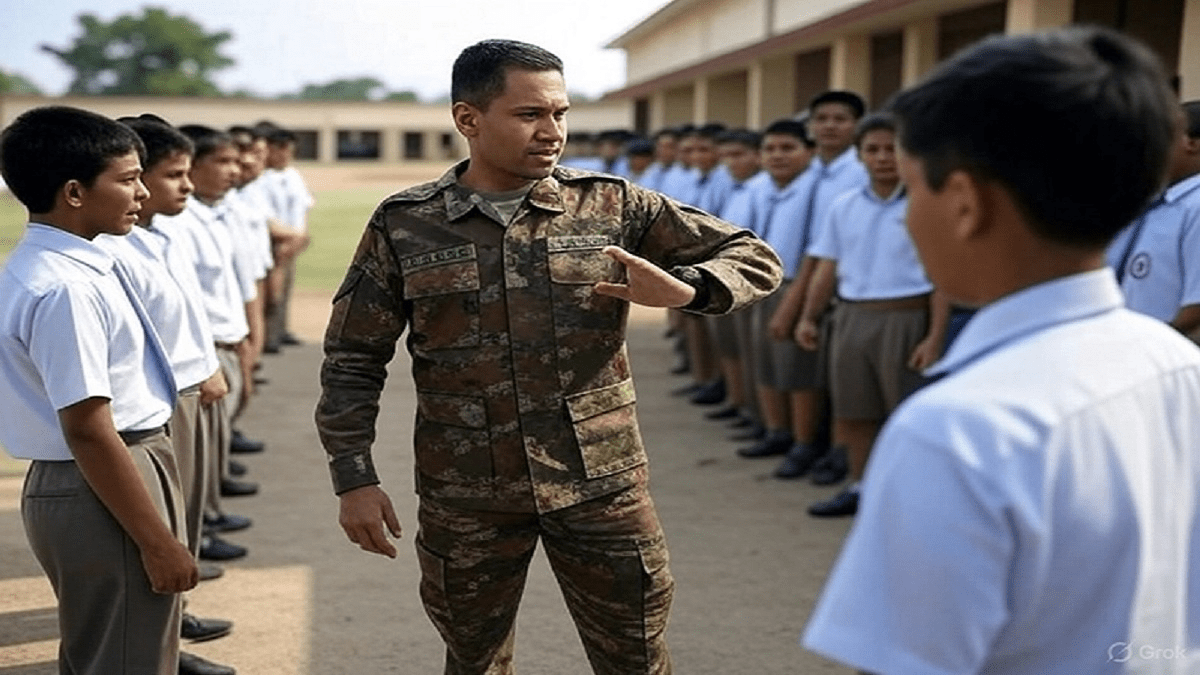
बच्चों के लिए सैनिक प्रशिक्षण : आखिर महाराष्ट्र सरकार की यह नई योजना क्यों एक चिन्तित करने वाली पहल है ?

‘मैंने जापान में जनता को अपनी स्वतंत्रता की सीमाएं अपनी सरकार द्वारा स्वेच्छा से स्वीकार करते हुए देखा है…लोग इस सर्वव्यापी मानसिक दासता को प्रसन्नता और गर्व के साथ स्वीकार करते हैं क्योंकि वे अपने आपको शक्ति की एक मशीन, जिसे राष्ट्र कहा जाता है, में बदलने की तीव्र इच्छा रखते हैं…’ 

-रवीन्द्रनाथ ठाकुर, ‘नेशनलिज्म’  

बच्चों के लिए फौजी तालीम !

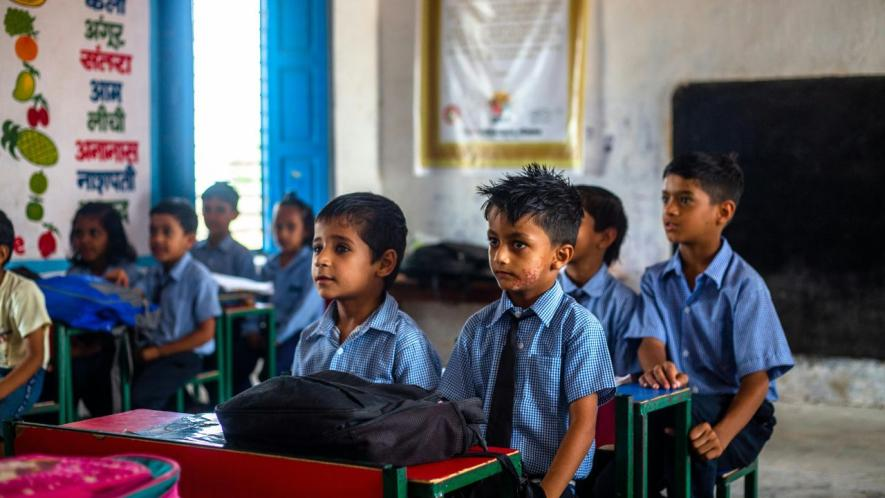
भारतीय संघ के सबसे समृद्ध सूबा कहलाने वाले महाराष्ट्र ने स्कूली शिक्षा के क्षेत्र में एक नयी पहल हाथ में ली है। वह स्कूली छात्रों के लिए कक्षा 1 से ही बुनियादी फौजी प्रशिक्षण देना शुरू करेगा ताकि बच्चों में ‘देशभक्ति, अनुशासन और बेहतर शारीरिक स्वास्थ्य की नींव डाली जा सके।’ एक स्थूल अनुमान के हिसाब से चरणबद्ध तरीके से लागू की जाने वाली इस योजना में लगभग ढाई लाख सेवानिवृत्त  सैनिकों को तैनात किया जाएगा। …..

यह प्रस्ताव कई स्तरों पर चिन्तित करने वाला है:
 
एक, जैसा कि जानकारों एवं शिक्षा शास्त्रियों ने बताया है कि राज्य का शिक्षा जगत एक जटिल संकट से गुजर रहा है, जिसका प्रतिबिम्बन कमजोर होती अवरचना / इन्फ्रास्टक्चर /infrastructure, अध्यापकों की कमी और नीतियों को लागू करने के रास्ते में आने वाली प्रचंड बाधाओं में उजागर होता है। ..अगर सरकार की तरफ से कक्षा एक से आगे फौजी प्रशिक्षण प्रदान करने की योजना को लागू किया गया तो उसका असर स्कूली शिक्षा के लिए आवंटित किए जा रहे संसाधनों में अधिक कटौती में दिखाई देगा

[ Read the full article here :https://janchowk.com/military-training-for-children-why-is-this-new-scheme-of-maharashtra-government-a-worrying-initiative/]

Maharashtra: Military Training for School Children!

Why this latest move by the state government is a worrying development.

I have seen in Japan the voluntary submission of the whole people to the trimming of their minds and clipping of their freedom by their government, which through various educational agencies regulates their thoughts, manufactures their feelings, becomes suspiciously watchful when they show signs of inclining toward the spiritual, leading them through a narrow path not toward what is true but what is necessary for the complete welding of them into one uniform mass according to its own recipe. The people accept this all-pervading mental slavery with cheerfulness and pride because of their nervous desire to turn themselves into a machine of power, called the Nation, and emulate other machines in their collective worldliness.

-Rabindranath Tagore, Nationalism

The richest state in the Indian union, Maharashtra, has embarked on a new initiative in the field of school education. It would provide basic military training to school students starting from Class 1, to promote  “patriotism, discipline, and physical fitness among young learners from an early age”. Around 2.5 lakh ex-servicemen would be involved to deliver this training which will be introduced in a phased manner.

Undoubtedly, in the aftermath of Operation Sindoor, this proposal will be able to gather enough eyeballs in the rest of the country and it would not be surprise that few other Bharatiya Janata Party-ruled states would implement similar schemes in education.

This proposal is worrying at many levels. ( Read the full article here :https://www.newsclick.in/maharashtra-military-training-school-children)

Will Asjad Babu Get Justice in Today’s India

“Our dead are never dead to us until we have forgotten them”

– George Elliot (English Novelist and Poet, 1819-1880)

Firdaus Alam alias Asjad Babu – age 24 years – is dead.

Details of this cold blooded killing have appeared in a section of the media and make chilling reading. (1)

Asjad – a native of a village in Kishenganj district of Bihar, married hardly 7 months back, worked as a tailor in Panipat, Haryana.That tragic evening, he was sitting with his friends including his brother Asad Raza in a playground when the accused approached him and started mocking him for wearing a skullcap.

None of the friends had any personal enmity with the accused Narendra alias “Susu Lala”.When confronted, he felt further agitated and attacked Asjad with a knife, inflicting serious fatal injuries.

Death of Asjad is no ordinary death.

It appears to be a hate crime.

Hate crime is a special crime where a person is targeted just because of hostility or prejudice towards that person’s colour, look, dress, which reveals the person’s community, religion or belief etc. One does not know whether the police or the law-and-order machinery would be ready to acknowledge this brutal murder as a hate crime (2) because that would entail stricter charges, which may be followed by stricter punishment.

What is even more disturbing, is to note that killings, like that of Asjad have become commonplace. ( Read the full article here : https://countercurrents.org/2025/06/will-asjad-babu-get-justice-in-todays-india/)

UP: Ramayana, Vedic Workshops in Govt Schools Challenged

Why the Yogi Adityanath-led BJP government’s move of using public funds for imparting religious instruction violates Article 28 of the Constitution.

Representational Image. Image Courtesy: Pexels

“No religious instruction shall be provided in any educational institution wholly maintained out of State Funds” unless “established under any endowment or trust which requires that religious instruction shall be imparted in such institution”. (Article 28 of the Indian Constitution)

It has been more than 75 years since the founding fathers (and mothers) of the Constitution took this bold stand when they were shaping the guidelines around which the newly independent country would move forward. ..

…..Much water has flown down the Ganges, the Jamuna and all rivers of the country and it appears that slowly, but not so silently, attempts are on to water down the provisions of this Article and facilitating religious instruction in government schools through the back door.

The manner in which Yogi Adityanath-led Bharatiya Janata Party (BJP) government in Uttar Pradesh has suddenly decided to hold summer workshops on the Ramayana and the Vedas in government schools across the state, without any broader consultation with the stakeholders involved in this endeavour, is symptomatic of the brazen attitude of the government. We are told that these workshops will be organised under the aegis of the International Ramayana and Vedic Research Institute, Ayodhya, and will include activities, like Ramlila, Ramcharitmanas recitation, Vedic chanting, painting, and mask-making.

As expected, this retrograde move by the Yogi government has generated anger among the broad masses as well as concerned citizens, who have demanded that this move be immediately rescinded. ( Read the full article here : https://www.newsclick.in/ramayana-vedic-workshops-govt-schools-challenged )

Two Minute Silence for Amir Pathan!

Life in Latur, a city in Maharashtra, known for its historical monuments is normal again. There was little commotion more than ten days back in one part of the city following the suicide of a senior executive with a telecom company who had resorted to this extreme step a day after a road rage incident when he allegedly faced communal slurs. Looking back what followed on that day was nothing unusual by Indian standards. ( Read the rest of the article here : https://countercurrents.org/2025/05/two-minute-silence-for-amir-pathan/)

””””””””””””””

Why a 3-Year-Old Child’s Death Will Haunt us For a Long Time

Keeping aside disagreement about customs like ‘Santhara’, one can at least agree that only an adult can make a decision to opt for death voluntarily in times of sickness.

Men never do evil so completely and cheerfully as when they do it from religious conviction.

Blaise Pascal (1623–1662)

French mathematician, physicist, inventor, philosopher, and Catholic writer

Namrata (name changed), the three-year-old daughter of IT professionals from Indore, is dead.

She had brain tumour which was successfully operated upon in January in Mumbai but it relapsed in March, and within less than a week, she breathed her last.

Apropos nothing seems amiss in her story.

The child got the best treatment available, and for her parents, belonging to Jain community, money was never a problem.

Despite all these relevant details, it is rather difficult to forget or disremember the past few hours of her life when she was still alive, when she must have been in tremendous pain and the way she was made to undergo some ritual to ‘improve her next birth’ — as impressed upon her parents by their spiritual leader.

We learnt that instead of hospital bed, where she should have been given palliative care, the child was shifted to the ashram of one Maharaj, a Jain monk, who had convinced his gullible disciples – her parents – to opt for Santhara “to decrease her suffering and improve her next birth”.

And these young IT professionals, barely in their 30s, had no qualms in shifting their dying daughter to the ashram, despite knowing full well that she was in tremendous pain and any sudden change would exacerbate her death. [ Read the full article here : https://www.newsclick.in/why-3-year-old-childs-death-will-haunt-us-long-time]

‘The Old is Dying’ – Notes on the Global Crisis of Democracy

Reflecting on what he called the “crisis of authority” or the “crisis of hegemony” from inside Mussolini’s prison, Antonio Gramsci had observed,

“The crisis consists precisely in the fact that the old is dying and the new cannot be born; in this interregnum a great variety of morbid symptoms appear.” (Selections from the Prison Notebooks, International Publishers, 1971, p. 276)

Reduced by Slavoj Zizek to a meaningless tweet that substitutes the last part with his own pop culture expression “now is the time of monsters”, it has become a kind of substitute for thinking what the crisis actually is all about.

Gramsci in fact, was hardly talking about pop culture “monsters”. He was thinking about a very new phenomenon of his time but which has become far more serious today – the crisis of the political party. The crisis of hegemony is tied in his above reflections, to the fact that “the great masses have become detached from their traditional ideologies and no longer believe in what they used to believe previously etc.” (SPN: 276)

Continue reading ‘The Old is Dying’ – Notes on the Global Crisis of Democracy

Is an All-India Plan Underway to Foment Communal Conflicts?

President Rajendra Prasad had written to Sardar Patel, flagging cases of Hindutva activists dressing as Muslims to foment communal trouble. That trend continues.

“…I am told Hindutva activists have a plan of creating trouble. They have got a number of them dressed as Muslims and looking like Muslims who are to create trouble with the Hindus by attacking them.. …The result of this kind of trouble amongst the Hindus and Muslims will be to create a conflagration.’’

[Extracts of a letter, written by Dr Rajendra Prasad on March 14, 1948, cited in Nehru-Patel: Agreement within Differences, Select Documents and Correspondence, edited by Neerja Singh, Page 43]

‘How Hindutva activists plan to foment communal trouble?’

It was the year 1948 and Dr Rajendra Prasad, who later became the first President of India, wrote a letter to the first Home Minister of independent India, Sardar Vallabhbhai Patel, about the plan of Hindutva activists to foment trouble in the newly independent country. As per reports that he had received from different sources, Prasad wrote how these Hindutva supremacists get dressed up as Muslims and ‘looking like Muslims’ create trouble with Hindus by attacking them.’

Much time has passed since the time letter was written, but every now and then, this template, created and developed by Hindutva Supremacist formations during the Partition violence and later, is active with the aim to communalise and polarise the society further. [ Read the full article here : https://www.newsclick.in/all-india-plan-underway-foment-communal-conflicts]

Indianity and Modernity : Dr Ravi Sinha

[ YouTube links of Ravi Sinha’s Informal talk in Lucknow in April 2025 on “Indianity and Modernity”.  Credits to Kumar Sauvir for recording, editing and posting. The title and intro are also by him ]

[ Ravi Sinha is an activist-scholar who has been associated with progressive movements for around five decades. Trained as a theoretical physicist, Dr. Ravi has a doctoral degree from MIT, Cambridge, USA. He worked as a physicist at University of Maryland, College Park, USA, at Physical Research Laboratory, Ahmedabad and at Gujarat University, Ahmedabad before resigning from the job to devote himself full time to organizing and theorizing. He is the principal author of the book, Globalization of Capital, published in 1997, co-founder of the Hindi journal, Sandhan, and one of the founders and a leading member of New Socialist Initiative.]

Class, Inequality, and the Current Political Moment in China and India : Prof Vamsi Vakulabharanam

Democracy Dialogues Series 39

Organised by New Socialist Initiative

Theme : Class, Inequality, and the Current Political Moment in China and India

Speaker : Prof Vamsi Vakulabharanam

Co-Director of the Asian Political Economy Program and Associate Professor of Economics at the University of Massachusetts, Amherst

Live streamed at Facebook ( facebook.com/newsocialistinitiative.nsi).
———————————-

Theme: Class, Inequality, and the Current Political Moment in China and India

This talk is based on a recently published book by the Oxford University Press – Class and Inequality in China and India, 1950-2010. China and India have seen a significant revival over the last three decades in terms of their place in the world economy. Two and a half centuries ago, they contributed 50 percent of the world output; after suffering a decline thereafter, their share fell to a paltry 9 percent in 1950 but has since resurged to over 25 percent today. Their growth and inequality experiences diverged for three decades following India’s independence (1947) and the Chinese revolution (1949). Thereafter, there are remarkable underlying similarities in the experiences of both countries, especially in terms of their rising inequality patterns analyzed through a class lens. Vamsi demonstrates that the mutual interconnectedness between Chinese and Indian growth and inequality dynamics and the transformation and evolution of global capitalism is key to understanding the within-country inequality dynamics in both countries over the 1950-2010 period. Based on this analysis of class-based inequalities, Vamsi reflects on the current political moment in both countries, from a political economy perspective.

Speaker : Prof Vamsi Vakulabharanam
Vamsi Vakulabharanam is Co-Director of the Asian Political Economy Program and Associate Professor of Economics at the University of Massachusetts, Amherst. He has previously taught at the University of Hyderabad (2008-14) and the City University of New York (2004-07). His recent research focuses on inequality in India and China and the political economy of Indian cities through the axes of gender, caste, class, and religion. In the past, he has also worked on agrarian change in developing economies, agrarian cooperatives, and the relationship between economic development and inequality. Vakulabharanam was awarded the Amartya Sen award in 2013 by the Indian Council of Social Science Research.

L’affaire UoH – How much land does a university want? Nithin Jacob Thomas

Guest post by NITHIN JACOB THOMAS

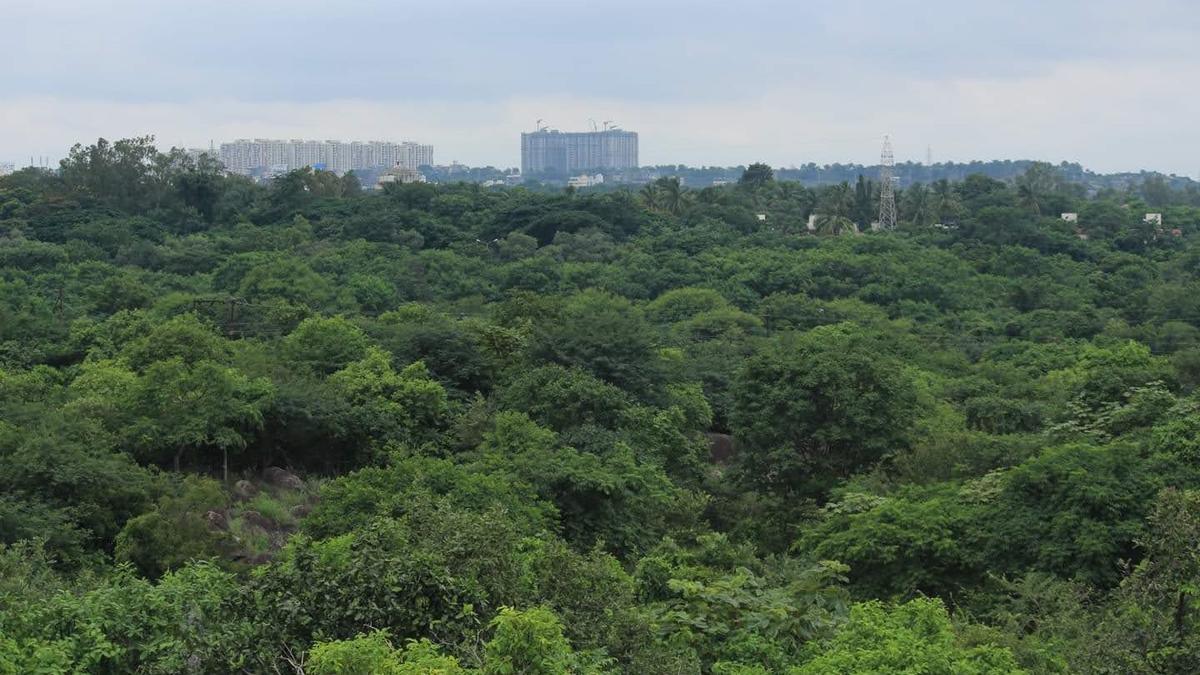
Recently, the students of the University of Hyderabad were protesting the Telangana state government’s bulldozing of 400 acres of ecologically vibrant, species-rich land within the university, undertaken as a preparatory step to auction it off. The state government sought to quell the protest by force, asserting that the land does not belong to the university and that it is within its rights to auction it. However, the Supreme Court has intervened and stayed the activities for the time being. Ego-bruised by the setback they have faced at the hands of the campus community, the Telangana government has now proposed that the entire 2300 acres of the university be turned into an eco-park, uprooting the campus in toto to a hundred-acre campus on the city’s outskirts.

Kancha Gachibowli forest, image courtesy The Hindu

Strangely, the university has not secured legal rights for the land it has occupied for several decades. However, the emphasis in the following note is on an aspect of the protest that lies beyond the legal dispute over ownership. It rather seeks to articulate the inarticulable—why the preservation of the ecology of these 400 or 2300 acres is not a standalone question but one that co-constitutes the very question of preserving the university itself.

Continue reading L’affaire UoH – How much land does a university want? Nithin Jacob Thomas

Can Extradition of Tahawwur Rana Bring Closure to 26/11 Terror Attack?

David Headley remains inaccessible in the US, and so do the masterminds in Pakistan.

The extradition of Tahawwur Rana to India to face trial for his role in the 26/11 terror attack is big news in the media. One can sincerely hope that with the arrest of only the second suspect to face trial for the 26/11 attacks – the first one was Ajmal Kasab – we can unearth other critical links in the conspiracy, role played by the terrorist groups and the support the whole operation received from the Pakistani establishment or its deep state.

Of course, it will be rather premature to assume that this arrest can bring a closure to the dastardly 26 /11 terror attacks. We are yet far away from the possibility of the mastermind of the attack – Hafeez Saeed and his accomplices – facing trial in Pakistan or being extradited to India.

There is no clue yet whether David Headley, a close friend of Tahawwur Rana, who is called the main conspirator of the operation would ever face trial in India. In fact, it is still a mystery how and why the US entered into a plea deal with him – promising him that he will not be extradited to India.

[ Read the full article here : https://www.newsclick.in/can-extradition-tahawwur-rana-bring-closure-2611-terror-attack]

Kshama Sawant Honoured in Absentia – Press Release

Kshama Sawant honoured in absentia by Canadian Radio station for standing up against caste-based oppression. Former Seattle City Councillor was presented with the annual Hands Against Racism award by Spice Radio at a well-attended event in Surrey on Sunday, March 30.
Born and raised in India, Kshama Sawant was instrumental behind the historic anti-caste ordinance brought by the City of Seattle in 2023. Since then, she has been under attack from supporters of the right-wing Hindu nationalist Modi government in New Delhi.
For doing that she had to pay a heavy price, as the Indian government denied her visa and an opportunity to go and see her ailing mother in Bengaluru.
Sawant couldn’t make it to the event organized at Surrey City Hall, due to the current tensions between Canada and US caused by the trade war. Spice Radio broadcaster and her vocal supporter Gurpreet Singh accepted the award on her behalf.
He earlier introduced her before her video message was played.
In her greetings, Sawant revealed that because of the hostile political environment, including ongoing arrests of pro-Palestine activists in the US, especially those who are naturalized American citizens like her, she had been advised not to travel outside the country.
However, she pulled no punches in criticising the Liberals and Democrats on either side of the border for their complacency and opportunism, enabling the extreme right wing forces to grow powerful.
Her speech received a huge applause from the audience.
Spice Radio CEO Shushma Datt started the campaign in 2015, on the birth anniversary of Martin Luther King Jr. It coincides with Holi, a Hindu festival of colours, and encourages participants to colour their hands and leave a palm print on a white sheet of paper with a message against racism. A practicing Hindu herself, she believes in diversity and inclusion and greeted everyone Happy Eid at the Sunday program.
Every year, individuals are also shortlisted and awarded for their anti-racism work as part of this initiative. This year Sawant and Bob Rennie were honoured. Rennie is a famous art collector and a strong advocate against xenophobia and homophobia, besides gender discrimination.
The very first recipient of the award, Senator Baltej Singh Dhillon, who served as the first turbaned Sikh Royal Canadian Police officer and faced racism from within the force, was also present and addressed the gathering.
Other past recipients also spoke on the occasion, including Attorney General Niki Sharma, anti-racism educator Annie Ohana and prominent journalist Charlie Smith.

An Open Letter to Sarada Muraleedharan about colourism in Kerala

Dear Sarada

I read your post. It is hard to describe the rage that I felt at the colourist dismissal of your work that you called out. As someone who has closely observed your admirable work of saving Kerala ‘s Kudumbashree network meant for the support of the underprivileged from deteriorating into a bunch of crumb-seeking women, I can only say that the comment was also probably driven by sheer envy, and not just shallow thinking. It may be true that your efforts did not fructify everywhere. It is also true that much has regressed, but some aspects continue to endure despite determined push from the political class. No one can deny your exemplary achievements,  rare among civil servants.

Continue reading An Open Letter to Sarada Muraleedharan about colourism in Kerala

ആശയറ്റ് പോകരുത് ആശമാരുടെയും : ഡോ. അഷ്ടമൂർത്തി എറയൂർ, ഡോ. ലക്ഷ്മി ആനന്ദ്

സമൂഹത്തിനും ആരോഗ്യ സംവിധാനത്തിനും ഇടക്കുള്ള മുഖ്യ കണ്ണിയായി പ്രവർത്തിക്കുന്ന ആശ വർക്കർമാരിൽ ഒരു വിഭാഗം  45 ദിവസത്തിലേറെയായി, കേരള സെക്രട്ടേറിയറ്റിന് മുന്നിൽ പ്രതിഷേധിക്കുകയാണ്. കഴിഞ്ഞ ഏതാനും ദിവസങ്ങളായി ഇവർ നിരാഹാര സമരവും നടത്തുകയാണ്. സംസ്ഥാന സർക്കാർ ആശമാർക്ക് നല്കുന്ന ഹോണറേറിയം വർദ്ധിപ്പിച്ച്, മിനിമം കൂലി പ്രതിദിനം 700 രൂപ എന്ന നിലയിൽ മാസം 21000 രൂപ വേതനം നല്കുക, വിരമിക്കൽ ആനുകൂല്ല്യങ്ങളും ഇൻഷുറൻസ് അടക്കമുള്ള പരിരക്ഷകളും അനുവദിക്കുക തുടങ്ങിയവയാണ് ഇവർ മുന്നോട്ട് വയ്ക്കുന്ന ആവശ്യങ്ങൾ. പൊതുജനാരോഗ്യ വിഭാഗം വിദ്യാർത്ഥികൾ എന്ന നിലയിൽ പല അവസരങ്ങളിലും ആശാ പ്രവർത്തകരുമായി നേരിട്ട് ഇടപെടുകയും, അവരുടെ പ്രയാസങ്ങൾ അടുത്ത് നിന്ന് മനസ്സിലാക്കുകയും ചെയ്തവരാണ് ലേഖകർ.

Continue reading ആശയറ്റ് പോകരുത് ആശമാരുടെയും : ഡോ. അഷ്ടമൂർത്തി എറയൂർ, ഡോ. ലക്ഷ്മി ആനന്ദ്

Federal fracture: A Nation in crisis – Prof C P Chandrasekhar

Democracy Dialogues Series 38

Organised by New Socialist Initiative
Theme : Federal fracture: A Nation in crisis

Speaker : Prof C P Chandrasekhar

Former Professor, Centre for Economic Studies and Planning ,JNU, Delhi

Time and Date : 6 PM (IST), Sunday, 30 th March, 2025, 

 facebook.com/newsocialistinitiative.nsi).

—————-

Theme :

Indian federalism is on the verge of breakdown for multiple reasons. A crucial contributor is the collapse of the system of revenue sharing between the Centre and the States and the weaponization of vertical transfers as an instrument for political contestation.

The conflict over resources in India’s quasi-federal political structure is by no means new. Framers of the Constitution, who recognised that the division of taxation rights and spending responsibilities between the two principal tiers of government in India was asymmetrical, sought to partially resolve this problem by providing for a share for the States in a defined set of tax revenues garnered by the Centre, with the principles governing the share devolved and distributed to individual States recommended by successive Finance Commissions. But State governments have been increasingly disappointed with the actual experience with devolution, because of the concentration of resources mobilised in the hands of the Centre.

The issue, however, is not one of mere competition for resources between the Centre and the states. Having gained control over the Lok Sabha, the BJP has made it clear that it is keen on establishing an opposition-free political space. To realise this objective, it has not only sought to undermine the legitimacy of individual opposition politicians with charges of corruption or “anti-national” activity, but of opposition-ruled State governments by eroding their ability to adopt economic policy measures and initiatives that could win them political legitimacy. Expenditures on building State infrastructure or social expenditures on subsidised food provision, a modicum of social protection, and employment guarantee schemes, do contribute to winning a party in power in a State a degree of political legitimacy. The attack on the fiscal capacity of the State governments helps limit such expenditures, even while Central claims on expanding infrastructural investments and social sector spending are advanced, with an increase in ‘central’ schemes, especially those attributed to the patronage of the highest authority, the Prime Minister. 

Speaker : 

Prof C P Chandrasekhar

 Prof C. P. Chandrasekhar is emeritus professor at the Centre for Economic Studies and Planning, Jawaharlal Nehru University (JNU), New Delhi. He has published widely in academic journals and is the coauthor of Crisis as Conquest: Learning from East Asia (2021, Orient Longman), When Governments Fail – A Pandemic and Its Aftermath (with Jayati Ghosh et al) , 2021 ; Interpreting the World to Change It – Essays for Prabhat Patnaik (with Jayati Ghosh), 2018 ; After Crisis : Adjustment, Recovery and Fragility in East Asia ( with Jayati Ghosh) 2009 ; The Market that Failed: Neo-Liberal Economic Reforms in India (2002, Leftword Books), and 

 
He received his MA and Ph.D (economics) from Jawaharlal Nehru University, where he served as a professor from 1997 until his retirement. He is a member of the executive committee at International Development Economics Associates (IDEAs) and the World Economics Association, as well as a contributor to Frontline, Economic and Political Weekly, and Businessline.
 
Chandrasekhar received the Malcolm Adiseshaiah Award for 2009 for contributions to economics and development studies.

Settle the ASHA workers’ strike through Centre-State government talks: Kerala Sastra Sahitya Parishat

[This is my translation of the statement issued by Kerala’s People’s science /development movement, the Kerala Sastra Sahitya Parishat, about the ASHA workers’ strike, which is now in its forty-fourth day.]

The ASHA workers of Kerala have been on strike since forty-two day now, engaged in seeking an increase in honoraria and other benefits. The issue continues to remain unresolved. The ASHA workers comprise a sector in which 26,000 workers currently work. They are all women, attached to a Central scheme, and receive merely Rs 7000 per month as honorarium. For this reason, it is the duty of both Central and State governments to consider their demands in a democratic fashion and respond with sympathy. The very many struggles unfolding among Accredited Social Health Activists now must be developed into a people’s struggle against globalized economic policies, and the issue of their wage must be settled with Central and State governments working together. What we see in the ASHA workers’ struggle in Kerala is the crisis and tension emerging from the one-sided and top-down imposition of globalizing tendencies upon a society that had grown and developed within the framework of a welfarist state.

Kerala’s public health sector was well-coordinated and accessible to all since a very long time. It is marked by a pro-poor orientation. A large network of health experts and professionals, from doctors to public health nurses, work in it. They are all appointed officially and formally, and are regarded as workers and employees. Therefore, their remuneration and conditions of work are well-defined according to existing rules and laws.

Continue reading Settle the ASHA workers’ strike through Centre-State government talks: Kerala Sastra Sahitya Parishat

Despite the CPM Leadership ‘Studying for Trump’: the ASHA workers’ Struggle in Kerala

The ASHA workers’ strike in Kerala is in the forty-third day today. It is the fifth day of their hunger strike — three women have been on hunger strike since the failure of talks with the government last week. Today, they have called for a mass hunger-strike at the protest site. ASHA workers who stand with the strike but are not able to reach Thiruvananthapuram have been requested to wear black at their workplaces and homes. The KAHWA has issued an open call to all women in Kerala to wear black and post pictures supporting the strike.

Continue reading Despite the CPM Leadership ‘Studying for Trump’: the ASHA workers’ Struggle in Kerala

The Three-Language Controversy – Response to a Disagreement on Hindi: Vipin Kumar Chirakkara

Guest Post by VIPIN KUMAR CHIRAKKARA

The state of the controversy

As the debate on the three-language policy has intensified, what was originally an exchange between ministers of the union government and the government of Tamil Nadu, or between leaders of the Bharatiya Janata Party (BJP) and the Dravida Munnetra Kazhakam (DMK), has become a subject of commentaries and criticisms coming from observers, intellectuals and activists. The union government says that no state could be exempted from the implementation of the three-language formula as envisioned in the New Education Policy (NEP) 2020 and adds that Hindi is not made mandatory under the present formula. The condition is that two of the three languages must be native Indian languages. The DMK leadership argues in response that the three-language policy can still be an indirect route to push Hindi into the state. The latter has appeared firm in its argument that it is the state’s prerogative under the federal system to determine its language and education policy (though during emergency education was shifted to the concurrent list of the union government). It also opposes the measure adopted by the union government, that is, to link the funding under the Samagra Shiksha Abhiyan to the implementation of NEP 2020 and the language formula it includes. The parties which are not in alliance with the DMK in the state allege that the DMK has staged this conflict in order to ignite sub-national/regional sentiment to strengthen its position before the elections.

Continue reading The Three-Language Controversy – Response to a Disagreement on Hindi: Vipin Kumar Chirakkara

Early morning on Women’s Day in Thiruvananthapuram, 2025

Photo: K B Jayachandran

Today is International Women’s Day.

ASHA workers on strike for the twenty eighth day, sleeping in front of the State Secretariat in Thiruvananthapuram.

Happy Women’s Day from Kerala, the Land of Women’s Empowerment!!

On this day, true to the fighting spirit of the women workers who fought valiantly for their rights and who faced the tyrant’s bullets fearlessly, Kerala’s COVID-warriors, our ASHA workers, sleep on the rain-soaked pavement in front of the State Secretariat in the capital city of Kerala.

Happy Women’s Day, Pinarayi Vijayan and Veena George. You must getting ready for the day refreshed by sleep in your soft beds, in the mansions that we the citizens of Kerala have funded for the comfort of our rulers.

Happy Women’s Day, Com. Thomas Isaac. Yes, you wouldn’t have been so famous the world over, if not for ‘women’s empowerment’ and the whole local-level development jingbang! See how empowered they are now. I am sure you must be happy now.

Happy Women’s Day, all of you in the CPM who have fattened on the achievements of women development workers — T N Seema and others — and the CPM hanger-ons who have managed a ‘feminist look’. Those women have learned to resist power, what a shame! I can imagine you rolling your kohl-lined eyes, frown-lines creasing those big red bindis on your foreheads . Those who set out to empower Kerala’s poorest women are now truly EM-powered. What an interesting and convenient twist!

Happy Women’s Day to Kerala’s ‘development movement’, the Kerala Sastra Sahitya Parishat! But I did not know that a people’s science movement went into mauna vratas, en masse. There can be no other explanations for their stunning silence, for all their concern about Kerala’s local-level development and public health.

Happy Women’s Day, feminist development experts who have all got nice shares of glory, along with other resources, from the Kerala government’s propaganda upholding its commitment to women’s empowerment … you who have not bothered to utter a single word despite seeing this rank injustice unfold … Private expressions of shock are useless, you know?

Goa: Who Fears The Truth?

How Hindutva Supremacists are engaged in ‘rewriting history’.

There are times when madness reigns

And then it is the best who hang’

– Albrecht Haushoffer

[January 7, 1903 – April 23, 1945, German geographer, diplomat, author, who faced martyrdom for his resistance to Nazism]

Uday Bhembre, the 87-year-old widely respected Konkani writer, son of legendary freedom fighter Laxmikant Bhembre, who has been a Sahitya Akademi awardee, is a worried man these days.

He has discovered to his dismay that his courage to speak the truth and challenge a narrative being peddled by the ruling dispensation in Goa, .. regarding well established facts of Goa’s own history, would lead to protests, led by Right-wing formations and many among them trespassing his house at night and pressuring him to issue an public apology.

Not very many people outside Goa know how this great writer – he was even a MLA (1984-89) — had neglected his literary career to fight for rights of Konkani language and has been against attempts to merge Goa into Maharashtra, to preserve its culture.

Thanks to the existence of powerful voices of resistance and a vibrant civil society in Goa, a significant number of people have publicly condemned these attempts to intimidate Bhembre and demanded strict action against the perpetrators and exposed the collusion of the Right-wing formations with people in power. Many even went to meet the noted writer to express solidarity with him. ( Read the full article here :https://www.newsclick.in/goa-who-fears-truth)