Category Archives: Decolonizing Theory

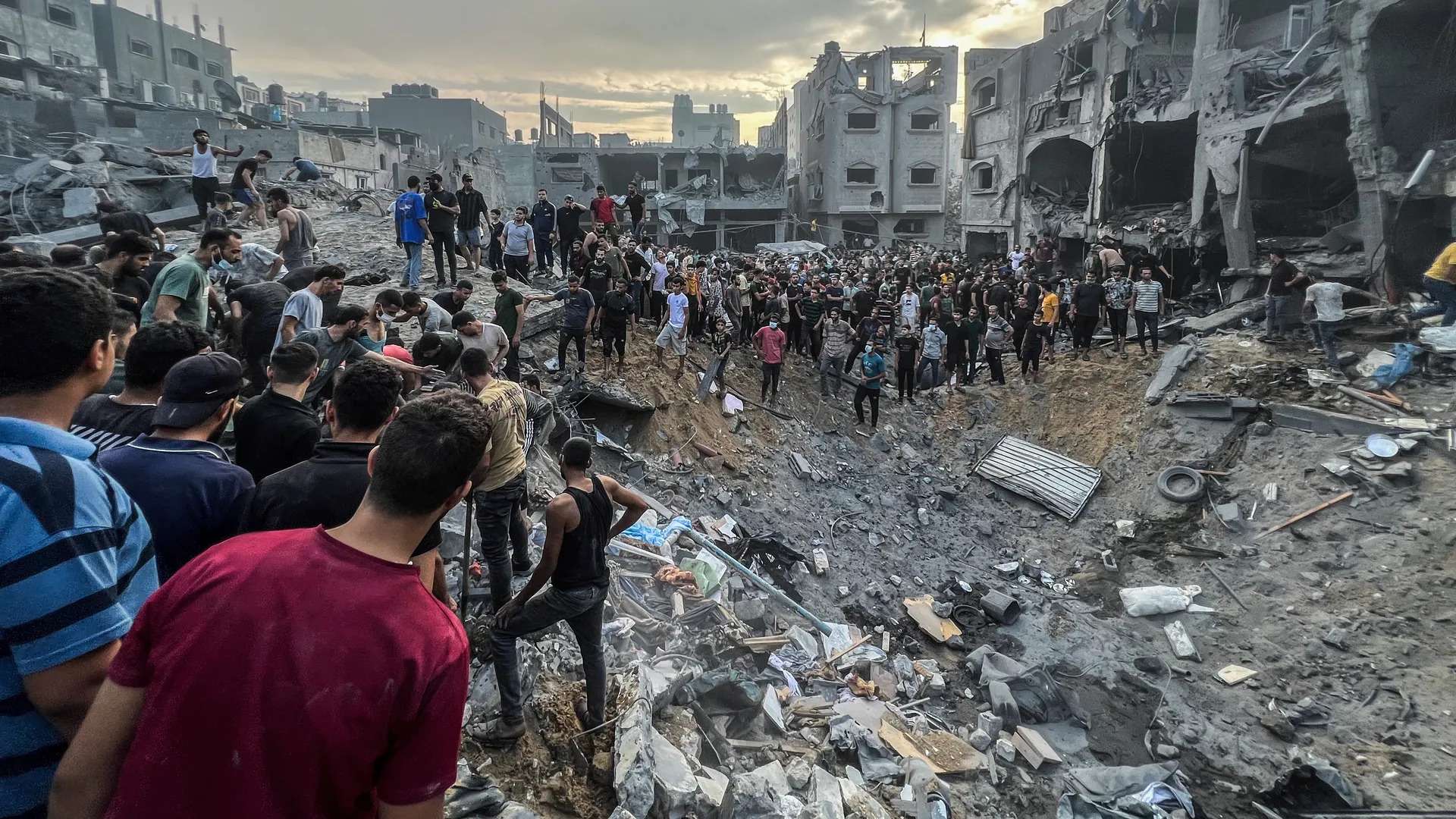
Genocide in Gaza – All the Perfumes of Arabia Will Not Sweeten These Hands…

As the ongoing livestreamed genocide in Gaza reaches its most despicable and horrendous phase of killing masses people through forced starvation, I am posting here a piece that I wrote for the art journal Art Deal last year. It was also delivered as a talk in a discussion organized by the All India Students’ Association (AISA) in JNU in September 2024. I am publishing it here with some minor additions/ changes.

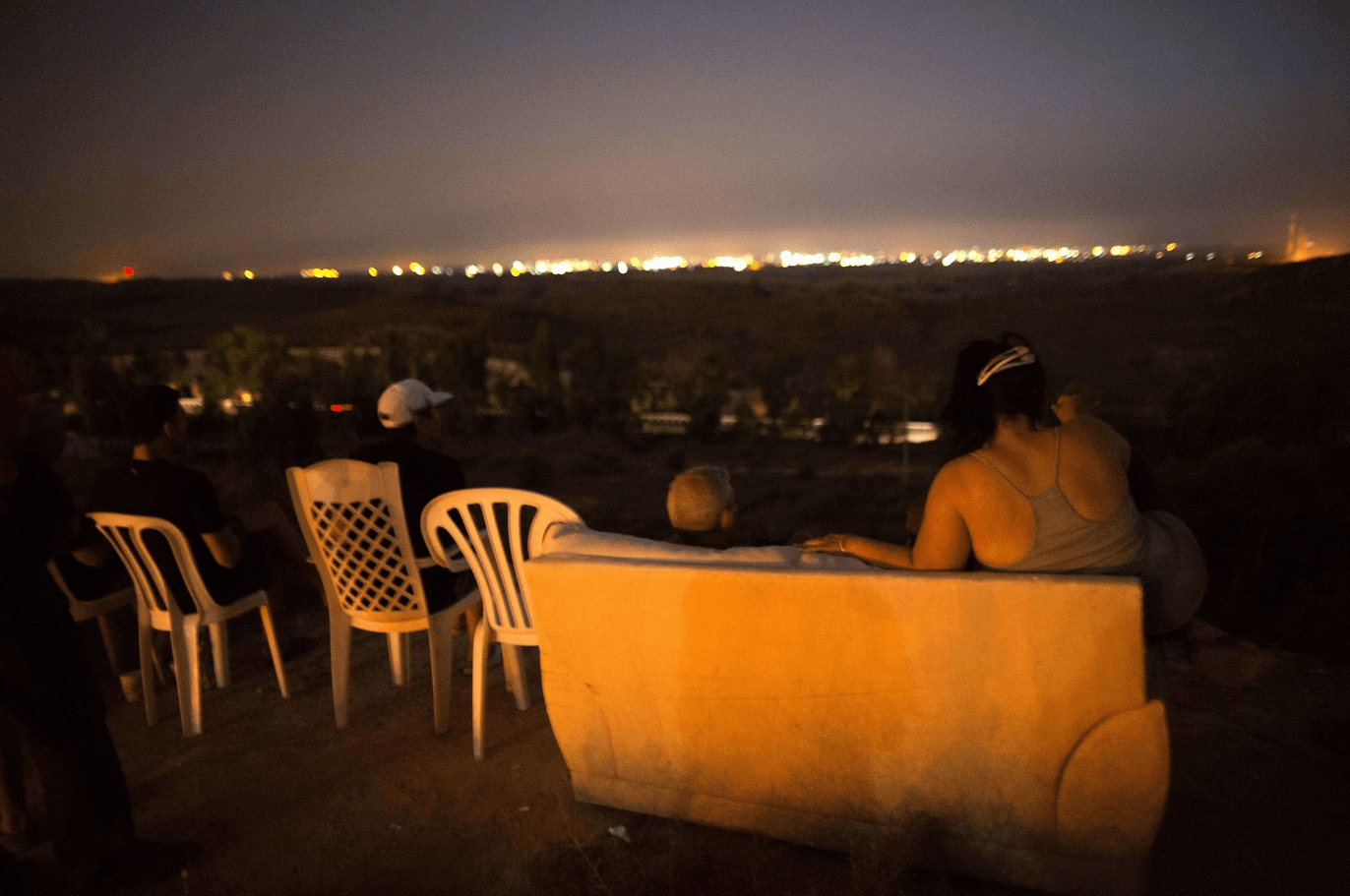
Israelis watch the bombing of Gaza in picnic mode outside a town called Sderot, in 2014, nine years before October 7, 2023. Image courtesy Menahem Kahana, Agence France-Presse.

‘Israel told U.S. officials in 2008 it would keep Gaza’s economy “on the brink of collapse” while avoiding a humanitarian crisis, according to U.S. diplomatic cables published by a Norwegian daily on Wednesday.

Three cables cited by the Aftenposten newspaper, which has said it has all 250,000 U.S. cables leaked to WikiLeaks, showed that Israel kept the U.S. Embassy in Tel Aviv briefed on its internationally criticized blockade of the Gaza Strip.’

 – Reuters, 5 January, 2011, Jerusalem.

I

No, it did not begin on 7 October 2023. Notwithstanding all the gaslighting by Israel and its guardians and arms-suppliers in the USA and Europe, the evidence says something else. The US cables leaked to Wikileaks show that not only had Israel been carrying out its genocidal activities for a very long time, its sponsors in the USA knew everything all along.

Continue reading Genocide in Gaza – All the Perfumes of Arabia Will Not Sweeten These Hands…

‘The Old is Dying’ – Notes on the Global Crisis of Democracy

Reflecting on what he called the “crisis of authority” or the “crisis of hegemony” from inside Mussolini’s prison, Antonio Gramsci had observed,

“The crisis consists precisely in the fact that the old is dying and the new cannot be born; in this interregnum a great variety of morbid symptoms appear.” (Selections from the Prison Notebooks, International Publishers, 1971, p. 276)

Reduced by Slavoj Zizek to a meaningless tweet that substitutes the last part with his own pop culture expression “now is the time of monsters”, it has become a kind of substitute for thinking what the crisis actually is all about.

Gramsci in fact, was hardly talking about pop culture “monsters”. He was thinking about a very new phenomenon of his time but which has become far more serious today – the crisis of the political party. The crisis of hegemony is tied in his above reflections, to the fact that “the great masses have become detached from their traditional ideologies and no longer believe in what they used to believe previously etc.” (SPN: 276)

Continue reading ‘The Old is Dying’ – Notes on the Global Crisis of Democracy

The Erosion Of Liberal Democracy in India: An Analysis – Prof Pranab Bardhan

Prof Pranab Bardhan,  Professor Emeritus, UC Berkeley, delivred the 24th Democracy Dialogues Lecture on August 27, 2023, Sunday at 10 AM India Standard Time.

Theme : The Erosion Of Liberal Democracy in India: An Analysis

Speaker : Prof Pranab Bardhan

Professor Emeritus of Economics at the University of California, Berkeley

It was also live streamed at:

facebook.com/newsocialistinitiative.com

Topic : The Erosion Of Liberal Democracy in India: An Analysis

A Brief Outline of the theme shared by Prof Bardhan

I’ll start with the global context of the turn of politics to right-wing extremism in much of the world.

One of the major factors behind this is the weakening of trade unions and of labour movements in general, which in earlier days used to act as a major force of resistance.

I shall then look into the weakening of labour movements in India and the pathetic failure of the Left political organizations. I shall analyze the deficiencies in their economic policies, mobilization strategies and governance failures even in areas where they used to be influential. Just blaming the semi-fascist Right is not good enough.

I shall end with a general discussion of how in prevailing Indian ideologies (including that of the Left) liberal democracy has often been under-valued.

Speaker :

Pranab Bardhan is Distinguished Professor Emeritus of Economics at the Department of Economics at the University of California, Berkeley.

He was educated at Presidency College, Kolkata and Cambridge University, England. He had been at the faculty of MIT, Indian Statistical Institute and Delhi School of Economics before joining Berkeley. 

He has done theoretical and field studies research on rural institutions in poor countries, on political economy of development policies, and on international trade. 

He was Chief Editor of the Journal of Development Economics for 1985-2003. 

He is the author of 17 books and editor of 14 other books, and author of more than 150 journal articles including in leading Economics journals 

His latest book titled A World of Insecurity: Democratic Disenchantment in Rich and Poor Countries was  published by Harvard University Press in late 2022.

His memoir titled Charaiveti: An Academic’s Global Journey is being published by Harper Collins India in late 2023.

His memoir in Bengali (titled Smriti-kanduyan, ‘Memory-Sratching’) has been serialized in Kolkata’s leading literary magazine, Desh, and the book came out in January 2014.

He has also contributed essays to popular outlets and some of these popular pieces have now been collected in his latest books, Globalization, Democracy and Corruption and Indian Polity and Economy:A Mirror to Difficult Times (Frontpage Publications). A collection of his Bengali essays has been published by Ananda Publishers in Kolkata in 2020.

The Hindu deity as juristic person – A dangerous path, yet again: Rahul Govind

Guest post by RAHUL GOVIND

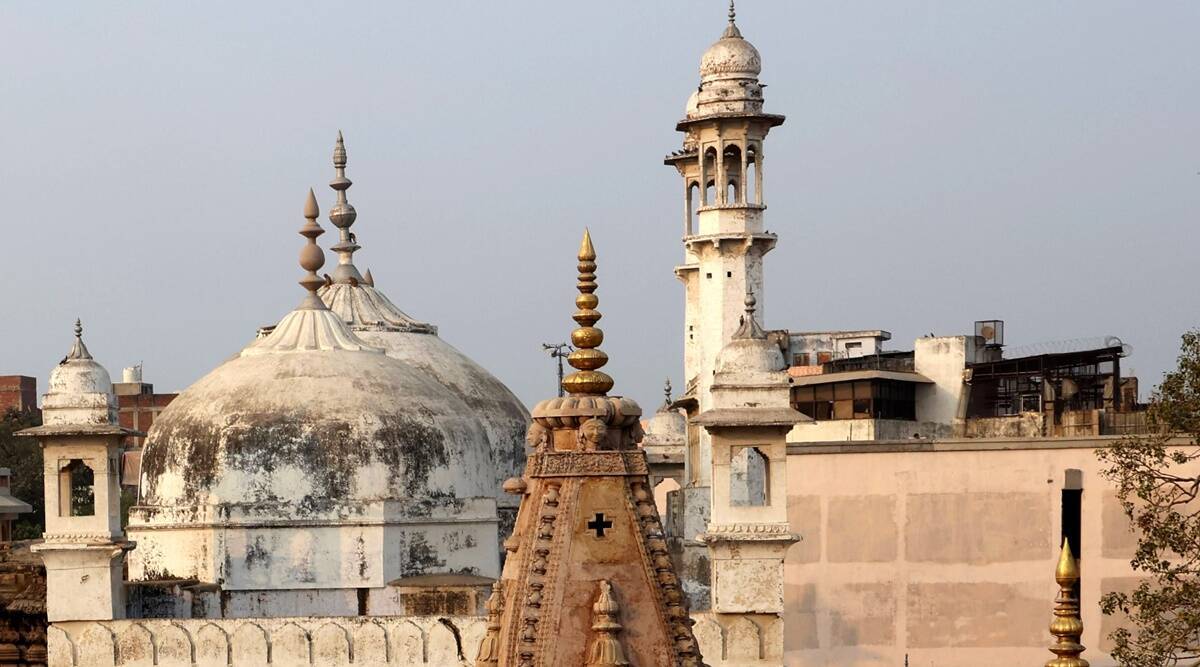
Gyan Vyapi Mosque and Kashi Vishwanath  Temple (Image courtesy Indian Express)

The present controversy over several religious sites threatens to tread yet again the path that led to the communal mobilization, riots and destruction of the Babri Masjid. The popular press also repeats several legal arguments without always analysing their import. In the present cases, just like in Ayodhya, a key point that we hear time and again is that when it comes to the Hindu deity’s property, such property is perpetual and therefore even if a temple was destroyed centuries ago, the legality of the Hindu deity’s property remains unimpeded, thereby becoming the basis of a reclamation. It is therefore important to understand the legal concept of the Hindu deity’s juristic personality. Continue reading The Hindu deity as juristic person – A dangerous path, yet again: Rahul Govind

Communist Manifesto, Late Marx and the Farmers’ Struggle


Spot the difference between the two quotations below.

“The bourgeoisie has subjected the country to the rule of the towns. It has created enormous cities, has greatly increased the urban population as compared with the rural, and has thus rescued a considerable part of the population from the idiocy of rural life. Just as it has made the country dependent on the towns, so it has made barbarian and semi-barbarian countries dependent on the civilised ones, nations of peasants on nations of bourgeois, the East on the West.” – [Marx and Engels, Manifesto of the Communist Party, 1848. Emphasis added]

Farmers’ protest at Delhi borders, image courtesy New Indian Express

“Hence, the historical movement which changes the producers into wage-workers, appears, on the one hand, as their emancipation from serfdom and from the fetters of the guilds, and this side alone exists for our bourgeois historians. But, on the other hand, these new freedmen became sellers of themselves only after they had been robbed of all their own means of production, and of all the guarantees of existence afforded by the old feudal arrangements. And the history of this, their expropriation, is written in the annals of mankind in letters of blood and fire.” – [Karl Marx, Capital Volume 1, Chapter 26, ‘The Secret of Primitive Accumulation’. 1867. All emphasis added]

Look closely at both, and if you have any doubts, you can return to the original texts from which these two passages have been extracted – the Communist Manifesto, by the youthful Marx and Engels, published in 1848 and Capital, Volume I, published in 1867. If the Communist Manifesto almost celebrates the ‘fact’ that capitalism has “rescued a considerable part of the population [i.e. the peasant] from the idiocy of rural life”, what does the text of Capital say? It underlines that precisely these people who had been thus ‘rescued’, “became sellers of themselves after they had been robbed of all their means of production“.

And if we take a step outside their context and read these lines in the context of contemporary India – from Singur and Nandigram to the ongoing saga of the epic farmers’ struggle – it is not difficult to see why the text of Capital insists that the history of their expropriation is written in “letters of blood and fire.” The big difference is that while literally millions perished in the storm of capitalist industrialization in the 17th, 18th and 19th centuries in Europe and simply disappeared into history; today, the peasants, farmers and indigenous people – all the so-called ‘pre-capitalist’ populations  –  are fighting back. There were no institutions of democracy, no language of struggle back then; it was the sheer exercise of naked power by the rising bourgeoisie that enforced the expropriation of agrarian and artisanal communities.

Continue reading Communist Manifesto, Late Marx and the Farmers’ Struggle

Mass Politics and ‘Populism’ in the World of Indian Languages

Image courtesy Netherlands Institute for Multiparty Democracy

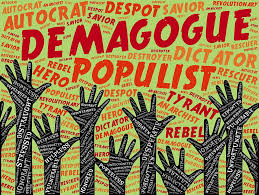
The label ‘populism’ has acquired unprecedented currency lately and is used to indiscriminately describe such a wide range of poliical figures and political tendencies that it seems to have lost all conceptual meaning. In the best of times, it was always a slippery concept that has been linked to democracy at one end and fascism at the other. On the one hand, it is seen as the democratic ‘excess’ that escapes the attempt of liberal-representative institutions to rein it in; on the other, it is seen as being of a piece with the fascist resort to antipolitical demagoguery and the rhetoric of the (national) ‘underdog’ oppressed by an elite (usually with international links).
The way the term is used these days to describe everyone from a Donald Trump, a Recep Erdogan or a Narendra Modi on the one hand, to the late Hugo Chavez, Evo Morales, Rafael Correa or even Bernie Sanders or Podemos and Syriza, on the other, defies all logic. What possible common denominator can one find between such diverse figures and political formations? That common denominator is simply ‘the people’ or the ‘underdog’ that they invoke – even if in completely different ways.

Continue reading Mass Politics and ‘Populism’ in the World of Indian Languages

We Urgently Need a Rainbow Left – One Hundred Years of Indian Communism

Bolivia Movement for Socialism, image courtesy The Nation

The world today desperately awaits the emergence of a new, rainbow Left that is liberated from the disastrous hold of the twentieth century. Indeed, attempts to find or forge such platforms are visible in different parts of the world. Falteringly and with setbacks to be sure, but there is no doubt that serious attempts are underway. And many of these attempts are powered by a different kind of imagination that is unencumbered, to a large extent, by the suffocatiing grip of the last century.

One hundred years ago, on 17 October 1920, the emigre Communist Party of India was formed in Tashkent with MN Roy as its chief initiator. This date of the party’s formation is, of course, contested by the current CPI, which dates its formation from 26 December 1925, when the first ‘Indian Communist Conference’ was held in Kanpur. The date became a matter of contention, especially after the split  in the CPI and the formation of the CPI(M) in 1964 – and at the core of that contention were two related issues. One opinion at the time of the Kanpur Conference had argued for a home-bred and ‘nationalist’ ‘Indian Communism’, in opposition to which the other section saw itself as a contingent or  a chapter of an international movement. The second question became more of an issue in the later years, after Stalin’s death and the revaluation of his role and the manner in which the Comintern came to play a subordinate role to Soviet foreign policy. In between these two lies the phase of the ‘Bolshevization’ of all socialist and communist parties across the world, which ensured that the CPI too, no longer remain an independent party in the sense in which some were arguing at the time of its formation.

Continue reading We Urgently Need a Rainbow Left – One Hundred Years of Indian Communism

Capitalism, Development and Western Hegemony – Looking Beyond to the Pluriverse


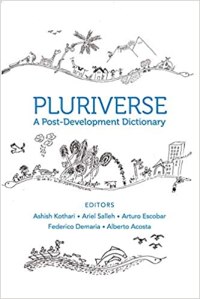
Many words are walked in the world. Many worlds are made. Many worlds make us. There are words and worlds that are lies and injustices. There are words and worlds that are truthful and true. In the world of the powerful there is room only for the big and their helpers. In the world we want, everybody fits. The world we want is a world in which many worlds fit…Our words, our song and our cry is so that the dead will no longer die. We fight so that they may live. We sing so that they may love. – Fourth Declaration of the Lacandon Jungle (1996), Zapatista National Liberation Army. Cited as epigraph in Pluriverse: A Post-Development Dictionary.

The New Grave-Diggers of Capital?

‘The world we want is a world in which many worlds fit’. This neatly sums up the idea of the ‘pluriverse’. Reading it, I was reminded of an interview of ‘Subcommandante Marcos’, ‘leader’ of the Zapatistas, some years ago. In that interview, Subcommandante Marcos (then anonymous) recounted that he and his colleagues at the Autonomous Metropolitan University in Mexico, who joined him in the Chiapas mountains in 1984, were Marxists and had basically gone there to organize the indigenous people. And for Marxists that bascially meant to ‘raise their awareness’ about capitalism and exploitation.

Editors: Ashish Kothari, Ariel Salleh, Arturo Escobar, Federico Demaria, Alberto Acosta

Continue reading Capitalism, Development and Western Hegemony – Looking Beyond to the Pluriverse

Hari Vasudevan, the Soviet Archives and the Left Establishment: Sobhanlal Datta Gupta

This tribute to Prof HARI VASUDEVAN by Prof SOBHANLAL DATTA GUPTA, who passed away in Kolkata recently, is being reproduced here, courtesy Mainstream Weekly.

Thereafter, as we proceeded in our work on the publication of the texts of the documents, we began to face insurmountable resistance, quite surprisingly, from a section of the Left establishment in West Bengal. We were threatened, maligned and discouraged not to proceed with this work any further and ridiculed for our research on documents which were described as “fake” and “doctored”.

It was May, 1995, exactly 25 years ago. Hari Vasudevan (Calcutta University), Purabi Roy (Jadavpur University) and I myself (Calcutta University) were in Moscow for two months, working as a team sent by The Asiatic Society, Calcutta in connection with a project of collection of documents from the newly opened Soviet archives on Indo-Russian Relations : 1917-1947. This project was the result of a Protocol signed between The Asiatic Society, Calcutta and Moscow’s Institute of Oriental Studies. With extremely limited funding we were expected to prepare catalogues of as many documents as possible and bring home photocopies/microfilms of those documents which we considered most important, depending, of course, upon their accessibility. It was a Herculean job, since we had no idea of the materials we had to handle. Working on hundreds and hundreds of documents, catalouging and copying them (in many cases because of paucity of funds and since we had no laptop, quite often we had to take down a document by hand) demanded a division of labour. While Purabidi worked in the State Archives of the Russian Federation (GARF), Archives of the Ministry of External Affairs (MID), Russian State Military Historical Archive (RGVIA), Hari and I worked in the former Central Party Archives, Institute of Marxism-Leninism (now known as Russian State Archive for Social and Political History or RGASPI ). Continue reading Hari Vasudevan, the Soviet Archives and the Left Establishment: Sobhanlal Datta Gupta

Beyond the ‘Employment’ Paradigm and Life After Capitalism – Manifesto of Hope IV


[This is the final instalment of the series on ‘Life After Capitalism – Manifesto of Hope’. Earlier parts can be accessed Part I here, Part II here and Part III here.]

Democratizing access to resources, Image courtesy AWID, created by Ana Abelenda

The Employment Paradigm

In this final instalment of the series, I want to discuss the vexed question of employment and what can be called the ’employment mindset’.  The mindset has dominated politics and the discipline of economics for the last century and a half for sure.  Before that youthful capitalism simply put people uprooted from their habitats and traditional occupations (the artisans and peasants) into ‘poor houses’ and enacted the most vicious laws to force the dispossessed poor work for it. Marxists give this violent pillage the scientific- sounding name of ‘primitive accumulation’ (or primary accumulation). ‘Scientific’ because it was seen by Marx as the ‘historical process of the separation of producer from “his” means of production’ – as if it was an objective process that was in some sense inevitable. Marx’s chapter on ‘primitive accumulation’ in Capital Vol I, certainly shows that he was revolted by the plunder and robbery that this phenomenon entailed but in a manner of speaking, by giving it an aura of historical inevitability, he could displace the solution to some future. There is also no doubt that the sections of Capital where Marx deals with the enactment of Poor Laws in Britain are full of passion and anger at what capitalism was doing – but then, what can you do with a process that is historically inevitable? Remember too that it was the same logic of ‘objectivity’ of ‘historical inevitability’ that was used to justify colonialism as the ‘unconscious tool of history’. The British Marxist historian, E.P. Thompson wrote of precisely these populations that perished in ‘the storm of industrialization’. He was so moved by their predicament that he wanted to ‘rescue them from the enormous condescension of posterity’. Yet, Thompson believed, like a good Marxist, that the artisan or the handloom weaver that he was writing about were ‘obsolete’ (Thompson’s term). Thus, he wrote, Continue reading Beyond the ‘Employment’ Paradigm and Life After Capitalism – Manifesto of Hope IV

Life After Capitalism and the New ‘al Shatir-Copernicus’ Revolution – Manifesto of Hope II

[This is the second of a four-part series. Other parts can be accessed Part I here, Part III here and Part IV here]

In the previous instalment of this series in Parapolitics, I had discussed the situation arising out of the Covid 19 pandemic in terms of the possible implications of the global lockdown and ‘quarantine of consumption’, for post-capitalist futures. In this part, I will discuss (a) the conditions that make such futures not just imaginable but possible and (b) indicate certain directions that such futures are already taking – for the paths that we tread now are the ones that lead to the future.

Sorrento Abandoned Mill near Naples, Italy Source: Mentnafunangann/Wikimedia Commons

Theory/ Concept/ Discourse

Since all talk of post-capitalist futures only sounds outlandishly utopian and out of sync with what we see around us with the ‘naked eye’ as it were, it is necessary to first clear our field of vision a little. And, let us be very clear here that this ‘clearing of the field of vision’ is not, in the first instance, about practices on the ground but about the field of knowledge – and theory in general. And before any hard-boiled hysterical-materialist tries to tell us that all this is idealism and that the ‘real’ stuff is materiality and things only happen in practice, I want to make three general points here. First, for the more theologically oriented: it was Lenin who said repeatedly that ‘without revolutionary theory, there cannot be any revolutionary movement.’ (What is to be Done?) Not only that, he also insisted (after Kautsky) that left to its own, the working class movement could only produce ‘trade union consciousness’ and that ‘socialist theory’ had to be imported from outside (basically bourgeois intellectuals) into the working class movement. This understanding was to lead to all kinds of problems including vanguardism but we will let that be for now.

Continue reading Life After Capitalism and the New ‘al Shatir-Copernicus’ Revolution – Manifesto of Hope II

At the Edge of Postmodernity – Reflections on the Contemporary from the Global South


I

The term ‘contemporary’ is often used synonymously with ‘the present’. It is often used to connote ‘newness’. But there is another sense where it refers to the idea of inhabiting the same time (as for example in the statement: ‘Gandhi was a contemporary of Tagore’) or of the industrial revolution being contemporaneous with the emergence of the steam engine. In this sense, it is not newness but ideas of simultaneity, co-presence, coevalness etc that are sought to be invoked through the use of the term ‘contemporary’.

The problem of the contemporary is therefore also a problem of multiplicity, of many different modes of being, and in a sense, can be seen as distinct from the idea of ‘the present’. For the category of ‘the present’, on the other hand, assumes a singularity and lies at the root of all attempts to understand ‘our times’ in relation to some specific characteristic or feature in relation to which others become ‘the past’. Thus ‘our time’ could be defined in terms of the ‘information technology and communications revolution’, ‘the digital revolution’ or the ‘era of post-truth’ and ‘populism’ and so on.

Continue reading At the Edge of Postmodernity – Reflections on the Contemporary from the Global South

Against Aachaaram: Srinarayana Guru

The excerpt below is translated by DARSHAN SUBRAMANIAM. The note that follows is by J Devika.

Continue reading Against Aachaaram: Srinarayana Guru

Against Aachaaram: A Dossier from Malayalam – Announcement

This is to announce a new series of postings I will be doing, relating to aachaaram in Kerala.

Aachaaram is loosely translated as ‘customary practices’ or ‘customary rituals’, but in 19th century Malayali society, it referred to a massive, inter-connected, all-pervading web of practices, rituals, and ideas which bolstered the domination of the upper-castes — in Kerala’s context, this meant the Brahmin-sudra nexus — over the lower castes. It touched the most intimate and personal aspects of a person’s life; through it,  the allegiances and the labour of lower caste communities were extracted to benefit the upper castes. The lower-caste assertions of the late 19th and early 20th centuries here, through which modern democracy became a possibility at all, were directed against this web. Aachaaram, however, survived this phase through shrinking its spatial presence to savarna homes and temples; later, after the re-consolidation of brahmin-sudra power, towards the end of the 20th century, the rise of spiritual capitalism had led to aacharam’s resurrection as the vehicle of gendered savarna power — and as the provider of opening gambits for the Hindu fundamentalists — in Kerala .

In this series, I will post translations of selections/excerpts from the writings of the critics of aachaaram from early 20th century Kerala, with short reflections on each for the present. The many different readings of Hinduism that arose in that period when the Brahmin-sudra nexus was thrown into confusion, as well as the many different dreams of social liberation from different parts of the world that entered Malayali society then — from C Krishnan’s Buddhism to Marxism — produced powerful critical exposures that revealed aachaaram to be nothing but a vehicle and instrument of the power of certain groups over others. The effort made by these voices to point to the danger that it posed to a dream of a just society was largely ignored by the mainstream, especially the mainstream left.

The first of these is an excerpt from a conversation between the well-known social revolutionary, the avarna-born seer, spiritual leader, and philosopher, Srinarayana Guru and his disciples in which the annual pilgrimage to Sivagiri was planned, which I will post separately.


संस्कृति की ज़मीन, बदलाव के बीज : रवि सिन्हा

Guest Post by Ravi Sinha
1.
मार्क ट्वेन ने कभी कहा था – धूम्रपान की आदत छोड़ने में मैं ख़ासा माहिर हूँ; यह काम मैंने हज़ारों बार किया है.सन्धान की यह केवल तीसरी शुरुआत है. वह भी काग़ज़ पर छप कर नहीं. अभी केवल वेब-पेज़ के रूप में. अतः यह दावा तो नहीं किया जा सकता कि हमलोग शुरुआत करने के विशेषज्ञ हो गए. बल्कि ये मनायें कि इस मामले में ट्वेन सरीखी महारत न हासिल हो. इरादा नयी शुरुआत का और हौसले दूर तक चलने के हों तो फिर से शुरू करने में कोई बुराई नहीं है.
हज़ारों साल पहले एक्लेसियास्टीज़ की किताब में कहा गया था – जो हो चुका है, वही फिर होगा. जो किया जा चुका है, वही फिर किया जायेगा. सूरज के तले कुछ भी नया नहीं है. लेकिन दूसरी तरफ़ हेराक्लिटस का कहना था – तुम एक ही नदी में दो बार पाँव नहीं रख सकते. पानी हर पल बदल चुका होता है. अगला पाँव नयी नदी में पड़ेगा.बुद्धिमानी शायद इसमें हो कि एक जेब में एक्लेसियास्टीज़ और दूसरी में हेराक्लिटस को रख कर चला जाय. एक कुछ बिल्कुल नया कर गुज़रने के घमण्ड को क़ाबू में रक्खेगा तो दूसरा नये का सामना करने की हिम्मत देगा. जो हो चुका है वही फिर होगा तो भी कुछ नया होगा. और, उम्मीद है, जो कहा जा चुका है वही फिर से कहा जाय तो भी कुछ नया कहा जायेगा और अर्थ कुछ नये निकलेंगें. समय की उसी नदी में आप दो बार पाँव नहीं रख सकते.
और, इस नदी में त्वरण है. समय के बदलने की रफ़्तार बदल चुकी है. पिछली एक सदी में जितना कुछ हुआ है, उतना पहले के हज़ार सालों में नहीं हुआ था. इन्सानी इतिहास का प्रवाह समय के उबड़-खाबड़ भूगोल से गुज़रा है. थोड़ी देर का समतल थके विजेताओं को उस असीम-अनन्त चरागाह की तरह दिखने लगता है जिसकी खोज में वे पाँच सौ या पाँच हज़ार साल पहले निकले थे. इतिहास के अन्त की घोषणाएँ होती हैं. लेकिन घोषणाओं की समाप्ति के पहले ही समय का समतल समाप्त होने लगता है. आगे कुछ के लिये ख़तरनाक ढलान है तो दूसरों के लिये कठिन चढ़ाई है.

Continue reading संस्कृति की ज़मीन, बदलाव के बीज : रवि सिन्हा