I live in Noida, which is the child of an extra-legal union between Delhi and Uttar Pradesh. Noida is not-quite Delhi, not-quite U.P, not quite itself on most days. Living in a cusp has several advantages, however, the main one being that one can look either way, up at Delhi and right down over U.P’s scruffy head. I found myself doing both in the recently-concluded U.P election. Curiously it seemed, for Delhi people, U.P’s 2012 elections were flush with new meaning. For decades the favourite whipping boy of Delhi, U.P had overnight become its favourite gap-toothed angel. For Pratap Bhanu Mehta of the Delhi-based Centre for Policy Research, the U.P election was a historic battle between empowerment and patronage, the future and the past, performance and rhetoric, sincerity and cynicism, and (this is my favourite) ‘rootedness over disembodied charm’. Mehta believes that while voters ‘carefully assessed’ candidates through the ‘prism of local circumstances’, they were no longer prisoners of their identity. Most confounding is Mehta’s view of democracy, “In a democracy, where you are going should be more important than where you are coming from”. These U.P elections “redeemed that promise” according to Mehta, since they were “without a trace of community polarisation: no one felt on the edge or under siege, all could exercise options without being unduly burdened by the past.”
Category Archives: Ecology/Environment
What the Wall Street Journal Can’t See in India’s Forests: Aruna Chandrashekhar
Guest post by ARUNA CHANDRASEKHAR
If we cut the entire forest down, where will we live?’- Muria adivasi, Warangal, Andhra Pradesh
I don’t even know how to begin addressing a story as blindly biased in its premise as this one in the Wall Street Journal, which draws an obtuse line between loss of forest cover and land usage by adivasis, when it is land grab by industrialization that is endangering all we have left.
So I’m going to do this paragraph by paragraph.
India’s forest cover decreased by 367 square kilometers between 2007 and 2009, and it was primarily tribal and hilly regions that were to blame.
The tribal and hilly regions are the last vestiges of India’s forests. How can you blame entire regions, without casting any aspersions on institutions or practices responsible? Continue reading What the Wall Street Journal Can’t See in India’s Forests: Aruna Chandrashekhar
India, Pakistan and the Snow Leopard: Javed Naqi
Guest post by JAVED NAQI

Amongst the lesser known casualties of the conflict between India and Pakistan is wild life. In times of war, we hear of the loss of life and property but seldom notice the huge impact on wildlife. Animals found in the vicinity of the disputed India-Pakistan border in Jammu and Kashmir are on the verge of extinction. One such is the snow leopard in the border district Kargil.
Kargil, a district in the state of Jammu and Kashmir is a remote, arid-cold and high altitude area. The region gained in prominence to the outer world after the Kargil War of 1999. Kargil serves as a suitable habitat for many endangered wildlife species like snow leopard, Tibetan wolf (Canis lupus langier), Himalayan brown bear (Ursus arctos isabellinus), Asiatic ibex (Capra ibex), Ladakh urial (Ovis vignei vignei), musk deer (Moschus spp.), pikas, and hares (Maheshwari et al 2010). A joint study by J&K Department of Wildlife Protection and WWF reports 16 direct and indirect evidence of Snow Leopard in Kargil and Drass (Maheshwari et al 2010). Continue reading India, Pakistan and the Snow Leopard: Javed Naqi
Open Letter to Haryana CM on Forced Land Acquisition for Gorakhpur Nuclear Power Plant, Fatehabad

Farmers of Gorakhpur village hold a protest in Fatehabad against acquisition of their agricultural land by the Haryana government for a nuclear power plant in the area, August 2010. (The Tribune on-line)
January 16, 2012
Bhupinder Singh Hooda,
Chief Minister, Haryana
Chandigarh
Dear Mr. Chief Minister,
It was with gravest concern and misgivings that we heard of Section 9 of the Land Acquisition Act, 1894, being issued in Fatehabad, Haryana, to forcibly acquire land for the proposed Gorakhpur Nuclear Power Plant Project. This action by the Harayana State Govt. is completely unacceptable on the following two counts:
Farmers of Gorakhpur and nearby villages have been sitting in continuous opposition to the proposed nuclear power plant from August 2010. They are fighting for their right to life, livelihood and to safeguarding their fertile and irrigated, three-crop land, all of which will be severely threatened if the project were passed. The fact that a community is in such a long drawn and strong opposition to this project, is of crucial concern and cannot be ignored arbitrarily or repressed in democracy. Continue reading Open Letter to Haryana CM on Forced Land Acquisition for Gorakhpur Nuclear Power Plant, Fatehabad
Fear, Safety and Livelihood: The Biopolitics of Mullaperiyar: T. T. Sreekumar
Guest post by T. T. SREEKUMAR
The Mullaperiyar Dam controversy embodies a concrete and complex example of the imperial matrix of biopolitical legacy that post-colonial societies continually encounter even after decades of political independence. More than a century ago, the British colonial Government administering Madras Presidency, which included parts of Tamil Nadu State, directed the erstwhile princely state of Travancore (which forms the southern districts of Kerala) to sign an agreement to divert water from the Periyar river in Travancore to the relatively arid zones adjoining the Western Ghats within the presidency, and to lease out a large tract of its territory for the construction of a Dam for a time span of 999 years. In the post-independence period, two supplemental agreements to the original Lease Deed of 1886 have been signed between the Madras government and the Government of Kerala regarding fishing rights and generation of hydroelectric power, the former in favour of Kerala and latter favouring Tamil Nadu. The supplementary agreements negotiated and enhanced the annual lease rent and the rate of pay for the electrical energy generated.
Continue reading Fear, Safety and Livelihood: The Biopolitics of Mullaperiyar: T. T. Sreekumar
This is the story of the monkeys of Delhi

From 2009 to early 2011, I lived in a south Delhi barsati which had an enormous terrace area. When I moved in, this open space looked sad and empty, so I spent many thousands of rupees doing it up with all kinds of plants. Then came the monkeys. A team of five to ten. On finding the kitchen locked, they would break the pots, and sometimes eat the plants. No flower was allowed to bloom.
I replaced the mud pots with heavy cement ones. The monkeys broke fewer of them but ate more shoots and leaves. They would come at night. Soon they’d come at dawn, and make such a commotion I’d wake up terrified. Mild banging on the door wouldn’t ward them off, nor would the other tactics I tried. I was afraid of them. They could be aggressive and strong and these traits were multiplied because they operated in gangs. I felt caged in the small room of my large barsati. All I could do was share my misery on Facebook. “Be careful,” a friend warned in a comment, “they once killed the deputy mayor of Delhi.” Read more…
‘Protests and Repression: Struggles in the Forests of India’
This note comes from the CAMPAIGN FOR SURVIVAL AND DIGNITY
The last few weeks have seen struggles over forest rights and forest control intensifying across the country. On the one hand there are larger and larger protests taking place, and on the other, the continued use of force by Central and State governments is combined with total silence and apathy on protecting people’s rights. Continue reading ‘Protests and Repression: Struggles in the Forests of India’
‘NAPM condemns arrest and harassment of anti-dam protesters in Assam’
This press release was issued on 26 December by the NATIONAL ALLIANCE FOR PEOPLE’S MOVEMENTS
New Delhi, December 26 : Tonight at 2:15 am Assam Police in collusion with other security forces swooped down on the protesters at Ranganadi who have been blockading the Highway since December 16 and thwarting state’s attempt to carry turbines and dam materials to project site of Lower Subansiri Dam. Nearly 200 people have been arrested and earlier also security forces have been harassing the ptotestors. In past too, Krishak Mukti Sangram Samiti fighting against the big dams on Brhamaputra have faced government’s ire and often been attacked and jailed. NAPM stands in solidarity with KMSS and other students groups of the region who have been consistently opposed to the Big dams in highly sensitive seismic zone. We condemn the sustained action and harassment of KMSS and their activists and targeting of Akhil Gogoi for constantly opposing the destructive development policies and corruption of the government machinery. Continue reading ‘NAPM condemns arrest and harassment of anti-dam protesters in Assam’
Mining Poisons South Goa Waters: Devidas Gaonkar
A Video Volunteers story on mining in Goa:
Salaulim reservoir, situated in the Sanguem taluka, is the largest dam in Goa. It supplies water to almost entire South Goa, comprising 55% of the state’s population. Although Devidas’s video mentions that there are 8 mines that operate near Salaulim, other sources suggest that there are as many as 15 mining leases within the catchment of the reservoir. This proves to be a grave danger to the dam, the water that flows through it, as well as the people who consume this water.
Continue reading Mining Poisons South Goa Waters: Devidas Gaonkar
Release Abhay Sahoo Now: People’s Union for Civil Liberties
This press release comes from the PEOPLE’S UNION FOR CIVIL LIBERTIES
Bhubhaneshwar / Delhi
5th December, 2011
PRESS RELEASE
• Appeal to the Odisha Government to withdraw the frivolous cases and RELEASE ABHAY SAHOO NOW!
• WITHDRAW ALL THE CRIMINAL CASES LODGED AGAINST THE ANTI POSCO ACTIVISTS and put a stop to repressive measures.
• PUCL APPEALS TO OTHER ORGANISATIONS TO COME TO TOGETHER AND INITIATE A NATIONAL CAMPAIGN FOR THE RELEASE OF ABHAY SAHOO AND SUPPORT OF THE POSCO PRATIRODH SANGRAM SAMITI.
The People’s Union for Civil Liberties, represented by its National Secretary Kavita Srivastava and Odisha Convenor, Pramodini Pradhan visited the area in and around Dhinkia Panchayat in Jagatsinghpur district on 1st December, 2011, where the struggle against the proposed POSCO steel plant is taking place for the last seven years. We also went to Choudwar Jail in Cuttack District on 2nd December, 2011 to meet Mr Abhay Sahoo the leader of the POSCO Pratirodh Sangharsh Samiti, who has been arrested against FIRs motivated by the administration under sections causing sexual assault, wrongfully confining somebody and causing atrocities under the SC & ST Act. Continue reading Release Abhay Sahoo Now: People’s Union for Civil Liberties
When Openness is Unfreedom (alternatively, when data is unfreedom) – Part II
This is the second post in the series that I began in October. I want to thank Rasagy Sharma for prompting me to put down the second post in this series.
This evening, Rasagy raised a question on twitter about whether the effort of a developer to make the database of the Indian railways downloadable is ‘official’ or not? As Rasagy later explained, the downloadable database is a list of trains, stations and the railway timetable. This list has has been made available in various downloadable formats (such as .csv, .pdf, etc) to encourage developers/interested persons to make web/mobile based applications. Rasagy’s question was more in the nature of checking the legality of the act of putting this information/database on another website when it is explicitly copyright of the Indian Railways (as declared on their website). He argued that cities such as New York and some countries across the world have made this information ‘open’, meaning available to the ‘public’. Hence, it is unreasonable for this government entity i.e., the Indian railways, to be ‘closed’ about reuse of this information by private entities and individuals.
Continue reading When Openness is Unfreedom (alternatively, when data is unfreedom) – Part II
Statement Condemning the Repression of the POSCO Pratirodh Sangram Samiti
This statement, signed by many individuals and organisations, was released on 29 November by the CAMPAIGN FOR SURVIVAL AND DIGNITY
CONDEMN THE REPRESSION ON POSCO PRATIRODH SANGRAM SAMITI AND THE LIKELY IMMINENT ATTACK ON THE PEACEFUL PROTESTERS OF THE AREA
The undersigned condemn the growing brutality of the state repression being unleashed against the peaceful, democratic protesters of the POSCO project area, who are only fighting for their legal and fundamental rights. This repression has reached a peak with the arrest yesterday (Friday) of POSCO Pratirodh Sangram Samiti leader Abhay Sahoo. The government’s constant announcements of its intention to start construction in the area lead us to apprehend that there will be more violence and brutality against the movement. Continue reading Statement Condemning the Repression of the POSCO Pratirodh Sangram Samiti
When an Ecofeminist Dies: Anupam Pandey
Guest post by ANUPAM PANDEY
“The government said, “If they only planted trees, we wouldn’t bother with them. But they also plant ideas. And I say, it’s true”
Wangari Mathaai (1940-2011)
When the death of Steve Jobs evoked such unprecedented emotions of manic proportions in India which is not even a market of consequence for Apple, it is astounding that the passing away of Wangari Mathaai (a few days before Jobs’ death) did not even create a ripple of interest. But then, in the power hierarchy of global capitalism, what is the worth of the life of an ecofeminist compared to that of the one which is associated with one of the most popular consumer brands in the world? Continue reading When an Ecofeminist Dies: Anupam Pandey
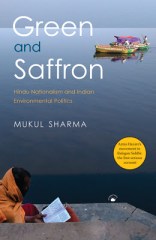
Green and Saffron: Hindu Nationalism and Indian Environmental Politics
My book Green and Saffron is just out. The book details and an interview are on the blog of Permanent Black. From the publishers’ notice:
This book examines contemporary environmental issues and movements in independent India on the one hand, and the development of Hindu conservative ideology and politics on the other. It includes the first thorough investigation of Anna Hazare’s movement in Maharashtra.
Mukul Sharma argues that these two social currents—environmental conservation and Hindu politics—have forged bonds which reveal the hijacking of environmentalism by conservative and retrograde worldviews. This, he says, constitutes a major aspect of hinterland political life which neither academics nor journalists have seriously analysed. Environmentalism and politics cannot be seen as separate from each other, for environmental issues are being defined in new ways by an anti-secular form of Hinduism. In turn, Hindu ideologues are gaining mileage for their ideology by espousing major environmental projects. Continue reading Green and Saffron: Hindu Nationalism and Indian Environmental Politics
Dilli
Dilli, the name most people of Delhi use for their city, is “a multiple-award winning documentary that has played in over 50 international film festivals across North America, South America, Africa, Europe and Asia”. Recently released online.
A few questions about a few thousand new auto-rickshaws in Delhi: Simon Harding
Guest post by SIMON HARDING
On Friday, Supreme Court judges KS Radhakrishnan and CK Prasad gave the go-ahead for 45,000 new auto rickshaw permits to be issued in Delhi. The move has the potential to drastically improve the city’s auto-rickshaw service for passengers and drivers alike, but many unanswered questions about distribution, implementation and numbers remain.
There are currently around 55,000 auto-rickshaws in the capital. The number of autos has not grown since the Supreme Court stopped the issuing of new auto permits in 1997 due to concern about the pollution emitted from the old dirty two-stroke petrol engines (now replaced with CNG).
The number has not remained frozen. Evidence suggests that it has actually fallen since 1997 because around 20,000 autos were lost during the CNG switchover as many drivers had their permits cancelled as they were too slow to convert their autos to the new fuel or simply could not afford the conversion. The fall in numbers contrasts with the growing demand for autos from Delhi’s population, which grew 21.6% in the period 2001-2011.
Continue reading A few questions about a few thousand new auto-rickshaws in Delhi: Simon Harding
Clean Chit to Law-Breaker Lavasa, a Blot on India’s Democracy and Environmentalism: NAPM
This press release was put out by the NATIONAL ALLIANCE FOR PEOPLE’S MOVEMENTS on 14 November 2011
Post-facto Green signal to Phase-I of Lavasa by the Union Ministry of Environment and Forests (MoEF) given on the November 9th is a blot on the democratic process and a shockingly dangerous precedent in the history of environmental action in India. MoEF’s improper action has infact sent shock-waves to eco-activists within the country and also across the world. Although it is not the first time in the long history of Indian Environmental clearance regime that political highhandedness has been used to subvert rule of law and the ends of justice, this case is unique since the clearance has disregarded well established evidence based on facts collected by no other than the MoEF itself. It is surprising that the Ministry’s decision has come in the wake of the case filed by the Maharashtra government against 15 persons including promoters of Lavasa Corporation for alleged violations of the Environment Protection Act (EPA), while the Maharashtra Chief Minister on the other hand has recommended that Lavasa be considered for environmental clearance, exposes the double standards of the state government. Continue reading Clean Chit to Law-Breaker Lavasa, a Blot on India’s Democracy and Environmentalism: NAPM
‘A Call for Rejecting 2011 Land Acquisition Bill’
This joint statement, signed and endorsed by various organisations and individuals from across India, named at the end, was put out on 12 November 2011.
The statement points out that:
Continue reading ‘A Call for Rejecting 2011 Land Acquisition Bill’
Esther’s Story – Battling the Land Mafia in Hardwar: Sumantra Maitra
Guest post by SUMANTRA MAITRA

When you are in journalism, something that slowly builds up in you is your immunity to suprise. You can feel fear, sadness, hopelessness, impatience, and even joy, though the last emotion is increasingly becoming a rare thing in this field. But whatever you feel, one thing is for sure, that you generally don’t get surprised. So when I initially heard about a lone Canadian woman of advanced age and energetic spirits, who had come to India at the age of 19 in the 1960s, fighting the land mafia in Hardwar, without any help from anyone, I was intrigued, but NOT surprised.
I decided to chase the story.
Continue reading Esther’s Story – Battling the Land Mafia in Hardwar: Sumantra Maitra
The nuclear energy debate in India: Response to Dr APJ Abdul Kalam from Dr Surendra Gadekar
Dr. SURENDRA GADEKAR is a well-published physicist of international renown, and a Gandhian. After an MSc and PhD (in theoretical physics) in 1979 from IIT Kanpur, he worked for two years as a post-doctoral fellow at Iowa State University, US and then two years as a research associate at IISc in Bangalore. He resigned in 1986 (a little before Chernobyl) to do antinuclear work when the Kakrapar Nuclear Power Plant was started. In 1987, he started Anumukti A Journal Devoted to Non-Nuclear India, and has carried out and published studies of the impact of nuclear energy around the plants at Kakrapar, Rawatbata and Jadugoda. He has also carried out a study at Pokharan, which is as yet unpublished. Dr Gadekar’s response follows:
Dr A P J Abdul Kalam and Mr. Srijan Pal Singh deserve a special thanks for their article in the Sunday edition of The Hindu (November 6, 2011) entitled “Nuclear power is our gateway to a prosperous future.”
Although most of what they write is irrelevant to their topic and the rest just plain wrong, the very fact that the establishment has to bring out its ‘Big Guns’ to answer the questions raised by the Koodankulam movement, is a testimony to the success of the movement.
Originally I had intended to write a point by point refutation of their article, but I have been deterred by the sheer length of the article. What I intend to do here instead is to paraphrase their points and answer them one by one. I would urge activists to visit the Hindu website at and to read the article in the full. I make this request specially so that friends can point out if I have been unfair in summarizing their work or have missed something important.
Development in the ICU: Swagato Sarkar
Guest post by SWAGATO SARKAR
Montek Singh Ahluwalia (MSA) has taken over the English news channels [okay, perhaps not all, but two “exclusive” interviews to Headlines Today and CNN-IBN’s FTN (F stands for ‘Face’, btw)] tonight to shoot back at his opponents and detractors, the likes of Roys, Drezes, Aiyars. The discourse had three parts: the sermon, gloss and proto-penance, and the affirmation of the revealed Truth.
The Planning of Commission of the sovereign, socialist, secular, democratic republic of India is not a Stalinist Planning Commission. It has the solemn duty of finding India’s rightful place in the world at the average rate of 8% per year. But India is a poor country [exclusive news which cannot be shared at Davos]. The GDP has to enlarge. Market is what will make it happen. But market has limits. Hence, welfare. But MSA is not happy that the Growth-Decline story did not work out as he would have wished. But that is no reason to be anti-Growth [now go to the first line of the para and read it all over again.]