Category Archives: Everyday Life

Three decades after Ameena, ‘Bride-Bazars’ continue to thrive in Hyderabad: Lovish Garg

Guest Post by LOVISH GARG

Ameena Begum was only ten years old when she was married to a man old enough to be her grandfather. The man- a 60-year-old Arab from Saudi Arabia had come to her house in Hyderabad to see Ameena’s elder sister for marriage but found her to be too ‘ugly and dark.’ He instead expressed desire to marry the young Ameena which the father readily agreed in exchange for a paltry sum of Rs 6,000.  She was later rescued by Amrita Ahluwalia- then an air-hostess with Indian Airlines after she found the young girl crying inconsolably on the Hyderabad-Delhi flight in-route to Saudi Arabia.

This incident put the global spotlight for the first time on the practice of ‘bride-shopping’ in the old city area of Hyderabad where minor Muslim girls from poverty-stricken families are married to older, mostly Arab men for a small sum of money. About three decades after this incident of August 1991- nothing much has changed and the practice of Sheikh marriages continue unabated with estimates suggesting around 2000 of such marriages performed only in the last one year.

The genesis of Sheikh marriages can be traced to the late 19th century when the Nizam of Hyderabad started hiring Chaush Arabs from what is the present-day Yemen. These men served as the military guards and later on high positions in the Nizam’s army and administration. The Arabs also brought with them the ritual of offering gifts and dowry to families who would marry their daughters to them. However, when oil stuck in the Gulf and situation in Hyderabad turned chaotic because of the rising peasant movement and later fall of Nizam- many such Chaush Arabs returned to their homelands.

Continue reading Three decades after Ameena, ‘Bride-Bazars’ continue to thrive in Hyderabad: Lovish Garg

Restore Our Vision of the Future: A Letter to the Kerala Chief Minister

Dear Comrade

I write to you as a citizen, so unlike the many eulogies and appeals you have received recently, this will not be sugar-coated. You have received much praise, which is indeed well-deserved. But most of us have done, and are still doing, our duty well, but there is no need to indulge in any more self-praise.

Continue reading Restore Our Vision of the Future: A Letter to the Kerala Chief Minister

A National Pledge for Kerala after the Great Deluge of 2018

  • Kerala is the land of my birth, and my life is intertwined closely and inseparably with the lives of all fellow-Malayalis. I will respect and remember this truth and will never think of my life as totally unrelated to nature, my neighbours, and the government that we elect to rule us.

Continue reading A National Pledge for Kerala after the Great Deluge of 2018

Some Reflections on Rape in India: Bobby Kunhu

Guest post by BOBBY KUNHU

A couple of days back, representatives of a group that wanted a petition demanding death penalty for all the accused in the Chennai gang rape case sought an appointment with me. I had clarified that I will not be part of any process demanding death penalty and would be glad to meet them on any other discussion they might want on the case. While, I managed to convince those who met me that death penalty cannot be a deterrent against rape, I suggested that instead of the petition they should spend their efforts to energize a change in the current discourse on rape in whatever small ways possible. The meeting ended with plans of a more substantive plan of action to discuss possibilities of advocating accessible spaces for children vulnerable to physical or sexual abuses at least in the neighborhood. I have summed up some of the points that I made at the discussion and I thought it would be important to share them with a wider audience.

Continue reading Some Reflections on Rape in India: Bobby Kunhu

Bollywood’s re-imagination of growing old: Tannistha Samanta

This is a GUEST POST by TANNISTHA SAMANTA

Although the Indian Hindi film industry has been known to be considerably less gerontophobic than the western popular culture (Hollywood, in particular), our aging Naanas and Naanis have been often represented as either able keepers of family “sanskars” or hyper-ritualized subjects (with added effect if in some diasporic setting)or as self-sacrificing elderly parents to prodigal children (or ruthless grandchildren). Continue reading Bollywood’s re-imagination of growing old: Tannistha Samanta

Thoothukudi Massacre – When State becomes Predator: Bobby Kunhu

Guest post by BOBBY KUNHU

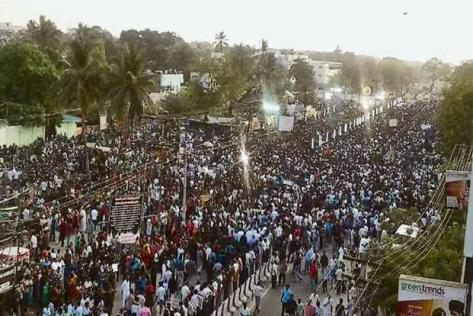
Thoothukudi protests – Image courtesy LiveMint

On 22nd May 2018, in what cannot be imagined even in a dictatorial regime, the police in Thoothukudi, Tamil Nadu – a South Indian state opened fire to kill, on a group of peaceful protesters marching towards the district administration office demanding denial of permission for expansion and closure of the existing copper smelting plant of Sterlite. Sterlite is a subsidiary of the London based corporation Vedanta, which has been dumping toxic waste all over this town since 1998 resulting in widespread health hazards including increase in reports of cancer. This massacre is unimaginable even in the worst dictatorial regimes, because not only were known national and international legal norms and protocols in crowd/riot control violated, but also because the video clippings that have surfaced after the massacre seem to indicate sufficient premeditation – with a plainclothes sniper on the top of a van being ordered to kill at least one person. Continue reading Thoothukudi Massacre – When State becomes Predator: Bobby Kunhu

Letter from former civil servants to Chief Secretary, Haryana on intimidation of Muslims offering namaz

Former civil servants have written open letters since 2017 (here and here), expressing their anguish at the unchecked attempts to spread hatred and discord among communities. Eleven of these civil servants have now written (on May 7, 2018) to the Chief Secretary of Haryana on the issue of harassment and intimidation of Muslims offering namaz in Haryana, by vigilante groups.

To Shri Depinder Singh Dhesi IAS,  Chief Secretary, Govt of Haryana.

Dear Chief Secretary,

We write to draw your attention to an urgent problem.

Over the last one month, Friday namaaz offered by the Muslim community in open spaces have been attacked and disrupted at several locations in Gurgaon district. These attacks have been organised by a dozen or so organisations (including the Vishwa Hindu Parishad, Bajrang Dal, Hindu Kranti Dal, Gorakshak Dal, Hindu Jagaran Manch and Shiv Sena) that have come together under the umbrella of the Hindu Sanyukt Sangharsh Samiti.

The attacks are coordinated, violent and clearly designed to terrorise and intimidate and are taking place across the district. Last Friday a group of hoodlums arrived in four jeeps at a namaaz venue on MG Road and started shouting abusive and provocative slogans at the assembled namaazis. Although a police force was present, it took no action to stop the sloganeering and threats. On the contrary, the police asked the namaazis to disperse. At a namaaz in Sector 40, the Imam who was leading the prayers was pushed to the ground. People who came for the prayers had no option but to fold up their mats and leave.

Continue reading Letter from former civil servants to Chief Secretary, Haryana on intimidation of Muslims offering namaz

Exposing the mirage of ‘Modicare’: Jan Swasthya Abhiyan

Statement by JAN SWASTHYA ABHIYAN

The Union Budget 2018-19 makes tall claims, with no clear road map for the health sector, one that is sensitive to the needs of the poor and the vulnerable population of India.

The allocations for Ministry of Health and Family Welfare (MoHFW) (including for AYUSH) have increased from Budget Estimate of Rs. 50,281 crore in 2017-18 Rs. 56,226 crore in 2018-19.

However, from 2017-18 (Revised Estimate) the increase is much lower, a mere Rs. 1374 crore, or just about 2.5 percent. This is a decline in real terms if we account for inflation, and Union Budget allocations for the health sector have stagnated at 0.3 percent of Gross Domestic Product (GDP). The 2017 target of National Health Policy (NHP) is 2.5 percent of GDP as health expenditure by the Government (both Centre and States) by 2025. However, with central allocations stagnating at the current 0.3 percent of GDP, it would not be possible to achieve this target.

The ‘Modicare’ mirage

Continue reading Exposing the mirage of ‘Modicare’: Jan Swasthya Abhiyan

International Mother Language Day: Ayesha Kidwai

Guest post by AYESHA KIDWAI

Happy International Mother Language Day. This day, declared by UNESCO, is straight up South Asia’s alley as it celebrates linguistic diversity and multilingualism. In other words, it celebrates each Indian.

Here’s what you can do from now on to celebrate it:
1. Resist Hindi imposition. An official language is not the national language. Persian was the language of administration for close to three hundred years, Sanskrit has been the language of knowledge for close to two thousand years, but neither were the only languages in the room. And we know what happened to those languages over time.

2. Defend diversity: Understand that, as in nature, numerical strength is not might (e.g., there may be more cockroaches in the world than humans), so if you belong to a large group of people, then this doesn’t mean that your language is better and more representative of the ‘heart and soul’ of ‘Indianness’. In India, literally hundreds of languages with populations ranging between 500 to 10,000 have flourished (many reported over all the Census) because

(a) mothers and fathers speak the language to their children in their homes beyond their school years, and Continue reading International Mother Language Day: Ayesha Kidwai

‘Why Ghalib appears so contemporary even today ?’ : Interview with Hasan Abdullah

Ghalib has fascinated generations of people and they have tried to understand/ interpret his poetry in their own way. For any such individual it is really difficult to recollect when and how Ghalib entered her/ his life and ensconced himself comfortably in one’s heart.

This wanderer still faintly remembers how many of Ghalib’s shers were part of common parlance even in an area whose lingua franca is not Hindustani. His andaaz-e-bayaan, his hazaron khwahishein, his making fun of the priest etc. could be discerned in people’s exchanges – without most of them even knowing that they were quoting the great poet.

To be very frank, to me, it is bewildering that a poet – who died over 150 years back – looks so contemporary or at times even a little ahead of our own times. Is it because, he talks about primacy of human being, at times philosophising about life,  and on occasions talking about rebelling against the existing taboos in very many ways? But then have not many other great poets have dealt with the same subjects/ topics? Continue reading ‘Why Ghalib appears so contemporary even today ?’ : Interview with Hasan Abdullah

Statement about the attacks on Dalits in Bhima Koregaon & the Subsequent developments in Maharashtra : Umar Khalid

Guest Post by Umar Khalid

I went to Maharashtra as I along with other activists and intellectuals were invited to come there. I along with others was a guest there. And I would remember fondly the love and support that I received in Pune and Mumbai. I would remember the resilience and enthusiasm of the people I met and their resoluteness to fight Manuvaad and centuries old casteist tyranny. I would remember the immense inspiration that I felt, when we paid homage to Jyotiba Phule and Savitribai Phule in Phule-wada, Pune. And, No I will not let two days of media trials by a few TV anchors, who are more of professional howlers, spoil these wonderful memories. I will not let their criminal cacophony and mindless vilification of me, Jignesh & others shadow my beautiful memories of Maharashtra.

The state of Maharashtra as well as the rest of the country is at a critical juncture today. On the one hand are forces in power who want to push our country back to many centuries and on the other are people who are resisting this Neo-Peshwahi, the casteist-communal-fascist regime of BJP-RSS. In my speech at Elgar Parishaad on 31st December 2017, I had said that the year 2018 is going to be a very challenging one. The last 3 and half years of the Modi Sarkar has exposed the BJP’s jumlas of Ache Din and Vikas as hollow, bitter and brutal lies.

As the General Elections of 2019 approach, BJP/RSS will now resort to creating civil strife amongst the people, polarising them on the basis of caste and religion and unleashing attacks on muslims and Dalits. The developments over the last few days vindicate me, a little too soon. Several regions of Maharashtra are in the midst of an acute agrarian distress. Both Marathas and Dalits are victims of this agrarian crisis that has been precipitated by the policies of both Modi and Fadnavis. The BJP/RSS regime has no resolution to offer to the farmers of Maharashtra. Therefore, unleashing attacks on Dalits through their hoodlums and portraying it as a caste clash between Dalits & Marathas will remain their only strategy. Continue reading Statement about the attacks on Dalits in Bhima Koregaon & the Subsequent developments in Maharashtra : Umar Khalid

Say NO to Aadhar – sign the petition

Sign the petition here.

Text of the petition

I’m Saying NO to Aadhaar

We the undersigned wish to place on record our opposition to the Aadhaar scheme which is being aggressively pushed by the government in complete violation of norms, procedures and Supreme Court orders. 

Many of us have resisted enrolment. Many of us are already enrolled. But today, we stand together to say NO To Aadhaar. 

We oppose Aadhaar because it violates our Constitutional rights and freedoms as citizens. 

We oppose Aadhaar because it undermines the foundations of our democracy, disempowering us as citizens while giving government the means to control every aspect of our lives. 

The mess created by Aadhaar is not a matter of poor implementation or “teething troubles” as claimed by the government.  Aadhaar cannot be fixed with some tweaking and tinkering. It is fundamentally flawed and  must be scrapped.      

We say NO to Aadhaar because  Continue reading Say NO to Aadhar – sign the petition

Failings Foretold – Reflections on the Unreflective Masculinity in the Time of the List: R Srivatsan

Guest post by  R. SRIVATSAN

It is with a recognition of a failing foretold that I read the different posts, letters and conversations around the list (the unmistakable one today).  That one’s teachers, seniors, peers and respected fellow academics have been named as having sexually harassed women cannot be digested without trouble.  I struggled to comprehend what had happened and went through all the emotions of denial and outrage, followed by shock, acceptance and hopefully a slowly emerging wisdom.

It then came back to memory that I too have sexually harassed women on three occasions.  However, I was in anonymous situations which were not explicitly relationships of power or authority.  And I did withdraw an overture (or a pass, to call it out by its name) when rejected.  Perhaps I have been cautious in not letting my shenanigans come back from the past to bite me.  Or perhaps I cleverly chose occasions and situations that would not be traceable to me.  Also, most importantly, perhaps those women who could have named and shamed me have been kinder and gentler than I deserved.  Finally, if I were a successful teacher today, perhaps my name too would have been on the list.  This response is based on the recognition that I virtually am.

Continue reading Failings Foretold – Reflections on the Unreflective Masculinity in the Time of the List: R Srivatsan

Response to ‘From Feminazi to Savarna Rape Apologist in 24 hours’: Sayantan Datta

Guest post by SAYANTAN DATTA

 [Note- The author believes that the structure of language has mirrored the patriarchal structure of the society, and therefore they practices aungendering mechanism persynally by neutralizing gendered roots of some words.]

I write this from my persynal discomfort with Prof.Menon’s recent response – this, although situated in the ‘Name and Shame’ debate, doesn’t derive anything more than grounding from it; this response is based on what Prof. Menon writes in the blog, and my somewhat naïve, but absolutely honest thoughts about it.

Firstly, I would like to myntion my constant and almost stagnant disapproval of how our loci as feminists are suddenly becoming one of legal negotiation – I refuse to engage in such a form of reimagining of feminism that, as she duly points out, has taken decades to strengthen its voice. She, in her response, points at ‘an atmosphere in which Indian courts are increasingly referring to ‘false’ complaints of domestic violence, and ‘misuse’ of rape laws, it is incumbent upon feminists to establish to the extent possible, context and explanation around our claims of sexual harassment’.

Continue reading Response to ‘From Feminazi to Savarna Rape Apologist in 24 hours’: Sayantan Datta

To Elphinstone Road

When a system is forced to run at four to six times its capacity for years on end, it doesn’t break – it was always broken. Elphinstone Road is the story of almost all urban infrastructure in our cities. It’s a template. It’s a warning. It’s our history, our everyday, and our future. It’s horrifying. It’s utterly banal.

When only death can make you think of repair, maintenance, upkeep, and expansion, then the everydayness of our infrastructure is a state of violence. When that death will still not make you change the way you manage that infrastructure, that violence is a siege, and we have Stockholm Syndrome. Not resilience, but a hostage situation.

The real challenge to us – all of us, in all our locations – is to realise the deep insufficiency of our anger if it is anger just at death. Anger is needed as much at the way we live, not just the ways in which we shouldn’t die.

Continue reading To Elphinstone Road

In Which Swaminathan Iyer McDonaldises the Tribals and Serves Other Junk Food : Shripad Dharmadhikary and Nandini Oza

Guest Post by SHRIPAD DHARMADHIKARY AND NANDINI OZA

Reposted from Manthan

What can one expect when one is faced with a blog by “India’s leading economic journalist” which is titled “Most of the ousted tribals are flourishing and loving it”? That there will be a large helping of fries on the side? That it will taste great but is really junk? In all of these expectations, one is not disappointed.

First, a little background. The leading economic journalist is Swaminathan Iyer, who along with a colleague carried out a survey of some tribals ousted by the Sardar Sarovar Narmada dam, comparing their situation with those left behind in the hilly areas near the river, and others in the hilly areas but near a mining project. On 10th Sept 2017, Iyer wrote a blog titled “Why many tribals don’t mind being ousted” based on his study. In a matter of just two days, Iyer has come out with a second blog based on the same study on the same topic. One wonders why. But then, again, one may not wonder, for the Sardar Sarovar has become an important topic with the Prime Minister scheduled to dedicate to the nation the dam on 17th Sept 2017.

The first blog was a classic case of misinterpretation of data, hiding the more important issues, and conclusions not supported by research findings, as we showed in our response. We showed that the tribals do mind being ousted. Now Iyer has written another blog on the matter, which skirts the issues we had raised in our response and omits some crucial survey findings given in the earlier blog, but still tries to show the Sardar Sarovar rehabilitation program as being successful.

Continue reading In Which Swaminathan Iyer McDonaldises the Tribals and Serves Other Junk Food : Shripad Dharmadhikary and Nandini Oza

हिंदुत्व और निजता का अधिकार : वैभव सिंह

Guest post by VAIBHAV SINGH

सुप्रीम कोर्ट के द्वारा निजता के अधिकार संबंधी फैसले ने निजी बनाम सार्वजनिक, व्यक्ति बनाम समाज, सरकार बनाम नागरिक के द्वैत को फिर बहस के केंद्र में ला दिया है।ऐसा समाज जहां गली-मोहल्लों व गांव-देहातों में निजी जानकारी छिपाने की कोई धारणा न तो रही है, न उसका सम्मान रहा है, उसी समाज में बड़े कारपोरेशन, सरकारी तंत्र व राज्य ने जब निजी जानकारियों का दुरुपयोग करना आरंभ किया तो गहरी प्रतिक्रिया हुई। इसका मनोवैज्ञानिक कारण यह है कि राज्य व बड़े कारपोरेशन्स समाज के लिए ‘बाहरी शक्ति’ के रूप में रहे हैं। वे पराए, अजनबी और अनजान तत्व हैं जो मनुष्य की निजी सूचना जुटा रहे हैं। उनके बाहरी शक्ति और विशाल संरचना होने के बोध ने निजी जानकारी के मुद्दें पर लोगों को उद्वेलित कर दिया। आधार कार्ड, सोशल साइट्स, सरकारी स्कीम आदि कई चीजें ऐसी रही हैं, जिनका सहारा लेकर नागरिकों की निजी जानकारियों मे बड़े पैमाने पर सेंध लगाई जा रही है और उन जानकारियों को निहित स्वार्थ वाले बेचेहरा व अज्ञात समूहों में शेयर किया जा रहा है। ऐसे माहौल में सुप्रीम कोर्ट का ‘राइट टु प्राइवेसी’ को स्वीकृति देते हुए यह कहना काफी मायने रखता है कि अनुच्छेद 21 के तहत जीने के अधिकार की सार्थकता तभी है जब व्यक्ति की गरिमा और निजता की भी रक्षा की जाए। व्यक्ति को यह पता हो कि उसकी निजी जानकारियां किसे, कब और क्यों दी जा रही हैं। कानून या राज्य के पास निजता को समाप्त करने के मकसद से देश का विकास, प्रशासनिक मजबूरी या डेटा-कलेक्शन की जरूरत का तर्क देने का विकल्प नहीं है।कोर्ट ने अपने फैसले में ‘सेक्सुअल ओरियंटेशन’ के बारे में टिप्पणी करते हुए इसे भी निजता के दायरे में रखा है। Continue reading हिंदुत्व और निजता का अधिकार : वैभव सिंह

The True Bargain : How Dr. Ram Rahim Singh Insaan Defined His Time

[ Random notes made in the wake of the conviction of Dr. Baba Ram Rahim Singh Ji Insaan of Dera Saccha Sauda for the offense of rape in Panchkula, Haryana, with some attention paid to the testimonials of his close friends. ] Continue reading The True Bargain : How Dr. Ram Rahim Singh Insaan Defined His Time

Committee for the Defense of Bhim Army Formed Amidst Continuing Repression

Image courtesy Indian Express

Even as the state government’s repression on Bhim Army continues, most of its leaders still in jail and some forced to leave Saharanpur, a committee has been formed for the defense of Bhim Army. (For background information, please see the ‘Note on Bhim Army’, appended at the end of this post, which carries links to informative videos as well). A group of activists and committed lawyers have been following up the legal struggle practically at their own expense – which at the moment involves getting the arrested activists, including the founder-President Chandrashekhar out of bail as the topmost priority. Some of the activists have started getting bail many still remain, including just ordinary people simply picked up by the people and framed by the police as Bhim Army activists.

However, getting the jailed activists out on bail is simply the first step in a long battle. The deliberate campaign of vilification that has been going on about Bhim Army has tried to paint the organization as ‘antinational’ and ‘instigators of violence’ who apparently have ‘Naxalite’ connections. Even though none of this could be substantiated and thus brought by the police into their charges against the jailed activists, the campaign of demonization has nevertheless continued through some sections of the media. Needless to say, such misleading campaign is meant to incite popular feelings against such groups who have been working mainly for education and self respect among the Dalit population in their area. Such a campaign of vilification cannot but affect the chances of wining the legal battle as well. It also ends up driving people who may have initially been sympathetic to their cause by sowing doubts about them in the popular mind.

It is with this concern in mind that a large number of citizens from different walks of life have come together to form the Committee for the Defense of Bhim Army, in order to mobilize all possible support for the embattled activists.

The Committee for the Defense of Bhim Army has been constituted comprising the following members from different walks of life:

Coordinators: Pradeep Narwal and Sanjeev Mathur

Treasurers: Presenjit Gautam and Nakul Singh Sawhney

  1. Anand Teltumbde, Civil rights thinker and activist, Mumbai
  2. Jignesh Mewani, Rashtriya Dalit Adhikar Manch
  3. Kancha Ilaiah, Political scientist, thinker and writer, Hyderabad
  4. Chandrabhan Prasad, Dalit thinker
  5. Radhika Ramaseshan, Senior journalist with Business Standard
  6. Harsh Mander, Human rights activist and Director, Centre for Equity Studies, Delhi
  7. Syeda Hamid, Former member, Planning Commission
  8. Om Thanvi, Senior journalist, former editor, Jansatta
  9. Sambhaji Bhagat, Cultural activist, Maharashtra
  10. Meera Velayudhan, Academic, Centre for Development Studies, Trivandrum
  11. Martin Macwan, Social activist, Gujarat
  12. Ratan Lal, Academic, Hindu College, Delhi University
  13. Sachin Mali, Cultural activist
  14. Sheetal Sathe, Cultural activist
  15. S.R Darapuri , Former IPS officer, social activist
  16. Colin Gonzalves, Lawyer
  17. Anand Patwardhan, Film maker
  18. Anil Chamadia, Journalist
  19. Subhash Gatade, Writer and social activist
  20. Akram Hassan, Social activist, Shamli
  21. Surender, Dalit youth activist, Delhi University
  22. N. Sukumar, Academic, Delhi University
  23. Rehana Adib, Social activist, Saharanpur
  24. Banojyotsna Lahiri, Academic and independent researcher
  25. Mohammad Zeeshan Ayyub, Actor
  26. Amar Singh, SC/ST Trade Union, Delhi University
  27. Dr. Mahesh Chandra, Bhim Army
  28. Sanjay Tegwal, Bhim Army
  29. Zakia Soman, Bharatiya Muslim Mahila Andolan
  30. Presenjit Gautam, Jati Todo Manch, Ghaziabad
  31. Pradeep Narwal, Dalit youth activist, Jawaharlal Nehru University
  32. Saroj Giri, Academic, Delhi University
  33. Tushar Parmar, IRS
  34. Sanjeev Mathur, Journalist
  35. Nakul Singh Sawhney, Film maker
  36. Praveen Verma, Research scholar, Delhi University
  37. Aditya Nigam, Academic, Centre for the Study of Developing Societies, Delhi
  38. Amar Paswan, Ambedkarvadi Chhatra Sabha, Gorakhpur
  39. Dhirendra, Poorvanchal Sena
  40. Anil Yadav, Rihai Manch
  41. Sagar Raghunath, Chhatra Bharati activist
  42. Dr J.K. Gautam, Doctor
  43. Dr. Sushil Kumar Gautam, Dalit Youth Activist, Chaudhary Charan Singh University, Meerut
  44. Subhashini Ali, Social Activist
  45. Mohinder Singh, Professor, JNU
  46. Prashant Nihal, Social Activist (Bihar)
  47. Atul Meena, Research Scholar JNU

Continue reading Committee for the Defense of Bhim Army Formed Amidst Continuing Repression

No to ‘Geri Route’, Bekhauf Azadi/ Reclaim the Night in Chandigarh: Janaki Srinivasan

Guest post by JANAKI SRINIVASAN

Reclaim the Night

If you are a resident of Chandigarh and came across pictures of the Bekhauf Azaadi Reclaim the Night and the Streets march of August 11 in the newspapers, it is most likely that you assumed it to be just another routine protest.  Protests in ‘the city beautiful’ do tend to follow a standard template. A small number gather in the Sector 17 plaza, banners are held, a few speeches made, photographs taken and a brief news report gets generated for the inner pages of the city supplement. In a small city, finding a mention in the newspapers is no indicator of the importance of one cause or one protest over others. Over the past decade, the administration has ensured this indifference, by physically redirecting political rallies- any event with the potential for large numbers- away from both government offices and public spaces to the outer perimeter of a severely gridlined map. The ‘Rally Ground’ neighbours the crematorium and the garbage landfill. Yet just as Le Corbusier’s monotonous plan and strict guidelines have been subverted by its residents to infuse vitality and uniqueness to the city, the protest template too sees a rare upheaval. Continue reading No to ‘Geri Route’, Bekhauf Azadi/ Reclaim the Night in Chandigarh: Janaki Srinivasan

Noida’s Domestic Workers’ Take on the ‘Madams’ – A Report from Ground Zero: Maya John, Sunita Toppo and Manju Mochhary

This guest post is an investigative report by MAYA JOHN, SUNITA TOPPO and MANJU MOCHHARY, who are associated with Gharelu Kamgar Union and actively involved in organizing domestic workers.

Recently, the otherwise docile workforce of domestic workers – most of whom are migrant labourers from the poorest states in the country – showed remarkable collective zeal against their wealthy employers in Noida (Uttar Pradesh). On the morning of 12th July 2017, a confrontation broke out between wealthy residents in a posh housing society, Mahagun Moderne in Noida Sector 78, and a gathering of agitated domestic workers and their families. The rampant exploitation of domestic workers, and the huge antagonism between their interests and those of their employers was directly exposed with the outbreak of this agitation.

The 12th July incident and subsequent developments have also revealed the sickening nexus between the police, employers, and right-wing politicians who have extended support to the wealthy residents. Within hours, an obvious labour issue, and the struggle of workers against the alleged illegal confinement of a female domestic worker was projected as a communal confrontation. With the accused employers and their sympathizers identifying the protesting workers and the missing domestic worker as ‘Bangladeshis’, the social media exploded with communal diatribe and messages of hate. Conditions for communal discord were consciously sown by Mahagun residents, putting at risk the lives of hundreds of workers living in neighbouring slums.

Continue reading Noida’s Domestic Workers’ Take on the ‘Madams’ – A Report from Ground Zero: Maya John, Sunita Toppo and Manju Mochhary