Category Archives: Excavation

Haryana Police and Administration Repress Ongoing Maruti Workers’ Struggle: MSWU

Guest Post by Maruti Suzuki Workers Union, Provisional Working Committee

Third Day of our Fast Unto Death – Police and Administration Gearing up for Further Repression of Our Struggle!

Friends,

Today is the third day of our fast unto death that began on 28th March. However it seems that the state is adamant on responding to our peaceful movement with increased violence and use of brute force. Today, when the local people of nearby villages and our family members came to lend their support to us at the site of the hunger strike, they were greeted by an increased number of policemen. When we tried to meet Haryana Industrial Minister Randeep Surjewala – we have been sitting outside whose residence for the last 6 days braving rains and the cold – he flatly refused to meet us. When the family members surrounded him demanding our rights then a large number of police men appeared at the site and the minister left the place using the police to disperse the people. Now there are 2 police vans stationed here and the small shopkeepers and tea stall owners in the area are being threatened by the administration to withdraw their support from our movement. When the administration realized that we are not going to abandon our struggle because of their threats then they put pressure on the owner of the plot where we are sitting and tried to use him force to us out.
Continue reading Haryana Police and Administration Repress Ongoing Maruti Workers’ Struggle: MSWU

When the Vishwa Hindu Parishad went time travelling: Ilija Trojanow and Ranjit Hoskote

3_3

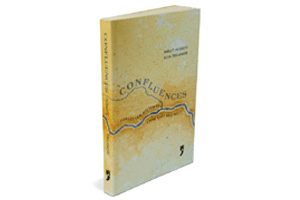
This is an excerpt from Confluences: Forgotten Histories of East and West by ILIJA TROJANOW and RANJIT HOSKOTE (Yoda Press, 2012). In defiance of the current tide of national and cultural neo-tribalism, the authors argue that the lifeblood of culture is confluence. No culture has ever been pure, no tradition self-enclosed, no identity monolithic. Employing a variety of approaches, ranging from the essayistic to the poetic, from rigorous historical analysis to the playfulness of fiction, they follow the journeys of stories, ideas, people and songs, and trace the umbilical connections between Europe and Asia, Zoroastrianism and Christianity, Western revolutionary thought and the annihilatory politics of Jihad and Hindutva. In this particular section, titled ‘Travelling Back in Faith’, history is presented through the prism of science fiction:

vhp2The Vishwa Hindu Parishad (VHP) is a powerful organization founded on the belief that the Hindu religion is eternal and unvarying, that it has existed in India for thousands of years (the VHP’s chronological estimates vary between 8,000 and 50,000 years), and that its essence has never been affected by any foreign influence or borrowing. Hinduism is unique to India, and India is a uniquely Hindu country: such is the logic of the VHP. And yet, occasionally, the VHP is assailed by a sense of doubt. It is all very well to thunder at Muslims and Christians in self-congratulatory public meetings, its leaders say to themselves, but it would be nice to have some proof with which to fight off the scoffing scientists. And so, as documents recently made available to researchers reveal, the high command of the VHP decided to sponsor a time travel project, sending a fact-finder back to the glorious Vedic age to collect evidence of how the ancestors of the Hindus performed their rituals, worshipped their gods, and conceived of their relationship to the Divine. Continue reading When the Vishwa Hindu Parishad went time travelling: Ilija Trojanow and Ranjit Hoskote
A Political Hanging: Nirmalangshu Mukherji

Guest Post by Nirmalangshu Mukherji

Since the secret hanging and burial of Afzal Guru in Tihar jail, many writers have justly condemned the manner in which the government conducted the execution . However, once the state decides to hang a person, the issue of whether the killing took place in a ‘transparent’ and ‘dignified’ manner is a largely aesthetic one. The process that initiated the killing continues to be of primary epistemic concern.

No doubt the manner and timing of the hanging clearly indicates that the government had ulterior political motives in mind. Yet, these motives are better understood in terms of the political considerations that guided the case of Afzal Guru from his arrest to the rejection of his mercy petition. His hanging within a few days of the presidential rejection was just the inevitable culmination of this political process.

Continue reading A Political Hanging: Nirmalangshu Mukherji

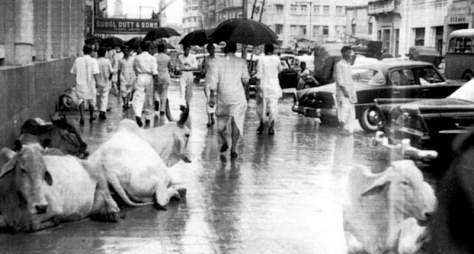
Photographs of Calcutta by Che Guevara, 1959

These three photographs were taken by CHE GUEVARA in Calcutta (now Kolkata) in 1959. The photos are taken from the book Self Portrait by Che Guevara, published by the Centre for Che Studies, Havana, in collaboration with Ocean Books, Australia. They were obtained by Jansatta editor Om Thanvi from the Centre for Che Studies in 2007, and come to us courtesy Thanvi.

1-che-gu-18

Continue reading Photographs of Calcutta by Che Guevara, 1959

When Che Guevara came to India: Om Thanvi

Update: The Hindu has acknowledged the problem with Mr Manash Bhattacharjee’s article not crediting the source of its information, and has edited his article online to give credit to Mr Thanvi. The paper has also added this note at the end of the article: “This article has been edited to include the original source of Che Guevara’s remarks on India, made during the revolutionary’s first visit to the country. All of his quotes have been drawn from Om Thanvi’s ‘The Roving Revolutionary,’ published originally in Hindi in Jansatta and later in English in Himal magazine in December 2007.”

Also see Mr Bhattacharjee’s response in the comments section of this post.

"Prime Minister Mr Jawaharlal Nehru welcoming Che Guevara in his Teen Moorti residential office on July 1, 1959)." Photo by Kundan Lal of Photo Division, Government of India.
“Prime Minister Mr Jawaharlal Nehru welcoming Che Guevara in his Teen Moorti residential office on July 1, 1959).” Photo by Kundan Lal of Photo Division, Government of India.

(In August-September 2007, Om Thanvi, editor of Jansatta, a Hindi daily of the Indian Express group, published in his paper a series of articles giving a vivid account of Ernesto ‘Che’ Guevara‘s historic 1959 visit to India. The articles were accompanied by a few photographs of Che in India: Che talking to peasants in a north Indian village; Che being interviewed by All India Radio at Hotel Ashok where Che and his six Cuban colleagues were staying; Che in a warm handshake with Prime Minister Jawaharlal Nehru at Teen Murti Bhawan, and so on. Jansatta even carried a sketch drawn by the famous cartoonist Abu Abraham, on which Che put his initials on the collar in 1962. Continue reading When Che Guevara came to India: Om Thanvi

The love story of Quli Qutub and Bhagmati, and other tragic endings

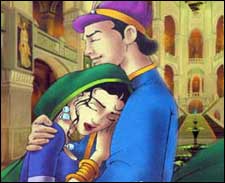
Still from an animation film, 'Bhaggmati'
Still from an animation film, ‘Bhaggmati’

For some strange reason, all, or almost all love legends have a tragic end. I cannot recall too many that end with “and they lived happily ever after”. In fact, Romeo-Juliet, Laila-Majnun, Heer-Ranjha, Sohini-Mahiwal, Sassi-Pannun, Dhola-Maru, Saif-ul-Malook-o-Badi-uj-Jamaal – the list of unhappy lovers separated by the cruel hands of society, scheming relatives, jealous rivals, misunderstandings and plain simple divine design is endless.

Amidst such tears and tragedies, poison-tipped swords and daggers, deceit and chicanery, there is a story of love that makes you believe that this world can’t be all bad. The most fascinating and enduring quality of this legend of love is that it is not a legend, it is fact, well mostly. And this is how it goes. Continue reading The love story of Quli Qutub and Bhagmati, and other tragic endings

The Hyderabad blast investigations are doomed to fail: JTSA

This release was put out today by the JAMIA TEACHERS’ SOLIDARITY ASSOCIATION

hyderabad-blasts-probe-feb2

In a grotesque replay of every investigation that follows a bomb blast, prejudice, misinformation and media blitz rules the direction of Dilsukh Nagar bombings investigation too.  The same suspects and shadowy organizations are being paraded as executors of the Hyderabad bombings.

But should we be surprised? A day after the Home Minister’s humiliating capitulation to the RSS-BJP, virtually giving them and their affiliates a clean chit, the message to the investigating agencies must have been crystal clear.  When the Home Minister himself discards the bulk of allegations and material pointing to the existence of Hindutva groups in planning and executing terror attacks, should we really expect the investigating agencies, whose past record inspires hardly any confidence, to sincerely pursue all possible angles and leads? This, when Messrs Aseemanand and company are being tried for the 2007 bombing of the Mecca Masjid.  By asserting that Hyderabad bombing may have been a reaction to the execution of Kasab and Afzal Guru, the Home Minister himself foreclosed any possibility of unbiased investigation. Continue reading The Hyderabad blast investigations are doomed to fail: JTSA

On Ram Setu: ‘Mahakaal ka ling kiya hain?’

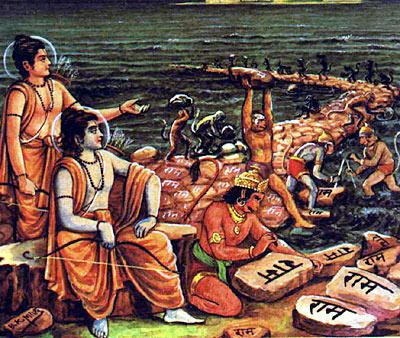
The Government of India again seems to be in the mood of going ahead with the Sethusamudram Shipping Canal Project that would reduce travel time for ships around coastal Tamil Nadu and Sri Lanka, and bring economic advantages to both countries. The project involves breaking limestone shoals that some regard to be the remains of the mythological Ram Setu. The controversy is an old one. In 2007, I had interviewed Hindutva ideologue Bharatendu Prakash Singhal, who was particularly vocal against the ‘destruction’ of the limestone shoals. Singhal is a former Rajya Sabha MP and a retired Indian Police Service officer. The bits from the interview that were directly about the Ram Setu controversy had appeared in Tehelka, but Singhal was more interested in talking about “mind, body and soul” than about Ram Setu. Here are the unpublished bits – though I had put them on my blog back then. Every word was transcribed faithfully from the recorded audio. Continue reading On Ram Setu: ‘Mahakaal ka ling kiya hain?’

22 Years after Kunan and Poshpora, Rethinking Kashmir: Abhijit Dutta

Guest post by ABHIJIT DUTTA; all photographs by the author unless otherwise mentioned

1-kunan 4

It looks like any other village in Kashmir.

You go past a wooden bridge, past open fields winter-barren and wet with rain. Past mountains with snow on their chin. Past wistful looking poplars. Past a brook with clear water. Past grumpy apple trees gnarled like a grinch.

Then the road narrows, and homes – of timber and brick – come into view. Some have fences, unpainted wood. Heaps of hay, dung cakes, piles of dried leaves left to smoke. Ditches and dykes choked with snowmelt. Leafless walnut trees and brunette willows. The chinars, wild redheads just months ago, now old and arthritic. There is a government school on the right, a madrassa on the left. A few houses of stone, fewer of concrete, tin roofs over all.

Before you walk any further, the village ends. The next village is Poshpora. Like Kunan before it, it looks like any other village in the valley. The two villages are so close that people no longer call them by their individual names. Everyone knows this two-in-one village as Kunan Poshpora. Continue reading 22 Years after Kunan and Poshpora, Rethinking Kashmir: Abhijit Dutta

Footprints on a Timeline: Gayatri Ugra

Guest post by GAYATRI UGRA; photographs by JAYANT UGRA

1-20 _MG_2200

“I travel so that people will lose track of me. Then I write, so they can find me again.”

I read these lines by Pierre Foglia, and I know nothing else about him. I do know more about why I travel: to retrace lost tracks. And why I write: not for people to find me but for me to find my own self. The last journey I made was just that. A long walk back into my past, and from there to the present in Kashmir, a living, growing, tense reality that I had to visit.

Facebook never served a better cause than ours when we planned our trip last June. On the spur of a moment of nostalgia, I posted this message on my page: “A family holiday in Kashmir. Any takers? All we need now is a travel agent and a motivator.” I could not have anticipated the response: so many of us wanted to come, hoped to come. My brother Gopal took up the task of making travel plans, reservations, bookings for accommodation, and ultimately made it happen for the eight of us that finally went. Continue reading Footprints on a Timeline: Gayatri Ugra

Ageless chisel: The rock-cut caves of Ellora

Cross-section of a frieze in Cave 16, or the Kailasa Temple

The Ellora caves, locally known as ‘Verul Leni’ and located on the Aurangabad-Chalisgaon road, were, like the Ajanta caves,carved out of the terraces that were formed as a result of the great movements in the crust of the earth that began millions of years ago. A part of land that had broken off the Australian landmass drifted north and began to push against the Laurasian plate about 65 million years ago, giving birth to the Himalayas at one end and triggering hectic volcanic activity at the point of contact. The resulting waves of lava flow solidified into layers, or terraces, spread across hundreds of miles. Both Ajanta and Ellora are located on this massive lava flow known as the Deccan trap. Incidentally, the Deccan trap is full of man-made caves. Maha-rashtra alone has about 1,200 big or small caves or big and small cave clusters and close to 75 per cent of them (about 900) are Buddhist caves. Continue reading Ageless chisel: The rock-cut caves of Ellora

Let’s Meet – On Ajay Bharadwaj’s ‘Milange Babey Ratan De Mele Te’: Virinder S Kalra

Guest post by VIRINDER S KALRA


Milange Babey Ratan De  Mele Te (Let’s Meet At Baba Ratan’s Fair); Length: 95 minutes, Year 2012; Directed and Produced by Ajay Bhardwaj

Ajay Bhardwaj’s third documentary film based in East Punjab, India, takes us into a deeper exploration of some of the themes touched upon in his previous works: Kitte Mil Ve Mahi and Rabba Hun Ke Kariye. Indeed, at one level Milange Babe Ratan De Mele Te is about a journey of an impossible return to a pre-Partition Punjab in which religious identity was fluid and the sacred and profane intermingled and fused. Continue reading Let’s Meet – On Ajay Bharadwaj’s ‘Milange Babey Ratan De Mele Te’: Virinder S Kalra

The Country With A ‘Balancing Office’: Suvaid Yaseen

Guest Post by Suvaid Yaseen

Of late there has been a rising trend of Kashmiris – professionals, artists, writers, musicians et al presenting their works on Kashmir on a much wider level than before. The larger impression that comes out of it all is that the narrative has been taken up by the people for themselves. A welcome contrast to outsiders flying in and telling us what we want, how we think, and what is actually good for us.

So, every time a Kashmiri artist is presenting his/her work on Kashmir, the expectations among Kashmiris tend to go up. People start feeling that finally their narrative, of how they saw the things, what they went through, would be told to the world, bereft of the lenses of security paradigm through which Kashmir has been usually viewed  –  a strategic territory, with not-so-strategic, dispensable people.

This can be fortunate as well as unfortunate. On one hand there is a ready audience to appreciate and applaud your work. On the other hand there are expectations to ‘perform’. For the artists themselves, there are additional pressures of ‘balancing’ and having a ‘non-biased’ view from the other side.

Continue reading The Country With A ‘Balancing Office’: Suvaid Yaseen

Was an Indian soldier decapitated at the Line of Control or not?

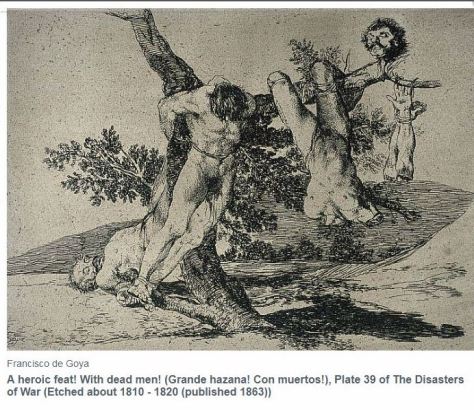
"In this sickening image, one of the most extreme in The Disasters of War series, the naked bodies of mutilated, tortured and castrated men are shown hung from a tree as a warning to others. Goya was one of the first artist to reveal the grim reality of warfare, stripped of all chivalry, romance and idealism. He captured something quintessential about modern war which has found resonance with succeeding generations of audiences. This print was controversially adapted in the 1990s by the artists Jake and Dinos Chapman. It formed the basis for one of their gory, three-dimensional tableaux, in which scenes from the series were recreated using dismembered mannequins covered in fake blood." - Image and caption via nationalgalleries.org
“In this sickening image, one of the most extreme in The Disasters of War series, the naked bodies of mutilated, tortured and castrated men are shown hung from a tree as a warning to others. Goya was one of the first artists to reveal the grim reality of warfare, stripped of all chivalry, romance and idealism. He captured something quintessential about modern war which has found resonance with succeeding generations of audiences. This print was controversially adapted in the 1990s by the artists Jake and Dinos Chapman. It formed the basis for one of their gory, three-dimensional tableaux, in which scenes from the series were recreated using dismembered mannequins covered in fake blood.” – Image and caption via nationalgalleries.org

*

In a skirmish on the Line of Control on Tuesday, 8 January 2013, did Pakistani soldiers behead an Indian soldier or did they not? Or did they behead two soldiers and take away the head of one of them? Or did they behead one and slit the throat of another? Reports in the Indian media have left me utterly confused. I’ll let you decide. Continue reading Was an Indian soldier decapitated at the Line of Control or not?

The muezzin’s last call at Babri Masjid: Krishna Jha and Dhirendra K Jha

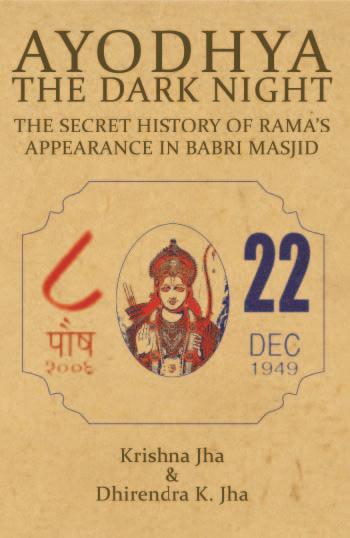
This guest post by KRISHNA JHA and DHIRENDRA K JHA is an excerpt from their book, Ayodhya: The Dark Night, about the original Ayodhya conspiracy of 22 December 1949

Published December 2011 by HarperCollins India;Rs 499; Pages 232
Published December 2011 by HarperCollins India; Rs 499; Pages 232

The sound of a thud reverberated through the medieval precincts of the Babri Masjid like that of a powerful drum and jolted Muhammad Ismael, the muezzin, out of his deep slumber. He sat up, confused and scared, since the course of events outside the mosque for the last couple of weeks had not been very reassuring. For a few moments, the muezzin waited, standing still in a dark corner of the mosque, studying the shadows the way a child stares at the box-front illustration of a jigsaw puzzle before trying to join the pieces together. Continue reading The muezzin’s last call at Babri Masjid: Krishna Jha and Dhirendra K Jha

January 6, 1993 – A Town Torched: Remembering the Sopore Massacre Twenty Years After: Sameer Bhat

Guest post by SAMEER BHAT

In Memory of the Massacre in Sopore, Kashmir, by the 94th Battalion of the Border Security Force on January 6, 1993.

[YouTube Video – Compiled from various sources – including a report by Savyasachi Jain, now with NDTV, for Eyewitness – a VHS delivered video news magazine active in the early 1990s.]

There was sound of a huge bang that morning, like someone blowing up a cartful of dynamite. Just before the cockcrow. Most of the townspeople were asleep. The dawn prayers had thin attendance, mostly because it gets very cold in January. By nine o’clock a military patrol was out, doing rounds of the main marketplace. Suddenly gunmen emerged from a narrow alley and shot random bullets at the party before quickly disappearing in the maze that old Sopore is. Taken rather off guard, the security detail ran back to their barracks only to emerge again as Frankenstein’s monsters, spitting hell fire. In the next fifty odd minutes, they murdered fifty five people in cold blood. And burnt the town down. Continue reading January 6, 1993 – A Town Torched: Remembering the Sopore Massacre Twenty Years After: Sameer Bhat

RSS Supremo Mohan Bhagwat’s Thoughts on Rape

The RSS supremo Mohan Bhagwat (or to call him out in the way he is referred to in the Sangh – Sarsanghchalak Param Pujya Shri Mohan-ji Bhagwat-ji) has now joined the pavilion of eminent Bharatiya moustachioed misogynists. In a breathtakingly revealing statement, he has told us that rapes happen in India, not in Bharat. What he means is that rape only occurs in urban areas where the influence of Paschatya Sanskriti (western culture) leads women astray into being raped by men unable to help or control themselves in the face of the assault of women, out and about, by day and night, defying Mohan Bhageat’s Sangh-mandated Lakshman Rekha.

When an upper-caste landlord in a village claims his ‘droit de seigneur’ (land-owner’s claim) with a Dalit woman, it is not rape, it is a yagya, a time honoured shastric ritual. When husbands persuade minor wives on their ‘suhaag raat’ with a few disciplinary measures that leave them with black eyes and sore limbs, it is not rape, it is the carrying out of an Upanishadic injunction. When swamijis, babajis, acharyas and prachaks have their way with ignorant and nabalik shishyas, it is not rape, it is the partaking of the naivedyam of a woman’s body. It is the realisation of a ‘pushp ki abhilasha’, even if the pushp gets pushed around a little bit in the process. Continue reading RSS Supremo Mohan Bhagwat’s Thoughts on Rape

Full report: Alleged Perpetrators – Stories of Impunity in Jammu & Kashmir

Given below is a report put out this morning by the Srinagar-based INTERNATIONAL PEOPLES’ TRIBUNAL ON HUMAN RIGHTS AND JUSTICE IN INDIAN-ADMINISTERED KASHMIR [IPTK] and ASSOCIATION OF PARENTS OF DISAPPEARED PERSONS [APDP].

Given below is a press release and the executive summary of the report.

Continue reading Full report: Alleged Perpetrators – Stories of Impunity in Jammu & Kashmir

Satyameva Jayate? On the impending execution of Afzal Guru

Someday, we will count how many minutes it took for television in India to start baying for Afzal Guru’s blood (once again) after Ajmal Kasab was buried in Yerwada Central Jail in Pune.

A man called Mohammad Afzal Guru, son of Habibullah Guru, currently resident in Ward Number 6 of Jail Number 1 in Tihar Central Prison in Delhi will hang to satisfy the bloodlust of the Indian Republic, unless the President of India decides otherwise. This text is an attempt to make us think about this decision and its ramifications carefully.

Continue reading Satyameva Jayate? On the impending execution of Afzal Guru

Kerala Police arrest one more for hurting some feelings: Sajan Venniyoor

This just in from our Thiruvananthapuram correspondent SAJAN VENNIYOOR

Trivandrum, 21 Nov: An unnamed youth from Thiruvananthapuram was arrested by the Kerala Police cyber-crime squad for allegedly ‘liking’ a Facebook post written by a complete stranger. The Facebook account in the name of ‘Indian Patroit Who Fuking Hates Everybody’ – believed to be an alias – carried a comment that was allegedly critical of something reportedly concerning a recently deceased non-Malayali. The Facebook comment was also withdrawn soon after the arrest of the Thiruvananthapuram native under sections 505 of IPC (“promoting ill-will among groups with different imaginary friends”) and 66A of the IT Act (“causing annoyance while belonging to a minority group”).

It is not known what the offensive post said, but police sources confirm that while the comment “did not actually hurt religious sentiments in the proper sense of the word”, it jolly well hurt the feelings of people who knew someone who had some kind of  sentiments that may well have been hurt had he been alive.

In his defence, the unnamed youth submitted before the Judicial Magistrate First Class, Vanchiyoor, that he had clicked on the Facebook button only because he violently disagreed with the post, thinking it said “Yikes”.

His lawyer confirmed later that the youth, who was let off on bail, was either dyslexic or from Ulloor.

(Clarification: Some Of Us Are Actually Dyslexic and/or From Ulloor. Any offence caused is therefore to us.)

Fifty villages

This report was released in Srinagar today by THE CITIZENS’ COUNCIL FOR JUSTICE. It is a statistical study of violence in north Kashmir between 1990 and 2011