Category Archives: Government

Beware BJP’s Filthy Campaign and Desperate Bid to Steal the Elections!

Avam characters

As the AVAM drama unfolds and much more detective work remains to be done, some other disturbing news has also started trickling in. A journalist friend got a mail from an official yesterday, who confided to this journalist:

Dear Sir,
We would like to bring to your notice that our volunteer Mr. XYZ (name withheld for obvious reasons) has attended the preparation of Electronic Voting Machine on 31st January & 1st February and he noticed some discripencies in the EVMs of Booth No. 26, 47A, 75 & 87.
Whichever button he was pushing the vote was being casted in favour of BJP only.
However, after his objection the EVM machines were replaced.

We of course, do not know how many such machines there are.

Meanwhile, another friend – an academic – sent this mail, which tells us something of the sense he got from a tour around Delhi areas – along with his deep suspicion that once again, through some machinations, the elections may be stolen:

This is just to tell you that I accompanied two journalist friends to go on an election tour of Delhi (targetting trader bases with BJP support) and most of the people that we talked to openly supported AAP. Attitudes to Modi ranged from indifference to criticism for blabbering away and not doing anything to plain abuse. Many have started identifying the BJP as a “syndicate” party i.e. as a party of rich businessmen. Above all people think that the 49 day government was a period they felt empowered – and they compare it to the lack of any improvements under Modi for the last 8 months!

This still does not let me lose my belief in the worst: But it gives me a warm feeling when I keep my fingers crossed!

Continue reading Beware BJP’s Filthy Campaign and Desperate Bid to Steal the Elections!

Gandhi’s Assassins

“It is far too early to dismiss the possibility of a future Hindu State in India. However, the possibility does not appear a strong one. The secular state has far more than an even chance of survival in India” (India as Secular State, 1963).

It was the early sixties when American political scientist Donald Eugene Smith commented about the “possibility of a Hindu state in India”. Today, even to a layperson, the secular state in India seems to be standing on very weak foundations, and the possibility of a Hindu State is far stronger than it was half a century ago, in 1963.

Perhaps, a pertinent expression of this transformation of India is the metamorphosis we witness in the image of Nathuram Godse – the assassin of Mahatma Gandhi, as part of a conspiracy which was hatched by many bigwigs of the Hindutva Supremacist movement. The makeover in the image is for eveyone to see: from a murderer, a conspirator, terrorist to a ‘martyr’ who supposedly ‘deserves’ a temple in his name everywhere. We also learn that after the ‘successful’ run of a drama in Marathi called Me Nathuram Boltoy (I Nathuram Speak) for the last few years, plans are afoot to have a movie made on him, supposedly to communicate his ‘viewpoint’. With the changed political situation, where even the censor board of the country is populated by rightwing people, one can guess that it won’t have any difficulty in release. And with an ambience which is more prone to illiberal ideas, one can as well prophesy that it will have a good run.

Read the full text here.

Where Have all the Swings gone?

School kids hold up a sign given to them by activists at a demonstration at Langata Primary Road School.Photo Courtesy : Brian Inganga/AP

Who ‘stole’ our playground ?

There are occasions when simple questions raised by innocent people – even by kids – invite brutal wrath of the authorities. The kids of Langata Road Primary School in Nairobi learned it a very hard way.  Back from Christmas vacations when they found that the playground of the school – which provided them enough space to unwind themselves – has just ‘disappeared’ behind ‘iron walls’ with security people guarding it, they had raised this simple question. Sympathetic teachers had told them that a dominant politician in Nairobi, who wanted space to park cars of people visiting a neighbouring mall owned by him, has ‘taken over’ their playground.

Definitely it was not an unusual event – at least in Nairobi which happens to be one of the fastest growing real estate markets in the world – where real estate mafias are so powerful that with the connivance of political masters they are able to ‘acquire’ vacant or unmarked land plots without much difficulty. And land belonging to public schools is considered ‘under threat’ of land sharks as it is not properly delineated to them.

But nobody could have predicted that the kids in Langata School would prove to be biggest stumbling block in their ‘peaceful’ expansion and would literally ‘make history’. As rightly pointed out by an analyst these kids did what ordinary Kenyans are rarely able to do: defend disappearing public space. Continue reading Where Have all the Swings gone?

Resist the Shrinking of Democratic Spaces on Campus: Concerned Students of Tata Institute of Social Sciences, Mumbai

Guest post by Concerned Students of Tata Institute of Social Sciences, Mumbai

Universities are thought to be just, equal and free spaces. However the history of access to universities for certain sections of the society is not very old. Discrimination has been institutionalized and structurally carried out on the basis of caste, race, gender, religion and sexual identity even in the space of the university. However, over time there has been an increase in assertion from the marginalized groups in university spaces that has caused some disquiet among administrators. This is evident from various incidents that are taking place on a day to day basis in university spaces.

Kashmir and North East are two regions which have been frequently used by the Indian state to claim its sovereignty through grave violation of basic rights of people residing in these areas. Contrary to our beliefs, campuses and universities also reflect the larger politics of our society.

We, a group of students invited Dr Dibyesh Anand for a lecture titled “Deliberating Kashmir: Beyond AFSPA and Chutzpah” at the Tata Institute of Social Sciences, Mumbai on 3rd January 2015. Dr Dibyesh Anand is the Head of Department of Politics and International Relations at the University of Westminster, London. He is an acclaimed scholar on violence and States in South Asia and has also written and published extensively on his area of expertise. He has also been a visiting professor to the University of California Berkeley, the Australian National University, the Centre for Bhutan Studies, the Jawaharlal Nehru University and the Central University of Hyderabad. Following the procedure we had booked the room four days prior to the programme and invited students and faculty in TISS and outside to attend the talk. Continue reading Resist the Shrinking of Democratic Spaces on Campus: Concerned Students of Tata Institute of Social Sciences, Mumbai

Bhopal Victims Neglect a Consequence of Disinvestment and Low Value of Life: Sagar Dhara

Guest post by SAGAR DHARA

On 2 Dec 1984, Bhopal’s unsuspecting population was hit in the stealth of the night by methyl isocyanate (MIC), a killer gas that leaked from the Union Carbide plant located on the northern edge of the city.  The official immediate death toll was 2,259, though journalists estimated it to be thrice that number.  Government of India now admits that the cumulative number of deaths is more than 20,000.

At first glance, the event looks like an engineering accident.  Wash water seeped through a closed valve, got into MIC Tank 610 and triggered a runaway reaction that ruptured it and spilt 42 tonnes of MIC.  Low wind speeds made the heavier-than-air gas cloud hug the ground at high concentrations as it drifted towards nearby slums.  The highly corrosive gas caused massive edema in the lungs.

Economics is root cause for accident

The cause for the accident can be traced to low product sales that made the company disinvest in safety and environmental systems. Prior to 1980, Carbide formulated Sevin, a carbamate group pesticide, with imported chemicals at their Mumbai plant.  Because of Sevin’s popularity, Carbide built a new plant in Bhopal to manufacture it.  By then synthetic pyrethroids, the next generation pesticide, started pushing carbamates out of the Indian market.  Consequently, the Bhopal plant never produced more than 50% of its installed capacity and its financial returns were unhappy. Continue reading Bhopal Victims Neglect a Consequence of Disinvestment and Low Value of Life: Sagar Dhara

Swachchh Bharat – Beyond Charity and Symbolism to Legal Rights and Duties: Sujith Koonan

Guest post by SUJITH KOONAN

Sanitation and cleanliness seems to have become buzzwords. Celebrities and political leaders have started talking about sanitation. The call for Swachchh Bharat by the Prime Minister of India was welcomed by many taking brooms in their hands. Several institutions have uploaded prestigiously the photographs of its employees carrying brooms. All of a sudden, the sanitation consciousness seems to have increased in the country. Indeed, it is a good sign that we have started thinking and talking about the ‘unmentionables’ – shit and dirt.

Many of these actions and responses are symbolic and rhetoric in nature. While it may be acceptable to begin with symbolism, the seriousness needs to be demonstrated through concrete long term plans and actions. One can hope that the government will take such steps. One way to show that the ongoing sanitation talk is serious, and the state is sincere about it, is to recognise the legal aspects of sanitation. There are mainly three issues where the government has been a failure in fulfilling its constitutional and legal duties and these are supposed to be at the forefront of the Swachchh Bharat Mission (SBM). Continue reading Swachchh Bharat – Beyond Charity and Symbolism to Legal Rights and Duties: Sujith Koonan

Under the Saffron Flag

The Long Forgotten battle against Hindutva Terror

Title page1
Not some time ago a very brief write-up by Younus SK had shared news items  revealing Hindus posing as Muslims to be committing mischief to whip up anti-Muslim frenzy.

If Amiya Sarkar was found to be behind putting up posters in Kolkata under the name of “Jamaat ul Mujahideen Bangladesh” threatening to bomb West Bengal, a VHP worker Deshraj Singh was arrested by police in Muzaffarnagar for placing slabs of buffalo meat in three Hindu temples, one Sushil Chaudhary was caught for sending threat mails to Rajasthan ministers under the name of ““Indian Mujahideen (IM) terrorist” , a Hindu boy adopting a fake Muslim identity was held by Bangalore police for posting threatening tweets to bomb the city.

Underlining the fact that in all the four cases, which were reported in the month of December itself from different parts of the country, and the manner in which police released them with minor rebuke, without finding any larger terror conspiracy behind their actions convincing ‘us that the men were stressed, depressed or mentally unsound’ it had posed a simple query whether they could be considered ‘random events or an RSS ploy’.

In the backdrop of ascendance of majoritarian forces at the centre and the consequent de-emphasising of battle against Hindutva terror – which had begun albeit half-heartedly under the UPA regime – it needs to be reminded that it is far from over and should be taken to its logical conclusion. Read a recent overview of the menace in ‘fountainink’,  a monthly magazine of narrative journalism.

Statement Against Continued Harassment of Teesta Setalvad, Javed Anand and others

The following is the text of a statement issued in Banaras on the 3rd January 2015, by a number of intellectuals 

In Support of Teesta Setalvad, Javed Anand and others

We are deeply shocked and outraged by the continuing attempts of the Modi government and the Gujarat police to somehow implicate the human rights lawyers and activists, Teesta Setalvad, Javed Anand along with three victim survivors of the state sponsored carnage in Gujarat in 2002 on patently trumped up charges.

This is another attempt to derail justice particularly Zakia Jafri’s appeal which is now before the Gujarat High Court where she has accused the then Gujarat chief minister, Narendra Modi, the home minister of Gujarat along with 59 others which include top politicians, civil servants of conspiracy for mass murder and other serious crimes.

It is extremely significant that the amicus curiae appointed by the Supreme Court, Mr. Raju Ramachandran  has told the apex court there was enough prima facie evidence to prosecute Shri Modi. Continue reading Statement Against Continued Harassment of Teesta Setalvad, Javed Anand and others

Pondicherry Ashram Suicides and The Spiritual Surrender: Bobby Kunhu

Guest post by BOBBY KUNHU

On 17th December there was a dramatic sequence where, the youngest of a family of aged parents and five sisters who were inmates of Sri Aurobindo Ashram, Pondicherry attempted suicide by jumping off a water tank. The police rescued the woman, booked her and her sisters for attempt to suicide and released them on bail. This was following a Supreme Court order evicting them from the ashram at the end of a decade long struggle against the ashram. Their demand was simple that the management of the Ashram be taken over by the State to contain the corruption within. On the morning of 18th December, the family of seven decided to walk into the sea. Three died, four were rescued. Amongst the four who were rescued, one was allegedly raped by two men in her state of unconsciousness.

The South Asian spiritual landscape perhaps is the most diverse – ranging all hues and shades of spirituality cutting across religions and castes and has attracted followers internationally including celebrities like the Beatles, Isaac Tigrett (the founder of Hard Rock Café) and many others. Without exception, all of these spiritual groups ask for “total” surrender, though the terms of this surrender would differ from group to group. And many have willingly surrendered! For a non-believer it might be difficult to understand this leap of faith. But, for the believer this becomes the single most important event in her/his life. Even more important than birth marriage, love or death! And, when the terms of surrender is breached – though all hell breaks loose, people cling on to their faith. Despite “Sexy Sadie”, Paul McCartney held that Transcendental Meditation was a gift The Beatles had received from the Maharishi at a time when they were looking for something to stabilise them. In the BBC documentary The Secret Swami Tigrett stated that he believed that there was truth to the rumors of Sai Baba’s actions of pedophilia and sexual abuse towards some of his young male followers, but also such rumours would not change his belief in the Baba. Continue reading Pondicherry Ashram Suicides and The Spiritual Surrender: Bobby Kunhu

Harvest of Innocent Blood – The Democracy Deficit in Bodoland, Assam: New Socialist Initiative

Statement by New Socialist Initiative

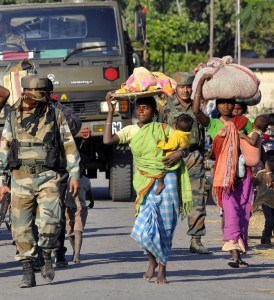
Photo courtesy: PTI
Photo courtesy: PTI

Once again, and very soon after the last instance of mass killings and displacement, another series of bloodshed and violence has rocked Bodoland Territorial Autonomous Districts (BTAD) – Assam. On 21st December 2014, two suspected militants of the National Democratic Front of Bodoland- Songbijit Faction (NDFB-S) were killed by the security forces in an alleged cold blooded encounter in the Chirang district of BTAD-Assam. In retaliation, on 23rd December, armed militants of NDFB-S attacked Adivasi villages in Kokrajhar, Chirang and Sonitpur districts. Since then it has resulted in the death of 81 people – 73 Adivasis including many women and children as well as 3 Adivasis killed in police firing on protestors.  As a mode of retaliation Adivasi mobs killed at least 8 Bodo civilians.  Since 23rd December, the entire BTAD and adjoining areas like Sonitpur district have been extremely volatile and under curfew. On 25th December, the Home Minister Mr. Rajnath Singh, in a meeting with the top security top brass, which was also attended by the Assam chief minister Mr Tarun Gogoi, declared Government of India’s resolve to fight terrorism and reportedly asked the security and intelligence apparati to ensure the elimination of the top leadership of NDFB-S within the next six months. Around 50 additional companies of paramilitary forces are being sent to Assam. The Army has also reportedly launched major operations in the Assam-Arunachal border region, in search of the NDFB-S militants.

 The NDFB-S massacre of Adivasi civilians is not a pre-modern tribal savagery. In fact such violence is justified by notions of exclusive ethnic-homelands and nations, and their corollaries like aspiration for spatial homogenization and monopolization of resources by particular communities. The Northeast of the country is home to many armed mobilisations against the domination of Indian state that are driven by an ethnic conception of political community in a contiguous territory. The Bodos of the Assam valley started an armed movement for Bodoland in 1980s against their marginalisation by the dominant non-tribal Assamese. Following the time tested carrot and stick policy, the Government of India managed to win over a faction of the armed groups in exchange for internal autonomy under the Sixth Schedule of the Constitution. The BTAD was formed in 2003. Curiously, even while the majority of citizens under the BTAD area identify themselves as non-Bodos the distribution of seats under the BTAD agreement is so designed that Bodos enjoy majority in the elected body.  While a faction of the Bodo leadership settled to run the BTAD, the seeds were sown for inter-ethnic clashes and violence. Continue reading Harvest of Innocent Blood – The Democracy Deficit in Bodoland, Assam: New Socialist Initiative

“Welcome to the Land of Enlightenment”: Kaveri Gill

Guest post by KAVERI GILL

Bihar Tourism’s Neglected Treasures

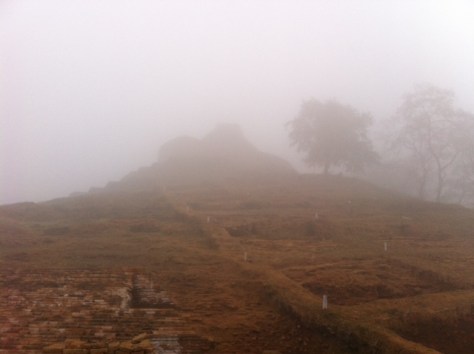
Kesariya Stupa East Champaran

A recent work trip took me to the north-east of Bihar, the poorest region of a state with ‘critical’ poverty incidence by any measure. For instance, within the state, on NSS 2004-05 data, West Champaran is the worst-performing district on headcount ratios (76.9) in rural India (Chaudhuri and Gupta, Economic and Political Weekly, 2009). Such destitution was on ample evidence amongst the segregated group of mahadalit and minority women members of a self-help group we spoke to, in a tola with no electricity and only candles to dispel an eerie fog settled over the village at dusk. Of 13 of them, 11 had repeat experience (up to three times per woman) of losing a child in the last trimester of pregnancy, just after giving birth or of a child under 5 years of age.  It was from Champaran that Gandhi first led landless labour and tenants or ryots, in his first satyagraha against the British, protesting the coerced cultivation of the cash crop, indigo. Almost a century later, not much has changed in tangible terms for the population of this part of the democratic Republic of India. Continue reading “Welcome to the Land of Enlightenment”: Kaveri Gill

The Success of Nilppu Samaram: The Victory of Democracy

This is a guest post by ASWATHY SENAN
The Nilppu Samaram (Standing Strike) by the Adivasis demanding their land rights started on 9-7-12 under the leadership of Adivasi Gothra Maha Sabha (AGMS). The protesters stood for 162 days in front of the Secretariat, Thiruvananthapuram. This protest saw the support and intervention of people from all age group from various caste and religious communities (not under the banner of any particular political party or religious organisation) most of whom came to the protest space and stood with them to mark their solidarity. The government had to budge at the end under the pressure of the non-violent democratic protest of the adivasis backed by the civil society and on the 163rd day the ended their standing after the Government of Kerala agreed to all their demands on paper.

Continue reading The Success of Nilppu Samaram: The Victory of Democracy

Make in India – A critical examination of an economic strategy: Leila Gautham

This is a guest post by LEILA GAUTHAM

‘Make in India’ is now an all-pervasive catchphrase – every newspaper and television channel trumpeting the Modi’s ‘clarion call’ to investors – but surprisingly empty in terms of substance. The website is flashy and vastly different from the run-of-the-mill government-of-India websites one is used to – but one has a hard time imagining the ‘captains of industry’ who attended the Make in India launch on September 25th finding any use for it. One begins to wonder, who exactly is the campaign aimed at? Is it the Indian public? An impressive farce, an ad campaign, the neoliberal dream of the efficient state come true – Make in India is not some brilliant brainwave of Modi’s: it is the culmination of very intensive campaign of worldwide propaganda that has been launched by global corporate capital.

I tried to probe deeper, to tease out concrete details if any – and the following article reflects my understanding, incomplete though it may be.

Continue reading Make in India – A critical examination of an economic strategy: Leila Gautham

Why Should Adivasis Bear the Burden of ‘National Development’? Deba Ranjan

Guest post by DEBA RANJAN

On 25th August 2014 large number of armed police including CRPF with magisterial power reached at the top of the Baphlihill, where Utkal Alumina of Aditya Birla – Hindalco is continuously transporting bauxite through trucks to its Doraguda Alumina Plant. They started beating the villagers of Paikakupakhal. “They were in 25 four wheelers and one bus” Padman Nayak of the same village said. Many got the injured and three dalit villagers namely Mangaldan Nayak (30 years), Kalendra Nayak (30) and Ms Kiyabati Nayak got seriously injured. Kalendra got treatment outside but again was lifted from the Medical by the police so that he may not speak about such action of police to the outside world. Both print media and TV channels (except one newspaper) did not cover the incident. The local journalist of that newspaper later on was harassed by the goons not to write more on it.

I had been to Siju Mali few days before and went to the top of the Hill. It falls in Kashipur area of Odisha just behind the Niyamgiri hill. For last few months this Siju Mali and its adjacent Kutru Mali, two bauxite hill ranges, have been in news because the Vedanta International Limited (VIL) has kept its eyes on it.

After the Lok Sabha election, between April and November 2014, Anil Agrawal, director of VIL has met Odisha Chief Minister Naveen Patnaik thrice and every time he comes out with fully glowing remarks that the latter assured him of transferring the bauxite hills to the Company. It is quite possible too. Election experts have highlighted corporate funding behind Biju Janata Dal’s election campaign and the State Election Commission is unmoved on such complaints. Continue reading Why Should Adivasis Bear the Burden of ‘National Development’? Deba Ranjan

Demolition Drive in Vadodara, 2014: Kathyayini Dash, Rushabh Vishawakarma, Hussain Sabu, Bhagwati Prasad Suryavanshi

Guest post by KATHYAYINI DASH, RUSHABH VISHAWAKARMA, HUSSAIN SABU & BHAGWATI PRASAD SURYAVANSHI

Untitled

In Tarsali, 10 kilometers from Vadodara

Note from authors:

We are a group of friends and students from MS University, Baroda. One of us, Rushabh, lives in Kalyannagar which has partly been demolished and this house too is slated for demolition. We have written this to bring to the surface what demolition and displacement means, from the perspective of those who live in places like Kalyannagar, which cannot even be called a ‘slum’. We could see first hand what happened during the demolition because our friend lived there.  We all have spent happy times at Kalyannagar, Rushabh’s home. We felt we owe it to these memories to at least record these events. You can visit us at BarodaBeat.

Development they say…

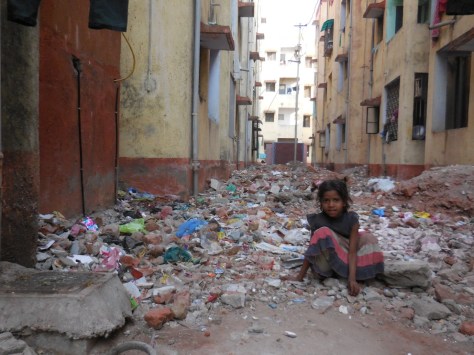
They say by 2015, not one jhopdi will be seen…Vadodara’s landscape would be studded with flyovers, high rise buildings, malls, clean pothole-free roads. There will be no stench of garbage, leave alone the sight of it.

The recent floods in Vadodara set off an alarm, urging the quick setting up of “river-front projects” which included the demolition and re-location of slum dwellings near the river which were so awfully affected during the floods.

They say, “this is not fair. They sure need help; first priority in fact. They have to be the first to be taken into consideration before going on to people who have it all: a raised plinth level, a well cemented house, resources to recover the losses incurred in the floods. The jhopdiwaale, well, they have nothing at all, don’t they? Already low on the economic scale, they have no resources to recover the losses incurred during the floods, they don’t even have pakka houses to resist the floods. And on top of it all, they have houses built along the river itself. Poor things, where else would they build their houses. But then, these houses shouldn’t be there in the first place isn’t it? Because this is government land, and they don’t have the right to live there. What good is it anyway?” they say. “It is near the river, there is always a dangerous risk of the river flooding and them and their houses drowning,” they say. Continue reading Demolition Drive in Vadodara, 2014: Kathyayini Dash, Rushabh Vishawakarma, Hussain Sabu, Bhagwati Prasad Suryavanshi

Is Standing with Young People Yet Another Fad? Reflections on the Young and Kiss Protests in Kerala

My arguments supporting young people in some recent debates, notably, the ones around the International Film Festival of Kerala and the ongoing Kiss protests, have apparently irritated a number of people, especially friends who belong to my own generation. From more than one source (hardly ever directly, though) I hear that they grumble that I am biased towards the young. That, apparently, is the latest fad. And Devika, it appears to them, has a tendency to support fads. Continue reading Is Standing with Young People Yet Another Fad? Reflections on the Young and Kiss Protests in Kerala

A Women’s Charter for Delhi Elections: Women against Sexual Violence and State Repression

Guest Post by Women Against Sexual Violence and State Repression

The elections in Delhi are approaching.

Violence, as well as discrimination against women, and sheer denial of women’s dignity and rights, has been a huge concern for Delhi’s citizens.

This is the time when women are looking towards the political parties, to see what place women’s rights and freedoms have on their agenda.

We are disturbed to see that while most parties pay lip service to the cause of women’s rights, they blithely field candidates accused of violence against women, and they play to the patriarchal gallery on a range of issues, ignoring the voices of the women’s movement.

We, the undersigned would like to put the following concerns on the agenda of the Delhi elections, and we ask the political parties contesting Delhi elections to respond to them with urgency and seriousness. We appeal to all women voters to place this charter before every candidate and every party campaigner, and ask them for a clear position on each of its points.

1. We are alarmed at the spiralling of communal violence towards the Delhi elections. We are shocked that, instead of nabbing those who are fuelling the violence in a planned way, the Delhi Police has instead beaten up and brutalised innocent women in Trilokpuri. Above all, we are appalled at the attempts to justify communal, caste, racial or homophobic/transphobic violence in the name of ‘protecting women’. We assert that women are invariably rendered most unsafe by such violence. We seek a commitment that no party will promote leaders – either as candidates or as campaigners – who are accused of stoking violence against women, as well as communal, caste, racial or homophobic/transphobic violence. Specifically, we do not want the notorious 1984 duo Jagdish Tytler and Sajjan Kumar, we do not want to see Gugan Singh (who made communal speeches in Bawana) or Sunil Vaidya (who incited riots at Trilokpuri), or Somnath Bharti (charge-sheeted for racist and anti-women violence at Khirki) to be candidates or campaigners. Continue reading A Women’s Charter for Delhi Elections: Women against Sexual Violence and State Repression

The deadly land policies planned by Modi’s advisers and the links to Ukraine and Honduras: Aditya Velivelli

This is a guest post by ADITYA VELIVELLI

One year after the Land Acquisition Act was passed in Parliament with bipartisan support, commerce minister Nirmala Sitharaman stated that changes will be made to the Act during the upcoming Winter Session of Parliament.

The earliest indication that this would happen, came from of all people, a first-time MP and microfinance lobbyist Jayant Sinha. Sinha had mentioned in a CNBC interview right after BJP’s win that land acquisition policy was the first priority. For those wondering why CNBC interviewed Sinha and allowed Sinha to lay out the new Government’s priorities, and why Sinha has been appointed junior finance minister, they should refer – Who is guiding Modi’s economic thinking and what is their background? Continue reading The deadly land policies planned by Modi’s advisers and the links to Ukraine and Honduras: Aditya Velivelli

Concerns on proposed meetings of Intellectual Property Owners Association with IPAB and the Delhi High Court: Campaign for Affordable Trastuzumab

The Campaign for Affordable Trastuzumab was launched in November 2012 and has been endorsed by over 200 Indian and global patient associations, cancer survivors, health movements, women’s rights activists and eminent jurists.

Kalyani Menon-Sen, Leena Menghaney and KM Gopakumar from this campaign express serious concerns about  the intent and purpose of the “Innovation Dialog” being organised in India from November 16-22, 2014 by the Intellectual Property Owners Association (IPOA).

To: Hon’ble Justice Mr. H.L. Dattu (Hon’ble Chief Justice of India); Hon’ble Justice Smt. G. Rohini, (Chief Justice, Delhi High Court); Hon’ble Justice K.N. Basha (Chair, Intellectual Property Appellate Board)

Dear Hon’ble Justice Dattu, Hon’ble Justice Rohini and Hon’ble Justice K.N. Basha,

We write to you on behalf of the Campaign for Affordable Trastuzumab, a network of treatment activists, patients and public interest lawyers committed to making the breast cancer drug – trastuzumab – affordable in India. We have closely followed the misuse of patent rights and more recently the vexatious litigation of the Swiss pharmaceutical company Hoffmann-La Roche Ltd in India to maintain control over the market for the lifesaving drug (trastuzumab), thus blocking access to treatment for thousands of women with HER2+ breast cancer.

This letter is to express our grave concern about the intent and purpose of the “Innovation Dialog” being organised in India from November 16-22, 2014 by the Intellectual Property Owners Association (IPOA).

The IPOA is a US-based group consisting of large corporations and law firms which has been aggressively lobbying on issues of intellectual property standards and enforcement in India and pushing a pro-corporate agenda. The biased and unbalanced position taken by the IPOA is especially troubling when it concerns medicines, where the use of intellectual property protections have restricted access to affordable treatment and blocked competition.
Continue reading Concerns on proposed meetings of Intellectual Property Owners Association with IPAB and the Delhi High Court: Campaign for Affordable Trastuzumab

From a Professor to a Showman: Kishen Pattnayak on Prannoy Roy

Translated from the original Hindi by Akhil Katyal

Kishen Pattnayak (1930-2004) was a socialist thinker and writer. He had been a member of the Indian parliament from Orissa. Pattanayak was the founding editor of a Hindi monthly periodical called ‘Samayik Varta’. In this Hindi essay ‘Professor Se Tamashgeer’ published in March, 1994, he understands Prannoy Roy as representative of a new class of intellectuals which came into being precisely with the changing economic policies of the Indian government in the early ’90s.

Those who do not know English in this country might not know Prannoy Roy. But knowing him is important because Prannoy Roy represents a new social phenomenon. Prannoy Roy’s fame has been sealed by the program “The World This Week” running every Friday on Doordarshan. Not unlike a magician putting on a show, it has lately become quite an art for Doordarshan to concentrate the attentions of the TV viewers and keep them spellbound with only select news and statements on the channel. Pritish Nandy’s show and Prannoy Roy’s weekly program etc. are prime examples of this art.

Among the country’s intellectuals, such folks must surely be rare, who apart from being immensely intelligent, can also put on a circus-show in the middle of a street. Television professionals are always on a hunt for such gifted intellectuals. Through them, the TV business gets some intellectual prestige, making it reputable to carry on showing several dreadful and obscene things. Continue reading From a Professor to a Showman: Kishen Pattnayak on Prannoy Roy

Feed The Poor, Go To Jail

image : Courtesy eideard.com

Whether serving food to the homeless is a crime?

Ask Arnold Arbott, known as Chef Arbott, a 90 year old man from Fort Lauderdale, Florida, who along-with two other members of a Church charity faces potential jail term for at least six months for the same ‘offence’. In fact his name finds prominent mention in the police records in the past week for breaking the new city ordinance which has come into effect recently which characterises his act as breach of law, according to reports.

Talking to a newsperson he said:

“These are the poorest of the poor. They have nothing. They don’t have a roof over their head. And who could turn them away?”

Continue reading Feed The Poor, Go To Jail