Category Archives: Government

This is the story of the monkeys of Delhi

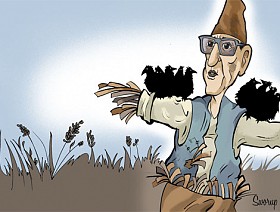
From 2009 to early 2011, I lived in a south Delhi barsati which had an enormous terrace area. When I moved in, this open space looked sad and empty, so I spent many thousands of rupees doing it up with all kinds of plants. Then came the monkeys. A team of five to ten. On finding the kitchen locked, they would break the pots, and sometimes eat the plants. No flower was allowed to bloom.

I replaced the mud pots with heavy cement ones. The monkeys broke fewer of them but ate more shoots and leaves. They would come at night. Soon they’d come at dawn, and make such a commotion I’d wake up terrified. Mild banging on the door wouldn’t ward them off, nor would the other tactics I tried. I was afraid of them. They could be aggressive and strong and these traits were multiplied because they operated in gangs. I felt caged in the small room of my large barsati. All I could do was share my misery on Facebook. “Be careful,” a friend warned in a comment, “they once killed the deputy mayor of Delhi.” Read more…

On ‘gay conditionality’, imperial power and queer liberation: Rahul Rao

Guest post by RAHUL RAO

It’s not clear what (or whether) David Cameron was thinking when he suggested recently that British aid should be linked to respect for LGBT rights in recipient countries. Almost immediately, the statement evoked homophobic responses from political and religious leaders in Tanzania, Uganda, Ghana and elsewhere. Perhaps more importantly, African social justice activists (including many of the leading LGBTI activists on the continent) advanced a comprehensive critique of ‘gay conditionality’ in a letter criticising Cameron’s statement, signed by 53 organisations and 86 individuals. Warning that the refusal of aid on LGBT rights grounds could provoke a backlash against queers who would be scapegoated for reduced aid flows, the critics have pointed out the insidious ways in which such initiatives could drive a wedge between queers and a broader civil society in recipient countries, besides reinforcing perceptions of the westernness of homosexuality as well as the imperial dynamics already prevailing between donor and recipient countries.

Continue reading On ‘gay conditionality’, imperial power and queer liberation: Rahul Rao

Let’s march faster towards the metric system: Subhash Chandra Agrawal

Guest post by SUBHASH CHANDRA AGRAWAL

Even after half-a-century of introduction of metric measure in India, certain commodities like cloth, paper, furniture, land, time etc are being traditionally manufactured/measures in old units or their metric-converts. For example, cloth is usually manufactured in widths like 36” (91 cms), 48” (122 cms), 50” (127 cms), 54” (137 cms), 120” (305 cms) etc which should now be woven in metric-measures in multiples of 10 cms. It is time that measuring tapes may be available only in metric units after some specified date.

Continue reading Let’s march faster towards the metric system: Subhash Chandra Agrawal

Human Rights Review – Jammu and Kashmir in 2011: JKCCS

This release comes from the JAMMU AND KASHMIR COALITION OF CIVIL SOCIETY, the Bund, Amira Kadal, Srinagar 190001, (www.jkccs.net)

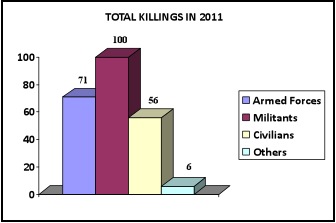
TOTAL KILLINGS

Year 2011 has just passed, and many have declared this year, a peaceful year in Jammu and Kashmir. Of course assertions of peace by various quarters are relative. Enforced silence cannot be construed as peace. Despite the hype of peace, people of Jammu and Kashmir have witnessed unabated violence, human rights abuses, denial of civil and political rights, absence of mechanisms of justice, heightened militarization and surveillance. The figures of violent incidents suggest that 2011 as usual has been the year of loss, victimization, mourning and pain for the people. Continue reading Human Rights Review – Jammu and Kashmir in 2011: JKCCS

Suggestions for India Post: Subhash Chandra Agrawal

Guest post by SUBHASH CHANDRA AGARWAL

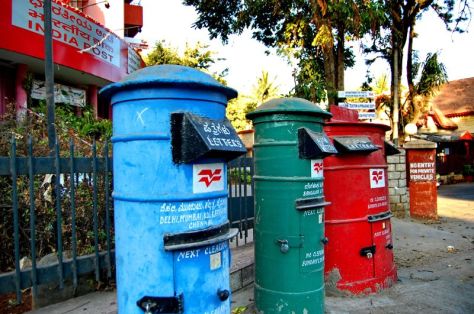
Photo credit: Aditya Bhelke

1.      All postal-tariffs should be generally in multiples of rupees five with Speed Post tariff being universal at rupees fifteen or twenty for every 50-gms rise in weight abolishing differential tariff of rupees 12 for local and rupees 25 for non-local mail-articles. Considering sharp decline in use of inland-letter-cards and post-cards, sponsored Meghdoot post-card should be priced at rupee one abolishing loss-giving Inland-Letter card and ordinary post-cards altogether. Continue reading Suggestions for India Post: Subhash Chandra Agrawal

The Year of the Coup D’état: Fawzia Naqvi

Guest post by FAWZIA NAQVI

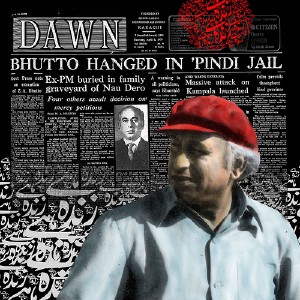
Imran Khan was not the first one to be obsessed with both cricket and politics. Saira and I beat him to it 20 years ago. We spent 50% of our time swooning over him and the other 50% worshipping Mr. Bhutto. 20 years later I believe it was I who got over Imran Khan and Saira who got over Mr. Bhutto. Although I must confess, it was Imran who adorned every inch of wall and closet space in my dressing room, the “shrine” as my brother labelled it. And it was Imran’s picture which popped out of the inside cover of my high school notebook. During moments of boredom and droning lectures I would stare at his picture for an hour straight and muse and sigh over the fact that one could see his house from the balcony of our school and perhaps today might be the day when he would come to pick up his sister from our school. The God, the Adonis, Imran was it for both of us.

I don’t know how Saira became an Imran groupie. I do recall well how I did. I was taken to my first ever live cricket match in 1976. My brother’s best friend pointed toward the field from high up in the spectator stands to what looked to me like white dots, and told me with much seriousness in his voice, “there over there is the most handsome man you’ll ever see…” and then he made his most remarkable claim, “he’s so handsome you’ll forget about Izzy!” Continue reading The Year of the Coup D’état: Fawzia Naqvi

‘NAPM condemns arrest and harassment of anti-dam protesters in Assam’

This press release was issued on 26 December by the NATIONAL ALLIANCE FOR PEOPLE’S MOVEMENTS

New Delhi, December 26 : Tonight at 2:15 am Assam Police in collusion with other security forces swooped down on the protesters at Ranganadi who have been blockading the Highway since December 16 and thwarting state’s attempt to carry turbines and dam materials to project site of Lower Subansiri Dam. Nearly 200 people have been arrested and earlier also security forces have been harassing the ptotestors. In past too, Krishak Mukti Sangram Samiti fighting against the big dams on Brhamaputra have faced government’s ire and often been attacked and jailed. NAPM stands in solidarity with KMSS and other students groups of the region who have been consistently opposed to the Big dams in highly sensitive seismic zone. We condemn the sustained action and harassment of KMSS and their activists and targeting of Akhil Gogoi for constantly opposing the destructive development policies and corruption of the government machinery. Continue reading ‘NAPM condemns arrest and harassment of anti-dam protesters in Assam’

Z for Zalim: Semiotics and the Occupation of Kashmir

Ours was the marsh country, down by the river, within, as the river wound, twenty miles of the sea. My first most vivid and broad impression of the identity of things, seems to me to have been gained on a memorable raw afternoon towards evening. At such a time I found out for certain, that this bleak place overgrown with nettles was the churchyard; and that Philip Pirrip, late of this parish, and also Georgiana wife of the above, were dead and buried; and that Alexander, Bartholomew, Abraham, Tobias, and Roger, infant children of the aforesaid, were also dead and buried; and that the dark flat wilderness beyond the churchyard, intersected with dykes and mounds and gates, with scattered cattle feeding on it, was the marshes; and that the low leaden line beyond, was the river; and that the distant savage lair from which the wind was rushing, was the sea; and that the small bundle of shivers growing afraid of it all and beginning to cry, was Pip. – Charles Dickens, Great Expectations

A for Apple and Z for Zebra. Children are taught the alphabet with the help of images. And the association of images with sound. It helps them associate the sound of A with the sound of Apple, and associate that in turn with the image of an apple. The alphabet book depends on images that may be familiar to children. The word Apple is a signifier, and the apple itself is the signified. This is, most simply, what semiotics or the study of signs and sign processes.

In a future world, if there are no zebras, alphabet books may have to replace the last entry with something else. What could it be? Zebra crossing? Zimbabwe?

Last week, the Jammu and Kashmir Police registered a case of sedition, defamation and criminal conspiracy against six officials of BoSE, the government’s very own Board of School Education, for this:
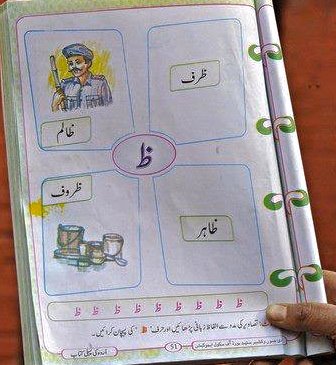
This is a page from a book called Baharistaan-e-Urdu. This attempt to teach Kashmiri children the Urdu alphabet (note to self: this is what I need to learn Nastaliq!) makes them say, “Zoi se Zalim,” Z for Zalim, meaning cruel. That is only one of four examples. The other two are: zaroof (utensils), zahir (visible) and zarf (ornamental cup holder).

Continue reading Z for Zalim: Semiotics and the Occupation of Kashmir

Wither Wall Street: Challenge of the Occupy Movement

Over the last three months New York City has been electrified by the Occupy Wall Street movement. Prachi Patankar and I have been participating in some of the actions. We have also been part of a number of discussions within the South Asia Solidarity Initiative (SASI) on how an organisation like ours can bring an internationalist perspective to this movement. Prachi is also on the board of the War Resisters League (WRL). Through such discussions SASI and WRL organised Empire on Wall Street actions. With many of our comrades in India and Sri Lanka asking us about the impact of the Occupy Wall Street movement and its future, we decided to write this article. Continue reading Wither Wall Street: Challenge of the Occupy Movement

Why ban just a Facebook page when you can erase a holy book or two (or more)?

Following in the wake of the declarations of the well known Internet idiot, who doubles as the honorable minister of telecommunications of the Union of India, an esteemed additional civil judge of a Delhi court has also decided to issue an ex-parte order commanding Social Media networks, Facebook and Youtube to remove 21 (or is it 22?) ‘objectionable’ websites that ‘offend religious sentiments’.

This has been done in response to please entered by a ‘journalist’, a certain Mr. Vinay Rai, and a certain Mufti Aijaz Arshad Qasmi, who also delivers online fatwas on a variety of subjects, ranging from the very intimate to the magnificently cosmic. It is wonderful to behold the learned court acting with such sensitivity to the joint plea of two honorable Hindu-Muslim worthies. Hindu-Muslim-Sikh-Isai – busybodies of every stripe seem to have little other work to do than police and control what can and cannot be said online, shown in a film, performed in a play or depicted in an art work. And our ‘secular’ civil society, and the lower ranks of the judiciary faithfully acquiesce to their every demand. Continue reading Why ban just a Facebook page when you can erase a holy book or two (or more)?

Pakistan ki Tareef: Haseeb Asif

This guest post by HASEEB ASIF is in Urdu, in Roman script

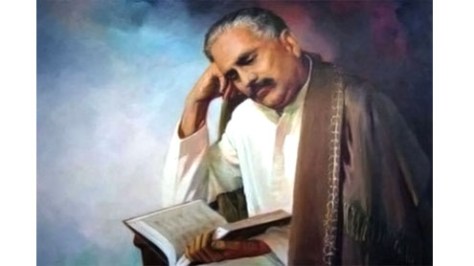
Allama Iqbal (1877-1938)

Islami Jamhooriya Pakistan ki tareekh Hindustan se bohut purani hai. Balkay Islam se bhi purani hai. Jab aathveen sadi mein Muhammad Bin Qasim Islam phelane bar-e-sagheer tashreef laye tau ye jaan ker sharminda huwe ke yahan tau pehle hi Islami riyasat maujood hai.

Yahan kufr ka janam tau huwa Jalaaludin Akbar ke daur mein, jo Islam ku jhutla ker apna mazhab banane ko chal diya; shayid Allah-ho-Akbar ke lughwi maani le gya tha.

Baharhal, in kafiron ne butparasti aur mehkashi jaisay gheir munaasib kaam shuro kerdiye aur apne aap ko Hindu bulaane lage. Sharaab ki aamad se Pakistan ke Musalmanon ki woh taaqat na rahi jo tareekh ke tasalsul se honi chahiye thi. Iski vaja ye nahin thi ke Muslaman sharaab peene lag paray the, balkay ye kay unki saari quwat-e-nafs sharab ko naa peene mein waqf hojati thi, hukmarani ke liye bachta hi kya tha.

Is ke bawajood Musalmanon ne mazeed do sau saal Pakistan per raaj kiya, phir kuch dinon ke liye angrezon ki hakoomat agayi (hamari tafteesh ke mutabiq yehi koi chalees hazaar din honge).

San 1900 tak Pakistan ke Musalmanon ki haalat nasaaz hochuki thi. Is dauran aik ahem shakhsiat hamari khidmat mein hazir huwi, jis ka naam Allama Iqbal tha. Continue reading Pakistan ki Tareef: Haseeb Asif

News TV – Caught Between an Anna and a Hard Place: Abhishek Upadhyay

Guest post by ABHISHEK UPADHYAY

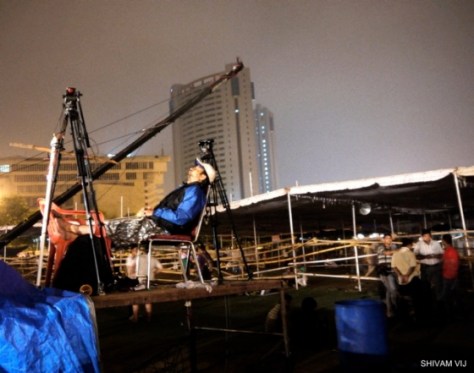
Taken in August 2011 at around 2 am one morning at Ramlila Maidan, this photo shows a news TV cameraperson taking sleeping on his chair.

Anna Hazare has returned with his protests and fasting. Should the media, particularly news TV, be more circumspect this time?

Is it time for the media to learn from the Ramlila Maidan experience in August, or should news channels stick to their earlier editorial line of broadcasting the Anna movement in great detail? Back in August, news TV broadcasted Anna’s “satyagrah” allegedly at the expense of the government. The stage is set again, the jury is out. Continue reading News TV – Caught Between an Anna and a Hard Place: Abhishek Upadhyay

The Absurd Tyranny of iSibal: Vrinda Gopinath

Guest post by VRINDA GOPINATH

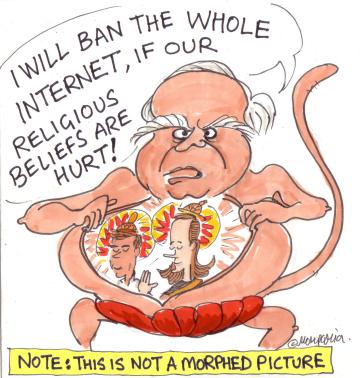
by Hemant Morparia

Well, Information and Technology Minister Kapil Sibal’s prickly suggestion to pre-screen content on social networks like Google, Facebook and Twitter, has invited such derision from the internet world that it has given him a tag to his name – Idiot Sibal. For iSibal, it’s not his status on Facebook that should bother him, but the ruinous unmasking of the minister in status-anxiety New Delhi. Sibal, after all, prides himself in belonging to the elite movers and shakers of the Capital – educated, connected, and gold card holder of the Stephen’s Old Boys Network. For the status seekers, this is a world of privilege and entitlement, cosmopolitanism and tolerance.

Now you would wonder what came over the blue-stockinged Technology Minister to make such an ill-thought out statement. Sibal’s liberal snobbery is not always what it seems to be, for there is a lurking autocratic and despotic streak, even archaic at times, that has surfaced time and again. And it is this aspect that has largely been ignored in the bedlam over his latest decree to social network companies.

Continue reading The Absurd Tyranny of iSibal: Vrinda Gopinath

Nationwide opposition to the government’s refusal to a peaceful fast in support of Irom Sharmila: NAPM

Press release issued today by the NATIONAL ALLIANCE FOR PEOPLE’S MOVEMENTS

New Delhi, December 10 : For some months now, Save Sharmila Solidarity Campaign (SSSC) has been spreading the word about Irom Sharmila and her struggle across the nation and beyond.

Started only by few organizations, campaign has now received support over more than 80 organizations and movements and thousands of supporters. Campaign has reached in almost every state of India and even outside. Campaign has organized various programs including its famous Nationwide Signature Campaign, Sri Nagar- Imphal Save Sharmila Jan Karwan in October and Ahemdabad- Srinagar Jattha in November this year. Continue reading Nationwide opposition to the government’s refusal to a peaceful fast in support of Irom Sharmila: NAPM

Of Cloaking, Colouring and Varnishing: Prasanta Chakravarty

Guest post by PRASANTA CHAKRAVARTY

“Then leave Complaints: Fools only strive
To make a Great and honest Hive.
T’enjoy the World’s Conveniences,
Be famed in War, yet live in Ease
Without great Vices, is a vain
Eutopia seated in the Brain.”

Bernard Mandeville (The Grumbling Hive, 1705)

Salutary falsehoods for a promising end, anyone? Try telling this to the ever righteous Anna Hazare or to the followers of Vaclav Havel, whose campaign assurance to ‘live in truth’ in the year 1989 so moved his virtuous flock. There is a politics of virtue and then there is realpolitik – or so we are told. Or is virtue above politics and vice below? What the deuce marks the ambiguous space in between?! That is what has been relentlessly, and ruthlessly, scanned by two masterful recent additions to the canons of contemporary Western political philosophy: Martin Jay’s The Virtues of Mendacity: on Lying in Politics and David Runciman’s Political Hypocrisy: the Mask of Power, from Hobbes to Orwell and Beyond.

At one level, both scholars acknowledge and emphasize the dangers of the ‘ethical turn’ in political studies.

Continue reading Of Cloaking, Colouring and Varnishing: Prasanta Chakravarty

Shivraj Patil hath no mercy! Why could he not pardon an old, ailing Ram Kumar?: PUCL

This statement has ben issued by the PEOPLE’S UNION FOR CIVIL LIBERTIES

Ram Kumar died of cancer in Jaipur Central Jail, waiting for the Governor to grant him mercy and Dr. Khalil Chishty waits in Ajmer Jail while his file sits with the Governor for several weeks now!

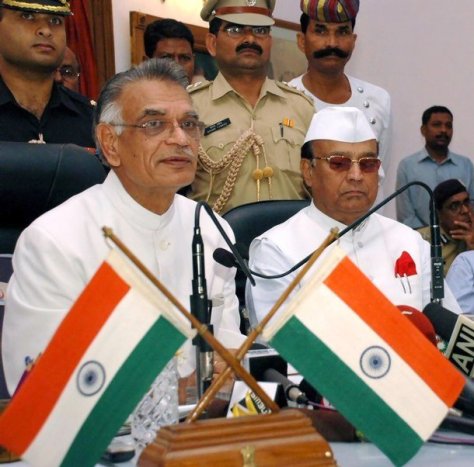
The Governor of Rajasthan Sh. Shivraj Patil’s attitude towards exercising his powers of granting mercy to convicted prisoners is absolutely negative. Article 161 of the Constitution of India confers “on the Governor of a State the right to grant pardons, remissions, reprieves or commute the sentence of any person convicted of any offence against any law relating to a matter to which the executive power of the State extends.” Continue reading Shivraj Patil hath no mercy! Why could he not pardon an old, ailing Ram Kumar?: PUCL

What Kapil Sibal does not understand: the internet

A  few days ago a friend asked me if I knew someone who had the ability and inclination to help out a certain department of the central government with using social media. My friend did not name who the prospective employer was, but clearly, with even Digvijay Singh on Twitter, the Congress party is worried about social media. No surprise that this should happen in a year when the UPA government’s popularity has taken a nose-dive.

The New York Times revealed on 5 December that Kapil Sibal summoned Facebook officials and showed them a Facebook page that allegedly maligned Congress president Sonia Gandhi and said that this was unacceptable. While HRD officials refused to reveal much in that NYT copy, they must have realised that shit has hit the fan, because the next morning’s Indian Express the spin doctoring was clear: there was now a mention of allegedly derogatory pictures of Prophet Mohammed along with the Prime Minister and the Congress President (who are no doubt as sacred in his books as Prophet Mohammed).By the time he held his press conference yesterday, it became about things that Hurt Our Religious Sentiments. On the 19th anniversary of the Babri Masjid demolition, it is very interesting to see a Congress minister using religion to cover up power politics.  Continue reading What Kapil Sibal does not understand: the internet

Kapil Sibal is an Idiot

I urge you to write KAPIL SIBAL IS AN IDIOT as your Facebook status message, use the hashtag #IdiotKapilSibal on Twitter, and write a blog post with the above title, because there may soon be a day when he may prevent you from doing so.

The New York Times reports:

The Indian government has asked Internet companies and social media sites like Facebook to prescreen user content from India and to remove disparaging, inflammatory or defamatory content before it goes online, three executives in the information technology industry say.

Top officials from the Indian units of Google, Microsoft, Yahoo and Facebook are meeting with Kapil Sibal, India’s acting telecommunications minister, on Monday afternoon to discuss the issue, say two executives of Internet companies. The executives asked not to be identified because they are not authorized to speak to the media on the issue.

[…]

About six weeks ago, Mr. Sibal called legal representatives from the top Internet service providers and Facebook into his New Delhi office, said one of the executives who was briefed on the meeting.

At the meeting, Mr. Sibal showed attendees a Facebook page that maligned the Congress Party’s president, Sonia Gandhi.  “This is unacceptable,” he told attendees, the executive said, and he asked them to find a way to monitor what is posted on their sites. [Link]

Continue reading Kapil Sibal is an Idiot

When Openness is Unfreedom (alternatively, when data is unfreedom) – Part II

This is the second post in the series that I began in October. I want to thank Rasagy Sharma for prompting me to put down the second post in this series.

This evening, Rasagy raised a question on twitter about whether the effort of a developer to make the database of the Indian railways downloadable is ‘official’ or not? As Rasagy later explained, the downloadable database is a list of trains, stations and the railway timetable. This list has has been made available in various downloadable formats (such as .csv, .pdf, etc) to encourage developers/interested persons to make web/mobile based applications. Rasagy’s question was more in the nature of checking the legality of  the act of putting this information/database on another website when it is explicitly copyright of the Indian Railways (as declared on their website). He argued that cities such as New York and some countries across the world have made this information ‘open’, meaning available to the ‘public’. Hence, it is unreasonable for this government entity i.e., the Indian railways, to be ‘closed’ about reuse of this information by private entities and individuals.

Continue reading When Openness is Unfreedom (alternatively, when data is unfreedom) – Part II

When Media is Nuked!: PK Sundaram

Guest post by PK SUNDARAM

After armed forces, nuclear establishment is another holy cow in the post-independence India. Our media does not only outsources all final judgements on nuclear issues to the nucleocrats, but has also happily joined them in slanders against the grassroots anti-nuclear movements.

We have seen the media discourse on nuclear weapons being shadowed almost entirely by national security and nuclear deterrence arguments. On the recent upsurge of mass protests against nuclear energy projects across the country, media is playing the official tune where people challenging these projects are reduced to illiterate crowd, foreign-funded groups, religious identities and even anti-nationals. On 24th this month, the Tamil newspaper Dinamalar published a story titled Truth and hype behind the Koodankulam row. This report is nothing but an utterly malicious piece of journalistic writing with ugly slanders against the leading activists of the ongoing anti-nuclear movement in Koodankulam – S P Udayakumar, M Pushparayan and M P Jesuraj.

Continue reading When Media is Nuked!: PK Sundaram

The need to influence the trajectory of one’s own life: Ruchi Gupta

Guest post by RUCHI GUPTA

The Arab Spring demonstrations in Tunisia, Egypt, Libya, Bahrain, Yemen, Syria, Jordan, Morocco were hailed in much of the democratic world. However the Occupy Wall Street protests, which till date have spread to 100 cities in the United States and 1500 globally have met with mixed response.

The Arab people are fighting for democracy, and thus their resistance must be respected and supported. But the OWS folks, proudly leaderless and having framed no concrete demands are vulnerable to all manner of criticism, even from those expected to be supportive. Bill Keller, the former editor of arguably one of the most influential newspapers in the world, the ostensibly liberal, New York Times derides,  “the Occupiers have been pandered to (“Love your energy!”); patronized (“Here, I’ve drafted you a list of demands …”); co-opted by unions, celebrities and activists for various causes; demonized by the right; arrested and tear-gassed in some cities; and taken lightly by the likes of me”.

However the uprisings in the Arab nations, the OWS demonstrations and even the wave of anti-corruption protests that swept India this year are all ultimately an expression of people’s resistance to disenfranchisement. Whether it’s those fighting for democracy or those who find themselves powerless in face of a system that’s been hijacked by the illegitimate nexus between the financial and political elite (the metaphorical 1%), the underlying sentiment is a demand for fair play and the right of self-determination. Continue reading The need to influence the trajectory of one’s own life: Ruchi Gupta