Category Archives: Identities

Arvind Kejriwal, master-blaster

Arvind Kejriwal is the new Sachin Tendulkar. You throw him the most difficult googly and he sweeps it to add runs for his century. In 2011, he started a national anti-corruption movement with the specific aim of setting up an anti-corruption ombudsman called Lokpal. The movement’s public face and leader was Anna Hazare, a respected social leader, who like Gandhi, believes in fasting for politics. The critics said Anna is just a puppet and it’s Kejriwal’s movement, and that such sophistry showed Kejriwal (who takes oath as chief minister of Delhi tomorrow) had sinister motives.

Kejriwal’s critics said that fasting unto death was a blackmail strategy not suited to a democracy. Kejriwal can’t have a Lokpal just because he wants it. His popular support is just media hype. If he really wants a Lokpal, why doesn’t he form a political party and contest elections?

Kejriwal’s critics said he was supported by the RSS and the BJP, that he is a BJP stooge, that the Lokpal movement was a right-wing conspiracy to remove pristine, super-secular, people-loving, chosen-by-god Congress party from power. Continue reading Arvind Kejriwal, master-blaster

Sex and the courtroom

A politician is exposed using State surveillance to allegedly woo his love interest. An editor tells a reporter his daughter’s age that the easiest way for her to keep her job would be to have sex with him. A godman and his son are both arrested for sexual assault and rape. A riot in Muzaffarnagar over false rumours of inter-religious ‘eve teasing’ left 48 dead and 15,000 homeless. The debate on rape, consent, gender relations sparked by December 16, 2012 continued throughout 2013. And by the end of it the Indian Supreme Court decided that the Indian Constitution’s letter and spirit were not being violated by criminalising consenting adults for having sex, in case the sex happened to be anything other than peno-vaginal.

India 2013 is like a pubescent 13 year old realising there’s something about the body that the mind needs to grapple with. There’s something about power, pleasure, social mores, class, law and so on, that comes together in the body and negotiates its way through bodily desire. There’s a sexual churning out there, and it’s not as titillating as the annual sex surveys news magazines do, nor is it as literary and profound as the language an incarcerated editor wields. Continue reading Sex and the courtroom

Why AAP is the new Congress

There is nothing novel about new parties upsetting the two-party binary. We have seen that happen through the process of Mandalisation in many states. But all those new parties have come up in the name of one or more identities caste, community, region. The BJP is the Brahmin-Bania party of Hindu nationalism. The BSP is the party of the Dalits, the JD(U) of the Kurmis, the BJD of Odisha. Many of these parties don’t have ambitions to rival the Congress or the BJP on the national stage.

The Aam Aadmi Party (AAP) is an exception in that its central ideology is good governance. This helps it escape identity politics. At the same time, the AAP embraces identity politics like everyone else does: its symbol, the broom, was from day one targeted at the Valmikis. Be it Muslims or Dalits or Brahmins, the AAP quietly takes note of identity politics and gives lip service, even as the party as a whole does not identify itself with any one community. The only other party which handles identity politics this way is the Congress. Continue reading Why AAP is the new Congress

Cultures of Servitude and the Khobragade-Richard Issue: Nissim Mannathukkaren

Guest Post by Nissim Mannathukkaren

When the great lord passes the wise peasant bows deeply and silently farts. (Ethiopian proverb)

When progressive politics finds itself in agreement with Arnab Goswami, then it is time for the alarm bells to ring. What has been unfolding over the last week has been nothing but spectacular: a wronged and humiliated ‘Third World’ nation (finally) standing up to the imperialist Satan over the Devyani Khobragade episode. A story supposedly fit for lore. But in reality it would have been comical only if it did not have serious consequences.

What is comical is a nation whose elites and middle classes are perfectly in sync with the American worldview (India is among the top America-loving nations in the world) and think that America is the epitome of democracy (a survey from a couple of years ago showed that Indians, more than any other people in the world, think that the United States is a multilateral rather than a unilateral actor), whose students and youth dream the American dream (the largest number of foreign students in America are from India), whose rulers salivate at the prospect of an eternal soiree with the American establishment (after all, the Indo-American strategic partnership has been called the ‘defining alliance of the 21st century’) have suddenly woken up to the rude reality that maybe the Americans do not think about us in the same way! Hence our petulant reactions – like a spurned lover.  Continue reading Cultures of Servitude and the Khobragade-Richard Issue: Nissim Mannathukkaren

Queering Christianity: Janice Lazarus

Guest Post by JANICE LAZARUS

While there have been several writings, posts and comments on the web and in the print about the connection between homosexuality and Hinduism, there has been almost nothing said about the outlook of Christianity on homosexuality. One of the petitioners in Kaushal vs. Naz case is the Utkal Christian Council represented by its Secretary; and so I feel that it is crucial to write about Christianity and the way in which in many parts of the world a Queer Theology is embracing those previously deemed sinful by the Church. While I am in no way a theologian, I do feel that the Bible is open to be read by all and can be interpreted differently by many (as do the different sects within Christianity).

Continue reading Queering Christianity: Janice Lazarus

An Incomplete Reunion – Ruining the Post-Partition Party: Archit Guha

Guest post by ARCHIT GUHA

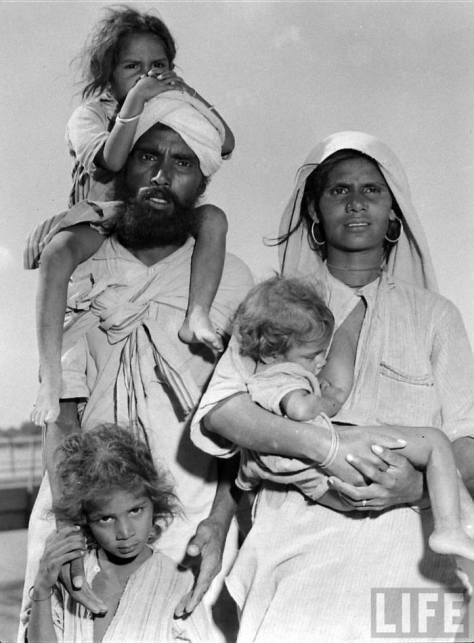
Reproduced without Permission from Life

By this point, every Indian, Pakistani, and their grandfathers has watched the Google Partition ad, tears welled up in their eyes. For the uninitiated, Google’s recent advertisement tugs at heartstrings, telling the tale of two chaddi buddies, separated by Partition, and reunited by their grandchildren nearly seventy years later. When the ad went viral via Facebook, sitting thousands of miles away in America, I bawled as I watched the granddaughter listening to her grandfather’s nostalgic retelling of the idyllic life he led in Lahore, eating jhajhariya, with his buddy Yusuf, and his granddaughter’s instant Google fixes to reunite him with Yusuf in Delhi. Continue reading An Incomplete Reunion – Ruining the Post-Partition Party: Archit Guha

As a religious minority, I empathize with sexual minorities: M Reyaz

This is a guest post by M. REYAZ

The Apex Court judgment of December 11, putting aside the Delhi High Court order on decriminalisation of homosexuality, pertaining to Section 377 of the IPC has clearly divided into two ‘queer’ camps, where on one side besides LGBTS are those liberals extending their support to the LGBT cause, and on the other side, there are religious leaders and groups, who otherwise would not even see eye to eye with each other (what is ‘queer’ about this second camp is not so much its sexual orientation, as the strangeness of its banding together against queer people despite their antagonism toward each other).

Continue reading As a religious minority, I empathize with sexual minorities: M Reyaz

The State Manufactures Terrorism: KP Sasi

An Interview with activist-film-maker, K.P. SASI by Md. EisaBadre Alam Khan and Abhay Kumar.

KP Sasi
KP Sasi

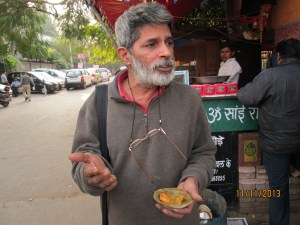
K.P. Sasi is a well-known social activist and filmmaker.  In his several decades of activism, he has been associated with a number of social movements ranging from anti-globalisation and anti-nuclear movement to anti-death penalty struggles and the movements led by environmentalists and marginalised social groups such as Dalits, Adivasis, and Muslims etc. He has expressed his activism through making more than two dozen documentaries and a few feature films. But his two music videos —America, America and Gaon Chhodab Nahin, watched by lakhs of people, continue to motivate social and political activists standing against injustice and inequality. The lean and thin Sasi, who spots thick grey beard, is again in controversies for his latest spell of activism. Early in this year he screened a 94-minute long documentary Fabricated based on the life of Muslim leader from Kerala Abdul Nasar Madani, accused in Coimbatore and Bangalore serial bomb blasts. Fabricated has been the fruit of Sasi’s two years of hard work during which he did an extensive research, met a number of people and travelled thousands of miles and received threats as well. Why did he take so much pain and risk his life? Fabricated, in Sasi’s words, is an attempt to bring a ray of hope to thousands of innocent people, mostly Muslims, Dalits, Adivasis, oppressed nationalities, workers and others languishing in jails for years and decades under draconian laws such as Unlawful Activities Prevention Act (UAPA). Fabricated is mostly woven around the story of Madani, making a strong case that the Muslim leader of Kerala is innocent and has been jailed for years simply because has been framed. He has a charisma, a great skill of oratory and above all a vision of the uplift of the marginalised sections. In the early week of November, Sasi was in Delhi where Fabricated was screened at many places. After watching the documentary at Jawaharlal Nehru University, Md. Eisa, Badre Alam Khan and Abhay Kumar had a detailed interview with K.P. Sasi during which he went on a great length about a host of issues from state terror, human rights, Hindu right, caste, and class to the Muslim politics. The excerpts of the interview are as follows: Continue reading The State Manufactures Terrorism: KP Sasi

Petition to Withdraw the ‘Golden Mother’ Award by the University of Calicut

To
Prof. M. Abdul Salam, Vice-Chancellor, University of Calicut
Members of the Syndicate, University of Calicut

The University of Calicut has recently announced the institution of a ‘Golden Mother Award,’ with the stated objective of highlighting “the contribution of mothers to societal development and nation building and to provide exemplary models to youngsters.” Mothers in the age group of 50+ and who are actively contributing to their domains of service will be considered for awards in eighteen categories such as Art, Literature, Teaching, Social work, Politics, Administration, Media, Sports, Agriculture, Entrepreneurship, Engineering, Medicine, Research, Law and judiciary, Police and Banking, Nominations from educational institutions, trade unions, LSGIs, NGOs and other organizations or from individuals themselves are to be submitted to the Director, Centre for Women’s Studies at the University.

Firstly, this attempt to glorify motherhood is blatantly patriarchal, anti-woman, anti-democratic and a move that pulls society back to the mores of a traditional morality. It implies that a woman’s place is at home and that her principal responsibility (and hers alone) is giving birth to children and rearing them. It pays little heed to contemporary feminist critiques of motherhood as not primarily a biological destiny, one that is made problematic by conditions of poverty, deprivation and societal violence. In ignoring new forms of motherhood and parentage such as adoption, single mothers, and so on, it also upholds elitist, casteist, and patriarchal conceptions of family and womanhood. Continue reading Petition to Withdraw the ‘Golden Mother’ Award by the University of Calicut

Protect the Privacy of the Tehelka Journalist: Report Responsibly

GUEST POST BY ‘REPORT RESPONSIBLY’
To all editors, journalists, bloggers, users of social media, and the public:

Some websites and blogs are posting the Tehelka journalist’s complaint to the magazine’s management or reproducing parts of it, perhaps with intent to expose a grave act of sexual assault by a man occupying a powerful position. However, in doing so, they are violating basic ethical and legal injunctions on the way cases of sexual assault must be reported.

The journalist’s complaint to her company is a private document and not a public one. While private documents can be leaked in the ‘public interest’, this principle is applicable to the emails of Tarun Tejpal and Shoma Chaudhury sent to Tehelka staffers, not to the journalist’s emailed complaint. In cases of sexual assault, it is a well established principle that the media can name the perpetrator, but not the victim. The identity and privacy of a victim must be protected at all costs.We are distressed that many people are circulating the journalist’s emails, and other journalists, bloggers and users of social media are publishing it in parts or whole.

Continue reading Protect the Privacy of the Tehelka Journalist: Report Responsibly

Adivasis of Kerala: Citizens or Cannon fodder?

This is a guest post by JAISON COOPER

Notwithstanding the opposition of many Adivasi organizations and progressive forces, the government of Kerala appears bent on moving forward with its project of recruiting Adivasis as home guards, paying them Rs.500 per day, to take on the Maoist guerrillas allegedly active in the Western Ghats. It is obvious that the state government is not learning lessons from the Salwa Judum experience in Central India and is bent on making Adivasis scapegoats in its impending showdown with the Maoists. Continue reading Adivasis of Kerala: Citizens or Cannon fodder?

अमर नश्वरता का कथावाचक: विजय दान देथा

मृत्युहीन अमरता से बड़ा अभिशाप और कुछ नहीं, विजयदान देथा की एक कहानी में एक कौवा सिकंदर को सीख देता है. फिर भी मृत्यु से दुखी न होना मनुष्यता के विरुद्ध है,यह भी हम जानते हैं. इसलिए कि प्रत्येक व्यक्ति अपनेआप ही ऐसी क्षमताओं और संभावनाओं का आगार है जो उसके अलावा और किसी के पास नहीं होतीं. हमें पता है कि उसके जाते ही वह सब कुछ चला जाता है जो उसने अर्जित किया, संग्रह किया और फिर उसके बल पर  गढ़ा. वह संग्रह और गढ़ने की वह ख़ास कला भी उसके साथ चली जाती है.दुख इससे  हमेशा के लिए वंचित हो जाने का होता है.विजयदान देथा के जाने से हुई तकलीफ और खालीपन दरअसल इस बात के अहसास से पैदा होता  है कि जो प्रयत्न उनके द्वारा संभव हुआ और जिसने प्रसन्न कला का रूप ग्रहण किया, वह कितना विराट और दुष्कर था, इसका आभास हम सबको है. Continue reading अमर नश्वरता का कथावाचक: विजय दान देथा

उन्नाव का सोना और विश्वास के आगे समर्पण

अभी ज्यादा समय नहीं बीता जब एक दिन यह ज्ञात हुआ के नई दिल्ली में स्थित तथाकथित अग्रसेन की बावली को अगरवाल समाज के हवाले कर दिया गया है क्योंकि उन्होंने ए एस आई से यह कहा था के इस बावली का निर्माण महाराजा अग्रसेन ने किया था जो अगरवाल समाज के संस्थापक थे. उनका कहना था कि इसलिए अगरवाल समाज बावली की देखभाल करना चाहता है – आखिर बावली उनके संस्थापक की यादगार जो है. ए एस आई ने विधिवत ढंग से एक एम ओ यू (इकरारनामा) तैयार किया दोनों पक्षों ने उस पर हस्ताक्षर किये और बावली अग्रवाल समाज के हवाले कर दी गयी.

अग्रवाल समाज को शायद उस शिलालेख से भी ऐतराज़ था जो बावली के बाहर ए एस आई ने लगाया हुआ था और ऐतराज़ वाजिब भी था अग्रवाल समाज का “विश्वास” है के बावली महाराज अग्रसेन की बनवाई हुई थी और शिलालेख पर, जहाँ तक हमें याद है, यह लिखा हुआ था के ‘उग्रसेन की बावली के नाम से मशहूर इस बावली का निर्माण सल्तनत काल की वास्तुकला का एक सुन्दर नमूना है’. इस तरह की बात ज़ाहिर है अस्वीकार्य थी और फ़ौरी तौर पर भूल सुधार की आवश्यकता थी. लिहाज़ा भूल सुधार दी गयी. अब जो नया शिलालेख वहां लगाया गया है उस पर साफ़ साफ़ लिखा है के “इस बावली का निर्माण अग्रवाल समुदाय के पूर्वज, राजा उग्रसेन, द्वारा किया गया था.” यह अलग बात है के शिलालेख पर अंग्रेजी में इस बात को ज़रा अलग ढंग से इस तरह कहा गया है “ कहा जाता है के इस बावली का निर्माण अग्रवाल समुदाय के पूर्वज, राजा उग्रसेन, द्वारा किया गया था.” (यह भी दिलचस्प बात है कि राजा का नाम कहीं ‘उग्रसेन’ तो कहीं ‘अग्रसेन’ लिखा जाता आया है.) Continue reading उन्नाव का सोना और विश्वास के आगे समर्पण

Ka Tvam Baale? Kaanchana Maatha! Or, the University of Calicut experiments with the Grotesque!

Now let me confess, it is high-time in life that I got an award — I am 46, nearly. It isn’t really a question of whether I desire it or not. If you are in the business of reading and writing in Kerala then you MUST receive some award by mid-career — it’s a bit like experiencing nausea and tiredness in early pregnancy. You MUST have it, it is the surest sign of being pregnant, and sometimes to enjoy people’s kindness towards a pregnant woman, you need to get vomiting soonest possible. You can’t get into a conversation about pregnancy with other women without being able to recount your experience of being nauseous and tired. Continue reading Ka Tvam Baale? Kaanchana Maatha! Or, the University of Calicut experiments with the Grotesque!

Chanting Sacred Election-Ritual Mantras by Regulating Free Speech: ‘A Status Update’ from EFLU, Hyderabad:Kt Hafis

This is a guest post by KT HAFIS

What follows is a ‘status update’ from EFL University, Hyderabad, with special reference to the recent regulation of free speech on social networking sites in the university. It follows the polemical structure of a facebook status update as it tries to bring in a new dimension to the nature and scope of the idea of public and public sphere. At the very outset, let me make this point very clear. We are not fighting for some anarchic and absolutist idea of free speech. We know very well that freedom of expression also means a lot of responsible thinking.

First, some detail about the facts of the matter before we reflect on the philosophical and theoretical problems that they posit in the face of the ‘here and now’ of student politics in Indian universities in general and EFLU in particular.Two students, Kt Hafis (the author) and Thahir Jamal were handed show-cause notices, issued by the Proctor’s office signed by Deputy Proctor Sujata Mukhri, for having expressed our opinion on Facebook regarding the anti-reservation remarks made by Mr. Tariq Sheik, a member of the administration and Deputy Dean of Student welfare, at a students’ general body meeting organized by the Dean of Students welfare to select the electoral committee for the upcoming students’ union election at EFL university. In that meeting,  students sensitive towards the problems of representation raised genuine concerns about the absence of reservation in the central panel (President, Vice-President, General Secretary, Joint Secretary, Cultural Secretary, Sports Secretary) and against the denial of the posts of SC/ST, OBC, women, disabled and foreign representatives in the new constitution of the Students’ Union. These had been approved by the Vice Chancellor of EFLU and in response to a students’ struggle conducted the last year. Continue reading Chanting Sacred Election-Ritual Mantras by Regulating Free Speech: ‘A Status Update’ from EFLU, Hyderabad:Kt Hafis

A Night at the Pow Wow: Jay Desai

This is a guest post by JAY DESAI


As I approached the brown fields at the foothills of the rugged San Bernardino Mountains, the rhythm of the foot- stomping grew into a crescendo. I was visiting the annual pow wow of the San Manuel Band of Serrano Mission Indians.  Thousands of Natives from many of the 500 or so Indian nations of North America had gathered for three days of dance, song and celebration of their rich heritage. Above us, the autumn California sun had turned the barren high peaks into a shade of angry red at dusk. As the night fell, the enthusiasm of the dancers grew to match the vibrant colors of their traditional outfits and headdresses. My young niece, visiting from India, asked me if the dancers wore these dresses in their everyday lives and if yes, why she never saw them during her long travels through this vast country. She asked me if they were Americans. Continue reading A Night at the Pow Wow: Jay Desai

A tale of two passports, the year 1979, and walking to India: Fawzia Naqvi

Guest Post by Fawzia Naqvi

For the first time Pakistan’s elected President has completed his full five-year term and has willingly stepped down to transfer power to another elected President, a herculean achievement for a country with chronic dictatoritus.  The people of Pakistan must be congratulated for ensuring that democracy becomes an enduring grace and not just a good idea in some unforeseeable future.  So while there is earsplitting cacophony of debate and disagreement on virtually all issues, there is near unanimous political consensus that the army should remain in the barracks and that there should be peace with India. The time is now. And Pakistanis have accomplished this in an era when Pakistan is suffering its worst hellish nightmare of daily bombings and killings by terrorists, and a loss of over 40,000 of its own citizens in the last decade or so.  Pakistan teeters on the precipice of a very dark abyss, and has been inching ever closer to this dangerous edge for the last 34 years if not more. The first disturbing sign which I can remember was when the state institutionalized bigotry by officially declaring the Ahmadi community non-Muslim in 1974, opening up a hornets nest of discrimination, violence and unequal citizenship.  A tragic disaster, and fatal capitulation to right wing elements, by Prime Minister Zulfikar Ali Bhutto. No one is really safe in today’s Pakistan but clearly those less safe, those hunted and killed are the Shias, the Christians, the Ahmadis and the Hindus. Those doing the killings have given insidiousness to the meaning of “the land of the pure.”

Continue reading A tale of two passports, the year 1979, and walking to India: Fawzia Naqvi

Voting with their feet – Religious conversion as a democratic right

Voting with one’s feet:  to express one’s dissatisfaction with something by leaving, especially by walking away.

2007052806851201_590863g

More than 1 lakh Dalits and tribal Hindus converted to Buddhism in May 2007 to commemorate the 50th anniversary of B.R. Ambedkar’s conversion, in what is considered the largest mass conversion in the country

What business is it of any government if I want to convert from one religion to another? Why should I seek permission from, or inform the government that I intend to follow a different god or gods from the one/s I was taught to worship from birth? There is absolutely no justifiable basis for the various anti-conversion laws in India, every one of which should be struck down as anti-constitutional.

Recently, Godie Osuri commented on the paradox of anti-conversion legislations being named ‘Freedom of Religion’ Acts when in fact they entail religious unfreedom.  And so they do. The Gujarat government has ordered a probe into the mass conversions of Dalits to Buddhism at Dungarpur village in Junagadh district last Sunday (October 12, 2013). Why? Because under the state’s Freedom of Religion Act of 2003, it is mandatory for the organizers to have taken prior permission. Turns out that the organizers did in fact inform the authorities, who provided facilities such as an ambulance, microphone and so on. It is clear that this ‘probe’ is a belated and panic stricken response from the Gujarat government upon realizing how great the Dalit response was to the event.

Continue reading Voting with their feet – Religious conversion as a democratic right

Dilemma of Indian Muslims After Partition: Yasmin Qureshi

Guest post by YASMIN QURESHI. Excerpts from this essay were read at an event organized by the Partition Archives project in Berkeley earlier this year.

Abbu’s family, like many other Muslims in India was torn between staying in their ancestral land and going to the new country founded for Muslims. The call for Pakistan and the Muslim League movement was more prominent in the elite or educated classes. For Abbu’s family it was a distant idea and life outside Dilli was inconceivable. But the partition wave didn’t leave them untouched and a few family members including Abbu migrated to Lahore. Lahore was chosen because they had heard it was similar to Dilli. A year in Lahore was enough for them to realize their heart was still in DilliGhalib ki galiyan, echoes of azaans from Jama Masjid, pigeons flying above their roofs and the aroma of korma brought them back to the home their father had built.

The conflict of choosing between the newly founded nation states of India and Pakistan divided many families. Some of Abbu’s relatives shuffled between the two for many years till they were forced to make a choice by the governments in the 1960s. His elder sister’s family and a few other nieces and nephews decided to become Pakistani citizens.

For Muslims that stayed in India, the next few decades were years of fear and subjugation. Communal violence, often organized and manufactured by political parties or the right wing Hindu organization, RSS throughout the 1960s in cities where Muslims were in large numbers was a threatening message to the Muslims that if they choose to stay here they would have to live as a silenced minority with a constant reminder they were guilty of dividing India. Continue reading Dilemma of Indian Muslims After Partition: Yasmin Qureshi

Securing Justice for Rape Survivors from Kashmir and Northeast is An International Human Rights Crisis: Ayesha Pervez

Guest Post by AYESHA PERVEZ

The events preceding the recent death sentence awarded to the rapists of December 16th  Delhi gang rape case from 2012 have certainly broadened  the canvas of discourse on sexualized violence in India. Not only was the institutional sexism that pervades India’s criminal justice system been challenged, but also patriarchal values and norms that sanction and reinforce gender biases were openly questioned.  It was remarkable to watch the unprecedented outpouring from the Indian citizenry from all across  which resulted in the decision of the government to constitute a committee which had the mandate for recommending amendments to the Criminal Law. Recommendations by the Justice Verma Committee in early 2013, undoubtedly paved a way for much needed reform of laws and criminal justice practices relating to crimes of sexual violence. However, this was not true for all the survivors of sexual violence, particularly from the “disturbed” peripheral states of India. For the victims and survivors of sexualized violence from the conflict zones of India – Jammu and Kashmir and Northeast, the discourse ended uneventfully with a reserved/muted  submission of the Committee’s report to the government. Continue reading Securing Justice for Rape Survivors from Kashmir and Northeast is An International Human Rights Crisis: Ayesha Pervez

Jazeera in Delhi: Who Can Speak Against the Sand Mafia? : Bindu Menon M

This is a guest post by BINDU MENON M

Jazeera V, who began her fight against sand mining mafia in Kerala one and a half years ago in the North Kerala coastal hamlet Neerozhukkumchal, is now on a sit-in, in front of the Kerala House near Jantar Mantar New Delhi.  She had first approached the village office, the local panchayat, police station, the district authorities and Kerala State government with the appeal to stop sand mining in the beach which grossly violated the Coastal Zone regulations. Ridiculed by the local media and intimidated and physically assaulted by the supporters of the sand mining mafia, she sat in front of Kerala State Secretariat for several weeks before moving to Delhi.  She demands that the central government should immediately take action against the gross violation of laws for protecting the coastal zones. Her struggle in front of the Kerala secretariat at Thiruvananthapuram for 68 days against the inaction of Kerala Government forced Chief Minister Oommen Chandy to invite her to his chamber for discussion. Although he assured her that he would take necessary actions against sand mining on the coast, he was reluctant to give her any written reply. She finally decided to shift her sit in from Kerala to Delhi in protest of Chief Minister’s callous attitude.

Continue reading Jazeera in Delhi: Who Can Speak Against the Sand Mafia? : Bindu Menon M