
A short fragment of video, fifty seven seconds long, taken from behind a window in a building in the Gaza Strip which was aired last night on Al Jazeera television brought home (once again) the sheer horror of the Israeli Defence Forces’ (IDF) brutal, ongoing offensive against the people of Palestine with devastating clarity.
Category Archives: Media politics
(How) Does the Sovereign Speak?: Akshaya Kumar
This is a guest post by Akshaya Kumar
In a recent piece, entitled The Modi Wave, I analyzed the orientations of the Modi campaign, and argued that crucial to Modi’s repackaging was his ‘sovereignty effect’. In this case, entirely a property of the media narratives that pitched Narendra Modi as someone from outside history, he was offered as an intervention into national history. I have suggested that this was a masterstroke to the extent that the subject within history has a compromised agency. The continuities – of forces, events, rationales and time as a whole – blunt the provenance of the outsider. In order for the subject to act upon history, he must stand entirely outside it. In this way, he cannot be accessed from within historical time. Modi not only offered a historical narrative of an unending Congress rule, infested with corruption, appeasement and misrule, but also that of him observing this lingering malady from outside the fence. His story of his own rise goes from being a tea-seller to the Chief Minister of Gujarat, from a not-yet to a fully sovereign. He is never a deputy, never a peg within the system; he suffers till his agency is still being shaped, and appears as already the incumbent. This fundamental separation from the substance of historical progression is needed to project oneself as unsullied, unlike those defiled by the their political existence within history.
Continue reading (How) Does the Sovereign Speak?: Akshaya Kumar
Wikipedia, Bhanwari Devi and the need for an alert feminist public: Urvashi Sarkar
Guest Post by URVASHI SARKAR
Until June 20th 2014, if you visited the Wikipedia entry on Bhanwari Devi — a women’s rights Dalit activist who was raped for taking on child marriage in an upper caste community in her Rajasthan village— you would have been in for a nasty surprise.
The following lines from the biography section of the article would have stood out starkly:
“Bhanwari, the young, illiterate potter woman…strutting about the village giving gratuitous, unctuous advice to her social superiors made attempts to persuade the family against carrying out their wedding plans. Standing unveiled in the street outside the house of the brides-to-be she loudly berated the elderly patriarch… flaunted her government appointment…and threatening them that she would stop at nothing to ensure their public disgrace by stopping the planned marriage.”
The citation for this paragraph was provided as ‘Bhateri Rape Case: Backlash and Protest’ by Kanchan Mathur published in the Economic and Political Weekly (EPW).
Not a single sentence from that paragraph features in the EPW article; but a preceding paragraph in the Wikipedia entry, which describes Bhanwari Devi’s work as a sathin or grassroots worker with the Women’s Development Project of the Rajasthan Government, is correctly attributed to the EPW piece. Continue reading Wikipedia, Bhanwari Devi and the need for an alert feminist public: Urvashi Sarkar
Media Freedoms, Coercive regimes and Blasphemy-mania: M. Amer Morgahi
Guest post by M. AMER MORGAHI
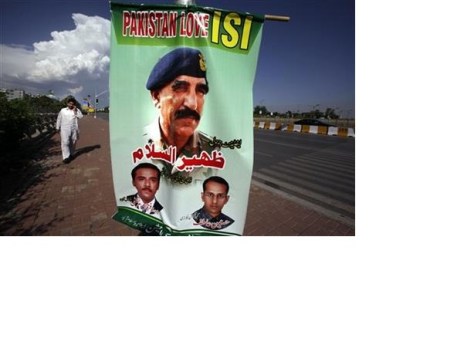
[What the corporate interests have done to the Indian media the military is doing in Pakistan. In the continuing face-off, the Pakistan Electronic Media Regulatory Authority (PEMRA) has suspended Geo TV’s license for fifteen days and imposed a fine of $ 104, 000 on it. See report here]
Media revolutions in different developing countries are seen as an important factor in democratic process, in acquiring information and in enhancing consciousness. However, the media can be manipulated, coerced and used to develop certain consensuses that favors the ruling groups, as the example of recent happenings in Pakistan shows.
Continue reading Media Freedoms, Coercive regimes and Blasphemy-mania: M. Amer Morgahi
A Stolen Verdict: Nirmalangshu Mukherji
Guest Post by NIRMALANGSHU MUKHERJI
The Bharatiya Janata Party secured about 19% votes in the general elections of 2009 to win 116 seats in the Parliament. With this most impressive conversion ratio, they had more or less exhausted their possibilities in their ‘safe’ states like Gujarat, Madhya Pradesh, Chhattisgarh, Jharkhand, Karnataka, and the like. They were still 157 seats away from a simple majority in the Loksabha. Even assuming the impressive conversion ratio, they needed at least 26% more of the vote share, that is 45% in all, to form a government.
When the elections for 2014 were announced, it was hard to see where the BJP would get these additional votes from. Moreover, unlike the NDA of 1999-2004, they had rather modest support from other parties with most of the big parties like AIADMK, TMC, JDU, BJD, and the like staying away. Hence, even if we factor in some rise in number of seats in ‘safe’ states, plus handsome gains in Rajasthan, Maharashtra etc., their ability to reach anywhere near the 272+ mark looked rather dim.
How The AAP Won Punjab: Harjeshwar Pal Singh
This is a guest post by HARJESHWAR PAL SINGH
Amidst the unprecedented Tsunami of Modi which swept away opposition in most of the country, one result stood out as truly exceptional. AAM AADMI PARTY’s (AAP) stunning debut in Punjab. The virtually unheard of party in Punjab even 5 months before won 4 Parliamentary seats out of 13 and secured 25% of the popular vote announcing itself to be an equal of the ruling SAD/BJP combine and the opposition Congress. Two of its candidates Bhagwant Maan (Sangrur) and Prof Sadhu Singh (Faidkot ) won with a stunning margin of over 2 lakhs and 1.7 lakhs respectively. This popular groundswell of support which was ignored by most political analysts, conventional media and political parties had begun to take visible form through buzz on the street, social media and in common discourse by the election day.
What explains this massive upsurge by a fledgling political outfit lacking money, muscle, men and a local organization to humble two of the most well equipped political machines -SAD/BJP and Congress? Continue reading How The AAP Won Punjab: Harjeshwar Pal Singh
So Who Has Won the Election?
The sweep is certainly breathtaking. Way beyond what most surveys and exit polls predicted. To be sure, our commitment to the democratic spirit demands that we recognize the mandate for what it is – at least on the face of it. And on the face of it, it is a triumph of the Modi-led BJP. Behind it, of course, lies the organizational machinery of the RSS and its familial organizations.
However, it will be a mistake to think that the election was fought and won by any of these outfits. From 1998 onward, the BJP, backed by the same RSS parivar, has continuously registered a decline in vote share, irrespective of whether it was in power or out of it. From 25.6 percent in 1998, it declined to 22.2 percent in 2004 and further to 18.8 percent in 2009. The presence of younger people in RSS shakhas too has been significantly on the decline in this period and in particular, after 2004. In period of the run-up to the elections, the BJP was a ramshackle and directionless party – its top leaders like LK Advani and Jaswant Singh disgraced and then brought back; Atal Behari Vajpayee knocked out of action for quite some time by then and practically all state units riven with internal dissension. As a consequence, it was also a party therefore, with completely demoralized ranks.
How then did the change come about? As long as our eyes remain fixed on the supposedly ‘political’ domain, we are unlikely to be able to see what exactly has been going on. The fact of the matter is that Narendra Modi was neither BJP’s candidate of choice nor that of the RSS. This election was fought by the corporate sector directly, along with the Big Media – the surrogates of the corporate sector. The plan to set up Modi was put in place by these players. And in this process, the emergence of the Big Media as a full-fledged propaganda machine of Modi’s constitutes a significant moment. It is a moment that actually awaits a more detailed study of how exactly the game plan was put into operation but one thing can be said right away. What brought about this result was not just the machinery of the Sangh parivar but the mobilization of a whole range of opinion makers to serve what was to be a clearly Hindutva framed political formation. Most of these intellectuals and opinion-makers are economically right-wing (neoliberal fundamentalists) although not Hindu-communal, but while they do not seriously believe that Modi has shed his Hindutva skin, they are prepared to join the propagation of lies, lies and lies in the service of corporate capital, disguised as the ‘greater good of humanity’. Continue reading So Who Has Won the Election?
Accident at Koodankulan Nuclear Reactor, at least 6 Injured
An Urgent Alert has been posted by NITYANAND JAYARAMAN in DiaNuke.org on an accident that occurred in Koodankulan sometime in the afternoon today.
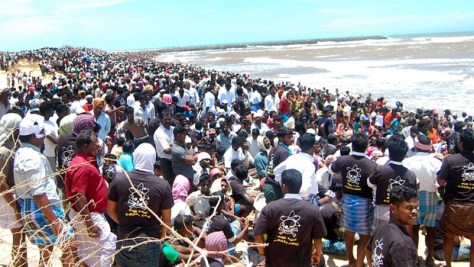
After initially flashing news about the incident, the media is now reportedly playing NPCIL’s statements denying and downplaying the incident. If NPCIL’s past record is anything to go by, truth will be a while in coming. Dr. APJ Abdul Kalam was unavailable for comment.
Today’s accident comes less than a week after the Honourable Supreme Court ruled that it was satisfied with the safety features installed at the plant. Read the rest of the report here.

We have reported earlier in Kafila on the ongoing struggle of the local people against the establishment of the nuclear reactor in Koodankulan here, here and here.
BJP’s Campaign of Intimidation – A Report from Banaras: Monobina Gupta
Guest post by MONOBINA GUPTA
The narrow streets of Goduliya Chowk were bursting at the seams yesterday. It was the time of the famous Varanasi aarti at the ghats of the Ganga, a time when the crowd multiplies by several hundreds of people. Narendra Modi was preparing to head out on his triumphant road show through this area, choc-a-bloc full. The BJP’s activists were in a frenzied trance – waving saffron flags, flaunting Modi caps (a tawdry imitation of the original AAP trademark), dancing and chanting: Modi, Modi. As a person with no love lost for Modi, I responded to the exultant mood with some apprehension. My thoughts were straying to the nukkad sabha of the AAP that I attended last evening when a group of 20 young and old AAP volunteers had gone around campaigning for Medha Patkar’s meeting. I found myself thinking about the evening a couple of days ago when I stood with Anand Patwardhan and some activists who were distributing leaflets right there at Goduliya Chowk, and a group of BJP men came surrounded us. I thought about another night spent at Kabir Math Chowk after watching the Dastangoi performance – when a group of young men from Bangalore and Maharashtra were confronted by BJP supporters. I was worried about their safety standing amidst a crowd which appeared dangerous in its swaggering triumph. Yesterday, with Modi’s cavalcade approaching, frictions were reaching fever pitch – encounters one could not possibly see on the images on TV at home.
Standing there amidst the crowd, I spotted an elderly Sikh gentleman walking through the throng of people wearing his AAP topi. Suddenly a roar went up, as Modi sympathisers lunged after him shouting ‘pagal, pagal’ (mad/mad). A little distance ahead I saw another man wearing the AAP cap. The crowd spotted him too, and ran after them both, gesticulating, heckling. As I start walking quickly towards the men I saw them, seemingly unperturbed, walk right through the charging hoard, not a sign of nervousness about their gait. They were walking the confident walk of men who know no fear. Continue reading BJP’s Campaign of Intimidation – A Report from Banaras: Monobina Gupta
Democracy as Permanent Advertising – Indian Media and Elections : Irfan Ahmad
Guest post by IRFAN AHMAD
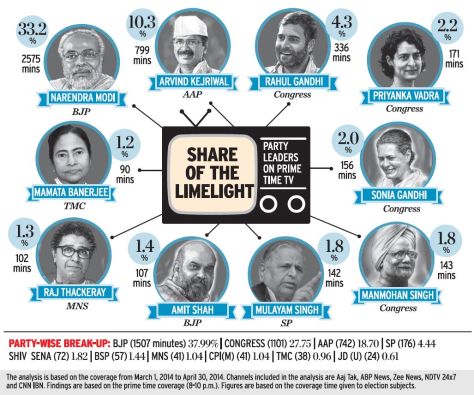
It was nothing short of a scandal. On 12 April, India TV, a Hindi channel, telecast 117-minute interview of the BJP Prime Ministerial candidate, Narendra Modi. Conducted by Rajat Sharma, it became, or was made, a mega hit. Tow days later, news director of Indian TV, Qamar Waheed Naqvi, resigned from his position alleging that the interview was ‘fixed’. Though Naqvi’s resignation was silenced in media, the fixed interview represents the dark and mutually constitutive relationships between media and politics.
Based on the analyses of select elections coverage by five television channels – India TV, NDTV, Aaj Tak, ANI, and IBN– I argue that:
- The way journalists pose questions to their favorite politicians are often already answers;
- In pursuing a storyline, journalists subordinate, even sacrifice, actual responses or events/facts to bolster their pre-determined narrative; and
- Electoral polity like India is heading towards a designer democracy marked by permanent campaigning-cum-advertising.
In short, I caution against the use of widespread phrase: ‘media and politics’. It is more fitting to say: ‘media as politics’ or ‘politics as media’.
Modi’s ‘Fixed’ Interview: India TV Continue reading Democracy as Permanent Advertising – Indian Media and Elections : Irfan Ahmad
Two days with AAP in Banaras
‘Varanasi’ is only the official name. Sometimes, to make a poetic point, someone may say Kashi. But ‘Banaras’ is how Banarasis refer to their city.
Banaras ki parampara, they say. Or hum Banaras ke musalman.
Kaal Bhairav Banaras ke kotwal hain, says the mahant of the Shitala Mata temple. Kaal Bhairav (Shiva) is the keeper of the gates of Banaras.
And of course, Banaras ki chaat khaayi hai aapne? Banaras ka paan nahin khayenge?
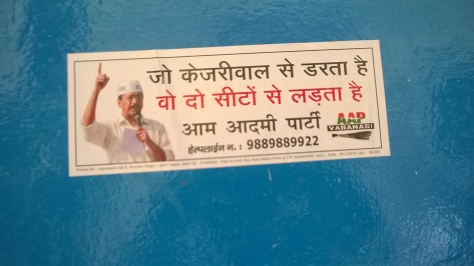
Sticker on wall of home in Rajmandir, a Hindu locality (All pictures by JAMAL KIDWAI)
My old friend and comrade Jamal Kidwai and I were in Banaras to observe the AAP campaign, being supporters of AAP (me) and of Arvind Kejriwal in Banaras (Jamal), and to hang out with the (largely young) volunteers who have landed up – from IT and advertising, from colleges and small government jobs, from Bangalore and Mumbai, from Madhya Pradesh and Arunachal Pradesh – to map Banaras with their feet. So this does not purport to be an objective account – unlike journalists’ accounts of the ‘Modi wave’, which do claim to be purely factual. As Professor Randhir Singh is fond of reminding us – in Paris in 1968, the first question the students would hurl at all speakers was always – “Where do you speak from?” Continue reading Two days with AAP in Banaras
David Cohen’s superficial understanding of Indian politics: Pran Kurup
Guest post by PRAN KURUP
This article is in response to a piece published in The Hindu by David Cohen: “Is India about to elect its Reagan” An American backing Modi seems to have got BJP fans all excited, given that the western media has, for the most part, taken an anti-Modi stance driven largely by his rather suspect human rights record.
Cohen finds that Indian elites “look down their noses at Mr. Modi, cringing at the thought of being led by a common chai wallah who can barely speak English.” Cohen is completely wrong here and appears to have a superficial understanding of India and the controversies surrounding Modi.
India has elected any number of leaders over the years who rose from humble beginnings and don’t speak English. Atal Bihari Vajpayee, former PM and BJP leader, is widely revered across the country though he never spoke English in public. Even to this day, you have so many elites who back leaders like Achutandanan from Kerala, Mayawati in UP, or Mamta Banerjee in Bengal. In fact, there are a whole host of Indian leaders who fit this “humble beginning, don’t speak English” profile. So Modi is no exception in this regard. Continue reading David Cohen’s superficial understanding of Indian politics: Pran Kurup
Modi-Fascism and the Rise of the Propaganda Machine
Almost every day, Modi takes off from Ahmedabad airport in an EMB-135BJ, an Embraer aircraft, for his rallies. The jet is owned by Karnavati Aviation, a group company of the Adani Group. “We record two movements of Modi’s aircraft daily. No matter where he goes to address rallies, he always comes back home,” said an air traffic control official.
Recently, Modi’s aircraft was denied permission to fly by DGCA in Delhi for over two hours, following which he lashed out at the central government for stalling his movement. Ever since, Modi has increased the use of choppers to cover smaller distances. “Mostly, politicians use chopper to reach places where bigger aircraft can’t reach,” said an ATC official.
Over the past few days, Modi flew in an Augusta AW-139 chopper, owned by the DLF Group, for his rallies in north India, especially in Uttar Pradesh and Bihar. ‘Fleet of 3 aircrafts ensures Modi is home every night after day’s campaigning’, Times of India, April 22, 2014
The Political Culture of Fascism
In an earlier post, I had joined issue with a section of liberal intellectuals, whose ‘liberalism’ was either rendering them too gullible or simply complicit in the formation of the Narendra Modi phenomenon – which I have no hesitation in referring to as the Indian edition of fascism. The gullibility or complicity of many of these intellectuals also manifests itself in the myopia that grips them when the talk about the impending challenge before democratic politics in India – a brief glimpse of which is provided in the quote above, that indicates the alliance, the power bloc that will rule, were Modi to come to power.
The Modi-formation is ‘fascism’, in the sense that it takes direct inspiration from the particular history that goes by that name, especially its Nazi episode and knows that even though it cannot replicate the conditions of its existence in India, it can nevertheless use its cardinal ideas. The exaltation of the Nation/ nation-state, the manic obsession with ‘national security’ to the extent of the destruction of democratic rights, identification and suppression of scapegoats – the Other (the Jew, the Muslim, the homosexual, and all kinds of ‘wayward’ sexualities – often, all rolled into one) and of course, the intellectuals, artistes and human rights activists. A key aspect of this political culture is the combination of violence with mass frenzy that is sought to be continuously whipped up and directed against the imagined enemies of the ‘Nation’. Continue reading Modi-Fascism and the Rise of the Propaganda Machine
Why Modi will become PM of India: Uzair Belgami
Guest post by UZAIR BELGAMI
I have been reading around of late and was surprised to see that there are actually still some people who think there is still a chance that Narendra Modi will not become PM of this country in 2014. Hah! Must be those minorities, or those Secularists, or those Communists who are saying and thinking this – all are Pakistan-lovers, Leftists and anti-nationals. I felt it is necessary I deal with these people through this article, in order to deal the ‘final blow’ before the elections. Continue reading Why Modi will become PM of India: Uzair Belgami
मर्दवादी और असमान सामाजिक व्यवस्था में स्त्री प्रतिरोध – ‘हाईवे’: धर्मराज कुमार
Guest Post by धर्मराज कुमार
वर्त्तमान परिदृश्य में हमारे इर्द-गिर्द जितने भी विमर्श मंडराते नजर आ रहे हैं उन सबके के आक्रामक शुरुआत को सोलह दिसंबर की बलात्कार की घटना से जोड़े बगैर नहीं देखा जा सकता है। इसमें कोई शक नहीं कि उस रात को दहला देने वाली घटना तक को कई खांचों में रखकर देखा जाता है। उदाहरणस्वरूप, आलोचना के तौर पर यह भी कहा गया कि निर्भया अभिजात वर्ग से आती थी इसलिए उसके बलात्कार ने पूरे देश की राजनीति को झकझोर कर रख दिया। जबकि उसी दरम्यान दिल्ली के करीब हरियाणा में कई दलित और सामाजिक रूप से प्रताड़ित लड़कियों और महिलाओं का निर्ममता से बलात्कार किया गया और मारकर फ़ेंक दिया गया और जिसका आज तक कोई अता-पता तक नहीं है। इससे भी इंकार नहीं किया जा सकता कि दिसंबर की घटना के पहले भी अनगिनत बलात्कार की घटनाएं हररोज हो रही थी और उसके बाद भी हो रही है। मगर कभी भी किसी विरोध ने इतना विकराल रूप धारण नहीं किया जिससे देश की राजनीति को हिलानी तो दूर उससे आजतक न्याय प्रक्रिया में गति तक आ सके। इसके कई कारण हैं।
मेरा उद्देश्य उस तरफ ध्यान खींचना कतई नहीं है। मेरा उद्देश्य है मुख्यधारा में इन मुद्दों से जुड़ती सवालों को उठाये जाने की तरफ ध्यान ले जाना। मैं बात कर रहा हूँ मुख्यधारा में चल रही फिल्मों और उससे जुड़े सवालों के ऊपर। फ़िल्म समीक्षा की दुनिया में ऐसा कम ही देखने को मिलता है जब कोई फ़िल्म अपनी रिलीज के बाद एक चर्चा का विषय हो या विवाद का हिस्सा हो। बल्कि तमाम विचारधारा से जुड़े लोग जब किसी फ़िल्म के ऊपर अपनी प्रतिक्रिया जताने लगे इसका मतलब है कि ऐसी फिल्में लोगों को संवाद करने के लिए विवश कर रही हैं। Continue reading मर्दवादी और असमान सामाजिक व्यवस्था में स्त्री प्रतिरोध – ‘हाईवे’: धर्मराज कुमार
De-recognize the BJP!
The BJP has been clamouring for the de-recognition of AAP for its ‘anarchism’ and its lack of faith in institutions put in place by the Constitution, but faced with the sting by Cobrapost on its own responsibility for the Babri Masjid demolition, its only response is that the Election Commission should stop its broadcast in view of the elections. In its characteristic fashion, the BJP leaders went on to accuse the sting operation of being ‘Congress sponsored’ – looks like this party has even lost the capacity to make a reasonable argument about anything. Meanwhile, all of yesterday the major channels were dancing tango with the BJP in expressing suspicion about the ‘timing’ of the release. Not one of the channels had anything to say about the content of the sting.
Who is setting the terms of ‘debate’ here?
And why does the BJP want the EC to stop the broadcast? Because now it is clear that even as top BJP leaders and the Kalyan Singh government gave their commitment to the Supreme Court of India that nothing would happen to the mosque, the leaders were planning its demolition. That is what the sting operation shows. It shows, in the words of the actual dramatis personae, how the young recruits were trained by retired military personnel, without being told what their mission was. The training was conducted in strict secrecy and with the full knowledge of at least some of the BJP bigwigs, the RSS and the Shiv Sena. Continue reading De-recognize the BJP!
Tabloid Law – Framing Sexual Violence: Pratiksha Baxi
Guest Post by PRATIKSHA BAXI
When an ongoing rape trial becomes a controversial ‘story’, much rests on journalistic practice: how the story is plotted, the metaphors used, and the visuals that accompany the text. Writing about sexual violence is challenging if one wants to resist voyeurism, yet sell a ‘story’. It means resisting reproducing ‘tabloid’ pictures of law.
Given that there is very little literacy about the newly amended rape law, it is not apparent to many why forms of sexual violence, other than forcible penile penetration of the vagina, should be called rape. Nor is it acceptable to many people that a man be sentenced for ten years (or more) for rape when it is not accompanied by annihilating physical violence.
Is it then incumbent on journalists to indicate that the 2013 amendments to the rape law create new meanings of rape, some which are not accepted as rape in society? Indeed, what role do journalists have in interrogating the social and collective toleration of sexual violence? Continue reading Tabloid Law – Framing Sexual Violence: Pratiksha Baxi
If a Woman is Raped in the Middle of a Forest and No Camera Sees it Was She Actually Raped? Fulana Detail
This is a guest post by FULANA DETAIL
When I was 19 years old I developed persistent headaches. My mother took me to the eye doctor to get my eyes checked. The doctor lived in our neighborhood. He was our family’s eye surgeon, he’d operated on both my grandfathers’ cataract, he was (and presumably continues to be) a well-respected doctor.
After the routine eye tests were done, the doctor noted I had slight myopia and that it, “appeared there was a weakness in the eye muscle that may be indicative of a general weakness.” I was anemic and underweight and he recommended a general physical examination. My mother said, “No problem, we’ll go to our GP”. “Why bother?”, he responded, “after all eye doctors are doctors first and receive the same medical training as everyone else”. Rather than bother with a separate visit he would be happy to do it himself, it would only take a few minutes. It sounded odd, but well he was the doctor. My mother knew him, and who were we to question the doctor? Why didn’t my mother step out, he suggested. I would be more comfortable that way. My mother looked at me: was I ok with that? I didn’t see why not, so she walked out.
He closed the door, I sat on the bed. He walked up to me, stood behind my right shoulder, began pressing my neck, unhooked my bra, felt my breasts, moved his hands down my stomach, pushed his hand into my underwear and began pushing his fingers into me. At this point I pushed him away, jumped off the bed and walked out. I didn’t go back in and my mother concluded the consultation. I said nothing to my mother at that point. She dropped me off at college. I felt strange and upset through the day, but I didn’t speak of this to anyone. In the evening I met my then boyfriend told him some of what had happened, but not the details. That evening, or perhaps it was the next day, I told my mother a version of what had happened but again, not in any detail. She asked if I wanted to lodge an official complaint. I didn’t. So my mother went back and confronted him. At which he flat denied anything untoward had occurred. If I were a victim, it was of a grievous misunderstanding. He had two daughters, he was terribly sorry if I had misunderstood, but really it was not his intention. He was only conducting a medical examination. I was not a child. I was a 19 year old, college educated woman. And I had let an eye doctor do something for which the new law prescribes a seven year jail sentence. Continue reading If a Woman is Raped in the Middle of a Forest and No Camera Sees it Was She Actually Raped? Fulana Detail
What do Tejpal supporters choose to see? Team FeministsIndia
[FROM THE BLOG FEMINISTSINDIA]
Tarun Tejpal, who was the editor of Tehelka magazine, is alleged to have sexually assaulted his junior journalist in a lift in a Goa Hotel. The past few days have seen subtle and direct statements that seek support for Tejpal based on the CCTV footage of the survivor and Tejpal outside the lift. While senior journalists Manu Joseph and Seema Mustafa wrote articles dissecting the incident in favour of the accused, well known film maker Anurag Kashyap accused the survivor of not telling the truth – they all were basing their opinions on the CCTV footage they saw. The campaign coincides with a bail application made to the Supreme Court.
Feminists Vrinda Grover and Kavita Krishnan analyse flaws in the arguments made in support of Tarun Tejpal in media and social networks by those who have illegally watched sub judicial CCTV footage.
Letter to Press Council re Tehelka case from Network of Women in Media
Dear Justice Katju,
The Network of Women in Media, India is deeply concerned about what appears to be a renewed media campaign that threatens the course of justice in the sexual assault and rape case involving the former editor of Tehelka, Tarun Tejpal.
In this connection we would like to call the attention of the PCI to two recent articles on the subject in two publications, The Citizen and Outlook. The article in the former, headlined “Alleged victim’s testimony in the Tarun Tejpal case at variance with CCTV footage” which originally appeared under the byline of senior journalist Seema Mustafa, was later credited, on 31 March evening, to ‘Citizen Bureau’. [This piece has by now been removed altogether]. The article in the latter, headlined “What the elevator saw” is by senior journalist Manu Joseph.
While ostensibly seeking to set the record straight, both articles are clearly biased in favour of the accused and seem to be a deliberate attempt to adversely influence public opinion against the complainant. Indeed, these articles appear to follow the familiar Standard Operating Procedure to silence women in cases of sexual violence, and bolster the impunity of perpetrators. Continue reading Letter to Press Council re Tehelka case from Network of Women in Media
Let’s be fair to Tarun Tejpal. Let us listen to his side of the story
A number of people are saying that Tarun Tejpal has been held guilty and convicted by a media trial. They are saying that the media and public have both chosen to not hear “the other side of the story”.
That claim, put simply, is incorrect. From day one of the story, “the other side” was heard. We read Tejpal’s emails and those of his lieutenant Shoma Choudhary. We heard Choudhury speak and defend herself endlessly on TV. On news channels, in print and on the web, we’ve heard a long list of luminaries defend Tejpal: Sanjoy Roy, Alyque Padamsee, Namita Devidayal, Dilip Tahil, Rahul Singh, Prem Shankar Jha, Roger Cohen, Anusha Rizvi, Manisha Sethi, Palash Krishna Mehrotra, Charu Nivedita, BG Verghese, Bina Ramani, Nirupama Sekhri, Madhu Trehan, Rahul Da Cunha and then some. Latest additions to the list are Seema Mustafa, Manu Joseph and Anurag Kashyap.

All of these people tell us the other side of the story, which is incoherent and constantly changing. Let’s be fair to them. Let’s listen to what Tarun Tejpal has to say. Continue reading Let’s be fair to Tarun Tejpal. Let us listen to his side of the story
 KAFILA - COLLECTIVE EXPLORATIONS SINCE 2006