Category Archives: Media politics

Statement on Censorship in Kashmir by Reporters without Borders

Censorship and violence against press in Kashmir
Reporters WIthout Borders, 25th August, 2008

Reporters Without Borders calls on the Indian authorities to put an immediate stop to the censorship and violence against the media in Kashmir that has been prompted by a wave of protests against Indian rule. At least 13 journalists were beaten by police yesterday in Srinagar, local TV stations are being censored and a curfew is making it hard for newspapers to bring out their issues.

“This latest crisis in Indian Kashmir must not be used as a pretext for subjecting the press to more violence and obstruction,” Reporters Without Borders said. “Journalists must have all the guarantees they need, including permanent passes, to be able to work freely despite the curfew. We also call on the police authorities to investigate the violence by certain elements that have led to injuries in the ranks of the press. If no sanctions are adopted, the door will be left open for more abuses. Finally, we call for an end to the censorship of local TV stations, which is a clear violation of the right of Kashmiris to be informed.”

Continue reading Statement on Censorship in Kashmir by Reporters without Borders

“I See Kashmir from New Delhi at Midnight”

(Adapted from a posting made earlier today on the Reader-List, Apologies for Cross Posting)

Even as the Indian state seems to be on the threshold of losing its grip both on hearts and minds in Kashmir and on its own wisdom, we have our own bunch of proud patriots making a heroic effort to convert the column inches of newspapers and the floor space of television studios into their own, special, battleground. Perhaps they might be consoling themselves with the hope that the turf battle of perception management in the media may yet be won, even if Kashmir is lost. Somehow, I am not so sure that this is going to be the case.

Unfortunately for them, to win in arguments, both – the state in Kashmir, and the Indian nationalist hard liners in the media and on other public fora, need some ideas, some attempt at reason, some amount of vision. I am afraid, that so far, neither the state, nor its hyper-loyal editorialists, sound-byte commandos and cyber-footsoldiers, have been able to display any. Instead, we have had bullets in Kashmir, and as I write this, news of midnight raids, arrests and the putting in place of the machinery of a major crackdown tomorrow, on those planning to assemble to protest peacefully on Lal Chowk in Srinagar, and restrictions on the freedom of expression. It is possible that a lot will happen tomorrow and in the next few days that will not filter through on television and the newspapers. It is possible that internet connections will be momentarily ‘down’ and that phone contact with the valley may be suspended. If it is not, then it is imperative that those who are in the valley, especially journalists of major international newspapers witness and report what might happen. If the worst does not come to pass, then, everyone will be relieved, and I really hope that is the case. We must remember, that in 1989-90, major massacres took place in Srinagar and in the rest of India, nobody really knew what was going on before it was too late. It is not as easy today for the Indian state to replicate the news blackout that accompanied the crackdown that took place in 1989, but certainly, the signs are that there might just be an attempt to do precisely that underway.

The PTI report quoted in a story just uploaded on the Indian Express website an hour before midnight, yesterday, 24th August, makes for chilling reading, especially if we read between the lines. It deserves being quoted in its entirety.
Continue reading “I See Kashmir from New Delhi at Midnight”

Update on Chengara

On 14 August, leading dalit activists from Kerala protested in Pathanamthitta against the continued road blockade organised by the joint front of trade unions which claim to be fighting for the rights of plantation workers. They were prevented from proceeding to Chengara and were arrested, to be released by evening. Meanwhile, the trade unions agreed to lift the blockade by 3 at noon. They however demand that the people who have occupied the plantation should all leave in 10 days’ time, and if this does not happen, the blockade will be on again.

Press coverage has improved somewhat but not much. Even the sworn enemies of the left, like the Malayala Manorama, have kept largely silent. Not surprising, though — the Congress and others, including the interests that this newspaper represents, are patiently waiting for the LDF government to dig its own grave by provoking a Nandigram-like situation. Once the calamity begins, they will of course move in, like vultures. The Centre too of course is watching and waiting for CPM to make another big mistake.

These are strange times.There is a raging debate now on within the CPM and the LDF about the pending approval to proposed SEZs, and one of the key points of the conflict has to do with trade union presence within them.While a powerful section within the CPM wants to curtail workers’ rights within the SEZs,outside, on the road to Chengara, trade unions attack their ‘enemies’ — landless and marginalised people.

The Chengara Struggle Committee has called for protest meetings all over the State on 23 August; it has also appealed for a protective human chain around Chengara on 25 August.

A Tangential Addition to the Great Auto Debate

I want to go off on a bit of a tangent here. Just to open a different discussion in the spirit of thinking, and muddling along together. It seems to me that one of the axis on which the debate has turned is on the question of desire and its representation. Who is the desiring subject, towards whom is this desire directed, who represents this desire in what way, what are the slippages therein, who has the right to speak about whom.

I was wondering if we can approach this from a slightly different angle by taking this question of desire beyond the individual subject (variously defined). And in fact nameless did gesture to this in one of her responses where she raised the question of the appropriation of what she termed subaltern practices by elite intellectuals where certain practices and forms, in this case autos, are made to stand in for certain values – in this case progressive, ‘left” etc – which says more about the locations of the intellectuals and their insensitivity to their own class-caste positions, in a move which is patronizing at best and exploitative at worst. I think inherent in this critique is the shadow of a kind of objectification of a certain experience, so that a symbol becomes alienated from the actual life practices in which it is located to circulate as some empty signifier, to be appropriately filled as per requirement.

Continue reading A Tangential Addition to the Great Auto Debate

Ahem-dabad again

Update: Yaha sab shanti hai, yeh public hai sab jaanti hai

Sheela Bhatt’s assertions that the Gujarati Muslim hasn’t been seeking retribution by a long shot are not surprising at all. What is illuminating is this:

One of the surprises of Saturday’s blasts was that except one blast in Sarkhej, all the blasts were executed in East Ahmedabad, which includes the highly communally sensitive walled city area. The accuracy of the planning suggests that a person with a complete grip on the social-political mindset of the city and its communal geography must be behind the blasts.

No one in this shaken city doubts that these blasts were planned by someone who has a thorough knowledge of the past 25 years history of communally sensitive areas and the Sangh Parivar’s role in it. Continue reading Ahem-dabad again

The Web Will Not Kill Traditional Organising by Michael Connery

Is technology undermining the much-vaunted community values of Millennials and creating a generation of semi-activists clicking for change on their computers, but ultimately disconnected and disempowered from each other and from the levers of real social change? This is the thesis posited by Sally Kohn, the director of the Movement Vision Lab at the Center for Community Change in an op-ed published in the Christian Science Monitor last week: Continue reading The Web Will Not Kill Traditional Organising by Michael Connery

“Madam, we know you’re leaving. Think wisely before coming back”

Continue reading “Madam, we know you’re leaving. Think wisely before coming back”

When you’re OUT, you’re IN

Since Gay is in, currently, for the Indian media, Sonali Gulati, film-maker, out lesbian and gay rights activist, knows what it is to be hotly pursued for sound-bites. She has posted on youtube a recorded conversation with a reporter from IBN 7 pressing her for her take on a “lesbian” issue. Her quiet , insistent questioning reduces him to confused gibberish, but more importantly, makes the point that “lesbians” are no more and no less newsworthy than straight people – At one point she asks him, “Agar yeh ek heterosexual couple ke saath ho jaata, tab aap kis se comment lete?”

(If this had happened with a heterosexual couple, then to whom would you have gone for comments?)

Meaning of course, that any and every heterosexual would not be considered “expert” enough to comment on any and every heterosexual issue. The bemused reporter starts all over again with his insane drivel – he simply does not get it. Can she really be giving up an opportunity to appear on television? Naaah.

But go on – listen to Sonali.

Under Development: Singur

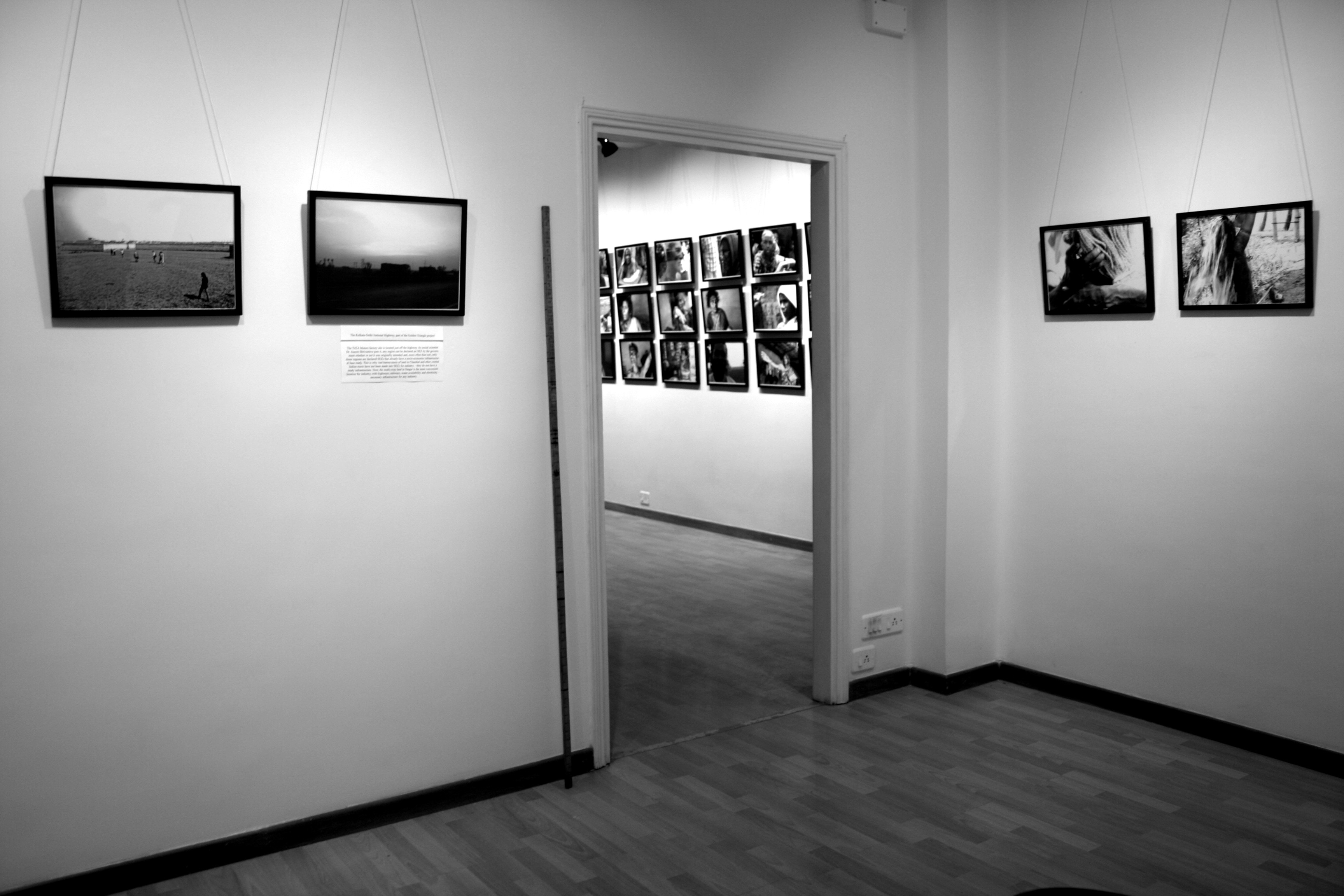
If you are in Kolkata between 27 June and 2 July, you may do well to visit the Seagull Arts and Media Resource Centre, Kolkata, for an exhibition of photographs of Singur. There will also be a panel discussion and a film festival. Continue reading Under Development: Singur

Gomti Nagar to Bundelkhand

It has been over a year since Mayawati came to power in UP and I am absolutely sick of seeing news reports beginning with the comment, “In a state ruled by a Dalit chief minister, a Dalit youth was killed…” This hostility towards Mayawati is ironically couched in the language of ‘Dalit empowerment’, the phrase used so loosely its is completely devoid of meaning. Where were all these reporters and their editorialising and their concern for Dalits when Yadavs were running the state?

What has Mayaywati been doing for Dalits? That question will be answered again and again without talking to a single Dalit. But if you do go looking for something, you will find it. The redoubtable Nilanjana Bose reports: Continue reading Gomti Nagar to Bundelkhand

Broken news

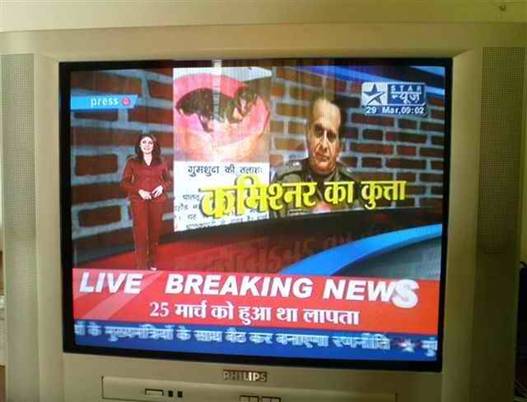
Got these from a friend. Enjoy.


Lost on 25 March, the Delhi police commissioner’s dog was soon found, giving star news an opportunity to ‘break news’ and do a special show replacing a news bulletin. Below: they continued flashing the news and calling it ‘breaking’ even when other news forced itself on to the screen.

Continue reading Broken news

The Patriot Act of Intellectual Property

I was at a meeting recently to discuss what is now being termed, as The Patriot Act of Intellectual Property. Some of the leading economic powers including the US, European Commission and Japan have been negotiating an agreement, the Anti Counterfeiting Trade Agreement (ACTA) which attempts to redefine IP enforcement. The Bush administration is particularly keen that they finalize this agreement before the end of his term. At the moment the substantive content of the agreement is not known, and the few details that are available are only because of a leaked document of the US government available in Wikileaks.

Continue reading The Patriot Act of Intellectual Property

Many Ramayanas and Hindutva Brigade

A lot of you must have seen the edit in today’s HT condemning the act of vandalism and the news of the arrest of three ABVP activists. You must have also seen reports in today’s newspapers about the demonstration yesterday in Delhi University of students and teachers demanding punishment to the guilty and reiterating the pledge that the text should not be expunged just because ABVP/BJP finds it objectionable. For those who want to look up, the text in question is A K Ramanujan’s Three Hundred Ramayanas: Five Examples and Three Thoughts on Translation, also available in a volume edited by Paula Richman: Many Ramayanas: The Diversity of a Narrative Tradition in South Asia (OUP; 1991.)

Continue reading Many Ramayanas and Hindutva Brigade

Wikileaks Under Attack: By Stephen Soldz

One of the most important web sites in recent months has been Wikileaks.org. Created by several brave journalists committed to transparency, Wikieaks has published important leaked documents, such as the Rules of Engagement for Iraq [see my The Secret Rules of Engagement in Iraq], the 2003 and 2004 Guantanamo Camp Delta Standard Operating Procedures, and evidence of major bank fraud in Kenya [see also here] that apparently affected the Kenyan elections. Wikileaks has upset the Chinese government enough that they are attempting to censor it, as is the Thai military junta.

Now censorship has extended to the United States of America, land of the First Amendment. As of Friday, February 15, those going to Wikileaks.org have gotten Server not found messages. Continue reading Wikileaks Under Attack: By Stephen Soldz

Climaterror, boredom and media

The pressing, in fact the overpowering need to keep people perpetually agog with false excitement, generated by the fear of impending doom, played out in all its gory details over the last three days across the gossip channels that go in the name of News Channels and Glamour sheets that try to pass of as Newspapers.

26th January had come and gone, Sarkozy had come and gone without giving us the nuclear fuel that would have overnight made the greatest democracy into the second or third or fourth or the nth most happening country in the world.

Continue reading Climaterror, boredom and media

Imagining Governance and Governing our Imagination

Manmohan Singh from the Indian Express two days ago:

I sincerely pray and hope that we remain a functional democracy. But democracy has certain disadvantages. I have a friend in the International Monetary Fund, who went to Korea in the days it was run by an authoritarian system. They were discussing the issue of devaluing the currency. When my friend talked with the finance minister, he said, “That’s a very difficult question. You don’t expect me to give an answer right away.” When my friend asked him how much time he would need, the finance minister said, “I will take half an hour, I have to book a call to the president.”

We have to work, therefore, to create a new mindset. Some ten days ago, I was in Singapore and had the privilege of meeting Premier Wen Jiabao of China, for whom I have great admiration, both for him and President Hu Jintao. The type of leadership that China has produced since the days of Deng, I think, is the greatest asset that China has. [Link]

Narratives, says French philosopher DeCerteau, go ahead of social practices to make way for them. Continue reading Imagining Governance and Governing our Imagination

Arundhati Roy on Taslima Nasreen and Nandigram: Interview with Karan Thapar on IBNlive.com

As we have been discussing both Nandigram and the situation that Taslima Nasreen has found herself over the last few weeks, I thought that it might be interesting to listen in on a conversation that Karan Thapar has had with the writer Arundhati Roy that takes on both these questions. This interview was broadcast today on CNN IBN.


Transcript of Arundhati Roy interviewed on the treatment of Taslima Nasreen by Karan Thapar on ‘Devil’s Advocate’, broadcast this evening on CNN-IBN

The transcript was published on Sun, Dec 02, 2007 at 20:32, on the IBNlive.com website

A video of the interview is also available on the website.

———————————————

Hello and welcome to Devil’s Advocate. How do India’s leading authors respond to the treatment given to Taslima Nasreen over the last 14 days? That’s the key issue I shall explore today with Booker Prize- winning novelist Arundhati Roy.

Karan Thapar: Arundhati Roy, let me start with that question. How do you respond to the way Taslima Nasreen has been treated for almost 14 days now?

Arundhati Roy: Well, it is actually almost 14 years but right now it is only 14 days and I respond with dismay but not surprise because I see it as a part of a larger script where everybody is saying their lines and exchanging parts.

Continue reading Arundhati Roy on Taslima Nasreen and Nandigram: Interview with Karan Thapar on IBNlive.com

Enough is Enough: Stop CPM’s Criminal Campaign

West Bengal governor Gopal Krishna Gandhi, has termed  the ‘recapture’ mission launched  by the CPM to regain its hold over areas of Nandigram  which had slipped out of its control after March 14, 2007, ‘unlawful and unacceptable’ . The ardour of Deepavali has been dampened in the whole state by the events in Nandigram. Several villages in Nandigram are oscillating from the deepest gloom to panic, Gandhi said on the evening of 9 October. He said that he had been receiving phone calls from responsible people in Nandigram   telling him that several huts were ablaze and people were forced to flee their home and take shelter elsewhere.. He said that the most appropriate description of the situation  in Nandigram  came from the Home Secretary who called Nandigram a WAR ZONE. The Governor said that no government or society can allow such war zones to exist without ‘immediate and effective action’.  Gopal Kirshna Gandhi made it clear that he did not trust the political leadership of the state when he directly asked the administration to remove ‘new unauthorized man made blocks’at the four entry points in Nandigram. The governor also expressed his displeasure over the manner in which Medha Patkar and her colleagues were prevented from entering Nandigram when the CPM activists pulled and pushed her, tried to drag her out of her car by punching her on her face.. He said,’The treatment meted to Smt Medha Patkar and other associates of hers last evening was against all norms of civilised political behavior’.

Newspapers have reported the governor carefully listing all the 13 villages which have now been recaptured by the CPM. It has been reported that the statement came hours after the request by a team of the CPM members of the parliament to see that his sympathy and concern are meant for ‘sufferers on both sides’. The CPM state secretariat member Benoy Konar promptly condemned the governor for being partial . He said that he had insulted his post. ‘When our supporters were out of their homes during Durga Puja, his festive spirit was not dampened. He has insulted his post’, Konar added.

Continue reading Enough is Enough: Stop CPM’s Criminal Campaign

Deoband Muftis Criticize Fatwa Against Taslima

[A report from khabrein.info by the Staff Reporter, Khabrein. Did anybody see this report filed in the mainstream media? Maybe we missed it. Barkha Dutt sure did not see the placard-wielding protestors protesting against the attack and subsequent fatwa against Taslima Nasreen. Do we by ignoring such voices of internal opposition and by arrogating all secular wisdom to ourselves, really advance the cause of  ‘secularism’, Ms Dutt? We wonder. Extracts from the report:]

Clerics at world renowned seminary Darul Uloom Deoband (waqf) have denounced fatwa against controversial Bangladeshi author Taslima Nasreen saying that the fatwa in itself was illegal. Prominent muftis of the madrasa Maulana Khursheed Alam, Asst. rector of the seminary Mufti Ehsan Qasmi, Mufti Muhammad Arif and Maulana Abdullah Jawed said that in a democratic and secular country like India a fatwa like the one that sought beheading of Taslima Nasreen was not based on a sharia law.

A cleric in Kolkata had issued a fatwa or a death warrant Friday against Taslima Nasreen if she did no leave India. “Anybody eliminating her would be given Rs 100,000 and unlimited rewards if she does not leave the country immediately. She has insulted Islam and continued to create problem in this country,” said Syed Noor-ur-Rehman Barkati, the shahi imam of Tippu Sultan Mosque in Kolkata. He went on to say that “We are forced to issue such a warrant because the government is not making use of the constitutional provisions and driving her out of the country”.

Read the full report here.

Roma’s Arrest, Land Mafias and the Indian Police State

Even as semi-literate journalists and supposed pundits in the Capital celebrated the 60 years of the “world’s largest democracy”(incidentally the greatest and most grotesque cliché of our times), away from the “watchful eyes” of the media, other less savoury stories have been playing themselves out. Brave and self-effacing women activists like Roma, have been arrested under the National Security Act and have now been labeled as ‘Maoist’, according to a report in the Jansatta (Ambarish Kumar, 17 August, “Manavidhikar Karyakarta to Ab Naxali Banane ki Muhim”). This is no small and isolated happening. It is, in a microcosm, the story of what this ‘largest democracy’ is all about. The ultimate weapon of a desperate police force (widely used all across the length and breath of the country) of ‘labeling a dog mad before killing it’ is being brought into play to deal with peaceful struggles of ordinary people.

For those who have any idea of the activities of activists like Roma, this is a lie of the most blatant sort. Roma has been long active in organizing the tribals and landless Dalits, and especially, of late, landless women to fight for their property rights. Roma’s struggle has been fought under the banner of Dr Ambedkar, Jyotiba Phule, Savitri Bai Phule, Birsa Munda and Rani Lakshmibai and has never resorted to any kind of violent means. Nonetheless, her arrest, along with Shanta Bhattacharya and Malati, in Sonbhadra district of UP, shows that even such non-violent and constitutional struggle is becoming impossible in large parts of the country today. It is the state and the police that are producing Maoists by the hour. It is not without reason that former Prime Minister VP Singh had to proclaim in utter exasperation that he too wants to become a Maoist. It is the utter cynical contempt with which the state, the judiciary and the media have treated a long and peaceful struggle against land acquisition – the Narmada Bachao Andolan – that sends out the signal, loud and clear that the only language that the state and the cohorts of corporate capital understand is that of the gun.

Continue reading Roma’s Arrest, Land Mafias and the Indian Police State

Shahid Amin on Memory, Media and the Historian’s Practice

[We bring you this piece by well known historian of the Subaltern Studies group, on the media’s hyperactivity on the ‘disclosures’ made by Lady Pamela Mountbatten, as he reflects on the historian’s responsibility. This article was first published in Daily News and Analysis.]

Publishing hype and a contentious presidential election have fortuitously brought two very dissimilar lady residents of the Viceregal House to media attention in the last week. On the same day when we read the details about Pratibha Patil’s victory, an interview was televised with the youngest daughter of Lady and Lord Mountbatten, the last Viceroy and Vicereine of Raisina Hill. Transcripts of the interview, occasioned by the publication of India Remembered: A Personal Account, co-authored by Lady Pamela Hicks, nee
Mountbatten and her daughter, have been carried in several newspapers.

Media-persons have been burning their phone lines trying to get sound bytes from historians about whether or not, ‘in actual fact’, the Edwina-Nehru intense, platonic relationship allowed the Last Viceroy to influence slyly our remarkable first PM. For there were moments, as the author recalls in the interview, when Panditji and the Lady were allowed by the Earl and his daughters to be left alone, “sitting on a sofa in the study or something”.

Continue reading Shahid Amin on Memory, Media and the Historian’s Practice