Category Archives: Mirror Worlds

Shadow Libraries

This is an article that I have written for e-flux which speaks to some of the debates that have taken place in Kafila on the photocopying case at DU. Most of the debates have been framed thus far by  legal questions and  questions of cost and access. While  ideas of cost and access are  useful for pragmatic arguments they fail to capture the delirious thrill  which marks most of our encounters with books (whether purchased, photocopied or  downloaded). In one of the comments to my earlier post Jeebesh Bagchi suggested that we should invoke the idea of shadow libraries and also the fact that our arguments should not be scared of dancing so here goes.

The original article can be found here

Shadow Libraries

Over the last few monsoons I lived with the dread that the rain would eventually find its ways through my leaky terrace roof and destroy my books. Last August my fears came true when I woke up in the middle of the night to see my room flooded and water leaking from the roof and through the walls. Much of the night was spent rescuing the books and shifting them to a dry room. While timing and speed were essential to the task at hand they were also the key hazards navigating a slippery floor with books perched till one’s neck. At the end of the rescue mission, I sat alone, exhausted amongst a mountain of books assessing the damage that had been done, but also having found books I had forgotten or had not seen in years; books which I had thought had been permanently borrowed by others or misplaced found their way back as I set many aside in a kind of ritual of renewed commitment. Continue reading Shadow Libraries
A Visa for Mahiwaal: Maheep Singh

Guest post by MAHEEP SINGH

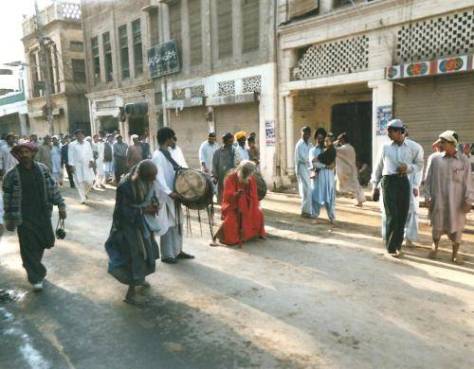
Sufi dervishes join a Sikh Nagar Kirtan parade at the Nankana Saheb shrine near Lahore. Photo credit: S Khalsa

As a child I gave my mother a tough time with all sorts of questions about the world; she would often not have answers. I would ask, for instance, why we couldn’t just go to Nankana Saheb as and when we wanted. Nankana Saheb is the birthplace of Guru Nanak, founder of the Sikh faith. It is in Pakistan, on the outskirts of Lahore.

Sikhism must be the only religion in the world whose official prayers include a plea for visa relaxation. Believe it or not, millions of Sikhs all over the world do that as part of their daily prayer, the Ardas, in which we pray to almighty to grant us free access (“khulle darshan deedaar”) to the birth place of Guru Nanak and other places in present-day Pakistan, considered holy by Sikhs. Continue reading A Visa for Mahiwaal: Maheep Singh

India and Pakistan: Let people meet

This online petition has been put out by AMAN KI ASHA

The people of Pakistan and India, people of Indian and Pakistani origin around the world, and friends of India and Pakistan, are fed up of the visa restrictions that prevent them from visiting families in the other country. There isn’t even a tourist visa protocol between these two biggest neighbours of South Asia. People in the region want the right to travel and to trade, to walk along coastlines and roads that represent their collective past, to seek and spread harmony across a subcontinent not divided by politics and propaganda. In this modern age of interdependence, it is a tragedy that the citizens of India and Pakistan are left peering over a border made indomitable and intimidating. There is little space for the hand of friendship to be extended across this border. This must change.

The governments of India and Pakistan must:  Continue reading India and Pakistan: Let people meet

Of Shopfloors and Newsrooms: Faiz Ullah

Guest Post by FAIZ ULLAH

It’s that time of the year. Newsrooms of television news broadcasters are buzzing. Human Resource (HR) professionals may choose to see it as the culmination of a significant process called performance appraisal, but for young news producers and journalists – a decidedly young species – it’s time to see that overdue promotion or promised increment in remuneration. Sometime during the beginning of last financial year these young professionals must have set up their ‘specific and measurable’ KRAs, or Key Result Areas, by using formulaic proformas sent to them by the HR department. This year, a few months ago they would’ve again got a mail from the HR department asking them to revisit those excel sheets with their line supervisors and have their performances graded on the scale of 1 – 10 or some such. Every story filed, every source cultivated, every special ‘half-hour’ show done must reflect on this document. ‘Domain expertise and knowledge’, ‘integrity’, ‘self-discipline’ and ‘adaptability’ are some of the ‘competencies’ against which the supervisors are required to assess the performance of their subordinates additionally. What don’t find mention on these appraisal forms are day to day frustrations that are part and parcel of a news professional’s job and anxieties that permeate his/her larger lifeworld.

Continue reading Of Shopfloors and Newsrooms: Faiz Ullah

National contestation, not religion, responsible for the plight of Myanmar’s Rohingyas: Ayesha Siddiqa

Guest post by AYESHA SIDDIQA

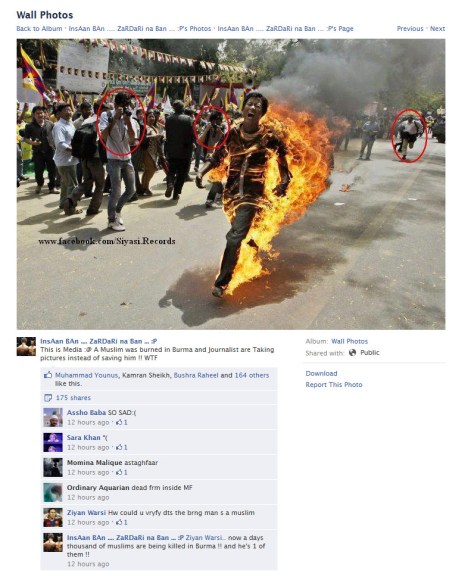
This photo is a screenshot of a Facebook page that incorrectly shows the self-immolation of a Tibetan activist in Delhi as an image of Rohingya persecution in Myanmar. This is one of countless such images circulated in social media. Image credit: Express Tribune, Pakistan.

These days, the social media is abuzz with discussion on Myanmar. Interestingly, it is not even a constructive discussion but one which is meant for point scoring. The nature of the discourse has complicated the issue even more and thus calls for at least a couple of articles: one on the issue and another one meant to be an analysis of the situation of Burmese Muslims. It is important at this stage to disentangle the two dimensions to make sense of what is actually happening. Continue reading National contestation, not religion, responsible for the plight of Myanmar’s Rohingyas: Ayesha Siddiqa

Molecular Socialism – A Possible Future for Left Politics

The end of the twentieth century saw the collapse of soviet-style state-socialism and the beginning of neo-liberalism’s triumphal march, which has ravaged the planet in a little over two decades. The destruction of the earth has proceeded with renewed vigour since, as has the dispossession of the poor. Cities have been re-made for the luxury living of the rich and the upwardly mobile middle classes. And for their luxury, for their ‘free movement’ across the city and beyond, settlements of the poor have had to make way, as shopping malls, freeways and expressways began defining the new imagination of the city.

If it took soviet-style socialism close to six-seven decades to finally face mass rejection, the neoliberal order has taken far less time. Faced with major opposition movements across the Western world, from the Occupy Wall Street movement to the Indignados in Spain and Greece and powerful new political formations in many parts of South America, the neoliberal order no longer seems as unchallengeable as it used to till just some time ago. Its advent on the horizon came as a new kind of theology that brooked no dissent. It came to us apparently telling us some elementary truths about ourselves and the world we inhabit. And it was quite amazing to see the speed with which the new religion gained converts in those early years. Continue reading Molecular Socialism – A Possible Future for Left Politics

On the ongoing ethnic violence in Assam: A Statement

The following is the text of a Statement issued in Delhi on 27 July 2012, endorsed by a number of concerned organizations and individuals

We the people from various parts of northeast residing in Delhi, along with concerned individuals, university members, various students’, teachers’, trade union, women’s, civil and human rights organisations from Delhi, strongly condemn the ongoing ethnic conflict with serious communal undertone that has erupted in four districts (Kokrajhar, Dhubri, Chirang and Bongaigaon) of Lower Assam. This has been the most widespread and alarming conflict in the recent history of Assam.

In the last one week we have witnessed the tragedy of nearly 200,000 people belonging to the Bodo and the Muslim communities, being forced to flee from their homes and villages. Currently they stand internally displaced, and are scarred and traumatized. Official figures state that around 41 people have lost their lives so far, while unofficial estimates from the grounds are much higher. More than 400 villages have been torched down until now. Continue reading On the ongoing ethnic violence in Assam: A Statement

In Solidarity with Oprah

I recently read a scathing article on Oprah Winfrey. I was quite shocked. The journalist made such fuss about her honest observations as if it’s criminal to not know something. However, what were more astonishing were the serendipitous parallels between her journey to Indian and mine to US. And when I read the article, I almost felt as if someone was mocking at me. I felt outraged and decided that I’ll write this note in solidarity with Oprah. Perhaps then, people will see the injustice done to her. Well, I am a celebrity too, here in this country. Not as big as Oprah but it doesn’t matter. It doesn’t matter even if you’re not able to place me at all. The real celebrities don’t publicize themselves anyway. They’re obscure, consigned to oblivion, with some quaint looking academic in some foreign university (probably US) fawning at the greatness of their work. These days all it takes to be a celebrity is to be notorious with your face pasted everywhere. You’d be surprised by the lack of work backing most people you take for celebrities. Anyway, I am notorious enough for the people who’ve suffered me on stage, I really don’t have much work to support me, and I guess I have had had enough presence in media to statistically pass off as a celebrity. Continue reading In Solidarity with Oprah

What set off the violence at Maruti’s Manesar plant?: Anumeha Yadav

Guest post by ANUMEHA YADAV

Photos by Anumeha Yadav

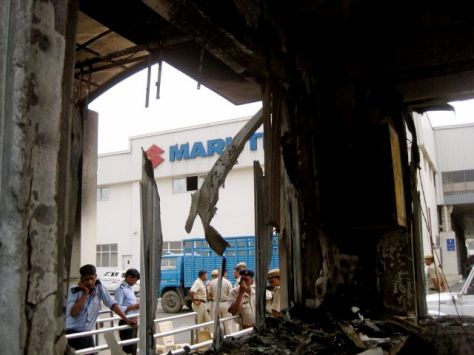
The year-long industrial conflict at Maruti Suzuki India Limited (MSIL), India’s largest automobile manufacturer’s Manesar plant turned violent on 18 July. At 3:30 pm on Wednesday afternoon, representatives from Maruti Suzuki Workers’ Union and the Maruti management had met to discuss the reinstatement of Jiya Lal, a permanent worker who had been suspended that morning after an altercation with his floor supervisor. Lal is a Dalit and alleges that he had reacted when the supervisor made derogatory casteist remarks against him. The workers were protesting that the management had been unfair, suspending Lal from service while merely sending the supervisor home on leave for a few days. Continue reading What set off the violence at Maruti’s Manesar plant?: Anumeha Yadav

The Poet, His Poems and His Tales

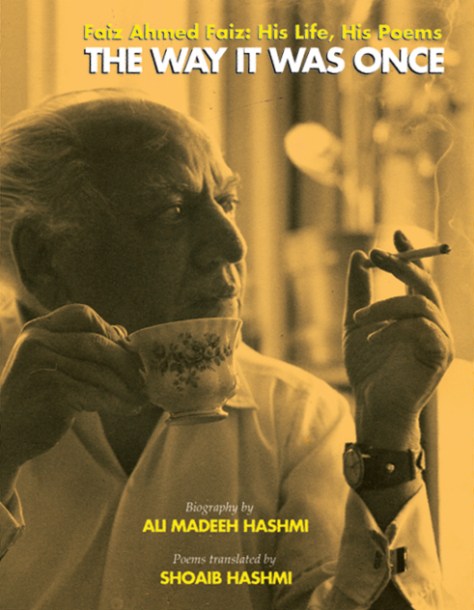
Faiz Ahmed Faiz: His Life, His Poems: The Way It Was Once by Ali Madeeh Hashmi/ Shoaib Hashmi; pp 256; Rs 499; Harper Collins Publishers India, 2012

After a decade without a day job, and associating with Dastangoi for over six years, I can safely say that I am a career storyteller. And one of the things I have learned is that resumes don’t make a person, stories do. Often these stories are not our own stories, but stories we’ve heard amongst loved ones, extended families, friends, work places, milieu; stories we’ve grown up with, stories distilled deep enough to become an integral part of our existence. We may not often identify with our resume but with our stories, always – acquaintanceship strikes, the moment our stories resonate. Continue reading The Poet, His Poems and His Tales

Swami Sahajanand Saraswati – A Contested Legacy: Manish Thakur and Nabanipa Bhattacharjee

Guest post by MANISH THAKUR and NABANIPA BHATTACHARJEE

Observers of the political scene in Bihar would have hardly failed to notice a renewed interest in the life and works of Swami Sahajanand Saraswati (1889-1950), the founder president of the All India Kisan Sabha, and arguably the most influential peasant leader of Bihar in the 1930s and 1940s. Over the last decade or so, his birth (22 February, 1889) and death (26 June, 1950) anniversaries have been celebrated with great pomp and show with full attendance of political luminaries of the state including Nitish Kumar, its present Chief Minister. Not only have glowing tributes been paid to his legacy but there has also been a spurt of writings on his life and times.

Swami Sahajanand Saraswati

New biographiesi have been released, and his collected works been published in six volumesii. In fact, there is a Swami Sahajanand Saraswati Foundation based in New Delhi as well as a Swami Sahajanand Saraswati Forum on the internet. Curiously enough, Swami Sahajanand Saraswati figures prominently on the internet in the caste-specific web-portals such as www.bhumihar.com; www.bhumiharmahasangh.com and www.bhumihar.net where his name appears along with Bhagwan Parashuram, Chanakya, Mangal Pande, Sri Babu, Ramdhari Singh Dinkar, C.P Thakur, and so forth in the long list of supposedly Bhumihar icons. Indeed, Saraswati’s legacy has always been the bone of contention between the Bhumihars and the communists. What needs explanation is the BJP’s concerted efforts in appropriating this iconic peasant leader as ‘samajik samrasta ke sant’.

Continue reading Swami Sahajanand Saraswati – A Contested Legacy: Manish Thakur and Nabanipa Bhattacharjee

Violence and Laughter: Ajay Skaria on the Ambedkar cartoon controversy

Guest post by AJAY SKARIA

Earlier this month, I signed, with some disquiet, onto this petition. Initiated by some members of the CHS at JNU, the petition protests against the withdrawal, in the wake of the cartoon controversy, of all NCERT Political Science textbooks, and seeks to defend the ‘gains of the new National Curriculum Framework 2005’. One reason I signed the petition was because it seems to me urgent that we try to save the NCF 2005 textbooks. They are, quite simply, amongst the most superb provocations available anywhere to critical thinking for young minds. I have over the years read them with my two children, and I would be very disappointed if other children were deprived of the same experience. There were other reasons too: I share the petition’s criticisms of the government’s arbitrary way of making its decisions about the textbooks, and its demand that textbooks be produced by an ‘academic, collective, democratic and inclusive process’ that excludes any ‘direct government intervention’. Continue reading Violence and Laughter: Ajay Skaria on the Ambedkar cartoon controversy

A meeting with Deepak Perwani

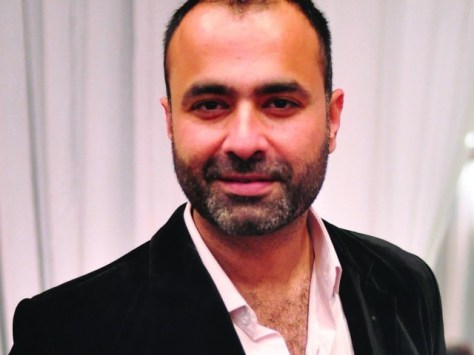
At the Lifestyle Pakistan trade exhibition that concluded in Delhi on Sunday, one stall stands out from a distance for just its name – Deepak Perwani, one of Pakistan’s most famous fashion designers. This was the first of its kind exposure for Perwani outside the Indian fashion circuit, of which he has long been a friend and fellow traveller. The humble Perwani, though, has long been used to facing Indian surprise. “People keep asking me, ‘Oh you guys didn’t migrate?’, ‘How are you treated there?’ and so on. The questions show a lack of awareness.” Pakistani Hindus do not exist in the Indian imagination, but Perwani is part of Karachi’s flourishing Hindu community, which is small but visible and influential even today. One lakh of Karachi’s 1.3 crore population is Hindu.

Continue reading A meeting with Deepak Perwani

Eviction of Slum Dwellers and Repression of Anti-Eviction Demonstrators in West Bengal

[We are publishing below the following report based on materials received courtesy Sanhati, whose members were also arrested in the course of the struggle]

“If Didi could rush to the scene for one Tapashi Mallik, then she could surely hear the voices of 800 poor people and come here to see us” –Residents of Nonadanga slum in Kolkata

It is the same story once again. Cleaning up and beautification of cities in the clamour for urban space for consumption and the luxury of the rich. And as we have seen, it makes little difference whether the government/s are Leftist or Rightist, whether they claim to represent the oppressed poor or not. Thus, on 30th March, 2012 the TMC government forcefully evicted around 300 poor families from the Nonadanga slum area in South 24-Parganas, in the name of ‘development’ and ‘beautification’ of Kolkata. Their shanties were razed to ground by the Kolkata Metropolitan Development Authority. The homeless slum-dwellers have been staying in an open field and are facing constant police harassment. Despite these harsh conditions, they have refused to depart and are presently on hunger strike. Their demand has to date failed to draw any favourable attention from the government. This neglect comes on the heels of the Planning Commission agreeing to annual Bengal plan around 16 per cent more than last year’s.

Continue reading Eviction of Slum Dwellers and Repression of Anti-Eviction Demonstrators in West Bengal

On the Supreme Court granting bail to Dr Khaleel Chishty: PUCL statement

Given below is the statement of the PEOPLE’S UNION FOR CIVIL LIBERTIES on the Supreme Court’s decision yesterday to grant bail to Dr Khaleel Chishty. Given below the statement is the full text of the court order

The PUCL is extremely relieved that the SC decided to set free from the Prison 80 year old Dr. Khalil Chishty serving a life sentence in Ajmer Central Jail for a murder case. This is an extremely significant step but not sufficient as bail for Dr. Chishty as seen earlier when the trial was underway for 19 years, was like house arrest. he had to report regularly to the police and could not step out of his house and area. We hope that the next step of sending Dr. Chishty back home happens soon as it would be better for all that we send him back alive, when he can be with those who care for him and love. The PUCL appreciates the wisdom of the Supreme Court for this judgement.
While Judicial remedy would be pursued in the Supreme Court, we would like to remind all that the executive remedy as provided in the Indian Constitution of President and the Governot of a State granting Mercy to an individual at any stage of the judicial process, was stalled by the Governor of Rajasthan, who despite being recommended twice by the Chief Minister of Rajasthan that Dr. Chishty be pardoned, the Governor only let the file gather dust. Continue reading On the Supreme Court granting bail to Dr Khaleel Chishty: PUCL statement

Mamata’s order that stoked the media war: Independent Observer

[This is a guest post by an independent journalist journalist and in Kolkata]

How difficult is to make a choice between the Caligula and the powerful senators who plotted against him, purportedly to save Rome from the populist-turned paranoid emperor?
The question comes to one’s mind in view of the ongoing public spat between Bengal chief minister Mamata Banerjee and a powerful section of Bengal media which has virtually likened her to a female (a non-libidinous also) version of Caligula. The row, that now involves pro and anti-Mamata media blocs also, has been triggered by a recent government order asking 2500 plus state-run and aided libraries to subscribe, initially, to eight pro-government newspapers —five Bengali, two Urdu and one Hindi— barring the market leaders in these segments. The circular of the state libraries and mass education department cited the ‘promotion of free-thinking’ as the reason behind favouring the chosen newspapers.

However, the issues involved are neither limited to Mamata’s increasing attempts to browbeat critical media as the aggrieved houses are complaining about nor her well-meaning effort to support ‘small’, resource-starved newspapers against their big brothers as she herself and beneficiaries of her patronage are claiming. A closer scrutiny reveals that there are more to it beyond the binary of Oraamra (them and us), now part of Bengal’s political and media lexicon after Buddhadeb Bhattacharjee’s infamous bragging over his government’s brute majority in the state assembly in order to rubbish all opposition to his policies. Continue reading Mamata’s order that stoked the media war: Independent Observer

Who are the real stakeholders of Indo-Pak peace?: Ayesha Siddiqa

This guest post by AYESHA SIDDIQA is the text of a speech delivered by her at a recent civil society review of the India-Pakistan peace process, organised by the Centre for Policy Analysis in Delhi.

This time it seems better then last time! I suppose this is what we said the last time as well. India–Pakistan relations have a cycle of ups and down: a crest followed by a trough and then a crest again. Although there is increased frustration on both sides for not being able to solve the ‘relationship’ mystery, the leadership and people in general remain eager to have peace rather than war. However, we also remain elusive regarding our threshold of peace, or what would be the cut-off point in settling for peace with each other. This cyclic peace of war and peace has remained primarily due to the peace process being elitist and confined to the strategic/security community. Therefore, I would like to argue three points: Continue reading Who are the real stakeholders of Indo-Pak peace?: Ayesha Siddiqa

Oru Kili Iru Kili – A Party in Dubai: Alia Allana

Guest post by ALIA ALLANA

For the Pilipino there was no escaping the Indian song and dance.

A tube-light flickered as loud music blared from a room at the far end of the corridor. The flickering light and the ensuing cacophony gave the corridor in Sonapur Labour Camp a surreal discotheque feel: one that the Pilipino was no longer game to. Nearer the door, voices of men dipped low and then travelled high past the room in which the tired labourer from Cebu lived.

“Oru Kili Iru Kili,” they bellowed in Malayalam and the tune filtered through the flimsy plywood door. The tired looking Pilipino pulled a face as he described the scene he had once encountered when the door was left ajar. The “party” room was clouded over with smoke and six Indian labourers from Kerala lounged cross-legged in a circle, smoking cigarettes and drinking from steel cups, writhing their bodies and shaking their hands up in the air. A bottle with no label was passed around and the brouhaha escalated to a feverish pitch. Once again the merry men burst out, “Oru Killi Iru Killi”. Continue reading Oru Kili Iru Kili – A Party in Dubai: Alia Allana

Sepia Mutiny (2004-2012)

The great Indian American blog Sepia Mutiny is shutting shop.

I also truly feel that the mission of Sepia Mutiny is complete, especially for what I envisioned SM would be all about (other bloggers can share their view).  Back in 2004 there was very little brown representation in the media and very little “voice” representing us.  There was not a single loud speaker for the South Asian American community. Now there is quite a bit more and brown is everywhere.  There seems much less need for a “Mutiny” given our strides.  We were even invited to blog at the 2008 Democratic National Convention which was hard to imagine in 2004.  That is not to say we are anywhere near where we’d like to be, but a Mutiny should naturally give way to a more organized movement of some kind.  I believe SM did its job in sowing the seeds for that next chapter, whatever forms it now takes. Continue reading Sepia Mutiny (2004-2012)

We, the People of Gujarat: Urvish Kothari

This guest post by URVISH KOTHARI was originally written in Gujarati and has been translated by VISTASP HODIWALA

Associated Press

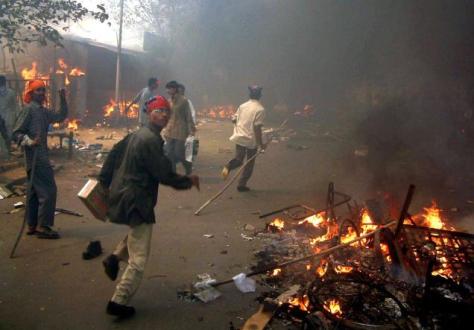
Some facts are so simple and self-evident that they elude you completely at the time they happen. Digesting them takes time – 2, 3,7, maybe even 10 years. By that time, the passion and the anger has abated a bit and there is a sense of composure that pervades our beings.

Like the fact about the communal violence that gripped the State of Gujarat in 2002.

Of course, a mere mention of this is enough to get the chief minister’s fanboys roll up their sleeves, even as their opponents ready themselves to launch a counter onslaught. But with the passage of ten long years, the first question should not be about whether the Chief Minister was complicit in the crime or not. No, it cannot be.

Continue reading We, the People of Gujarat: Urvish Kothari

Ambedkar – A poem by Ravikumar

Guest post by RAVIKUMAR

Under the scorching Sun
in the shadow of a tamarind tree
there assembled a small crowd
children, women and men
words about Ambedkar,
Dalit rights and Women’s rights
breezed over
sweating faces

When we sow
Some seeds fall in bushes
Some on rocks
Some on dry land
Some in ponds
Some on wet land
Who knows–
who is the wet land

(Ravikumar is a well-known activist and theoretician of the Dalit movement in Tamil Nadu. A former legislator in the Tamil Nadu legislature, he is general secretary of Viduthalai Ciruthaikal Katchi.)

Previously by Ravikumar in Kafila: