Category Archives: Mirror Worlds

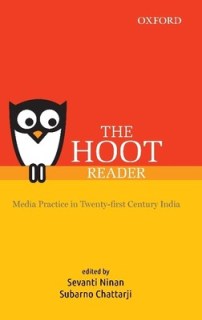
Grappling with media: The Hoot Reader

the-hoot-reader-media-practice-in-twenty-first-century-india-400x400-imadhbtch8jfgfjwThis is an excerpt from the introduction to The Hoot Reader: Media Practice in Twenty-First Century India edited by SUBARNO CHATTARJI and SEVANTI NINAN. The Reader commemorates a decade of TheHoot.org, still the only media-watch platform of its kind in India.

The notion of media power has come to loom large in India over the last decade, and has led to inevitable scrutiny of those who wield it. The men and women chasing stories become stories themselves when their first take is scrutinized to present a second take, to judge if that first draft of history was a job well done, or whether it was lazily or unethically constructed. Media criticism had been dormant in India over decades of journalistic practice, but its advent and subsequent blossoming are celebrated in this volume. Because, to report how the media covers India, is to report on the complexity and promise of India itself.

The decade of 2001–11 was when coalition politics took firm hold, terrorism began to rival militancy in attention commanded, naxalism spread, digital communication expanded, and the media became a noisy beast that grabbed more mind space than before. The North-East became less of a blank spot and Kashmir remained a media Mecca. Through it all, the old challenges remained as the media stories here bear witness—hunger did not disappear, women in flooded areas looked for secluded spaces to defecate in, caste prejudices thwarted aspiration, and so on. As subjects sexy and dreary competed for space, many stories also went untold. Continue reading Grappling with media: The Hoot Reader
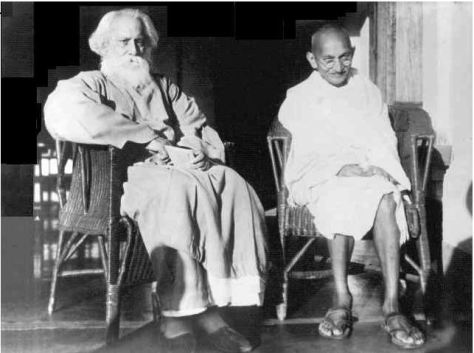
Nationalism in India: Rabindranath Tagore

From RABINDRANATH TAGORE‘s lectures on Nationalism, 1917

tagore-gandhi

Our real problem in India is not political. It is social. This is a condition not only prevailing in India, but among all nations. I do not believe in an exclusive political interest. Politics in the West have dominated Western ideals, and we in India are trying to imitate you. We have to remember that in Europe, where peoples had their racial unity from the beginning, and where natural resources were insufficient for the inhabitants, the civilization has naturally taken the character of political and commercial aggressiveness. For on the one hand they had no internal complications, and on the other they had to deal with neighbours who were strong and rapacious. To have perfect combination among themselves and a watchful attitude of animosity against others was taken as the solution of their problems. In former days they organized and plundered, in the present age the same spirit continues—and they organize and exploit the whole world. Continue reading Nationalism in India: Rabindranath Tagore

The Curious Case of Hamid Ansari

large-p-9-aa

You may think he is a spy or a saboteur. If he is one, would he have spent months trying to reach Kohat from Mumbai and then get caught in just two days?

Sitting in Mumbai, Hamid Ansari fell in love with a Pakistani Pashtun girl over Facebook. He was a 26 year old management teacher, she was a B.Ed. student. After over a year of obsessing about each other over the internet, phone and phone messengers, she called him one day, crying. She had confided in her sister about this online affair, but the sister told the parents, who decided it was time to find her a husband. It was the last phone call. She soon disappeared from Facebook too. Continue reading The Curious Case of Hamid Ansari

Manmohan Singh must visit Pakistan

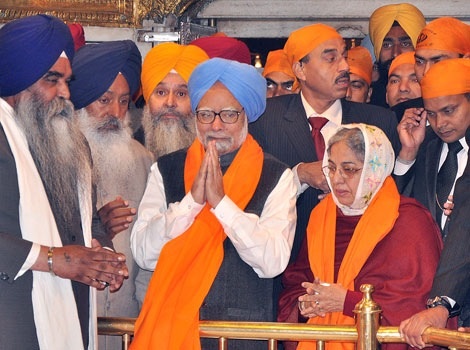
Dr Manmohan Singh with wife Gursharan Kaur at the Golden Temple in Amritsar on 1 January 2012

By SHIVAM VIJ: Which Indian or Pakistani premier has not desperately wanted to be the one to clinch peace between the two countries? Prime Minister Manmohan Singh has reportedly been keen, for years now, to go on a state visit to Pakistan.

Before the political climate could be conducive to Manmohan’s visit to Islamabad, 26/11 took place. Pakistan’s refusal to give Dr Singh even breathing space on the 26/11 investigations, followed by the LoC tensions in January and August this year, means that in his 10 years of prime ministership, Manmohan Singh will never have visited the country of his birth. Continue reading Manmohan Singh must visit Pakistan

Gendered Violence and the Hall of Mirrors: Parnal Chirmuley

Guest Post by Parnal Chirmuley

A very young man, who should have been cheerfully devouring the world of ideas over samosas and tea from the canteen, tries instead to hack an equally young woman, his classmate, to death. With an axe, some say. Tries to shoot her too, but the pistol is too stubborn, they say. Then turns the blade and the poison on himself. There he sees success. Succumbs to both.

This leaves behind rivers of blood in the classroom and gashes in the minds of those who witnessed this, bravely intervened, or ran away from it. It leaves everybody entangled in a sea of Gordian knots that are just questions.

Continue reading Gendered Violence and the Hall of Mirrors: Parnal Chirmuley

The Batla House Judgement and the Impossibility of Closure

The word ‘closure’ has a reassuring, comforting resonance, particularly when it comes to matters of death. One achieves closure. It is granted.  Those who are fortunate receive it as recompense for the necessary tasks of grief and mourning. We move on.

On the 25th of July, last week, after Rajender Kumar Shastri, 2nd Addiitional Sessions Judge of the South East (Saket) Court in New Delhi announced in open court that a young man named Shahzad Ahmad of Khalispur village in Uttar Pradesh’s Azamgarh Disttrict was guilty of causing the death of Inspector Mohan Chand Sharma of the Special Cell of the Delhi Police in Flat No. 108, L-18, Batla House, in South Delhi’s Jamia Nagar on the 19th of September, 2008, the word ‘closure’ began to ring out on prime time television.  We were given to believe that the infamous ‘Batla House Encounter’ case had finally achieved closure. That the ‘martyrdom’ and sacrifice of Inspector Mohan Chand Sharma had now been vindicated. That all unseemly controversy could now be put to rest. We were told that it was time to move on.

Continue reading The Batla House Judgement and the Impossibility of Closure

Ishrat Jahan, Narendra Modi and the IB: How Not to be Non-Non Terrorist

The CBI charge-sheet in the Ishrat Jahan encounter case and its aftermath has led the BJP and supporters of Narendra Modi (within and without the Intelligence Bureau) to discover the joys of time travel. Apparently, David Coleman Headley’s testimony in 2010 (which says that Ishrat Jahan was an LeT operative) has given the Gujarat police officials a means to tell us why they killed Ishrat Jahan in 2004. Or, following on from Shivam Vij’s recent tweets, we could say: “The IB says that Headley says that Ishrat Jahan was a non-non terrorist…”

We will discuss more about this heady Headley testimony and ‘non-non terrorism’ later, but for now, let us admit that the secret of how a statement in the future can influence the unfolding an event six years in the past is known only to those who are partisan to Mr. Modi and his party. It is not for nothing that they call him a Yug Purush (‘The Man of Time’)- all times, past, present and future, can do his bidding, or so thinks the BJP. Continue reading Ishrat Jahan, Narendra Modi and the IB: How Not to be Non-Non Terrorist

Can late Erdoğan learn from early Erdoğan?: Tamer Söyler

This guest post by TAMER SÖYLER is the first of a three-part series on Istanbul’s Taksim Square protests for Kafila.

taksim8
Photographs by Tamer Söyler

The 42nd President of the United States, Bill Clinton, is said to have remarked: being President is like running a cemetery; you have got a lot of people under you and nobody is listening. As is the case with any good politician, Clinton is known for his bamboo-like character. During his presidency whenever he looked the weakest, he proved to come stronger out of the chaos. Clinton’s remarkable flexibility provided him the ability to bend as much as he needed to achieve his goals without breaking. The Prime Minister of Turkey, Recep Tayyip Erdoğan, proved again that he does not have Clinton’s sense of humour, his presidency or his flexibility.

Turkey is a parliamentary representative democracy. Erdoğan has been expressing his intention to transform the country into a presidential system and become the first president of the country. The government plans to put the question of a constitutional referendum to a vote in the year 2014. The people of Turkey are suffering from a great anxiety related to a fear of finding themselves in an authoritarian, charismatic presidential system. Protestors worry that without adequate mechanisms to enforce the separation of powers in the constitution, Erdoğan can easily transform Turkey into an authoritarian regime.
Continue reading Can late Erdoğan learn from early Erdoğan?: Tamer Söyler

The Jamhuriyat Road to Taksim Square: Shilpi Suneja

Guest post by SHILPI SUNEJA

Istanbul, 4 June

istanbul11

The evening of 3 June, 2013 was the first time I’d experienced the sting of pepper spray. I was walking on Cumhuriyet Caddesi near Taksim Square in central Istanbul, where, for the past five days, civilians and the Turkish police have been clashing over what the international media has called “a matter of a few trees”. Certainly, the spark of what is now a huge mass protest spanning multiple cities with over 1,000 injured, was the issue over Gezi Park, an area in central Istanbul where the Prime Minister, Tayyip Erdogan has proposed to build a shopping complex. The plan was to graze the green space and create a shopping complex. This in an area that already boasts of a Hyatt, a Hilton, a Swiss hotel and shopping centers with national and international brands. “There’s already so many shopping malls here,” said a Turkish friend speaking about the government’s decision. “Why build another?” The grazing of the park was supposed to start on Thursday, May 30th. By that time, hundreds of people gathered and occupied the park, bringing tents, books, and children. The police, in response, burned their tents and dispersed the protesters using pepper spray and tear gas. Continue reading The Jamhuriyat Road to Taksim Square: Shilpi Suneja

Old Films: Habib Tanvir

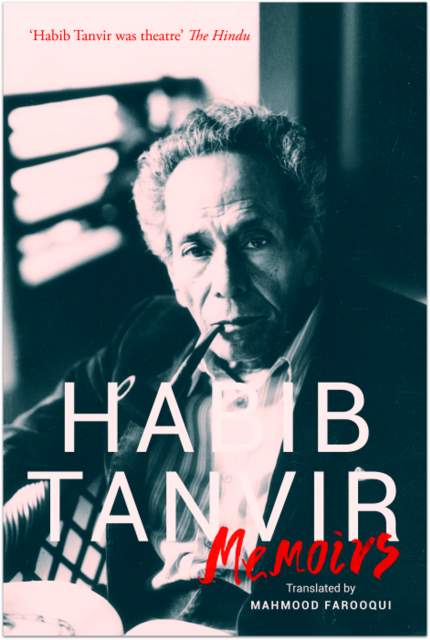
This is an excerpt from HABIB TANVIR’s Memoirs, translated by MAHMOOD FAROOQUI, to be released this evening 7 pm at the India Habitat Centre in Delhi.

1-habib-t-mahmood-cover
Memoirs by Habib Tanvir, translated by Mahmood Farooqui, Penguin Viking, Delhi, 2013; Rs. 599, pp. 400

First of all there was the bioscope. A woman wearing ghaghra and choli would roam around from mohalla to mohalla calling out to the children and gathering them at a chowk or in large courtyard, would take out a long stool from her arm pit and place it on the ground, would remove an octangular and muddy looking tin box from her head and place it on top which had a small mouth covered by a black cloth which the child would remove and peer inside. The women usually came from Rajasthan. The box would contain ten or fifteen cards of photographs, she would show them one after the other and also introduce them in a particular musical speech, ‘see the Rauza of Taj Bibi, see the Lal Qila of Dilli…etc.’ At one time only one child could see the pictures, which would be projected through a lens and lit up through a bulb inside the box which would make the photographs appear larger and more dramatic. When one child was through another would take his place. A large and restive crowd of children would be gathered around waiting their turn. Even the elders would be eager to see Hindustan through these pictures. She would charge two to three chhedams from everyone who took a peep. When the show was over, she would hawk her way to another mohalla. Continue reading Old Films: Habib Tanvir

Eleven things India must do in Kashmir: Justin Podur

india_kashmir_rebel_attack
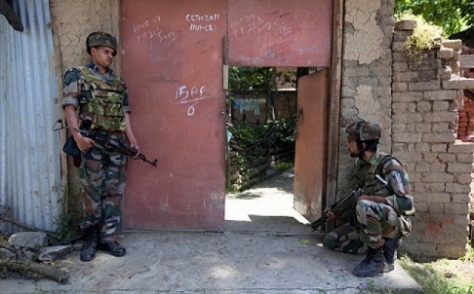
Indian Army soldiers at an encounter site with militants in Kashmir on Friday. AP photo

Guest post by JUSTIN PODUR: I spent a week in Srinagar, the capital of Kashmir, at the end of April 2013, talking to people among whom there was a wide range of opinion. While almost everyone supports freedom, some are resigned to India never letting Kashmir go, others believe that the struggle will go on and take different forms, some are just trying to survive. It seemed to me, at the end of a calm week during tourist season, that India is bringing about all of the things that it fears: Pakistani influence, violence,  radicalisation of youth, political Islam, and hatred of India. Continue reading Eleven things India must do in Kashmir: Justin Podur

Sarabjit, Sanaullah, you and me

sarabjit2

I met Sarabjit Singh’s brave lawyer Awais Sheikh in Delhi some months ago, where his book was released. He was very confident Sarabjit wouldn’t be hanged. As was Justice (Retd.) Katju, who launched the book. Justice Katju said there was no point campaigning for Sarabjit’s release until the Pakistan elections were over. I got a similar impression of optimism from people who had been following the Sarabjit case.

Well, they were right. Sarabjit wasn’t hanged. But hanging is only one way of killing. Continue reading Sarabjit, Sanaullah, you and me

Of campus democracy and academic excellence: Students of St. Stephen’s College

This is a guest post by some STUDENTS OF ST. STEPHEN’S COLLEGE, Delhi

Over the past one year Delhi University has been subjected to significant changes in the name of academic excellence, and many more changes are in the offing, like an un-thought-out introduction of the four-year undergraduate course. Teachers and students who have voiced concerns (and protested) have been harassed and not paid any heed to. One can witness a general shrinking of democratic space, and the space for dissent within the university. It is almost as if democratic decision making is an enemy of academic excellence, and thus needs to be curbed! A sharp contradiction between campus democracy and a vaguely defined academic excellence has come up recently in some issues pertaining to St. Stephen’s College. In this article, we – some students of the college would like to draw attention to the injuries inflicted on campus democracy, and the questions thrown up about the very meaning of academic excellence in the process.    Continue reading Of campus democracy and academic excellence: Students of St. Stephen’s College

We are all Hari Sadu: Veena Venugopal

VEENA VENUGOPAL writes: Saw the ad about the horrible boss? The one in which the employee comes in with a new idea and in return he gets a load of sarcasm? And even when the boss likes the idea, he reveals it with an air of impudent superiority. Seen that one? What was it called? Hari Sadu?

Well, no. This ad is for a new brand of cookies; Gold Star, it is called. A male “attendant”/“peon”/“employee” comes in to a plush white room and serves a plate of cookies to Amitabh Bachchan. On biting into one, he realizes these are not his regular cookies. “Arre suno,” he calls because come on, he isn’t expected to know the name of all the people who serve him cookies at home. The employee admits they are new. “Maine socha ki…” (I thought…) he says at which Bachchan rolls his eyes and says, “aaj kal aap sochne bhi lag gaye?” (you have even started thinking now?). But then he realizes he likes the new ones and instructs the man, “ayenda yeh sochna band karo,” (please stop thinking in the future). Continue reading We are all Hari Sadu: Veena Venugopal

Letter from Jail: Maruti Suzuki Workers Union

Guest Post by MARUTI SUZUKI WORKERS UNION
(Reg. No. 1923, IMT Manesar)

Appeal from Jail
Stand in Solidarity with us for Justice

We are workers of Maruti Suzuki, who are behind bars since 18.07.2012 as part of a conspiracy, and without any just investigation. 147 of us are inside Gurgaon Central Jail. Since July, 2500 permanent and contract workers have been terminated from our jobs. In these past more than 8 months, we have sent our appeal to almost all administrative officials and elected representatives, including Chief Minister Haryana and the Prime Minister of India. But neither have our appeals been heard nor have we been granted bail.

Continue reading Letter from Jail: Maruti Suzuki Workers Union

Appeal from Tamil Civil Society to the International Community on Sri Lanka

This appeal was published in groundviews.org and has been sent to us by V. Geetha. We are publishing it here to give a different view from the kind of view that dominates now. Even though the appeal was made before the voting took place in the UN Human Rights Council, it is nevertheless an important view.

This appeal, signed by civil society activists who live and work in the North and East of Sri Lanka, seeks to state our position with regard to the resolution on Sri Lanka to be tabled at the 22nd sessions of the UN Human Rights Council. We understand that the resolution will seek to provide more time to the Government of Sri Lanka to implement the recommendations contained in the Lessons Learnt and Reconciliation Commission and that it will fall short of calling for an international independent investigation to hold to account those responsible for the Crime of Genocide, War Crimes and Crimes Against Humanity. If this resolution would contain only the above and no further, in our opinion, it would be truly unfortunate. Read the full statement here.

Carpets and kebabs in Isfahan: Marryam H Reshii

Guest post by MARRYAM H RESHII

iran67

I could write a book about my week in Iran, but will restrict myself to captioning these photographs I took.

The only two cities I visited were Mashad and Isfahan. Mashad is famous for two things. The shrine of the Eighth Imam of the Shia sect of Islam, Imam Reza, the only one out of all twelve Imams to actually be buried in Iran (all the others are buried in Saudi Arabia and Iraq) and saffron that grows far, far more plentifully than it does in Kashmir.

Mashad sells carpets woven/produced elsewhere. While the large carpets are traditionally Iranian, the small ones in frames are too suspiciously perfect to be made with human hand. Most of them have a plethora of shades of white in them, making the weaver something of a genius! Continue reading Carpets and kebabs in Isfahan: Marryam H Reshii

चे का चेहरा: ओम थानवी

ओम थानवी का यह लेख जनसत्ता अखबार में 23 सितंबर 2007 को प्रकाशित हुआ था। ओम थानवी जनसत्ता के संपादक हैं।

che-gu-22

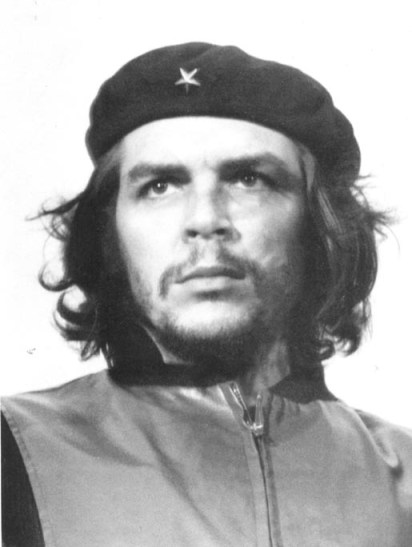
वह तस्वीर चे ने खुद कभी नहीं देखी। उस तस्वीर से उसके छविकार ने कभी एक पैसा नहीं कमाया। मगर दुनिया के हर कोने में आज वह छवि मौजूद है। विद्रोह और क्रांति के एक सशक्त प्रतीक के रूप में। ‘टाइम’ पत्रिका द्वारा चे गेवारा को पिछली सदी की सौ हस्तियों में शरीक करने से बहुत पहले वह छवि दुनिया में सबसे ज्यादा छपी तस्वीर घोषित हो गई थी। Continue reading चे का चेहरा: ओम थानवी

Pakistan ka Jugraafiya: Kyunki Patras

This guest post by KYUNKI PATRAS is in Roman Urdu.
KYUNKI PATRAS ka yeh mazmoon Roman Urdu mein hain.

Pakistan samundr-e-kufr mein aik roshan jazeera hai. Continue reading Pakistan ka Jugraafiya: Kyunki Patras

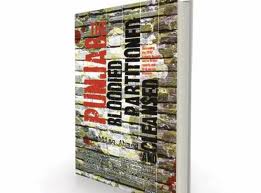
An undivided history of Punjab’s Partition: Ajay Bharadwaj

This is a book review by AJAY BHARADWAJ of an authoritative new book on the Punjab’s Partition by Prof Ishtiaq Ahmed. If you have any questions about the book or about the Partition in general, please leave them in the comments section and we will soon put them to Prof Ahmed.

images
The Punjab Bloodied, Partitioned and Cleansed
By Ishtiaq Ahmed
Rupa Publishers, Delhi; 2011, 754 pp., Rs 995

Ishtiaq Ahmed claims that his work is “the first holistic and comprehensive case study of the partition of Punjab” (p.xlv); he has lived up to it admirably.  A study of rigorous scholarship, with painstaking fieldwork on both sides of the divide, The Punjab Bloodied, Partitioned and Cleansed’ offers unbiased insights into a minefield called the Partition of Punjab. As the title itself suggests, the book delves deep into the most difficult aspect of Partition history which has come to define it — the scale and magnitude of the killings at that juncture.

The primary sources that Ahmed has accessed in his endeavour are equally interesting for a number of reasons. While the historian draws extensively from the classified fortnightly reports (FRs) of the Punjab governors and chief secretaries to the viceroys, he simultaneously pays heed to oral history or the personal narratives of individuals — “witness to or victim of traumatic events” — that he has recorded over a decade and a half. The coming together of the two strands creates an intricate web of high politics and everyday life, which contributes to a layered, richly detailed and immensely moving account of the partition of Punjab — leaving a permanent imprint on the mind of the reader. Continue reading An undivided history of Punjab’s Partition: Ajay Bharadwaj

Ilyas Masih wants to stay in the dustbin: Saad Sarfraz Sheikh

This slideshow requires JavaScript.

SAAD SARFRAZ SHEIKH sends us this photo essay from Lahore: On 9th March, 2013, I saw an entire neighborhood burn right in front of my eyes. All I could do was watch, as the houses fell and their residents watched in vain.

And now, there are burnt teddy bears and dolls, broken doors and melted buckets stuck on the floor. It seems I am on fire.

Nasreen’s defunct washing machine is now as black as the night. Her child sits on it and weeps. Like a surgeon, she salvages the motor and tells me that it could still work. But her microwave, she tells me, is a painful puddle on the floor. Continue reading Ilyas Masih wants to stay in the dustbin: Saad Sarfraz Sheikh