Many of us who have been studying the political process in Assam were surprised when we received the news in December 2009 that Chairman Arabindo Rajkhowa and some of his colleagues of United Liberation Front of Asom (ULFA) had been arrested in Bangladesh. This moment had to come some day, but we were not prepared to face it. We were familiar with the brave and somewhat legendary image they had created for themselves and needed time to believe that they could be defeated. Continue reading My Days with Nationalism in Assam: Ankur Tamuli Phukan→
(Nepal’s Prime Minister, Dr BABURAM BHATTARAI, visited India in his first bilateral trip since taking office, in the third week of October. Bhattarai spoke at the Jawaharlal University, Delhi, where he had earned his PhD from the Centre for Study of Regional Development, about the political evolution in Nepal, particularly after the 1990 and 2006 movements as seen through the prism of the Unified Communist Party of Nepal (Maoist).
Before beginning his substantive speech, he declared, “I am what I am because of JNU,” amidst thundering applause and cries of Lal Salaam.
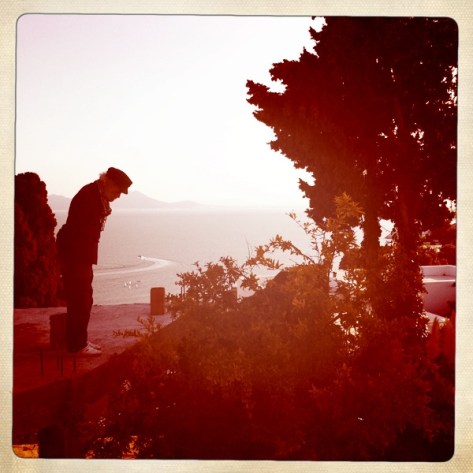
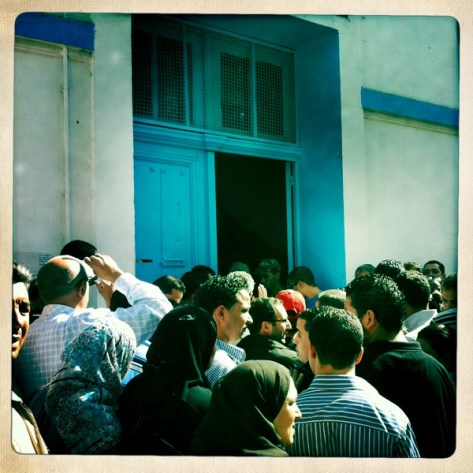
This guest post for Kafila by ALIA ALLANA from Sidi Bou Said on the outskirts of the capital Tunis captures the mood a day before Tunisia goes to the polls. Photos by Alia Allana
This guest post byALIA ALLANA is a despatch for Kafila from Damascus, the Syrian capital. All photos by Alia Allana
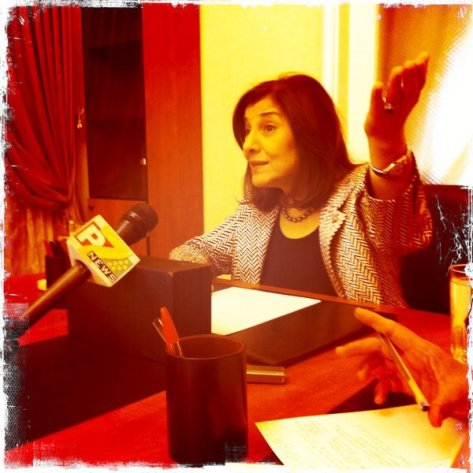
“You don’t think I’m afraid?” asked Bouthaina Shaaban, advisor to Syrian President, Bashar al Assad.
We were sitting in the Ministry of Protocol in Damascus and she tugged on her black pearl necklace and fidgeted with her black and white tweed jacket. She had more reason to be afraid, she said – not just because she was a woman but also because she is a supporter of the current regime.
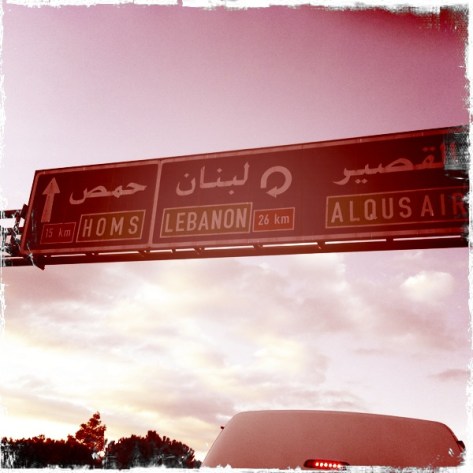
This guest post byALIA ALLANA is a despatch for Kafila from Homs, Syria. All photos by Alia Allana
He was found shot in the chest, bleeding on the streets, alone.
He has no name. He’s just another struggling body in the hospital in Homs — only he’s much younger than most. He’s only four. He doesn’t move, his small frail body is gobbled by wires. The doctors say he hasn’t opened his eyes, hasn’t made a sound, nor has he called out for anyone. Saliva runs down his mouth but there is no one to wipe it off his face. This isn’t the first case and the doctors fear it won’t be the last. There will be other children who will take his place, there will be more victims of random shooting, more deaths and no one knows by whose gun. Continue reading A Despatch from Homs: Alia Allana→
I wish I could start with the ritual “I love you” which the Occupy Movement is supposed to inspire. To be honest, it has been a space of turmoil. But also, virulent optimism.
What I outline below are not criticisms of the Occupy movement. I am inspired that the dynamic of the movement thus far has been organic, so that all those who choose to participate are collectively responsible for its evolution and development. To all those participating — I offer my deepest gratitude and respect. I am writing today with Grace Lee Boggs on the forefront of my mind: “The coming struggle is a political struggle to take political power out of the hands of the few and put it into the hands of the many. But in order to get this power into the hands of the many, it will be necessary for the many not only to fight the powerful few but to fight and clash among themselves as well.” This may sound dramatic and counter-productive, but I find it a poignant reminder that, in our state of elation, we cannot underestimate the difficult terrain ahead and I look forward to the processes that will further these conversations.
A big red river streamed out of the gates of Kamla Nehru Park in Gurgaon last evening (17th October, 2011). Several thousands of workers (according to one estimate – one hundred thousand workers), from many factories in the Gurgaon-Manesar belt had occupied the park from 4:00 pm onwards to stand in solidarity with the struggle of the Maruti-Suzuki, Suzuki Powertrain and Suzuki Motorcycle India Limited workers. In an unprecedented demonstration of solidarity, permanent workers are on strike to demand justice and re-instatement of their contract worker colleagues. The atmosphere at the meeting was of celebration, workers who had been occupying three different factories for more than a week had been evicted by an administration that had brought out all the police and coercive power at its disposal. But yesterday’s gathering was like a reunion, the workers of the three ex-occupied factories, and their comrades in other plants throughout the Gurgaon-Manesar belt were meeting, like old and new friends, to taste the heady experience of peacable solidarity. Continue reading A Big Red River: Solidarity Meeting with Maruti-Suzuki Workers→
More than 3000 Domestic Workers Take to the Jaipur Streets
SHARE THEIR WOES AND DEMAND RIGHTS
PUBLIC HEARING PANEL:
• Aditi Mehta (Principal Secretary Social Justice and Empowerment),
• Anuradha Talwar. Trade Union Activist, Paschim Banga Khet Mazdoor Sangathan, Kolkata
• Jose Mohan, DCP, Jaipur Police Commissionerate
• Bhagwan Sahai Sharma, member Secretary, State Social Welfare Board,
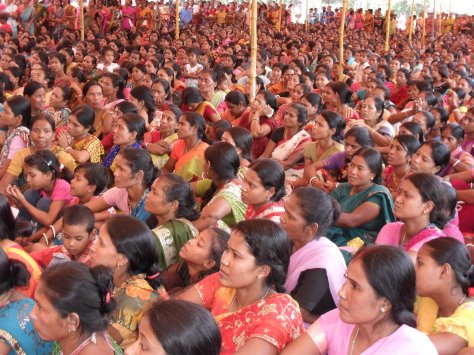
Domestic worker women power made history today in Jaipur when they took to the streets of Jaipur and demanded their rights from the State and society. We are not “naukranis” they said. We are workers in free India and want the dignity of being a worker. We run two homes, yours and ours, can any of you in society do without our labour, they asked boldly. Ninety percent were Bengally with abotu ten percent from who had come from different parts of Rajasthan. Continue reading Bengal Power in Jaipur: Kavita Srivastava→
As governments across the world prostrate themselves before corporations and corporate greed takes over the daily business of governing, mass struggles are breaking out all over the world. What started as the much propagated ‘Arab Spring’ – apparently the Arab world’s yearning for American and Western values represented by ‘democracy’, has now, after spreading through Europe (France, Greece, Spain, Portugal…) engulfed the heart of Empire – the United States of America. The Occupy Wall Street movement that started almost three weeks ago, with thousands of people assembling in Zucotti Park in Lower Manhattan, New York, has now spread amdist media blackout and police repression, to other parts across the United States. A glimpse of the situation about a week ago:
This statement come from theRIGHT TO FOOD CAMPAIGN
October 3rd, 2011
Arbitrary Raid on Kavita Srivastava’s house: Latest act of harassment of human rights workers
We condemn in the strongest possible terms the arbitrary raid this morning (3 October), in Jaipur, on the house of Kavita Srivastava, General Secretary of PUCL and convenor of the Right to Food Campaign’s steering group. This is yet another instance of harassment of human rights workers under the cover of fighting Naxalism. Kavita Srivastava is the convenor of the Steering Committee of the Right to Food Campaign and PUCL is the petitioner in the Supreme Court case on the Right to Food which has recently challenged the Government on the issue of the poverty line. Continue reading Statement condemning raid on Kavita Srivastava’s house: Right to Food Campaign→
Guest post by A. SUNEETHA, VASUDHA NAGARAJ, R. SRIVATSAN, GOGU SHYAMALA, SARATH DAVALA and R.V. RAMANA MURTHY
[This post was sent to us on the 23rd of September, when the strike, still on-going, entered its tenth day. On the date of posting this, the strike had entered its sixteenth day].
Sakala Janula Samme (extraordinary general strike) in the ten districts of Telangana has entered its tenth day today. Miners in the Singareni Collieries, private college teachers and students, road transport employees unions, school teachers, university staff, lawyers in the lower and high courts, the electricity employees union—in short almost all employees (who usually refuse to see beyond their immediate benefits) and contract workers (who under normal circumstances cannot afford to lose wages) needed by the state to “govern” its people—have gone on strike.
Telengana general strike, photo courtesy: msn news
Government in this region, already seriously impaired and facing severe challenges from the movement since 2009 has come to a standstill. In an extraordinary “do or die” battle for the formation of a separate Telangana state, the various joint action committees promise to continue this strike till a separate Telangana state is formed.
[JAGANNATH SARKAR, who passed away in April, was among those who led the spectacular rise of CPI in Bihar in the 1960s and 1970s. He was among a handful of Bihar CPI leaders who envisioned the crisis in CPI in the mid-1970s. Today is his first birthday after he passed away – he was born on 25 September 1919. The piece below is an important document that gives a glimpse of the debate on new caste assertions in the CPI. It was written by Sarkar in 1998, following the National Council meeting of the CPI. It has been translated by Raj Ballabh from Hindi. – AN]
The National Council of the CPI accepted, if belatedly, in its review report of March 1998 that there has been a serious decline in the basic mass base of the party and its class-based mass base has fragmented on the basis of caste. It has accepted that the party could not face the deviation of ‘social justice’ in the form of ‘backward casteism’ in its theatricality, or indeed politically and practically; that the party could not maintain its distinct identity, as a party that was politically and practically different from the Laloo-led Janata Dal Government. What is more, the toxin of casteism began to show its effects within the party as well. Indeed, it is an issue of serious concern which should be analyzed in detail.
Respected Prime Minister of India, and Chief Minister of Tamilnadu:
We are residents and organisations from Japan, and are intimately aware of the unpredictability and uncontrollable nature of nuclear power. We are the unfortunate witnesses of two nuclear holocausts. It is with pain that we see the Indian Government pursuing a dangerous path of constructing large nuclear power plants within even larger nuclear “parks” where power generation capacities are pegged at up to 10,000 MW.
Faced with the never-ending agony to which the members of the Dalit Human Rights Movement (DHRM) in Kerala seem to be subject to, it appears that that the more familiar ways of marginalizing of dalit people in Malayalee people do not work anymore. The past few days have seen horrendous attacks on these people near the town of Varkala in Thiruvanathapuram district. The DHRM has accused the Siva Sena and the BJP of violence, but it appears that both the authorities and the press are equally and irremediably deaf. Continue reading Out of Development’s Waiting Room, Out of Democracy: The Continuing Agony of the DHRM→
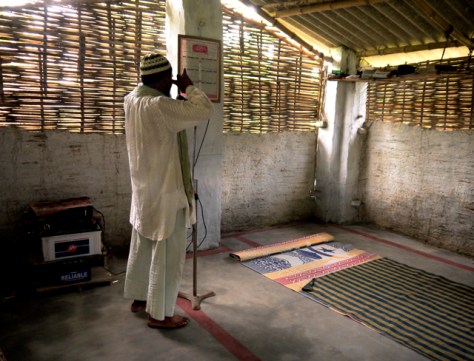
Imam Shamsuddin calls for prayer. Photo credit: Shivam Vij
Like nearly every village in South Asia, Allahpur, in the east Indian state of Bihar, is geographically divided on the lines of caste. On one side of a dirt track live the upper-caste Muslims (Syeds, Sheikhs and Pathans) and on the other side live the lower-caste Muslims (Ansaris, Dhunias and Raains). There are only four Hindu families in Allahpur, and they are all lower castes, their houses amid the low-caste Muslim houses.
For five years now, the low caste Muslims have been praying at a ramshackle mosque they built, boycotting the mosque in the upper-caste Muslim area, a stone’s throw away.
It is no exaggeration to say today that Telangana is burning. Nor will we be far off the mark if we suspect that a paralyzing fear has encased its ‘intellectuals”. Everyone is lost in providing testimonies to prove themselves to be pro-Telangana and everybody is a self-accomplished activist. In fact, the intellectuals have lost themselves as spectators. They have become immune to understand what is happening before them.
The demand for statehood for Telangana is undoubtedly a democratic and judicious demand. It has been held back since 1950s and suppressed time and again. No doubt Mr. Kalvakuntla Chandra Sekhar Rao (KCR), the President of Telangana Rastra Samithi (TRS) did maintain the public talk with occasional tactical moves and has been considered an icon of “Telangana vaadam” as last ten years of Telangana politics are referred to. Since 2009 November the movement could attract large mass of diversified sections of people from all walks of life and engage the attention of the people with hopes of achieving the state any day thanks to the enthusiastic role play of the media and political parties – in power or opposition. It is indeed noteworthy that since November 2009 the movement has been able to attract a large number of diverse sections of people from all walks of life in thousands. They have mobilized voluntarily and have conducted meetings in the most democratic way. That there has been considerable restraint among the people who have been dishonored, alienated and humiliated under the Andhra Pradesh rulers is without dispute. These people have mobilized democratically despite the war-like surveillance and suppression of both the para-military and the state police force. Historical injustice – political, economic and cultural of the people of this region is well highlighted.
Protest Meeting at Maruti-Suzuki Factory, Manesar, September 01, 2011
Manesar is an emerging industrial hub roughly fifty kilometers from Delhi. Factories rise along the co-ordinates of a neat grid, overshadowed by the rocky Aravallis. The world is made here – cars, bikes, semiconductors, automotive parts, electronics, telecommunications equipment. Manesar has a little bit of everything. Even a bomb data analysis centre and a brain research lab and a military school and a heritage hotel. On a Maruti Swift, speeding down National Highway 8 towards Jaipur, you could make it to Manesar from Delhi, through Gurgaon, in less than an hour. Maruti’s ads are all about speed and control. Speed and control will cruise you to Manesar.
The following is a statement issued by the MARUTI SUZUKI EMPLOYEES UNION (MSEU) on 1 September 2011
The management of Maruti Suzuki Industries Limited, Manesar plant (Plot 1, Phase 3A) has terminated 11 and suspended 38 workers on 29th and 30th August 2011, on completely fabricated charges of go-slow in production and that workers have been ‘undisciplined’. It is doing this as a continuation of harassing workers for our struggle for the right of Union formation and other legitimate rights from June 4th to 16th. It is using brute police force to intimidate us, and is also continuing to pay and use bouncers and lumpen force to continuously threaten us. The management is also spreading a rumour that the production has resumed yesterday 31 August through a handful of contract workers, some supervisors, engineers and robots. This disinformation campaign has also been splashed across the media.
In following the discussion on the Anna Hazare phenomenon, I have found the references to populism very interesting. In response to Partha, Aditya reminds us that populism should not be dismissed as non-political or anti-political. Partha clarified that he does not regard Anna Hazare’s populism as anti-political but as anti party-politics and anti government. Team Anna narrowly defines politics as the domain of party politics and the government, which it then identifies with corruption. Om Puri’s rant and Kiran Bedi’s vaudeville performance expressed this sentiment. Politics means netas, who are corrupt. References to 2G, CWG, Kalmadi, and various land scams refer to politics in this sense. Such a definition of politics allows the claim that the gathering at Ramlila was non-political or beyond politics. Anna as a saintly Gandhian figure who does not seek office, and the status of Kiran Bedi and Kejriwal as civil society members, contributed to the representation that the mobilization of the “people” transcended politics.
I have been trying to make sense of the Anna Hazare event. I agree that it was historical, but was it a tragedy, or a farce? The swift exchange between Partha Chatterjee (PC) and Aditya Nigam (AN) and their reference to Ernesto Laclau and ‘populism’ have given me a familiar frame to enter into the debate around the event. Here, I will concentrate on the question of populism and its normative status. However, unlike PC and AN, I have got nothing to offer to ‘the Left’ (Independent or Dependent), because I am not a leftist, rather one who likes sitting on the fence on a nice arm-chair and this piece will perhaps bear an imprint of that position. Also, apologies are due to the readers of Kafila as I have not read, just browsed through, the two pieces written by Shuddhabrata Sengupta, which have been wildly popular – if Facebook is an indicator – and have been referred to by both PC and AN. Therefore, I might be repeating what Sengupta has already said.