Category Archives: Movements

Let Us Not Forget – South Asia Solidarity Initiative

Statement by the South Asia Solidarity Initiative (SASI) at ‘After Mumbai, Which Way Forward? A Public Dialogue’, City University of New York Graduate Center, New York, December 15th, 2008. Co-sponsored by The Center for Place, Culture and Politics, The Brecht Forum and SALAAM Theatre.

Let Us Not Forget

Like many in South Asia, we watched with anguish as nearly 180 people of different castes, classes, religions and nationalities lost their lives in the events in Mumbai that unfolded over several days. We mourn their loss in this large tragedy and condemn the perpetration of such terrible violence. We also express solidarity with those intrepid groups and individuals who have tirelessly sought to build deep-roots of social, political, economic and cultural understanding for peace and justice in South Asia.  At this moment, we call for reflection on recent histories of South Asia and the world.  Hence lessons may be drawn, collective action contemplated and spaces of hope created from the debris of despondency. Continue reading Let Us Not Forget – South Asia Solidarity Initiative

More reflections as Southasians on Mumbai

Anjum Altaf has sent us two posts on The South Asian Idea that reflect on the terrorism in Mumbai and discuss how best we can respond as Southasian citizens:
 

Ecstatic Archaisms of Aurobindo Ghose – Prasanta Chakravarty

Guest post by PRASANTA CHAKRAVARTY

In Reflections on Revolutionary Violence Aditya Nigam makes some nuanced points about the nature of Maoist violence and by contrast, comments on the bedrock character of democracy itself. Can we trace the sublime cult of blood and gore further down, to the founding principles of Forward Bloc, for instance? Or espy it in the millennial longings of a few Gita wielding swadeshis, for that matter? One may begin to see a pattern.

Continue reading Ecstatic Archaisms of Aurobindo Ghose – Prasanta Chakravarty

Reflections on Revolutionary Violence

In the last one year, I have often found myself going back to a conversation I had had with a Maoist ideologue. As it happened, it was he who started interrogating me about my stand on violence. ‘So, you have become a Gandhian?’ he demanded. I must confess I was a bit taken aback, not quite able to figure out the context of this poser. ‘What do you mean by Gandhian’, I kind of mumbled. Pat came his reply: ‘Well you have been making some noises lately about Maoist violence, haven’t you?’ Suddenly it all became clear. Through this ridicule, he was trying to appeal to that part of me that still remained marxist – presumably now buried in some remote past – and to resurrect it against my ostensible ‘non-marxist’, ‘liberal’ present (for which ‘Gandhian’ was some kind of a short hand code). I found myself at a loss of words. Does a criticism of the mindless and nihilistic violence of the Maoists make one a Gandhian? Is there no space left between these two polar positions? The conversation did not go very far that day but has kept coming back to me ever since.

Continue reading Reflections on Revolutionary Violence

The ‘Obama Moment’: Sangay Mishra and Jinee Lokaneeta

The ‘Obama Moment’ and Conversations on Race
Guest post by SANGAY MISHRA and JINEE LOKANEETA

[The ‘Obama moment’ is much more than the man. Elementary, one would have thought. But maybe not. For, it has been intriguing to watch and listen to people – radical and nonradical liberal alike – mock this moment in a cynical, ‘we-know-it-all’ and ‘what-do-you-expect?’ mode. Intriguing, because, somewhere the insinuation is that those who celebrate are just being carried away by an ephemeral event. Maybe. It seems however, and the authors argue below, that this persona we now know as ‘Obama’ was not there even a year or two ago; he emerged in this present form, through a series of ‘encounters’ – with race, with his own history and with ‘blackness’. In his present form, Obama is produced by a certain African American investment in the earlier Obama (of, say, the pre-campaign Obama). – AN]

Much as the Obama victory on the 4th of November was expected and already predicted by a number of polls, the reaction to his victory both inside and outside the United States was breathtaking.

Continue reading The ‘Obama Moment’: Sangay Mishra and Jinee Lokaneeta

Bye Bye Reliance: Pen Tehsil Says No SEZ!

In our continuing concern with the strange times that seem to have befallen our cities, lets not lose sight of the historic battle underway in the countryside. In the first instance of its kind, the referendum on the Maha-Mumbai Special Economic Zone being set up by Reliance has unambiguously returned the verdict of the farmers of Raigad- no SEZ in Pen! As Sanhati notes, the Tata’s 1500 crore investment in Singur sounds like loose change when compared to the one lakh crore that Reliance is planning to sink into 10,000 hectares. 22 villages in the Pen Tehsil voted against the acquisition of their lands at the paltry sum of 10 lakhs per acre. Unsurprisingly, Reliance Industries Limited has said the referendum is “not genuine”:

Continue reading Bye Bye Reliance: Pen Tehsil Says No SEZ!

Singur, Mediotics and an NGO Called Indian Express

[Note: Television was often referred to as the the idiot-box. For very sound reasons. It produced idiocy on a regular basis. It still does. But in these days, this is no longer the monopoly of the televisual media. Newspapers too are doing pretty much the same. Let us call this specific form of media-generated idiocy, rampant among media persons, mediocy and the phenomenon, mediotics. Those affected by it will then be mediots.]

I know that someone will immediately step in to correct me to say that Indian Express is not an NGO. But if one looks at the completely illiterate use of the term made by the Indian media, then anything that is not ‘governmental’ is ‘non-governmental’ and can, hence, be called an NGO. Except that for the large mass of ignoramuses peopling the media i.e. mediots, this is a safe term to describe an animal that you cannot identify. Continue reading Singur, Mediotics and an NGO Called Indian Express

Indians against Indian repression in Kashmir

Be there or elsewhere:

Janahastakshep, PUCL and PUDR  are holding a dharna on August 30 at jantar mantar from 11am to 1pm in protest against the crackdown on non violent people demanding ‘azadi’. Continue reading Indians against Indian repression in Kashmir

Quepem by the kilo: Hartman de Souza on Mining in Goa

I am posting below a requiem to Quepem by my old friend Hartman. It reads eerily like a companion piece to the curatorial essay to Manifesta 7 by Raqs, posted earlier on Kafila. Raqs wrote:

Mountains are flattened to mine bauxite, the main aluminium ore. Mountains of aluminium waste may eventually take their place…The “rest of now” is the residue that lies at the heart of contemporaneity. It is what persists from moments of transformation, and what falls through the cracks of time. It is history’s obstinate remainder, haunting each addition and subtraction with arithmetic persistence, endlessly carrying over what cannot be accounted for. The rest of now is the excess, which pushes us towards respite, memory and slowing things down.

And here’s Hartman:

As you read this, mourn the brutal rape and murder of half a dozen steep, thickly forested hills barely 12 kilometres from Quepem town in south Goa. These form an integral link of the magnificent Western Ghats that surround Goa, and as any schoolchild studying the environment will tell you, they play a crucial role in providing Goa its ecological wellbeing.

And yet, in blatant contravention of wisdom we purport to impart to children, hundreds of forests are being cut down around Quepem even as I write this. The denuded land turned inside out so fast, a hill can disappear in three months, leaving behind suppurating wounds that go down so deep the giant tipper trucks at the bottom look like the harmless toys little boys plays with.

Continue reading Quepem by the kilo: Hartman de Souza on Mining in Goa

Under Development: Singur

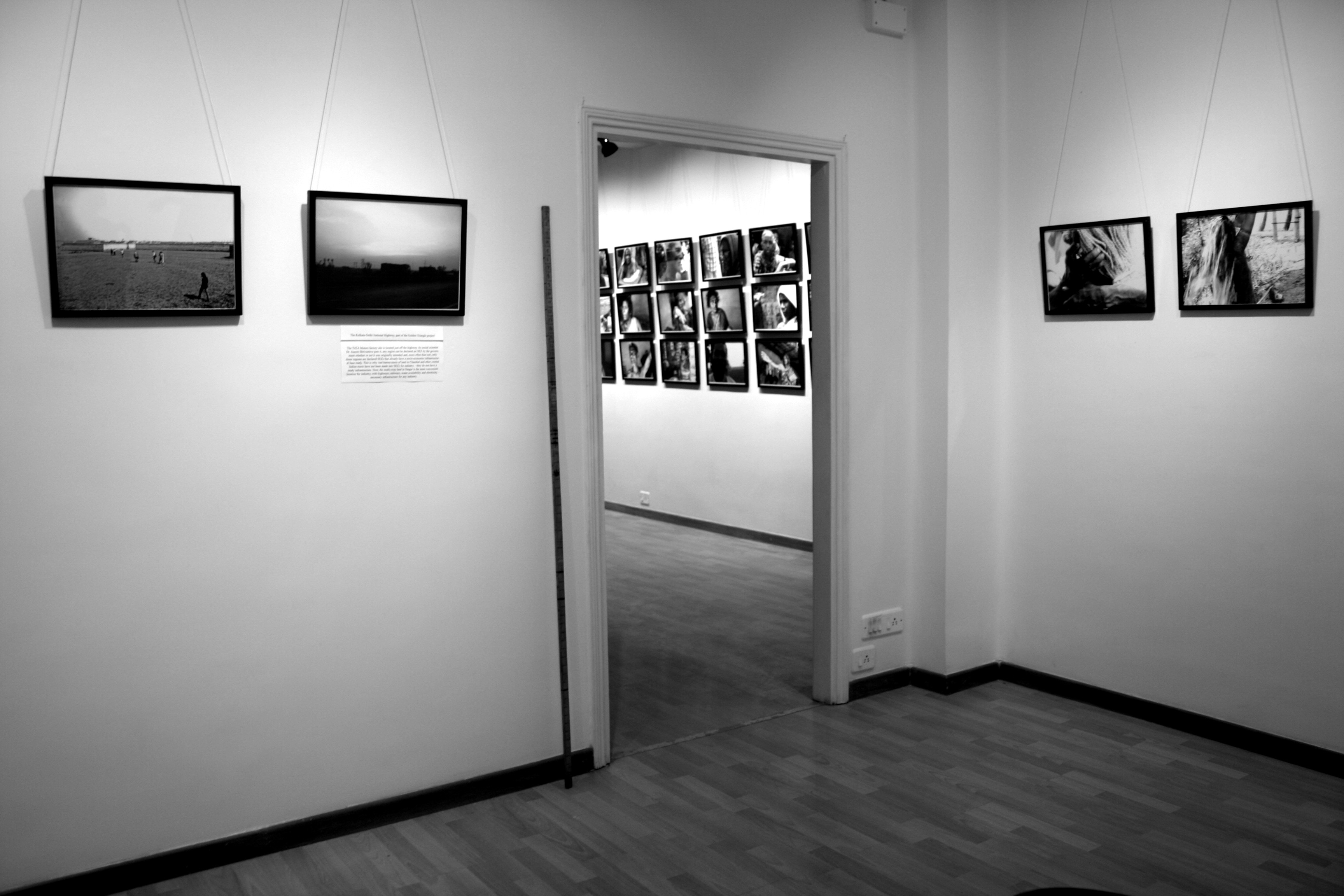
If you are in Kolkata between 27 June and 2 July, you may do well to visit the Seagull Arts and Media Resource Centre, Kolkata, for an exhibition of photographs of Singur. There will also be a panel discussion and a film festival. Continue reading Under Development: Singur

Ahilan Kadirgamar on Southasian Solidarity and Questions of State and Land

[This guest post is by AHILAN KADIRGAMAR who is an activist with the Sri Lanka Democracy Forum. He has written about the international dimension of the conflict and peace process in Sri Lanka and worked on human rights concerns related to the conflict. His current interests include the political economy of state-society relations and attempts at state reform in Sri Lanka.]

I have been travelling between cities, from Kathmandu to Delhi to Calcutta and down south to Madras. Visiting friends, but also trying to understand peoples’ perceptions of Sri Lanka in a time of war. I give talks here and there, but many more meetings over tea and dinner. There is an older tradition of solidarity, but now I am thinking again of the meaning of Southasian solidarity.

In Calcutta, on an activist’s book shelf, I find a book signed and gifted to her in the mid-eighties by Para, my friend from Berlin who passed away last year. Kumaraswamy Pararajasingham, a Marxist and human rights activist in Lanka in his early years, was a pillar of Tamil dissent over the last two decades of exile in Germany. An old Marxist in Calcutta, asks me about Hector Abhayawardhana, the theoretician of the Lanka Sama Samaja Party Continue reading Ahilan Kadirgamar on Southasian Solidarity and Questions of State and Land

Kavita Srivastava’s report on last year’s Gujjar confrontation in Rajasthan

[This detailed report was prepared by Kavita Srivastava, the Jaipur-based general secretary of the People’s Union for Civil Liberties. Posting this here to make it publicly available as it is not on the PUCL website. Please note that this was a rough draft. ]


State Violence and Caste Confrontation in Rajasthan

I. Outline of the week long movement for ST Reservation by the Gurjars

Soon after independence the Bhil Meenas got reservations in the Districts of Dungarpur, Banswara, Chittorgarh and Udaipur. At the time of 1931 census the Bhil Meenas were over 20, 000, however today they have reduced to half they are only 10,000 in number.

This was an issue of contention for the Meenas as they felt that they also deserved to be STs so they decided to raise their voice against this injustice as they called it. Under the leadership of Lakshmi Narayan Jhirwal they organized themselves.

11th June 1952: Meenas organized a sammelan near Dudu (Jaipur) district for the inclusion of the Meena community in the Schedule list for reservation. The Gurjars supported this wholly. Continue reading Kavita Srivastava’s report on last year’s Gujjar confrontation in Rajasthan

Goa: How the battle was won

By Rifat Mumtaz and Madhumanti Sardar

(Rifat Mumtaz and Madhumanti Sardar work with NCAS and are involved in campaigns against SEZs).

Recently, Goa became the only state in India to openly declare that no more Special Economic Zones (SEZs) would be set up on its territory. This was a result of relentless pressure from almost the entire state — villagers, educated middle class, professionals, activists, the church and media. Continue reading Goa: How the battle was won

Condemnation of Maoist and State violence in Orissa

[We publish below a statement signed by some concerned citizens and intellectuals, on the Maoist violence in Nayagarh town in Orissa. This statement could also be considered as an invitation to a debate on the larger question on the place of violence in political and social movements. Continue reading Condemnation of Maoist and State violence in Orissa

Second Statement from Chomsky, Tariq Ali et al

[We have received this second statement by Noam Chomsky, Tariq Ali and other signatories of the earlier letter on Nandigram. As will be evident, in this letter the authors have made some clarifications in response to the reactions they received from a range of people in India.

However, in the meantime, there has been a misrepresentation of what we thought was a private response from Prof Chomsky to the signatories of the statement issued by some of us (See the post Response to Noam Chomsky, Howard Zinn et al on Nandigram). For instance, see the comment by Hindol Bhattacharya on the above post. Regarding that comment, we must clarify one point here: Prof Chomsky’s letter to us explained the situation in which he had felt compelled to issue the first statement, his explanation being that an earlier private email correspondence with some individual supporter of the ‘opposition’ had extracted one part of that correspondence and it was ‘used as a slogan in demos’. The person concerned could probably better clarify this situation, which is indeed unfortunate. We refrained from publicizing Prof Chomsky’s response to us, given this previous misuse by somebody of his private correspondence.

However, Mr Bhattacharya has now produced an extract from another mail (private? public? we do not know) supposedly from Prof Chomsky which runs thus:

“The statement that you saw has been grossly misinterpreted by segments of the Indian left. As those who responded know, but didn’t say, the statement was issued after members of the opposition took a phrase from a letter of mine expressing concern but saying that I did not know enough to support them, and manipulating it into a statement of support. The statement that I and others signed was in part a reaction to this misrepresentation.”

This is truly astonishing, for he wrote to us AFTER we sent him our response – as a response to our response. The charge therefore of “our knowing but not saying” is entirely unfounded. There are several different voices raising questions about the CPM – it is simply convenient to conflate all of them as “the opposition”.

The new statement by Chomsky et al is published below:]

We are taken aback by a widespread reaction to a statement we made with the best of intentions, imploring a restoration of unity among the left forces in India –a reaction that seems to assume that such an appeal to overcome divisions among the left could only amount to supporting a very specific section of the CPM in West Bengal. Our statement did not lend support to the CPM’s actions in Nandigram or its recent economic policies in West Bengal, nor was that our intention. On the contrary, we asserted, in solidarity with its Left critics both inside and outside the party, that we found them tragically wrong. Our hope was that Left critics would view their task as one of putting pressure on the CPM in West Bengal to correct and improve its policies and its habits of governance, rather than dismiss it wholesale as an unredeemable party. We felt that we could hope for such a thing, of such a return to the laudable traditions of a party that once brought extensive land reforms to the state of West Bengal and that had kept communal tensions in abeyance for decades in that state. This, rather than any exculpation of its various recent policies and actions, is what we intended by our hopes for ‘unity’ among the left forces.

We realize now that it is perhaps not possible to expect the Left critics of the CPM to overcome the deep disappointment, indeed hostility, they have come to feel towards it, unless the CPM itself takes some initiative against that sense of disappointment. We hope that the CPM in West Bengal will show the largeness of mind to take such an initiative by restoring the morale as well as the welfare of the dispossessed people of Nandigram through the humane governance of their region, so that the left forces can then unite and focus on the more fundamental issues that confront the Left as a whole, in particular focus on the task of providing with just and imaginative measures an alternative to neo-liberal capitalism that has caused so much suffering to the poor and working people in India.

Signed

Michael Albert, Tariq Ali, Akeel Bilgrami, Victoria Brittain, Noam Chomsky, Charles Derber, Stephen Shalom

Arundhati Roy on Taslima Nasreen and Nandigram: Interview with Karan Thapar on IBNlive.com

As we have been discussing both Nandigram and the situation that Taslima Nasreen has found herself over the last few weeks, I thought that it might be interesting to listen in on a conversation that Karan Thapar has had with the writer Arundhati Roy that takes on both these questions. This interview was broadcast today on CNN IBN.


Transcript of Arundhati Roy interviewed on the treatment of Taslima Nasreen by Karan Thapar on ‘Devil’s Advocate’, broadcast this evening on CNN-IBN

The transcript was published on Sun, Dec 02, 2007 at 20:32, on the IBNlive.com website

A video of the interview is also available on the website.

———————————————

Hello and welcome to Devil’s Advocate. How do India’s leading authors respond to the treatment given to Taslima Nasreen over the last 14 days? That’s the key issue I shall explore today with Booker Prize- winning novelist Arundhati Roy.

Karan Thapar: Arundhati Roy, let me start with that question. How do you respond to the way Taslima Nasreen has been treated for almost 14 days now?

Arundhati Roy: Well, it is actually almost 14 years but right now it is only 14 days and I respond with dismay but not surprise because I see it as a part of a larger script where everybody is saying their lines and exchanging parts.

Continue reading Arundhati Roy on Taslima Nasreen and Nandigram: Interview with Karan Thapar on IBNlive.com

Chomsky, Howard Zinn, Tariq Ali: The Seductions of Stalinism

Once more, Stalinism’s seductions have taken over even libertarian Leftists and Trotskyists, who, one would imagine, should know better about the methods of this devious ideological machine. Leading intellectuals like Noam Chomsky and Howard Zinn have issued a statement addressed to “Our Friends in Bengal”, which you can read here. The statement offers the solemn advice that in the face of Iraq and the impending attack on Iran, ‘it would be impetuous to split the Left’. Suddenly, as if by magic, ‘all Leftists’ from anarcho-communist Chomsky, Trotskyist Tariq Ali, and many many Liberal Leftists – all become ONE with Stalinism (‘The Yet-Unsplit Left’). For it will be apparent to any one who reads the statement that the appeal not to split the Left is made not to the CPM, but to those who oppose its crypto- capitalist policies.

Continue reading Chomsky, Howard Zinn, Tariq Ali: The Seductions of Stalinism

Karl Marx Replies to Comprador Intellectuals

NOT IN MY NAME – KARL MARX (See image below)

You are not what you wereAshok Mitra after 14th November, 2007:

buddha modi

[For all the stories that Sudhanva Deshpande has to tell – quoting what else but Ganashakti – we reproduce here the agonized remarks of another ‘pathological Left-hater’ (in SD’s words, that is what every CPM critic is!). Somewhere here, you might get a clue as to why the likes of Prabhat Patnaik ‘had to sign on the dotted line’ – on a statement drafted in AKG Bhavan. Has Patnaik made his ‘Lukacsian choice’? Our sympathies are with him. Read the full translated version of the original Bengali article here. – AN]

“Till death I would remain guilty to my conscience if I keep mum about the happenings of the last two weeks in West Bengal over Nandigram. One gets torn by pain too. Those against whom I am speaking have been my comrades at some time. The party whose leadership they are adorning has
been the centre of my dreams and works for last sixty years…”

Continue reading Karl Marx Replies to Comprador Intellectuals

Pakistan’s student movement

I saw this first in an incredible Pakistani blog on the matrial law shared by fellow Kafila-ite Mahmood Farooqui.

Lets face it, right now the Indian media can learn a few things from its Pakistani counterparts, let alone all of us…

This report is about Punjab University terrorised by Jamaat goons for many years, this is a turning point, when students rallied against the JIT, whose local leaders had grabbed Imran from a demo at the University and handed him over to the police…

Students rise for Imran, against IJT Unprecedented campus march

By Mansoor Malik

LAHORE, Nov 15: A large number of Punjab University students on Thursday held a protest demonstration against Islami Jamiat Tulaba (IJT) for its manhandling of Pakistan Tehrik-i-Insaaf Chief Imran Khan.

The event was unprecedented in the history of campuses in Punjab, which have been under the Jamiat’s rule for decades. Continue reading Pakistan’s student movement

Dhikkar Michhil: One Lakh March in Kolkata – Moinak Biswas

[We present below a participants’ account, by Moinak Biswas, of the massive and unprecedented Dhikkar Michhil [condemnation rally] in Kolkata, protesting the killings in Nandigram. We now know, notwithstanding the cold blooded claims of ‘liberation’, that the operation carried out there was no different from what any marauding army does – kill rape, rape, maim. And so, Kolkata rose up in spontaneous condemnation – AN]

kolkata rally

The organizers were obviously not prepared for size of the turn-out. That it would be big they must have known, as the outrage had reached a boiling point since the second offensive against Nandigram villagers started on the 6th. . But no one could have anticipated the multitudes that would render numbers obscure on the streets yesterday. The organizers didn’t even bring enough of those little badges which just said ‘Dhikkar’ (‘Shame!’). But then who were the organizers? Some familiar faces were using a loudspeaker to issue basic instructions – ‘Please do not carry organizational banners; do not shout slogans; our route will be.. .’ No one was leading. Many people did not know who gave the call for the rally; they still do not know. Continue reading Dhikkar Michhil: One Lakh March in Kolkata – Moinak Biswas

Time for Alternative Left Platform in W Bengal

The CPM mask is off. Beneath it you can see the face of the totalitarian face of the Biman Boses, Benoy Konars and Brinda Karats. Much more is to come in coming days but one thing seems to be becoming clearer with each passing day: it will be wrong now on, to count the CPM as a Left wing force (at least in West Bengal). Unless we are able to shed this misleading idea, we are likely to misread the situation in the state completely.

The situation in Nandigram is developing rapidly. The area has been ‘liberated’ – which is to say brought under CPM control. Nobody, including journalists and political and civil rights activitsts can enter the area. All you have are marauding criminal gangs of AK 47 (and other assorted weapon) wielding ‘cadres’. They roam about with the red flag and have no compunction in attacking the likes of Medha Patkar and Anuradha Talwar, punching them in the face and tearing at their clothes. This is a political style and culture that we have so far only associated with the fascist right. We have seen glimpses of it in the recent past in the state but now it has assumed a generalized form. And while the armed gangs are at work in Nandigram, the state’s police has started targetting protestors in Kolkata.

Continue reading Time for Alternative Left Platform in W Bengal