Two early-career teachers in private universities in India reflect on what has quietly transformed in their classrooms over the last few years, as they trace the rise of a new norm of ‘silence’. Their reflections ask what it means to teach in the intimate classroom space as it begins to mirror the shrinking democratic space and what forms of care, courage and pedagogy might keep the classroom thinking in these changing times.
I
In the last half a decade, i’ve felt my classroom in a private Indian university change in ways that are hard to capture through the usual metrics. The checklist is enviable: i retain full freedom to design courses, assign authors i want and structure electives around questions that matter to me. And yet, in one of the courses while teaching Margaret Canovan’s piece on ‘Two Faces of Democracy’, i realised what had changed. There is a subtle paradox: the formal freedoms of the private university remain in place, but the informal ecology of the classrooms has altered.
A National Convention on Defending Universal Adult Franchise, convened by Bharat Jodo Abhiyan, the People’s Union for Civil Liberties (PUCL) and the National Alliance of People’s Movements (NAPM), took place at the Constitution Club, New Delhi, on 20 December, 2025. At this National Convention, the Special Intensive Revision (SIR) of electoral rolls being carried out by the Election Commission of India in different states of India was discussed. About two hundred persons, including many witnesses, attended the Convention and were part of the audience. We post below the report of the jury
Conclusion of the jury:
After hearing the testimonies, the jury is of the view that the revision of electoral rolls is being carried out hastily and sometimes carelessly. The possibility of mass disenfranchisement is, therefore, real and ominous. It is imperative for the process to be fair and accurate; all eligible voters must be duly registered and should be able to exercise their right to vote. To fulfil these basic requirements, the SIR process needs to be reconsidered and reworked, and until that is done, in the interim, it must be stopped.
Jury members: Justice Madan Lokur (Retd.), Justice A.K. Patnaik (Retd.), Ms. Pamela Philipose, Dr. Jean Drèze, Prof. Nivedita Menon (Retd.)
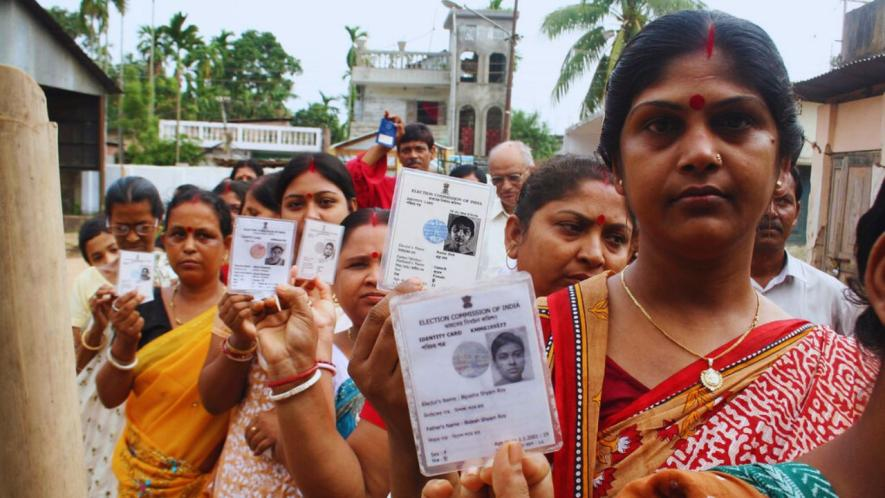
We, people’s movements, peoples’ organisations and citizens from across India, express our deep concern at the undemocratic, unconstitutional and illegal deletions of crores of voters under the guise of Special Intensive Revision (SIR) of electoral rolls. We confront the largest ever disenfranchisement in the history of any democracy. We face a challenge to the universality of the universal adult franchise — the foundational achievement of our freedom struggle.
The Election Commission of India (ECI) has weaponised a seemingly routine administrative exercise into an unprecedented and sweeping rewriting of the rules of who can be a voter.
This tectonic shift in the country’s electoral architecture was introduced without a constitutional amendment, without public or legislative debate, and without any change in the statutory rules or even the ECI’s own Election Manual. This has resulted into a double whammy for the people of India. First, the responsibility for inclusion on the voters’ list has been shifted from the State to the citizen. Second, the presumption of citizenship has been overturned. These provisions fly in the face of the letter and the spirit of our constitution, are a case of wanton abuse of law, disregard of the judicial pronouncements and the ECI’s own established norms of transparency, accountability and fairness.
The experience of Bihar stands as a stark warning. The SIR unfolded as a chaotic exercise in bureaucratic overreach that imposed impossible demands on the frontline election staff and needless misery for ordinary people. There is ample evidence that the SIR in Bihar failed every quality test of electoral roll revision: completeness, equity and accuracy. The population–elector ratio declined sharply, resulting in a net reduction of forty-five lakh names from the voters’ list. The burden of exclusions fell disproportionately on the poor, migrants, minorities and women. Meanwhile, inaccuracies in the voters list remained unresolved—duplicated entries, blank records, gibberish data and bulk voters at single addresses persisted.
Yet, instead of learning from this disaster, the Election Commission has chosen to go ahead with SIR in the rest of the country. Evidence from the second phase of SIR shows that more than eleven crore voters now face the threat of disenfranchisement—because they could not submit forms on time, or because they could not trace themselves to an arbitrarily set qualifying electoral rolls of 2002 or 2003. The burden has fallen once more on the most vulnerable, especially women, migrants, dalit, adivasis, nomadic and trans communities and the religious minorities, mainly the Muslims. Again, impossible deadlines have been imposed on inadequately trained and overburdened BLOs, leading to multiple tragic cases of their deaths and suicides.
This runs counter to the consultative and inclusive spirit that the ECI has upheld for decades and deepens the suspicion that this mass exclusion is being carried out at the behest of the ruling dispensation. The Election Commission faces a crisis of credibility like never before, as the lines dividing the Commission, the Government and the ruling party have been blurred.
In a democracy voters choose their government. A democracy loses all meaning if the government is allowed to choose its voters. That is the abyss the SIR is leading India into.
After the uprising of the 17th June Election of 2024
The Secretary of the Writers Union Prime Minister’s Office
Had leaflets distributed in the Stalinallee the message sent out via Nagpur
Stating that the people
Had forfeited the confidence of the government
And could win it back only
By redoubled efforts. Would it not be easier
In that case for the government
To dissolve the people
And elect another? – [Courtesy Bertolt Brecht]
The way things are going with the SIR, we are heading for the regime “electing its people” – with the full participation of the Opposition parties, who despite the knowledge of the process, have become unwilling participants. Not knowing how to respond, they seem to be running around like headless chickens. “Vote Chori” and the so-called “Special Intensive Revision” (SIR) are closely tied together and though Rahul Gandhi seems to have got the import of what this means, reports suggest that RSS “sleeper cells” within and outside the Congress Party are hyperactive now, trying to undermine the campaign against vote chori. Some INDIA bloc parties have even openly distanced themselves from it.Continue reading “SIR” Is a Process of Mass Disenfranchisement→
Following is a statement issued on 10 December 2025, by over 50 organizations and 200 plus individuals on the reported adoption of the “Aadhar model” by some other countries.
We, concerned Indian citizens and organisations, are alarmed to note that efforts are being made to promote biometric identity systems similar to Aadhaar in other countries.
Aadhaar is India’s unique identity number, linked with a person’s biometrics (fingerprints, iris and photograph as of now). The number was rolled out with fanfare from 2009 onwards. The use of this number, and of Aadhaar-based biometric authentication (ABBA), was promoted to the hilt by the Indian government in close collaboration with the IT industry. Aadhaar was supposed to be voluntary, but it quickly became clear that living without it would be very difficult for most. Today, it is as good as compulsory. Most social benefits are out of reach without Aadhaar.
The resignation of Professor Nandini Sundar from the convenorship of the seminar colloquium at the Department of Sociology, Delhi School of Economics, has left an emptiness that language struggles to fill and words can barely cover. The seminar she was to host, titled Land, Property and Democratic Rights, was to be delivered by Dr. Namita Wahi, a senior fellow at the Centre for Policy Research and one of India’s most thoughtful legal scholars on land rights.
The event formed part of the department’s long-standing Friday Colloquium series—among the oldest and most cherished intellectual traditions in Indian academia. Over the decades, nearly every major figure in the social sciences has presented a paper here at least once. More than a seminar, it has been a ritual of conversation—one that has weathered political shifts, personal rifts, intellectual disagreements, and institutional flux, sustaining across generations a living legacy of thought, dialogue, and learning. Continue reading The Day the Colloquium Fell Silent – Bureaucratic Diktat and the Fate of Thought: S. M. Faizan Ahmed→
[Below is theEnglish Version of a Public Statement in Malayalam released by a group of concerned economists and social activists that appeared in the Malayalam and Kerala-based English Newspapers today (31 October 2025)]
Background: The Government of Kerala have been preparing to declare the State of Kerala as India’s First Extreme Poverty-Free State on 1 November, 2025 being the State formation day. Th government claims that this achievement was attained through sustained efforts to eradicate extreme poverty in the state since July 2021, with just 64,006 extremely-poor families identified through a survey conducted by the Kudumbashree Mission and the Panchayats and Municipalities. The criteria used, as the government claims, were (i) households with no income, (ii) not even food for two times a day, (ii) those unable to cook food even with food articles available from ration shops, and (iv) those with very bad health conditions. This makes Kerala the first state in India to attain the two Sustainable Development Goals of No Poverty and No Hunger. However, this raises a number of crucial questions. It is in this background the following public statement was issued.
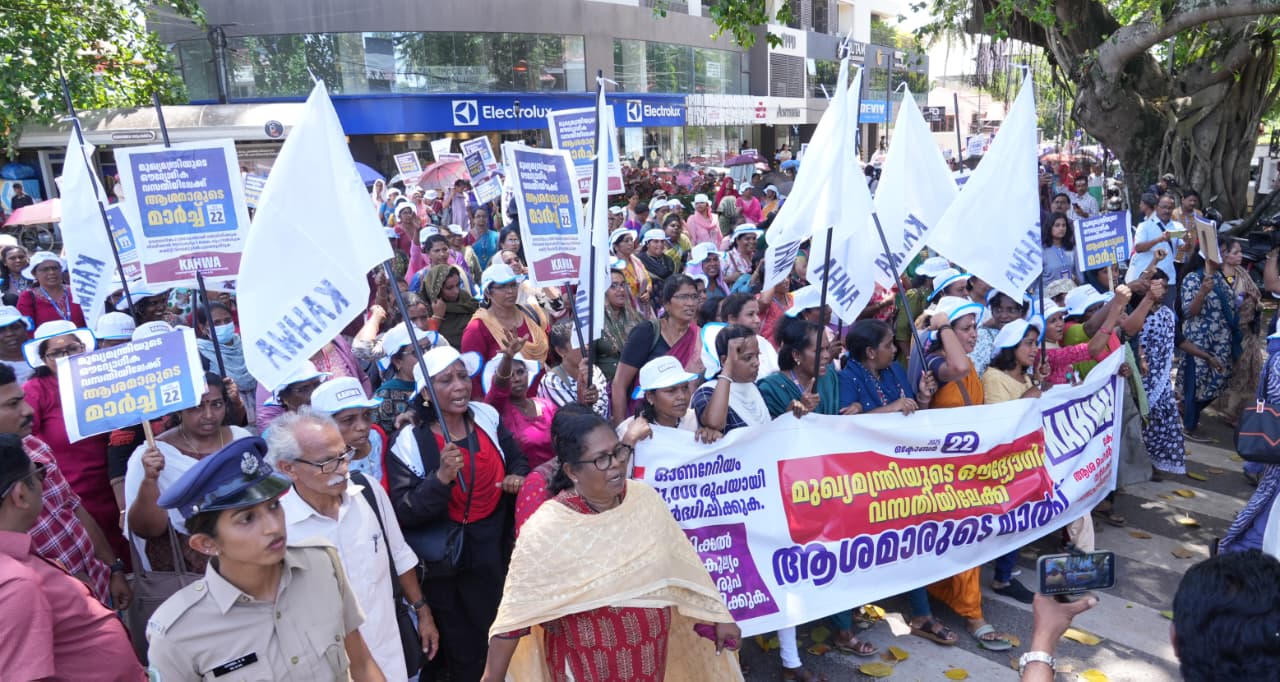
Yesterday, the protesting ASHA workers marched to your residence in the pouring rain, seeking to rouse you from your utterly inexcusable stupor. Yes, over the past eight months, you tried to first crush the strike, and then to kill it by ignoring it. Who does not know that the worst form of violence is indifference?
Finally, I am able to understand why the government of Kerala, led by a leading communist party, the CPM, is so doggedly against the demands of Kerala’s internationally-celebrated ground-level women health workers — the ASHA workers — who have been on strike since February 2025.
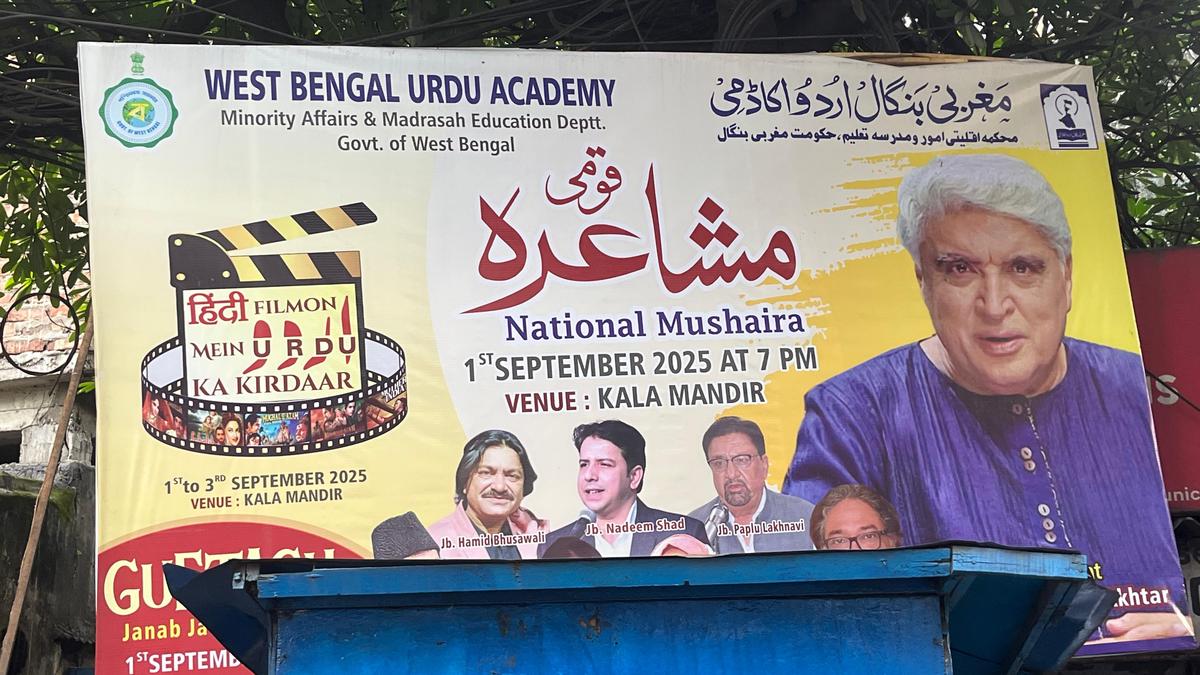
Javed Akhtar’s recent ‘exile’ from the West Bengal Urdu Academy event did more than generate headlines. It dwarfed a bigger debate about Urdu in Hindi cinema, which was the event’s main theme. The media precipitately reduced the whole issue to the conflict between the lyricist and the Urdu Academy. The controversy carried a tinge of ‘Muslim fundamentalism,’ reflecting today’s cultural and political ideologemes. However, the discussion on Bollywood’s uneven relationship with Urdu was lost in the sound and fury of cultural climate of the country. Et tu, Brutus?’ finds a new stage – ‘Et tu, Bollywood?’ You speak against the very world that gives you voice. Continue reading Javed Akhtar, Bollywood and Urdu’s Ghostly Existence – Rashid Ali→
‘So you are the little woman who wrote the book that made this great (American) civil war’ — Abraham Lincoln to Harriet Beecher Stowe, author of Uncle Tom’s Cabin
The Writers’ Police !
Bruno Fulgini, a nondescript employee at the French Parliament, would not have imagined in his wildest dreams that his tedious and boring job at the Parliament library would lead him to a treasure hunt of another kind.
Nearly two decades back one witnessed him metamorphose into an author and editor, thanks to the sudden discovery of old files of the Paris police, which provided details of its surveillance work done way back in 18 th century. A report filed by AFP then, quotes Fulgini tell us that ’Beyond criminals and political figures, there are files on writers and artists. In some cases, they go far in their indiscretions.’….
It was clear to these protectors of internal security of a tottering regime that the renowned literati then viz. Victor Hugo, Balzac or Charles Dickens, might be writing fiction, but their sharp focus on the hypocrisy of the aristocrats or the livelihood issues of ordinary people is adding to the growing turmoil in the country. They knew very well that they might be writing fiction for the masses but it is turning out to be a sharp political edge that hit the right target and is becoming a catalyst for change.
The Parisian police was engaged in tracking down the daily movements of the writers, was more subtle in its actions; its present-day counterparts in the West do not seem to have such patience.
The strongest democracy in the world namely the US has of late become a site of an ’unprecedented’ ’Multi-level barrage of US book bans’ as per PEN America [1]….
And now there are indications that the biggest democracy in the World namely India is keen to follow the footsteps of the strongest democracy ? Or it is too early to say that .[ Read the full article here : http://mainstreamweekly.net/article16227.html
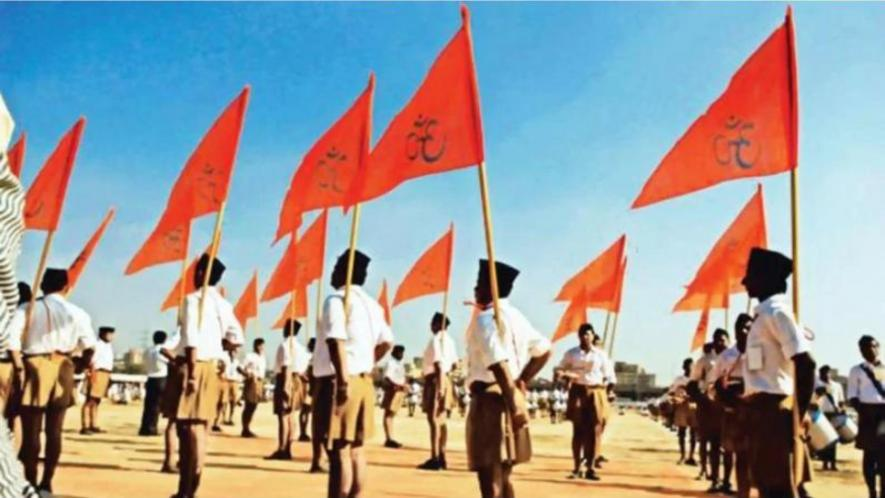
[Centenary celebrations of RSS – the biggest ‘self-proclaimed’ cultural organisation in the world — comprising of Hindus are on.
Much is being said about its longevity etc., and much will be said about it in coming days, it remains to be seen if it is ready to take a fresh look at some discomforting aspects of its own history when it is embarking on a journey towardswhat it calls as ‘new horizons’]
Ram Lila, the dramatic folk re-enactment of the life of Rama is still popular in Northern India.
Anyone who has watched this programme — especially in villages or towns — might have noticed a particular scene where god curses a sage for his misdemeanour that he will get a donkey’s face for his actions and will not even realise that he has got this new face.
One is reminded of this story — which tells us the great hiatus between claims and reality — whenever an individual or a formation starts bragging about its achievements that have no basis in reality.
Leaders of the Hindutva Supremacist movement in this part of South Asia look no different when they declare from the rooftops the “great role their political ancestors have played during the freedom movement”. It is a different matter that any objective student of India’s history — especially of the Independence struggle — is conversant with hundreds or thousands of pages, books, monographs written or documented to underline the contrary, their meek behaviour and compromising role during the very struggle. [https://www.newsclick.in/rss-centenary-search-icon]
The CCG’s concern that the proposed PPOHS Act is ‘unconstitutional’ and is an ‘open invitation to ‘oppressive misuse’ needs to be heeded.
Image : Courtesy Fiickr
Whether history will repeat itself, that is the question being asked about Punjab government’s renewed attempt to enact a law supposedly against ‘sacrilege’?
Anyone who is a keen observer of the social-political developments in the state knows very well that it has a history of such efforts (2015 and 2018) where similar attempts were made to amend laws related to sacrilege, and both attempts proved unsuccessful as they failed on the yardstick of constitutionality.
As per reports, the proposed Punjab Prevention of Offences against Holy Scriptures Bill, 2025 (PPOHS Act), which was recently referred by the state legislature to a committee for further discussion, has come under the scanner of experts of the Constitution and concerned citizens.
A leading voice among them, namely the Constitutional Conduct Group (CCG) — a platform of retired civil servants and diplomats– has in an open communication underlined how Punjab government’s proposed ‘PPOHS Act’ is ‘unconstitutional’ and is an ‘open invitation to oppressive misuse’ .
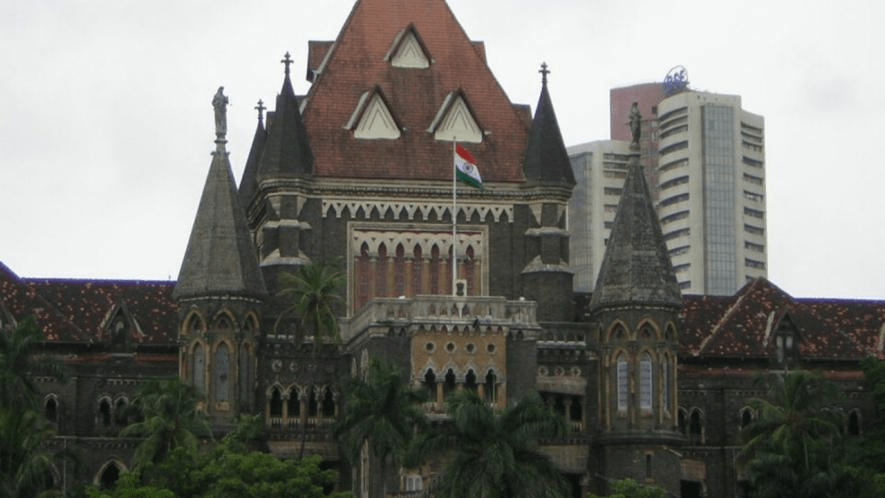
Could it be argued that Bombay HC’s highly debatable decision on a peaceful rally against Gaza genocide is an attempt not to inconvenience the ruling dispensation?
It was the year 1763, when Genevaís ecclesiastical assembly ordered one Robert Covelle to genuflect and listen to a reprimand for having fathered an illegitimate child. Covelle refused to kneel and turned to Voltaire for help.
Voltaire, a leading light of enlightenment, outraged at the very idea that religious authorities daring to make a citizen kneel, wrote a pamphlet against genuflection comparing the act with a tyrant punishing slaves or pedant correcting children. The rest of the philosophes rallied behind Voltaire and after six years of agitation, the Genevaís ecclesiastical assembly was forced to abolish genuflection from its code
Meera Nanda, writer and historian of science discusses, this episode in one of her monographs
Rereading this episode and seeing if around two-and-half centuries ago, the Church could be compelled to see incongruence, injustice and unreason in its own ruling, can a a similar thing be possible vis-à-vis the judiciary in the 21st century in the ‘biggest democracy in the world’?
This poser is related to a recent debatable decision of the Bombay High Court, which has rightly received enough opprobrium.
The following is an appeal made by the Citizens for Democracy to the President of India to restore the independence of the Election Commission of India.
A public appeal to the Hon’ble President of India
The apex court is seized of the matter of Special Intensive Revision of voter rolls in Bihar, which the Election Commission of India (ECI) has ordered. The matter being sub judice, the Citizens for Democracy, as a responsible organisation, a defender of people’s democratic rights, would abide by the rules and traditions and refrain from commenting on the matter. In any case, several organisations, political parties and individuals have, as petitioners, already presented their point of view before the highest court of the land. Needless to say, we are with the petitioners.
We, however, do not hesitate to do our duty to expose the sins of omission and commission of the ECI ever since the BJP government came to power in 2014. ECI, an independent constitutional body, has surrendered its autonomy to the ruling party and has become a willing tool in the party’s efforts to crush democracy in India. Things have taken many turns for the worse with every succeeding incumbent to the exalted position of Chief Election Commissioner.
EC – now a Government Department
In 2023 the Supreme Court suggested the appointment of the Chief Election Commissioner and other commissioners by a committee comprising the Prime Minister, the Leader of the Opposition and the Chief Justice of India and asked the government to amend the Act of 1991 suitably. The government promptly amended the Act and, as if to mock the Supreme Court, did not include the CJI in the committee. Instead, it made a minister appointed by the Prime Minister as one of its three members. With the Prime Minister leading the Committee, and one of his appointees at his beck and call, the government effectively reduced the existence of the Leader of the Opposition (LoP) in Parliament, the third member of the Committee, to a permanent minority. This has brought down the ECI’s status to that of a government department. One cannot expect fairness from such a body.
In the thick, humming night of a city that never truly sleeps — only flickers. Flickers between traffic signals and app pings, between delivery promises and the quiet violence of exhaustion.
He collapsed just beyond Gate Number Three in a residential colony in Delhi, somewhere between the parked dumpers and the weary under-construction site of the Metro.
He fell softly, without spectacle. The kind of death a city absorbs without noticing, like rain into dust.
In a few days, the Resident Welfare Association had drafted a statement — not out of grief, but out of inconvenience: “What if it had been one of us?”
The Cold War and the collapse of the Soviet Union are long behind us, and we’re now hurtling toward a tri-polar world dominated by America, Russia, and China. These three powers vy to shape global influence, often competing but sometimes colluding. As the saying goes, “When elephants fight, the grass gets trampled.” So, the central question for this lecture is: What path are the nations of South Asia—including Afghanistan and Iran—likely to take? What alternatives and tools do they possess to navigate this landscape? Most importantly, what vision of society and power should guide them toward a viable future?
Speaker :
Professor Pervez Hoodbhoy is a nuclear physicist, author, and a prominent activist who is particularly concerned with promotion of freedom of speech, secularism, scientific temper and education. He is the founder-director of The Black Hole in Islamabad and as the head of Mashal Books in Lahore, he leads a major translation effort to produce books in Urdu that promote modern thought, human rights, and emancipation of women.
Prof Hoodbhoy received his undergraduate and doctoral degrees from MIT and has taught physics and mathematics at Forman Christian College-University in Lahore, at the Quaid-e-Azam University (QAU) in Islamabad and later at Lahore University of Management Sciences (LUMS).
He is a recipient of the Baker Award for Electronics and the Abdus Salam Prize for Mathematics. He was visiting professor at MIT, Carnegie Mellon University, and the University of Maryland. In 2003 he was awarded UNESCO’s Kalinga Prize for the popularization of science.
Here is a list of a few of his publications :
– Pakistan: Origins, Identity and Future, published by Routledge (London, New York), 2023. – Confronting the Bomb – Pakistani and Indian Scientists Speak Out, (edited) Oxford University Press, 2013. – Education and the State – Fifty Years of Pakistan, (edited) Oxford University Press, 1998. – Islam & Science: Religious Orthodoxy and the Battle for Rationality, published by ZED Books, London, in 1991 with translations in Turkish, Malaysian, Indonesian, Arabic, Spanish, Sindhi, and Urdu. – Proceedings of School on Fundamental Physics and Cosmology, co-edited with A. Ali, World Scientific, Singapore, 1991.
Is Bihar being turned into a test case of disenfranchising people?
Representational Image. Image Courtesy: Flickr
India pledged to usher in a democracy with universal adult franchise.
It was the late 1940s, when India, a newly independent nation, whose less than 10% population was then literate, embarked on this unique experiment, unheard of in those times.
The architects of Independence rejected all the Western prescriptions that openly said that .’.. India had no democratic future‘ (Winston Churchill) or ”monarchial arrangement best suited the Asian people‘ (British Prime Minister Clement Attlee to Nehru, 1949), and (to quote a student of history) ‘met the imperial argument on direct terms, firmly believing in the possibility of creating democratic citizens through democratic politics.’ (India’s Founding Moment: The Constitution of a Most Surprising Democracy by Madhav Khosla)
What is worth emphasising is that all those great leaders who shaped a forward-looking Constitution were on the same page when it came to granting the right to vote. For example, B.R Ambedkar, who was chairman of the Drafting Committee of the Constitution, firmly believed that ‘To limit the franchise, was to misunderstand the meaning of democracy ... ‘
None of them dithered over this provision despite knowing well that even the Western countries had not fully adopted universal adult franchise. Remember, Switzerland granted the right to vote to women only in 1971.
Much water has flown down the Ganges, the Jhelum, the Brahmaputra, the Godavari or the Kaveri.
A good 75 years after the adoption of the Constitution (1950), today we are faced with a challenge that at first looks unbelievable, the present ruling dispensation seems to have embarked on a journey in an exactly reverse direction. [Read the full article here : https://www.newsclick.in/democracy-few]
Following is a statement issued by some eminent citizens of Assam, issued in Guwahati on 3 July 2025. It calls for a civil society intervention, via the Assam United Citizens Convention to be held today and tomorrow (5 and 6 July), following the Garukhuti cow scam.
We have seen how our state is being run by the present government. The Garukhuti episode has made it amply clear how this government had thrown all the norms of government functioning to the winds and how favouritism and corruption have eaten into the core of governance. We have also seen how the chief minister of Assam is reacting to the situation and what he has been saying all the time. We think that the Garukhuti incident is not a single and isolated one. Garukhuti symbolises the basic character of Himanta Biswa Sarma government.
How saffrons are engaged in militarising Indian society not so surreptitiously.
Representational Image. Image Courtesy: Flickr
“…though this be madness, yet there is method in it“?
-Polonious, in ‘Hamlet’ by William Shakespeare
Pushback of ‘alleged foreigners’ It was May end, when the Assam government led by Bharatiya Janata Party’s (BJP) Himanta Biswa Sarma, was in the news for its policy of pushback where it was found literally pushing what it termed as ‘illegal foreigners’ into Bangladesh.
What was noticeable was that when its controversial pushback policy came under the scanner of national and international human rights organisations, the Assam government approved another scheme that has raised new questions?
This was a ‘special’ scheme to make the border areas, especially those inhabited by indigenous people living in “vulnerable and remote areas”, safe. ..
What image does one conjure up when Haryana finds mention anywhere ! It is the image of the millenium city Gurgaon – with offices of leading MNCs or neighbouring Nuh – the Muslim majority district with one of the lowest literacy rates in India or the dominant Jat peasantry, the growing gender imbalance in the society which even gets reflected in the phenomenon of purchasing of brides from Bihar or other areas, etc
Various cases of dalit oppression add another gloomy layer to the not so bright picture.
Rarely does one find voices of the ’other Haryana’ getting reflected in the public discourse.
….Writer, journalist, left activist Tarun Kanti Bose’s new book, ’ And Quietly Flows the Dawn : Haryana— Its Identity Issues, Grassroots Movements and Alternative Endeavours breaks a new ground in this dominant discourse and brings before us many such unheard voices.