Category Archives: Politics

Condemning Caste Discrimination in Higher Education Centres that led to Rohith’s Untimely Death – Students of Delhi School of Economics, Delhi University

Guest Post by Students of Delhi School of Economics, Delhi University

dschool

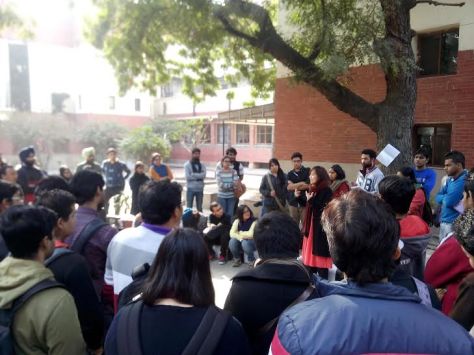
( A protest meeting on Rohith Vemula was organised in Delhi School of Economics, Delhi University on 28 th January. Find pasted below a brief report of the meeting followed by the statement which was read and passed in the meeting.)

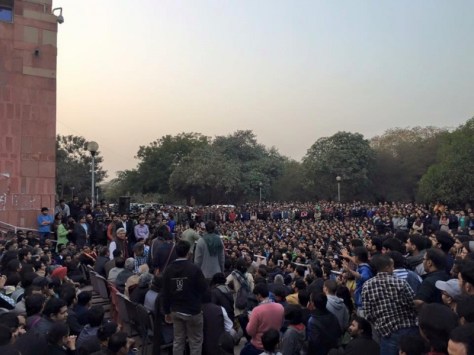
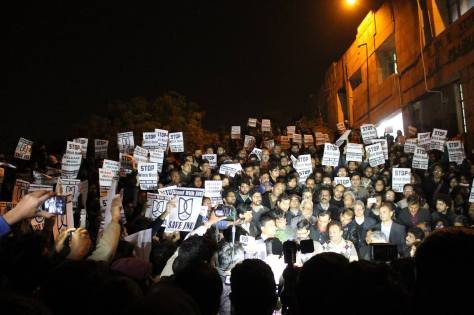
We, the students of Delhi School of Economics organised a protest meeting in solidarity with the Joint Action Committee for Social Justice, University of Hyderabad. It was joined in by students from other departments of the university as well.

The discussion revolved around the presence of caste based discrimination within university campuses and the deadly silence on the matter. It was recognised that Rohith’s investment in progressive politics was crucial in him and others in Ambedkar Students Association being victimised. And the present gathering affirmed its investment in that politics and striving for the kind of change Rohith also aspired for. Continue reading Condemning Caste Discrimination in Higher Education Centres that led to Rohith’s Untimely Death – Students of Delhi School of Economics, Delhi University

Manipur Tribals Protest on Republic Day: Ajita Banerjie

Guest Post by AJITA BANERJIE

Untitled 2

As the country prepares itself in all the glory to celebrate Republic Day, nine bodies remain unburied in Churachandpur. With what started as a local strife between the protesting tribals and the police, the struggle is now for a graver concern – land, rights and identity.

On 31st August 2015, several young people from the tribal communities in Churachandpur took to the streets protesting against the three controversial bills. The Protection of Manipur People Bill, 2015, the Manipur Land Revenue and Land Reforms (Seventh Amendment) Bill, 2015, and the Manipur Shops and Establishments (Second Amendment) Bill, 2015, were passed unanimously by the Manipur Assembly and were a response to the earlier demand of introducing the Inner Line Permit. The protest turned violent and in the clash, nine young civilians were killed by brutal police force. Out of the nine, the youngest to have lost his life was an eleven year old boy who was shot dead by the police. What seemed like collateral damage in a political strife, became a symbol of revolution for the hill tribes. To stage their protest, the families of the 9 martyrs have refused to bury the bodies until the government takes cognizance of their demands to withdraw the three bills that threaten the very basic rights of the tribals and makes them refugees in their own land.

Continue reading Manipur Tribals Protest on Republic Day: Ajita Banerjie

Academics protest Rohith Vemula’s death

Statement by concerned scholars

The suicide of Rohith Vemula is now the subject of a ridiculous inquiry to be conducted by a Committee set up by Union HRD Minister Smriti Irani. The real reason and the politics behind it are clear to those who are willing to open their eyes. As academics, we are concerned that such a situation should prevail in Universities, and wish to register our protest.

Muzaffarnagar Baaqi Hai was to be screened at the University of Hyderabad. The action was planned by the Ambedkar Students’ Association. The Akhil Bharatiya Vidyarthi Parishad, student goons of the RSS, used force to try and halt this. Dalit students were subjected to verbal abuse as well as physical force. As a result of agitations the ABVP had to apologise in writing. This was what caused such tremendous heartburn to the Hindutva forces. While the screening of Muzaffarnagar Baaqi Hai has taken place in various parts of the country, and has also given rise to conflicts in various parts of the country, it is in UoH alone that the consequences turned so aggressive with full participation of the top echelons of the University. The new Vice Chancellor, Appa Rao Podile, had five PhD students suspended. They were subjected to social ostracism as well. Thrown out of hostel, debarred from entering library, administrative spaces, they were hounded in a way that no administration has hounded any upper caste student in our memory. It is also reported that an MHRD letter designated them anti-national for opposing the hanging of Yakub Memon. The MHRD, today  proclaiming autonomy of Universities, was goading UoH through several letters to take action against the ASA. Rohith had even written a letter to the Vice Chancellor a couple of weeks ago, where he suggested the University provide means of committing suicide to Dalit students. Even after this the authorities did nothing. And after the suicide, the police acted in a brutal and shameless manner, grabbing the body of Rohith and disposing of it in secrecy instead of handing it over to his relatives. 

Continue reading Academics protest Rohith Vemula’s death

Slow violence and the Spectacle – Dispossession, segregation, and the Chennai Floods: Priti Narayan

Guest post by PRITI NARAYAN

[This article is followed by a detailed survey report on the losses sustained by people during the Chennai floods, which can be read here.]

“How, in an age that venerates the instant and the spectacular, can one turn attritional calamities starring nobody into stories dramatic enough to rouse public sentiment,” asks scholar Rob Nixon, in his discussion of Rachel Carson’s seminal 1962 book Silent Spring. It is a question worth asking now, in the aftermath of the floods in Chennai.

The floods were spectacular, the initial neglect by the national Indian media notwithstanding. Enough has been written about both about the floods themselves, and the spectacle of thousands of Chennai residents pouring onto the streets and into the water to undertake rescue, relief and rehabilitation work. Now that the spectacle is fading and the celebration of the city’s spirit is dying down, perhaps we can examine the floods more objectively. Not that the deluge has not deserved the attention it has received – reports estimate that over 400 lives have been claimed, and anywhere between 1.8 to 2 million people have been displaced.

But we do not talk as much about the “attritional calamity” that involves the dispossession of the poor of their land  and their subsequent displacement to the peripheries of the city.The lack of affordable housing stock has historically led the poor to occupy land in the central city, from where they access livelihood and educational opportunities. Their location in the city has enabled them to contribute invaluable labour and services to the city’s economy. Off late however, development projects are putting immense pressure on land in the Indian city. Strategies to make a world class city –“beautification”, “development” and “eco-restoration” – envision no place for the poor in Chennai.Transparent Cities Network estimates that at least 1,50,000people from 63 slums have been displaced for development projects over the course of the last 15 years. Not all those displaced have been rehabilitated: at least 22,000 people have been left homeless. There are no estimates of the number of people who have died during displacement or after resettlement, but the instances of crime(including trafficking, prostitution, and mafia-style murders) and suicides in these government-created ghettoes tell a sordid tale. Continue reading Slow violence and the Spectacle – Dispossession, segregation, and the Chennai Floods: Priti Narayan

अता मोहम्मद खान के लिए दो मिनट का मौन

एक ‘कब्र खोदनेवाले’ के जनाज़े में इतने लोग शायद पहले कभी नहीं जुटे हों। अलबत्ता पिछले दिनों जब 75 साल की उम्र में अटटा मोहम्मद खान का इन्तक़ाल हुआ, तब यही नज़ारा दिख रहा था।
उत्तरी कश्मीर के सीमावर्ती शहर उरी के चहाल बिम्बयार गांव के निवासी रहे अटटा मोहम्मद खान ने अपने घर में ही अंतिम सांस ली थी। लम्बे समय से वह अस्थमा से पीड़ित थे। सोचने की बात थी कि ऐसे शख्स के लिए इतने सारे लोग क्यों मातम में थे ?
असल बात यह है कि वह कोई मामूली ‘कब्र खोदनेवाले’ नहीं थे। वह कश्मीर के रक्तरंजित इतिहास के एक ऐसे साक्षी थे, जिन्होंने अपनी रेगिस्तानी आंखों में बहुत कुछ समेट कर रखा था। वह कश्मीर की सिविल सोसायटी में चर्चित चेहरा थे, जबसे उन्होंने सूबे में फैली अचिन्हित कब्रों (unmarked graves) को ढंूढने में इन संस्थाओं की सहायता की थी। और जब हुक्मरानों की तरफ से बुलावा आया तो किसी से बिना डरे खुल कर वह सबकुछ बयां किया था। कुछ साल पहले राजधानी से निकलने वाले एक अंग्रेजी अख़बार /’Tragedies buried in Kashmir’  , मेल टुडे ने 28 मार्च, 2008/ ने जब कश्मीर में दफनायी गयी इन तमाम त्रासदियांे को उकेरना चाहा, तो अनाम, अचिन्हित कब्रों की अपनी रिपोर्ट में अट्टा मोहम्मद खान से भी की गुफतगू शामिल थी। वर्ष 2013 में उन्होंने अपना बयान निबंधों की एक किताब में दर्ज किया था, जिसका संकलन स्थानीय पत्रकार फहद शाह ने किया था।

Continue reading अता मोहम्मद खान के लिए दो मिनट का मौन

The Need for Black-South Asian Solidarity: Lavanya Nott

This is a guest post by LAVANYA NOTT

In February 2013, George Zimmerman, a 28-year old neighbourhood watch coordinator in Sanford, Florida, stalked and fatally shot 17-year old unarmed Trayvon Martin, an African-American high school student. In July of that year, Zimmerman was acquitted of his crime.

On August 9, 2014, unarmed Black teenager Michael Brown was shot several times by police officer Darren Wilson in Ferguson, Missouri after Brown stole several packs of cigarillos from a neighbourhood store. In late November of that same year, a grand jury did not indict Wilson of his crime.

The Black Lives Matter movement began after Zimmerman’s acquital, and the Ferguson non-indictment saw the movement surge forward, with thousands of citizens taking to the streets all over the United States in protest. In the months that followed, the movement gained rapid momentum, spurred on by yet another non-indictment—that of a White police officer in Staten Island who put 43-year-old Eric Garner in a fatal chokehold in broad daylight, without provocation. His death was ruled by a medical examiner as a homicide, but his killer Daniel Pantaleo escaped indictment.

In mid-September 2015, Mohammad Akhlaq’s house in Dadri was broken into, his family attacked, and his life taken by a rampaging mob of RSS workers who were responding to a rumor that Akhlaq killed a cow and subsequently consumed its meat on Eid.

Less than a month later, a gang of upper-caste Rajputs set fire to the house of a sleeping Dalit family, killing two-year-old Vaibhav and his nine-month-old sister Divya. This attack, in BJP-ruled Faridabad, was set against the backdrop of a long-standing caste-related dispute between the Dalit and Rajput communities in the city.

Continue reading The Need for Black-South Asian Solidarity: Lavanya Nott

മണ്ണാങ്കട്ടയും വേണ്ട, കരിയിലയും വേണ്ട: ഷഫീക്കിന് ഒരു തുറന്ന കത്ത്

പ്രിയ ഷഫീക്ക്


ഈയാഴ്ചത്തെ മാതൃഭൂമി ആഴ്ചപ്പതിപ്പു കണ്ടപ്പോൾ നിങ്ങൾക്ക് ഇങ്ങനെ ഒരു കത്ത് എഴുതണമെന്നു തോന്നി. സത്യത്തിൽ ഈ ലക്കം ആദ്യം മറിച്ചുനോക്കിയപ്പോൾ പത്രമിടുന്നയാൾക്ക് തെറ്റുപറ്റി ദേശാഭിമാനി വാരിക കൊണ്ടിട്ടോ എന്നു സംശയിച്ചു പോയി. എന്നാൽ സാവധാനം വായിച്ചപ്പോൾ ഒരു കാര്യം പിടികിട്ടി – ഈ ലക്കത്തിലെ താരം മറ്റാരുമല്ല, താങ്കൾ തന്നെ. പച്ചയ്ക്കങ്ങു പറഞ്ഞില്ലെങ്കിലും ഇന്ന് മാനവ-അമാനവസംഗമവക്താക്കൾ ഒരുപോലെ ഭയപ്പെടുന്ന വ്യക്തി ഷഫീക്കാണ്.

അത് നല്ലതോ എന്നെനിക്ക് തിട്ടമില്ല, പക്ഷേ എന്തായാലും ചീത്തയല്ല. അവിടെയും ചില പ്രധാനപ്പെട്ട വ്യത്യാസങ്ങളുണ്ട്. മാനവസംഗമപ്രവർത്തകർ നിങ്ങളുയർത്തിയ പ്രതിഷേധത്തെ മറച്ചുകളയുകയോ അമാനവരുടെ വശത്തേയ്ക്ക് പരോക്ഷമായി തള്ളുകയോ ചെയ്തപ്പോൾ അമാനവസംഗമപ്രമുഖൻ താങ്കളെ തിരിച്ചറിവു കുറഞ്ഞ ഒരു പാവമാക്കി. അഭിനന്ദനങ്ങൾ. നാം ജീവിക്കുന്ന ഈ കാലങ്ങളിൽ സർവ്വസമ്മതരാകുന്നതല്ല രാഷ്ട്രീയസർഗ്ഗാത്മകതയുടെ ലക്ഷണം. വിഷമപ്രശ്നങ്ങൾ ഉന്നയിക്കാനുള്ള കഴിവാണ് അതിനാവശ്യം. അതുള്ളതുകൊണ്ടാണ് നിങ്ങളെ പലവിധത്തിൽ പുറന്തള്ളാൻ മാനവരും അമാനവരും ഇത്ര തിടുക്കപ്പെടുന്നത്.

എ എം ഷിനാസും എൻ പി ജോൺസണും കെ കെ ബാബുരാജും തമ്മിലുള്ള വ്യത്യാസങ്ങളെ അവഗണിക്കുന്നില്ല. ഷിനാസ് ക്രിസ്റ്റഫർ ഹിച്ചൻസിൻറെ നാടൻ പതിപ്പായാണ് ആഴ്ചപ്പതിപ്പിൽ അവതരിച്ചിരിക്കുന്നതെങ്കിൽ (ഐജാസ് അഹമ്മദ് പറഞ്ഞതുകൊണ്ടു മാത്രം ഇസ്ലാമോഫാസിസം എന്ന പദത്തിൻറെ അർത്ഥസൂചനകൾ നിരുപദ്രവകരമാകുന്നില്ല) ജോൺസൺ ഇരുപത്തിയൊന്നാം നൂറ്റാണ്ടിൻറെ സാഹചര്യങ്ങളിൽ സ്ത്രീവിമോചനദൌത്യമേറ്റെടുത്ത കേരളീയനായ പുരുഷ സാമൂഹ്യപരിഷ്ക്കർത്താവാണ്. ബാബുരാജാകട്ടെ, ഇവരുടെ ബദ്ധവൈരിയായാണ് പ്രത്യക്ഷപ്പെടുന്നത്. നിങ്ങൾ പക്ഷേ മൂന്നുപേർക്കും ഒരുപോലെ ശല്യക്കാരനാണ്.
ഈ മൂന്നു ബുദ്ധിജീവികളും ഇരുപതാം നൂറ്റാണ്ടിലെ മലയാളപുരുഷബുദ്ധിജീവിയുടെ പല സ്വഭാവങ്ങളും പ്രദർശിപ്പിക്കുന്നുവെന്നും വ്യക്തം. ഫാസിസത്തെ ഇരപിടിയൻ-ശിങ്കിടി മുതലാളിത്തത്തോടും ന്യൂനപക്ഷ മതസ്വത്വങ്ങളോടും കീഴ്ജാതിസ്വത്വങ്ങളോടും അവർക്കിഷ്ടമില്ലാത്ത മിക്കതിനോടും, കാര്യമായ സാധൂകരണമൊന്നും കൂടാതെ ബന്ധിപ്പിക്കുന്നൂ മാനവപക്ഷക്കാർ. ഈ പ്രതിഭാസങ്ങളെക്കുറിച്ച് ഇന്ന് നിലവിലുള്ള അതിബൃഹത്തായ പഠനസാഹിത്യത്തെ ആഴത്തിൽ സ്പർശിക്കാൻ മെനെക്കെടാതെ, മറുപക്ഷത്തെ ലളിതവത്കൃത കോമാളിഛായകളാക്കി താഴ്ത്തുന്നതിൽ ലേശവും മടി കാട്ടാതെ, തങ്ങളുടെ ബോദ്ധ്യങ്ങൾ വായനക്കാരുടെ മുന്നിൽ വീശിയെറിയുന്നൂ അവർ. ചുംബനസമരത്തിലെ അസൌകര്യകരമായ വിശദാംശങ്ങളെയും ശബ്ദങ്ങളെയും പച്ചയ്ക്കു തന്നെ ഒഴിവാക്കി തനിക്കുതകുന്ന വിധത്തിൽ ആ സമരത്തിൻറെ ചിത്രം ചമയ്ക്കാൻ മറ്റൊരാൾക്ക് തെല്ലും മടിയില്ല. തങ്ങളുടെ ആന്തരിക’പരിശുദ്ധി’യെ ചോദ്യം ചെയ്യാനിടയുള്ള ഒന്നിനെയും വെച്ചുപൊറുപ്പിക്കില്ലെന്ന ശാഠ്യവും ഇരുകൂട്ടരിലും ഒരുപോലെ ശക്തം തന്നെ. വളരെ തയ്യാറെടുപ്പുകളൊന്നും കൂടാതെ തങ്ങളുടെ ബൌദ്ധിക ‘ഭീരങ്കികൾ’ നിറയൊഴിച്ച് സർവ്വരേയും വിറപ്പിക്കാൻ ഇവർക്ക് കഴിയുന്നതിനു പിന്നിൽ ആ മലയാളി (ആൺ) റാഡിക്കൽ ജീനിയസ് അവബോധം തന്നയല്ലേ എന്നു സംശയിച്ചു പോകുന്നു. അത്തരം തയ്യാറെടുപ്പു നടത്തിയിരുന്നെങ്കിൽ ഫാസിസത്തെയും മതത്തെയും സ്വാതന്ത്ര്യത്തെയും അങ്ങനെ പലതിനെയും പറ്റി ഇവർ നടത്തുന്ന ലളിതപ്രസ്താവങ്ങൾ ഇവരുടെ ഉള്ളിൽത്തന്നെ ജന്മമെടുക്കില്ലായിരുന്നു. ഉദാരവാദചിന്തയുടെ ഉച്ചകോടിയിൽ പിറന്ന പിതൃമേധാവിത്വപരമായ ആശയമാണ് ‘പ്രതിഭാശാലി’ എന്നത്. ഗവേഷണപരമായ തയ്യാറെടുപ്പുകൾ കൂടാതെ (അല്ലെങ്കിൽ തങ്ങൾക്ക് സൌകര്യപ്രദമായ പഠനസാഹിത്യത്തെ മാത്രം ആശ്രയിച്ച്, മറ്റുള്ളവയെ ന്യായമായ രീതിയിൽ അഭിസംബോധന ചെയ്യാൻ കൂട്ടാക്കാതെ) ‘ഉൾ-കാഴ്ചകൾ’ തട്ടിവിടുന്ന മലയാളിപുരുഷപൊതുബുദ്ധിജീവികൾ അവലംബിക്കുന്നത് ആ പഴയ ജീനിയസ് മാതൃകയെത്തന്നെ. ലിബറലിസത്തെയും വ്യക്തിവാദത്തെയും വാതോരാതെ അപലപിക്കുന്ന ബാബുരാജു പോലും ജീനിയസ്നാട്യം ബലമായിപിടിച്ചിരിക്കുന്നതുകൊണ്ടാണ് ദലിത് ഫെമിനിസ്റ്റുകളുടെ ഇടപെടലുകളെ പരിഗണിക്കാൻ അദ്ദേഹത്തിനു കഴിയാത്തത്. രേഖാ രാജിൻറെ പേരു പോലും ഓർക്കാൻ അദ്ദേഹത്തിനു കഴിയാതെപോകുന്നതും അതുകൊണ്ടുതന്നെ.

ഹിന്ദുത്വഫാസിസത്തിൻറെ സദാചാരവും നവ ഇസ്ലാമികസദാചാരവും എല്ലാം ഒന്നുതന്നെയെന്ന് മാനവപക്ഷത്തിന് തീർച്ചയാണ്. എന്നാൽ അമാനവപക്ഷത്തു നിലയുറപ്പിച്ച ബാബുരാജ് പോലും പരോക്ഷമായി ഈ നിലപാടല്ലേ സ്വീകരിക്കുന്നതെന്ന് ഞാൻ സംശയിക്കുന്നു. ചുംബനസമരം പൊതുവേ ‘സദാചാര’ത്തിനെതിരെയായിരുന്നെന്ന് അദ്ദേഹം ശഠിക്കുന്നത് വസ്തുതാപരമായിപ്പോലും ശരിയല്ല. ലൈംഗികധാർമ്മികത അനാവശ്യമാണെന്നല്ല, മറിച്ച് ബ്രാഹ്മണഹിന്ദുത്വസദാചാരസമ്മർദ്ദത്തെ ചെറുക്കണമെന്നും കൂടുതൽ ജനാധിപത്യപരമായ രീതിയിൽ ലൈംഗികധാർമ്മികതയെ പുന:സൃഷ്ടിക്കണമെന്നുമാണ് ചുംബനസമരങ്ങൾ ആവശ്യപ്പെട്ടത്. ഏതെങ്കിലും സദാചാരം അനീതിപൂർവിവമാണെന്നു പറഞ്ഞാൽ യാതൊരുവിധ ധാർമ്മികതയും ആവശ്യമില്ല എന്ന് അർത്ഥമാകുന്നില്ല. സദാചാരത്തെ തിരുത്തിയെഴുതാൻ ചരിത്രത്തിൽ നടന്ന സമരങ്ങളെ മുഴുവൻ സദാചാരവിരുദ്ധസമരങ്ങളായി ചിത്രീകരിച്ച് വ്യവസ്ഥാപിതസദാചാരഭീതികളെ ഇളക്കിവിടുക എന്നത് പണ്ടുപണ്ടേ ഉള്ള കാരണവതന്ത്രങ്ങളിലൊന്നാണ് – അതാണ് ബാബുരാജ് പ്രയോഗിച്ചത്.എങ്കിലും സദാചാരമെന്ന് താനെന്താണ് ഉദ്ദേശിക്കുന്നതെന്ന് വ്യക്തമാക്കാൻ അദ്ദേഹം മെനക്കെടുന്നില്ല. നമുക്കറിയാം, ആ സമരം വിമർശിച്ചതു മുഴുവൻ കേരളത്തിലിന്ന് അധീശത്വം കൈയാളുന്ന ബ്രാഹ്മണസദാചാരമൂല്യവ്യവസ്ഥയെ ആണ്. എൻറെ പരിമിതമായ വായനയിൽ ഇസ്ലാമികസദാചാരത്തെ, അല്ലെങ്കിൽ ഇസ്ലാമികസദാചാരത്തിൻറെ സാദ്ധ്യതകളെ, ബ്രാഹ്മണസദാചാരമൂല്യങ്ങളിലേക്കു ചുരുക്കാൻ കഴിയില്ലെന്നാണ് കാണുന്നത്. ഉദാഹരണത്തിന് ഇസ്ലാം ലൈംഗികാനന്ദത്തെ വെറുക്കുന്നില്ല. കുടുംബകാര്യങ്ങളിൽ സ്നേഹത്തിനു കല്പിക്കുന്ന അതേ പ്രാധാന്യം നീതിയ്ക്കും കല്പിക്കുന്നു. വിവാഹത്തെ അനാവശ്യമായി പവിത്രീകരിക്കുന്നില്ല. പുരുഷാധികാരപരമായ വായനകൾക്കാണ്, അവിടെ മുൻതൂക്കമെന്ന് സമ്മതിക്കാം, പക്ഷേ ബ്രാഹ്മണസദാചാരവും എക്കാലത്തും ആവിധം തന്നെയായിരുന്നു. ബ്രാഹ്മണസദാചാരത്തിനില്ലാത്ത സാദ്ധ്യതകൾ ഇസ്ലാമികലൈംഗികധാർമ്മികതയ്ക്കുണ്ടായേക്കാം എന്നതുകൊണ്ടുതന്നെ അതിനെ ബ്രാഹ്മണസദാചാരത്തിലേക്ക് ചുരുക്കുന്നത് തീരെ ആശാസ്യമല്ല.

ഒന്നുകിൽ ബാബുരാജിന് അതു കാണാൻ താത്പര്യമില്ല; അല്ലെങ്കിൽ ഇന്ന് കേരളത്തിലെ നവ ഇസ്ലാംപക്ഷങ്ങൾ ഉന്നയിക്കുന്ന ലൈംഗികധാർമ്മികതയും ഹിന്ദുത്വ-ബ്രാഹ്മണലൈംഗികധാർമ്മികതയും മൂർത്തരൂപത്തിൽ ഒന്നുതന്നെ എന്നദ്ദേഹം സൂചിപ്പിക്കുന്നു! ഇസ്ലാംലൈംഗികാനന്ദത്തെ വെറുക്കാത്തതുകൊണ്ട് ചുംബനസമരക്കാരുന്നയിച്ച പുതിയ ലൈംഗികധാർമ്മികതയോട് അതിനാണ് (അതിൻറെ പുരുഷാധികാരവ്യാഖ്യാനങ്ങളെ കണക്കിലെടുത്താൽ പോലും) കൂടുതൽ അടുപ്പം.അത്തരം സംവാദങ്ങൾ ഉണ്ടാകാതെ ബ്രാഹ്മണസദാചാരത്തെ സംരക്ഷിച്ചുനിർത്തി എന്നതാണ് ചുംബനസമരവിരുദ്ധപ്രചരണത്തിലൂടെ ബാബുരാജ് നടത്തിയ ചരിത്രസംഭാവന. എന്തായാലും ഇക്കാര്യത്തിൽ ഈ മൂന്നു ബുദ്ധിജീവികളും പ്രത്യക്ഷമോ പരോക്ഷമോ ആയ നിലകളിൽ ഒറ്റക്കെട്ടാണ്.

ആധുനികസ്വാതന്ത്ര്യങ്ങളെ പറ്റി, വിശേഷിച്ചും ലിംഗതുല്യത, ലൈംഗികതെരെഞ്ഞെടുപ്പുകൾ എന്നിവയെപ്പറ്റി, സംശയാലുക്കളായ മതവിഭാഗങ്ങളെ  ആക്രമിച്ചാൽ മതി, അതു ഫാസിസ്റ്റ് വിരുദ്ധപ്പോരാട്ടമായിക്കൊള്ളുമെന്നു ധരിക്കുന്നവരും, യാഥാസ്ഥിതികസദാചാരത്തെ ആക്രമിച്ചാൽ അത് ഫാസിസത്തിനു വഴിയൊരുക്കും എന്ന് ആണയിടുന്നവരും തമ്മിലുള്ള ഈ കടിപിടിയെപ്പറ്റി എന്തു പറയാനാണ്?

മണ്ണാങ്കട്ട ഒലിച്ചു പോകും, കരിയില പൊടിഞ്ഞു പോകും. ഒടുവിൽ അവ ഒന്നുതന്നെയായിത്തീരും.

നിങ്ങൾ രണ്ടിനെയും ഭയക്കേണ്ട കാര്യമില്ല. സധൈര്യം മുന്നോട്ടു പോവുക. അഭിവാദ്യങ്ങൾ!

ജെ ദേവിക


31st August in Manipur – The day and after: Roluahpuia

Guest Post by ROLUAHPUIA

In Manipur, most days are not merely a day as they appear in the calendar. Many days in fact are commemorated and remembered and therefore political. For instance, the 18th of June is commemorated as the Great June Uprising by the Meitei mostly led by the United Committee Manipur (UCM) as a mark of remembrance to the loss of 18 lives as a result of the protest over the extension of ceasefire beyond territorial limits between the Government of India (GoI) and the National Socialist Council of Nagalim- Isak Muivah (NSCN-IM). On the contrary, 27th August is commemorated by the Mao Naga as ‘Martyrs Day’ to commemorate the loss of seven lives in 27th August of 1948 for the cause of Naga integration movement. For the last, 13th September of every year is commemorated by the Kuki as Kuki Black Day against the mass killing of Kuki by the Naga militants. What this three different commemoration displays is the noticeable cleavages and ethnic divides among the three ethnic groups of the state. Continue reading 31st August in Manipur – The day and after: Roluahpuia

Evening out the Odds, Learning from the BRT Fiasco

The Chief Minister of Delhi has come out with a very practical idea, an Idea, whose time has come as the American would say. Anyone who says that Delhi’s air is a killer is only putting it mildly. The number of those dying of respiratory ailments on a daily basis stands today at 23, this translates to 161 per week, 644 per month and 7728 per year. The figures were half this 4 years ago.

Even if pollution levels do not worsen in future the cumulative effects of exposure to these high levels of pollution will keep pushing up the death rate and increasingly it will be the kids born today who will grow into wheezing asthmatics, inhaling this deadly cocktail of pollutants increasingly becoming unfit, as they grow, for doing anything that calls for even mild exertions. The resultant costs on medical expenses incurred by their families, in the face of the rapid withdrawal of government spend on public health will assume the shape of a horror movie gone real and it can only get worse unless something is done and done fast. Read the full article, published in Catch News, here

गाय के नाम पर जनतंत्र वध

हिंगोनिया गोशाला, जयपुर के प्रभारी मोहिउद्दीन चिंतित हैं। जयपुर म्युनिसिपल कॉरपोरेशन द्वारा संचालित इस गोशाला में नौ हजार से अधिक गायें रखी गई हैं। इनमें 30 से 40 गायें लगभग हर रोज मर रही हैं, मगर कोई देखने वाला नहीं है। वहां न इनके खाने-पीने का सही साधन है, न ही बीमार गायों के इलाज का कोई उपाय। लिहाजा, 200 से अधिक कर्मचारियों वाली इस गोशाला में गायों की मौत पर काबू नहीं हो पा रहा है। वैसे, एक अखबार के मुताबिक अप्रैल में अकेले जयपुर शहर में हर रोज 90 गायों की मृत्यु हुई, जिनकी लाशें हिंगोनिया भेज दी गईं।

याद रहे, राजस्थान देश का पहला राज्य है जहां स्वतंत्र गोपालन मंत्रालय की स्थापना की गई है। लेकिन जयपुर में प्रति माह 2,700 गायों की मौत के बावजूद इस मसले पर मंत्री महोदय कुछ भी कर नहीं पाए। दरअसल असली मामला बजट का है। मोदी सरकार ने सामाजिक क्षेत्रों की सब्सिडी में जबर्दस्त कटौती की है, जिसका असर पशुपालन, डेयरी तथा मत्स्यपालन विभाग पर भी पड़ा है। पिछले साल की तुलना में इस साल 30 फीसदी की कटौती की गई है। Continue reading गाय के नाम पर जनतंत्र वध

More than 500 jhuggis demolished in Shakur Basti, slum dwellers left on their own to grapple with bone chilling winter.

Report by BIGUL MAZDOOR DASTA

IMG_20151214_095246

More than 500 jhuggis have been demolished by the Railways in Shakur Basti, Delhi. The demolition took place on last Saturday leading to the death of a six month old child, leaving many injured and an odd 10,000 people homeless in the chilling Delhi winters. The Railway minters Suresh Prabhu is allegedly shocked and unaware. Mr Kejriwal took to twitter to condemn the demolition. Ajay Maken of congress too condemned the demolition. On Monday Rahul Gandhi briefly visited the razed down site where once the shanties stood and thats that! All these electoral political parties have even made what is a tragedy and a very difficult time for the slum dwellers an opportunity of mud slinging onto each other which also doesn’t come as a surprise.

Continue reading More than 500 jhuggis demolished in Shakur Basti, slum dwellers left on their own to grapple with bone chilling winter.

Simply for Making Speeches Some Go to Jail in Kerala: Nasarudheen Mannarkkad

This is a Guest post by NASARUDHEEN MANNARKKAD

In a democracy, it is beyond argument that court procedures should  be accountable and transparent. If the courts start to give its verdicts relying upon the false made up stories of police and the media influenced by its own make-believe ‘public opinion’, that spells disaster for democracy. There is nothing more dangerous than a manipulated and biased court verdict and that can be fatal to the public trust in the judiciary, which is the only claim for an unelected body to be credible before the nation. Continue reading Simply for Making Speeches Some Go to Jail in Kerala: Nasarudheen Mannarkkad

Observing Human Rights by Defending Food Rights of Dalit-Bahujans and Muslims: Sudarshan, Osmania University

Guest post courtesy DALIT CAMERA

[On 10th December 2015 Osmania University students celebrated Beef festival to mark Human Rights Day in a novel fashion. BJP MLA Raja Singh few days before stated he would kill or get killed to protect the cow. It is strange because the Osmania Uuniversity students had only said they would eat beef which is already available in the market, they never said they would kill cow, but the BJP/VHP was spreading rumours that OU students are killing cow. Print and Electronic media gave a full coverage for the BJP/VHP activists). With threats pouring in from different corners (Police, Judiciary, Administration) OU students organized the Beef festival, and in their support EFLU, TU, UoH organized beef festival. Most importantly TVV organization ate beef in Delhi Red Fort.

Why did OU students hold the Beef festival? Here we present an interview of Sudarshan, key organizer of the Beef Festival in OU for the larger public. The interview was conducted and transcribed by Dharma Teja.]

Continue reading Observing Human Rights by Defending Food Rights of Dalit-Bahujans and Muslims: Sudarshan, Osmania University

Ambedkar For Our Times!

( Till 1992, 6 th December was remembered as ‘Parinirvan Divas’ of Dr Ambedkar, legendary son of the oppressed who had clearly recognised the true meaning of Hindutva and warned his followers about the dangers of Hindu Rashtra ; post 1992, 6 th December has an added meaning and it relates to the demolition of Babri Mosque undertaken by these very forces.

Apart from the fact that this event led to the biggest communal conflagaration at the national level post-independence, whose repercussions are still being felt and whose perpetrators are still roaming free, we should not forget that it was the first biggest attack on the principles of secularism and democracy, which has been a core value of the Constitution drafted under the Chairmanship of Dr Ambedkar.

What follows here is an edited version of the presentation made at Dept of Social Work, Delhi University, during their programme centred around 1 st Ambedkar Memorial Lecture)


“If Hindu Raj does become a fact, it will no doubt, be the greatest calamity for this country. No matter what the Hindus say, Hinduism is a menace to liberty, equality and fraternity. On that account it is incompatible with democracy. Hindu Raj must be prevented at any cost.”

– Ambedkar, Pakistan or Partition of India, p. 358

‘Indians today are governed by two ideologies. Their political ideal set in the preamble of the constitution affirms a life of liberty, equality and fraternity whereas their social ideal embedded in their religion denies it to them’

– Ambedkar

Continue reading Ambedkar For Our Times!

Armed Forces as livelihood and State power: Gautam Navlakha

Guest post by GAUTAM NAVLAKHA

Notwithstanding popular perception, professional soldiers do not join the armed services out of overwhelming ‘patriotism’. They are in fact driven by the desire to get a job that offers material security for them and their family. It is predominantly their own livelihood needs that drives people to enlist. On the other hand, the main objective of any government’s concern is to keep the morale of such professional soldiers high, so that they would go out and fight anyone as directed by the government, whether it is ‘enemies’ outside the nation’s borders or within – conducting the predatory war for ‘development’ which profits the corporate class or suppressing popular movements.

More than 101 Districts out of 680 in India are notified as ‘Disturbed Area’ where the military forces enjoy immunity from prosecution and exercise extraordinary authority. In addition, in 35 other districts similar conditions operate even though these have not been notified as “Disturbed Area”. However, the  Union Ministry of Home Affairs exempts the personnel, through a notification, from  prosecution for any crime they commit in course of their service in the designated areas. In the ‘Disturbed Areas’ the Army has begun to exercise veto power over both withdrawal of troops as well as  removal of Armed Forces Special Powers Act.  That apart, the very size of the military force, its use and misuse, its degradation, the fiscal ramifications and socio-political consequences of a bloated military are some of the aspects that invite scrutiny. Continue reading Armed Forces as livelihood and State power: Gautam Navlakha

Free to question India’s imperfections: Laila Tyabji

LAILA TYABJI in The Business Standard

Never in my 68 years have I thought for even a milli-second of living anywhere else except India. Not even when, in the wake of the Ayodhya agitation, I received a stream of poisonous hate mails and a packet of turds (in a mithai box!!) I love the multilayered multiplicity of India, its synergies & paradoxes, its many diverging & converging cultural streams, its colour & chaos, the hit-and-miss judaad of past and present, malls and mandirs, East and West; its unexpected but inherent certainties…. In any case, good or bad, it is MY country.

So it feels strange to be told, when I critically question any aspect, that I should go live somewhere else – Pakistan for instance. I am utterly amazed that Aamir Khan’s confession of momentary vulnerability should be termed a “moral offence” by no less a person than MJ Akbar! I used to so admire the reasoned clarity of his writing.

I have always over-used adjectives. My English teacher would red-pencil an acerbic commentary. A rebuke I secretly courted was “oxymoron”. I loved its sound as well as its meaning – two adjectives contradicting each other.

These days I am being turned into an oxymoron myself! “Indian Muslim” is an identity increasingly open to suspicion by self-proclaimed ‘patriots’; one’s own patriotism needing constant justification plus a certificate that one doesn’t eat beef or critique the nation. That a well-known Sadhvi can dub Shahrukh Khan a Pakistani agent and not be arrested for libel, instead accruing a trail of approving social media comments, or the Culture Minister awards A P J Abdul Kalam the accolade of being a good man “despite being a Muslim” is not exactly a comfortable feeling. That someone can be lynched to death for having meat in his fridge is even more eery. Continue reading Free to question India’s imperfections: Laila Tyabji

Not a model victory: Tom Thomas

This is a GUEST POST by TOM THOMAS

Winning 17 out of 19 seats in a panchayat election by candidates fielded by a corporate entity is definitely hot news, even more so when it is using the mandated CSR spend to woo the voters. And it is a first for the country. The company in question,Kitex Group, is a textile major with interests ranging from apparel to spices, employing approximately 15,000 people. It has an annual turnover of more than Rs 1,000 crore and is located in KizhakambalamPanchayat, about 30 km from Kochi, the commercial hub of Kerala. Continue reading Not a model victory: Tom Thomas

Statement on the Order of the High Court of Meghalaya on the AFSPA

This statement has been sent out by TARUN BHARTIYA, PRASHANT BHUSHAN, ARUNA ROY AND NIKHIL DEY  for endorsements. Please send your endorsements by tonight (November 24, 2015) to arunaroy@gmail.com

In a recent order, the High Court of Meghalaya has made a suo motu suggestion to the Central Government for the imposition of the Armed Forces (Special Powers) Act, 1958, in the Garo Hills area. It is shocking and deeply disturbing that a draconian law like the AFSPA is being sought to be imposed through a judicial fiat. The order is completely devoid of any kind of legal reasoning and is based on the lay impressions of the bench.
 
 
See below a statement which carries our objections to this order. We want you to also consider lending your name to the statement. As the statement is being released to the press tomorrow, we will request you to send in your endorsement by tonight. Please do circulate the statement widely for endorsements.
Text of Statement

In a recent order, the High Court of Meghalaya has found it fit “to direct the Central Government to consider the use of Armed Forces (Special Powers) Act, 1958, in the Garo Hills area”[1]. We are deeply troubled by this order for several reasons.

Continue reading Statement on the Order of the High Court of Meghalaya on the AFSPA

Of Flags and Fetishes – The Paris Attacks and A Misplaced Politics of Solidarity: Debaditya Bhattacharya

This is a guest post by DEBADITYA BHATTACHARYA

Megan Garber’s article ‘#PrayForParis: When Empathy Becomes a Meme’, published in The Atlantic (November 16, 2015) has claimed that Paris hashtags and French flag filters on Facebook make for an “act of mass compassion” – a “compassion that has been converted, via the Internet’s alchemy, into political messaging”.

flag filter2

I have absolutely no problems with flag filters on Facebook. Or for that matter, profile-picture revolutions that happen all too often. I’m not, in the least bit indignant about such a competitive exhibitionism of feeling – indexed through a currency of memes and emoticons. In an age of such mass-production of violence (‘terroristic’ or ‘humanitarian’), it is no surprise that the event of mourning must become a symptom of the incompatibility between ‘act’ and ‘response’.

A funereal Facebook must therefore bleed profile pictures, because that seems the only charter of our most intimate emotions. We naturally do not care if Facebook is using the Paris tragedy as a marketing platform, as long as it helps us reclaim a deeply ‘personal’ angst in the face of more-than-a-hundred ‘spectacular’ deaths.

Continue reading Of Flags and Fetishes – The Paris Attacks and A Misplaced Politics of Solidarity: Debaditya Bhattacharya

Davids Versus Goliath – How Yogi Adityanath had to ‘Go Back’ to …..(err not Pakistan but) Gorakhpur

Displaying IMG_20151119_172721574.jpgDisplaying IMG_20151119_172721574.jpgThe Pandal was ready.

The Sainiks with their saffron bandanas  – who were scattered here and there – were eagerly waiting to listen to another fiery call from their Senapati.

Time was already running out but the ‘Star Speaker’ was nowhere to be seen.

Little did they knew that their Senapati had already made an about turn and was headed back home as the district administration had ‘advised’ him against entering the district and was told that he would face ‘legal action if he dares to do so.’

For Yogi Adityanath, the firebrand MP of BJP, who is widely known for his controversial statements as well as  acts and who every other day asks dissenters to ‘go to Pakistan’ , it was his comeuppance moment when he was rather forced to ‘go back’ to Gorakhpur. And all his plans to be the star speaker at the inaugural function of Students Union of Allahabad University – once called ‘Oxford of the East’ – lay shattered. Continue reading Davids Versus Goliath – How Yogi Adityanath had to ‘Go Back’ to …..(err not Pakistan but) Gorakhpur

Jain Tandoori – When the State Chickens Out: Gita Jayaraj

Guest post by GITA JAYARAJ

New shocks seem to await non-vegetarians almost daily, now. At a popular supermarket chain in Besant Nagar, one of the go-to places in namma Chennai, there seems nothing unusual on the evening of November 11. The floor is littered with stuff as the young shop assistants squat in the narrow aisles trying to stack the packets on the shelves; or laze in small clusters discussing workplace politics, oblivious of the customers milling around.

Seems like a normal evening. Heading towards the billing counter, I decide at the last minute to pick up some chicken. The young girl at the fresh-ground coffee counter, next to the fresh chicken refrigerator, giggles nervously as I open it. “Sale of chicken not permitted today madam”, she tells me hesitantly in Tamil. I am puzzled, has the beef ban in some states been extended to cover chicken as well in all states? Continue reading Jain Tandoori – When the State Chickens Out: Gita Jayaraj