Category Archives: Politics

Akbaruddin Owaisi – You are an Enemy of Muslims (and Hindus)

Guest post by IRSHADUL HAQUE
Translated from Hindi by Shuddhabrata Sengupta

Akbaruddin Owaisi, you are an enemy of Muslims. You are the kind of adversary who lurks like a snake in the grass, ready to strike at the person who cares for that patch. Your desire to provoke a confrontation between India’s 25 crore Muslims and 100 crore Hindus reminds us of Muhammad Ali Jinnah. This is why Javed Akhtar has gone to the extent of calling you ‘the greatest enemy of Muslims’. I know that I am not alone when I find myself agreeing with this view. Many other Indian Muslims will be in agreement with me. Continue reading Akbaruddin Owaisi – You are an Enemy of Muslims (and Hindus)

Notes from a Night Walk in Delhi University

[ B&W pictures, courtesy Chandan Gomes. Colour pictures and cell phone video footage, courtesy, Bonojit Husain, New Socialist Initiative ]

Dear young women and men of Delhi,

I am writing to you again because I have been listening to you. This is a strange time, when everybody is talking, and everybody is listening, and the unknown citizen, who could have been any one of you, has transformed us all.

I was with you last night, from five thirty in the evening to around nine at night, while we walked together from the Vishwavidyalaya (University) Metro Station to Vijay Nagar, Kamla Nagar and the North Campus of Delhi University. There were around twelve hundred of you. Several of you held candles. You made yourselves into a moving blur of light. As the shopkeepers of Vijay Nagar, as the rent collecting aunties of paying guest accommodations, as the men and boys and girls and women on the streets and in the verandahs looked at you in wonder, you looked back at them, many of you smiled and waved. I could see some people in the crowd lip-synch with your Hallabols.

[ video of the night march near Delhi University ]

Continue reading Notes from a Night Walk in Delhi University

Evening at Jantar Mantar.

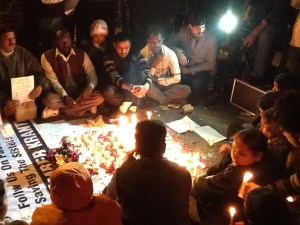
Candles at,Jantar Mantar
The Wake
The Wake
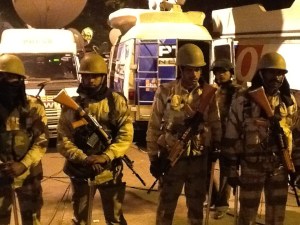
Armed, Cold, Bored
Armed, Cold, Bored

Dear Abhijit babu – The Society of Painted and Dented Ladies responds

Rajyasree Sen in Firstpost:

Dear Shri Abhijit Mukherjee,

I am writing to you in my capacity of  General Secretary of the Society of Painted and Dented Ladies of India. First of all, I would like to state that I was most touched that you have noticed our presence in your midst. For long, we the Painted and Dented Ladies have suffered on the fringes of society, waiting to be recognised – especially by the likes of political luminaries such as you. This honour from a sitting MP, has given me inestimable joy. Not to forget that you are our venerable president, Pranab Mukherjee’s very own son. I stand up in respect, sir.

Read the rest of this article here.

This Truth Will Never Be Televised: Saiyed Danish

Guest post by SAIYED DANISH

The death of the police constable Subhash Tomar in the middle of the anti-rape protests at India Gate is eerily reminiscent of the controversial death of Inspector Mohan Chandra during the infamous Batla House encounter in 2008.

 The post-mortem report of Constable Subhash Tomar says that he died of a heart attack which was triggered by internal injuries. The police say those injuries were the result of fatal blows given to him by the angry protestors. However, a protestor named Yogendra had earlier said on national TV that he “saw him running towards the protestors and then collapsing suddenly on his own.” Yet another controversy over the death of a police man,  with a familiar  clash of State vs People’s versions has now begun.

Continue reading This Truth Will Never Be Televised: Saiyed Danish

Men against Sexual Violence, Men for Gender Justice

Statement by Men for Gender Justice, Bangalore

Public Protest on December 30th


Men against Sexual Violence, Men for Gender Justice

As men, we are ashamed over the continuing domination of men over women!!

Women and men are Equal. Men should understand and accept this!!

Men should become responsible, humane and non-violent!!

As protesters are pouring into the streets all across the country and demanding justice for the recent brutal gang-rape of a 23 year old woman in Delhi, we as men who stand for justice and equality are ashamed, as a large section of men in our country are committing abuses against women – rape, sexual harassment, domestic violence, economic and legal discrimination.

Continue reading Men against Sexual Violence, Men for Gender Justice

Armed Forces Special Powers Act provides impunity for rape: Warisha Farasat

Guest post by WARISHA FARASAT

The protests against the brutal gangrape of a young 23 year-old girl in Delhi have been unprecedented. Finally, it appears that the impunity with which crimes against women in our country are committed is causing outrage, and both men and women are demanding justice. What is encouraging is that although the protests were triggered by the recent incident of rape in Delhi, it has also forced us to reflect on the larger issue of impunity for rape and other crimes against women, particularly when it happens against women belonging to the marginalized communities. Moreover, it is also politicizing an entire generation of young people that are realizing that their voice can create ripples in the political establishment in Delhi.

Shuddhabrata Sengupta in his earlier post has lucidly articulated about how our response to sexual violence should not be selective, and our protests should recognise the brutality of crimes against women in the conflict areas of Kashmir, Manipur and Chhattisgarh. In Kashmir, accusations of rape have been repeatedly made against the security force personnel. It has been alleged that rape and assaults have occurred during crackdowns, cordon and search operations. During these operations the men were held for identification outside their houses, near mosques or in a common ground while the security forces searched their homes. During these search operations, safeguards such as inclusion of a women officer in the search teams were never followed. Continue reading Armed Forces Special Powers Act provides impunity for rape: Warisha Farasat

Statement by women’s and progressive groups and individuals condemning sexual violence and opposing death penalty

On 16 December, 2012, a 23-year old woman and her friend hailed a bus at a crossing in South Delhi. In the bus, they were both brutally attacked by a group of men who claimed to be out on a ‘joy-ride’. The woman was gang raped and the man beaten up; after several hours, they were both stripped and dumped on the road. While the young woman is still in hospital, bravely battling for her life, her friend has been discharged and is helping identify the men responsible for the heinous crime.

We, the undersigned, women’s, students’ and progressive groups and concerned citizens from around the country, are outraged at this incident and, in very strong terms, condemn her gang rape and the physical and sexual assault.

As our protests spill over to the streets all across the country, our demands for justice are strengthened by knowing that there are countless others who share this anger. We assert that rape and other forms of sexual violence are not just a women’s issue, but a political one that should concern every citizen. We strongly demand that justice is done in this and all other cases and the perpetrators are punished.  Continue reading Statement by women’s and progressive groups and individuals condemning sexual violence and opposing death penalty

A Government in Hiding

Protestors from Raisina Hill began to be forcibly removed late last night. The police action continued in the foggy cold of this December morning. Aghast at the violence on a completely peaceful gathering of students – some of them just school children – many of us too felt compelled to join the demonstrations. A number of left-wing student groups who have been part of the protests had called for collecting at the Neel Gumbaz at Nizamuddin. At 11 am, we all started collecting there – many of us older folk going there in solidarity with what has been one of the most unprecedented student-youth mobilizations in the city. Yesterday, there had been repeated rounds of  water cannons, tear-gas and brutal lathi-charge by the police of a government that has gone into hiding.

Finally, some 600-700 of us began moving in a procession from Nizamuddin to India Gate. When we reached there, we discovered that already large numbers of people had begun recongregating at ‘Rajpath’ – the Power Avenue where every January the Republic displays its military might to the world. The numbers were continuously swelling. A group of supporters of Arvind Kejriwal’s AAP – inclduing Kejriwal and other leaders – were squatting on one side, towards Hyderabad House. This was virtually on the margins of the area where the main crowds were. Apart from the group of people we had come with, there were hundreds who seemed to us to be completely unaffiliated ordinary students, contrary to some claims floating around in Facebook that these were ‘RSS crowds’. At one end a human chain had been erected and slogan shouting for justice continued. Around the Amar Jawan Jyoti, there were processsions of students still coming in. We were there till about 2 pm and there was no question of any violence at all – except for three unprovoked tear gas shells that had been lobbed by the police into the crowd. There had been some minor commotion as the police occassionally tried to push back students with a lathi charge of sorts.

By this time, however, it was apparent that the police was preparing for the offensive. Police briefings were taking place in different groups and gradually the crowd was being surrounded from all sides. And yet, till about 2.50 pm, despite twenty rounds of tear gas being fired by the police, as well as periodic lathi charges  – they did not manage to provoke violence from the crowd to justify a crackdown. But the crackdown had to take place. And lo and behold, the justifications for it materialized, suspiciously, very soon. Continue reading A Government in Hiding

Rape Cultures in India: Pratiksha Baxi

Guest post by PRATIKSHA BAXI

Delhi has tolerated intolerable forms of sexual violence on women from all backgrounds in public spaces for decades. It is a public secret that women are targetted in streets, neighbourhoods, transport and workplaces routinely. There have been countless campaigns and appeals to all agencies concerned to think of safety of women as an issue of governance, planning and prevention. However, prevention of sexual violence is not something, which features in the planning and administration of the city. It is not seen as an issue for governance that extinguishes the social, economic, and political rights of all women.

 It is a public secret that rape of women in moving vehicles is popularly seen as a sport. The sexualisation of women’s bodies accompanies the projection of cars as objects of danger and adventure. Private buses now participate in this sexualisation of moving vehicles as a site of enacting pornographic violence. In this sense, safety is not seen as a commodity that can be bought, purchased or exchanged. Men consume images of a city tolerant of intolerable violence. City planners enable rapists to execute a rape schedule. Streetlights do not work. Pavements and hoarding obstruct flight. Techniques of surveillance and policing target women’s behaviour, movement, and clothing, rather than policing what men do. The city belongs to heterosexist men after all. Continue reading Rape Cultures in India: Pratiksha Baxi

Free Naveen Soorinje

333487_10152333238225258_544394853_o

It is a matter of shame that instead of being celebrated, Naveen Soorinje, who followed journalism’s best traditions in reporting the attack by Hindutva vigilantes in Mangalore earlier this year, is now languishing in jail.

“Being South African, it felt like walking into another apartheid ambush”

The 3 Wise Men blocked by Israels Apartheid Wall

The Three Wise Men blocked by Israel’s Apartheid Wall

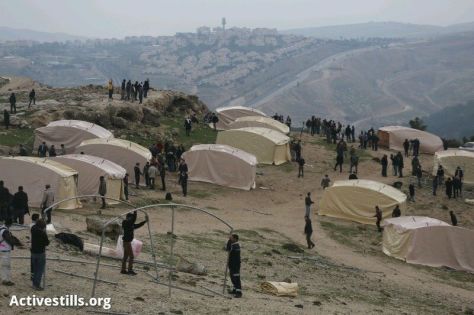
A delegation of South African Christian Church leaders has just returned from a one-week solidarity visit to the holy cities of Bethlehem and Jerusalem in Palestine-Israel. On their return, they released this joint statement [extracts]:

“Being South African, it felt like walking into another apartheid ambush. We witnessed violations of international law on so many levels – the multiple Israeli house demolitions, the discriminatory Israeli legal system, the daily intimidation of Palestinians by the Israeli Defence Forces, the Israeli Apartheid Wall and its associated regime of restrictions on movement and access for Palestinians, the imprisonment of a large percentage of Palestinians (including children), the ongoing confiscation of Palestinian water and land, the closure of previously bustling Palestinian streets and businesses, separate pavements for Israelis and Palestinians…”

Continue reading “Being South African, it felt like walking into another apartheid ambush”

Appeal to Dalit Groups for Solidarity with Laxmipet Dalit Victims: Hyderabad Political Economy Group

Statement issued by the HYDERABAD POLITICAL ECONOMY GROUP, received via RAVICHANDRAN BATHRAN

It is necessary for all of us to look beyond whatever we do. The killing of Laxmipet Dalits on 12th June 2012 and subsequent events indicate that divided houses of Andhra Pradesh Dalit Mahasabha must re-examine the nature of political divisions that have long since afflicted it leading to numerous splinter dalit groups and the formation of two major groups, the Mala Mahanadu demanding status-quo and the Madiga Dandora claiming for categorisation in reservation policy. There are three major issues emerging over the last six months after Laxmipet events unfolded which is why we appeal to both political groups of Dalits to show support and solidarity with each other.

First, time has now come for these Dalit organisations to realise how their persistent bickering has divided them and has weakened their struggle for justice.  The Dalit organisations, especially the Mala Mahanadu and the Madiga Dandora, must realise that a full-fledged reservation system in Laxmipet, ensuring representation of  Dalits in administration and politics, have failed to protect  Dalits from atrocities committed by dominant castes over land issues.  Continue reading Appeal to Dalit Groups for Solidarity with Laxmipet Dalit Victims: Hyderabad Political Economy Group

Mowgli meets the Maoists: Satya Sagar

Guest post by SATYA SAGAR

Hello folks! I need your help and hence this appeal to all of you!

I have been a journalist for a long time but never managed to write a full book on my own all these days. One reputed publisher has now approached me to write a book about the Maoists and I am very excited about it. The publisher thinks that the Maoists are a very ‘sexy’ topic and I should write about them because as a veteran journalist I am qualified to write on anything under the sun.

Let me give you some background. Basically publishers have figured out there seems to be lots of money in printing anything penned by an Indian writer. Novels, plays, travelogues, diaries, memoirs, collections of old essays, homework notes from school, whatever- because the entire world is willing to read anything written by Indians. It seems people around the planet had assumed all these decadesthat Indians were completely illiterate and now that has been finally proven untrue they want to read EVERYTHING they write. Continue reading Mowgli meets the Maoists: Satya Sagar

Finding Women among “Common Men”: Aradhana Sharma

Guest post by ARADHANA SHARMA

Arvind Kejriwal_new2--621x414

I have often wondered about the place of women in all the current talk about the aam aadmi. Is she included in this expansive and apparently un-gendered discourse that claims to represent every ordinary citizen? Who speaks for her and how? And what does this tell us about the gendered, dare I say patriarchal, nature of the contemporary discourse on democratic transformation?

Congress’ claims on the political symbol aside, the aam aadmi’s recent resurgence has much to do with Anna Hazare and Arvind Kejriwal. Be it the mobilizations around the RTI Act or Lokpal Bill, the Gandhian cap or Kejriwal’s new party, the aam aadmi’s durdasha and a fight for his rights are front and center in political debate today. The largely male leadership of ongoing agitations for governance reform and their critics rarely talk about women or gender concerns specifically. They assume, it seems, that women are automatically included under the common man category and therefore are spoken for each time the figure of the ordinary citizen is invoked.

So imagine my surprise, when, during an NDTV show titled “The Kejriwal School of Politics,” gender issues within governance were raised directly, if fleetingly. Continue reading Finding Women among “Common Men”: Aradhana Sharma

Why Pakistan Loves Turkey: Saim Saeed

Guest post by SAIM SAEED

Pakistan's President Asif Ali Zardari with the Turkish Prime Minister Recep Tayyip Erdoğan. Reuters photo
Pakistan’s President Asif Ali Zardari with the Turkish Prime Minister Recep Tayyip Erdoğan. Reuters photo

Everybody loves Turkey. It’s where Pakistani families go for holidays, where students now go for education, where laborers go for work, where clerics go for counsel, and where both civilian and military officials and dignitaries go to find inspiration. Due to Turkey’s momentous economic and political rise, especially in the last decade, it is being held up to the rest of the Muslim world as a country worth emulating, and experts from everywhere have been referring to the “Turkish model” – an Islamic democracy with a robust economy – as the blueprint for a strong and stable (and still Muslim) country. Continue reading Why Pakistan Loves Turkey: Saim Saeed

Kurdistan, a Forgotten Nation of 40 Million People: Kamal Chomani

Guest Post by KAMAL CHOMANI

It has been for about 13 months I am living in Bangalore, India. I am here to study masters. India to me, as it is, is incredible. I feel as if I am at home. People here are friendly. My teachers and colleagues are just great. I have to confess that for a student that is his first time to leave his home for such a long time, certainly, will face many difficulties, but no difficulties have hurt me as much as a question of Indian people ‘where are you from?’

I am from Iraq, but Iraq is not my country. I cannot speak Arabic which is the official language the country. Luckily three more Iraqi people are with me who have helped me to manage my Arabic. My culture is different from Arabs. I don’t want to look like a nationalist, because I am telling the truth. I am a Kurd! My mother tongue is Kurdish. My homeland is Kurdistan.

So, who are the Kurds?

Kurdish community in Italy protesting for Ocalan's release. Photo courtesy demotix.com
Kurdish community in Italy protesting for Ocalan’s release. Photo courtesy demotix.com

Kurds are the original inhabitants of Middle East. They are the biggest stateless nation around the world that they are still struggling for freedom and independence. They have been forgotten by the world.

Yes, Kurds are a forgotten nation of 40 million populations. In India, few people know who Kurds are. I am really surprised when some Indians ‘love’ Saddam Hussein, the former Iraqi president. Saddam has killed more than 300,000 Kurds. He used poisoned gas against Kurds and killed 5000 Kurds in only one hour in Halabja, which is known as Hiroshima and Nagasaki’s sister! He mass murdered more than 182,000 Kurds in Anfal (Genocide) operations. The Anfal case is going to be an international case. Sweden Parliament has just decided to recognize it as a genocide act against humanity. In UK, Kurdish people have started a huge campaign to make pressures on UK parliament to recognize as Genocide. Continue reading Kurdistan, a Forgotten Nation of 40 Million People: Kamal Chomani

Sex, Lies and God’s Promise: Response to a Diatribe

An article titled “In Defence Of Israel” is being circulated to media-persons in India by the Spokesman of the Embassy Of Israel in Delhi. This article, published in Open magazine, was written by Jonas Moses Lustiger (a student based in Paris, who has earlier lived in India).  The article names me specifically, and refers to mine and Aditya  Nigam’s posts on Palestine in Kafila, but I was not interested in engaging with Lustiger’s largely ill-informed, propagandist and misrepresenting rant. But now that it appears we are responding directly to the Israeli state, I feel perhaps I should put some things on record.

(Our three posts on Kafila are Nakba and Sumoud, Living the Occupation and Imagining Post-Zionist Futures)

 Let me begin by stating my complete agreement with Lustiger on three of his key statements in the Open article.

First:

It is true that Israel’s current government is one of the worst it has known and most of its citizens have lost hope for peace. It is also true that Israeli society is turning more racist, intolerant and ignorant of the suffering and existence of their immediate neighbours—Palestinians. Of course, the Palestinian people have been denied many rights and have been living under precarious conditions since Israel’s 1967 occupation of the West Bank and Gaza. True, they have been repeat victims of unjustifiable violence and a large proportion of Israeli politicians deny their claim to an independent land, even as Israel threatens the viability of a Palestinian state by wielding tools of colonisation. 

Pretty much sums up our three posts on Kafila – what’s not to agree?

Second:  Continue reading Sex, Lies and God’s Promise: Response to a Diatribe

‘Media ka self-regulation ka drama expose ho jayega’

Madhu Trehan’s fascinating interview of Ravish Kumar:

Reminds me of Trehan’s interview of the more rebellious Punya Prasoon Vajpayee:

विश्वविद्यालय के विचार का अंत : अपूर्वानंद

दिल्ली विश्वविद्यालय प्रशासन और अध्यापक वर्ग के लिए यह समान रूप से चिंता का विषय होना चाहिए कि मानव संसाधन और विकास मंत्री को प्रशासन को यह सलाह देने की ज़रूरत पड़ी कि परिसर में किसी भी प्रकार का अकादमिक परिवर्तन पर्याप्त और वास्तविक  विचार-विमर्श और संवाद के जरिए ही लाया जाना चाहिए और यह कि दिल्ली विश्वविद्यालय शिक्षक संघ अध्यापाकों द्वारा  चुनी हुई वैधानिक  संस्था है . इसका अर्थ यह है कि विश्वविद्यालय परिसर में संवाद टूट गया है.  शिक्षक संघ से कई मामलों में  जगह असहमत अध्यापकों  का भी  ऐसा महसूस करना  क्या उनकी अतिरंजित प्रतिक्रिया है ?

संवाद की आरंभिक शर्त यह है कि शामिल पक्ष एक-दूसरे के स्वतंत्र मत के अधिकार को स्वीकार करें और उसका सम्मान करें. लेकिन यदि विश्वविद्यालय प्रशासन के किसी प्रस्ताव पर विचार के लिए विभागीय बैठक के पहले अध्यक्ष को यह निर्देश प्राप्त हो कि वह प्रस्ताव के पक्ष , विपक्ष में मत देने वाले अध्यापकों के ही नहीं , उनके नाम भी भेजें जो मत नहीं देना चाहते तो सन्देश स्पष्ट है. प्रशासन के प्रस्ताव से अलग मत रखने  वाले संदिग्धों की सूची में डाल दिए जाएंगे. इसका तात्पर्य  यही हो सकता है कि विश्वविद्यालय अपने अध्यापक की व्यक्तिमत्ता को स्वीकार करने को तैयार नहीं. लेकिन  विश्वविद्यालय की तो खूबी यही है कि वह मुझे अकेले एक व्यक्ति के रूप में खड़े रहने का साहस देता है. इसका अर्थ यह है कि मैं अपनी इस व्यक्तिमत्ता के साहस के साथ अपनी सामूहिकता का चुनाव करने की स्वतन्त्रता अर्जित करता हूँ. इसके साथ यह जोड़ना भी ज़रूरी है कि विश्वविद्यालय एक ऐसा परिसर है जहां  ‘अलोकप्रिय’ और ‘अनुपयोगी’ विचारों को  पनपने और पल्लवित होने की  अनुकूल जलवायु  प्राप्त होती है. इसके लिए अनिवार्य हो उठता है  प्रभुत्वशाली और स्वीकृत विचारों का विरोध.विरोध या असहमति इस प्रकार विश्वविद्यालय का अस्तित्व-तर्क है. इसीलिए विश्वविद्यालय अनुशासन और दंड के विधान से बंधे नहीं होते.

Continue reading विश्वविद्यालय के विचार का अंत : अपूर्वानंद

We are fine in Gaza. How about you?

Palestinians carry the bodies of members of the al-Dalo family during their funeral in Gaza City. Reuters

Listen to the Palestinian singer and writer—Khaled El-Hibr sing these words on Jadaliyya:

We are fine in Gaza

How about you?

We are fine under attack

How about you?

Our martyrs are under the rubbles

Our children now living in the tents

And they ask about you

We are fine in Gaza

How about you?