Category Archives: Violence/Conflict

NWMI Condemns The Violent Abuse Of Meena Kandasamy

[We at Kafila are absolutely horrified at the abuse directed at poet and activist Meena Kandasamy for expressing her views on twitter regarding the beef-eating festival at Osmania University. That supposedly ‘neutral’ educational institutions replicate upper-caste Hindu dietary taboos, is no surprise, nor that the ABVP reacted with its customary violence to that questions upper caste privilege. What is shocking is the attitude of the Vice Chancellor and the sexist, misogynist, violent speech directed at her on the web. It is telling that those who take such umbrage at the eating of cows, think nothing of advocating the public rape of women. Below is a statement issued by the The Network of Women in Media condemning the hate speech directed at her. We stand in solidarity with Meena Kandasamy.]

The Network of Women in Media, India (NWMI), strongly condemns the violent and sexist abuse unleashed on poet, writer, activist and translator Meena Kandasamy, presumably in response to her posts on Twitter about the beef-eating festival at Osmania University, Hyderabad, on 15 April 2012 and the ensuing clashes between groups of students. Continue reading NWMI Condemns The Violent Abuse Of Meena Kandasamy

Of Shared Spaces and Experiences in Gujarat: Ayesha Khan

This is a guest post by Ayesha Khan

The other day, my brother dug out an old DD animation film on unity in diversity – Ek Titli, Anek Titli… We replayed it umpteen times in a fit of summer nostalgia, until we got all the lines correct. We  ignored the political subtext.  But only until it rebounded starkly on us, with the wails of  a baby that had newly come in to the family. The little one foisted on us the first ponderous responsibility – finding him a name.

The family brief for me, aunt to a six day old nephew, and equally to childhood pal Vandana, who is soon-to-be aunt to a niece in US,  was to think up  names resonating a core Indian-ness, the Muslimness, the TamBram-ness (in Vandana’s case), with a universal appeal and encapsulating  everything that is pious, lucky and great.

Continue reading Of Shared Spaces and Experiences in Gujarat: Ayesha Khan

A meeting with Deepak Perwani

At the Lifestyle Pakistan trade exhibition that concluded in Delhi on Sunday, one stall stands out from a distance for just its name – Deepak Perwani, one of Pakistan’s most famous fashion designers. This was the first of its kind exposure for Perwani outside the Indian fashion circuit, of which he has long been a friend and fellow traveller. The humble Perwani, though, has long been used to facing Indian surprise. “People keep asking me, ‘Oh you guys didn’t migrate?’, ‘How are you treated there?’ and so on. The questions show a lack of awareness.” Pakistani Hindus do not exist in the Indian imagination, but Perwani is part of Karachi’s flourishing Hindu community, which is small but visible and influential even today. One lakh of Karachi’s 1.3 crore population is Hindu.

Continue reading A meeting with Deepak Perwani

On the India hand in Nepal

In an interview with this writer for The Hindu newspaper last week, Maoist chairman Prachanda explained the sudden decision to send the Nepal Army to the cantonments, revealed the possible meeting points on constitutional issues, said that he would have no objection to an NC-led government promulgating the constitution, and declared his personal ambition of wanting “5-10 years” to “implement his vision”. But the bit that has drawn the most attention here in Kathmandu is his public acknowledgment of India’s role in Nepal’s political transformation—from the 12-point agreement, to the CA elections, to the declaration of republic and the progress in the peace process.

Expectedly, ultra-nationalist websites have latched onto this as proof of Prachanda’s “subservience”; right wing stalwarts have the “We told you so” smug look about how they were right all along that this was an external plot. In a different context, there has also been commentary projecting India’s current phase of engagement with the Maoist as somewhat opposed to the Nepali people’s aspirations for peace and democracy.

It would be useful to look at the several issues enmeshed here separately, based on the evidence currently available. Continue reading On the India hand in Nepal

क्या खलील चिश्ती अपने जीवन में पाकिस्तान वापिस जा पाएंगे?: आशीष महर्षि

आशीष महर्षि
पी.यू.सी.एल. के सदस्य डॉक्टर खलील चिश्ती को बैल मिलने के बाद उनके साथ
बीस साल बाद भले ही डॉक्टर खलील चिश्ती खुली हवा में सांस ले रहे हों लेकिन उन्हें अभी भी सरकार की दया की दरकार है। उम्र के ८क् बरस गुजार चुके डॉ. खलील अब अपने वतन लौटना चाहते हैं। खलील साहब की जमानत भले ही हो गई हो लेकिन उन्हें और उनके परिवार को इंतजार है संपूर्ण रिहाई का। Continue reading क्या खलील चिश्ती अपने जीवन में पाकिस्तान वापिस जा पाएंगे?: आशीष महर्षि

A State of ‘Encounters’: Madhumita Dutta

This guest post has been written by MADHUMITA DUTTA, a Chennai-based activist and writer, in conversation with Savukku Shankar, a former employee of the police department and a freelance journalist

“This state has witnessed more than 90 encounters in the last 15 years.  Tamil Nadu is a state of encounters!” laments ‘Savukku’ Shankar. ‘Encounters’, a euphemism for extra-judicial killings, began in the state in the 1980s when the government started cracking down on members of Maoist organisations around Dharmapuri district of Tamil Nadu.

On April 9th of this year, a Division Bench constituted by the Madras High Court was to commence its final hearing on PILs filed by Advocate Puzhalenthi, asking filing of murder charges against policemen involved in the recent ‘encounter’ deaths of five alleged bank robbers in Velachery; and questioning the magisterial enquiry ordered by the government under Cr. P.C. 176 (1A). Said Shankar, “That section applies only to custodial deaths, but this is an encounter killing”. The matter finally got adjourned to 5th of June. It is not uncommon for cases like this to drag on for years in the Courts. A special bench constituted by the court to hear 26 ‘encounter’ cases that took place in Tamil Nadu between 2006 and 2010 is yet to commence its hearings. Continue reading A State of ‘Encounters’: Madhumita Dutta

India must reciprocate Pakistan by sending back Dr. Chishty and Pakistani fishermen

This is a statement put out by some of us; names of signatories is given at the end

We, the undersigned, welcome the decision of Pakistan government to release 26 Indian fishermen on humanitarian grounds. They were in Pakistani prison for more than two years for allegedly violating territorial border. The Pakistani gesture came in the background of a meeting, which took place in New Delhi, between the Indian Prime Minister Manmohan Singh & the Pakistani President Asif Ali Zardari on last Sunday. The poor Indian and Pakistani fishermen find it extremely difficult to recognize other country’s territorial border in the mid-sea.

We appeal to the Government of India to reciprocate Pakistani gesture by sending Dr. Khaleel Chishty and Pakistani fishermen back home. This will be a major confidence building measure. It will help in creating a conducive atmosphere in taking forward peace process. Continue reading India must reciprocate Pakistan by sending back Dr. Chishty and Pakistani fishermen

Eviction of Slum Dwellers and Repression of Anti-Eviction Demonstrators in West Bengal

[We are publishing below the following report based on materials received courtesy Sanhati, whose members were also arrested in the course of the struggle]

“If Didi could rush to the scene for one Tapashi Mallik, then she could surely hear the voices of 800 poor people and come here to see us” –Residents of Nonadanga slum in Kolkata

It is the same story once again. Cleaning up and beautification of cities in the clamour for urban space for consumption and the luxury of the rich. And as we have seen, it makes little difference whether the government/s are Leftist or Rightist, whether they claim to represent the oppressed poor or not. Thus, on 30th March, 2012 the TMC government forcefully evicted around 300 poor families from the Nonadanga slum area in South 24-Parganas, in the name of ‘development’ and ‘beautification’ of Kolkata. Their shanties were razed to ground by the Kolkata Metropolitan Development Authority. The homeless slum-dwellers have been staying in an open field and are facing constant police harassment. Despite these harsh conditions, they have refused to depart and are presently on hunger strike. Their demand has to date failed to draw any favourable attention from the government. This neglect comes on the heels of the Planning Commission agreeing to annual Bengal plan around 16 per cent more than last year’s.

Continue reading Eviction of Slum Dwellers and Repression of Anti-Eviction Demonstrators in West Bengal

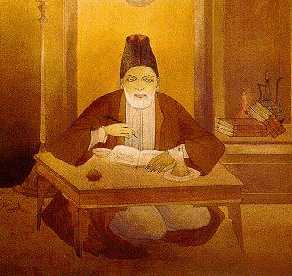
My name is Mirza Asadullah Beg Khan ‘Ghalib’ and I am not a terrorist!

Image from http://www.the-south-asian.com

Update: If you’re on Twitter please help make #Ghalib trend @ Twitter India – Tweet his sher’s!

That is what it has come down to. DNA reports that according to Maharashtra police, a Ghalib couplet on a piece of paper is proof the Students Islamic Movement of India is into the business of mass violence:

Of the several affidavits — filed in court asking for the ban on the group to continue — accessed by DNA, one by inspector Shivajirao Tambare of Vijapur Naka, Solapur, cites a Ghalib verse — as part of evidence — to show how dangerous SIMI (Students Islamic Movement of India) is.

Mauje khoon ser se guzer hi kiyon na jay, Aastane yaar se uth jaein kaya! A loosely translated Marathi version in the affidavit concludes that these lines speak of bloodshed and animosity. Continue reading My name is Mirza Asadullah Beg Khan ‘Ghalib’ and I am not a terrorist!

The Case That Never Was: A JTSA Report on the ‘SIMI’ Trial of Jaipur

In September 2001, the central government banned Students Islamic Movement of India (SIMI) through a notification. Since then, the ban has become a convenient pretext for the police and investigative agencies to arbitrarily pick, detain and then arrest and frame Muslim youth, ostensibly on charges of carrying on the activities of the banned organization. Sections 3, 10, 13 of Unlawful Activities Prevention Act (UAPA 1967) have been invoked against scores, if not hundreds of Muslim youth across the country. Some of these men had been active in SIMI prior to its ban; some had outgrown the organization because they had crossed 30 years—the age limit for membership in the organization; some were guilty of having acquaintances, friends or relatives who had been involved or had been office bearers in SIMI.  On most occasions, the cases against former members or purported activists of SIMI have rested on seizure of banned literature, namely copies of magazines published by SIMI before the ban. The flimsiness of evidence –and the sketchiness of charges— has resulted in dozens of acquittals; but equally true is the fact that the overwhelming nature of the ‘war on terror’ discourse and its institutional structures has allowed the conviction of many even in face of glaring lack of evidence.

The JAMIA TEACHERS SOLIDARITY ASSOCIATION (JTSA) profiles here one such case, which came to be known as the Jaipur blasts case, even though the accused were not charged with either conspiracy or execution of bomb blasts in Jaipur in 2008.  So what were these men guilty of? According to the FIR and chargesheet, they were responsible for carrying out activities of the banned SIMI.  How and why did these men come to be identified with the Jaipur blasts? Theirs is a terrible and tragic tale of frame up by the Rajasthan police.  It is above all testimony to the employment of UAPA against alleged or former members of SIMI and of the manner in which rule of law is subverted, violated and discarded as soon as the ‘T’ word is uttered.

Download the full report here (.pdf, 1.1 MB, 36 pages).
Bring home the crew of MV Albedo: Yusra Askari

Guest post by YUSRA ASKARI

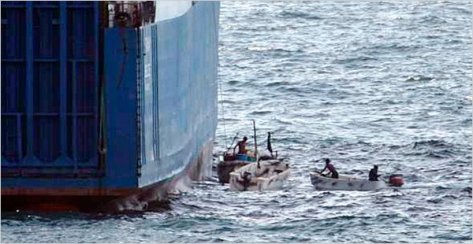
Karachi: The MV Albedo and its crew; 7 Pakistanis, 7 Bangladeshis, 6 Sri Lankans, 2 Indians and 1 Iranian national have been held hostage by pirates off the coast of Somalia, for over 17 months now. With the final deadline fast approaching, last ditch efforts are underway in Pakistan to ensure the safe return of all 22 sailors. Continue reading Bring home the crew of MV Albedo: Yusra Askari

Who killed four foreign tourists in Kashmir in 1995?

Given below is the text of a petition submitted to the Jammu & Kashmir State Human Rights Commission by the INTERNATIONAL PEOPLE’S TRIBUNAL ON HUMAN RIGHTS AND JUSTICE IN INDIAN-ADMINISTERED KASHMIR (IPTK) together with the ASSOCIATION OF PARENTS OF DISAPPEARED PERSONS. A Division Bench of the SHRC will hear the case on 17 April 

To,
Mr. Tariq Ahmad Banday,
Secretary,
Jammu and Kashmir State Human Rights Commission,
Srinagar

Date: 6 April 2012

Dear Mr. Banday,

The International People’s Tribunal on Human Rights and Justice in Indian-administered Kashmir [IPTK] (a brief on the Tribunal’s premise and objectives may be found here) and the Association of Parents of Disappeared Persons [APDP], present before you the following submission:

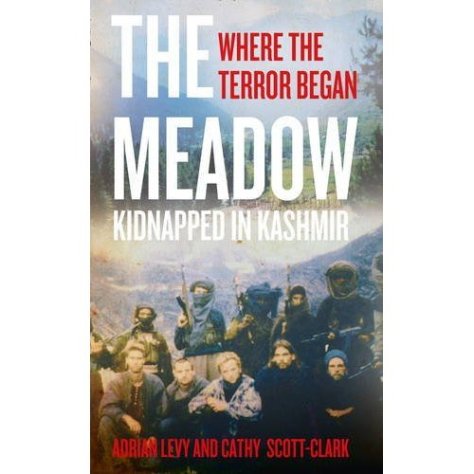
  1. In July 1995, during a trekking expedition, six persons were reportedly kidnapped by a group that referred to itself as “Al-Faran” [a front of the Harkat-ul-Ansar]. The six persons kidnapped were: John Childs [Simsbury, Connecticut, USA], Dirk Hasert [Bad Langensalza, Germany], Don Hutchings [Spokane, Washington State, USA], Keith Mangan [Teesside, Middlesbrough, England], Hans Christian Ostrø [Oslo, Norway], and Paul Wells [Blackburn, Lancashire, England]. Continue reading Who killed four foreign tourists in Kashmir in 1995?

My Days in Tihar Jail

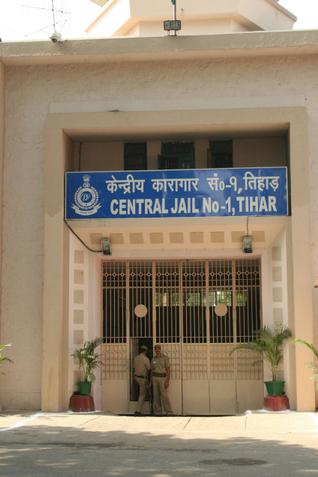
Mrs Gandhi, the then Prime Minister of India, represented the Rai Bareli seat in the Lok Sabha. On 12th June 1975 she was unseated on charges of election fraud and misuse of state machinery in a landmark judgement by Justice Jagmohan Lal Sinha of the Allahabad High Court.  Fakhr-ud-Din Ali Ahmad, the then President of India, declared internal emergency on the 25th of June,  on the recommendation of a pliable cabinet presided over by Mrs G. The people of India lost all civil liberties for a period of 21 months.
Trade unions were emasculated, political opponents were arrested, newspapers censored, the only place where a semblance of freedom survived, for a short while, were the universities, most were in turmoil and were being singled out for special attention. Students unions were being banned and activists were being picked up and thrown in jail.

Continue reading My Days in Tihar Jail

सत्ता और हिंसा : बद्री नारायण

बद्री नारायण का यह लेख लखनऊ के एक हिंदी अख़बार को दिया गया था पर उन्होंने छापने से मना कर दिया.

शक्ति अपने संस्थागत रुप में सत्ता में तब्दील हो जाती है। सत्ता अपने मूल अर्थ में भय एवं हिंसा पर टिकी होती है। सत्ता का अभ्यांतरिकरण हो या सत्ता का प्रतिरोध, दोनों ही अर्थो में हिंसा उसके सह उत्पादक के रुप में दिखाई पड़ती है। जनतंत्र को एक ऐसी प्रक्रिया के रुप में परिकल्पित किया गया था जो सत्ता को उसके हिंसक पक्ष से मुक्त कराके सेवाभाव के एजेन्सी के रुप में सक्रिय रखे। यह माना जा रहा था कि जनतंत्र सत्ता को रेशनालाइज कर उसे सेवा-भावि प्रशासकीय स्वरुप में तब्दील कर देती है। यह काफी कुछ हुआ भी किन्तु अपने कार्य-प्रक्रिया में इस जनतांत्रिक समय में भी सत्ता हिंसा को उत्पादित करते रहने वाली शक्तिस्रोत के रुप में सामने आई है। सत्ता पहले अपने भीतर अपने ही कारणो से क्राइसिस को जन्म देती है, फिर उससे उबरने के लिए हिंसा रचती है। बंगाल, झारखण्ड, आन्ध्र के जंगलों में पहले तो बाजार शासित विकास के तहत आदिवासी जीवन के संसाधनों पर कब्जा कर उन्हे बहुराष्ट्रीय कम्पनियों को बेचना, फिर उसके विरोध में आदिवासी जनता का नक्सलवादी विचारों एवं नेतृत्व में हिंसक प्रतिरोध का बढ़ते जाना, पुनः उसे दबाने के लिए राज्य द्वारा की जाने वाली ज्यादा आक्रामक एवं खुंखार हिंसा को इसी रुप में देखा जा सकता है। Continue reading सत्ता और हिंसा : बद्री नारायण

Who are the real stakeholders of Indo-Pak peace?: Ayesha Siddiqa

This guest post by AYESHA SIDDIQA is the text of a speech delivered by her at a recent civil society review of the India-Pakistan peace process, organised by the Centre for Policy Analysis in Delhi.

This time it seems better then last time! I suppose this is what we said the last time as well. India–Pakistan relations have a cycle of ups and down: a crest followed by a trough and then a crest again. Although there is increased frustration on both sides for not being able to solve the ‘relationship’ mystery, the leadership and people in general remain eager to have peace rather than war. However, we also remain elusive regarding our threshold of peace, or what would be the cut-off point in settling for peace with each other. This cyclic peace of war and peace has remained primarily due to the peace process being elitist and confined to the strategic/security community. Therefore, I would like to argue three points: Continue reading Who are the real stakeholders of Indo-Pak peace?: Ayesha Siddiqa

Will Sri Lanka now get on with the job?: Kusal Perera

Guest post by KUSAL PERERA

Its now post-Geneva in Sri Lanka. Prime Minister of neighbouring Bharat Ganarajya, the Republic of India, Dr. Manmohan Singh thus wrote to His Excellency the President of Sri Lanka on 24 March, to say, “Your Excellency would be aware that we spared no effort and were successful in introducing an element of balance in the language of the resolution”  and the Indian delegation to the UNHRC had been advised to keep close contact with its Sri Lanka counterparts “in an attempt to find a positive way forward”. The implied message is that New Delhi played its role to hook Sri Lanka to a US sponsored resolution in Geneva, over post war reconciliation and rehabilitation and on accountability during war.

The resolution in short, requires the SL government to, Continue reading Will Sri Lanka now get on with the job?: Kusal Perera

Kudankulam Update

This document has come to us via NITYANAND JAYARAMAN

The following is a rough and quick translation of the Demands placed by a delegation on behalf of the Struggle Committee of People’s Movement Against Nuclear Energy.

TRANSLATION OF DOCUMENT FROM TAMIL, CONTAINING DEMANDS

“DEMANDS OF THE PROTESTING PEOPLE” Continue reading Kudankulam Update

Letter to the Press Council Chair Person Justice Markandey Katju about SUN News reportage of the arrest of the supporters of the Kudankulam Struggle

Guest Post by V.GEETHA

My name is V. Geetha, and I live in Chennai. I am a writer, with an interest in civil rights issues. I write this note to register my shock and bewilderment at some recent developments in my state. Given your concerns about the relationship between freedom and responsibility as far as the media is concerned, I felt it important to convey some of my – and other peoples’ – misgivings over media reporting of sensitive political events.

Throughout today, March 25, SUN News, part of the SUN TV network, while reporting on three men arrested over the last few days, for supporting the anti-nuclear plant struggle at Kudankulam has alleged they are all ‘Maoists. The channel has further gone on to note that it has got wind of a ‘ naxalite plot’ that is all set to take over the anti-nuclear plant protests at Idinthakarai. Continue reading Letter to the Press Council Chair Person Justice Markandey Katju about SUN News reportage of the arrest of the supporters of the Kudankulam Struggle

Kudankulam Updates

Below is the latest update from Kudankulam.

Click here for the Letter from the National Fishworkers Forum to the Prime Minister.

Further below is a press statement released on 23/03/2012 about the arbitrary arrests, illegal detention and custodial torture of three activists whose politicl affiliations are being wrongly read on to the Kudankulam struggle in order to take focus way from the issues in question and malign the people’s struggle that continues.

KOODANKULAM – PMANE UPDATE – 25.03.2012

Dear Friends:

Greetings! Pushparayan, the other 13 friends and I have become weaker and tired; but we are still able to sit up and talk to people. Today is the seventh day of the indefinite hunger strike. Nobody from the State Government or the Central Government has bothered to come and see us or talk to us. A medical team came to check our health day before yesterday (March 23) but no public health officials came and offered any help even though some 10,000 people have been congregating here at Idinthakarai every day since March 19th. Our friends from Idinthakarai have been cooking some simple meals for all these people and most of the people are sleeping here as there is the prohibitory order of 144 still in effect. They are scared of going out of this foot-ball stadium sized space in front of the St. Lourdes church. The police are waiting for me and Pushparayan to collapse so that we would go to an hospital for treatment and they could arrest us there. How cruel and anti-people our governments could become!

Continue reading Kudankulam Updates

Will Naveen Patnaik please wake up to atrocities against Dalits in Odisha?

This memorandum was submitted on 22 March 2012; see full list of signatories at the end

A Memorandum of Demands Seeking Chief Minister’s Immediate Intervention to stop the Ongoing Brutal Atrocities/ Crimes against Dalit Communities in Odisha

Date: 22/03/12

Dear Sir,

We, the undersigned victims of human rights violation, representatives of various mass organisations, Non-Governmental Agencies, Community Based Organisations, Human Rights Activists, journalists and citizens belonging to the marginalised communities would like to draw your attention to the ongoing atrocities against Dalit Communities in Odisha. Continue reading Will Naveen Patnaik please wake up to atrocities against Dalits in Odisha?

Kudankulam Update

Below is a note written by Udayakumar, one of the leaders in Kudankulam that is being circulated. Further below is an update from activist Nityanand Jayaraman on the Madras High Court interim orders in response to cases filed against all the illegal steps taken by the government on Kudankulam.

Please watch this blog for another audio broadcast from Sundari, an activist and member of the community in Idinthakarai. Continue reading Kudankulam Update