Jyoti Punwani writes:
Expectedly, the questions were the same. What were you doing on the day of the blasts? Had you gone to Cheetah Camp? Do you know anyone from the Indian Mujahideen? How many times have you been to Pakistan? Why does only your information come to us? Get your house documents.
Amanullah was ready with the answers and documents… [Must Read]
From Kafila archives:
What does it mean to be a Muslim in India today?
It’s been more than two years since the supposed end of the war in Sri Lanka. The issues of concern are many, particularly with regard to the period after the end of direct combat. The Sri Lankan government has been abysmal in acknowledging the range of human rights violations that have been committed by the armed forces, which has been documented without a kernel of doubt by the United Nations report as well as the Channel 4 documentary. This documentation has been made in spite of circumstances where any neutral observation of the last stages of the conflict was made impossible by the Sri Lankan government and its army.
Continue reading Statement of Indian Women’s Rights Activists in Solidarity with Women in Sri Lanka
This guest post for Kafila comes from CAELAINN HOGAN, an Irish journalist who was in Juba for South Sudan’s independence day, 9 July 2011
At midnight on the eve of independence, the birth of the Republic of South Sudan was heralded with an outburst of celebrations. In Juba, the capital city, people ran through the streets singing and ululating, in the delirium of a moment they never though would come to be. In a local church the congregation sang happy birthday to the new nation. The next day at the official declaration ceremony thousands gathered to witness the new flag raised high and to sing the national anthem together. Many broke down in tears, thinking of loved ones who had fought or struggled and never got to see this day. The declaration brought an end to a long history of conflict; one that many believed could now be relegated to the past. Others still found inspiration and strength in the past, singing the old revolutionary song, “We will never surrender”. Continue reading “I never knew this before, but now I know I am a human being”: A despatch by Caelainn Hogan from a new country

(Please see two updates at the end of this post.)
‘Gotcha!’ That is the sound I hear in the Indian media and amongst patriotic fellow-Indians in response to the arrest of Syed Ghulam Nabi Fai, an American citizen of Indian origin, by the Unites States Federal Bureau of Investigation.
Most analyses of the Fai arrest say it’s part of the ongojng tussle between the American CIA and the Pakistani ISI but some in India think it’s part of the American reward to India for opening up its nuclear energy and other markets to American corporations, thus creating jobs for Americans. This may have some truth in it, considering that the Americans asked their ambassador to take a flight to Srinagar four months ago to pat Omar Abdullah on the back for successfully presiding over the killing of 120 Kashmiris the previous summer, and for halting the killings when President Obama was in Delhi, so that the media attention on the President’s visit is not diluted. (And then Americans wonder why ‘Muslims hate us’). Continue reading The question we are not asking about Fai, Tramboo and Shawl
Imagine there had been a rape in Delhi. Imagine the headlines in the papers. They would have been loud and angry. As they are, and as they must be. Do you think any of the papers would have said that the woman in question has ‘accused’ or ‘alleged’ who the perpetrator was? But there has been a rape in Kashmir and your media wants you to know that a woman has ‘accused’ an army jawan of having done so. Journalistic restrain and caution are good things when they are useful. After all, let an inquiry establish this is the truth.
Continue reading A rape in Kulgam; the dishonouring of India continues
To: asinha at dnaindia dot net
Aditya Sinha,
Editor,
DNA, Mumbai.
Dear Sir,
I have long been a fan of your column, tweets and have admired The New Indian Express and DNA under your editorship. I am, however, saddened to se that you chose to publish Subramanian Swamy’s column that is Islamophobic in the extreme, presumes the people behind the Mumbai blasts were Muslims without evidence, and in hardly veiled terms calls for violence against Muslims. Continue reading A note of protest to Aditya Sinha, editor, DNA
Statement by COALITION OF MUSLIMS AND TAMILS FOR PEACE AND COEXISTENCE
The coalition of Muslims and Tamils is a Sri Lanka based organization-comprising Muslim and Tamil identified persons who as a general principle are committed to pluralism and social justice in all its forms. Specifically, we are committed to the peaceful coexistence of Muslims and Tamils in the country, particularly in the north and east, and to a just and equitable solution to the ethnic conflict.
We can be contacted at: ctmpc_srilanka@yahoo.com
We have changed our blog site and the new address will be up soon!
Old blogsite: http://www.ctmpc.blogspot.com/
Two Years On: No War but no peace for women still facing the consequences of the war
Women in the north and the east of Sri Lanka have undergone severe hardships during the war, including the loss of loved ones, family’s support structures, livelihoods, houses and also a loss of life and dignity. While there have been numerous changes announced by the Government the situation for women on ground, however, has continued to be challenging. It is sad since the end of the brutal war women’s lives have not seen a dramatic transformation over the last two years and they have continued to face the basic challenges of safety, shelter and basic facilities. It in this light that we wish to put forward a few issues that these women have been facing within the broader context of life in the north and east for the communities living there. We have chosen to highlight these issues because of their gravity, the State’s involvement in the same and the inability of women to seek justice in such cases owing to the lack of an effective civilian administration, security threats and the lack of a concrete remedy within the local legal system. While we write of the issues relating to women, they raise broader concerns impacting the families and communities. The incidents and the report cover only the Northern and Eastern Province of Sri Lanka. Continue reading Two Years On: No War but No Peace for Women still facing the Consequences of the War – CMTPC
Statement by Jamia Teachers’ Solidarity Association
JTSA offers its heartfelt sympathies to the bereaved and the injured in the Mumbai serial blasts. We sincerely hope that the perpetrators of this mindless violence will be brought to justice swiftly. There are early indicators though that this investigation will be marred by prejudiced investigating agencies. There are news items appearing in various media outlets which cite the interrogation report of Md. Salman, a supposed operative of the Indian Mujahideen (IM) to establish that Mumbai was on IM’s sights.
Already we see that, though the Home Ministry has restrained from holding any group culpable, the investigation is being gently pushed in one direction. But even if one leaves aside for a moment the criticism that investigators react in stereotypical ways, their compass needle invariably pointing towards Azamgarh, there are serious issues arising out of this reliance on Salman’s interrogation report for getting to the bottom of the Mumbai serial blasts conspiracy.
Continue reading Don’t let Mumbai blasts investigations fall victim to prejudice and shortcuts: JTSA
AMNESTY INTERNATIONAL wants you to sign the statement below

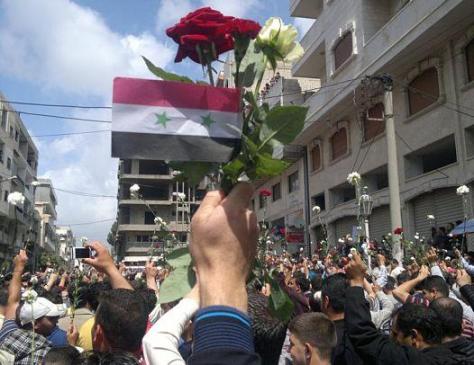
It has been over four months since the beginning of largely peaceful protests in Syria calling for political reform and for the Syrian President to step down. The Syrian authorities’ response to their people’s demands has so far been brutal to say the least. Continue reading ‘Ask Brazil, South Africa and India to help stop the bloodshed in Syria’
We the citizens of India and Pakistan strongly condemn the inhuman and dastardly serial blasts in Mumbai on 13 July 2011 in which 21 innocent people were killed and over 140 injured. We offer our heartfelt condolences and sympathies to the bereaved families and pray for quick and complete recovery of all those injured. It is clear that these blasts are a well orchestrated heinous conspiracy to derail the resumption of the dialogue and peace process between India and Pakistan that was stalled following the terrorist attack in Mumbai in 2008. Continue reading Indian and Pakistani Citizens Condemn Serial Blasts in Mumbai
Guest post by Mridu Rai
It is widely believed that the Kashmir conflict has its roots in the Partition of India in August 1947. This view perpetuates the understanding of the conflict as one between India and Pakistan. However, recognising that the roots of the conflict lie in an earlier history – indeed, that there was a history before August 1947 – changes our understanding of the ‘intractable’ conflict in Kashmir. This guest post by MRIDU RAI, author of the book, Hindu Rulers, Muslim Subjects: Islam, Rights and the History of Kashmir (2004), discusses the salience of the events in Srinagar on this day, exactly 80 years ago.

Continue reading Martyrs’ Days: Memorializing 13 July 1931 in Kashmir: Mridu Rai
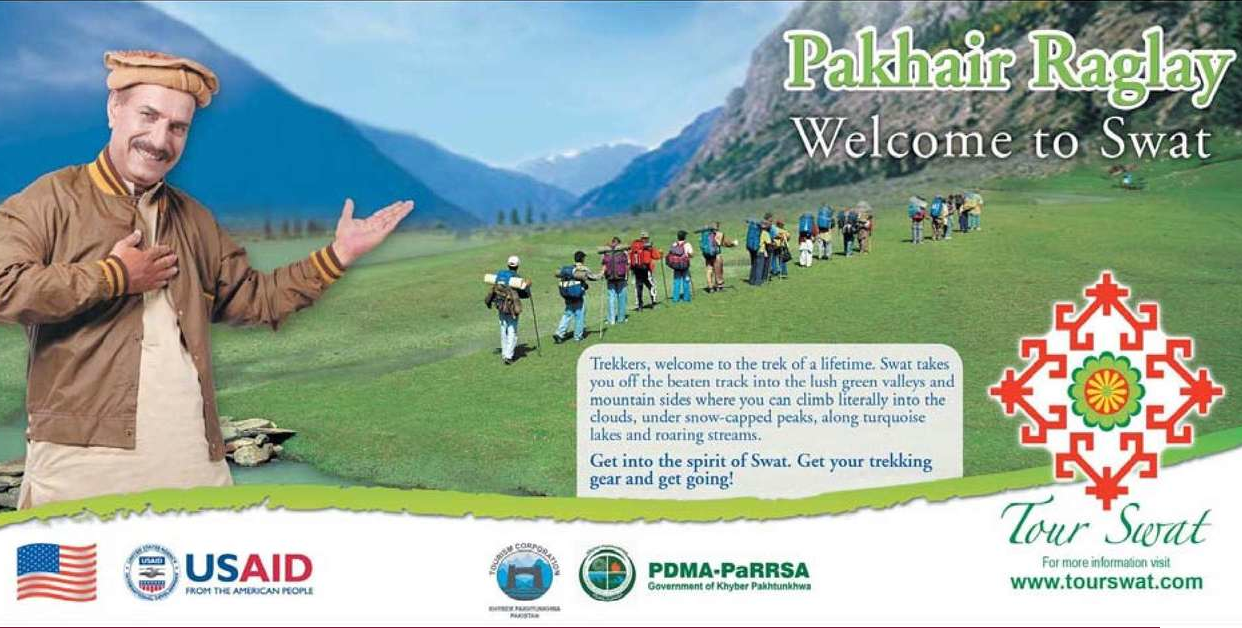
That is an advertisement published on the front-page of the Pakistani newspaper Dawn this morning. Two days ago, the paper wrote in an editorial: Continue reading And you thought the Valley was unsafe to visit?
The Supreme Court has held that the use of extra-legal armed forces in Chhattisgarh is unconstitutional. Responding to a PIL filed by Nandini Sundar, Ramachandra Guha and E.A.S. Sharma, the court’s decision turns on the nature of the Salwa Judum and the appointment of special police officers under the Chhattisgarh Police Act. But if it were a judgment that had merely ruled on the technicalities, it would have been a welcome and competent order, but would have missed its moment of constitutional greatness. This judgment attains such greatness by virtue of its deft combination of insightful legal analysis, the articulation of a moral vision of constitutionalism and development and its sharp invocation of rhetoric (in the best sense of the term) and fiction to buttress its arguments.
Fiction, William Gass reminds us is the figure of truth. Law has always produced and promoted legal fictions and the substantive interpretation of law often rests upon on a body of rhetorical figures and scenarios. The imaginative and moral character of legal fiction can often be found wanting, but there are times when the courts produce inspired moral visions that outdo even literature. Although fiction in the manner of its making, is pure philosophy, Gass says that no novelist has created a more dashing hero than the handsome absolute, or conceived more dramatic extrications- the soul’s escape from the body, for instance, or the will’s from cause. Nandini Sundar v. State of Chattisgarh is an excellent example of the ways in which the law can productively use metaphor as legal argument (‘our constitution is not a pact for national suicide’)
There will be time in the near future to examine all the nitty gritties of the judgment, but for now lets celebrate this amazing judgment. I am reproducing some extracts which may be of interest, and highlighting some of the key metaphors that the judges use in describing the state of affairs in Chhattisgarh and India more generally. (Full text available here; .pdf, 58 pages.) Continue reading A beacon of light in the heart of darkness: SC holds Salwa Judum unconstitutional
This evening, I was sitting in a coffee shop and writing about the sociology of information, how information is mired in relationships and how trust, suspicion and social relations develop in the course of circulation and exchange of information. As I was beginning to disentangle the complex web of legitimacy and regulations surrounding information, a friend called to inform that some activists and citizens had been arrested for protesting against the tree felling and road widening at Sankey Road in the northern part of Bangalore. In the last few days, the conflict regarding road widening and tree felling at Sankey Road got strong coverage in the media because citizens began gathering around the trees and the roads to prevent authorities from felling the trees. Despite this, the authorities went about felling the trees for widening the roads. The activists and protestors were clearly becoming a nuisance for the government officials and institutions who have not been able to execute the works. Hence, today, at some point, some of our activist friends were arrested on the false charges that they had assaulted public officials in their conduct of ‘government’ duty. The charges were filed under section 343 or 353 CrPC which also implied that the arrest was non-bailable. Over the course of the evening, news went about on FaceBook and Twitter about these arrests, and people from in and around Sankey Road were called to silently protest at the Aiyyappa Temple where the trees were being felled for enabling the road widening. The arrested activists and citizens were released from jail and all the charges against them were ‘dropped’ at about 6 PM. The court also granted a stay order on the tree felling around the same time, with further hearings and orders to arrive on Monday. Continue reading Cities and Infrastructure – The Road Widening Saga in Bangalore
Guest post by PRASANTA CHAKRAVARTY
The remarkable Singur Land Development and Rehabilitation Bill, passed in the West Bengal Assembly on June 14 became an Act on June 20. The Act scrapped the previous Left Front government’s deal with Tata Motors and has provisions to return land to unwilling farmers. Consequently, Singur land was taken over by the State government prompting Tata Motors to legally challenge the whole Act and a judicial battle has ensued between them and the newly elected State government. The State government may continue to return land in right earnest since there is no legal bar to that as of now. One would think that by many standards, this is a landmark bill that challenges and confronts policy consensus in issues of land transfer, models of enclosing and a concomitant notion of development that marks our nation at this point of time.
Reactions to this enactment have been thick and fast—alarmist and cautious to generous and triumphant. Continue reading The Singur Act and the Deontological Reaction: Prasanta Chakravarty
This release comes from the NATIONAL ALLIANCE OF PEOPLE’S MOVEMENTS
Akhil Gogoi’s arrest smacks of vindictive attitude of Assam Govt.
PUNISH THE GUILTY POLICE OFFICIALS FOR BRUTAL MURDER

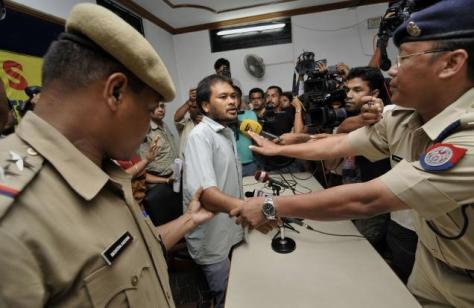
New Delhi / Guwahati, June 24th : As was expected, Akhil Gogoi, Genereal Secretary along with Mukut, Office Secretary, KMSS have been arrested by the Assam police from the Guwahati Press Club on the charges of arson, rioting and burning of government vehicles. It is ironical that there has been no action taken on Debasish Borah DSP, Dispur and other police officials responsible for day light murder of a nine year old child, Shiv Chauhan (40), and Viren Kolita (62) a rickshaw puller. Is this the rule of law? It is nothing but vindictiveness on part of the Congress Government in Assam against whom KMSS has been actively campaigning and exposing their corruption. Continue reading Akhil Gogoi’s arrest smacks of vindictive attitude: NAPM
Guest post by JAHANGIR RANA
It has now become an established trend for the Indian political establishment to beat the drums of ‘victory’ after every electoral process in Kashmir. Almost invariably, prior to an election, this establishment maintains that the issue of resolution is not linked to elections in the disputed state. However, as soon as the electoral process is over, the same establishment is out to cash the participation in elections as an implicit approval for the status quo.
In an interview last week, senior Congress politician Mani Shanker Aiyer went as far as claiming that Azadi can be attained through Panchayat, pointing at the recent participation in Panchayat elections. These bombastic claims are now bordering on the absurd. To assume that the twenty-year resistance in Kashmir has been about devolution of power and development at grass roots, Aiyar and his colleagues within the establishment continue to live in denial. Continue reading Goodbye UN, Hello Sarpanch: Jahangir Rana