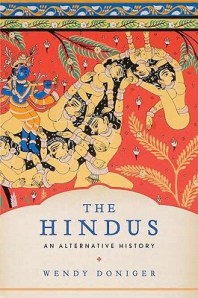
Legal notice to Penguin Books India for violation of rights of readers

Advocate LAWRENCE LIANG  has served this legal notice to Penguin Books, India, on behalf of Shuddhabrata Sengupta and Aarti Sethi. 

Under instructions from, for and on behalf of my clients Sh. Shuddhabrata Sengupta and Ms. Aarti Sethi, both residing at New Delhi, I serve upon you this legal notice for the following reasons and purposes:

  1. My client, Mr. Sengupta, is an artist and writer based in New Delhi with a longstanding interest in the comparative history of religions. Ms. Sethi is an anthropologist with a deep interest in Hindu philosophy. Both Mr. Sengupta and Ms. Sethi are avid bibliophiles, ardent supporters of freedom of speech and expression and have in the past been admirers of Penguin Books.
  2. My clients were delighted when YOU NOTICEE published Wendy Doniger’s  “The Hindus: An Alternative History” and as people who have closely followed the scholarly contributions of the said author they regard this book to be a significant contribution to the study of Hinduism. They consider Ms. Doniger’s translations of Indian classical texts and her work on various facets of Hinduism from morality in the Mahabarata to the erotic history of Hinduism as an inspiration for their own intellectual pursuits.
  3.  It has come to the notice of my clients that YOU NOTICEE have withdrawn publication of the book “The Hindus: An Alternative history” pursuant to an agreement entered between YOU NOTICEE and Shri. Dinanath Batra; O.P.Gupta, Sharvan Kumar and a few other busybody etcetera’s on the 4th of February 2014. YOU NOTICEE have further agreed not to sell, publish or distribute the book and also to pulp all unsold copies of the book. Continue reading Legal notice to Penguin Books India for violation of rights of readers

Adivasi-yagna, The Great Sacrifice – Tribal Communities for ‘Greater’ Hyderabad? R Uma Maheshwari

This is a guest post by R UMA MAHESHWARI

The Andhra Pradesh ministers are fighting like the hooligans they show in Telugu films (one is reminded, in particular, of an old Telugu film aptly named Assembly Rowdy). The fight is all over, and about, investments in Hyderabad and elsewhere. As it is about money. The Parliament fight is with pepper sprays and knives. Back there, on the ground, in tribal villages in AP (yet to be declared as either Seemandhra or Telangana), absolutely unarmed Koyas, Kondareddis, and a few other tribal communities are opposing the construction of the Polavaram dam. And have been marking their protests with dharnas, rasta rooks and burning of effigies of leaders of all political parties. The former have some plum real estate and business interests to protect; the latter have their everything to fight for – homes, land and histories. Not for a while, in the entire debate and fighting over the state of either unification or creation of Telangana have any of these picketers in the Parliament have sought the opinions of the tribal people whose land is today a battleground for investment. One has no qualms of using the peculiar Sanskritic terminology, in the Vedic sense of sacrificial rituals, conducted by the wealthy and upper castes for their benefits, in the name of the ‘common good’. A Former Chief Minister of the state of Andhra Pradesh, YSR, too, used the same Sanskritic term (in spite of his being a Christian) for the irrigation projects (or contractor businesses) he initiated (86 nos.) under jalayagam.  Today the sacrificial ritual continues, and it is a human sacrifice, of more than three hundred thousand tribal people (as it is the sacrifice of animals and birds and every visible or invisible organism), in return for the illusory real-estate-driven world called ‘Greater’ Hyderabad; what if it is going to be a “joint capital for ten years” (and who has seen what the world will look like after ten years, any way? Or what shape it will assume? But these are matters of philosophy and metaphysics, I guess, talking of who knows where we will be, what will be…). Continue reading Adivasi-yagna, The Great Sacrifice – Tribal Communities for ‘Greater’ Hyderabad? R Uma Maheshwari

This is not Wendy Doniger’s The Hindus – An Alternative History

download

“This is not a pipe” (Rene Magritte)

5263037

This is not Wendy Doniger’s The Hindus. An Alternative History

None of the following are, either. They are links from which you can download the entire text:

Epub version
pdf version 


 WENDY DONIGER: Finally, I am glad that, in the age of the Internet, it is no longer possible to suppress a book. The Hindus is available on Kindle; and if legal means of publication fail, the Internet has other ways of keeping books in circulation.

People in India will always be able to read books of all sorts, including some that may offend some Hindus.

And no, this is not a penguin, a notoriously brave bird!
chicken

Racism and the NE – Exclusion and prejudice: Arjun Rajkhowa

Guest Post by Arjun Rajkhowa

I read with interest Lawrence Liang and Golan Nauluk’s piece in The Hindu (4 February 2014, ‘Cultural ignorance and prejudice’). They rightly point out the various gaps and fissures in our understanding of racism and its impact on those whose identities are often placed outside the “rubric of Indian nationhood”. They also suggest, insightfully, that the “complicated history of the northeast with its various self-determination movements and armed struggles requires a slightly different imagination of multicultural citizenship”.

Using this as a point of departure, I’d like to discuss another dimension of the “cultural difference” they foreground in their piece – the manner in which Indian nationhood is constructed in the northeast. Manifold exclusionary tendencies manifest themselves in northeastern politics and, for someone who is from the region, it is impossible to disentangle these from current discussions on racism. While it is important to interrogate the existence of prejudicial attitudes towards northeasterners in a city like Delhi, such questioning cannot be extricated from the larger context of the conceptualization of nationhood and identity within the northeast, for the two are closely imbricated issues.

Continue reading Racism and the NE – Exclusion and prejudice: Arjun Rajkhowa

An Ice Age for Indian scholarship

These are lonely times for scholarship in India.Shiksha Bachao Andolan Samiti( SBAS) has claimed yet another scalp in the form of the withdrawal of Wendy Doniger’s book ‘The Hindus:An alternative history’ by its publishers Penguin,India. The author, while ‘angry and disappointed’ by this decision has said that she can understand the plight of her publishers who were fighting a criminal case and not a civil suit. It had serious implications for their physical safety. Fellow scholars and academics are upset and angry that the publishers have caved in.

The question we need to ask ourselves, however is about our own role in this whole affair. There were not too many voices of protest  when the same SBAS forced the Calicut University to remove a poem by an unknown poet from an English language textbook alleging that the poet was a ‘terrorist’. Its editors felt compelled to apologize as they were threatened with a probe into their possible involvement in a conspiracy network to jeopardize national security. Continue reading An Ice Age for Indian scholarship

Open Letter to AAP and the Public on Continuing Racism in Khirkee Village: Aastha Chauhan, Malini Kochupillai & Friends

Guest Post by AASTHA CHAUHAN, MALINI KOCHUPILLAI, and several AFRICAN RESIDENTS OF DELHI

Dear Mr. Arvind Kejriwal, Mr.Yogendra Yadav and Aatishi Marlena,

Being witness to the events occuring in Khirkee this past month, we, a group of artists, architects, activists and local residents have felt  the need to frame an open letter addressed to your party, the AAP & the public. The media-frenzy associated with these events has been accompanied by the usual kind of misinformation and hyperbole. However, in the ensuing noise, the real stories of the underlying racism that afflicts our society and the negative repercussions of the raid on the African residents of the neighborhood, have been lost.  We hope this letter will clarify some facts and put across a few of our concerns.

Our intention is not to encourage confrontation, it is to propose solutions. Delhi is a tough place for all immigrants alike, how will we make this a more inclusive compassionate city? These are the larger questions. These were the issues we were hoping to tackle. Continue reading Open Letter to AAP and the Public on Continuing Racism in Khirkee Village: Aastha Chauhan, Malini Kochupillai & Friends

Modi and The Art of ‘Disappearing’ of Untouchability

It is a story attributed to a famous Saint from Middle Ages – a votary of the idea of Brahma Satya, Jagat Mithya (Brahma is the Only Truth, Rest is All Illusion). Once this gentleman was walking with his Shishya (disciple) on a road and suddenly a elephant appeared from nowhere and rushed towards this duo. Abruptly ending his discussion on Maya (illusion) the Guru instructed his Shishya to just run away to save himself. When both of them were at a safe place, the exasperated Shishya asked the Guru, why did he ask him to run knowing well that everything else is an ‘illusion’. Without winkling his eyelid the Guru said ‘Gajopi Mithya, Palayanopi Mithya‘ (The elephant was also an illusion and our running away was also an illusion).

One does not know whether the famous sage had visited Gujarat or not but his influence seems palpable there at least among the ruling elite. If the Guru could ‘invisibilise’ the elephant calling it an illusion, here in Gujarat an age old problem like untouchability could be similarly ‘disappeared’ by terming it a matter of ‘perception’. Continue reading Modi and The Art of ‘Disappearing’ of Untouchability

Pulping Doniger Can Put Penguin in Peril

It was with great anger and sadness that many readers in India heard yesterday of Penguin Books India’s decision to enter into an out-of-court settlement with a group of busy-bodies led by one Dina Nath Batra of the so called ‘Shiksha Bachao Andolan’ (Save Education Movement) – one of the many poisonous heads of the RSS hydra – to recall and pulp all extant copies of Wendy Doniger’s “The Hindus: An Alternative History” (Penguin India, 2009).

Dina Nath Batra (infamous for leading the campaign that led to the withdrawal of A.K. Ramanujan’s essay on the Ramayana from the Delhi University syllabus) and others, through their advocate, one Monika Arora, had filed a suit in a Saket, New Delhi against Wendy Doniger (whom they address, as ‘You, Noticee’) and Penguin Books on the grounds that Doniger’s book offends their religious sentiments. Continue reading Pulping Doniger Can Put Penguin in Peril

Kumar Vishwas – a Work in Progress in the Times of YouTube : Akhil Katyal

Guest Post by AKHIL KATYAL

kv

On the internet you can never really begin from scratch, that is to say, you can never really begin from a desired point in space and time, erasing all the befores.

One of the most difficult conversations about the form of the internet is that descriptive metaphors that work for some other mediums do not work for it. Things do not, for instance, easily die on the internet or age gracefully. In a manner of speaking, shelves do not gather dust here. A 2004 video takes no longer to load than a 2014 video; it is not stored behind or below it. The desire to order space and time online runs against the grain of this form, in the sense that, knowledge is not arranged as sequence on the internet, it is arranged as infinite sets of adjacencies. 

These sets of adjacencies are attempted to be given shape by algorithms that make you reach where you want to reach. But despite them, the non-sequential nature of knowledge on the internet is evident from the fact that any keyword search would always allow you to look for that keyword in a variety of ways – each way an attempted but always incomplete ordering, whether by significance, language, region, time, domain, web page location, level of adult content, reading difficulty, file types or license types. However, these algorithms never fully master the adjacencies that they seek to make legible to us. And adjacencies – of different videos, articles, photographs, memes – do not make for calm political stories, they make for political drama. Continue reading Kumar Vishwas – a Work in Progress in the Times of YouTube : Akhil Katyal

Mirror, Mirror on the Wall ! Who Were Those ‘Bad Elements’ Mr Bhagwat?

‘Cat drinks milk with closed eyes and thinks the world is not watching it’

(Marathi Proverb)

 I.

Rare have been occasions in recent times that the RSS, with all its anushangik (affiliated) organisations on their toes, is engaged in dousing the fire in which it has caught itself unawares. Reason being the ‘interview’ of one of its own Pracharaks (wholetimer) turned terrorist named Swami Aseemanand which was published in a leading magazine named ‘Caravan’.(http://www.caravanmagazine.in/reportage/believer).  According to the RSS, it is a ‘concocted’ one and has even issued a handwritten letter supposedly written by the interviewee ‘denying’ that any such interview occurred whereas the magazine has stood the ground and has even made transcripts of the said interview and its audio recordings public.

Perhaps with the ‘denial’ by the interviewee the matter should have ended there for the RSS, but this does not seem to be the case. And for reasons which is known to itself, it is trying to ‘clarify’ its stand on various aspects which came up during the interview and is trying to distance itself – once again – from Swami Aseemanand alias Naba Kumar Sarkar, a disciplined activist of the ‘Parivar’ for last more than three decades, who hails from a village in West Bengal. Continue reading Mirror, Mirror on the Wall ! Who Were Those ‘Bad Elements’ Mr Bhagwat?

Will the new Bill benefit the freshly included disabilities? : Amita Dhanda

Guest Post by AMITA DHANDA

The Rights of Persons with Disabilities Bill 2014 has got caught in the crossfire of different disability groups. Whilst one body of opinion holds that the Bill is regressive, incoherent and needs to be heavily reworked before it can be enacted; the other perspective is that the Bill may not be perfect but at least it provides something to those who are not included in the 1995 Act.  People propounding the something is better than nothing logic, also pertinently point out, that while persons with disabilities who are included in the 1995 Act can afford to wait, that luxury is not available to them.

Thus, the strongest case for passing a less than perfect legislation comes from persons with impairments which are not covered by the 1995 Act.   Significantly, the Bill of 2014 has changed the definition but other provisions, which need to be incorporated in theBill, to ensure that the freshly inducted persons with disabilities obtain all the entitlements (including job reservations) have not been included.  It is submitted that without those provisions being included the expanded definition is going to be of little benefit to the freshly included disabilities. Continue reading Will the new Bill benefit the freshly included disabilities? : Amita Dhanda

The Unending Amnesia Over Hindutva Terror

image : Courtesy – http://www.abplive.in


..[A]seemanand’s description of the plot in which he was involved became increasingly detailed. In our third and fourth interviews, he told me that his terrorist acts were sanctioned by the highest levels of the RSS—all the way up to Mohan Bhagwat, the current RSS chief, who was the organisation’s general secretary at the time. Aseemanand told me that Bhagwat said of the violence, “It’s very important that it be done. But you should not link it to the Sangh.”

Aseemanand told me about a meeting that allegedly took place, in July 2005. ..In a tent pitched by a river several kilometres away from the temple, Bhagwat and Kumar met with Aseemanand and his accomplice Sunil Joshi. Joshi informed Bhagwat of a plan to bomb several Muslim targets around India. According to Aseemanand, both RSS leaders approved, and Bhagwat told him, “You can work on this with Sunil. We will not be involved, but if you are doing this, you can consider us to be with you.”


(Reportage : The Believer: Swami Aseemanand’s radical service to the Sangh, by LEENA GITA REGHUNATH | 1 February 2014, Caravan Magazine, http://www.caravanmagazine.in/reportage/believer)


‘Law is an ass’ a phrase which was used by Charles Dickens in  ‘Oliver Twist’ in a completely different context today finds a deep resonance in this part of South Asia. And nothing illustrates this better than the predicament of what is popularly known as Hindutva terror. Continue reading The Unending Amnesia Over Hindutva Terror

Love Outside the Gurdwaras: Pukhraj Singh

Guest Post by PUKHRAJ SINGH

Picture 1

Balmiki temple in Dhotian  village, Tarn Taran

The latent passions of this land are steeped in love and longing. If one sees Punjab solely from the perspective of its oral traditions, local continuities and folklore, then the picture which emerges is in complete contrast to the drubbed, kitschy monochrome making its way to the mainstream. It is the unquestionable faith and conviction of its peoples, which have often subverted the rigid precepts of religion and nationalism, to create identity markers that are more organically rooted in the mythos and geography.

By innately focusing on the unseen and the unsaid, there will be an emotional realization of a certain kind of inexplicable absence, and the purity of absence, overwhelming its verdant backdrop. The dirt-tracks crisscrossing the rural outliers are pockmarked with the signage of a time bygone, managing to exist somewhere between the interstices of memory and history. Continue reading Love Outside the Gurdwaras: Pukhraj Singh

Are you celebrating free speech, Mr. Lit Fest? Harsh Snehanshu

Guest post by HARSH SNEHANSHU

This January, in a session at the Jaipur Literature Festival (JLF), the award-winning writer Jerry Pinto said something that sent most of us into a tizzy.

“We are sitting in the ‘Google’ Mughal Tent discussing how crucial the freedom of expression is for us writers,” Pinto said wringing his hands animatedly. “It’s the same Google that reads all our mails, encroaches on our privacy, and here, under its roof, we are discussing how we should feel free to say whatever we want without any fear.” The crowd was amused, and left with some food for thought. Would it have been possible to organize an event as grand as the JLF, free for all, without Google’s help? I asked myself. The answer was a no. Google’s deep pockets couldn’t be ignored. Should I refrain from attending the fest just because of Google’s invasion of my privacy? The answer, after some thought, was again a no. Google monitoring my mails doesn’t affect my freedom of expression that I prize most as a writer.

Two weeks later, another literature festival has arrived, this time in New Delhi. Run by arguably India’s most revered newspaper, The Hindu’s Lit for Life is being held at the Siri Fort Auditorium, New Delhi, on 8th February after its successful three day stint at Chennai in mid-January. The guest-list is embellished with names of noted luminaries like the writers Rana Dasgupta, Sam Miller, Rahul Bhattacharya among others, the Olympian Mary Kom, and politicians Shazia Ilmi and Manish Tewari. The entry, like every other literary festival nowadays, is free. The beautifully designed logo is aptly shaped as the fountain pen, representing the craft that it celebrates. However there is something below the logo that disturbs me. It says, ‘Powered by VIT University.’ Continue reading Are you celebrating free speech, Mr. Lit Fest? Harsh Snehanshu

Theatres Of Rape: Srimati Basu

Guest Post by SRIMATI BASU

The Birbhum rape has thrown up images of the ‘kangaroo court,’ evoking the savagery of tribal subjects — but rather than feeling complacent at the exception and difference of this location, we might concentrate on the common modes of gendered control achieved by the rapes.

Jyoti Singh’s rape and murder in a Delhi bus in December 2012 seemed to evoke a sense of horror at the ultimate in human depravity. But in the time since, no week seems to go by without yet another gruesome gang rape, almost a one-upping of sadist violence across these uncoordinated episodes. Gang rapes have come to appear as the spectacular trendy crime of the moment. They underline the lethal consequences of women’s daily cultural transgressions: going to school, going to a night show movie, going to work, having a drink, being in politics. Even though we know they are miniscule in the corpus of sexual violence, which overwhelmingly happens in private and domestic spaces and among people who know each other, they have irritatingly given the impression that public spaces have become more unsafe, and further strengthened restrictions by families and communities on women’s mobility and choices.

As if the New Year’s report that a Kolkata schoolgirl was burned alive after being gang raped twice (the burning and second rape allegedly being retaliations to her police complaint) was not ghastly enough, this week we are talking about another woman in West Bengal (Birbhum), gang raped by diktat of the village council, on a public platform erected for optimal viewing. Continue reading Theatres Of Rape: Srimati Basu

Efforts to save the endangered oral traditions of Rajasthan: Vishesh Kothari

Guest Post by VISHESH KOTHARI

574802_10151322516287197_1967840932_nMedieval feudal social systems and attitudes in Rajasthan persisted until very recently. This, and perhaps a host of other reasons, allowed several aspects of culture to remain preserved here for much longer than in other parts of our country. While Rajasthan has become well known for its architectural heritage, it is the intangible heritage of this state that is in need of the most urgent intervention to protect it from being lost – from the oral lore to the epic ballads, everything is threatened by the onslaught of modernity.

Komalji Kothari and Vijaydanji Detha embarked on such a project many years ago and achieved great success – however an even greater amount remains to be done. For more than a decade now, the Jaipur Virasat Foundation has been continuing and enhancing this project to protect, preserve and promote the oral musical traditions of this state. Continue reading Efforts to save the endangered oral traditions of Rajasthan: Vishesh Kothari

Why sue a ‘skin’ colour? Chirayu Jain

A law student from Bangalore has filed a complaint against Hindustan Pencils at a consumer court, accusing the company of racism for producing a skin tone crayon that is not the skin tone of most people in India.

That law student CHIRAYU JAIN explains here here why he took up this issue.

DSC_0938It was May 2012, I was at Bangalore Airport, where they had a promotion going on – giving out free crayons and colouring sheets, inviting travellers to ‘revisit their childhood’.  I  jumped at the invitation and so I did revisit my childhood that day. Continue reading Why sue a ‘skin’ colour? Chirayu Jain

Gandhi’s Dystopia – More Mobile Phones Than Toilets: Apurv Mishra

Guest Post by APURV MISHRA 

Sanitation is more important than independence”, said Gandhi, the godfather of our freedom fighters, in 1925. Unlike Nehru, who believed that sovereignty and self-rule were a prerequisite for social change, Gandhi insisted that true Swaraj could only be achieved when political independence was accompanied by a parallel program of social reform. As we go through the perfunctory national routine of remembering Gandhi on his death anniversary every year, it is a good time to take stock and reflect on the irreconcilable gap between Gandhian values and our societal priorities. I am not talking about the ambitious Gandhian ideas of village republics, Nai Talim, strict vegetarianism, zealous celibacy or his suggestion of disbanding the Congress, but simple principles like cleanliness and sanitation.

Out of the 1.1 billion people around the world who openly defecate everyday, 626 million belong to India. Indonesia is second with 63 million. Our step-sibling China has just 14 million who defecate in the open, despite having a larger population. In fact, India has more than twice the number of the next 18 countries combined. Just think over these numbers for a minute.

This is not just a hygiene issue; open defecation is the single largest threat to the long term well-being of our country. Continue reading Gandhi’s Dystopia – More Mobile Phones Than Toilets: Apurv Mishra

Petition from IITs against Section 377

This petition may be signed by alumnae, faculty and students of IITs at IITs Against 377

To
The Honourable Chief Justice of India,
The Honourable Prime Minister of India,
The Honourable Minister of Home Affairs, India,
The Honourable Minister of Law and Justice, India,
The Honourable Minister of Human Resource Development, India,
and The Directors of the Indian Institutes of Technology.

Dear Sirs,
We are a group of students, alumni, faculty and staff of the Indian Institutes of Technology, collectively expressing our shock and disappointment at the Supreme Court’s decision to reinstate Section 377 of the Indian Penal Code. Section 377 is a British-era statute that outlaws “carnal intercourse against the order of nature” and includes within its ambit intercourse among consenting adults of the same sex. We hold that this law violates the fundamental rights of privacy and autonomy accorded to all Indian citizens by its Constitution, and the rights to dignity, equality and due process of Lesbian, Gay, Bisexual, Transgender and Queer (LGBTQ) citizens. While we demand that the law be immediately modified to exclude all forms of sexual intercourse among consenting adults, we wish to reiterate that this is merely one step towards the goal of equal membership in Indian society for everyone, regardless of sexuality and gender identity. Continue reading Petition from IITs against Section 377

A Critique of The Draft Rights of Persons with Disabilities Bill, 2014: Amba Salelkar

Guest post by  Amba Salelkar, Inclusive Planet Centre for Disability Law and Policy 

The Rights of Persons with Disabilities Bill was meant to be an enactment to codify India’s obligations under the UNCRPD, which it ratified without reservations. There was a Committee set up in 2009 by the Ministry of Social Justice and Empowerment, headed by Smt. Sudha Kaul, to draft a Bill to this effect. Like the UNCRPD says, the Committee included different people with disabilities – across disabilities – to draft this Bill. The Draft Bill of 2011 was submitted to the Ministry, and in response to that or otherwise, the Ministry released a Draft Bill in 2012, which are both on the Ministry’s website.

The Draft Bill of 2012 is not as comprehensive and inclusive as the 2011 one, and there were certain serious issues raised before the Ministry on the notification of the 2012 Draft. Thereafter the Draft, apparently still in its 2012 format, went to the various Cabinet Minstries, and then circulated among States. Some version of this Bill was cleared by Cabinet in December 2013. Thereafter, organizations of persons with disabilities, confident that the 2012 Draft was intact, began protests for the speedy introduction and passage of the Bill. I do not know why they did not believe that there had been changes made, but I assume it was in good faith. These protests were largely led by groups in Delhi who had better access to information. Some pockets of regional groups were demanding for information on the contents of the Bill. They remained unanswered. Meenakshi B of the Disability Rights Alliance, Tamil Nadu, followed up with the Ministries and the general passage of the Bill, and she was told that the Bill was ‘top secret’. Vaishnavi J, one of the founders of The Banyan, also received similar cryptic feedback.

Continue reading A Critique of The Draft Rights of Persons with Disabilities Bill, 2014: Amba Salelkar

Ruins of the Living: the Rohingya Refugees: Akshita Nagpal

This is a guest post by Akshita Nagpal

A tree with deep roots, if uprooted and planted in alien soil, might live but often sans its vigour. The same can be said for refugees. A couple of weeks ago, along with a bunch of my classmates, I visited the refugee camp of Burmese Rohingya Muslims at Kalindi Kunj in the vicinity of our university campus. The visit was part of an initiative to help them with old winter clothing after hearing about the unliveable conditions of the camp.

IMG_3912

The Rohingyas, an ethnic group hailing from Myanmar (Burma), chiefly from its Rakhine (Arakan) State, happen to be one of the most oppressed people in the Asian sub-continent.

Continue reading Ruins of the Living: the Rohingya Refugees: Akshita Nagpal

DISSENT, DEBATE, CREATE