PUCL statement on the police raid at Prof GN Saibaba’s residence

24th September, 2013
STOP THE WITCHHUNT!
PUCL STATEMENT CONDEMNING THE POLICE RAID OF PROF. GN SAIBABA’S RESIDENCE

The People’s Union for Civil Liberties (PUCL) condemns the illegal raid and search of the residence Professor GN Saibaba of Delhi University on 12th September, 2013. Professor Saibaba is a differently abled person and is wheel chair bound. Ironically, over 50 police persons and intelligence officers raided his house! Prof Saibaba and his entire family including his minor daughter and the driver were all locked in different rooms, during the three-and-half-hour search. It is believed that the raid is pre-cursor to the imminent arrest of Prof Saibaba.

SEARCH WARRANT ILLEGAL

Continue reading PUCL statement on the police raid at Prof GN Saibaba’s residence

In the relief camps of Muzaffarnagar and Shamli

This report was prepared by a group of citizens (whose names are given at the end), and released on 20 September 2013.

shamli

A human tragedy unfolds, as the State watches, In the relief camps of Muzaffarnagar and Shamli Districts

A Preliminary Citizens’ Report
September 20, 2013

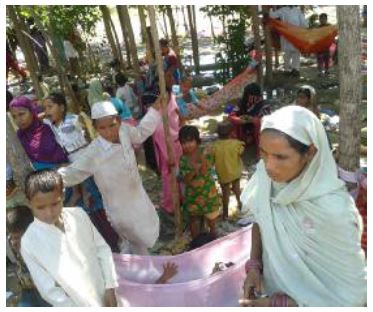
A. On September 17-18, 2013, an 11 member team consisting of both independent activists as well as activists affiliated with 5 organizations based in Lucknow, Chitrakoot, Muzaffarnagar and Delhi visited relief camps in two affected districts of Muzaffarnagar (3 Relief Camps – Madrasa camp at Bassi Kalan, Madrasa camp at Tawli and camp at Haji Aala’s house, Shahpur) and Shamli (3 Relief Camps – Madrasa camp on Panipat Road in Kairana, Malakpur camp in Kairana, and the Idgah camp in Kandhla). In Shamli District the team also met with senior members of the district administration – the District Magistrate and the Superintendent of Police.

B. This was not conceived of as a fact-finding visit, but was a recce visit to determine the human needs on the ground in the relief camps, and to see how we might plan to help survivors in initiating procedures towards criminal justice (lodging of FIRs and complaints), accessing compensation for death, injury, destruction of property, planning rehabilitation, and also to confirm unverified news reports of sexual violence against women. Continue reading In the relief camps of Muzaffarnagar and Shamli

भाषा का फासीवाद

भाषा का कार्य न तो प्रगतिशील होता है और न प्रतिक्रियावादी, वह  फासिस्ट है: क्योंकि फासिज़्म अभिव्यक्ति पर पाबंदी नहीं लगाता, दरअसल वह बोलने को बाध्य करता है. रोलां बार्थ का यह वक्तव्य पहली नज़र में ऊटपटांग और हमारे अनुभवों के ठीक उलट जान पड़ता है. हम हमेशा से ही फासिज़्म को अभिव्यक्ति का शत्रु मानते आए हैं. लेकिन बार्थ के इस वक्तव्य पर गौर करने से, और हमारे आज के सन्दर्भ में खासकर, इसका अर्थ खुलने लगता है. इसके पहले कि हम आगे बात करें, यह भी समझ लेना ज़रूरी है कि बार्थ की खोज कुछ और थी. वे अर्थापन की नई विधि या पद्धति की तलाश में थे. अंततः उनकी खोज अर्थ से मुक्ति की थी, एक असंभव संधान लेकिन दिलचस्प: स्पष्टतः वह एक ऐसी दुनिया का स्वप्न देखता है जिसे अर्थ से मुक्ति हासिल होगी( जैसे किसी को अनिवार्य सैन्यसेवा से छूट मिली होती है). हम हिन्दुस्तानियों के लिए इसका पूरा अभिप्राय समझना कठिन  है लेकिन एक अमेरीकी या रूसी या इस्राइली के लिए नहीं. उन्हें पता है कि वयस्क होते ही राज्य उनको  सेना में भर्ती होने के लिए बाध्य कर सकता है. प्रसंगवश अनेक न्यूनताओं के बावजूद भारतीय लोकतंत्र के पक्ष में  यह बात भी है कि उसने अपने नागरिक को सैन्य पदावली में परिभाषित नहीं किया. भारतीय होने की शर्त या उसकी कीमत अपना सैन्यीकरण नहीं है. Continue reading भाषा का फासीवाद

No Country for Visually Challenged Persons ?

Yesterday I got a call from Lucknow regarding an article I had penned down for a Hindi newspaper.

The focus of the write-up was the plight of four candidates – all of them visually challenged – who had cleared the UPSC (Union Public Service Commission) examinations way back in 2008, scored more marks than many ‘normal’ students and were still waiting for appointment letters. The Commission as everybody knows is India’s central agency authorised to conduct civil services and other important examinations.

The caller said that he was one among the four and shared with me the long struggle he along with others were engaged in to get their due. Apathy exhibited by people in the higher echelons of the Commission as far as visually challenged persons are concerned is really disturbing. And it was not for the first time that it had failed to give appointment letters to such candidates. Merely three years back Ravi Prakash Gupta had to approach the highest courts of the country namely the Supreme Court to get his appointment letter. Last February it was the Prime Minister’s Office  which had to intervene so that seven candidates from similar category could join their duty. Continue reading No Country for Visually Challenged Persons ?

Muzaffarnagar 2013 – Violence by Political Design: Centre for Policy Analysis

This fact-finding exercise was coordinated by the CENTRE FOR POLICY ANALYSIS. Team members were the human rights activist and former civil servant Harsh Mander; former Director-General of the Border Security Force, E N Rammohan; Professor Kamal Mitra Chenoy of Jawaharlal Nehru University; National Integration Council member John Dayal; senior journalist Sukumar Muralidharan and CPA Director and senior editor Seema Mustafa.

Introduction and Overview

The first impression of the Muzaffarnagar countryside, now green with the sugarcane ripening for harvest, is of utter desolation. Villages are tense with fear.  Kasbas and hamlets are purged of their Muslim presence and the Hindu quarters have also emptied out in a self-imposed curfew even at midday, as women and children peep out from behind closed doors and windows, their menfolk having fled to avoid arrest as criminal complaints are made out against them. Fear is in the air. The atmosphere reeks of embitterment and betrayed trust, with neighbour now unwilling to trust neighbour, and apprehensive of ever returning to their accustomed lives. All the evidence points towards people who were forced to flee their habitations in sheer terror and seek out the safety of gathering among others of their own faith, occupying any vacant space in areas where they could be sure of not being targets just because of who they were.

“We will never go back to our villages”, say Muslim women refugees in a makeshift camp in the tehsil town of Budhana, some twenty kilometres from Muzaffarnagar. Continue reading Muzaffarnagar 2013 – Violence by Political Design: Centre for Policy Analysis

Common sense and Hindu nationalism – Why the Catholics in Goa are not Hindu: Albertina Almeida & Others

This Guest Post by ALBERTINA ALMEIDA, AMITA KANEKAR, DALE LUIS MENEZES, JASON KEITH FERNANDES AND R. BENEDITO FERRÃO is a response to a statement by Chief Minister of Goa, Manohar Parrikar.

Can a Goan Catholic be Hindu? Can Catholics professing a tradition of Catholicism that is over five centuries old be considered Hindu in culture? This is what the Chief Minister of Goa, Manohar Parrikar, sought to suggest in a recent interview with Sambuddha Mitra Mustafi of the New York Times India blog India Ink, where he said:

I am a perfect Hindu, but that is my personal faith, it has nothing to do with government. India is a Hindu nation in the cultural sense. A Catholic in Goa is also Hindu culturally, because his practices don’t match with Catholics in Brazil [a former Portuguese outpost like Goa]; except in the religious aspect, a Goan Catholic’s way of thinking and practice matches a Hindu’s. So Hindu for me is not a religious term, it is cultural. I am not the Hindu nationalist as understood by some TV media – not one who will take out a sword and kill a Muslim. According to me that is not Hindu behavior at all. Hindus don’t attack anyone, they only do so for self-defense – that is our history. But in the right sense of the term, I am a Hindu nationalist.

Parrikar’s bizarre statement was in response to the question of whether he saw himself as a Hindu nationalist. Of course, a quick and easy response to his statement would be to summarily dismiss it as expected rhetoric flowing from his saffron affiliations; yet, questions persist, not least because of the peculiar and oft-misrepresented Goan scenario. Continue reading Common sense and Hindu nationalism – Why the Catholics in Goa are not Hindu: Albertina Almeida & Others

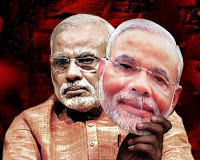
NaMo NaMo or Namaste Sada Vatsale ..

Image Courtesy : http://www.truthofgujarat.com


It is now time for NaMo NaMo in BJP.

To quote a newspaper, Hindutva poster boy Narendra Modi has been declared candidate for Prime Minister’s post by the highest body of the Party.

As planned earlier there were celebrations at different party offices of the BJP spread over the country. It is a different matter that the party could not hide the fact that it was not a unanimous decision rather a majority decision. The ‘tallest leader’ or ‘mentor’ of the party L K Advani made his displeasure clear in a letter the very same day. And not only Advani till a day ago three members of the highest body – whose strength is 12 only – were vehemently opposing the proposal that the candidature be announced immediately and wanted it to be deferred till the assembly elections to five states were over. Two amongst them – Ms Sushma Swaraj and Murli Manohar Joshi – could be persuaded to join the anointment at the last moment only.

The comical part of the whole anointment has been the gentleman who had only a week ago declared that he would like to serve the state – where he was elected CM for the third time – till 2017, had no qualms in dropping all pretensions and rush to Delhi for the coronation. Continue reading NaMo NaMo or Namaste Sada Vatsale ..

In Delhi’s defence

Reuters photo
Reuters photo

By SHIVAM VIJ: The census counts ’urban agglomerations’, and the Census of India says that Mumbai is India’s largest urban agglomeration. This includes Mumbai’s suburbs. In counting Delhi, the suburbs are not added because They are separated by state boundaries. If you were to add suburbs of the ’National Capital Region’, Delhi’s population would be not 16 million but over 22 million, making it the world’s largest urban agglomeration after Tokyo. This bustling urban centre is made of its people. Today’s Delhi cannot be stereotyped as just the seat of power. There is more to Delhi than the endless roundabouts of Lutyens’ capital.

Delhi’s core – the Partition refugee Punjabi – is not xenophobic like the Marathi ’manoos’ of Mumbai. In fact Delhi today is what Bombay once was, India’s foremost cosmopolitan metropolis. It is the city of choice for people from across India to migrate to with dreams of riches.

A lot has been written about “the Delhi gang-rape”. 16 December 2012 started a conversation that doesn’t seem to end. This conversation has largely been about rape, not about Delhi.
Continue reading In Delhi’s defence

विनोद रायना

मेरी मिट्टी जब मिट्टी में मिल रही हो तो मुझे तसल्ली रहे और मेरे दोस्तों को भी कि इसने वाकई अपने आप को खाक कर दिया था. मेरी आखें जो और जितना देख सकती हों, देख चुकी हों, मेरी त्वचा जितने स्पर्शों का अनुभव कर सकती थी, कर चुकी हो, मेरे पैर जितना चल सकते थे, चल चुके हों ;मेरे हरेक अंग और एक-एक इंद्रिय ने, कुदरत ने जो कुछ उन्हें बख्शा था और फिर उन्होंने खुद जो कुछ भी उस नेमत में जोड़ा था, सब का सब लौटा दिया हो.मैं अपने आखिरी लम्हे में मिट्टी के अलावा कुछ और न रह जाऊं , अपने साथ जो कुछ कमाया था, उसमें से कुछ बचा ले जाने का अफ़सोस न रह जाए. मैं ऐसी ही मौत और ऐसी ही ज़िंदगी चाहता हूँ.

4916512513_64a025b94b_mक्या विनोद रायना ने लैटिन अमरीकी कवि हिमनेज के जीवन-सिद्धांत की इस कसौटी पर खुद को कस कर इत्मीनान की आख़िरी साँस ली होगी?विनोद रायना सिर्फ तिरसठ साल के थे. कैंसर ने जब उनकी हंगामाखेज ज़िंदगी पर शिकंजा कसना शुरू किया होगा और उन्हें इसकी भनक लगी होगी,उन्होंने भी जवाब में अपनी रफ़्तार चौगुनी कर दी होगी,ऐसा मुझे लगता है. क्या एक साल को चार साल के बराबर जिया जा सकता है? क्या आप एक घंटे में चौबीस घंटा कस दे सकते हैं ? विनोद ने जैसे यही करना तय कर लिया हो. लेकिन यह वे कोई अभी ही कर रहे हों,कैंसर की पहली आहट जब उन्होंने अपने शरीर में सुनी होगी, ऐसा नहीं है. हम उनसे मजाक किया करते कि हिन्दुस्तान के ऐसे कोने का नाम बताइये जो आपके चरण रज से पवित्र न हुआ हो! विनोद हमेशा कहीं-से-कहीं के बीच में होते थे. फिर भी आप जब इस बीच उनसे मिल रहे होते तो वे आपसे इतने इत्मीनान से बात करते कि इसका अहसास ही नहीं हो पाता कि यह शख्स अभी एक घंटा पहले ट्रेन या हवाई यात्रा करके आया है और इसे घंटे भर बाद ही कहीं और के लिए रवाना हो जाना है. व्यक्तित्व में यह इत्मीनान दुर्लभ है,विशेषकर उनमें जो ‘एक्टिविस्ट’ कहे जाते हैं. इस वजह से उनसे मिलने वाले किसी में कभी न तो हीनता बोध आया और न अपराध बोध. यह भी विरल है. अक्सर ऐसी मुलाकातों के बाद आप आत्म-भर्त्सना के शिकार हो सकते हैं कि आपकी ज़िंदगी उस एक्टिविस्ट के मुकाबले हेच है, आप किसी काम के नहीं. विनोद ने सामनेवाले को कभी यह अहसास होने नहीं दिया, बल्कि इसका उलटा ज़्यादा ठीक है : हर किसी को यह विश्वास दे पाना कि वह सार्थक जीवन जी रहा है और उसमें संभावना है. Continue reading विनोद रायना
How Would You Like your Death Penalty Steak, Rare, Well Done, or Medium Rare?: Arguments Against the Death Penalty

The anger that I felt when a young woman was brutally raped and killed by a group of men on the night of December 16 last year is not something that will ever go away. It marked not just me, but millions of people in Delhi, and elsewhere. That anger has no closure. Nor do I seek the convenience of such a closure. I do not seek the convenience of closure for the rape and murder of dalit women in Haryana, or of women in Kunan-Poshpora and elsewhere in Jammu & Kashmir or in Manipur who were raped and killed by the soldiers of the Indian army and who are still unpunished. I would like such men to be punished, but I will never demand the penalty of death for them. Not because I have any affection for rapists, but because I have a greater regard and respect for human life, which I do not think that we should allow the state to take away, in cold pre-meditation, whatever the circumstances.

Continue reading How Would You Like your Death Penalty Steak, Rare, Well Done, or Medium Rare?: Arguments Against the Death Penalty

The Many Avatars of Fear: Amrita Nandy

Guest Post by AMRITA NANDY

I have recently come to the US for a year. My “settling down” has happened under the viral shadows of the Rose Chasm debates. (See HERE and HERE)

Personally, the online exchanges struck a chord for me because I too, like Rose, am a student who is new in a foreign country and to its culture, trying to feel at home, adjust, mingle, accommodate and, most of all, make sense of some new experiences.

Before you point out that this juxtaposition of Rose’s context with mine is too simplistic and reductive, allow me to say “of course”.

Of course! A comparison, contrast or parallel of our respective experiences is not where I am headed to.

This is merely my account of being an outsider in America. More precisely, this is my attempt to engage with the articulation of fear in its many avatars and contexts.

Yes, fear!

Continue reading The Many Avatars of Fear: Amrita Nandy

Goodbye Sunila Abeysekara

Image

Sri Lanka’s top UN Human Rights award winner Sunila Abeysekara died at a private hospital in Colombo on Monday afternoon after a long battle with cancer.

A founder of Sri Lanka’s feminist movement, Ms. Abeysekara was a leading socialist activist for minority rights, women’s, workers and peasants rights. Recently she was prominent on Lankan human rights issues at the UN Human Rights Council in Geneva. She was also a noted Sinhala folk and opera singer. Ms. Abeysekera, daughter of the late Charles Abeysekara, a noted human rights and social activist, founded Inform, a rights-based NGO. – Ends-

(Sunday Times ,Sri Lanka,  Monday, 09 September 2013 19:02)

It was late 2002 when Delhi witnessed a public meeting of a different kind at Rajendra Bhavan. Hundreds of people from different walks of life – activists, writers, political workers, young students – had gathered there to witness the unveiling of an interim report prepared by an international panel of feminist activists which had visited Gujarat between 14th and 17th December, investigated the violence – particularly the physical and sexual – inflicted upon women since 27th February 2002.

The interim report prepared by the ‘International Initiative for Justice in Gujarat’ unequivocally stated : “this violence, which reflects a longer and larger genocidal project, in our view constitutes a crime against humanity and satisfies the legal definition of genocide, both of which are crimes of the most serious dimension under international law.” (http://www.onlinevolunteers.org/gujarat/reports/iijg/interimreport.htm)

The panelists included leading feminist scholars and activists from different parts of the world.

It was the first time that one had a chance to listen to Sunila Abeysekara. Continue reading Goodbye Sunila Abeysekara

Report of the Fact Finding Investigation conducted to ascertain facts in the case of alleged rape and murder of Dalit girl in Jind district of Haryana

Report of Fact Finding Team put together by  ALL INDIA DALIT MAHILA ADHIKAR MANCH. Received via Kalyani Menon-Sen

01TH-DIVYA-Coun_02_1570280e

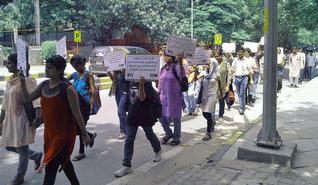
Women activists protest outside Haryana Bhavan in Chandigarh on September 1 demanding a CBI probe into the death of the Dalit girl in Jind. Image from The Hindu

On 24th August, a 20 year old Dalit girl was brutally raped and murdered in Jind, Haryana, while she was on her way to write an examination. Her body was found near a canal the next day by the police. There were cigarette burn marks on her body and significant indications of sexual violence. It is clear that she was kidnapped, raped and then murdered.

However, at the time of the fact finding, even after four days the culprits had not been identified or arrested, and there was no progress on the investigation beyond sending the body for post mortem. In fact, the parents of the girl, members of her village and various Dalit activists refused to cremate the body and were sitting on dharna in front of the Jind Civil Hospital to protest against police and administrative apathy and callousness. It was very clear that the Haryana police and administration was exhibiting gross negligence in this case, ignoring the law and evading established investigative procedure.

It is at this point that the All India Dalit Mahila Adhikar Manch (AIDMAM) decided to put together a fact finding committee to visit the area, meet the key people involved and ascertain the facts of the case. Continue reading Report of the Fact Finding Investigation conducted to ascertain facts in the case of alleged rape and murder of Dalit girl in Jind district of Haryana

The One Thing White Writers Get Away With, But Authors of Color Don’t: Gracie Jin

In this article, GRACIE JIN asks why only white writers are assumed to be capable of writing about cultures not their own.

Bill Cheng’s first novel, Southern Cross the Dog, debuted in June. His book, a fine example of writing what you don’t know, has been billed as “audacious” and “ambitious,” but you’ll be hard-pressed to find a review that doesn’t wonder at the novelty of a Chinese-American man from Queens, New York, writing about rural black Mississippi…

Unfortunately, most reviewers and interviewers seem to care less about the quality of Cheng’s writing than they do about the answers to these questions: Did the Chinese guy get it right? Can an authentic picture of the South come from a man of Asian descent who grew up in Queens?

…How many celebrated white writers have written characters who were not exactly like them? William Faulkner, Joseph Conrad, Mark Twain, Pearl S. Buck, Colum McCann, Yann Martel, and Arthur Golden immediately come to mind. In a society masquerading as post-racial, it is still only the white man who can speak authoritatively for every man. People of color, on the other hand, are expected to speak only for themselves….

Ideally, the authority of a work of fiction should be judged against the standards of the world that it creates, not by its alignment with a rigid notion of reality. By this measure both Cheng and Johnson’s books are empathetic, engaging, and deeply imaginative. Both are worth a read. Both are fiction.

Read the full article here.

Let taxpayers pay for ‘our’ treatment abroad, while they rot in government hospitals: Harsh Taneja

Guest post by HARSH TANEJA

The Government of India has recently gifted its bureaucrats a privilege. The state will reimburse the total cost of medical treatment abroad for the three highest civil services officers (the IAS, IPS and IFS).

And this entitlement is not limited to procedures that cannot be carried out in India.

According to this newspaper report, these officers and their families can decide to go abroad for even routine procedures such as bypass surgeries. A privilege that is unfair, undemocratic and borders on institutionalized corruption. Here’s why.

First, the most obvious argument pointed out in the newspaper article itself, is the huge expenditure to the exchequer. However that to me is the beginning of why this is problematic. The following two concerns are perhaps more grave. Continue reading Let taxpayers pay for ‘our’ treatment abroad, while they rot in government hospitals: Harsh Taneja

Modi’s ‘Vanzara’ Moment : Encounter killings as State Policy?

Resignation letters of suspended officers – who are in jail under serious charges-  are never a cause of concern for the powers that be. But with Dahyaji Gobarji Vanzara, suspended DIG of Gujarat police and head of its Anti Terrorist Squad, who once happened to be very close to the powers that be and has the potential of further embarrassing them, situation is entirely different. It is not for nothing that the government led by Narendra Modi has decided to reject the said resignation by not forwarding it to the Central government.

Imagine a murder accused sitting in jail who wants to leave the government service and the state government – which has received enough opprobrium because of these murders – wants to keep the accused in service. The only logical explanation seems to be that the accused officer must be privy to secrets which the government does not want to divulge in public. It is a known fact that till his arrest, Vanzara had been privy to the entire goings on in Gujarat since 2002, which included 2002 riot investigations which were handled by the crime branch, the Pandya murder case and the Akshardham attack, apart from the fake encounters. Continue reading Modi’s ‘Vanzara’ Moment : Encounter killings as State Policy?

Race too, after all, along with Gender: Arvind Elangovan

A few facts and some thoughts on the reception of Michaela Cross’s experience of India – Guest Post by ARVIND ELANGOVAN

Since Michaela Cross’s experience was part of a study abroad program conducted annually by the University of Chicago, and I was part of the program – for three years as a graduate student assistant (for the Fall quarters of 2007-2009), and one year as faculty in the program (Fall of 2010) – I think I could most usefully contribute by highlighting a few facts about the program itself. In the process I would think aloud about some of the issues that have come up in the reception of Cross’s experience in India, especially in the responses of Rajyashree Sen and Ameya Naik. I choose Sen’s and Naik’s responses partly because they have been the most recent, but also because between them they represent the spectrum of possible positions that one could usefully take about this issue. Needless to add, there have been other responses, such as the one posted by another fellow University of Chicago student on the trip, an article titled ‘In Defence of Rose Chasm (Michaela Cross) and countless other comments, criticisms, and responses that have flooded the Internet world.

However, between Sen and Naik, the basic ends of the spectrum are quite clear. Sen contends that it is not only a white woman’s problem but an issue for all women and that some self-regulation and discipline would have gone a long way to avert the unsavory experiences if not completely eliminate their possibility. Naik, at the other end of the spectrum, points out that the expectation of preparedness or caution urged by Sen belies the possibility of questioning the pervasive culture of sexual violence, in which any cautionary attempt to be safe, is to pay merely lip service to acknowledging the crime of sexual violence, instead of combating more difficult questions about such a culture. Continue reading Race too, after all, along with Gender: Arvind Elangovan

How to dress for your body shape

How to dress for your body

Courtesy Pramada Menon’s Facebook Page

Is bypassing the state the best way to push for land reform?

Last month, I visited Harare to cover the Zimbabwe elections but found myself fascinated by the controversial fast track land reform process. This story was first published in The Hindu, but – as always – I am happy to take questions here. A thought worth considering: In the context of the discussion around the Land Bill in India, does Zimbabwe’s experience suggest that questions of land are best resolved outside of the ambit of the state?

For as long as anyone remembered, the border was a dusty track of red sun-baked earth that separated the tidy communal lands in Mhondoro, where the Shona people grew maize, from the fenced farms and private hunting reserves where white farmers grew tobacco and foreign tourists shot antelope.

Young men and women crossed over to work on estates like John Dell, Solitude and Damvuri but hurried back before dusk lest they be arrested for trespass. In the communal lands, children watched that the cattle weren’t confiscated for grazing on white lands. One night in 1998, a young man called Julius was fatally shot on the Damvuri hunting reserve on suspicion that he was poaching wildlife meant for paying guests. Border relations, villagers say, deteriorated from that day on.

A little over a year later, over 200 villagers from Mhondoro walked into Damvuri, a 32,000-acre private game reserve, as part of a nationwide wave of farm invasions that reverberated across the world. At the time, about 4,500 predominantly white farmers owned 11 million hectares, or about 35 per cent of all agricultural land in Zimbabwe while the black population was squeezed onto communal lands.

“For twenty years after independence we waited, we knew, the land is ours,” said a shopkeeper from Mhondoro. Today, 181 families live, farm, and raise cattle on Damvuri. The fences have been torn down and a new community is coalescing around the local bar, pool tables and provisions store. Across Zimbabwe, 170,000 families have settled on 10 million hectares of land since 2000.

Continue reading Is bypassing the state the best way to push for land reform?

Indians of Another Colour, Or why Goans are More than Just Portuguese: Hartman de Souza

This guest post by HARTMAN DE SOUZA is in response to Europeans of An Other Colour – Why the Goans are Portuguese

The news that Goa’s Catholics obtain Portuguese citizenship and flee wherever they can with their families, availing in fact of whatever loopholes are available, is not that new a phenomenon to Goans following matters on the ground – even though it may now serve to open out a new thread in the discussion of postcolonial societies, and in particular, the travails of immigrant communities in what is supposedly a ‘globalized’ world.

It helps to keep in mind that it is Goa that is the classic case of a ‘failed state’, and not Pakistan, as Indians like to believe. Goa was once a beautiful territory protected by Ghats on three sides, rich with an abundance of water, blessed with fertile land, and made up of villages each of which had control of their commons through a sophisticated system of village governance that far predated the Portuguese Colonialists. Today however it is a state governed by politicians who work hand-in-glove with their crony partners whether in mining, real estate or industry,  a state in a freefall towards entropy. Continue reading Indians of Another Colour, Or why Goans are More than Just Portuguese: Hartman de Souza

DISSENT, DEBATE, CREATE