I went to the CDS campus today hearing of the great tumult there, news of which has been appearing off and on in the press. I was just curious. I know personally one of the SEWA ladies; she told me her version of events. The students, of course, have been venting their ire amply. In the past few days, I have also seen many of their comments in FB which made me want to puke, partly because of the fact that the faculty members who they revile now were fawned upon just a few days back. Normal people cannot help marveling at such extraordinary ability to reverse emotions towards the same object and at the same time, land on all four emotional feet. Continue reading Back to ‘family’ at CDS – How to push false pride under the carpet! Anonymous→
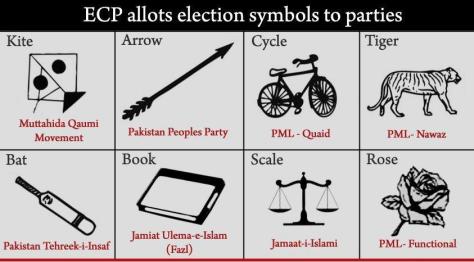
Guest post by AYESHA SIDDIQA: The renowned television anchor Quatrina Hosain was in tears. A day after the incident of her being sexually assaulted at a Pakistan Tehreek-e-Insaaf (PTI) jalsa by party workers in Wah Cantonement, she talked about how the bruises may heal but not her emotional scars. She was covering election rallies and got invited by a PTI candidate Mohammad Sarwar to his rally in Wah. It was a sudden plan so no one could have conspired to misbehave. This is important to note, as many PTI workers have subsequently tried to blame the incident on Pakistan Muslim League (Nawaz)’s workers. However, when confronted with facts, PTI workers tried to hide behind the argument that women should not provoke people by coming out and mixing with them. Continue reading Naya Pakistan, an old fable: Ayesha Siddiqa→
Guest post by MANISHA SETHI: It has been seven months since the Jamia Teachers’ Solidarity Association brought out its report, Framed, Damned, Acquitted, chronicling in detail how the Delhi Police’s Special Cell implicated innocents – former militants, police informers, businessmen, and just ordinary, unlucky men – as terrorists. It is one of the few documents that lends evidentiary credence to the widespread sense amongst Muslims that they are being targeted in the war against terror. Apologists for the police and investigative agencies however do not tire of contesting its conclusions, namely that there is a systemic and systematic bias against minorities when it comes to terror investigations. What bias, they ask. As does our chief National Security ‘analyst’ Praveen Swami, who has stressed that “liberals are compromising the war against jihadi terror“.
Could such ‘analysts’ be echoing the sentiments of a judge of the Allahabad High court, who less than two decades after India gained independence, noted, that “in the entire country there is not another criminal force whose misdeeds can come anywhere near the list of crimes of that organised body called the Indian Police force” (All India Reporter, 1964, Vol. 51, 702). Do they mean, that our extraordinarily brutal police force is even-handed in its application of cruelty across the spectrum of our citizenry, and is not especially biased against the Muslims, or Dalits, adivasis and so on?
Guest post by SUVAID YASEEN: Incredible India is a land of promises. Amnesia and half narratives. Selective remembrance and deliberate forgetting. The national interest is incredibly important. And everything is allowed in this war.
Gandhi’s – the father of the nation – maxim of bura mat kaho, bura mat suno, bura mat dekho (don’t say evil, don’t hear evil, don’t see evil), interestingly forgets to say bura mat karo (don’t do evil). So, you can do it, and forget it. Gandhi should smile. And his monkeys can make merry.
Mohammad Yasin Malik, the Jammu Kashmir Liberation Front commander turned ‘Gandhian leader’ must know this irony very well.
When, in the early nineties, the guns started ringing, Kashmiris were told that they should leave the path of the armed struggle and have a peaceful agitation, and they would be listened to, by India and by the international community. Continue reading Gandhi’s fourth monkey: Suvaid Yaseen→
I recently read your piece for Kafila, which was subsequently reproduced in part in the Hindu. I studied economics there as well, batch of 2006. I subsequently went on to read for an MPhil in Economics at Oxford.
Good on you for writing that piece. It raised lots of questions about our education system, and I agree with a lot of what you wrote (and share the same dismay at the dictation sessions from one particular professor you referred to).
There’s just a few things that I’d like to say, but before I say them let me say that none of this comes from being ‘nationalist’ or ‘patriotic’ in the slightest – just as you spent three years studying, working and paying taxes in India, I spent five studying, working and paying taxes in the UK, and I would like to believe that doing so has given me a bit of a world view of these things. Moreover, my area of interest is education economics, which is what my research focused on. Continue reading On higher education in India: Saattvic responds to Thane Richard→
At the recent Historical Materialism conference held in Delhi from April 3-5, a panel was organized with great fanfare – an official panel by the HM editors – around Vivek Chibber’s new book Postcolonial Theory and the Spectre of Capital. This panel was billed to be a decisive refutation of Subaltern Studies and Postcolonial theory, not only by the chief theorists and organizers of Historical Materialism but by many other Indians – most of whom in any case have little more than a religious faith in ‘Marxism’ and understand little of Marxism and its history. There was glee all around and one came across the hurried announcement of a Centre for Marxist Studies that was to host further events around this book against the demon that Chibber had apparently slain. After all, Chibber was backed by the likes of Slavoj Zizek, Robert Brenner and Noam Chomsky, all of whom had endorsed his book as the death knell to Subaltern Studies and Postcolonial theory. The glee was to be short-lived.
On April 28, at the New York conference of Historical Materialism, the organizers made the mistake of inviting Partha Chatterjee (a representative of a spent force, already buried at the Delhi HM Conference!) to debate the new star on their horizon. The meticulous demolition of Chibber that followed, embarrassed even his most ardent supporters, who had hoped to see the redoubtable Partha vanquished in person. And Chhibber, let our marxist brethren note, is reduced to finally accepting that he is more inclined towards contract theory than towards Marxism!
Partha, whose years of meticulous engagement with Marxism can hardly be taken on cavalierly by any upstart on the horizon, calmly tore Chibber’s claims to shreds. Many supporters of Chibber’s book have, in social media, glumly described the 28 April event as a great setback to their cause…
This is a guest post by Navine Murshid The grief surrounding the collapse is unimaginable with more than 500 dead and hudrends still missing. It is clear that the accident was a culmination of the alignment of corruption, greed, inefficiency, and a bid to cut costs, at every level from acquiring lands through illegal means, using sub-standard materials for construction, and forcing workers to work despite life-threatening risks, to foreign buyers who show little regard for human life. It is clear too that the wealthy elite with political connections have capitalized on the textile industry by exploiting the poor; it reveals the evils of capitalism where the bid to minimize costs have led to the complete disregard for human lives, perpetuating the “race to the bottom.”
Thousands of RMG workers have gone on strike and taken to the streets to demand justice for what has happened and to demand changes in working conditions. Many have demonstrated in front of the BGMEA office. On the occasion of May Day, different groups came forward to support the working class’ struggle for a work environment that is safe and well-equipped for emergency situations and a justice system that actually does them justice. Indeed, such support and solidarity with workers can end these “murders.”
The relevance of Shahbag
Shahbag’s main contribution to the political culture in Bangladesh, arguably, has been to empower people, particularly urban youth, to speak up and realize that even ordinary people can make a difference when they unite; that they do not need political patronage to voice their demands and dissatisfaction. The outpouring of support in the wake of the Savar disaster can be attributed to the understanding of “taking back the nation” that Shahbag had instilled in people to encourage them to be active citizens instead of waiting for the state to take action.
The Savar disaster reveals some key points of convergence between the interests of Shahbag activists and the working classes.
This is a guest post by N P Ashley: For a teacher, it feels strange to defend one’s workplace in public against the experiential remarks of an individual who happens to be in some ex-student capacity in the same college. “I didn’t like X’s classes” or “I found academic excellence in St. Stephen’s College a myth” are statements that need no attempt to be disproven precisely because the writer, Thane Richard, makes no attempt to prove them in the first place. The narrative is anecdotal and validation is through “personal experience” which can only be countered, rather weakly, through otheranecdotes. Hence, I won’t get into it. But there are certain methodological problems with the entire exercise, which, if not countered, will wrongly define the concerns of the readers. Continue reading The Golchakkar of Premier Institutions: St. Stephen’s College as a Public Concern: N P Ashley→
GUWAHATI: The echo of the Shahbag protest in Bangladesh was heard about 200 miles away here on Sunday with citizens, under the banner of Janamat, expressing solidarity with protesters in that country. Janamat, a Guwahati-based socio-cultural body which organised the solidarity meet here, said that the issue raised by the Shahbag protesters is relevant to India in general and Assam in particular because both the countries’ secular and democratic fabrics are threatened by communal forces.
Solidarity meet in city for Shahbag protest
TNN Apr 29, 2013, 09.35AM IST
Representatives of different Gonojagoron Mancha across the country on Friday suggested spreading its activities to grassroots level to aware people about its demands. They urged all to be united to fight against Jamaat-Shibir and move forward with a view to realising their demands …Around 300 representatives from 167 gonojagoron manchas from seven divisions attended the daylong representative conference at Senate Bhaban of Dhaka University to express their views and suggestions to strengthen the movement.
Imran H Sarkar, spokesperson for the Gonojagoron Mancha, announced a mass rally at Mymensingh on May 18 and a grand rally at Projonmo Chattar in Dhaka on May 31 at the end of the conference.
(The Daily Star, May 3, 2013)
Maulana Syed Jalaluddin Umari, President of Jamaat-e-Islami Hind, (Born in 1935), seems to be a learned man, at least that’s what his biographical details tell us. Elected for the second time as Ameer (President) of the Jamaat he is known to have ‘authored more than thirty books’ and is ‘considered an ‘authority on human rights in general, and women and Islamic family system in particular’. Interestingly, despite his long innings in social-political life and exposure to the outside world his understanding of some crucial developments in this part of the subcontinent seems to be at variance from what can be said as a general consensus around the issue.
The manner in which he and the organisation he leads reacted to the recent developments in B’desh, the emergence of what is known as Shahbagh movement – the spontaneous movement initiated by youth seeking ‘exemplary punishment to the war criminals’ and banning of ‘politics based on religion’ – is an indicative of this disconnect between what Maulana Umari and the organisation he leads thinks and what actually happened.
There have been reports in the media of an agitation by students of the Centre for Development Studies, Thiruvananthapuram, because a fellow student was asked to leave the hostel to facilitate an investigation of a complaint against him by the Self Employed Women’s Association, which runs the cafeteria on campus. These reports and some exchanges between faculty have been circulated on the web / social media and has led to wider discussion of this event. We consider it imperative to put forward our shared perspective as women activists as well as bring together our views as women faculty members of CDS and co-ordinator of SEWA respectively.
The student was informed in a letter that the action against him was until such time as the investigation was completed. Media reports have portrayed the agitation as having been motivated by the victimization of a Dalit student by the workers of the cafeteria. Also it is being propagated that the student was ‘turned out’ of the campus when the letter from the Director required the student to ‘leave’ the hostel and refrain from using the cafeteria until the investigation was over. Deliberately enough, the action was not to prevent the student from entering the campus. We present here the context in which the student was asked to leave the hostel, the politics of the portrayal of the incident by the students as an infringement of the rights of a Dalit student and the larger implications of their claims, that feminism has been used to victimize students on the basis of caste.
This is a guest post by MADHU MEHRA: The Criminal Law (Amendment) Bill, 2013, more popularly called the Anti-rape Bill, is now law. The outrage following the homicidal gang rape in Delhi unleashed events that lent force to the longstanding demand by the women’s movement for comprehensive reform of laws relating to sexual assault. These demands were bolstered by the recommendations of the high level committee, headed by retired Justice Verma, that called for reform of criminal laws, police reforms, prevention and education interventions to effectively tackle impunity for sexual violence. With the new bill passed by the parliament, the law stands substantially changed. This article takes stock of the ways in which the new amendments re-framed sexual offences in the law, their significance and the challenges that remain. While being far from comprehensive, these changes substantially transform the way legal redress for sexual offences have been framed in the law. A few examples below contextulise the significance.
This is guest post by ANKITA AGGARWAL: Last week a group of about fifteen of us (students who have been working on the right to food in various capacities) met Members of Parliament to discuss the amended National Food Security Bill and how it can be improved. We knocked on the doors of more than a hundred MPs, but managed to meet only about twenty of them. Most of the MPs were away from Delhi, in their constituencies or elsewhere, and a few were “too busy” or “too tired” to meet us.
Our overall experience was quite disappointing. Most MPs were quite clueless about the Bill. But instead of using our visit as an opportunity to inform themselves about the Bill and its shortcomings, most of them preferred to indulge in rhetoric, making statements like “we will raise your demands in the Parliament” or “it’s shameful that there is hunger in the country even so many years after independence”. A few MPs talked to us at length about issues ranging from the demand for Telangana to the impossibly high cut-offs in colleges, but not about how the Bill can be salvaged. Some MPs were of the opinion that there was no scope for discussion of the Bill in Parliament, and that it was pointless to discuss it with us. Continue reading Food Security Bill – MPs clueless: Ankita Aggarwal→
This is a guest post by ARITRA CHATTERJEE: In his response to the article by some students of St. Stephen’s College, Thane Richard has raised a set of questions about the college, about the students participating in the present movement, about education in India and students’ voice in shaping education. He is critical about what he calls the lack of quality education, of a system where education is primarily about rote learning and conformity to structures of authority; in such a situation the promise of a good liberal arts education remains a mere promise and students migrate to the West in search of it. He also rues the lack of students’ voice in the education system, rhetorically asking, “Do students have any right?” He welcomes the students’ fight against the oppressive regime at St. Stephen’s College but views it as a movement that istoo little too late and even that in “the wrong direction”. I shall respond to his views at two levels – at the level of education in the country as a whole, and that of the present movement at St. Stephen’s College. Continue reading Of Angry Young Students and Education in India – A Response to Thane Richard: Aritra Chatterjee→
“Let us declare that the state of war does exist and shall exist so long as the Indian toiling masses and the natural resources are being exploited by a handful of parasites.” Those are not the words of a member of the Central Committee of the Communist Party of India (Maoist), though the film has that too. These words are of Bhagat Singh, revolutionary freedom fighter who has today been appropriated by everybody for their own purposes.
The most remarkable thing about Sanjay Kak’s new film Red Ant Dream is Punjab. Occupying more than a third of the film, its use of the revolutionary sentiment in today’s Punjab takes forward the debate on the Maoist and other resistance movements in India. Instead of getting into the debates around the Maoist movement in central India, the film makes for a powerful document of the how and why the revolutionary ideal lives in India 2013. Continue reading Let us declare that a state of war exists→
This statement was issued yesterday by the JOINT INDIA-PAKISTAN JUDICIAL COMMITTEE ON PRISONERS
May 03, 2013
Members of the India-Pakistan Judicial Committee on Prisoners visited Pakistani Jails in Karachi, Rawalpindi and Lahore from April 26-May 1, 2013. The members of the Committee, Justice (Retd.) Mr A.S Gill and Justice (Retd) Mr. M.A Khan from the Indian side and Justice (Retd) Abdul Qadir Chaudhry, Justice (Retd.) Mr. Nasir Aslam Zahid and Justice (Retd.) Mian Muhammad Ajmal from Pakistan side visited the Jails.
Himanshu Kumar is a Gandhian activist who, together with his wife, ran the Vanvasi Chetana Ashram in Dantewada, Chhattisgarh for 22 years. He learned the local adivasi language (Gondi) and worked through the Ashram to help adivasis access their rights under the law. Starting in 2005, during the murderous Salwa Judum campaigns of vigilante groups against the adivasis of Bastar in Chhattisgarh, Himanshu worked to try to get villagers back to their homes, get people falsely accused out of jail, and win justice for the victims of police and vigilante crimes. His Ashram was eventually bulldozed and he was forced to move to Delhi, from where he continues to try to follow up with legal cases on the state’s treatment of the adivasis. JUSTIN PODUR interviewed him there in February 2013.
Guest post by RAJSHREE CHANDRA: In the backdrop of the on going battle in the Delhi High Court, between publishers (OUP, CUP and Taylor and Francis) and Rameshwari photocopiers-Delhi University (next hearing 8th May, 2013), there are two perspectives to which attention needs to be drawn. The first, of course, is a legal one which allows for course pack to be compiled for dissemination of course and research material, provided they adhere to stipulated norms. What are these stipulated norms? Have DU, and its network of photocopying, infringed these legal guidelines or even transgressed internationally evolved, legally acceptable norms of “fair use”. Continue reading Is there anything like ‘copying’ fairly?: Rajshree Chandra→
Guest post by ANJA KOVACS: Imagine a TV station inviting a guest and giving the audience the opportunity to freely ask questions, with the guest deciding which questions to respond to. Imagine a member of audience then threatening the guest with rape, and the TV station’s representative responding by simply passing on the microphone to the next person, leaving the guest to fend for herself. Imagine the TV station then also refusing to provide any assistance to the guest following the incident. Outrage would, justifiably, ensue. Last week, Rediff treated a guest in much this way – during a Rediff-organised online public chat.
On 24 April, Kavita Krishnan, Secretary of AIPWA and a leading figure in the anti-rape protests that have been rocking the capital since December 2012, participated in a public chat at the invitation of Rediff. The topic of the chat was the rising incidences of rape and violence against women in the country. During the chat, Krishnan was repeatedly threatened with rape by a participant whose handle read ‘RAPIST’. RAPIST wrote: ‘Kavita tell me where I should come and rape you using condom’. Earlier the same person had made comments such as ‘Kavita tell women not to wear revealing clothes then we will not rape them’, to which Krishnan had in fact responded. All comments by RAPIST were written in capital letters.
[This piece by Javed Anand was sent to a major daily but not published for undisclosed reasons]
Leaders and the led from a host of rightwing Indian Muslim organisations – Jamaat-e-Islami Hind (JEI), All India Muslim Majlis-e Mushawarat, All India Milli Council, All Bengal Minority Youth Federation, West Bengal Sunnat Al Jamaat Committee included – have not been sleeping well in the last several weeks. Their angst is on two counts.
One, the International Crimes Tribunal (ICT) set up by the ruling Awami League in 2009 to investigate and prosecute suspects for the genocide committed in 1971 by the Pakistan army and their local collaborators, Razakars, Al-Badr and Al-Shams during the Bangladesh Liberation War of 1971.
Two, the “atheist conspiracy” to banish Islam from Bangladesh that is supposedly behind the lakhs who have been thronging Shahbagh.
So far, nearly a dozen men including nine currently top-ranking leaders of the Jamaat, the largest Islamist party in Bangladesh, have been held guilty and served stiff sentences. According to the sleepy-heads, the ongoing trials are a sham, a mere cover for the ruling Awami League’s “vendetta politics” against the Jamaat and its youth wing, Islami Chhatra Shibir. That the Jamaat had any hand in the genocide is news to them. Continue reading Islamo-fascists in Bangladesh – Whose side are you on?: Javed Anand→
“I saw men on television (trade union stars, Cabinet Ministers, left-wing think tank advisers) visibly hystericized by talking economics: eyes would glaze, shoulders hunch, lips tremble in a sensual paroxysm of ‘letting the market decide’, ‘making the hard decisions’, ‘levelling the playing field’, ‘reforming management practices’, improving productivity’…those who queried the wisdom of floating exchange rate, deregulating the banks, or phasing industry protection were less ignored than washed away in the intoxicating rush of ‘living in a competitive world’ and ‘joining the global economy’.” (Meaghan Morris cited in J K Gibson-Graham, The End of Capitalism (As We Knew It), University of Minnesota Press, Minneapolis and London, 2006: 92)
Degrowth, courtesy extraenvironmentalist.com
Meaghan Morris is talking about Australia, but she could be talking about anywhere in the world and the description would be perfect. This is how capitalism is performed – literally and figuratively. Eyes glaze, shoulders hunch, lips tremble, as policy-makers, media personalities, economists and even those supposedly at the left end of the spectrum, talk about taking hard decisions. Manmohan Singh, Montek Singh Ahluwalia, P. Chidambaram, to be sure – but also Narendra Modi, LK Advani and even Buddhadeb Bhattacharya (now waiting in the wings, hoping his act isn’t over yet), Pinarayi Vijayan…we could go on.
This May Day, the day of international solidarity of labour, comes to us in some very special circumstances. It comes against the backdrop of heightened attacks on workers’ livelihoods and on their fundamental right to organize and their right of collective bargaining. We have covered and commented on some of the recent workers struggles in the last couple of years in particular on Kafila (here, here, here and here). The most recent post on the attack – on the NOIDA workers tells a story of the creation of luxury living amidst destitution, a story of super-exploitation by the real estate mafia, a story of non-payment of wages and of repression and violence when the workers demand no more than their rightful due.
This May Day also comes as the countdown to the impending 2014 general elections begins and there is frenetic activity in corporate circles and their media houses to determine the political agenda in keeping with their interests. The ‘policy paralysis’ that afflicts the UPA government, they all sing in chorus, needs to be quickly overcome – and of course, as has been pointed out by commentators, ‘policy paralysis’ does not mean that Food Security should be rapidly ensured or the Lokpal idea should be immediately put into practice. Rather, it means that the obstacles to growth should be immediately removed. Hard decisions must be taken!
From the earlier article by Hartman De Souza and comments here on recent incidents at Tata Institute of Social Science campus at Guwahati, we had a glimpse into how a Deemed University heavily funded by the UGC and by both the Central and State governments could conduct its business in totally autocratic and authoritarian ways. Even with the risk of repetition I want to share my first-hand experience at another extension counter of TISS Mumbai which is TISS Tuljapur where exactly same events unraveled six months ago. Continue reading Disciplining at Tuljapur: A First-hand Experience : Sunandan K N→