Elements of Bomb (Blast) Making – Understanding Dilsukhnagar: Biju Mathew

hydblast2

This is a guest post by BIJU MATHEW: The story is always the same, isn’t it? A perfectly ordinary day becomes extraordinary. A day when the daily tribulations of thousands of workers and small merchants is instantly transformed into tragedy. 15 dead, 5 still critical and over 100 others injured– some of them maimed for life – thinking of what recovery might mean. Ravinder, a farm hand from a Nalgonda village has lost a leg. His wife, Lakshmi might still yet lose her foot. Their 1 year old is missing. And they were in Dilsukhnagar for a hospital visit because the 1 year old has a congenital heart condition. There is no justice to be had here. Continue reading Elements of Bomb (Blast) Making – Understanding Dilsukhnagar: Biju Mathew

Noida Police keeps a labour leader and 6 citizens under illegal custody: Bigul Mazdoor Dasta

Press release by BIGUL MAZDOOR DASTA:

At the behest of the factory owners, the reign of terror of police continues

Noida, March 1. Several mass organizations including Bigul Mazdoor Dasta have strongly condemned the Noida police’s act of illegal detention of the labour leader Tapish Maindola and 6 common citizens. A petition is also being filed today at the Allahabad High Court against the illegal custody.

Ajay swamy of Delhi Metro Kamgar Union told that on the evening of February 27th, 10-12 persons came in 2 Bolero vehicles to the DTP Centre of Navin Prakash in Ghaziabad and forcibly took him and his employee Raju along with them. They forced Navin to call the activist of Bigul Mazdoor Dasta and his friend Tapish by phone and as soon as Tapish reached there, police captured him. Without informing the people present there as to where they were taking them, the policemen took all three along with them. None of the three were allowed to make a call and their phones were taken away and switched off.

Continue reading Noida Police keeps a labour leader and 6 citizens under illegal custody: Bigul Mazdoor Dasta

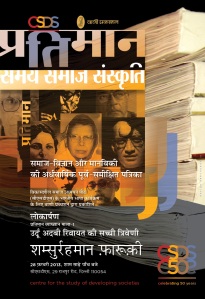
Leaping Across a Troubled History – Launch of Pratiman

Poster of the launch event  for Pratiman
Poster of the launch event for Pratiman

A new research journal in Hindi, Pratiman – Samay, Samaj, Sanskriti, was launched on 28 February 2013, at the Centre for the Study of Developing Societies, Delhi. The occasion was historic in many ways. Given the long and troubled history of the great language divide between Hindi and Urdu and the lost traditions of Hindustani, the fact that the launch was marked by a public lecture by noted Urdu scholar-poet Shamsur Rahman Faruqi cannot but be anything but historic. There is a certain impertinence and perhaps even insolence, in the move to leap across that history of over a century and a quarter, in complete disregard of the custodians of purity on both sides, in the insistence that language is not what the custodians make of it but what lives in the world of creativity and exchange.

It was only befitting of this occasion that Faruqi chose to speak on “Urdu Adabi Ravayat ki Sachchi Triveni.” In what turned out to be a remarkable and breathtaking tour de force, Faruqi turned his scholarly apparatus to the task of dissecting the Urdu poetic and aesthetic tradition in a manner that revealed its three currents (the ‘triveni’) – namely, Arabi, Persian and Sanskrit.Through the metaphor of the Triveni at Allahabad, where the Ganga and Yamuna meet the third river Saraswati, which is invisible but nonetheless ‘present’, Faruqi too perhaps wanted to stress the significance of the third but invisible current of Sanskrit poetics.

Continue reading Leaping Across a Troubled History – Launch of Pratiman

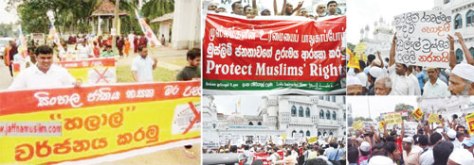
The Political Economy of Anti-Muslim Attacks in Sri Lanka

738297541protest

The Muslim community is under attack. There have been increasing reports of attacks on mosques and shops owned by Muslims as part of a broader hate campaign against Muslims. The attack on the Dambulla Khairya Jummah mosque in April 2012 saw a decisive shift in the scale of these attacks. This act of violence was built on anti-Muslim rhetoric and a nascent campaign that had been simmering for years. More recently, the anti-Halal campaign and the boycott of No Limit stores has mobilised much larger sections of society. The mobilisations, together with chauvinistic public discourse, have alerted a few critical journalists, public intellectuals and activists to rightly draw parallels between these developments and the events that led up to the July 1983 pogrom against the Tamil community. Indeed, there needs to be stronger mobilisations and statements of condemnations to arrest this wave of anti-Muslim attacks. In this article, I ask a question that has not received as much attention: Why are these attacks on the Muslim community taking place now?

Published in Sunday Island, Colombo

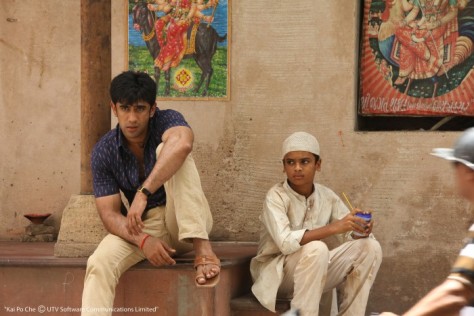
Kai Po Che and the reduction of 2002: Zahir Janmohamed

Guest post by ZAHIR JANMOHAMED

A still from Kai Po Che

When I started conducting research in Gujarat two years ago, I kept being asked the same question among middle class youth in Ahmedabad: “Have you read Chetan Bhagat?” When I asked what other books they have read, I often heard, “Actually I only read Chetan Bhagat.”

So I started to read Bhagat because I wanted to relate to many of the young people I was interviewing. But it was not an easy task.

I understand the frustration with Bhagat’s writing. Unlike other young adult authors like JK Rowling or Suzanne Collins, Bhagat’s books rarely reward a second reading (and yes I have tried). Continue reading Kai Po Che and the reduction of 2002: Zahir Janmohamed

Aspirational India? Raj Nandy

Guest post by RAJ NANDY

0209-delhi-homeless-children_full_600

Image of homeless children from For Donald

Mainstream media recently carried stories about Prema Jayakumar, daughter of an auto-rickshaw driver who topped the Chartered Accountancy exam, and of several other young men and women who have made the journey from village to city, overcoming ‘poverty, social discrimination and even political strife to succeed in life‘ and are now set to step into elite professions.

The same story linked to above, suggested that Prema-type examples also show that “this tale of personal courage and excellence is embedded in the ethos of aspirational India” and that the “idea of aspiration has proved to be one of the most binding factors in the country”.

I disagree. To glorify and salute such examples of exceptional hard work and determination is, of course, apt and well deserved. However, to present a tiny fraction – say, a few hundreds or thousands as reflecting the temper or character of millions muddling through crippling poverty and malnutrition seems like mistaking the shadow for the substance. Continue reading Aspirational India? Raj Nandy

The Great Right-Wing Convergence – Towards 2014: Ruchi Gupta

Guest post by RUCHI GUPTA

For those of us, whom the well organized Right on the internet describes as “sickular”, the prospect of Modi as Prime Minister is unthinkable. Congress is then a reflexive default – not a party of choice. Its secular credentials too are tarnished with 1984, but its communal capitulations are opportunistic (and thus contained) unlike the BJP with its official Hindutva party plank. Moreover with all its corruption and contradictions, the Congress has always had a strong left-liberal strand, providing some space for engagement to further progressive agenda, enacting for instance the landmark Right to Information Act, NREGA and FRA. However faced with a Rahul Gandhi versus Modi contest – the former a reluctant prince leading a dithering party, the latter the decisive machismo king of no-nonsense governance – it appears that Congress has decided to move so far to the Right that 2014 looks set to become a Modi versus ‘sickular’ Modi contest.

Continue reading The Great Right-Wing Convergence – Towards 2014: Ruchi Gupta

Justice for a rape survivor: Majlis Legal Centre

As we note the unprecedented, if not always productive, attention being drawn to widespread sexual violence in India, we need to remember that in the shadows of media attention, legal activists routinely wage long, arduous and painful struggles in courts. One such set of activists located at MAJLIS LEGAL CENTRE, Mumbai, recently secured the conviction in Sessions Court, of a 60 year old man for the sexual assault of a toddler. Here is the inspiring (and infuriating!) account of this battle in the words of Majlis. Some of us have been making an argument for CCTV’s in police stations, to monitor the behaviour of the police towards complainants, especially of sexual violence. This case only reinforces our belief that the surveillance by citizens, of the coercive apparatus of the state is imperative.

majlisIt’s been two long years of trials and tribulations as we journeyed a difficult path with a very young rape survivor.  In fact, this case started off the ‘Socio-Legal Support to Survivors of Sexual Assault’ Programme of Majlis.

The incident had taken place within the premises of Kalina Education Society in Kalina in February, 2011. When the mother noticed an injury on her child and rushed to the police station, the police, instead of registering a case, recording her complaint and sending the child for medical examination, preferred to call the school principal to the police station.  The Principal, in the presence of the lady Police Sub-Inspector, threatened the mother that if she filed a complaint, her child would be thrown out of the school. This led to valuable medical evidence being lost. The next day the mother was asked to bring to the child to school by the lady Sub-Inspector, for “investigations”.  While the mother was asked to wait outside  the school compound, the child was interrogated alone  by the principal and teachers in the presence of the police, and was threatened.   The case was recorded only when the mother, on the third day, at her own initiative, took the child to a private doctor, who after noticing the injury  referred the child to the Sion Hospital (which is a Government Hospital). Continue reading Justice for a rape survivor: Majlis Legal Centre

A Future for the Left: Ravi Sinha

Guest post by RAVI SINHA

It is with considerable satisfaction and with a mild sense of accomplishment that we arrive at this moment. For those of us who have been a part of this process, it has been an exciting but difficult journey. One little climb is over. After every climb, howsoever small, one gains a view. And a view we have gained.

I speak of satisfaction, and of a sense of accomplishment. But, I also speak of trepidation. I do so because a climb much steeper and far more challenging begins from here.

We have gained a view, admittedly still hazy, but much clearer than the one we had in the valley we come from. Most of the climb, however, lies ahead of us.

Fortunately, it is not like climbing in the mountains. Fortunately, metaphors have their limitations. There, in the mountains, as you gain height, the air gets thinner and climbers begin to drop out. There, it gets lonely at the top.

The terrain of history is different. Climbing has a different meaning in the movement. Here, the air gets thicker as you climb higher. Here, you join others as you gain a clearer view. With clarity comes a higher but broader platform for unity.

Here, a summit is reached when an entire revolutionary class stands united in its resolve to overturn the status quo. Here, a summit is gained when an invincible mass of humanity comes together to bend the course of history. Continue reading A Future for the Left: Ravi Sinha

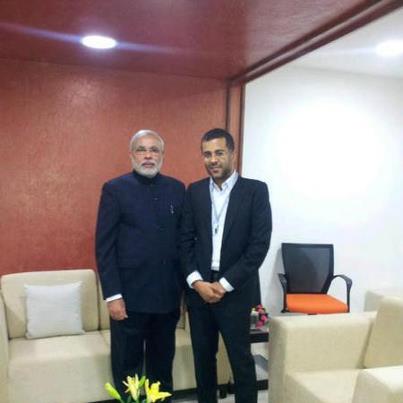
The sickening political opportunism of Chetan Bhagat

modi-chetan-bhagat

Snigdha Poonam watches Kai Po Che, whose script was written by Chetan Bhagat, based on his book The Three Mistakes of My Life:

In the film adaptation, Mr. Bhagat has also added what seems like justification for some Hindus to turn violent, like the death by burning of both of the parents of one of the three protagonists in the Sabarmati Express; in the novel, it was his nephew. We all know the level of vengeance with which Bollywood heroes respond to the targeting of their mothers: “Teri maa mari hai kya (Is it your mother who has died?),” the bereaved son explodes at a sensible friend trying to stop him from losing control of himself.

In his book, Mr. Bhagat clearly showed the 2002 riots as a state-sanctioned exercise (“Whatever it takes to quench the hurt feelings,” says a “senior Hindu Party leader”). But he excised that from the film completely. [Read]

That image above is via DeshGujarat.com, where an article quotes Bhagat as saying in a TV debate:

“It has been discussed much that Modi ji has done well in Gujarat, but what I believe is that he is a very good politician. A politician has to change with public mood. When communal issue mood was there in the country, that was Modi version 1, when he elected for the first time. And when he won the election for second time, he won it on development agenda.”

Clearly, Mr Chetan Bhagat is also a good politician.

तार्किकता, भावुकता और फासिज्म

 28 फरवरी को याद करने पर अब कहा जाने लगा है कि यह नकारात्मक स्मृति है और इंसानी फितरत के मुताबिक़ हमें आगे बढ़ना  चाहिए. हिन्दुओं को, खासकर गुजराती हिन्दुओं, यह नागवार गुजरता है कि उन्हें  बार-बार 28 फरवरी , 2002 की याद दिलाई जाए. आखिर गुजरात में 2002 के बाद पूरा अमन है और वह विकास के मार्ग पर एक दृढसंकल्प मुख्यमंत्री के नेतृत्व में संकल्पपूर्वक बढ़ा जा रहा है और वहां के मुसलमान भी अब कुछ और बात करना चाहते हैं.

दरअसल भुलाने और आगे बढ़ जाने की शुरुआत 2002 में ही हो गई थी. 28 फ़रवरी से राज्य-संरक्षण में शुरू हुए मुसलमानों के कत्लेआम ने भारत के उद्योगपतियों के एक हिस्से को भी झकझोर दिया था. लेकिन कुछ समय बाद ही पूंजीवाद के तर्क ने मानवीयता की कमजोरी पर विजय पा ली और उन्होने नाराज़ मुख्यमंत्री से क्षमायाचना करके गुजरात की प्रगति में उन्हें हिस्सा लेने की इजाजत माँग ली  थी. सार्वजनिक रूप से उन्हें गांधी और पटेल से तुलनीय बताया जाना अब अटपटा भी नहीं लगता, बल्कि उलट कर कहा जा सकता है कि गांधी और पटेल में  ऐसे कई गुण नहीं थे जो गुजरात के ह्रदय-सम्राट में पाए जाते हैं , इसलिए यह तुलना वस्तुतः इन दोनों के प्रति पक्षपात है. पूंजीवाद के मूल अंतर्राष्ट्रीय चरित्र ने अंततः युरोपियन यूनियन को अपनी मानवीय हिचक को किनारे करके गुजराती यथार्थ को कबूल करते हुए कारोबारी नज़रिया अपनाने को प्रेरित किया. यह संभव नहीं था कि आर्थिक निवेश के ठोस आकर्षक आमंत्रण को   न्याय के अमूर्त आग्रह  के चलते ठुकरा दिया जाए. Continue reading तार्किकता, भावुकता और फासिज्म

Nine prisoners at risk of execution in India: Amnesty International

Statement put out on 21 February by AMNESTY INTERNATIONAL

Following two recent secret executions in India, there is fear that the Indian authorities may execute nine other prisoners whose petitions for mercy have not yet been ruled on.

The mercy petitions of eight men and one woman are pending with either the Union Home Ministry or the President: Gurmeet Singh, Dharampal, Suresh, Ramji, Praveen Kumar, Jafar Ali, Sonia (f), Sanjeev, and Sundar Singh. Ministers have publicly stated that decisions on some of these petitions will be made soon, putting the nine in imminent danger of execution. Continue reading Nine prisoners at risk of execution in India: Amnesty International

Kashmir: Civil society objections to proposed Police Bill

List of signatories at the end; statement put out on 25 February
Following a preliminary reading of the Draft Jammu and Kashmir Police Bill, 2013, made public on 15 February 2013, the undersigned condemn the attempt of the Government to formally put in place powers and structures that the Jammu and Kashmir Police have for long enjoyed and employed to carry out systematic human rights violations in Jammu and Kashmir. Further, specific sections of the Draft Bill that are seriously objectionable are listed. As an immediate step, the Government must extend the time allotted for feedback from people.  Continue reading Kashmir: Civil society objections to proposed Police Bill

The Hyderabad blast investigations are doomed to fail: JTSA

This release was put out today by the JAMIA TEACHERS’ SOLIDARITY ASSOCIATION

hyderabad-blasts-probe-feb2

In a grotesque replay of every investigation that follows a bomb blast, prejudice, misinformation and media blitz rules the direction of Dilsukh Nagar bombings investigation too.  The same suspects and shadowy organizations are being paraded as executors of the Hyderabad bombings.

But should we be surprised? A day after the Home Minister’s humiliating capitulation to the RSS-BJP, virtually giving them and their affiliates a clean chit, the message to the investigating agencies must have been crystal clear.  When the Home Minister himself discards the bulk of allegations and material pointing to the existence of Hindutva groups in planning and executing terror attacks, should we really expect the investigating agencies, whose past record inspires hardly any confidence, to sincerely pursue all possible angles and leads? This, when Messrs Aseemanand and company are being tried for the 2007 bombing of the Mecca Masjid.  By asserting that Hyderabad bombing may have been a reaction to the execution of Kasab and Afzal Guru, the Home Minister himself foreclosed any possibility of unbiased investigation. Continue reading The Hyderabad blast investigations are doomed to fail: JTSA

Ram Setu: The ecological argument against the Sethusamudram project

Science and discourses claiming the authority of Science routinely make their appearance in order to settle contentious issues in the domain of politics. The invocation of Science is meant to establish the truth of one position over another, even when, as often happens, conflicting views are expressed by different sets of experts all claiming the authority of Science. The Sethusamudram Ship Canal Project is a recent example.

1171876859_ram_bridge

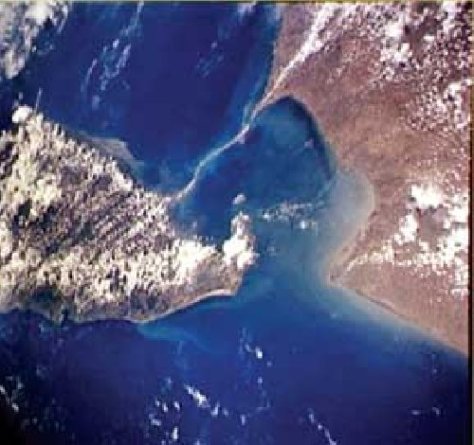
This project aims to reduce the shipping distance from the southern tip of the east coast of India to the northern parts of the coast, by constructing a route through the Gulf of Mannar to the Bay of Bengal. Ships will then be able to go northwards directly through the narrow Palk Strait between the east coast of India and the west coast of Sri Lanka, rather than swinging around Sri Lanka as at present. It is claimed that this project will save time and money for shipping companies, and is expected to radically increase the volume of traffic in that region.

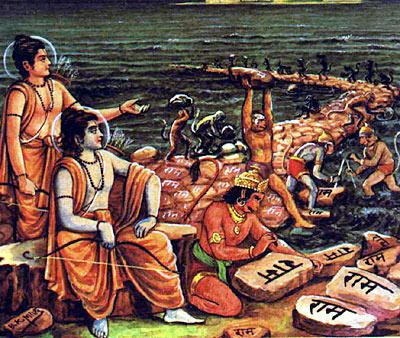
In order to build the canal, an underwater bridge connecting India and Sri Lanka along the Palk Strait would have to be destroyed. Depending on your point of view this bridge is either a natural formation of limestone shoals (Adam’s Bridge), which linked Sri Lanka to the Asian continent in the last Ice Age, or it was built by Hanuman’s army to cross over to Sri Lanka to rescue Sita (Ram Setu as it tends to be referred to in English and North Indian media, but known locally as Ramar Sethu, in Tamil). Continue reading Ram Setu: The ecological argument against the Sethusamudram project

The colonial legacy of capital punishment

G Mohan Gopal writes:

The British and their collaborators had made a similar mistake. They thought that the common people of India would be deterred and cowed down by the violence of the state. A young scholar from Columbia recently shared with me data collected from the National Archives showing that the British were hanging on average three people daily in the 1920s in a desperate bid to frighten Indians into obeying British rule. We know how that ended. The government should know how this will end too. [Frontline]

And Fahad Shah meets Maqbool Butt’s mother:

“Both Maqbool sahib and Guru sahib were innocent and on the right path. India thinks that this freedom movement will stop but it won’t stop. It will continue. There are so many Maqbools in Kashmir” [The Kashmir Walla]


Sanjay and me: Zahir Janmohamed

Guest post by ZAHIR JANMOHAMED

House of a Naroda Patiya massacre survivor. Photo by Zahir Janmohamed

It was 2002. The week before I left for India, my father invited his Gujarati Hindu colleague Rupa Aunty for dinner at our house in California. When I was a kid, I tied the rakhi brotherhood bracelet on her son. When my mom was diagnosed with cancer, Rupa Aunty was the first to spend the night with us at the hospital.

“If you need anything at all,” she told me just before I left for India, “my family is from Ahmedabad and we will be there for you.”

I grew up in California mispronouncing names of Gujarati dishes like thepla and my trip to Ahmedabad in 2002 was the first time anyone in my family had returned since my grandparents left Gujarat for Tanzania in the 1920s. This – my father kept reminding me – was my trip “home”. Continue reading Sanjay and me: Zahir Janmohamed

On Ram Setu: ‘Mahakaal ka ling kiya hain?’

The Government of India again seems to be in the mood of going ahead with the Sethusamudram Shipping Canal Project that would reduce travel time for ships around coastal Tamil Nadu and Sri Lanka, and bring economic advantages to both countries. The project involves breaking limestone shoals that some regard to be the remains of the mythological Ram Setu. The controversy is an old one. In 2007, I had interviewed Hindutva ideologue Bharatendu Prakash Singhal, who was particularly vocal against the ‘destruction’ of the limestone shoals. Singhal is a former Rajya Sabha MP and a retired Indian Police Service officer. The bits from the interview that were directly about the Ram Setu controversy had appeared in Tehelka, but Singhal was more interested in talking about “mind, body and soul” than about Ram Setu. Here are the unpublished bits – though I had put them on my blog back then. Every word was transcribed faithfully from the recorded audio. Continue reading On Ram Setu: ‘Mahakaal ka ling kiya hain?’

What happens when a woman decides to walk to the sea in Karachi, all by herself?: Hira Nabi

This video post comes from HIRA NABI

http://vimeo.com/58865627

(Hira Nabi is a visual artist in Pakistan.)

Even you are very beautiful: Nikitha Suryadevara

Guest post by NIKITHA SURYADEVARA

Bhopal: Janata Dal (United) President Sharad Yadav today stunned many at a press conference in Bhopal when he called a woman reporter “beautiful.”

The journalist asked him whether he prefers Madhya Pradesh or Bihar – he has represented both in Parliament.

The chief of the Janata Dal (United) dodged a bullet by saying, “The whole country is beautiful.”

Then came the unexpected remark – “Even you are very beautiful,” he said.

Read the complete article here at NDTV


So I figuratively raised an eyebrow when I first read this (raising just one eyebrow is much harder than it looks, trust me I’ve tried). The reporter asked him a question designed to make the man fumble, but Mr Sharad Yadav is just too suave. When asked to pick between one of his two constituencies, he swiftly pointed to the reporters beauty instead. Well that seems like a logical conclusion. Continue reading Even you are very beautiful: Nikitha Suryadevara

PUCL statement on Hyderabad blasts

This statement was put out today in Delhi by the PEOPLE’S UNION FOR CIVIL LIBERTIES
PUCL strongly condemns the serial  blasts in Hyderabad on 21.02.2013 which has resulted in loss of life and grievous injuries to many. PUCL extends its sympathies to the families of all those who lost relatives and hopes that the injured recover speedily.
PUCL  re-iterates its stand that all organizations – whether State or non- state players – functioning for the people and in the public arena are accountable and answerable for their acts. PUCL appeals to all organizations to refrain from acts of mindless violence, especially when they endanger innocent persons.  Violence can never offer a solution to any issue however genuine it may be.  Continue reading PUCL statement on Hyderabad blasts

DISSENT, DEBATE, CREATE