On Ram Setu: ‘Mahakaal ka ling kiya hain?’

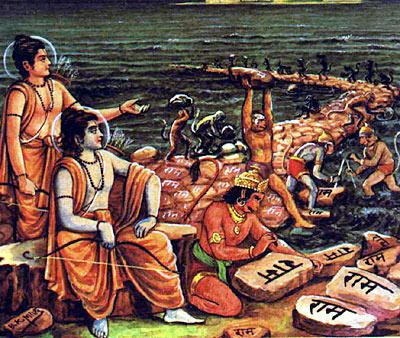
The Government of India again seems to be in the mood of going ahead with the Sethusamudram Shipping Canal Project that would reduce travel time for ships around coastal Tamil Nadu and Sri Lanka, and bring economic advantages to both countries. The project involves breaking limestone shoals that some regard to be the remains of the mythological Ram Setu. The controversy is an old one. In 2007, I had interviewed Hindutva ideologue Bharatendu Prakash Singhal, who was particularly vocal against the ‘destruction’ of the limestone shoals. Singhal is a former Rajya Sabha MP and a retired Indian Police Service officer. The bits from the interview that were directly about the Ram Setu controversy had appeared in Tehelka, but Singhal was more interested in talking about “mind, body and soul” than about Ram Setu. Here are the unpublished bits – though I had put them on my blog back then. Every word was transcribed faithfully from the recorded audio. Continue reading On Ram Setu: ‘Mahakaal ka ling kiya hain?’

What happens when a woman decides to walk to the sea in Karachi, all by herself?: Hira Nabi

This video post comes from HIRA NABI

http://vimeo.com/58865627

(Hira Nabi is a visual artist in Pakistan.)

Even you are very beautiful: Nikitha Suryadevara

Guest post by NIKITHA SURYADEVARA

Bhopal: Janata Dal (United) President Sharad Yadav today stunned many at a press conference in Bhopal when he called a woman reporter “beautiful.”

The journalist asked him whether he prefers Madhya Pradesh or Bihar – he has represented both in Parliament.

The chief of the Janata Dal (United) dodged a bullet by saying, “The whole country is beautiful.”

Then came the unexpected remark – “Even you are very beautiful,” he said.

Read the complete article here at NDTV


So I figuratively raised an eyebrow when I first read this (raising just one eyebrow is much harder than it looks, trust me I’ve tried). The reporter asked him a question designed to make the man fumble, but Mr Sharad Yadav is just too suave. When asked to pick between one of his two constituencies, he swiftly pointed to the reporters beauty instead. Well that seems like a logical conclusion. Continue reading Even you are very beautiful: Nikitha Suryadevara

PUCL statement on Hyderabad blasts

This statement was put out today in Delhi by the PEOPLE’S UNION FOR CIVIL LIBERTIES
PUCL strongly condemns the serial  blasts in Hyderabad on 21.02.2013 which has resulted in loss of life and grievous injuries to many. PUCL extends its sympathies to the families of all those who lost relatives and hopes that the injured recover speedily.
PUCL  re-iterates its stand that all organizations – whether State or non- state players – functioning for the people and in the public arena are accountable and answerable for their acts. PUCL appeals to all organizations to refrain from acts of mindless violence, especially when they endanger innocent persons.  Violence can never offer a solution to any issue however genuine it may be.  Continue reading PUCL statement on Hyderabad blasts

22 Years after Kunan and Poshpora, Rethinking Kashmir: Abhijit Dutta

Guest post by ABHIJIT DUTTA; all photographs by the author unless otherwise mentioned

1-kunan 4

It looks like any other village in Kashmir.

You go past a wooden bridge, past open fields winter-barren and wet with rain. Past mountains with snow on their chin. Past wistful looking poplars. Past a brook with clear water. Past grumpy apple trees gnarled like a grinch.

Then the road narrows, and homes – of timber and brick – come into view. Some have fences, unpainted wood. Heaps of hay, dung cakes, piles of dried leaves left to smoke. Ditches and dykes choked with snowmelt. Leafless walnut trees and brunette willows. The chinars, wild redheads just months ago, now old and arthritic. There is a government school on the right, a madrassa on the left. A few houses of stone, fewer of concrete, tin roofs over all.

Before you walk any further, the village ends. The next village is Poshpora. Like Kunan before it, it looks like any other village in the valley. The two villages are so close that people no longer call them by their individual names. Everyone knows this two-in-one village as Kunan Poshpora. Continue reading 22 Years after Kunan and Poshpora, Rethinking Kashmir: Abhijit Dutta

India Slept Through a Revolution in Bangladesh: Richa Jha

Guest post by RICHA JHA

Dhaka, Bangladesh. 18th February 2013 -- A woman shouts on a microphone. -- A demonstration for the death penalty to be given to war criminals, is continuing at Shahbag crossroads, and has reached its fourteenth day,.
Dhaka, Bangladesh. 18th February 2013 — A woman shouts on a microphone. — A demonstration for the death penalty to be given to war criminals, is continuing at Shahbag crossroads, and has reached its fourteenth day,.

This morning, I changed the ‘sleep’ in the heading of this article to ‘slept’. I woke up to the news that Bangladesh’s nearly twenty days long mass uprising was now getting a structured exit. The most moving and visually spectacular part of the Shahbag movement was coming to an end. India, of course, slept through most of it. The past tense, suddenly, paints our selective insularity in even starker shades. Continue reading India Slept Through a Revolution in Bangladesh: Richa Jha

Shahbagh: The Forest of Symbols: Naeem Mohaiemen

This is a guest post by NAEEM MOHAIEMEN

Shahbagh_SyedLatifHossain
© Syed Latif Hossain

There is a particular way of lensing mass movements, when we are observing from within immediate tactics. In a fast moving situation, with opponents and allies squared off, the first thing to shrink is the space for internal critique. Professor Azfar Hussain uses the term “critical solidarity” for his approach to Shahbagh. A critique that seeks to help the movement, but also a critique some are not ready to hear yet.

For the last sixteen days, Bangladesh has been in an intense new political phase. The ground has shifted and been recast by the scale of the Shahbagh movement. The flash point was the sentencing of the “Butcher of Mirpur” (a war criminal who collaborated with the Pakistan army in 1971). But, by now, the demands have expanded to a call for a ban on the main Islamist party Jamaat-e-Islami, or even Islamist politics altogether. Older leftist thinkers like Badruddin Umar are daring to ask questions of the hallowed place of “state religion” in the constitution. Younger bloggers are urging all to make it clear that the movement is about war criminals, not religion. But of course, with war criminals conflated with the Jamaat-e-Islami, and that party eager to present themselves as standing for “Islam,” category errors will happen. Continue reading Shahbagh: The Forest of Symbols: Naeem Mohaiemen

Footprints on a Timeline: Gayatri Ugra

Guest post by GAYATRI UGRA; photographs by JAYANT UGRA

1-20 _MG_2200

“I travel so that people will lose track of me. Then I write, so they can find me again.”

I read these lines by Pierre Foglia, and I know nothing else about him. I do know more about why I travel: to retrace lost tracks. And why I write: not for people to find me but for me to find my own self. The last journey I made was just that. A long walk back into my past, and from there to the present in Kashmir, a living, growing, tense reality that I had to visit.

Facebook never served a better cause than ours when we planned our trip last June. On the spur of a moment of nostalgia, I posted this message on my page: “A family holiday in Kashmir. Any takers? All we need now is a travel agent and a motivator.” I could not have anticipated the response: so many of us wanted to come, hoped to come. My brother Gopal took up the task of making travel plans, reservations, bookings for accommodation, and ultimately made it happen for the eight of us that finally went. Continue reading Footprints on a Timeline: Gayatri Ugra

People’s Watch Over Parliament: Bekhauf Azadi Campaign

20130220-235633.jpg

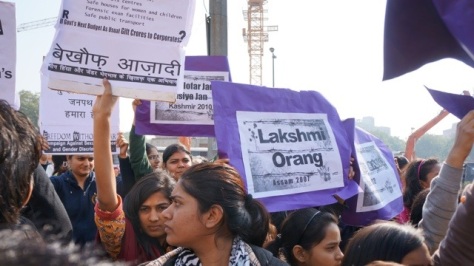
  • Protestors at the ‘Freedom Parade’ Rally of the Bekhauf Azadi Campaign, New Delhi, 26 January, 2013

Guest Post by Bekhauf Azadi (Freedom Without Fear) Campaign.

People’s Watch Over Parliament: February 21, 1st Day of the Budget Session, Jantar Mantar
Gather in large numbers – 12 PM onwards at Jantar Mantar, New Delhi.
Are Our Lawmakers Ready to Listen to the Voice of the Movement Against Sexual Violence?

Continue reading People’s Watch Over Parliament: Bekhauf Azadi Campaign

Why India Needs the Death Penalty

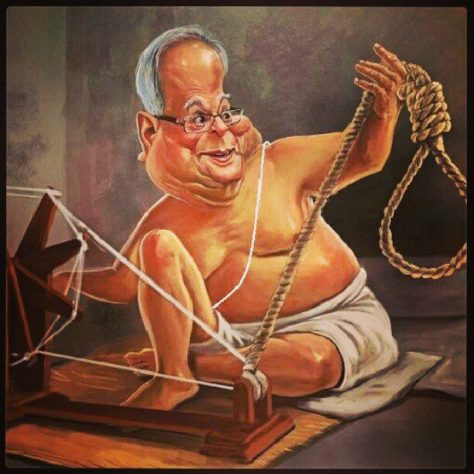
poltu-hangman-gandhi-india

So, The Law has been taking its Own Course, without any help from the political bankruptcy of the Kangress party. The Law took its Own Course and hanged Ajmal Kasab before a Parliament session and co-incidentally Afzal Guru before another Parliament session. The Law’s Own Course is stranger than the river Kosi which changes direction at will (actually, even the Kosi river changes directions because of corruption in the unnecessary embankments the Bihar government builds). Continue reading Why India Needs the Death Penalty

Dalit and Adivasi Women Warriors Question Caste and Gender Oppression: Sujatha Surepally

Posted at Round Table India

SUJATA SUREPALLY shares her impressions from the first National Dalit and Adivasi Women’s Congress held on February 15-16, 2013, at Tata Institute of Social Sciences, Mumbai.

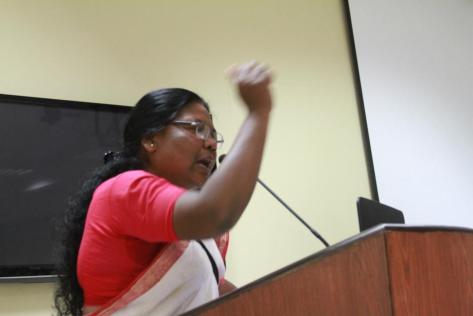
We live in nature! We die in Nature! It’s our life, if you occupy our land where should we go and how do we live? Whose land is this?

dayamani

The hall is echoing with the furious voice of Dayamani Barla, veteran Adivasi activist from Jharkhand. She is trying to unite people against mining in Jharkhand, around 108 mining companies are waiting to destroy Adivasi life in the name of mining, first they come for coal, next they say power houses, it continues, we are pushed out and out further. How do we live without our land? Spectacular speech for an hour, pin drop silence all around, everyone is identifying with her pain and agony. At the end of it, what is she is trying to convey?

Humko Jeene Do! Let us live our own life! If this is called development, we care a damn about it!  Blanket statement. [Continue reading]

Dear Sisters (and brothers?) at Harvard

Letter from  Indian feminists VRINDA GROVER, MARY E JOHN, KAVITA PANJABI, SHILPA PHADKE, SHWETA VACHANI, URVASHI BUTALIA and others, to their siblings at Harvard

We’re a group of Indian feminists and we are delighted to learn that the Harvard community – without doubt one of the most learned in the world – has seen fit to set up a Policy Task Force entitled ‘Beyond Gender Equality’ and that you are preparing to offer recommendations to India (and other South Asian countries) in the wake of the New Delhi gang rape and murder. Not since the days of Katherine Mayo have American women – and American feminists – felt such a concern for their less privileged Third World sisters. Mayo’s concern, at that time, was to ensure that the Indian State (then the colonial State) did not leave Indian women in the lurch, at the mercy of their men, and that it retained power and the rule of the just. Yours, we see, is to work towards ensuring that steps are put in place that can help the Indian State in its implementation of the recommendations of the Justice Verma Committee, a responsibility the Indian State must take up. This is clearly something that we, Indian feminists and activists who have been involved in the women’s movement here for several decades, are incapable of doing, and it was with a sense of overwhelming relief that we read of your intention to step into this breach. Continue reading Dear Sisters (and brothers?) at Harvard

Prof VK Tripathi and the fight for Schools in Juhapura: Zahir Janmohamed

Guest post by ZAHIR JANMOHAMED

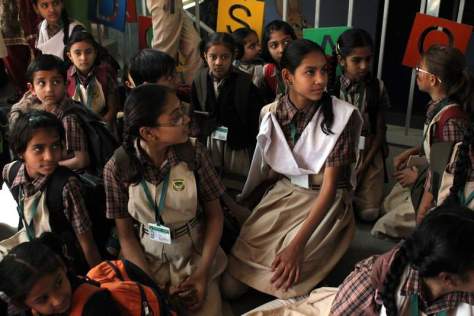
A school in Juhapura. Photo credit: Atish Patel

On Tuesday, February 19, the Ahmedabad Municipal Corporation ratified its budget and elected to build the first municipal school in Juhapura, the largest ghetto of Muslims in Ahmedabad. Juhapura was incorporated into the Ahmedabad Municipal Corporation five years ago and many residents wondered why the AMC took so long to build a school to serve Juhapura’s 350,000 residents. At the forefront of this struggle is IIT Delhi physics professor VK Tripathi. It was during a chance meeting with a sandwich shop owner in Washington DC that Professor Tripathi first learned about Juhapura. Continue reading Prof VK Tripathi and the fight for Schools in Juhapura: Zahir Janmohamed

Punishment by Procedure: Saurav Datta

Guest post by SAURAV DATTA

“An advocate, by the sacred duty which he owes to his client, knows in the discharge of that office but one person in the world- the client, and no other…to protect that client at all hazards and costs to all others, and among others to himself, is the highest and most unquestioned of his duties…..Nay, separating even the duties of a patriot from those of an advocate, and casting them if need be to the wind, he must go on reckless of the consequences…” – Lord Brougham, “Law and Other Things”, Cambridge University Press (1937)

“Beneath this face that appears so impassive hell’s tides continually run.” – Walt Whitman,“You Felons on Trial in Courts”

“Nothing rankles more in the human heart than a brooding sense of injustice.” Justice Brennan’s words keep on ringing in my ears when I see the manifestly violent injustice meted out to Mohammad Afzal- the Courts tore to smithereens his inalienable right to a fair trial. The Parliament attack case was the first litigation I had been part of – I was a student intern in the chambers of Ms. Kamini Jaiswal, who was briefing Mr. Ram Jethmalani. I got to see and understand the case from the closest of quarters, and that maybe that exacerbates my indignation at this egregious miscarriage of justice. Continue reading Punishment by Procedure: Saurav Datta

One Billion Rising for Soni Sori: 8th March 2013 and till she is free.

We Rise Because We Refuse To Support State Violence On Women. 

We Rise Because Rape And Violence Against Women Under Any Circumstances is Unacceptable.

We Rise On This International Women’s Day To Demand Freedom for Soni Sori & Punishment For Her Perpetrators.

  Continue reading One Billion Rising for Soni Sori: 8th March 2013 and till she is free.

Capital Punishment – An Agenda for Abolition: Yug Mohit Chaudhry

This is (a slightly modified) text of the second Shahid Azmi Memorial Lecture, delivered at the Indian Law Institute on 9 February 2013 by advocate YUG MOHIT CHAUDHRY. The lecture and its topic had been scheduled days in advance, but co-incidentally, Mohd. Afzal Guru was hanged in the morning of the day of the lecture. The Shahid Azmi Memorial Lecture has been instituted by his friends, comrades and students, who want to keep alive the memory of his inspiring work. Advocate was shot dead in his office on 11 February 2010, at the age of 32. At the time of his murder, Shahid was fighting several terrorism cases, including of those falsely accused in the Malegaon blasts and the 26/11 Mumbai attacks.You can read tributes to Shahid Azmi in Kafila archives by Mahtab Alam, Arvind Narrain and Saumya Una, and Susan Abraham.

In Furman v. Georgia (1972), where the U.S. Supreme Court struck down the death penalty, Justice Marshall said that if citizens were fully informed about how people are sentenced to death, they would find capital punishment shocking, unjust and unacceptable. However, research on the death penalty and public awareness of the exact nature of the death penalty have been the most neglected areas in the abolition campaign in India. The last three challenges to the constitutionality of the death penalty in India were rejected by the Supreme Court, inter alia, on the grounds that there is no empirical data to support the abolitionists’ claims. Unfortunately, the situation has not changed at all, and even now there is hardly any research on this subject. Therefore, the highest priority in any abolition campaign is to produce empirical research on the death penalty. That, and doing our utmost to stop each proposed execution and, failing that, to make it as difficult as possible for the state to carry out an execution, adopting all legal, political and social means at our disposal.   Continue reading Capital Punishment – An Agenda for Abolition: Yug Mohit Chaudhry

Diabolic designs and demonic actions : Review by Anand Teltumbde

Image


Indian history is fraught with ruling-class intrigues, which tend to keep the lower classes in a perennial state of confusion. The very fact that this history comes to us in a mythologised form is itself the biggest intrigue, obscuring as it does information about how the vast, diverse masses of the Subcontinent lived through the millennia. Reading Indian history, thus, becomes an exercise in speculation. If it provides one kind of insight for one group, it is capable of being interpreted equally plausibly in the opposite way by another. What eventually reaches the people is a partisan viewpoint at best and bewilderment at worst – a condition under which the ruling classes thrive.

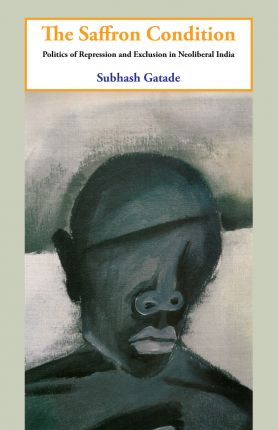
 In this context, two books by Subhash Gatade, a committed intellectual and leftist activist, are significant additions to the works of the fast-diminishing community of scholars who continue their work with unstinting commitment in these confusing times. Continue reading Diabolic designs and demonic actions : Review by Anand Teltumbde

I love the winter in your eyes: Uzma Falak

Guest post by UZMA FALAK

Winter of my eyes
took flight
Did you see?
These are not the same eyes
colors of which you would patiently decipher
sitting under the sun
for hours
gray dreams refusing to dissolve
in waters of Lethe. Continue reading I love the winter in your eyes: Uzma Falak

What is wrong with this picture? Carole Vance

Guest post by CAROLE VANCE

Two faculty members at Harvard, associated with gender studies, convene a Policy Task Force, designed to “to offer recommendations to India and other South Asian countries in the wake of the New Delhi gang rape and murder” and in this semester “to produce a working paper that advises on the implementation of the recommendations from the Verma Committee”.   This is not a student initiative, though a meeting with students is scheduled to invite their input, along with that of the larger Harvard community. Continue reading What is wrong with this picture? Carole Vance

Unintended consequences of feminist action: Prabha Kotiswaran

Guest post by PRABHA KOTISWARAN

Taking off from the debate here on the Harvard Task Force, I’d like to flag some  disagreements among feminists on law reforms. There are many strains to this debate – I will only engage with a few.

No feminist, whether of Indian origin or not, whether primarily located in India or not, is insecure about feminists/lawyers around the world working on rape in India. Circuits of feminist scholarship and activism become so inter-disciplinary and transnational that maintaining and policing turf (if at all that were possible) is an utterly useless endeavour. Continue reading Unintended consequences of feminist action: Prabha Kotiswaran

Arindam Chaudhuri promises to get Kafila page unblocked

kafila-arindam-c-iipm-blocked
The webpage http://kafila.org/2011/06/22/arindam-chaudhuri-silchar has been blocked by Internet Service Providers in India. Some users will see a blank page (like above) and others will see a note that the page has been blocked on the orders of the Department of Telecommunications.

Until Nikhil Pahwa of Medianama.com informed me, I had no clue that  India’s unjust and arbitrary internet censorship regime had finally affected Kafila. Medianama published on Friday 15 February a list of 78 URLs that the Department of Telecommunications had ordered ISPs to block. 73 of them were webpages critical of the Indian Institute of Planning and Management (IIPM), whose Arindam Chaudhuri has a long history of complaining about the Internet. Continue reading Arindam Chaudhuri promises to get Kafila page unblocked

DISSENT, DEBATE, CREATE