Muslim youths launch peace forum in Assam

This press release was put out by MY-FACTS, Guwahati, on 3 September 2012

As a response and being aggrieved over the communalisation of the recent violence and mass displacement in BTAD (Bodoland Territorial Autonomous Districts) area and in order to analyse the situation, on 2 September, 2012 about 60 highly educated, secular and liberal Muslim youths from all over Assam assembled at the Bhagabhati Prashad Baruah Bhaban, Guwahati, Assam, to brainstorm about a peaceful solution for the present scenario of hatred and violence prevailing in Assam that is spreading all over the country. The meeting was convened under the aegis of a newly formed platform named MY-FACTS (Muslim Youths: Forum Against Communalism, Terrorism and Sedition). Continue reading Muslim youths launch peace forum in Assam

Protesting the Forced Repatriation of Visiting Sports persons and Others from Sri Lanka

Previously posted on dbsjeyaraj.com

We the undersigned are aghast and anguished by the recent decision of the government of Tamil Nadu, acting on the Chief Minister’s orders, to send back two sports teams from Sri Lanka that were in Chennai to play matches against local school teams.

Two days after the Chief Minister issued her orders, members of a Tamil nationalist group, Naam Tamizhar Iyakkam protested against a group of pilgrims from Sri Lanka visiting a church near Thanjavur.

There have been similar protests in the past against visiting teams – by members of the Periyar Dravidar Kazhagam. Continue reading Protesting the Forced Repatriation of Visiting Sports persons and Others from Sri Lanka

A Visa for Mahiwaal: Maheep Singh

Guest post by MAHEEP SINGH

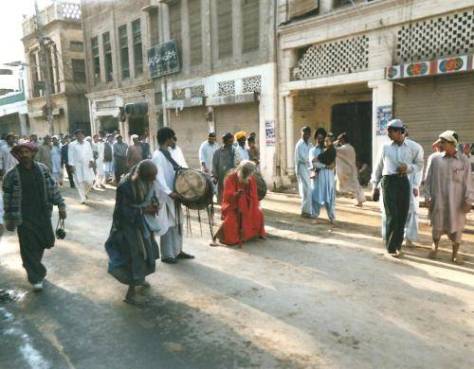
Sufi dervishes join a Sikh Nagar Kirtan parade at the Nankana Saheb shrine near Lahore. Photo credit: S Khalsa

As a child I gave my mother a tough time with all sorts of questions about the world; she would often not have answers. I would ask, for instance, why we couldn’t just go to Nankana Saheb as and when we wanted. Nankana Saheb is the birthplace of Guru Nanak, founder of the Sikh faith. It is in Pakistan, on the outskirts of Lahore.

Sikhism must be the only religion in the world whose official prayers include a plea for visa relaxation. Believe it or not, millions of Sikhs all over the world do that as part of their daily prayer, the Ardas, in which we pray to almighty to grant us free access (“khulle darshan deedaar”) to the birth place of Guru Nanak and other places in present-day Pakistan, considered holy by Sikhs. Continue reading A Visa for Mahiwaal: Maheep Singh

Naroda Patiya judgement rekindles the death penalty debate in India

The Naroda Patiya massacre in Ahemdabad on 28 February 2002 killed 97 Muslims. It is the massacre infamous for the gory stories of a pregnant woman disemboweled and raped, a 20 day child killed, and so on. If this massacre is not fit to be considered “rarest of the rare,” what is?

It is ironical that the court found the kingpin of the massacre to be a woman, Dr Maya Kodnani, a practicing gynaecologist, a former Minister of State for Women and Child Welfare in the Narendra Modi government! The court came down particularly hard on her, commenting that as a legislator, a representative of the people she had done the opposite of what she was expected to: she helped kill people rather than save them. “She led the mob and incited them to violence. She abetted and supported the violent mob,” the court observed.

However, special court judge Jyotsna Yagnik chose not to sentence the accused to death when he announced the sentencing on 1 September. Her court found 32 people guilty, of whom one is absconding. 7 will spend 31 years in jail, 22 will spend 24 years, Maya Kodnani 28 years and former Gujarat state Bajrang Dal president Babu Bajrangi is to live the rest of his life in jail. Continue reading Naroda Patiya judgement rekindles the death penalty debate in India

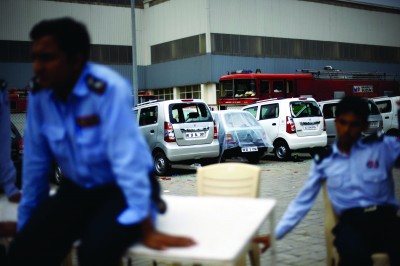
Don’t let him drink water because then he’ll also want to go to the bathroom

Photo credit: Ishan Tankha

My name is… let that be. Maruti Suzuki is out to get me, not because I did anything but because they want to put virtually every worker in jail, even those who belonged to the third shift and were not even present when violence took place in the Manesar factory on 18 July. I was present there and will tell you what happened, but to understand it you will have to let me begin from the beginning. Read more…

When the pseudo-sentiments of the pseudo-religious are pseudo-hurt

In neighbouring Pakistan, an Islamic cleric recently accused a young Christian girl, Rimsha Masih, of blasphemy, a charge punishable by life imprisonment. He said she had burnt some pages that contained verses from the Quran. The 14 year old girl hails from a poor family and suffers from Down’s Syndrome. An eyewitness to the event showed courage and told a magistrate the truth: it was the Muslim cleric who had put those burnt pages in Rimsha’s bag. The cleric has been arrested and is set, in turn, to be charged with blasphemy.

I have been thinking about the incident. Insulting somebody’s religion is bad. It may cause offence. Often it is intended to cause offence. If somebody insults Islam, by doing things like burning pages containing verses from the Quran, it is bound to outrage a Muslim. Continue reading When the pseudo-sentiments of the pseudo-religious are pseudo-hurt

Petition to Chief Justice of India – Remove Justice Bhaktavatsala of Karnataka High Court

On August 9, during the hearing of a matrimonial dispute, Karnataka High Court Judge K Bhaktavatsala told a young woman lawyer that she was unfit to argue the matter since she was unmarried. “Family matters should be argued only by married people, not spinsters. You should only watch. Bachelors and spinsters watching family court proceedings will start thinking if there is any need to marry at all. Marriage is not like a public transport system. You better get married and you will get very good experience to argue such cases,” he advised her.

Last week, hearing a case between a separated couple, in which the woman accused her husband of regularly beating her, the judge told the woman, “Women suffer in all marriages. You are married with two children, and know what it means to suffer as a woman. Yesterday, there was a techie couple who reconciled for the sake of their child. Your husband is doing good business, he will take care of you. Why are you still talking about his beatings?”

Justice Bhaktavatsala has shown grave disrespect towards the Indian Constitution, which he is sworn to protect, and which guarantees equal rights to all citizens, men and women. As such, he has revealed himself to be utterly unfit for his high office of responsibility.

Sign the petition asking the Chief Justice of India, Hon’ble Mr. Justice S.H. Kapadia, to remove Justice K Bhaktavatsala from his post for these appalling statements.

Cast Away Caste – Breaking New Ground …

‘Turn in any direction you like, caste is the monster that crosses your path. You cannot have political reform, you cannot have economic reforms unless you kill the monster.’

Annihilation of Caste, Ambedkar

‘If Lenin was born in India , he would not have even  let the idea of revolution come to his mind before he had completely  buried casteism and untouchability’

– Ambedkar

1.

The Indian left today presents a very contradictory picture. As opposed to many left formations/movements in different parts of the world which witnessed decline/3reverses after the Soviet collapse, it has been able to sustain itself and at places even expand itself. Yes, the movement is far from united, there are ruptures and divisions at various levels, which at times even prove deadly, but if one is able to look at the cumulative impact of what is known as left and contrast it with many other countries, situation does not appear that bleak.

It’s sustenance and continuation amongst heavy odds, does not mean that it is not beset with challenges. The challenge of outlining its emancipatory vision of social transformation for 21 st century, devising innovative strategies of mobilisation and rejuvenating itself organisationally still remains. It also needs to reboot itself to address few important issues which are of key importance for any radical restructuring of Indian society and state. Undoubtedly, its failure on this count has cost it heavily. Question of dalit emancipation or the whole struggle for annihilation of caste forms one such core issues which demand serious attention. Continue reading Cast Away Caste – Breaking New Ground …

Saving our heritage

The National Commission for Minorities (NCM) received a letter from the Jamiat-ul Ulama-e-Hind. The letter wanted 31 protected mosques to be opened for prayers. “Although the commission was not very keen that heritage monuments should be opened for prayers, it decided to suggest a joint survey for ascertaining the condition of these mosques.” Officials from the NCM, the Archaeological Survey of India (ASI) and the Wakf Board will carry out the joint inspection according to the suggestion made by the commission in its letter sent to the Ministry of Culture towards the end of July.

This reference made by the NCM needs to be looked at a little carefully, because the issue is not likely to remain restricted to these 31 mosques nor will it remain confined to Delhi. The reference impinges on questions of law and will eventually inform our attitude to the wider question of heritage protection. Continue reading Saving our heritage

India and Pakistan: Let people meet

This online petition has been put out by AMAN KI ASHA

The people of Pakistan and India, people of Indian and Pakistani origin around the world, and friends of India and Pakistan, are fed up of the visa restrictions that prevent them from visiting families in the other country. There isn’t even a tourist visa protocol between these two biggest neighbours of South Asia. People in the region want the right to travel and to trade, to walk along coastlines and roads that represent their collective past, to seek and spread harmony across a subcontinent not divided by politics and propaganda. In this modern age of interdependence, it is a tragedy that the citizens of India and Pakistan are left peering over a border made indomitable and intimidating. There is little space for the hand of friendship to be extended across this border. This must change.

The governments of India and Pakistan must:  Continue reading India and Pakistan: Let people meet

Are We Not Alive: Women’s Voices from Kudankulam

Guest post by ANITHA. S

As I sit here in my home village of Idinthikara watching the hot sun light up the waves rolling onto the shores, I think of the news that has hit the world today about the Koodankulam Nuclear Power Plant. All of you must have seen the news that Madras High Court has given the go-ahead for the KKNPP.

When we carried the dead body of democracy and burnt it in the outskirts of our village on Aug15th, 2012, little did we realize that so soon we would witness the real death of democracy. As this last nail is being tightened on our lives, we realize how insignificant has been our voice. But this has only strengthened our vow to be together. Continue reading Are We Not Alive: Women’s Voices from Kudankulam

On the International Day of the Disappeared: APDP

This press statement was issued yesterday, 30 August 2012, by the ASSOCIATION OF PARENTS OF DISAPPEARED PERSONS, the Bund Amira Kadal, Srinagar – 190001, Jammu and Kashmir
 
Today on the occasion of the International Day of the Disappeared, the Association of Parents of Disappeared Persons (APDP) organized a seminar on the International Convention for the Protection of all Persons from Enforced or Involuntary Disappearances and Institutional Violence and Denial of Justice by India. Various members of the Civil Society addressed the importance of the ratification of the international Convention against Disappearances.
Further, the Association of Parents of Disappeared Persons (APDP) today submitted 507 cases of enforced or involuntary disappearances from Baramulla and Bandipora districts to the State Human Rights Commission (SHRC) for conducting investigations. Continue reading On the International Day of the Disappeared: APDP

Coke Studio Pakistan – At a crossroads: Nandini Krishnan

Guest post by NANDINI KRISHNAN

Rohail Hyatt, producer of Coke Studio Pakistan

Khabaram raseedah…imshab
Khabaram raseedah imshab kih nigaar khaahi aamad

The words are beautiful; the voices that sing them mellifluous. And yet, I find that instead of being overwhelmed as I usually am by the qawwali of Fareed Ayaz and Abu Muhammad, enraptured by the transcendental waves of their music, parts of my consciousness are held down, niggled. Perhaps it’s the constant drumming and strumming, perhaps it’s the psychedelic sound waves zipping across giant screens, perhaps it’s the acoustics that throw back bits of the singers’ strains at them. But the Coke Studio version of Khabaram Raseedah doesn’t affect me the way even scratchy recordings of live, open-air concerts do. Continue reading Coke Studio Pakistan – At a crossroads: Nandini Krishnan

Copyrights versus The Right to Copy – A Normative Perspective: Rajshree Chandra

Guest post by RAJSHREE CHANDRA

For those not familiar with the recent spate of events at Delhi University; and for those who may have missed Lawrence Liang’s post, here’s a bird’s eye view: Impatient with an old gargantuan University’s obsolete ways, the authorities have attempted a make-over. As in all make overs, the old structure is retained but glossed over with cosmetic changes so as to appear ‘new’. So we have new hip courses, new syllabi content for old courses, new reading lists, new reading packages, new exam system, semesters and so on. Making all transitions possible of course, is a team of make-over artists. At one end of the set up are photocopiers like Rameshwari Photocopy Service located within the renowned Delhi School of Economics and Sociology; and at the other end, we the teachers. Reading material – by way of recommended articles, papers, chapters – was provided to the photocopiers by University faculty, who then made copies of them, segregated them year wise and instruction wise. The first page specified the semester for which the reading material was relevant, the ‘max marks’, the course objective and the syllabus all clearly outlined. Only after they were thus meticulously detailed were they spiral bound with the customary blue plastic cover and voila! Teachers and students alike had accessible reading and teaching material for all the new jazzed-up-courses. Emails circulated by departments instructed the college departments to use and recommend these dossiers; phone numbers of relevant photocopiers were given; and before long an entire chain of dissemination of this ‘new knowledge’ was established. It was all ‘official’. But more importantly, it was affordable, effective and terribly efficient. There was just one problem – it was in violation of the copyright law! The Rameshwari photocopiers were the new pirates!

Continue reading Copyrights versus The Right to Copy – A Normative Perspective: Rajshree Chandra

Quietly censors the nanny state: Mishi Choudhary


Guest post by MISHI CHOUDHARY

New Delhi’s Sanchar Bhawan, which houses the office of the Ministry of Communications and Information Technology

The recent curbs on social networking websites in India demonstrate the unpredictability of the legal environment, both for businesses and the citizens. Whether its the Government of India’s (GoI) insistence on getting access to corporate emails and text messages sent via BlackBerry devices, or changing stances on “pre-screening” user generated content, the authorities seem to be doing a tap dance around legal issues. The implementation of rules seems surreptitious as they are bent conveniently in the name of “security”. Continue reading Quietly censors the nanny state: Mishi Choudhary

Why is the Indian media building a case for internet censorship rather than against it?

Hundreds of webpages now stand blocked in India, the government has openly been appealing to internet companies to pre- or post-screen content and remove what the government wants it to remove. One Google Transparency Report after another has been revealing how the number one target of the government is criticism of politicians and government. Just imagine what would the Indian media’s response to such censorship have been like had it been hundreds of books or articles we were talking about? Instead of asking Facebook to ‘pre-screen’ our posts, had Kapil Sibal been asking for someone to pre-screen articles in the newspapers, would it not be like the Emergency?

Okay, point taken. Let us not trivialise the Emergency, which entailed jailing of dissidents and forced sterilisation and so on. But still, there’s so much internet censorship in India now that it is surprising that instead of outrage you find the Indian media actually building the case for censorship. What about hate speech, they ask. What about the trolls, Why is there so much abuse on the internet? Continue reading Why is the Indian media building a case for internet censorship rather than against it?

Borderline madness: Sajan Venniyoor


Guest post by SAJAN VENNIYOOR

Now that government agencies in India — some half a dozen of them working with the exceptional coordination we have come to expect from government agencies — have blocked Facebook accounts, Twitter feeds and YouTube videos supposedly originating in Pakistan, perhaps we could contemplate other trans-border electronic transgressions committed by our neighbours.

In August 2011, The Times of India reported that Punjab border farmers still tune into Pak FM radio stations. According to villagers on the fringes of Ferozepur, the limited range of India’s “national radio” broadcasts and the absence of any local FM station have made radio services from Pakistan the most popular source of entertainment in border areas.

About the same time last year, the Indian government had become alarmed by the popularity of Nepal’s FM radio channels in Bihar along the Indo-Nepal border. According to various sources, some half a dozen Nepal FM radio stations are broadcasting programmes – “anti-India advertisements and vulgar songs”, according to one outraged newspaper report – into Bihar, especially Madhepura, Supaul, Madhubani, Kishanganj, Araria, Sheohar, Saharsa, Muzaffarpur, and East and West Champaran districts.  Continue reading Borderline madness: Sajan Venniyoor

News pornography and mediated cultures of violence: Anirban K. Baishya, Shaheen S. Ahmed and Amit R. Baishya

Guest Post by ANIRBAN K. BAISHYA, SHAHEEN S. AHMED and AMIT R. BAISHYA

Satyamev Jayate, the popular Aamir Khan-helmed TV show, aired an episode in May this year that praised northeast India [an unfortunate “directional category” (Barbora) that homogenizes a complex, polyglot region] for its virtual absence of dowry-related crimes and its general “liberalism” on gender issues.  Subsequently, one saw a virtual deluge of “Proud to be from the northeast”- type of messages on social networking sites such as Facebook.  June and July, though, were cruel and dispiriting months that belied such declarations of identitarian pride, especially for people from Assam. Continue reading News pornography and mediated cultures of violence: Anirban K. Baishya, Shaheen S. Ahmed and Amit R. Baishya

Reading the Violence in Assam: Here and There: Musab Iqbal

Guest post by MUSAB IQBAL
… the fact that violence was not merely transitional, a birthmark or a departure, but a much more general and continuous aspect of modern life – Gyanendra Pandey

1.

The misreading or out of place reading of any local and contextual issue and putting it in a wrong frame can be very catastrophic. The recent episode of violence in Assam and the fury it triggered across the country is a classic example of such misreading. But apart from the misreading this complete episode is certainly indicator of certain other phenomenon underlying our fragile society.

Moreover it looks that this is not only adding to verbal construction of abuse but also a very controlled confusion working at someone’s behest. The rally and violence in Mumbai, Ranchi, and Jamshedpur whose motivating factor was this violence happening in northeast and cross border against “Muslims”. The other episode, which adds to cynicism, is through popular newspapers in South India and in Assam publishing that Assamese will be subject to target and then under the cloud of rumor and suspicion these residents of the state is forced to run.

Continue reading Reading the Violence in Assam: Here and There: Musab Iqbal

Another Onam – MB Manoj on Dalits, Onam and Malayali identity

Today is the first day of Onam – and MB Manoj reminds us about other histories of Kerala and other Malayali voices than those of the dominant Nair community.

The interview is entirely in Malayalam. But here’s a short account of what Manoj says in both videos below:

Reading Onam through the eyes of Dalits, the festival loses its “natural” association with the Malayali identity. In fact, in the words of Manoj – “Onam is a black day for Dalits, a day of murder, even as it is a day of happiness for the upper castes”. The coming of Onam also marks the coming of the caste system and slavery in Kerala. Manoj talks about Dalit cultural life in Kerala and its relation to Onam. There are folk songs which criticise the upper-caste nature of Onam and its vegetarianism. Similarly, there are songs which criticise the temple entry proclamation of Kerala. There is a realisation among Dalits that Onam is a celebration of the murder of their king by the upper castes. As part of this realisation, Dalit movements, and especially the Indian Dalit Federation, have observed hunger strikes during Onam days. Manoj reminisces participating in one of these hunger strikes in Idukki town in Kerala during his college days. Manoj stresses that most Dalits, tribals and backward castes eat meat during Onam and their culture fall outside the cultural milieu of Onam. Therefore, for the lower-castes, Onam is neither a cultural nor a national festival, but a festival of the upper-castes.


Memories of Drought: Bharat Patankar

Guest post by BHARAT PATANKAR

English translation of Marathi article published in Sakal

Some years had passed since the completion of the Koyna dam which was the basis for the all-round development of Maharashtra.   Electricity had begun to be produced from the water stored in the dam.   The campaign to bring electricity to the villages had begun.  An increase in industrial development also began to be felt; however the situation of agriculture was as shown in the film, “Mother Krishna is flowing calmly”.   The situation is described in the song, “Mother Krishna is flowing calmly, unaware of happiness or sorrow on her banks/ Limitless water flows without a break; nobody diverts it for irrigating the land/ how can this Ganges become fruitful to the lazy people?”   Such was the situation.  It was not only true for the Krishna.  It was also the case for the Godavari and Tapi.  Agriculture was still dependent on wells and rainfall for irrigation.  Aside from Mulshi, Rajewadi, Bhatghar and other dams of the British period and a few dams after independence, all of Maharashtra was like this.

The 1972-3 drought was general.  Continue reading Memories of Drought: Bharat Patankar

DISSENT, DEBATE, CREATE