
As the ASHA workers’ strike continues today despite pouring rain today, they have been subjected to a new line of attack. The BJP MP, Suresh Gopi, visited the protest site the other day. Nothing earth-shaking happened. No grand announcements of benefits were made; the striking workers did not hesitate to signal to him that he was speaking from a position of power, and hence the words offered were not enough.
Continue reading Fast and Fallacious: The CPM Acolyte’s Guide to Confusing PeopleTo the CM of Kerala: In solidarity with ASHA workers: Panchali Ray
The COVID-19 pandemic brought home that everything of value, beginning from the very regeneration of life, is entirely dependent upon human labour in all its diverse, productive and reproductive forms. Yet, this life-making regenerative labour is pegged at the lowest level when it comes to recognition, rights, entitlements, and status in the labour market. While this is a no-brainer when it comes to governments committed to capitalism that rely on women’s unpaid/partially paid labour to drive development schemes, one wonders how the government of Kerala, committed to a more egalitarian political economy, unleashes violence of such magnitude on grassroot women workers.
Continue reading To the CM of Kerala: In solidarity with ASHA workers: Panchali RayWho’s Lying? Condemn the Brazen Attack on S Mini: Althea
As the ASHA workers’ resolve continues to remain unbroken in the third week of their struggle, the CITU leadership in general and the CPM cyber spokesmen in particular are losing their cool completely. S Mini is a familiar figure to people in Thiruvananthapuram in the many battles for justice that we have witnesses over the past twenty years . She is among the few women in Kerala who have embraced a full public life without desire for power, status, or visibility. The organisation she is part of, the SUCI, has long suffered ridicule. The big bully of left politics in Kerala, the CPM, has long tried to pick on them. Like all bullies, the latter keeps talking of how small they are.
Continue reading Who’s Lying? Condemn the Brazen Attack on S Mini: AltheaICAN stands in solidarity with Kerala ASHA Health Workers Association (KAHWA)
The Indian Community Activists Network (ICAN) extends it unwavering
support to the striking ASHA workers led by the Kerala ASHA Health
Workers Association (KAHWA).
ASHA workers, at the grassroots level, are the main workforce of the public health sector. However, the succeeding governments at the Centre and states have always refused to recognise their immense value to the poor and needy in the rural India. They serve village folk and carry the health messages to the doorsteps of every household.
Despite their great service they are the lowest paid employees who are
euphemistically known as volunteer-workers. Using this title, the
government has abandoned its responsibility to pay them a decent salary. We are dismayed to note that the situation is no better in a state like Kerala ruled by LDF which boasts of speaking for the poor.
Friends, your demand to raise your remuneration up to Rs. 21,000 is just in view of the minimum wage Rs. 18,000 of an unskilled industrial worker approved by the government. ICAN hopes that the LDF government sees merit in all five demands raised by you and act in a reasonable manner by accepting them. We are confident
of your success.
In solidarity
Arvind Murti
Medical Professionals in solidarity with the striking ASHA workers of Kerala
28th Feb 2025
Kerala’s public health system, the pride of the state, stands on the labours of many groups of people who are neither paid well nor recognized enough. The ASHA workers form one such important group who reach out to Kerala’ those sections of the lower middle class and the poor sections who cannot afford expensive private care. They are our vital health support structure in the event of pandemics and natural disasters, too. In Kerala, in the past decade we have known at least in two moments of crisis – the floods of 2018 and the pandemic – how crucial this force is in containing disease and keeping up the morale of people even in the remotest locations. As Kerala’s public health system gears up for further challenges, the workloads of these workers will only increase; the current workloads they carry, of carrying out numerous health surveys is already huge indeed.
Continue reading Medical Professionals in solidarity with the striking ASHA workers of KeralaOpen Letter to the Kerala Chief Minister about the Ongoing ASHA workers’ strike: Cynthia Stephen
Respected sir,
As a long-time advocate for the rights of women and their empowerment, we are used to comparing the situation of women in Kerala as a good model for women’s empowerment in all fields of life. The history of workers’ struggles and the fact that even women in the informal sector receive government benefits after retirement is a shining example to the rest of the world.
Continue reading Open Letter to the Kerala Chief Minister about the Ongoing ASHA workers’ strike: Cynthia Stephen‘Anarchists’? ‘Tin-pan fund collectors’ Movement’? What is the Kerala Asha Health Workers’ Association?
In the past few weeks, the CPM ministers, CITU leaders like Ilamaram Kareem and CPM cyber propagandists have been relentless in their attack against the SUCI, heaping on them insult after insult. The preferred insults have been ‘anarchists’ and ‘tin-pan fund collectors’. The SUCI is a small group of committed people who have however produced significant political impact. They have indeed been a thorn in the flesh of the local CPM for quite some time — from at least the anti-waste dumping struggle at the panchayat of Vilappilsala in 2012 to the K-Rail protests, the SUCI’s intrepid persistence was important in forcing the government to back off. These insults are not new either; we have been hearing them since back in 2012 or earlier. But the Kerala Asha Health Workers’ Association has been especially targeted for slander, as though they were just a tool of the SUCI.
Continue reading ‘Anarchists’? ‘Tin-pan fund collectors’ Movement’? What is the Kerala Asha Health Workers’ Association?Find a solution to the strike by ASHA workers in Kerala: Statement by Writers and Socio-Cultural Activists
We request the Kerala Government to take necessary actions to end the day/night strike of the Accredited Social Health Activist (ASHA) workers in front of the Kerala secretariat for the last 17 days by meeting their just demands. ASHA workers were the backbone of our valiant fight against the COVID-19 pandemic. However, their work is not acknowledged by our society or our government. The honorarium they receive is paltry compared to the important work they are
doing.
This is NOT a law and order problem: The ASHA Workers’ Strike in Kerala– Althea
Now that the ASHA workers’ strike in Thiruvananthapuram has entered its third week and public support for the workers is growing, the Kerala government, instead of trying to solve the issue, is resorting to an age-old tactic: of turning this into a law-and-order issue. Provoked by the sizeable support the workers have garnered from civil society, the police have issued notices to fourteen public intellectuals and activists who participated in the mahasangamam meeting two days back, which was a massive success despite all the threats. They have been ordered to appear at the police station within 48 hours, and accused of disturbing order and obstructing traffic.
Continue reading This is NOT a law and order problem: The ASHA Workers’ Strike in Kerala– AltheaOpen Letter to the Kerala CM : The Need for Grace and Empathy in the State’s Response to the ASHA Workers’ Strike: Rajesh Ramakrishnan
Dear Chief Minister Pinarayi Vijayan
It is distressing to read the news of the way in which the ASHA workers’ strike in Kerala is being handled. To say that ASHA workers are being misled by anarchist organisations, as one of your senior leaders did, is to deny their own agency as they agitate for their just demands. It is wilful forgetting of the long history of trade unionism and social activism in the state, which contributed to the famed Kerala model of development.
Continue reading Open Letter to the Kerala CM : The Need for Grace and Empathy in the State’s Response to the ASHA Workers’ Strike: Rajesh RamakrishnanStrikedenigrating, Ilamaram Kareem Style: The ASHA Workers’ Strike in Kerala
After branding the ongoing ASHA workers’ strike in Kerala, now in its third week, as ‘unnecessary’, the CPM, the leading constituent of the ruling LDF, is now proceeding to stage 2 of strike-denigrating, deploying its master-strike-denigrator — the ex-Minister and CITU leader Elamaram Kareem. This man is notorious for his anti-people stance in many earlier workers’ struggles, notably the epic struggle to end the terrible pollution of the Chaliyar river by Birla’s factory there. The full misogyny that defines the present-day CPM leadership in Kerala, as well as its reeking elitism, may be found in the ugly article that he wrote in the CPM’s organ, Deshabhimani a couple of days back. Despite the CPM’s claims about ‘women’s empowerment’, if one takes Kareem seriously, it now firmly believes that the public care work that the ASHAs do are only ‘service’ and that they are ‘not workers’.
Continue reading Strikedenigrating, Ilamaram Kareem Style: The ASHA Workers’ Strike in KeralaLetter to the Kerala CM from a Concerned Citizen about the ASHA Workers’ Strike: ARCHANA RAVI
Dear Chief Minister,
In the democracy of our dreams, you, I and Asha workers are equal. But in this world, a (yet to be identified) person shouted at Asha workers from the first floor of the health minister’s official residence and they had to return without meeting the minister. A huge reason why the health department was praised by the world was the labour of these women. The minister’s demeanour towards them makes me wonder if she has forgotten this.
Continue reading Letter to the Kerala CM from a Concerned Citizen about the ASHA Workers’ Strike: ARCHANA RAVIThe Fight is Not Just About Better Pay: Solidarity with the Striking ASHA Workers of Kerala : TTCU
The Tamil Nadu Textile and Common Labour Union (TTCU) stands in solidarity with the ASHA workers of Kerala, whose strike has now entered its third week. As a women’s trade union we understand how difficult it is for women workers to step away from their responsibilities and take to the streets. It is never an easy decision, but one that becomes necessary when all other avenues to have their voices heard are exhausted.
Continue reading The Fight is Not Just About Better Pay: Solidarity with the Striking ASHA Workers of Kerala : TTCU‘पवित्र स्नान’ का दूसरा पहलू : क्या महाकुंभ में सरकारी लापरवाही से लोग बेहद गंदे पानी में नहाते रहे?

आस्था और गंदगी सहयात्री रहते आए हैं। आस्था के तमाम जाने-माने केन्द्रों पर या अपनी आस्था को सेलिब्रेट करने के नाम पर मनाए जाने वाले समारोहों में-प्रचंड ध्वनि प्रदूषण और रौशनी का प्रदूषण आदि के माध्यम से-इसकी मिसाल अक्सर देखने को मिलती है। प्लास्टर ऑफ पेरिस की मूर्तियों से भरे गंदे जलाशय-जिनकी मौजूदगी पानी के ऑक्सीजन की मात्रा पर विपरीत असर डालती है, पानी में ही फेंकी गयी सूखे फूलों की मालाएं आदि आदि से महानगर भी अछूते नहीं रहते हैं।
इस सम्बन्ध में ताज़ी मिसाल महाकुंभ के बहाने से उजागर हुई है, जब केन्द्रीय प्रदूषण नियंत्रण बोर्ड (CPCB) की रिपोर्ट ने इस बात को उजागर किया कि किस तरह प्रयागराज के पानी में उन्हें उच्च स्तर पर मल के जीवाणु मिले हैं, जो किसी भी सूरत में नहाने योग्य नही है। इस सिलसिले में नेशनल ग्रीन टिब्यूनल ने उत्तर प्रदेश प्रदूषण नियंत्रण बोर्ड (UPPCB) के अधिकारियों को तलब भी किया है कि ‘प्रयागराज/इलाहाबाद में गंगा, यमुना के पानी की गुणवत्ता के उल्लंघन को लेकर-उन्होंने जो दिशानिर्दश जारी किए थे उस पर उन्होंने अमल नहीं किया है।
गौरतलब है कि राष्ट्रीय ग्रीन टिब्यूनल (NGT) ने उत्तर प्रदेश प्रदूषण नियंत्रण बोर्ड की इस बात के लिए भी आलोचना की है कि अपनी जो रिपोर्ट उन्होंने प्रस्तुत की है, उसके सैम्पल पुराने है और सभी 12 जनवरी के पहले के-अर्थात कुंभ मेला शुरू होने के पहले के है। ….
…निस्संदेह महाकुंभ के अवसर सीवेज युक्त पानी को लेकर उठे सवाल अब दबना मुश्किल है। सरकार जो भी प्रचार करे, अधिक से अधिक लोग अब इस बात का अनुभव करेंगे कि गंगा किनारे उन्होंने जो ‘पवित्र स्नान’ किया उस वक्त वह पानी कत्तई शुद्ध नहीं था। यात्रियों का एक छोटा सा हिस्सा अब यह कहने का साहस भी जुटाएगा कि किस तरह सत्ताधारी समूह ने उनकी धार्मिक आस्था का दोहन किया है। [ Read the full article here :https://janchowk.com/beech-bahas/the-other-aspect-of-the-holy-bath/]
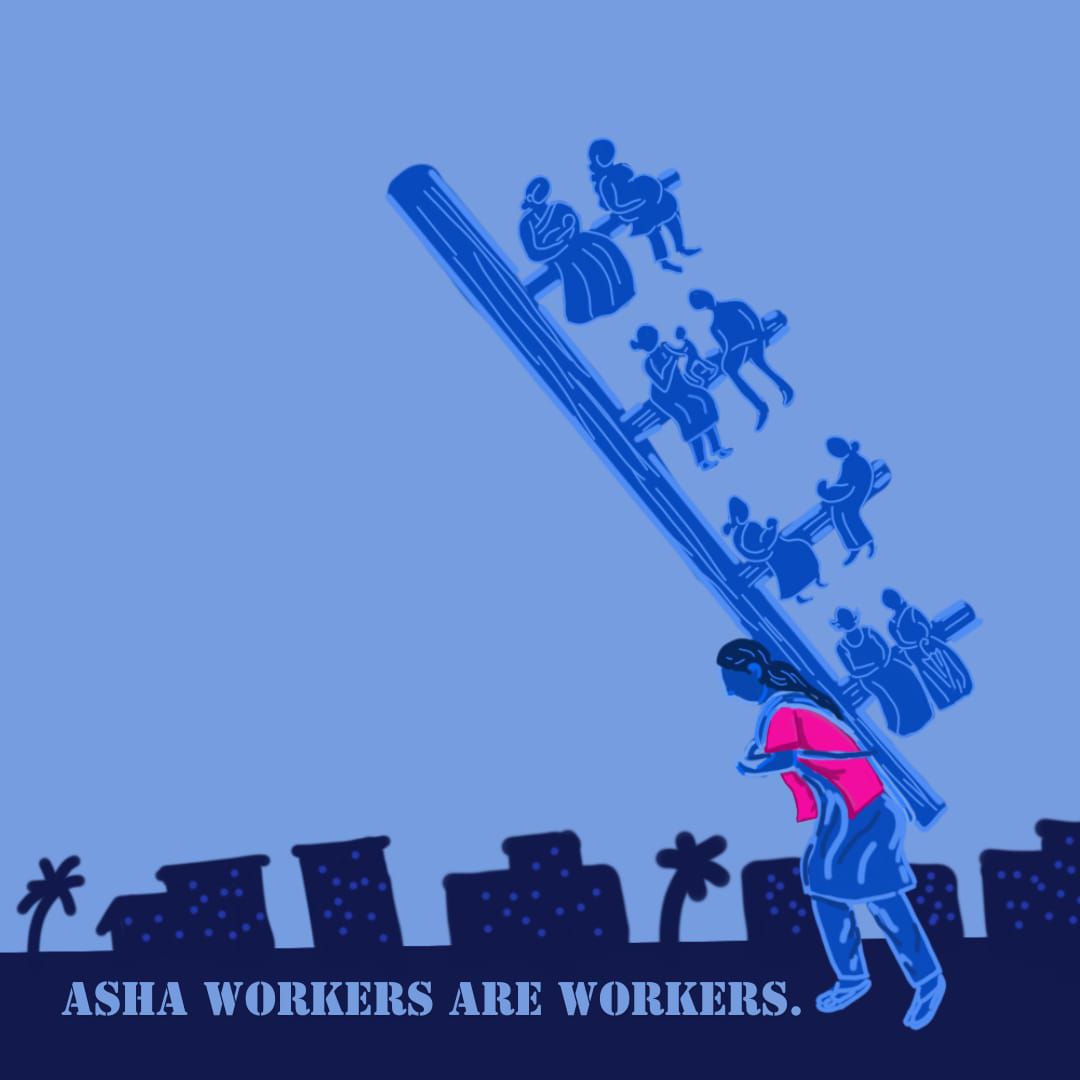
Care work is work: in solidarity with the striking ASHA workers in Kerala: Sustainable Kerala Menstruation Collective
ASHA workers, the backbone of community healthcare, are neither privileged nor part of the ruling class. They receive honorariums, not wages, for their essential services. This constitutes a clear instance of labor exploitation and informalisation, a practice ironically reminiscent of the current government’s own historical roots in worker strikes dating back to the 1920s. Today, Dalit, Bahujan, and Adivasi women are leading the charge in this strike, demanding recognition as workers entitled to dignified working conditions and a basic living wage.
Continue reading Care work is work: in solidarity with the striking ASHA workers in Kerala: Sustainable Kerala Menstruation CollectiveSupport the ASHA Workers’ Strike in Kerala: An Appeal to Women’s Organisations, Trade Unions, and Malayalis around the World : Althea
The ASHA workers’ strike in Kerala is entering its third week. We are appalled by the CPM-led government’s apathy and the disgusting ignorance of the CPM’s own history of trade unionism displayed by their spokespersons in the media. Maybe the forgetfulness of history is deliberate, because the CPM can no longer continue to nurture even minimally the ‘party of the poor’ image that it built in the middle decades of the twentieth century. While the ASHA workers were on strike in front of the State Secretariat and an ASHA Workers’ mass meet called by the striking association drew a very large number of such workers to the capital city, the government was busy holding an investors’ meet. Such a government cannot be expected to be attentive to the needs and rights of the workers, perhaps.
Continue reading Support the ASHA Workers’ Strike in Kerala: An Appeal to Women’s Organisations, Trade Unions, and Malayalis around the World : AltheaShould Faith be Used to Brush Away Filth?
Did Hindutva supremacists make devotees bathe in polluted sewage water during the Mahakumbh?
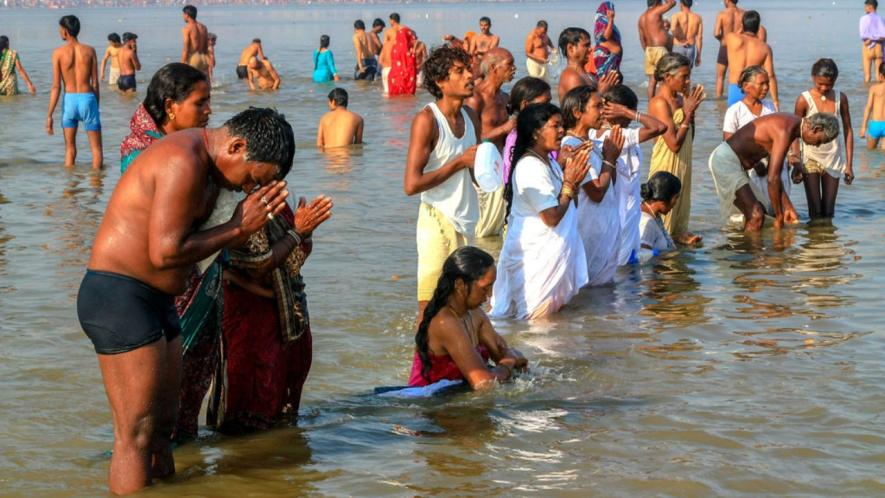
Faith and filth have an uncanny existence together
The latest in series happens to be the report by the Central Pollution Control Board (CPCB) underlining how they have found high faecal bacteria levels in Prayagraj river water, which fails bathing standards and the summoning of the Uttar Pradesh PCB (UPPCB) authorities by National Green Tribunal (NGT) over non-compliance of directives regarding ‘serious water quality violation in Ganga, Yamuna at Prayagraj’
The fact is that NGT has repeated itself when it said that high levels of faecal and total coliform were found at various locations at the Maha Kumbh, during a hearing on allegations that untreated sewage has been discharged into Rivers Ganga and Yamuna in Prayagraj.
Will the UP Chief Minister Yogi Adityanath’s rejection of this report on the floor of the House and underlining that the water at the Sangam was fit for ‘drinking’ serve any purpose when NGT grills the UPPCB authorities over non-compliance of their directives issued earlier over the quality of water?
Any sane person would know the answer.
May be in a bid to appear uncompromising or cover his own nervousness over the developments, Adityanath tried to question the veracity of this report – in an indirect way – by condemning people who spread misinformation against “Sanatan Dharma, Maa Ganga, and India” and warning them that they were attacking the “faith of those 56 crore people who had taken a bath there.”
( Read the full article here : https://www.newsclick.in/should-faith-be-used-brush-away-filth)
Whether AAP’s Defeat Can Become a Wake Up Call for New Cheerleaders of Hindutva Lite Politics!
Time for Ideological Politics Now !

“ Do Not Put Each Foot in a Different Boat.”
– Chinese Proverb
A defeat in elections should not be The End of politics for a political party.
There are examples how parties who were humbled in one election could bounce back with huge majority in next elections.
It is a different matter that with AAP ( Aam Aadmi Party) things seem to be unfolding in rather unpredictable ways, thanks to its rather unceremonious exit from the citadels of power in Delhi and defeat of all its top leaders in the recently held elections to the assembly.
Nobody would have imagined that its Supreme Leader would feel so insecure after the loss that he will summon all MLAs of his party – which is leading the government in neighbouring Punjab – to the national capital the very next day for consultation or may be sweet talk.
No doubt it did give way to speculations about increasing disgruntlement within his party and its legislators and their being in search of greener pastures.It also rekindled debate about the personality centric functioning of the AAP or how a close confidante of Kejriwal was appointed on a key post under Bhagwant Mann – Chief Minister of Punjab – last year itself which was construed as clipping of his wings by the opposition. ( Read the full article here : https://countercurrents.org/2025/02/whether-aaps-defeat-can-become-a-wake-up-call-for-new-cheerleaders-of-hindutva-lite-politics/
Anti-Colonial Constitutionalism and the Defence of India’s Democracy
Democracy Dialogues Series 37
Organised by New Socialist Initiative
Theme : Anti-Colonial Constitutionalism and the Defence of India’s Democracy
Speaker : Prof Sugata Bose
Gardiner Professor of Oceanic History and Affairs, Harvard University, ex Member of Parliament
Continue reading Anti-Colonial Constitutionalism and the Defence of India’s Democracyहिन्दुत्व के कल्पना-लोक में स्त्री और RSS के लिए उसके अतीत से कुछ सवाल
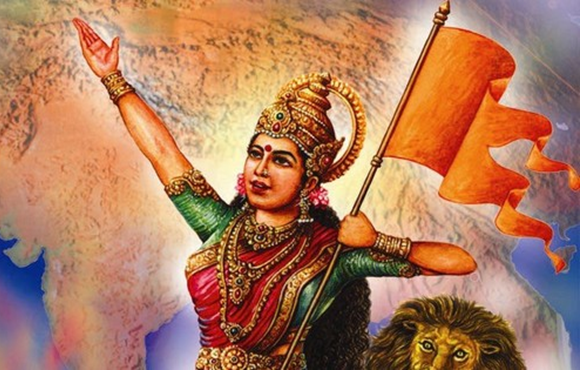
[मध्ययुग में पश्चिमी जगत में आधुनिकता के आगमन ने धर्म के वर्चस्व को जो चुनौती दी थी, भारत में अंग्रेजों के आगमन के बाद पैदा हुई परिस्थितियों और राजनीतिक आजादी ने यहां धर्म के प्रभाव को और अधिक सीमित कर दिया। रूढ़िवादी, प्रतिक्रियावादी ताकतों ने समय-समय पर इस बदलाव को बाधित करने की कोशिश की। संविधान निर्माण से लेकर स्त्रियों को अधिकार-संपन्न करने के लिए ‘हिन्दू कोड बिल’ को सूत्रबद्ध एवं लागू किए जाने का हिन्दुत्ववादी ताकतों ने जिस तरह से विरोध किया, ऐसी ही बाधाओं का ही परिणाम रहा कि डॉ. आंबेडकर को नेहरू के मंत्रिमंडल से इस्तीफा देना पड़ा। यह आलेख संविधान-निर्माण के दौरान स्पष्ट तौर पर उजागर हुए राष्ट्रीय स्वयंसेवक संघ के स्त्री-विरोधी विचारों एवं सक्रियताओं की पड़ताल करता है]
वह 1936 का साल था, जब राष्ट्रीय स्वयंसेवक संघ (RSS) के विचारों एवं कार्यों से प्रभावित होकर नागपुर निवासी लक्ष्मीबाई केलकर (1905-1978) ने संघ के संस्थापक सदस्य डॉ. केशव बलिराम हेडगेवार से मुलाकात की और संघ से जुड़ने की इच्छा जाहिर की थी। सुश्री केलकर- जिन्हें बाद में लोग मौसीजी नाम से पुकारने लगे थे- को यह कतई उम्मीद नहीं रही होगी कि संघ सुप्रीमो इस प्रस्ताव को ठुकरा देंगे और उन्हें सिर्फ स्त्रियों का संगठन बनाने की सलाह देंगे। ‘’राष्ट्र सेविका समिति’’ की स्थापना की यही कहानी बताई जाती है, जिसे आरएसएस का पहला आनुषंगिक संगठन भी कहा जा सकता है।
राष्ट्र सेविका समिति की जब स्थापना हुई, तब RSS का निर्माण हुए 11 साल का वक्फा गुजर चुका था। वह दौर औपनिवेशिक शासन के खिलाफ तथा सामाजिक उत्पीड़न से मुक्ति के लिए उठी हलचलों का था, जिसमें स्त्रियों ने बढ़-चढ़ कर हिस्सा लिया था। भारतीय राजनीतिक-सामाजिक जीवन में जबरदस्त सरगर्मियों के इस दौर में संघ संस्थापक महानुभावों में से किसी को भी यह खयाल तक नहीं आया था कि आबादी का आधा हिस्सा स्त्रियां उनके नक्शे से गायब हैं। वैसे, उन्हें इस बात का एहसास होता भी कैसे क्योंकि इन दोनों किस्म की हलचलों से उन्होंने दूरी बना कर रखी थी और अपने बेहद संकीर्ण व असमावेशी नजरिये के तहत संगठन बनाने में जुटे थे। धर्म आदि के आधार पर जिन्हें वह ‘अन्य’ समझते थे, उनको लेकर अपनी एकांगी सोच के प्रचार-प्रसार में सक्रिय थे। ( Read the full article here : :https://followupstories.com/politics/women-in-hindutva-ideological-realm-and-historical-blunder-of-rss/)
 KAFILA - COLLECTIVE EXPLORATIONS SINCE 2006