Love in the Time of Public Despair: Remembering Kamala Surayya

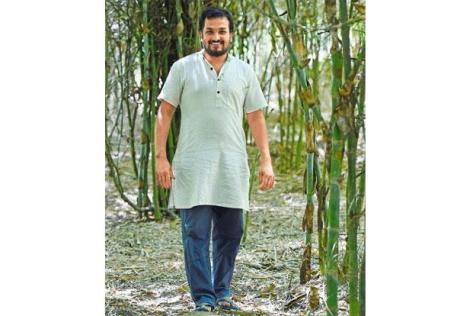
31 May passed like any day in present-day Kerala – filled with the cacophony of mediocrities and expressions of greed, envy, and hate which have become the new normal. No wonder, then, that most people did not remember that this was the poet Kamala Das/Madhavikkutty/ Kamala Surayya’s death anniversary. I cannot help recollecting that I had predicted that this would happen: that people here would celebrate her death, display sickening sentimentality, and then quickly forget. In life and in death, Surayya never received the critical attention that she deserved as a thinker, nor did those interested in progressive left politics take her forays into politics seriously. In these times of despair, one must, however, turn to her …

Read more on:

http://www.thehindubusinessline.com/blink/know/seeking-rhyme-in-reason/article8737506.ece


Stop Trying to Portray Us as Extremists: Dalit Human Rights Movement

The police investigation about the bomb blast at the Kollam Collectorate on 15 June 2016 has now turned against us. Neither the organization nor its activists have any involvement in this incident. The accusation against us is just a ploy to use draconian laws such as the UAPA to destroy dalit-adivasi resistance.

The demeaning and enslaving social norms in Kerala have, since centuries, denied dalit people the most basic human rights such as the right to education, the right to decently clothe one’s body, the right to travel on public roads, and express one’s views. But India became a democracy that aimed for social democratisation, and Dr B R Ambedkar raised the possibility of social equality and reservations for the underprivileged groups through the Indian Constitution. Yet, sixty-five years later, the classes fundamental to this society have made no social, economic, or cultural progress and they continue to endure caste slavery and and exploitation in all areas of public life. The mainstream political parties who surfaced as the protectors of these classes have never offered them complete protection at any time. Though they have been faithful followers and workers of these parties, members of the disadvantaged groups have had little economic security; they have lacked social education; they have had to cry out for tiny parcels of land. Continue reading Stop Trying to Portray Us as Extremists: Dalit Human Rights Movement

Crushing Dignity, Force-feeding Honour: The CPM is Back in Form Again!

The hunt, it seems, is on again. The CPM in power has begun to show its fangs again, and shamefully, they seem to threaten only dalit people who refuse and criticise their disciplinary/welfarist embrace.  In north Kerala, two dalit women were arrested for having allegedly attacked a DYFI leader who abused them in casteist terms. In the south, the persecution of the Buddhist Dalit Human Rights Movement (DHRM)seems to have begun afresh, with the police and the press foisting on them responsibility for the recent bomb blast at the premises of the Kollam Collectorate. The two women mentioned belong to the Congress party; as for the DHRM, the CPM has had a long-standing grouse against them, carried forward now from their last term in power. I am not sure, but the recent ouster of Laha Gopalan, the leader of the Chengara land struggle in the wake of the CPM’s return to power, could be part of this story too. I have no love lost for that man, who evoked the name of Ambedkar but ran the village set up by the landless in Chengara like a crude caste headman. But the timing of his expulsion and the way the village seems to be under the thumb of the police arouses discomfort. Continue reading Crushing Dignity, Force-feeding Honour: The CPM is Back in Form Again!

Of men, women, caste and cinema: Rita Kothari

Guest post by RITA KOTHARI

 “Woh kam-jaat  ladka hai. Phir kaise uske saath bhag gayi?  Sochna tha na  pehle?”  (He is a low-caste boy, why did she elope with him then? Shouldn’t she have thought of this?”)

Vimala’s judgment was unequivocal. She was talking about Hansa, her neighbour  and my former ‘help.’  Hansa  is  a young girl , perhaps seventeen,  and she  recently eloped with a boy. I stopped myself from saying anything facile, as yet.

“Ab pyaar poochhke to hota nahin, “ I said to her.  Love seeks no permission.

To bhugatna bhi padta phir.”  Then be ready to suffer, Vimala quipped.

She went on to tell me about an incident she had witnessed in her village,  about 30 kilometers away from the big town of Dungarpur in Rajasthan. A Rajput girl and Sewak boy eloped. They settled down in some city, and ten years went by. Meanwhile the girl had a child and was carrying her second baby. Her family had managed to track her whereabouts and convinced that she would be welcome home. The couple returned to the village for a visit. One night the girl’s brother put out lights in the entire village. The young couple was killed.

Poore gaanv ki bijli band kar di, aur maar dala dono ko. Humne dekha apni aankhon se,” Vimala said.

I stood transfixed. What was more accurate here, fiction or life?  I had just returned from watching the  Marathi film, Sairat.

Continue reading Of men, women, caste and cinema: Rita Kothari

A Case for Animals against Executive Culling: Arjun Joshi

Guest post by ARJUN JOSHI

The issue with killing animals highlights an anomaly of sorts. These animals survive on the borders of our moral concepts; the consequence is that we sometimes find ourselves according them a divine moral status, while at other times denying them even basic moral status. Prakash Javadekar, the Union Minister of State for Environment, Forests and Climate Change, recently sanctioned the mass-killing of wild boar in Uttarakhand, nilgai in Bihar and rhesus monkey in Himachal Pradesh. More animals such as peacocks (Goa) and wild elephants (West Bengal) have been declared to be vermin by the state governments, paving the way for their culling too.

Javadekar’s defence is that his orders are premised on complaints his Ministry has received from multiple State governments claiming that the animals are damaging farm-lands.

Construing the actions of an individual, irrespective of their arbitrariness, risks confusing the symptom for the disease. Today, Mr. Javadekar’s actions are based on an ill-informed interpretation of the Wildlife Protection Act of 1972. The Act stipulates the protection of all wild species, barring vermin. By definition, vermin include common crows, fruit bats, mice and rats. A notable exception is made when there is a direct threat to human life by wild animals, and it requires immediate intervention. Apart from these, arguably, justified reasons, the Ministry is disallowed from ordering culling of any other animal. Unfortunately, Mr. Javadekar has bypassed the existing framework, by opting to declare an entire species as vermin – the convenient route out of planned and strategized animal management.

Continue reading A Case for Animals against Executive Culling: Arjun Joshi

[Audio: Hindi] Prashant Jha on Upper Caste Madhesis taking the Sorry Pledge

In the second instance of what I hope will become a regular feature on Kafila, I caught up with fellow journalist and Kafila contributor Prashant Jha on the We Are Sorry Campaign for Social Reform in Madhes , where upper-caste Nepali Hindus acknowledge they have benefited from the centuries long oppression of pretty much everyone else.

In our conversation Prashant addresses the substantive and well-founded criticism of the pledge [another example of upper-castes setting the terms of debate and discourse, largely symbolic] as well as broader questions of Nepali politics and nation-hood.

He will respond to comments on this site. Let me know if there are any particular themes you would like us to explore in our new audio work. All audio files in this series are freely downloadable, and shareable – so you can download them to your phone and listen on your commute to where ever.


Resist the Modi Regime’s Assault on Students, Reject the Subramaniam Panel Report on Student Politics: Shehla Rashid

Guest Post by Shehla Rashid

When politics decides your future, decide what your politics should be !

Shehla Rashid (AISA), Vice President JNUSU, speaks at a student protest, during the 'Occupy UGC' Movement
Shehla Rashid (AISA), Vice President JNUSU, speaks at a student protest, during the ‘Occupy UGC’ Movement

The recent government constituted panel‘s (headed by former cabinet secretary T.S.R. Subramaniam) report on student politics is unconstitutional, highly regressive and politically motivated, and signals the upcoming onslaught of total commercialisation of education and imposition of Hindutva ideology in universities. The TSR Subramaniam Panel’s report is the logical follow up to the Birla Ambani report (which was submitted in 2000), following which student unions across the country were banned. The Birla Ambani report had lamented that student unions are not allowing commercialisation of education: we accept the charge and take pride in it! We believe that education should be a right of everyone, not a privilege of a handful of people.

Continue reading Resist the Modi Regime’s Assault on Students, Reject the Subramaniam Panel Report on Student Politics: Shehla Rashid

An Open Letter to the DU Teachers from a DU Student – I Stand with You: Fatma M. Khan

Guest post by FATMA M. KHAN

Dear teachers,

After three years at the Delhi University, I have been disillusioned with a lot of things. But one thing which never ceases to surprise me is the tireless effort put in by a lot of you to create something better. It is often against the system, against the apathy of the students, against the examinations which reduce texts to regressive questions. This is for you.

This is for the teachers who hated the FYUP programme, but still tried hard to create meaningful project topics for the foundational courses out of the juvenile textbooks we had, not caring about the extra correction this created for themselves. This is for the teachers who went out of their way to conduct thought-provoking discussions on “Integrating Mind, Body and Heart”, a course which had no marking. Continue reading An Open Letter to the DU Teachers from a DU Student – I Stand with You: Fatma M. Khan

Indian Feminists In Solidarity with Dr. Homa Hoodfar

This statement was sent to the Iranian authorities and the Iranian Embassy in Delhi yesterday.

Here is a link to one of Prof Hoodfar’s most influential essays, “The veil in their minds and on our heads.”

homa_hoodfar

We, the undersigned, are in solidarity with Dr. Homa Hoodfar, a Canadian anthropologist of Iranian origin who has been imprisoned by the Iranian authorities on June 6, 2016. Dr. Hoodfar is a respected academic scholar and researcher on women and family in the Middle East and the Muslim world.  She travelled to Iran in March 2016 to visit family and for research on women’s participation in public life.

Prior to her arrest, the Iranian Revolutionary Guard interrogated Ms. Hoodfar repeatedly without the presence of a lawyer, searched and seized her belongings including passport, phone and laptop.  Ms. Hoodfar fully cooperated with the process and has been very respectful of the domestic Iranian judicial system.  Since her arrest however, her family, colleagues and supporters in Iran were left with no choice but to go public with the news of the arrest.

Iranian authorities have given no reason for the arrest and the charges under which she has been held.  She has not been granted access to her family or legal counsel.  Dr. Hoodfar, aged 65, is not in good health and has already suffered from a mild stroke in 2015.  Her family is concerned about her health and fears she may not have access to the specialized care that she requires. Continue reading Indian Feminists In Solidarity with Dr. Homa Hoodfar

रौशनी के बीज बोने का माददा – ‘अंधविश्वास उन्मूलन’ पुस्तकत्रयी के बहाने चन्द बातें 


(‘पहल’ के आगामी अंक हेतु )

Andhavishwas Unmoolan : Vichar - 1

1.

स्मशान में कवि सम्मेलन और वह भी अमावस की पूरी रात।

पिछले साल के अन्त में पुणे से आयी इस ख़बर की तरफ बहुत कम लोगों का ध्यान गया था। ( देखें इंडियन एक्स्प्रेस 14 नवम्बर 2015) उधर शहर में लोग दीपावली मना रहे थे और वहां सैकड़ों की तादाद मंे एकत्रित लोगों के बीच कविताएं पढ़ी जा रही थीं, एक कविता संग्रह का विमोचन भी हो रहा था, कुछ सांस्कृतिक  समूह भी बीच बीच में अपनी प्रस्तुतियां दे रहे थे। पुणे के उपनगर बोपोडी की स्मशानभूमि का परिसर उस अलग ढंग के कार्यक्रम का गवाह बना था।

‘अमावस्या की पवित्र रात में स्मशान में कवि सम्मेलन’ शीर्षक से आयोजित इस कार्यक्रम के मुख्य आयोजक थे , महाराष्ट्र अंधश्रद्धा निर्मूलन समिति – जिसके निर्माण में शहीद विचारक डा नरेन्द्र दाभोलकर ने पहल ली थी – तथा सिद्धार्थ संघ और सिद्धार्थ महिला संघ। समिति के सदस्यों द्वारा गाया एक गीत काफी चर्चित हुआ, जिसके बोल थे ‘बो रहे हैं हम प्रकाश बीज’। भूतों-प्रेतों के ‘अस्तित्व’ या उनके ‘विचरण’ को लेकर समाज में व्याप्त भ्रांत धारणाओं को चुनौती देने के लिए अंधश्रद्धा निर्मूलन समिति के बैनर तले आयोजित इस कार्यक्रम ने बरबस कुछ समय पहले कर्नाटक के बेलागावी सिटी कार्पोरेशन के अन्तर्गत आते वैंकुंठ धाम स्मशान में हुए एक अन्य आयोजन की याद ताजा कर दी थी,  जहां कर्नाटक के उत्पादनशुल्क/एक्साईज मंत्राी जनाब सतीश जरकीहोली ने सैकड़ों लोगों के साथ वहीं रात बीतायी थी अंौर वहां भोजन भी किया था। याद रहे कि महाराष्ट्र की तर्ज पर कर्नाटक विधानसभा में अंधश्रद्धा विरोधी बिल लाने में अत्यधिक सक्रिय रहे मंत्राीमहोदय दरअसल लोगों के मन में व्याप्त इस मिथक को दूर करना चाहते थे कि ऐसे स्थानों पर ‘भूत निवास’ करते हैं। Continue reading रौशनी के बीज बोने का माददा – ‘अंधविश्वास उन्मूलन’ पुस्तकत्रयी के बहाने चन्द बातें 

India vigils in memory of Orlando shooting victims

FROM ORINAM

The mass shooting in Pulse, a gay nightclub in Orlando, Florida, US, on the night of June 11, resonates with those of us who have faced intolerance, hatred and violence simply for being who we are. The lesbian, gay, bi, trans*, intersex, queer, ally and other (LGBTIQA+) communities in India stand in solidarity with the families, biological and chosen, of the victims of this senseless crime.

LGBTIQA+ people have always been at the receiving end of bigots from all faiths, and we register our protest against initiatives by ideologues of all stripes to use this incident to advance political and personal agendas of xenophobia and Islamophobia. Bigotry is a form of violence against a community, and we stand firmly against all attempts to make this part of a global anti-Islam narrative, just as we resist the dastardly celebration of this incident by homophobic groups.

We condemn all forms of hatred and violence, whether based on sexuality, gender, religion, caste or ethnicity.

Protests and vigils are being planned in the following cities and towns.

FOR DETAILS SEE ORINAM.NET

An Open Letter to Students from DUTA

Dear Students,

I have received letters from some of you, especially final year students, expressing your anxiety about the likely delay in results caused by the evaluation boycott protest of teachers, and appealing to teachers to withdraw this particular form of protest.

Let me assure you that we are equally keen to get back to evaluation and to work overtime to bring out your results at the earliest. In fact, this is not a form of protest we would have embarked on had the situation not been so devastating. You would have seen in the last three years, we observed a one-day strike only once when services of two teachers were terminated, preferring alternative forms of struggle even during the grimmest of battles such as those over theSemesterisation, FYUP, CBCS, debilitating administrative corruption, no permanent appointments, violation of Constitutional provisions of reservation, denial of promotions, a draconian Code of Conduct to suppress dissent and extreme forms of victimization. Continue reading An Open Letter to Students from DUTA

This Is Not Just About Kanhaiya Kumar & Delhi University Teachers: Mukul Mangalik

MUKUL MANGALIK in raiot.in

The Delhi University Teachers’ Association (DUTA) General Body Meeting (GBM) held on May 28, 2016 issued an appeal ‘to all students to support our struggle’ against the University Grants Commission (UGC) Notification 2016. The resolution passed by the DUTA GBM of June 2, 2016 ‘extends thanks to Jawaharlal Nehru University Students’ Union (JNUSU) for its support’ and to many other students’ organisations ‘which have expressed support for the ongoing struggle’. The DUTA Executive, in keeping with the letter and spirit of the sentiments expressed by successive GBMs invited representatives of teachers and students’ unions and organisations, including the JNUSU, to extend solidarity with the ‘khaali thaali’ (empty plates) dharna (sit-in) organized by the DUTA on 6th June outside the UGC compound. A section of Delhi University (DU) teachers did their best to prevent Kanhaiya Kumar, elected President of the JNUSU, from speaking on this occasion…

In trying to deny a student even a chance to speak, they have gone against everything that teaching should mean; in seeking to throttle words, speech and ideasinstead of countering them with other words, speech and ideas they, as university teachers have struck a blow against the freedom of expression that is the lifeblood of universities. They have gone against the idea of universities as potentially life-altering sites for students, places that encourage them to ask questions and speak freely; to read, write and think critically, analytically and with academic rigour, together and independently, in the endless pursuit of understanding and truth; to debate, disagree with, and discuss everything of consequence without fear of any forms of authority or power, but with respect for universal rights, ‘in the hope of creating a future in which liberty and human freedoms might be grounded in citizenship based on substantive equality’…

Let no one imagine that this moment of contestation in our history will spell political doom for the DU teachers’ movement. It shall not. If anything, we are likely to come out of this with an even stronger resolve, holding up a brighter flame of hope to all teachers and posing a more invulnerable front to Capital and State than has been the case thus far.

Read the whole article here.

शिक्षक: पेशेवर पहचान का संघर्ष

अपना  कार्यभार  बढ़ाने के खिलाफ शिक्षक आन्दोलन कर रहे हैं . बहुत दिनों के बाद शिक्षकों में इस तरह की एकजुटता और उत्तेजना देखी जा रही है. दिल्ली विश्वविद्यालय शिक्षक संघ को पिछले दिनों अक्सर ऐसे सवालों पर भी, जो शिक्षकों के हित से सीधे जुड़े थे, आन्दोलन में संख्या की कमी से निराशा होती रही थी. इस बार शिक्षक पूरी तादाद में सड़क पर हैं. संघ की सभाओं में हाल खचाखच भरे हुए होते हैं. क्षोभजन्य उत्साह से आन्दोलन में नई ऊर्जा दीख रही है.

अपने पेशे के अवमूल्यन से शिक्षक आहत और क्रुद्ध हैं. काम के घंटे बढ़ाने के निर्णय ने अध्यापक के काम की विलक्षणता को ख़त्म कर दिया है, यह अहसास उनमें है. अलावा इसके, एक शिक्षक का काम बढ़ जाने के बाद  यह कहा जा सकेगा कि अब चूँकि एक शिक्षक ही दो का काम करेगा, और पदों की आवश्यकता ही नहीं है.इसका असर उन शोधार्थियों पर पड़ेगा जो अध्यापन के पेशे में आने की तयारी कर रहे हैं. इसीलिए इस बार सड़क पर वे सब दिखलाई पड़ रहे हैं, जिन्हें दिल्ली विश्वविद्यालय में  एड्हॉक  कहा जाता है और जिससे  कई जगह बंधुआ मजदूर की तरह बर्ताव किया जाता है.

साधारण जनता को शिक्षक के पेशे की खासियत  के बारे में शायद ही मालूम हो! इसी कारण संभव है, वह यह सोचे कि हफ्ते में सोलह घंटे  पढ़ाने की जिद पर अड़े लोग कामचोर ही तो हैं. लेकिन ऐसी  समझ कुछ तब जाहिर हुई जब दिल्ली विश्वविद्यालय के पूर्व कुलपति प्रोफेसर दिनेश सिंह ने एक अखबार को कहा कि कार्यभार बढ़ने की शिकायत फिजूल है, शिक्षक चाहें तो रात में शोध का काम कर सकते हैं.उन्होंने अपना उदाहरण दिया कि वे भी रात को ही शोध का काम करते रहे हैं!  Continue reading शिक्षक: पेशेवर पहचान का संघर्ष

Ashley Tellis ko Gussa Kyun Aata Hai? What makes Ashley Tellis so Angry: Pallavi Paul

Guest Post by Pallavi Paul.

[ This is a response by Pallavi Paul to a post by Ashley Tellis titled ‘Indians are racist, but Africans are not nice either’ that was published recently on the Daily O]

Let me, at the outset state that I feel almost bad taking on such a soft target . I say soft because there is nothing redeemable about Ashley Tellis’ hatred towards ‘dangerous’, ‘morally corrupt’, ‘threatening’ and most importantly ‘unfriendly’ Africans. However, because we are dealing with someone who stakes claim in political-critical thought (or so I am told), this is important to do.

While Tellis cursorily signposts the odd murder and some statements made by a few ministers, he dedicates the rest of the article to creating a portrait of these “Africans” (an all subsuming term that can accommodate an entire continent). By having been a resident of Kishangarh, a colony in Delhi where some ‘Africans’ also happen to live, he takes on the role of the expert in ‘African’ behavior. He produces eye witness accounts of the depravity of these people.

Continue reading Ashley Tellis ko Gussa Kyun Aata Hai? What makes Ashley Tellis so Angry: Pallavi Paul

[Statement] Does the “Liberal Cause” need Tejpal? Complainant Responds

Earlier today, the Mid-Day newspaper carried a short piece arguing that the so-called “media trial” of Tarun Tejpal, for raping a junior colleague, had damaged the “liberal” cause, at a time when personal freedoms are under assault in India. The article concluded by hoping that Tejpal would make a “come back” – presumably to save us all from the Big Bad BJP.

The article is not just profoundly misogynist and ignorant, it also conflates all resistance to oppression in its many forms with Tehelka and Tejpal’s transactional and dubious politics.

Here we reproduce the complainant’s response to the Mid-Day piece:

Fighting patriarchy, sexual violence and harassment at the workplace should be the cornerstone of any progressive politics. For TT’s supporters to claim that all should be forgiven because the liberal cause needs him is completely bogus. There was nothing liberal about the source of Tehelka and Think’s funding, or the fact that stories in the newsroom were killed whenever they threatened the editor’s friends.

If Tehelka was so righteous and embattled, how did its editor in chief amass huge properties in Delhi, Goa, Mumbai and Nainital? If a media trial destroyed Tejpal, how does he continue to pay his huge and expensive battery of lawyers? Finally — whom does this delay in the ‘fast track trial’ benefit? What kind of justice should one hope for when wealthy and influential criminals are lobbying with journalists, politicians and industrialists to hold an international conclave under the guise of “liberalism”?


[Audio] Delhi: A Hydrological History

In summer, Delhi’s fancy turns grimly to thoughts of thirst.

How can a mega-city provide a safe and sustainable supply of water to its 24 million residents? How has it done so in the past? What do we lose when we turn our backs on a river,  turn our streams into sewers and lay concrete over our ponds?

In this conversation, Sohail Hashmi summons the Delhi of history, and  the Delhi of his childhood through recollections of the Yamuna, ponds, streams, and the Urdu Bazaar where everyone had a favourite well from where they drew their daily sustenance.

Like what you hear? Leave us comments on how we can expand our audio section


Open Letter to JNU VC from a JNU Professor: Rajat Datta

Guest Post by RAJAT DATTA

Dear Professor Jagadesh Kumar,

I read your long interview in the Pioneer of 6th June 2016 with great interest, particularly because of the way in which you’ve outlined your vision for JNU over the next five years. We’d been hearing a lot of whispers about your `vision’ all these months, and I’m happy that I’ve finally got to see it in print. Unfortunately, some of the issues you’ve raised have made me somewhat uncomfortable, and thus I feel constrained to write this open letter to you to share some of these concerns. Please don’t take it amiss, for what I have to say emerges from being a very senior faculty member of the university and from your assurance that you work in `consultation’ with senior faculty members.

My first area of unease is precisely this proclamation. I don’t recall a single instance where you tried to consult me, or any of the senior faculty members that I know (and believe me, I know most of them). You’ve not bothered to visit my Centre, the largest in the University in terms of the faculty and student numbers, to interact and `consult’ with us. If by `consultation’ you mean your meetings with Deans over policy issues, there is nothing new in what you’re doing. All Vice-Chancellors in JNU have done that, and more. Indeed, you have omitted Chairpersons entirely from these processes. If your consultation process is so pervasive, why did so many `senior’ and not so senior members of the JNU faculty sit on a relay hunger strike against your administration over eight days in May? I regret to say that the consultation process that you talk about so proudly is seen by many as a very closed coterie of people (whom you proudly refer to as your `team’). Is it because you haven’t been able to win the trust of the larger academic community of this university? On their own initiative, different groups of teachers have met you (when permitted to) and other members of your “team” when you have been unavailable to meet them, over various issues, and emerged from these meetings feeling that you do not listen to us. Continue reading Open Letter to JNU VC from a JNU Professor: Rajat Datta

The Bose Republic


The recent violent event in Mathura has  outraged many people. But more than anger, there is bewilderment. It is difficult for people to accept that right in the heart of a town like Mathura, part of the mainland, there existed and flourished  a liberated zone. Liberated zones in our imagination are created only by Naxalites or Maoists in the jungles of Chhattisgarh or Jharkhand. And they are inspired by ‘alien’ ideologies like Marxism or Maoism. This makes it easy for us to label them as ‘anti-nationals, conspirators’ who are out to dismember our nation. They have ‘collaborators’ hiding in places like JNU, masquerading as students and teachers. Continue reading The Bose Republic

Islamic Banking in India – For Financial Inclusion of Muslims or to squeeze them further ?


(Photo Courtesy : http://www.malaysiagazette.com)

Faith based banking in a country which has secularism enshrined in its constitution ! Does not it sound anachronous ?

Well, as far as the present dispensation at the centre led by BJP is concerned – which has an altogether different take on secularism – it does not seem to think so. And that’s why it has gladly accepted the proposal by the Saudi Arabia based Islamic Development Bank (IDB) – an international investment organisation – to start its operations here. In fact this proposal is considered a positive outcome of PM Modi’s visit to Saudi Arabia sometime back.( April 2016) Although a date has not been announced when the Bank would start its operations here, all the formalities regarding its launching have been completed and even the city for its first branch in India has been identified. Ahmedabad would see the first branch of this Bank. Continue reading Islamic Banking in India – For Financial Inclusion of Muslims or to squeeze them further ?

Statement by SC/ST Faculty Forum and Concerned Teachers of the University of Hyderabad on the Attack on Velivada

In the early hours 28th May 2016, at around 2 P.M., the authorities at the University of Hyderabad removed the tents erected in North Shopcom around the Velivada and the venue of protest following the death of Rohith Vemula. This happened in the darkness of night, shrouded in secrecy and utterly insensitive towards the turmoil it was bound generate within the student community. Such an act reaffirms the dictatorial stance of the present administration as well as its intolerance to dissent.

The removal of the tent is a clear act of provocation against students since it is well known that they are emotionally attached to the Velivada and consider it as a place of mourning and memorial for Rohith. Especially for the Dalit students, it remains the site of challenge against caste discrimination. Further, bringing down the posters of Dr.Babasaheb Ambedkar’s quotes that surrounded the tent is a grave insult to the Father of the Constitution of this country and an atrocity in itself. It is indeed ironic that the university administration that overtly pronounces its intent to celebrate Dr. Ambedkar’s 125th birth anniversary for a year has no qualms about removing his posters, or barring his grandson, Prakash Ambedkar, from entering the university. Such actions unmask the true character of the administration; revealing its deeply discriminatory, apathetic and disrespectful attitude towards Dalits and their leaders. Continue reading Statement by SC/ST Faculty Forum and Concerned Teachers of the University of Hyderabad on the Attack on Velivada

DISSENT, DEBATE, CREATE