Tibetan Artists Silenced at Dhaka Art Summit: Ahmad Ibrahim

This is a guest post by AHMAD IBRAHIM
20160207_200806
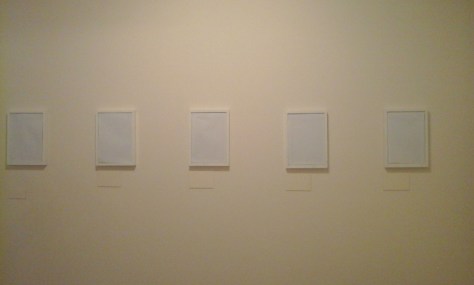
These pictures, which depict blank walls, are symbolic of the attack. Pictures of the original art cannot be shared due to copyright issues.

On the 7th of February, Tibetan artist Nortse and Indian artists Ritu Sarin and Tenzing Sonam had their photographs and art installations removed at the behest of the Chinese ambassador to Dhaka from the Dhaka Art Summit taking place in Shilpakala Academy in the capital of Bangladesh. The art project by Nortse was titled Prayer Wheel, Big Brother and Automan (2007) which showed the artist don traditional Tibetan clothes along with modern objects to show the surveillance that marks their lives. .Ritu Sarin and Tenzing Sonam produced a piece called “Last Words”, which consists of five facsmilies of five last messages written by the self-immolators in Tibet, along with their English translations. Ritu Sarin and Tenzing Sonam depicted Tibetan monks in the act of self-immolation as a way of political and religious protest against the occupation of Tibet by the Chinese government. At the end of the 6th of February, both artists were still depicted on the walls of the Art Summit. On the 7th, what greeted the visitors and patrons were blank stretches of white wall with white frames. It was as if the works had never existed. This is not the first time the Chinese government has tried to shut down political art work that aims to show the real face of Chinese occupation of Tibet. What is even more reprehensible is that it happened inside the walls of an institution that was proclaiming itself to be a haven of bold art and artistic expression. That the Chinese government could go to such lengths to silence an exhibition happening thousands of miles away shows the depth of their oppression over an entire country. Since February 2009, 142 Tibetans have self-immolated in their homeland, 120 dying from their actions.

A link to Tenzing Sonam’s twitter:

A Facebook link to a picture when the exhibit was still standing. 

Ahmad Ibrahim is a Dhaka based journalist.

If You Can’t Beat Them, Join ’em – Or, Ente Dinkeswara!

A new wave, nay, tsunami, of (THE) Faith has risen in Kerala. Soon, it will sweep the Nation.  This is the mighty thrust of Lord Dinkan, now known all over Kerala as Dinkamatam – or Dingoism.

…. Yellow, and black, and pale, and hectic red/ Pestilence-stricken multitudes: O Dinka,/ Who chariotest to their dark wintry bed ... [from ‘Ode to Dinka’ by the early Dinka devotion poet Muroidea Muridae Murinae, later stolen by Shelley and rewritten as ‘Ode to the West Wind’. Note that Dinkan,  superhero airborne rat and Shelley’s West Wind are both powers of the Air]

If you don’t believe me, visit this url:

https://www.dinkoism.com/

Now, like many others, I too was an unbeliever until I went there. One click, and I knew this was truly Faith. Market logic is nowadays the true marker of anything genuine (redefined an anything worth pursuing), and Dinkoism is unmatched in this regard. Even Amritanandamayi who successfully packages and sells all styles of Hinduism (the astrologer-obsessed style, the Saibaba-singing-style, the Sivakasi-print style, the shallow version of the Upanishadic style, the Christian-inflected Hugging-Mother style, the belligerent Hindutvavadi-style) cannot match him. Upon opening this Divine page, my eyes fell upon a notice in Malayalam which said: Mega offer before the world ends in 2012 [that needs updating, I suppose – small error; the spirit is more important] . 100 % guarantee in securing sin-free existence. Many years of service. Ridding of curses undertaken responsibly. We have no branches. Now, what further proof did I need to be convinced that this was the true Faith? Who doubts now that faith in the Logic of the Market precedes faith in faith? The Logos of Dinkan and the Logic of the Market are in perfect harmony!

Continue reading If You Can’t Beat Them, Join ’em – Or, Ente Dinkeswara!

Vocabulary of justice and being

After the Supreme Court delivered its verdict in Suresh Kumar Koushal v. Naz Foundation (2014) overruling the Delhi High Court’s decision, the National University of Juridical Sciences brought out a special law review issue assessing the judgment. Prof. M.P. Singh, the constitutional scholar and former vice chancellor of the university, wrote an article praising the judgment for its judicial restraint, in which he described the use of constitutional litigation by sexual minorities as a case of “misplaced hope in courts”. Prof. Singh prefaced his article with a cautionary extract from Judge Learned Hand that warns us against “placing our hopes too much upon constitutions, upon laws, and upon courts. These are false hopes; believe me, these are false hopes”. Prof. Singh similarly suggests that what activists ought to do is to educate legislators rather than pin their hopes on the judiciary. Underlying these opinions seemed to be an unwritten rule of an economy of hope (that one could have a little but not too much of it) but the essential trait of hope is that it is greedy sentiment that demands the impossible, and the Naz judgment with its rich evocation of dignity, liberty and equality had already proven that we could not just demand but hope for the impossible.

Continue reading Vocabulary of justice and being

Stop the attack on Rohith’s mother! Solidarity Committee for Rohith’s mother Radhika

STATEMENT BY SOLIDARITY COMMITTEE FOR ROHITH’S MOTHER RADHIKA

We believe there  is a concerted effort on the part of the powers-that-be to diffuse the nation-wide mass protests against Dalit research scholar Rohith Vemula’s death and caste discrimination in higher educational institutions. They are keen to demonstrate that Rohith did not face caste discrimination by claiming that his mother Radhika is not a Dalit. Rather than addressing the critical issues that his death and the protests have raised, these misdirected attempts seek to dissolve the issue in narrow legalese. And thereby somehow save the people named in the students’ complaint from the stringent penal provisions of the SC/ST Atrocities Act. This malicious campaign is unethical, illegal and undemocratic. Continue reading Stop the attack on Rohith’s mother! Solidarity Committee for Rohith’s mother Radhika

The Terror That Is Man: Shaj Mohan

Guest post by SHAJ MOHAN

Manifold is the un-homely, yet nothing is more un-homely than man — Sophocles

The middle of the previous century is understood to be the termination of all kinds of containments of man, having witnessed the worst containment in the Camp[i]. This termination resulted from a crisis that is both philosophical and political: what is the de-termination of man such that he is not the contained? A summary of this scenario is found in a trivial understanding of Foucault’s statements concerning “the end of man” (The Order of Things) and Derrida’s deconstruction of the notion of the “the end” in his essay “Ends of Man” (Margins of Philosophy). As a result of the exigencies of the philosophical and the political, the concept of the state located itself, in the occidental domain, away from the containers. The State would no longer claim to be the clergy and the sovereign of containers such as race and religion. Instead, the State demanded only the right to primary containment—first Indian and then Muslim, first British then White, first Spanish then Basque. The list, the differences, the classification and the management of all the other containers—religion, caste, language, race, public, private—were left up to the new clerics, the new academic disciplines and the NGOs. If all containers were opened up then everything should have flooded out and mixed to form a substance of a new world of people; rather, a substantiality for the in-terminable formation of people. This new people-substance should have dissolved the traces of all the containers, the way science-fiction often imagines the future to be. It should have left for us tales which are the negative of memories, that is, taboos, or myths. For example, the tales that we received about incest from the ancients, the tales of cannibalism in fairy tales, the tales of the world’s resistance to Nazism. Continue reading The Terror That Is Man: Shaj Mohan

Disability, Language, and Empowerment: Dorodi Sharma

This is a guest post by DORODI SHARMA

In 2009, as a writer for a disability news portal I got a note back with one of my stories from the director of the organisation. “Suffering from disability”, I had written about someone. The note said “I have been a wheelchair user since the age of 15, and trust me I am not suffering.” Over the years, the first document I shared with new employees of the disability rights organisation I worked for in Delhi was a document on ‘disability etiquette’ that outlined not just terminologies but also the acceptable ways of interacting with people with disabilities. Yes, even in the 21st century we need to coach people on ‘interacting’ with a section of humanity. The discourse on importance of language has taken a new meaning when recently Prime Minister Narendra Modi called people with disabilities ‘divyang’ or people with divine abilities. The reaction to this has been outrage, to shaking of heads, to complete indifference. But it is important to talk about language when it comes to disability because it reeks of charity and reflects the patronizing attitude that prevents people with disabilities in India from getting their due.

Let us be very clear, disability is part of human diversity. Disability is as normal or abnormal as being a man, woman, gay, lesbian, person of colour, or any other variation of being human for that matter. Why then do we look at disability as something that needs to be ‘overcome’? With the proliferation of social media, we are now faced with innumerable ‘inspiration porn’ posts. Yes, inspiration porn. As described by Stella Young, Australian journalist, comedian, and activist – inspiration porn is objectifying people with disabilities for the benefit of non-disabled people. Young said the purpose of these images is to inspire people, to motivate them, so that they can look at them and think “Well, however bad my life is, it could be worse. I could be that person.” Precisely for that reason, people living with a disability are tired (and angry) of all the euphemistic terminologies used about them. No, they are not specially-abled, or differently abled, or ‘divyang’ for that matter. They are persons with disabilities and disability is a crucial part of their identity, just like one’s gender, race, or nationality.

Continue reading Disability, Language, and Empowerment: Dorodi Sharma

Missing the Forest for Trees – Caste System’s Shadow on Rohith’s Suicide : Sanjay Kumar

Guest Post by Sanjay Kumar

(Photo Courtesy : Prokerala.com)

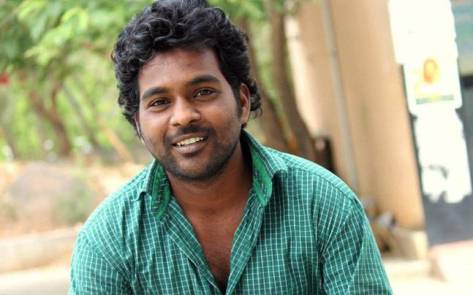
Mainstream politics over Rohith Vemula’s suicide is becoming hot and ugly. Although whisper campaigns against Rothith’s dalit identity were on since his suicide, the BJP’s central leadership had been relatively quiet after HRD minister’s rather shrieky ‘appeal’ to not play caste politics over his suicide. However, now it seems daggers are out. The party in power, whose two ministers are accused of creating conditions leading to Rohith’s suicide, has decided that Rohith’s non-dalit status is the dog it is going to beat to counter its anti-dalit image. Rohith’s mother is a Mala, a Scheduled Caste, who lives seperately from his father, a backward caste Vaddera. He got an SC certificate on the basis of showing that he grew up in his mother’s Mala household. BJP’s strategy may look petty, but it is based on the age-old great Hindu tradition which can not contenance any violation of the privileges of the patrilineal system. After all, marital rape does enjoy legal sanction in India to this day. Continue reading Missing the Forest for Trees – Caste System’s Shadow on Rohith’s Suicide : Sanjay Kumar

Why is the World Ignoring Palestine’s ‘Third Intifada’? Shubhda Chaudhary

Guest post by SHUBHDA CHAUDHARY

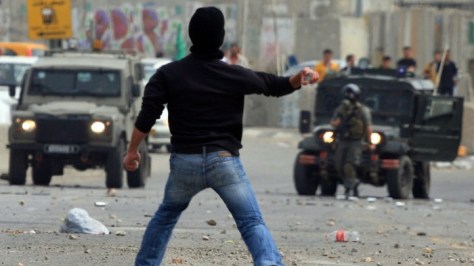
Already ravaged by two political Intifadas in the past, Palestine is now undergoing a third ‘leaderless Intifada’ in West Bank and Gaza. In fact, there is disagreement over whether a leader is even needed. In a striking paradox, several names are being considered for the leadership that does not exist: Jerusalem Intifada, Mass Intifada, Revolutionary Wave and Third Intifada.

Third Palestinian Intifada - On its way or Already Arrived? image courtesy Alwaght
Third Palestinian Intifada – On its way or Already Arrived? image courtesy Alwaght
revolutionary woman intifada streetby Quadraro, image courtesy Deviant Art.
‘revolutionary woman intifada street’ by Quadraro, image courtesy Deviant Art.

As West Asia is too gripped in sectarian conflict and the rise of ISIS, this emerging trend is going unnoticed. But the violence is already cementing the layers of distrust that Palestinians harbor against Jews, with calcifying hatred.

After the desecration of Al-Aqsa Mosque and other sacred Islamic sites in various parts of the occupied Palestine by Israelis, Palestinians have been pouring out on the streets. The retaliatory attacks by Palestinians have claimed the lives of seven Israelis while leaving a number of them injured. It should be noted that the average age of demonstrators and people responsible for stabbing and running over people is less than 20 years old. They were born after the Oslo Accord between the Palestinian Liberation Organization and Israel in 1993 and 1995. They are just coming of age, and it’s hard for them to see any future but a bleak one. Continue reading Why is the World Ignoring Palestine’s ‘Third Intifada’? Shubhda Chaudhary

In solidarity with Rohith Vemula: Concerned students and faculty at the Indian Institute of Management, Calcutta

Open letter to the President of India from Concerned students and faculty at the Indian Institute of Management Calcutta.

To

The President of India

Subject: An urgent appeal to address discrimination and political interference in academic institutions in the wake of the death of RohithVemula.

We, a group of students and faculty of the Indian Institute of Management Calcutta,expressour grief over the loss of the precious life of RohithVemula, a Dalit research scholar, at the University of Hyderabad.The events that transpired in the particular case were indeed tragic, with allegedinfringement of freedom of expression, caste discrimination and partisan interference by the higher State apparatus. This event is symptomatic of the larger malaise of failure of our institutions to provide a climate where students, irrespective of their social backgrounds, could find a way to excel. To create such a climate would require synchronised efforts in the parts of the State, the educational institutions and the society at large. Continue reading In solidarity with Rohith Vemula: Concerned students and faculty at the Indian Institute of Management, Calcutta

A test of dignity and democracy

Today, as the Supreme Court hears the curative petition on Section 377, it has an opportunity to remember its promise to be the last resort of the oppressed, to let dignity be the domain of all.

In 2015, a student at the Indian Institute of Science (IISc) in Bengaluru was blackmailed and threatened with being publicly outed for being gay. When he refused to pay extortion money, the private letters turned into notices pinned on noticeboards on campus. The words were sharp, relentless and inhumane: “I think it’s completely shameful, bad, immoral and disgusting. You should go kill yourself. Why do you think it’s illegal to be gay in India?”

Evading prejudice

For many queer people, this moment is familiar. It is one that many of us have faced or live in a constant fear of facing. In some ways, it is the latter that is worse. We live our lives anticipating prejudice. Even before it comes, we are constantly censoring, moving, and shaping our lives to evade it or, if we can’t, to survive it. Those of us who have the privilege of privacy scan rooms to find allies, weigh what to tell our doctors, measure out information in our offices, and seek safe spaces. Those without this privilege face a much more direct battle to be who they are: an unrelenting and legitimised public violence that falls on working class bodies in our streets, police stations and public spaces. The law is not the only force behind this violence, but it is an important one. “Why do you think,” the blackmailer asks, “it’s illegal to be gay in India?” When petitioners in the Naz Foundation case argued that Section 377 of the Indian Penal Code played an important part in shrouding our lives in criminality and of legitimising violence, this letter was one of many that we wrote against in our heads. Continue reading A test of dignity and democracy

Paranoia and Procedure – Everyday Life within a University Labyrinth, Circa 2016: Prasanta Chakravarty

This is a guest post by PRASANTA CHAKRAVARTY

“The nature of peoples is first crude, then severe, then benign, then delicate, finally dissolute.”

–Giambattista Vico
The past congeals in savoir faire or habit, conserved as an ethos, in the corridors of the Arts Faculty at Delhi University. We all remember what is happening, while it is happening; watching ourselves as live spectators of our own actions. Wherefore such a sense of centripetal actuality? How this despotic pathology of inevitability in a place which was supposed to be the harbinger of a future? But the future arrives as a gyre, a loop. Continue reading Paranoia and Procedure – Everyday Life within a University Labyrinth, Circa 2016: Prasanta Chakravarty

Operation Ekalavya : Jhandewala, New Delhi, Rohith Vemula’s Birthday, 30th January 2016

Dear young friends who went to Jhandewala on Rohith Vemula’s birthday,

a1078-rohit-facebook-and-storysize_647_011816123527

And all those who were there in spirit, in Delhi, Hyderabad and elsewhere. I am writing to you because I think you might have all taken things much further than anyone can quite imagine or understand at present.

I am writing to you, for today and for tomorrow, so that every time in the future that young people gather to celebrate their friend Rohith’s birthday, we might all begin to have a different kind of conversation. So that the boundaries between mourning and celebration, between anger and joy may always remain blurred enough for us to know what to do next, each time.

Since you had a close encounter with the police and their colleagues in the RSS on Rohith’s birthday, I want to spend a little time thinking about them with you. Bear with me. I sincerely hope we will not have to bear with them for much longer.

Continue reading Operation Ekalavya : Jhandewala, New Delhi, Rohith Vemula’s Birthday, 30th January 2016

महात्मा की ह्त्या और हमारे बच्चे:नासिरुदीन हैदर खान

GUEST POST by Nasiruddin Haider Khan

किसी की हत्या की गई हो तो उसकी वजह भी होगी. महात्मा गांधी की भी हत्या की गई थी. जाहिर है, इसकी भी कोई वजह होगी. वैसे क्‍या वजह है? हम कह सकते हैं, 68 साल बाद क्या यह भी कोई सवाल है? ऐसा सवाल जिसका जवाब तलाशने की जरूरत हो?

पिछले दिनों उत्‍तरी बिहार के एक स्‍कूल में कुछ साथियों के साथ जाना हुआ. हमें नौवीं क्‍लास के छात्रों से रू-ब-रू होना था. यह उस शहर का नामी निजी स्‍कूल है. स्‍टूडेंट भी मेधावी हैं. हम इनसे बातचीत का मौजू तलाश रहे थे. जनवरी का महीना है. हमें सूझा, क्‍यों न महात्मा गांधी की हत्या पर बात की जाए. देखा जाए बच्चे  क्या सोचते या जानते हैं? तो हमने तय किया कि इसी पर बात होगी.

क्‍लास में करीब 60 लड़के-लड़कियाँ रही होंगी. सबकी उम्र 15 के आसपास होगी. हमारे सामने सवाल था, कहाँ से और कैसे शुरू किया जाए. हमने बोर्ड पर लिखा ‘30 जनवरी.’ बातचीत शुरू हुई. क्या 30 जनवरी कुछ खास तारीख है? सभी छात्रों से अलग-अलग जवाब मिले- इस दिन गांधी जी की हत्या हुई थी…शहीद दिवस है… गांधी जी राष्ट्रपिता हैं आदि.

हमार अगला सवाल था- अगर हत्या हुई थी तो क्या आप बता सकते हैं, गांधी जी की हत्या किसने की थी? नाथूराम गोडसे- यह जवाब ज़्यादातर बच्चे जानते थे. इसके बाद सवाल किया गया- नाथूराम गोडसे ने गांधी जी को क्यों मारा? इसके जवाब काफी अलग-अलग थे. कुछ व्यक्तिगत जवाब थे तो कुछ सामूहिक. इन जवाबों से यह  झलक भी मिलती है कि गोडसे को बच्चे क्या समझते हैं?

आगे के लिए यह लिंक देखिए:

http://hindi.catchnews.com/india/why-did-nathuram-godse-kileed-mahatma-gandhi-1454050822.html


Reclaiming academia: understanding the student movement of our time: Tony Kurian and Suraj Gogoi

This is a guest post by TONY KURIAN and SURAJ GOGOI

Students from different parts of the country started protesting since a Dalit student from one of the premier universities of the country (University of Hyderabad) committed suicide on account of caste discrimination by the administration. This new wave of protests can be traced back to Occupy UGC which erupted when University Grants Commission (UGC) decided to stop the monthly research stipend known as non-net fellowship of Rs 5000 and 8000 for MPhil and PHD respectively. The ministry concerned has since constituted a panel to review the decision on account of student’s protests. On the other hand, we are seeing India becoming part of World Trade Organization (WTO) agreement on higher education. These instances should not be regarded as isolated moments but should be viewed as an integral part of a story unfolding. It is in this context that one should locate the student movement of our time. The movement itself is receiving much media attention, and, it was mostly couched as a student’s movement against the government. For sure, the immediate demands of the students is to ensure justice to Rohith Vemula. The present wave of student movement is aimed at reclaiming academia both from an exclusivist culture which permeates much of our academic institutions, and increasing influence of free market logic in our higher education.

 Why are we seeing a new wave of student protests?

To understand why a movement like that we are witnessing now is extremely important for a vibrant and democratic academic space, we should explore some of the unwritten rules of academia itself and our academic institutions. Research is a long-term investment for the person who undertakes it. Every day he or she spends as a full time researcher is a day forgone from the job market. For a research scholar to earn a permanent job, it can take anywhere between five to ten years after the master’s programme.

Continue reading Reclaiming academia: understanding the student movement of our time: Tony Kurian and Suraj Gogoi

गांधी एक प्रेत का नाम है…


mk_gandhi

गांधी से खुद को जोड़ने की कोशिश करने वाले ज़्यादातर लोग राजघाट तो जाते हैं लेकिन बिड़ला भवन नहीं, क्योंकि वहां जाने के मायने हैं उस व्यक्ति की हत्या से रूबरू होना जिसे राष्ट्रपिता कहा जाता है.

या जैसा एक लेखक ने कहा, बिड़ला भवन में एक प्रेत रहता है. हम उसका सामना करने से घबराते हैं. वह किसका प्रेत है?

गांधी की हत्या को उचित मानने वालों की संख्या कम नहीं है और वे सब राष्ट्रीय स्वयंसेवक संघ, हिंदू महासभा या शिव सेना के सदस्य नहीं हैं.

Continue reading गांधी एक प्रेत का नाम है…

Condemning Caste Discrimination in Higher Education Centres that led to Rohith’s Untimely Death – Students of Delhi School of Economics, Delhi University

Guest Post by Students of Delhi School of Economics, Delhi University

dschool

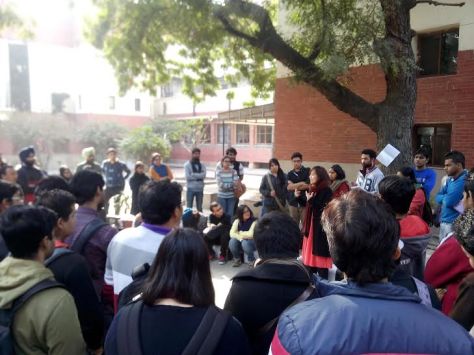
( A protest meeting on Rohith Vemula was organised in Delhi School of Economics, Delhi University on 28 th January. Find pasted below a brief report of the meeting followed by the statement which was read and passed in the meeting.)

We, the students of Delhi School of Economics organised a protest meeting in solidarity with the Joint Action Committee for Social Justice, University of Hyderabad. It was joined in by students from other departments of the university as well.

The discussion revolved around the presence of caste based discrimination within university campuses and the deadly silence on the matter. It was recognised that Rohith’s investment in progressive politics was crucial in him and others in Ambedkar Students Association being victimised. And the present gathering affirmed its investment in that politics and striving for the kind of change Rohith also aspired for. Continue reading Condemning Caste Discrimination in Higher Education Centres that led to Rohith’s Untimely Death – Students of Delhi School of Economics, Delhi University

We, Naked Women : P Padmarajan

[P Padmarajan passed away on 24 January, 1991. In his extraordinary and brief life, he attained the status of a living legend in Kerala. Celebrated much more as a cine director and a script-writer of some of Malayalam’s most memorable films, he was however, one of Malayalam’s finest fiction-writers. In many ways, as a writer, Padmarajan was ahead of his times; no wonder then,  he never received the recognition that he richly deserved as a writer. Continue reading We, Naked Women : P Padmarajan

Sandeep Pandey threatened by RSS persons on IIT-BHU campus

Close on the heels of the planned disruption of a speech by Siddharth Varadrajan, noted journalist and ex-editor of ‘The Hindu’ on the Allahabad University campus by members of the Akhil Bharatiya Vidyarthi Parishad  (http://thewire.in/2016/01/23/editors-guild-condemns-abvp-threats-to-the-wires-founding-editor-20015/) has come the news that Sandeep Pandey, who has been working as a guest faculty in IIT-BHU for the last two and half years was recently threatened allgegedly by members of the same fraternity on the university campus itself.

It may be added here that Sandeep Pandey’s services were abruptly terminated by the university on the charge of being a naxalite and being involved in ‘anti-national’ activities (http://kafila.org/2016/01/11/letter-against-dismissal-of-prof-sandeep-pandey/). Looking at the aggressive manner in which members of the Hindutva fraternity seem to be moving it is quite possible that their threats will not remain merely at the level of words and one definitely perceives a danger to Sandeep’s well being at their hands. Continue reading Sandeep Pandey threatened by RSS persons on IIT-BHU campus

Saluting Rohith Vemula on Republic Day: Meena Kandasamy and Ravichandran Bathran

Meena Kandasamy in The Hindu:

Rohith, you have left behind your dream of becoming a science writer like Carl Sagan, and left us with only your words. Each of our words now carries the weight of your death, every tear carries your unrealised dream. We will become the explosive stardust that you speak of, the stardust that will singe this oppressive system of caste. Within every university, every college, every school in this country, each of our slogans will carry the spirit of your struggle. Dr. Ambedkar spoke of caste as the monster that crosses ones path every way one turns, and within the agraharams that are the Indian educational institutions, our very physical presence must embody the message of caste annihilation. Let every despicable casteist force wince when they encounter a Dalit, a Shudra, an Adivasi, a Bahujan, a woman staking claim within academia, let them realise that we have come here to end a system that has kept trying hard to put an end to us, that we have come here to cause nightmares to those who dared to snatch our dreams. Let them realise that Vedic times, the era of pouring molten lead into the ears of the Shudras who hear the sacred texts, the era of cutting the tongues of those who dared to utter the knowledge that was denied to them, are long gone. Let them understand that we have stormed these bastions to educate, to agitate, to organise; we did not come here to die. We have come to learn, but let the monsters of caste and their henchmen bear in mind that we have come here also to teach them an unforgettable lesson.

Read the rest of this tribute here.

RAVICHANDRAN BATHRAN in Tehelka

A person who is conscious of and sensitive about caste discrimination is certain to become alienated in every psychological, emotional, social and political sense in today’s campuses that breed free-market-loving, reservation hating students who benefit from caste-intensive social networks. This is why the Dalit and anti-caste students’ movement is crucial in democratising our campuses. These outfits question the present, past and future of the society we live in. They may be few in number and not always successful, but their actions are solely committed to the welfare of Dalit students as they have no other support system in our campuses. I am proud to say that many like me are the product of such movements in the universities.

Read the whole article here

Manipur Tribals Protest on Republic Day: Ajita Banerjie

Guest Post by AJITA BANERJIE

Untitled 2

As the country prepares itself in all the glory to celebrate Republic Day, nine bodies remain unburied in Churachandpur. With what started as a local strife between the protesting tribals and the police, the struggle is now for a graver concern – land, rights and identity.

On 31st August 2015, several young people from the tribal communities in Churachandpur took to the streets protesting against the three controversial bills. The Protection of Manipur People Bill, 2015, the Manipur Land Revenue and Land Reforms (Seventh Amendment) Bill, 2015, and the Manipur Shops and Establishments (Second Amendment) Bill, 2015, were passed unanimously by the Manipur Assembly and were a response to the earlier demand of introducing the Inner Line Permit. The protest turned violent and in the clash, nine young civilians were killed by brutal police force. Out of the nine, the youngest to have lost his life was an eleven year old boy who was shot dead by the police. What seemed like collateral damage in a political strife, became a symbol of revolution for the hill tribes. To stage their protest, the families of the 9 martyrs have refused to bury the bodies until the government takes cognizance of their demands to withdraw the three bills that threaten the very basic rights of the tribals and makes them refugees in their own land.

Continue reading Manipur Tribals Protest on Republic Day: Ajita Banerjie

Calculated Tears

modi lko croppedThe lacrimal glands have been activated once again but even if the tears remained trapped in the eyes of the leader, must they blur our vision?
That a full five days were allowed to elapse since suicide the suicide of a dalit student in Hyderabad before these gland optics tells us that what we saw in Lucknow on Friday was not at all a spontaneous expression of grief. The Telegraph has shown frame by frame the pictures of a smiling, beaming Modi on different joyous occasions – when the mother of Rohith was grieving and the nation was trying to make sense of her loss – to prove that the prime minister’s act is a little too late and unconvincing. Rohith’s father has seen through the bluff and already spoken up about it.

While some were keen to see in those brimming eyes a humane approach, I saw a cynical, strategic mind which kept its emotions in check so as to let it flow on an appropriate occasion, against a suitable backdrop.

Continue reading Calculated Tears

DISSENT, DEBATE, CREATE