Tag Archives: India-Pakistan

Rethinking Urdu Nationalism in Pakistan: Raza Rumi

Guest post by RAZA RUMI

Urdu has been a controversial language in Pakistan despite its official and holy status. The Bengalis rejected it way back in the 1940s when Jinnah, advised by a bureaucracy, with imperial moorings declared in that it would be the official language. Subsequently, Sindhis, Baloch and Pashtuns have also resisted the one-size-fits-all Urdu formula. Yet, Urdu has emerged as the functional lingua franca that connects Pakistan’s federating units, and its conflation with Islam and Muslim ‘nationhood’ remains the paramount narrative in Pakistan.

It takes arduous scholarship and infinite courage to author a book like From Hindi to Urdu: A Social and Political History (Oxford University Press, 2011). Dr Tariq Rahman, ironically, has worked as the Director of the National Institute of Pakistan Studies at the Quaid-i-Azam University and therefore his challenge to the mythical dimensions of ‘Pakistan Studies’ comes from within and not as an outsider. Sixty-four years after the creation of Pakistan, we have not arrived at any conclusion about our ‘national’ or cultural identity. Dr Rahman’s book if anything shatters the myths that we have built around Urdu; and therefore presents a valid alternative to Goebbelsian tone of our official history. Continue reading Rethinking Urdu Nationalism in Pakistan: Raza Rumi
India, Pakistan and the Snow Leopard: Javed Naqi

Guest post by JAVED NAQI

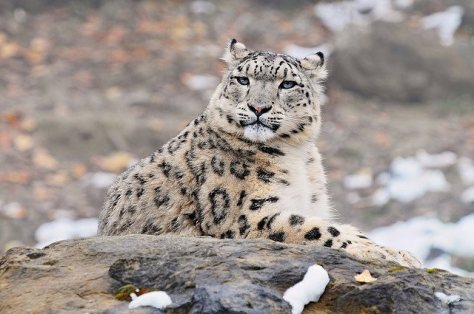
Photo Credit: Flickr User Tambako the Jaguar

Amongst the lesser known casualties of the conflict between India and Pakistan is wild life. In times of war, we hear of the loss of life and property but seldom notice the huge impact on wildlife. Animals found in the vicinity of the disputed India-Pakistan border in Jammu and Kashmir are on the verge of extinction. One such is the snow leopard in the border district Kargil.

Kargil, a district in the state of Jammu and Kashmir is a remote, arid-cold and high altitude area. The region gained in prominence to the outer world after the Kargil War of 1999. Kargil serves as a suitable habitat for many endangered wildlife species like snow leopard, Tibetan wolf (Canis lupus langier), Himalayan brown bear (Ursus arctos isabellinus), Asiatic ibex (Capra ibex), Ladakh urial (Ovis vignei vignei), musk deer (Moschus spp.), pikas, and hares (Maheshwari et al 2010). A joint study by J&K Department of Wildlife Protection and WWF reports 16 direct and indirect evidence of Snow Leopard in Kargil and Drass (Maheshwari et al 2010). Continue reading India, Pakistan and the Snow Leopard: Javed Naqi

The inter-connected destinies of strangers across an international border

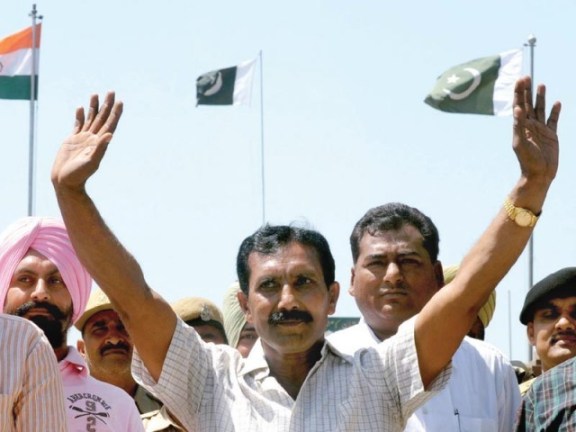
Gopal Das at Wagah border. AFP photo

The central government wants him to do it, the Rajasthan government wants him to do it, but Rajasthan’s acting Governor Shivraj Patil wouldn’t sign on a file for several months now. His obstinacy could become a major hurdle for many Indians and Pakistanis lodged in each others’ prisons.

In an unusual order, the Supreme Court of India quoted William Shakespeare and Faiz Ahmed ‘Faiz’ to directly appeal to the government of Pakistan to pardon and release Indian prisoner Gopal Das. Pakistan President Asif Ali Zardari signed the papers within 16 days, ahead of Prime Minister Yusuf Raza Gilani’s visit to Mohali to witness the cricket world cup semi-final with his Indian counterpart. On 7 April, Gopal Das crossed into India. There were those in Pakistan who had opposed his release, arguing he had a few months left to complete his sentence, and that he should not be shown mercy because he had been found guilty in 1984 by a Pakistani military court on charges of being a an Indian spy. He and his family claimed this was not true, and wanted him pardoned because now 52, he had spent the last 27 years in several Pakistani prisons. Continue reading The inter-connected destinies of strangers across an international border

Three Formidable Barriers to the Advance of Democracy: Ravi Sinha

This guest post by RAVI SINHA is the text of the key note address to the Pakistan-India People’s Forum for Peace and Democracy in Allahabad on 30 December 2011

I must begin by expressing my gratitude to the organizers of this Convention and to this Forum for the opportunity and the honor you have given me by letting me address this impressive assembly. Also, I must congratulate you for choosing a theme that articulates, perhaps, the central challenge confronting all peoples and all nations of the world and more so for the peoples and the nations on the subcontinent. We are all witness to and victims of the times characterized by monstrous brutalities of war and deep scars of deprivations, inequities and oppressions. We live under a world order wherein those who brought, for example, untold tragedy and destruction to Iraq will never be brought to justice because they are the global hegemons. They will not be questioned about the hundreds of thousands of dead and maimed Iraqi men, women and children; they will not be questioned about the thousands of dead and decapitated American soldiers; they will not be questioned about the trillions of dollars spent on the war and further trillions destroyed by the war; and they will not be questioned about the kind of Iraq they are leaving behind.

Continue reading Three Formidable Barriers to the Advance of Democracy: Ravi Sinha

Pakistan ki Tareef: Haseeb Asif

This guest post by HASEEB ASIF is in Urdu, in Roman script

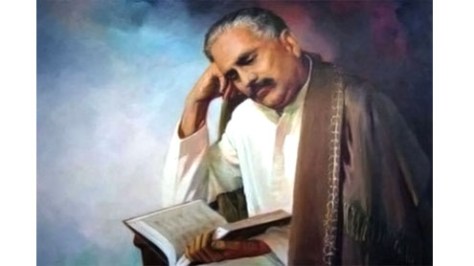
Allama Iqbal (1877-1938)

Islami Jamhooriya Pakistan ki tareekh Hindustan se bohut purani hai. Balkay Islam se bhi purani hai. Jab aathveen sadi mein Muhammad Bin Qasim Islam phelane bar-e-sagheer tashreef laye tau ye jaan ker sharminda huwe ke yahan tau pehle hi Islami riyasat maujood hai.

Yahan kufr ka janam tau huwa Jalaaludin Akbar ke daur mein, jo Islam ku jhutla ker apna mazhab banane ko chal diya; shayid Allah-ho-Akbar ke lughwi maani le gya tha.

Baharhal, in kafiron ne butparasti aur mehkashi jaisay gheir munaasib kaam shuro kerdiye aur apne aap ko Hindu bulaane lage. Sharaab ki aamad se Pakistan ke Musalmanon ki woh taaqat na rahi jo tareekh ke tasalsul se honi chahiye thi. Iski vaja ye nahin thi ke Muslaman sharaab peene lag paray the, balkay ye kay unki saari quwat-e-nafs sharab ko naa peene mein waqf hojati thi, hukmarani ke liye bachta hi kya tha.

Is ke bawajood Musalmanon ne mazeed do sau saal Pakistan per raaj kiya, phir kuch dinon ke liye angrezon ki hakoomat agayi (hamari tafteesh ke mutabiq yehi koi chalees hazaar din honge).

San 1900 tak Pakistan ke Musalmanon ki haalat nasaaz hochuki thi. Is dauran aik ahem shakhsiat hamari khidmat mein hazir huwi, jis ka naam Allama Iqbal tha. Continue reading Pakistan ki Tareef: Haseeb Asif

Who’s afraid of Veena Malik?

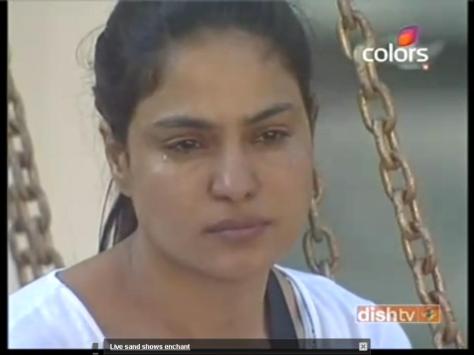
News broke of Veena Malik’s “nude” – more accurately, implied nude – photographs in FHM India magazine when the image of the magazine’s cover went viral on Twitter, even before the magazine was on newsstands. The media in India and all over the world reported “outrage” in Pakistan, in keeping with the international image of Pakistan as a country taken over by Islamists who would wreak havoc over a Pakistani woman posing without clothes for an Indian magazine with ISI tattooed on her arm.

FHM India itself magazine emphasised Malik’s nationality, calling her a “Pakistani WMD” and discussing burqas with her, even mentionining the word burqa on the cover, to reinforce the stereotype of a hot Pakistani model defying a country riven with Islamic extremism.

But in reality, there hasn’t been as much backlash in Pakistan as the world outside would expect or believe. Says Islamabad-based journalist Shiraz Hassan, “I am surprised that except a few news channels and papers nobody has been bothering about Veena Malik, as though they don’t care what she did. Haven’t seen anything from hardliners also.” Continue reading Who’s afraid of Veena Malik?

Three Years After 26/11: Raza Rumi

Guest post by RAZA RUMI

As a Pakistani it is difficult for me to talk about the ghastly attacks on Mumbai three years ago and the response of its vibrant citizens. This is not simply due to the nationality of Ajmal Kasab, the lone terrorist captured after the 26/11 Mumbai terror attacks. What happened in Mumbai was a sad reminder of how easy it has become for a handful of militants to wreak havoc, to hold an entire city hostage and undermine humanity. A vast majority of Pakistanis felt the pain and condemned the Mumbai attacks; targeting innocent civilians is heinous and unacceptable.

The Mumbai attacks changed the atmosphere created by President Asif Ali Zardari’s unprecedented offers of peace and cooperation. A few weeks before the carnage in Mumbai, Mr Zardari made historic remarks in a conclave organised by an Indian newspaper, which represented a consensus within Pakistan’s political class: “I do not feel threatened by India and India should not feel threatened from us… today we have a Parliament which is already pre-agreed upon a friendly relationship with India. In spite of our disputes, we have a great future together.” Mr Zardari also declared that Pakistan will not be the first country to use its nuclear weapons, thus altering a carefully constructed Pakistani nuclear doctrine of first-use. Continue reading Three Years After 26/11: Raza Rumi

Pundit Manto’s First Letter to Pundit Nehru

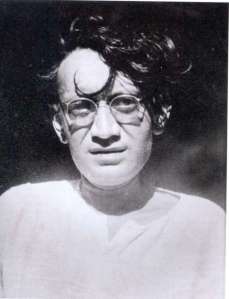
This is M. ASADUDDIN‘s translation of a letter written by SA’ADAT HASAN MANTO to Jawaharlal Nehru in 1954. This translation first appeared in The Annual of Urdu Studies (volume 11, 1996).

Pundit-ji, assalamu alaikum!

This is the first letter I’m sending you. By the grace of God you’re considered very handsome by the Americans. Well, my features are not exactly bad either. If I go to America, perhaps I’ll be accorded the same status. But you’re the Prime Minister of India, and I’m the famed story writer of Pakistan. Quite a deep gulf separating us! However, what is common between us is that we are both Kashmiris. You’re a Nehru, I’m a Manto. To be a Kashmiri is to be handsome, and to be handsome … I don’t know. Continue reading Pundit Manto’s First Letter to Pundit Nehru

A case for remission of punishment for Dr Khaleel Chishty under Article 161 of the Constitution of India: Kavita Srivastava

Guest post by KAVITA SRIVASTAVA

Pardon and or Remission of Punishment for Pakistani prisoner Dr. Khaleel Chishty under Article 161 of the Constitution of India by the Governor of Rajasthan

Continue reading A case for remission of punishment for Dr Khaleel Chishty under Article 161 of the Constitution of India: Kavita Srivastava

Trading with the Enemy: Raza Rumi

Guest post by RAZA RUMI

Reports suggest that Pakistan has decided, in principle, to grant the Most Favoured Nation (MFN) status to India. Much progress has taken place since the earlier announcement and several parleys between the officials suggest that trade relations may finally ‘normalise’. India already conferred MFN status to Pakistan in 1996. India and Pakistan have no formal trade agreement. Until now Pakistan maintained a Positive List of importable items from India consisting of 1075 items.

Most Favoured Nation: Under the WTO agreements, countries cannot normally discriminate between their trading partners. Grant someone a special favour (such as a lower customs duty rate for one of their products) and you have to do the same for all other WTO members. This principle is known as most-favoured-nation (MFN) treatment. It is so important that it is the first article of the General Agreement on Tariffs and Trade (GATT), which governs trade in goods. MFN is also a priority in the General Agreement on Trade in Services (GATS). Continue reading Trading with the Enemy: Raza Rumi

In Search of Ram and Kabir

You may have seen this documentary film before. If you have, you will, I’m sure, want to see it again. It is not about Ram or Kabir. It is about you and me.

Had Anhad is a documentary film, part of the Kabir Project, released in 2008.

A film by Shabnam Virmani
Language: Hindi & Urdu with English Subtitles
Duration: 103 min

Kabir was a 15th century mystic poet of north India who defied the boundaries between Hindu and Muslim. He had a Muslim name and upbringing, but his poetry repeatedly invokes the widely revered Hindu name for God – Ram. Who is Kabir’s Ram? This film journeys through song and poem into the politics of religion, and finds a myriad answers on both sides of the hostile border between India and Pakistan.

Watch it on Culture Unplugged.

Signs of improving times

Two incidents that took place recently provide hope, underlining that the India-Pakistan peace process must indeed be on track. One incident was related to the UN and the other to Kashmir, if you can believe it. Continue reading Signs of improving times

Through the screen, not so darkly: Raza Rumi

Guest post by RAZA RUMI

Pakistanis love Bollywood. There is no question about that. Amidst the love-hate perceptions, Indian cinema has for decades fed public imagination. Before the 1965 war that took place when Ayub Khan, Pakistan’s first military ruler, was in power,  Indian films were released in Pakistan regularly. They competed with the local cinema. The healthy contest enriched filmmaking and gave choice to Pakistani cinema-goers. The war and competing imaginary nationalism halted this process and for decades, Indian films stayed away from cinemas until another military ruler, Parvez Musharraf, allowed limited releases. Such is the power of Bollywood and its commercial viability that for the past few years, Bollywood flicks have revived cinema in Pakistan. Continue reading Through the screen, not so darkly: Raza Rumi

Gopal Das is free, Khaleel Chishty is not

Justice Markandey Katju, who has upon retirement just been appointed head of the Press Council of India, today addressed the media at his residence in Delhi. Towards the end of his speech, he said:

Before I conclude, I once again repeat my appeal to the Indian Government through the Prime Minister to release Dr Khaleel Chishty who is in Ajmer Jail. He is 80 years old and has not very long to live. He was an eminent virologist in Karachi Medical College and was a PhD from Edinburgh University. He is a heart patient and has many other ailments also. He is unable to walk. In the name of humanity I appeal to the Indian Government to release him and allow him to get back to home in Karachi to his wife and daughter who live there. The Pakistan Government honoured my appeal and released Gopal Das from a Pakistani jail. I am sad that the Indian Government has not yet honoured my appeal made several months ago to the Hon’ble Prime Minister, the Hon’ble Home Minister, and His Excellency the Governor of Rajasthan. In my opinion, the prestige of our country will be invreased if Dr. Chishty is released, whereas if he dies in jail, we will be disgraced. Continue reading Gopal Das is free, Khaleel Chishty is not

Release Indian and Pakistani fishermen with their boats

PRESS STATEMENT: We, the undersigned, express our deep concern regarding the continuous arrests of Indian and Pakistani fishermen and confiscation of their boats by each country of the other. The poor, innocent fishermen go to sea to catch fish and in the deep sea it becomes virtually impossible for them to recognise where their countries waters end and other’s start.

The fishing season has begun couple of days ago and boats in a big number go to the mid-sea to catch and earn some money. Both the governments need to recognise the fact that these traditional fishermen go to the mid-sea for their livelihood. Arresting them and confiscating their boats means depriving their families from the livelihood, and causing them extreme distress. Continue reading Release Indian and Pakistani fishermen with their boats

Bring Dr Chishty home – alive

An elderly, bed-ridden man sentenced to life imprisonment in an ‘enemy’ country for a murder he didn’t commit awaits the signature on his clemency petition. By Beena Sarwar and Shivam Vij

Human rights activists in India are renewing their efforts for the release of the elderly Pakistani prisoner Dr Khalil Chishty lodged in Ajmer prison hospital, whose mercy petition awaits just one signature from the Rajasthan Governor Shivraj Patil. The mercy petition had earlier been approved by the state government and had reached Patil in June this year. At that point, it was expected that Dr Chishty, 78, a renowned virologist bed-ridden with various illnesses in jail, would soon be released.

Instead, Governor Patil raised a set of questions for the state government to answer. The Rajasthan government has answered all the queries, but has not submitted the file to the Governor again – perhaps because, according to sources, the Governor has already indicated that he will not sign the petition. Continue reading Bring Dr Chishty home – alive

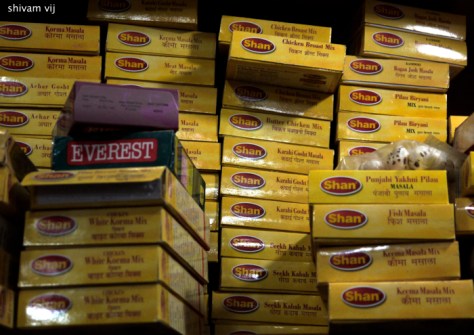
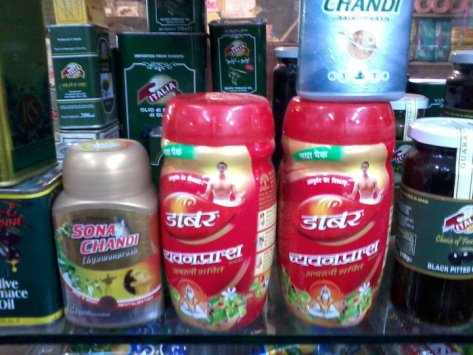
India and Pakistan: A Matter of Taste

Imported from Karachi, Shan masalas are a hit in Delhi. They make sure anyone can make good Biryani or Korma. Photo taken at a grocery store in south Delhi by Shivam Vij
Dabur Chawanprash at a grocery store in Lahore. The Devnagiri script on the pack would be a rarity in Pakistan! Photo credit: Shiraz Hassan

The question we are not asking about Fai, Tramboo and Shawl

GN Fai

(Please see two updates at the end of this post.)

‘Gotcha!’ That is the sound I hear in the Indian media and amongst patriotic fellow-Indians in response to the arrest of Syed Ghulam Nabi Fai, an American citizen of Indian origin, by the Unites States Federal Bureau of Investigation.

Most analyses of the Fai arrest say it’s part of the ongojng tussle between the American CIA and the Pakistani ISI but some in India think it’s part of the American reward to India for opening up its nuclear energy and other markets to American corporations, thus creating jobs for Americans. This may have some truth in it, considering that the Americans asked their ambassador to take a flight to Srinagar four months ago to pat Omar Abdullah on the back for successfully presiding over the killing of 120 Kashmiris the previous summer, and for halting the killings when President Obama was in Delhi, so that the media attention on the President’s visit is not diluted. (And then Americans wonder why ‘Muslims hate us’). Continue reading The question we are not asking about Fai, Tramboo and Shawl

Indian and Pakistani Citizens Condemn Serial Blasts in Mumbai

We the citizens of India and Pakistan strongly condemn the inhuman and dastardly serial blasts in Mumbai on 13 July 2011 in which 21 innocent people were killed and over 140 injured.  We offer our heartfelt condolences and sympathies to the bereaved families and pray for quick and complete recovery of all those injured. It is clear that these blasts are a well orchestrated heinous conspiracy to derail the resumption of the dialogue and peace process between India and Pakistan that was stalled following the terrorist attack in Mumbai in 2008. Continue reading Indian and Pakistani Citizens Condemn Serial Blasts in Mumbai

Coke Studio India – the first six songs

So the unanimous verdict is that Coke Studio India (first aired on the Friday that went by) is no match for Coke Studio Pakistan [Wikipedia]. For some it’s been like an India-Pakistan match – I’ve seen Indian congratulate Pakistanis on Twitter for the ‘Coke Studio victory’ and others ask Indian musicians and singers to listen to Pakistani singers and hang themselves. For most, this was not surprising – Coke Studio Pakistan has showcased some of the best music you’ve heard in recent times and it raised the bar too high for Coke Studio India. There’s also the problem of Bollywoodisation of music in India, of dumbing down, producing music aimed at the marriage market and livening up the moods of those stuck in traffic. A celebrity culture has taken the passion out of music in India – it does not seem to come from deep within. New popular music in India leaves you with the kind of feeling that a mall does. Loud and empty.

Continue reading Coke Studio India – the first six songs

Dr Khaleel Chishty will finally be free

This note comes from KAVITA SRIVASTAVA of the People’s Union for Civil Liberties

An ailing Dr Chishty will soon be with his family

Dr. Khaleel Chishty, the 78 year old a renowned Virologist from Pakistan, will now go home very soon. A process that began on the 20th of April, 2011 will finally conclude at the Rajasthan end two months later precisely on the 20th of June, with the Governor signing the mercy petition that will let him go, once the MEA give their stamp.  Continue reading Dr Khaleel Chishty will finally be free