Tag Archives: Rohith Vemula

Communication Students, Practitioners, and Professors in Solidarity with Kanhaiya Kumar, Umar Khalid, Anirban Bhattacharya, Rama Naga, Ashutosh Kumar, and Anant Prakash Narayan and Jawaharlal Nehru University
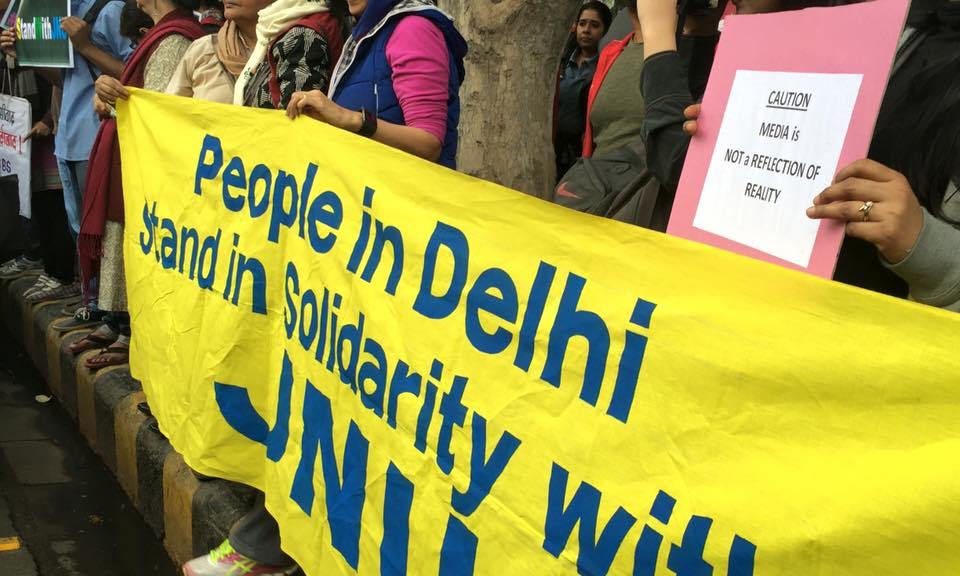
 

 We, students, professors, and practitioners of Communication and Media, condemn the recent attacks by the Indian state on students and faculty at Jawaharlal Nehru University (JNU) campus. Given the spurious nature of the claims mostly circulated through traditional and social media, we demand an immediate end to all police action on campus, a withdrawal of charges against the President of JNU Students’ Union, Kanhaiya Kumar, and JNU students Umar Khalid, Anirban Bhattacharya, Rama Naga, Ashutosh Kumar, and Anant Prakash Narayan, as well as an engaged effort to return peace and a climate of open debate to the university. We are troubled by the climate of authoritarianism being actively promoted by the Indian government in educational institutions and the concerted effort by the government to silence critical conversations. We are also disturbed by the attack on journalists by lawyers and goons close to the structures of power. Continue reading Communication Students, Practitioners, and Professors in Solidarity with Kanhaiya Kumar, Umar Khalid, Anirban Bhattacharya, Rama Naga, Ashutosh Kumar, and Anant Prakash Narayan and Jawaharlal Nehru University

The New School in Solidarity with JNU


We, the undersigned, students, faculty, alumni, and staff at the New School University, New York, stand in solidarity with the students, staff, and faculty at Jawaharlal Nehru University, New Delhi, in their protests against the militarization of the campus and suppression of dissent by anti-democratic and divisive Hindu nationalist groups allied with the Modi government. Continue reading The New School in Solidarity with JNU

University of Texas Students and Faculty stand with JNU


We, the undersigned, students, scholars, and faculty of the University of Texas at Austin, stand in solidarity with the students, faculty, and staff at Jawaharlal Nehru University, New Delhi against the illegal and unconscionable crackdown by police. We demand an immediate end to all police action on campus, a withdrawal of all frivolous charges against the President of JNU Students’ Union, Kanhaiya Kumar, and other students, as well as an end to the campaign of harassment and intimidation against students at the university. With them, we affirm the autonomy of the university as a non-militarized space for freedom of thought and expression. Accordingly, we condemn police presence on campus and the harassment of students on the basis of their political beliefs.  Continue reading University of Texas Students and Faculty stand with JNU

Bangalore Research Network’s Letter of Solidarity with JNU


We, the undersigned members of the Bangalore Research Network and a consortium of academics and researchers from Bangalore, declare our solidarity with the students and faculty of the Jawaharlal Nehru University, New Delhi protesting the illegal police arrest of JNUSU president Kanhaiya Kumar on charges of sedition. We unequivocally stand by them in affirming that universities are autonomous spaces for the free expression of a plurality of beliefs and cannot become military spaces of thought control that go against the very grain of a democratic society.  With them, we condemn the blatantly authoritarian attempt by the police and the central government to witch hunt students on the basis of their political beliefs. We also condemn the unethical media trial of JNU students such as Kanhaiya Kumar and Umar Khalid. Continue reading Bangalore Research Network’s Letter of Solidarity with JNU

The India I Came Back To: Namrata Sharma

This is a guest post by NAMRATA SHARMA


I will start this piece with a painful but short flashback tirade about myself. I moved back to New Delhi in 2014, after six long years in New York and Singapore. My decision to move back to the motherland was predominantly attributed to issues that a twenty-something grapples with when he or she is away from home and family. However, familial ties and emotional reasons aside, there was one factor which deeply resonated with me and was the driving force behind my decision to move back. This factor was – the liberty to express my thoughts and views on a topic, any topic, in an indulgent and lenient space, which, by virtue of being an Indian citizen, was guaranteed to me in India and not in other places. In India, this liberty transcended predictable spaces like classrooms, newsrooms and sophisticated editorial pages of the morning newspaper and was very organically present in the form of arm-chair political banter amongst friends and political conversations with family over dinner. Continue reading The India I Came Back To: Namrata Sharma

#NoDissentNoCountry #StandWithJNU

Williams College Stands with JNU!


http://https://www.youtube.com/watch?v=AQm_SvFKiJ4

Kajri Jain, University of Toronto


Aarti Sethi, (JNU 2009), Columbia University

A complete Hindi transcript and video of Kanhaiya Kumar’s speech is available here.

A complete English translation may be accessed here.

Rohith Vemula’s last note may be accessed here.

Solidarity Statement of Students from Northeast India, TISS, Mumbai 20th February 2016


We, the undersigned, students and research students from various states of northeastern region of India studying in Tata Institute of Social Sciences, Mumbai would like to highlight on the unprecedented shrinkage of academic spaces across various universities in India. We condemn the politically motivated interferences of the state in Jawaharlal Nehru University and in Hyderabad Central University (HCU), and other universities. We also condemn the mob justice perpetrated by lawyers against students, journalist, activists etc in the Patiala House Courts, New Delhi, and media trial led by prominent journalists from New Delhi. Continue reading Solidarity Statement of Students from Northeast India, TISS, Mumbai 20th February 2016

An Appeal to the Academic Community of Delhi for February 23 Rohith Vemula March, “Chalo Dilli” by University of Hyderabad Alumni

Dear friends,
We, the alumni of the University of Hyderabad, are writing to the fellow teachers, researchers and students of Delhi to request all to participate in the Chalo Dilli March, “Delhi for Rohith Vemula”, organised for the ideals of social justice and constitutional rights on 23 February 2016 from Ambedkar Bhawan to Jantar Mantar.

Continue reading An Appeal to the Academic Community of Delhi for February 23 Rohith Vemula March, “Chalo Dilli” by University of Hyderabad Alumni

Statement on the Events at HCU and JNU From Faculty of the Tata Institute of Social Sciences


We, the undersigned, are deeply shocked and dismayed by the processes that led to the suicide of Rohith Vemula at HCU in January and the ongoing attacks on students and faculty of JNU. At Hyderabad Central University, RohithVemula a Dalit research scholar was labelled as anti-national and driven to suicide in January through systematic persecution. At Jawaharlal Nehru University (JNU), New Delhi over the past few days, Kanhaiya Kumar, the President of the JNU Students Union is held in police custody on the trumped up charge of sedition. On February 15, 2016, the police stood by as mute spectators while a group of lawyers and hooligan elements attacked students and faculty of JNU who had gone to the Patiala House courts in Delhi in solidarity with Kanhaiya Kumar who was to be produced there. Continue reading Statement on the Events at HCU and JNU From Faculty of the Tata Institute of Social Sciences

Oxford University Members and Alumni in Solidarity with JNU: Oxford Students, Faculty and Alumni

Guest Post by students, faculty and alumni of Oxford University, UK

We, the undersigned members and alumni of the University of Oxford, stand firmly in solidarity with fellow students, teachers and scholars at the Jawaharlal Nehru University (JNU). We condemn the ongoing persecution of the student community in JNU, in particular the arrest of JNU Students Union (JNUSU) president Kanhaiya Kumar under sedition charges. We protest the use of institutional and state machinery to stifle dissent on campuses, and the attempt to persecute those whose views do not conform to the narrow narratives of ‘nationalism’, ‘nationhood’ and ‘Indian culture’ promoted and endorsed by the ruling party. We view the crackdown in JNU in a continuum with the use of state machinery to clamp down on dissenting views and ideologies on campuses, most prominently at the FTII, Jadavpur University, IIT-Madras and the University of Hyderabad (UoH). We would like to point out that it was a similar witchhunt, backed by state authority, that led to the suicide of Dalit scholar and student leader of the Ambedkar Students’ Association, Rohith Vemula. We also stand in solidarity with the ongoing rally hunger strike at UoH and the struggles of the Joint Action Committee for Social Justice, demanding justice for Rohith Vemula.

Continue reading Oxford University Members and Alumni in Solidarity with JNU: Oxford Students, Faculty and Alumni

Letter of Solidarity from International Association of Women in Radio and Television (India Chapter) for JNU

We the undersigned, from the India Chapter of the International Association of Women in Radio and Television (IAWRT), would like to place on record our solidarity with the students and teachers of the Jawaharlal Nehru University (JNU). We find the recent events that have taken place in JNU –  arrest of the JNUSU President Kanhaiya Kumar on charges of sedition, and a lookout by the police for several other students who allegedly raised anti-national slogans – extremely disturbing. We also feel that the use of the sedition law, which was enacted by British colonial government, draconian and has no place in India. A fundamental principle in a democracy is the right to free speech. Article 19 of the Indian Constitution grants it as a fundamental right, and the Indian courts have recognised this in the past, including in the case of Balwant Singh vs. State of Punjab. In this context, the framing of charges against the students of JNU is unacceptable, and should have no place in a democratic society.

Continue reading Letter of Solidarity from International Association of Women in Radio and Television (India Chapter) for JNU

#AssamwithJNU – Thousands take to the Streets in Assam: Bonojit Hussain

This slideshow requires JavaScript.

Last two days had seen several #AssamWithJNU #JusticeForRohith protests and rallies demanding justice for Rohith Vemula and against the assault on JNU, police crackdown and arrest of JNUSU President Kanhaiya Kumar under the charges of sedition, media trial of Umar Khalid, and the undeclared emergency in the country.

Continue reading #AssamwithJNU – Thousands take to the Streets in Assam: Bonojit Hussain

Undeclared Emergency? State Repression from JNU students to HONDA workers: Nayan Jyoti

Guest Post by Nayan Jyoti

[ Even as the repression on students in universities, continues, the BJP regimes in Rajasthan and Haryana have attacked peaceful assemblies of young workers in the National Capital Region (NCR). This calls for widening and deepening the resistance against the Modi regime, whose fascist character is now nakedly visible. When the state starts hunting down workers and students at the same time, it is time for workers and students (and their friends) to stand united together and resist the repression by all means necessary and possible. We are posting below an account by Nayan Jyoti, a young activist, of the violence unleashed by the BJP governments in Rajasthan and Haryana, in collusion with factory managements, using the brute force of armed police and hired thugs in the last few days, with the hope that it will add crucially to our understanding of what exactly is going on in India.The Modi regime is in a deep crisis, and the only way the BJP (both at the centre and at the provincial levels) knows how to respond is through violence. Modi is the best student of Indira Gandhi in Indian politics, and he is following totally in her footsteps, invoking exactly the same ‘Anti-National’ tag, especially in terms of the way she led up to the declaration of the emergency in 1975. Things are different now, but also very similar. This is the beginning, as the author of this post says, of an undeclared emergency. The difference between a declared and an undeclared emergency appears at the moment to be only a formality. It is time we saw through the veil of this formality.]

We #standwithJNU and raised our united voices against State repression and witch-hunt of students for #righttodissent since 9th February. On 18th February, more than 15,000 people said so clearly in Delhi and pointed out that this has directly followed in a coordinated manner more recently from the institutional murder of Rohith Vemula in HCU by the anti-Dalit administrations under influence of the BJP, and right-wing attack on FTII students to completely control freedom of thought and expression earlier and the murder of progressive intellectuals by right-wing groups in recent times.

As this terrorizing and silencing of progressive voices, students and intellectuals goes on by both the BJP government and its police-administration from the top and the RSS vigilante groups on the streets, another much more brutal crackdown on thousands of workers has just happened and continues in the Haryana-Rajasthan border.

Continue reading Undeclared Emergency? State Repression from JNU students to HONDA workers: Nayan Jyoti

Delhi Stands With JNU Students and Against the Evil Modi Regime

Because things are the way they are, things will not stay the way they are...”-

Bertholt Brecht

This slideshow requires JavaScript.

This afternoon saw an amazing, uplifting show of peaceful, joyful strength by students, young people, teachers, friends in Delhi, in support of JNU, in memory of Rohith Vemula, in solidarity with Kanhaiya, Umar and all the students in JNU who are being so stellar in their principled opposition to this evil, venal Modi regime. Reports of massive protests are coming in from Kolkata, Russia to and elsewhere. Something is changing in the air.
It was a perfect spring afternoon, overcast like our times, but breezy like our morale. There must have been at least 15,000 people on the march today. We met old and long lost friends and made new ones.

The gathering was totally peaceful. Young  women and men, student profits from JNU in the eighties, grey haired, felt young again as their student held aloft flowers, flags, signs and homemade banners. Everyone looked their best, as if they had come to a massive street party.

It was so infectious, the mood this afternoon, such a contrast to the vile bad temper of the men who attacked Kanhaiya and his supporters two days in a row at the Patiala House Courts two days in a row that the difference between two entirely different visions of politics was palpable on your skin. The contrast sent a clear message to all our senses.

The RSS-ABVP-BJP brand of politics is diseased. It’s on its last legs and that is why it is so desperate. It cannot perform, it has no ideas, it is morally and culturally bankrupt.

Universities are in crisis and all that the bad TV actress who makes a joke of her ministry (HRS) every day can think of today while thousands March against her and her boss is about sticking giant flagpoles into the ground and stitching gigantic silk shrouds for her  government and her party.

Modi, Rajnath and Manusmriti Irani should quake in fear. Their time is up.

Very proud of JNU students and the people of Delhi today.

#StandwithJNU #StandwithKanhaiya

#StandwithUmar

#Standwithallstudents

#NowitchHuntofStudents

“A Glorious Thing Made Up Of Stardust:” What Pat Parker & Rohith Vemula Ask Us to Consider Lata Mani

This is a guest post by LATA MANI

The first thing you do is to forget that I’m black
Second, you must never forget that I’m black

Pat Parker (1978)

In these opening lines of her poem, For the White Person Who Wants to Know How to be My Friend, Pat Parker names a paradox at the heart of challenging socially produced difference. Parker is speaking not to diversity in nature, nor to the diversity of nature. Not to the variations of appearance – size, shade, height, foliage, texture; or mode of expression – hoot, howl, accent, gesture, cultural practices. Her lines address a uniquely human phenomenon: prejudice. They speak to the poignant difficulty of challenging a spurious and malevolent construction of racial difference in a society still in the grip of its miasma.

I have recalled Parker’s lines many times in the days of sorrow, tumult and righteous rage that have followed Rohith Vemula’s suicide. “Rohith Vemula’s suicide.” I am holding off from saying “Dalit scholar Rohith Vemula’s suicide.” Or, as is now being said with good reason, “Dalit scholar Rohith Vemula’s institutional murder.” I defer by a couple of sentences a description of him that refers to the caste into which he was born; to honour if only symbolically his anguish that the contingent facts of his birth had indelibly defined his life.

Continue reading “A Glorious Thing Made Up Of Stardust:” What Pat Parker & Rohith Vemula Ask Us to Consider Lata Mani

Break Down the Barriers: Reading Robin T, Bhimrao and the Nation State in JNU

Jai Bhim, Joy Guru, Lal Salaam

Two of the greatest, crazies, most beautiful minds produced by the Indian subcontinent in the Twentieth Century would have been arrested by the police and attacked by the RSS, as ‘Anti-Nationals’, perhaps rightly so, had they been alive today.After all, they never stopped being young.


The Young Ambedkar
The Young Ambedkar

One of them was tall, you know him – the big guy, with  glasses, always dressed to the nines, (no itchy khadi or scratchy khaki would do for him) .

995
The Young Tagore

The other had long hair and a beard, and even became a contemporary artist in his old age.

The cops, or thugs-in-law of the RSS might even have said “saala JNU ka lagta hai” (looks like this ***** is from JNU).

So, here they are – Bhimrao Ambedkar (Baba Saheb), and Rabindranath Tagore.

Once again, Jai Bhim, Joy Guru. And pass the ammunition.

Continue reading Break Down the Barriers: Reading Robin T, Bhimrao and the Nation State in JNU

On framing JNU for an imaginary crime: Aditya Sarkar

This is a guest post by ADITYA SARKAR

JNU has entered an indefinite state of siege. Police have been swarming all over campus, raiding hostels, picking up students and interrogating them. The ABVP, predictably, have been directing them to the lairs of ‘anti-national elements’. When immense demonstrations of public solidarity with the accused students were organized, ABVP activists have attacked these, in one case mounting a violent physical assault on a visiting speaker. The JNU administration has gone to the extent of cutting off the power supply to the microphones used at a protest meeting. At Patiala House on Monday the 15th of February, the BJP’s MLAs and what appear to be a group of lawyers have assaulted JNU students, faculty and supporters in full view of the police, with what can only be regarded as smug impunity. More than one observer has remarked that this is the Emergency all over again.

It is clear that the arrayed forces of the central government are pitted against a campus which has long been an object of hatred for the Right. There’s no telling how matters will develop in the days and weeks to come. So it might be necessary to step back a bit and consider the sequence of events that led to the current situation.

In the past month, JNU students organized a protest meeting which raised the issue of Kashmiri rights, and drew attention – just as Rohith Vemula’s protest in Hyderabad had done – to the execution of Afzal Guru in 2013. Since the mainstream news outlets systematically censor any attempt to reopen that extremely murky case, it’s worth reminding ourselves of precisely why the execution was so controversial. The terrorist attack on Parliament in December 2001 produced a police investigation on which serious doubt was cast from the beginning. Afzal Guru’s laptop and mobile phone, key pieces of evidence, had not been sealed prior to investigation. One of the other accused in the case, a Delhi University lecturer (who was later emphatically acquitted) was viciously framed by Zee News, which used the police charge-sheet to make a documentary ‘establishing’ his guilt. The court proceedings were even more revealing. The Supreme Court admitted that there was no hard evidence to conclusively establish Afzal Guru’s involvement in criminal conspiracy. But these admissions were merely qualifications to what was perhaps the most extraordinary decision in the history of the judiciary in independent India. Afzal Guru was eventually hanged in 2013 on the basis that only this would appease ‘the collective conscience of the nation society’.

Continue reading On framing JNU for an imaginary crime: Aditya Sarkar

The Tendency of the Price of Young Life to Fall and the Hope that it May Rise

The war on young people continues. In this post we will only consider it’s arithmetic. Not even its algebra, simply its arithmetic.

I am prompted to do this by a strange acoustic co-incidence. While standing as part of a cordon of faculty and friends protecting the students of JNU on the public meeting on the 13th of April from a handful of ABVP activists who liked invoking blood and bullets in their slogans, I head one that stayed with me, and made me revisit a question that often bothers me.

lance-naik-hanumanthappa

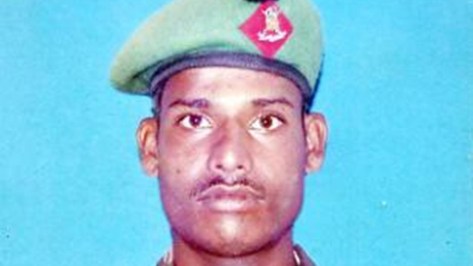
This was the slogan ‘Hanumanthappa hum sharminda hain, tere qatil zinda hain’. (‘Hanumanthappa we are ashamed, your murders are still alive’ ). Lance Naik Hanumanthappa, as we all know now, was a thirty two year old soldier of the Indian army who survived six days under an avalanche on the Siachen Glacier in Kashmir and then died of multiple organ failure in a Delhi military hospital. His young body must have had a tremendous and a passionate yearning for life. Sometimes I think of what a fine father or husband or lover or friend a man who loved life so must have been, could have continued to have been.

Continue reading The Tendency of the Price of Young Life to Fall and the Hope that it May Rise

Why our universities are in ferment

Published in The Hindu today

jnu-pic-800x600

Image courtesy Morung Express

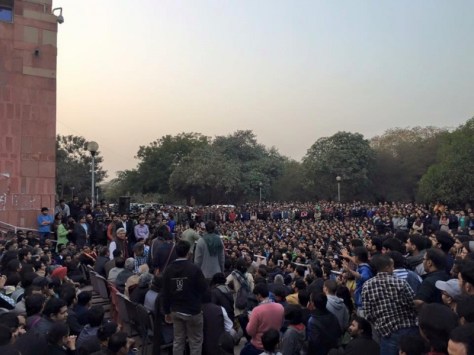
As over two thousand students and teachers of Jawaharlal Nehru University gathered peacefully on Saturday to protest police action on campus and the arrest of the President of the Students’ Union, a potentially dangerous stampede was set in motion at the front, when at Rahul Gandhi’s entrance, media people with cameras rushed unheedingly into the thickly clustered people seated on the ground. The situation was exacerbated by a further push into that space by about fifteen Akhil Bharatiya Vidyarthi Parishad (ABVP) activists holding black flags and shouting slogans against Rahul Gandhi. Within seconds, however, the students conducting the meeting had organized a human chain to hold back and corral the media and the ABVP safely into one corner, and the human chain was then immediately taken up by the hundreds of teachers present. Until Rahul Gandhi left, the handful of ABVP activists continued their slogans, but they could only be heard by those seated in their immediate vicinity.

This is how students and teachers have always maintained, through the gravest provocations, perhaps the most peaceful campus in the country. Debate and dissent have always been part of its ethos but never violence, an ethos unfamiliar to those who only know violent suppression of dissent. Continue reading Why our universities are in ferment

Stop the attack on Rohith’s mother! Solidarity Committee for Rohith’s mother Radhika

STATEMENT BY SOLIDARITY COMMITTEE FOR ROHITH’S MOTHER RADHIKA

We believe there  is a concerted effort on the part of the powers-that-be to diffuse the nation-wide mass protests against Dalit research scholar Rohith Vemula’s death and caste discrimination in higher educational institutions. They are keen to demonstrate that Rohith did not face caste discrimination by claiming that his mother Radhika is not a Dalit. Rather than addressing the critical issues that his death and the protests have raised, these misdirected attempts seek to dissolve the issue in narrow legalese. And thereby somehow save the people named in the students’ complaint from the stringent penal provisions of the SC/ST Atrocities Act. This malicious campaign is unethical, illegal and undemocratic. Continue reading Stop the attack on Rohith’s mother! Solidarity Committee for Rohith’s mother Radhika

Missing the Forest for Trees – Caste System’s Shadow on Rohith’s Suicide : Sanjay Kumar

Guest Post by Sanjay Kumar

(Photo Courtesy : Prokerala.com)

Mainstream politics over Rohith Vemula’s suicide is becoming hot and ugly. Although whisper campaigns against Rothith’s dalit identity were on since his suicide, the BJP’s central leadership had been relatively quiet after HRD minister’s rather shrieky ‘appeal’ to not play caste politics over his suicide. However, now it seems daggers are out. The party in power, whose two ministers are accused of creating conditions leading to Rohith’s suicide, has decided that Rohith’s non-dalit status is the dog it is going to beat to counter its anti-dalit image. Rohith’s mother is a Mala, a Scheduled Caste, who lives seperately from his father, a backward caste Vaddera. He got an SC certificate on the basis of showing that he grew up in his mother’s Mala household. BJP’s strategy may look petty, but it is based on the age-old great Hindu tradition which can not contenance any violation of the privileges of the patrilineal system. After all, marital rape does enjoy legal sanction in India to this day. Continue reading Missing the Forest for Trees – Caste System’s Shadow on Rohith’s Suicide : Sanjay Kumar