All posts by Aditya Nigam

After Garukhuti Scam – Towards United Assam Citizens Convention: Hiren Gohain et al

Following is a statement issued by some eminent citizens of Assam, issued in Guwahati on 3 July 2025. It calls for a civil society intervention, via the Assam United Citizens Convention to be held today and tomorrow (5 and 6 July), following the Garukhuti cow scam.

We have seen how our state is being run by the present government. The Garukhuti episode has made it amply clear how this government had thrown all the norms of government functioning to the winds and how favouritism and corruption have eaten into the core of governance. We have also seen how the chief minister of Assam is reacting to the situation and what he has been saying all the time. We think that the Garukhuti incident is not a single and isolated one. Garukhuti symbolises the basic character of Himanta Biswa Sarma government.

Continue reading After Garukhuti Scam – Towards United Assam Citizens Convention: Hiren Gohain et al

Conversations on Palestine: Teredide Mane O Baa Athithi

Conversations on Palestine with an activist, a poet, a scholar

Teredide Mane O Baa Athithi (Come in, I have opened my doors dear guest) is an offshoot of Mere Ghar Aakar Toh Dekho, a national campaign in India, in Karnataka. It aims to counter the forces of hate, bigotry and polarization that have gained ground in the country by redrawing boundaries and expanding notions of trust and community. The campaign involves participants from diverse backgrounds opening their own homes and hearts to guests from equally varied locations. Teredide Mane has grown as a community, learning and unlearning through practice the concepts of guest and host, home and house, consent and comfort, celebration and sharing, listening and observing—both commonalities and diversity. [Content and editing by Madhu Bhushan, Winnu and Anita Cheria. Illustrations and design by Winnu]

We invite you into this moving and powerful conversation that has been reproduced largely in the speakers’ own words, and hope that you will add to it and take it forward. Read the whole conversation here (https://shorturl.at/JzvI5). Or a shorter note on the conversation here (https://shorturl.at/NkLHz).

Over the past months, the genocide in Palestine has come up multiple times in our meetings. Apart from engaging in acts of protest and solidarity, there was a need to go beyond ‘news noise’, and meet people engaged with and from Palestine. We decided to create a virtual space, one that was safe and intimate, to be able listen deeply to friends we had connected with in the course of our work and life journeys. This conversation, with Lisa Suhair Majaj, Smadar Lavie and Issa Samander in October, 2024, came about as a result of this intention.

Lisa Suhair Majaj is a passionate Palestinian American poet whose writings and poetry echo with the spirit of the land and people that she was herself exiled and alienated from.

Continue reading Conversations on Palestine: Teredide Mane O Baa Athithi

The Everyday Ecological Justice Struggles Across India to save Commons, Humans & All Species: NACEJ

[We are publishing below a report of a press conference by the NATIONAL ALLIANCE FOR CLIMATE AND ECOLOGICAL JUSTICE that details the status of struggles for ecological justice from across the country. Lifting the mask off ritualistic official observances of the World Environment Day, while the government continues to wreak havoc on the ecology and the commons, this report gives a sense of the struggles in different parts of the country. At the end of this report is the link to its full online recording.]

As the world marked yet another Environment Day on 5th June, the National Alliance for Climate and Ecological Justice (NACEJ), a pan Indian forum of NAPM, brought together voices from different parts of the country in an online press conference on 6th June, to share the current status of ecological justice struggles. Speakers from Kashmir, Sikkim, Tamil Nadu, Madhya Pradesh, Maharashtra, Telangana, Rajasthan, Chhattisgarh, Haryana, Odisha, and other states addressed the Press Conference. These voices reinforced the reality that both the Central Govt and different states governments are majorly complicit in environmental violations, enabling large profiteering, extractive agendas of mega-corporations, unleashing repression on democratic movements. Moderated by well-known environmental activist Soumya Dutta, the meeting saw good participation from both media and movements.

Continue reading The Everyday Ecological Justice Struggles Across India to save Commons, Humans & All Species: NACEJ

Marxist Coordination Committee and Lal Nishan Party Merge with CPI(ML) Liberation: Dipankar Bhattacharya

[In two very significant developments in the non-mainstream Left, the Marxist Coordination Committee (MCC) of the Dhanbad-Jharkhand region and the Lal Nishan Party (LNP) of Maharashtra merged with the CPI(ML) Liberation. While the merger with the took place in September 2024, the one with the LNP happened on 31 May 2025. What is really significant about these two developments is that both the MCC and the LNP, in different ways moved away from orthodox thinking from the beginning. It is not surprising then that they decided to merge with the CPI(ML) Liberation, which in my reckoning, has made some very significant departures from orthodoxy on a range of issues concerning the Indian social and political scene (as also on matters such as democracy and climate change). It is no wonder then that while the MCC, founded by the legendary AK Roy, had developed strong ties of the trade unions in the colliery with the larger adivasi Jharkhandi society, the LNP in its time, distinguished itself by standing by and campaigning for Ambedkar in the early 1950s.

Here we reproduce two pieces by CPI(ML) General Secretary DIPANKAR BHATTACHARYA published in their journal Liberation. The pieces separately discuss the two mergers. – AN]

Lal Nishan Party’s Unification with CPI(ML): Towards a Stronger Communist Movement to Defeat the Fascist Offensive

To defeat the growing fascist offensive, India today urgently needs a stronger presence and role of the Left. The merger of the Lal Nishan Party of Maharashtra with the Communist Party of India (Marxist-Leninist), announced at a unity conference in Shrirampur on 31 May, marks an encouraging step in this direction. This unification brings together two great legacies of India’s communist movement in a state which has historically been the cradle of the quest for social equality. Maharashtra also happens to be the ideological fountainhead of Indian fascism and every advance of the communist movement in Maharashtra today has great value. The unification of LNP and CPI(ML) therefore evokes a lot of hope in the centenary year of India’s organised communist movement.

Continue reading Marxist Coordination Committee and Lal Nishan Party Merge with CPI(ML) Liberation: Dipankar Bhattacharya

Stop Forcible Dam Activity and Militarization in Siang Valley – Safeguard Ecology & Uphold Indigenous People’s Rights: Solidarity with Arunachal’s Indigenous Farmers

Following is a statement of All India Solidarity with Siang Indigenous Farmers’ Forum, endorsed by 43 organizations and fifty individuals.

The Siang river in Upper Siang district, Arunachal Pradesh. Photo courtesy Anupam Chakravartty, Down to Earth

We, the undersigned, express our solidarity with the Siang Indigenous Farmers’ Forum (SIFF), which has been spearheading the people’s protest against the proposed 11,500 MW Siang Upper Multipurpose Project (SUMP) of the National Hydro-electric Power Corporation (NHPC) in Arunachal Pradesh, which will be disastrous for this whole area. We support the demands of SIFF for withdrawal of Central Armed Police Forces (CAPF) deployed in Beging village for doing the Pre-Feasibility Report (PFR) of the project.

Continue reading Stop Forcible Dam Activity and Militarization in Siang Valley – Safeguard Ecology & Uphold Indigenous People’s Rights: Solidarity with Arunachal’s Indigenous Farmers

Stop This Insanity in the Name of Patriotism: Axom Nagarik Samaj

Statement by AXOM NAGARIK SAMAJ on the targeting of minorities today

Are we witnessing a textbook case of fascist tendencies being practised in Assam? How long can a section of religious minorities will be subjected to all kinds of atrocities and humiliation by branding them as Bangladeshi foreigners? They are being harassed and humiliated all the time. We have been told time and again that they are the cause of all our evils and they are a threat to our existence. How can the victims turn into victors? What a classic case of distorted logic.

We had a six-year-long Assam movement to get rid of the Bangladeshi foreigners. Then overnight AASU turned into AGP and ruled Assam for ten long years. Thereafter came  the Congress government which ruled Assam for 15 years when the present chief minister was in charge of the implementation of the Assam Accord. Then there was that famous declaration of Modi that all Bangladeshi foreigners would have to leave Assam with their baggage by 16 May, 2014. Now the BJP has been in power for the last 10 years. Nothing happened. Instead, the CAA was brought in to grant citizenship to a section of linguistic minorities. Come any elections, blame the religious minorities and do all kinds of nasty things to them and use them to win the votes of the majority community. The brandishing a particular religion as a threat and criminalizing the religious minorities has become a well-known tactic of the Hindutva brigade. Now they are going to issue weapons to the indigenous people against the religious minorities. Have we seen any civil war-like situation anywhere in Assam? Then why do you have to do this? Why promote this communal hatred and create tension among the common people? It is heartening that the people in Assam have generally maintained peace, except for a few minor incidents here and there, and have remained calm while maintaining amity among themselves everywhere in the state.

We appeal to all right-thinking people including the Opposition political parties and civil society organizations to condemn and oppose this nefarious design of the ruling combine. 

Ajit Kumar Bhuyan, President Paresh Malakar, General Secretary

Axom Nagarik Samaj

The Racist Conspiracy Theory of “White Genocide” and Trump’s Supposed “Ambush” of Cyril Ramaphosa

Today happens to be Africa day and my friend Professor Sabelo Ndlovu-Gatsheni reminds us in a social media post that Africa’s is still a liberation struggle, for “strategic natural resources (minerals. oil, and others) are on the soil of Africa but not yet in our hands.” Something of how Africa is still sought to be kept in subjugation was evident in Trump’s meeting with the South African President in the White House recently.

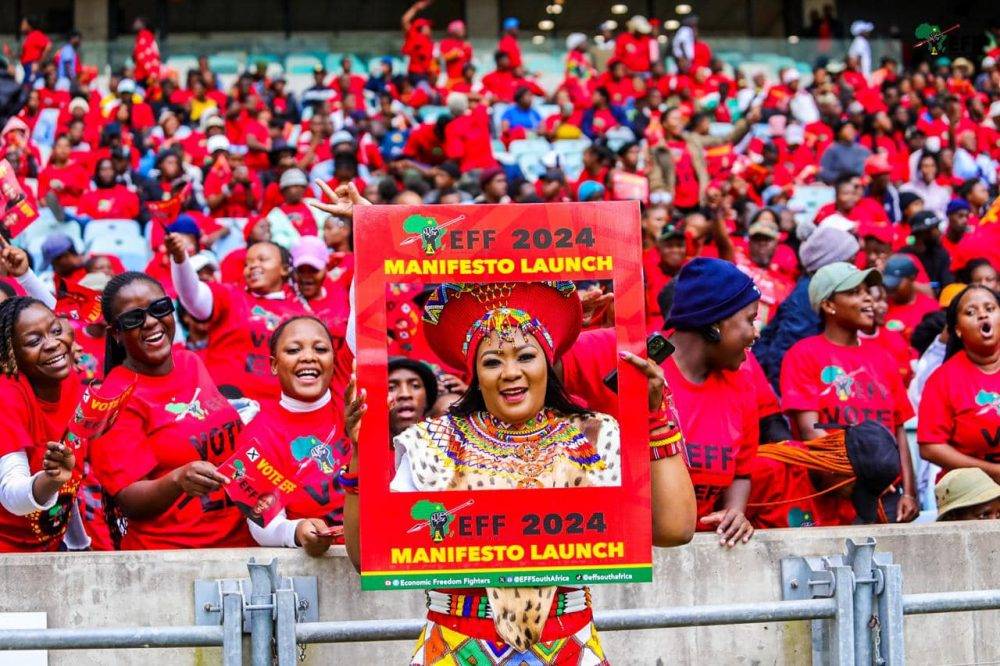
Julius Malema’s Economic Freedom Fighters, before the 2024 elections. Photo: EFF, courtesy Mail and Guardian

What happened in the White House meeting between POTUS Donald Trump and the South African President, Cyril Ramaphosa three days ago was quite appalling even for a non-South African to watch. The whole thing was a repeat performance, but far more humiliating, of what Trump and JD Vance had done with Volodymyr Zelensky, the Ukranian President. This meeting is being described as Trumps’ “ambush” of Ramaphosa. What is more, timed with this ambush was a staged “arrival” of some 49 families – men, women and children – claiming to be “farmers” fleeing the “white genocide” in South Africa. They were welcomed by US officials at the airport saying things like “Welcome to the United States, the land of freedom. It is such a pleasure to welcome you here” and so on.

Continue reading The Racist Conspiracy Theory of “White Genocide” and Trump’s Supposed “Ambush” of Cyril Ramaphosa

भारत-पाकिस्तान की तनातनी पर सीएफडी का वक्तव्य

सिटीजन्स फॉर डेमोक्रेसी ने निम्नलिखित बयान 17 मई को नई दिल्ली में जारी किया।

सिटीजन्स फॉर डेमोक्रेसी ने पहलगाम में हुए भयानक आतंकी हमले के बाद अपनी चिंता व्यक्त की है कि यह हत्याकांड विश्व शांति के लिए खतरा है और इसके परिणाम स्वरूप, अंतर्राष्ट्रीय कानून के शासन में और अधिक गिरावट आने की संभावना है, इतना ही नहीं, भारत के  लोकतंत्र के लिए  भी गंभीर ख़तरा पैदा हुआ है।

पहलगाम में जो कुछ हुआ, वह निस्संदेह राजनीतिक उद्देश्यों को प्राप्त करने के लिए आतंक का उपयोग था और स्थानीय कश्मीरी मुसलमानों के नेतृत्व में भारतीय आबादी के सभी वर्गों ने इसकी निंदा की। कश्मीरी मुसलमान पीड़ितों की सहायता के लिए आगे आए और इस कृत्य के खिलाफ बड़े पैमाने पर प्रदर्शन किए। हालाँकि, भारत सरकार की प्रतिक्रिया न तो संयमित थी और न ही संतुलित थी, बल्कि सत्तारूढ़ भारतीय जनता पार्टी और संघ परिवार की विचारधारा और घरेलू राजनीतिक उद्देश्यों से प्रेरित थी। हालाँकि प्रधान मंत्री  सऊदी अरब की अपनी यात्रा  अधूरी छोड़ कर  वापस आ गए, लेकिन सरकार द्वारा बुलाई गई सभी दलों की बैठक में उपस्थित नहीं रहे। सर्वदलीय बैठक में पहलगाम में हुई सुरक्षा चूक के बारे में खुल कर जानकारी नहीं दी गई, न ही जांच की कोई रूपरेखा घोषित की गई। दोष का ठीकरा तुरंत पाकिस्तान पर फोड़ा गया, साथ ही सिंधु जल संधि को स्थगित करने जैसी कार्रवाई की गई, जिससे कुछ आतंकवादियों की कथित हरकतों के लिए सभी पाकिस्तानी लोगों को सामूहिक सजा दी गई। संयुक्त राष्ट्र सुरक्षा परिषद में पेश करने के लिए आतंकवादी हमले में पाकिस्तान की साँठगाँठ के  कोई ठोस सबूत जुटाने का प्रयास नहीं किया गया।

Continue reading भारत-पाकिस्तान की तनातनी पर सीएफडी का वक्तव्य

Statement on India-Pakistan hostilities by Citizens for Democracy

The following statement issued by the Citizens for Democracy in New Delhi on 17 May 2025 on the war and its aftermath.

Citizens for Democracy expresses its alarm at the aftermath of the horrific terror attack in Pahalgam, which endangers world peace and leads to further breakdown in the rule of international law, as well as poses a further threat to democracy within India itself.

What happened in Pahalgam was undoubtedly the use of terror to achieve political objectives and it was rightly condemned by all sections of the Indian population, led by local Kashmiri Muslims themselves, who rushed to the aid of the victims and held huge demonstrations against the act. The response of the Government of India was, however, neither measured nor balanced, but was dictated by the ideology and domestic political objectives of the ruling Bharatiya Janata Party and the Sangh Parivar. Though the Prime Minister cut short his visit to Saudi Arabia and rushed back, he did not address the meeting of all parties that was convened by the government itself. In the all-party meeting, the major security lapses in Pahalgam which allowed the terror attack to happen were not adequately explained, nor was any modality of enquiry announced. The finger of blame was immediately pointed at Pakistan, along with actions like putting the Indus Water Treaty in abeyance, thereby inflicting collective punishment on all Pakistani people for the purported action of a few terrorists. No effort was made to gather hard evidence to show the Pakistani state’s involvement in the terror attack and present to the UN Security Council.

Continue reading Statement on India-Pakistan hostilities by Citizens for Democracy

The Troll Army’s Inglorious War: Alok Ranjan

Guest post by ALOK RANJAN

Image courtesy Satish Acharya

Given its organizational form and nourishment, it is difficult to imagine that the troll machine can genuinely feel. But it has been trained in demonstrations of outrage. One section of the online machine felt betrayed by the declaration of a ceasefire between India and Pakistan. Shocked by the ‘premature’ end of what was desired as a ‘decisive’ war, it lamented that the background conditions of an avenging solidarity and armed forces’ bravery were left under-utilised as Pakistan remained one nation, unlike its split during Indira Gandhi’s time in 1971.  

Continue reading The Troll Army’s Inglorious War: Alok Ranjan

Axom Nagarik Samaj Condemns the Attacks on Independent Media Platforms

The following is a statement issued by AXOM NAGARIK SAMAJ

Axom Nagarik Samaj condemns the banning of independent media platforms

Guwahati, 10 May: The terrorist attack at Pahalgam was an act of cowardice. To retaliate this the Indian armed forces conducted the ‘Operation Sindoor’ and destroyed several terrorist establishments inside Pakistan. Indian public and political parties irrespective of their ideological affiliation stood solidly behind our armed forces. It goes without saying that the national security of the country is of paramount importance. There shouldn’t be any let up in it. However, on the pretext of escalation of tensions between India and Pakistan there shouldn’t be any curtailment of freedom of expression which is a fundamental right. But unfortunately government of India has done exactly that by banning and blocking ‘4pm’ News Network, the YouTube channel of Punya Prasun Bajpai and ‘The Wire’. These are all truth speaking, independent and trust worthy media platforms. In the time of war mongering, spreading of fake news and falsehood by most of the mainstream electronic media, they tried to report and inform public objectively and truthfully. These platforms are manned by best of professional journalists in the country. What government has done is nothing but gagging of the independent media which is utterly harmful for a democracy. We condemn this and demand that the banning and blocking of all the three media platforms are withdrawn immediately. 

Ajit Kumar Bhuyan, President,

Paresh Malakar, General Secretary 

Axom Nagarik Samaj

‘The Old is Dying’ – Notes on the Global Crisis of Democracy

Reflecting on what he called the “crisis of authority” or the “crisis of hegemony” from inside Mussolini’s prison, Antonio Gramsci had observed,

“The crisis consists precisely in the fact that the old is dying and the new cannot be born; in this interregnum a great variety of morbid symptoms appear.” (Selections from the Prison Notebooks, International Publishers, 1971, p. 276)

Reduced by Slavoj Zizek to a meaningless tweet that substitutes the last part with his own pop culture expression “now is the time of monsters”, it has become a kind of substitute for thinking what the crisis actually is all about.

Gramsci in fact, was hardly talking about pop culture “monsters”. He was thinking about a very new phenomenon of his time but which has become far more serious today – the crisis of the political party. The crisis of hegemony is tied in his above reflections, to the fact that “the great masses have become detached from their traditional ideologies and no longer believe in what they used to believe previously etc.” (SPN: 276)

Continue reading ‘The Old is Dying’ – Notes on the Global Crisis of Democracy

L’affaire UoH – How much land does a university want? Nithin Jacob Thomas

Guest post by NITHIN JACOB THOMAS

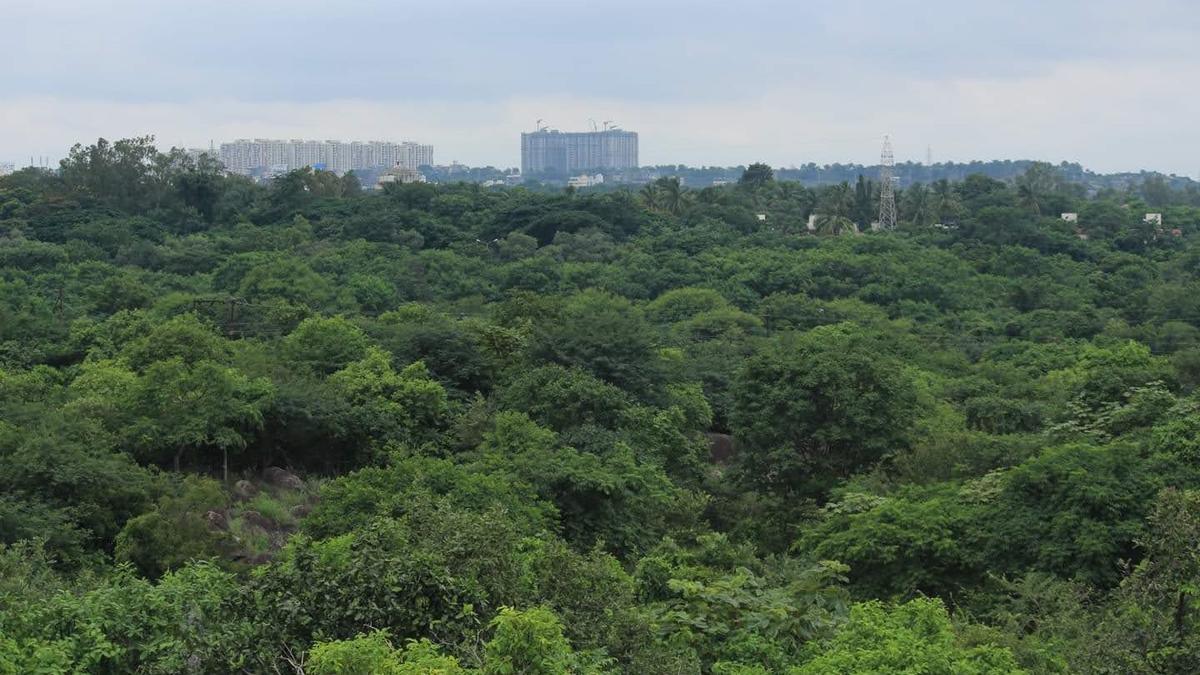
Recently, the students of the University of Hyderabad were protesting the Telangana state government’s bulldozing of 400 acres of ecologically vibrant, species-rich land within the university, undertaken as a preparatory step to auction it off. The state government sought to quell the protest by force, asserting that the land does not belong to the university and that it is within its rights to auction it. However, the Supreme Court has intervened and stayed the activities for the time being. Ego-bruised by the setback they have faced at the hands of the campus community, the Telangana government has now proposed that the entire 2300 acres of the university be turned into an eco-park, uprooting the campus in toto to a hundred-acre campus on the city’s outskirts.

Kancha Gachibowli forest, image courtesy The Hindu

Strangely, the university has not secured legal rights for the land it has occupied for several decades. However, the emphasis in the following note is on an aspect of the protest that lies beyond the legal dispute over ownership. It rather seeks to articulate the inarticulable—why the preservation of the ecology of these 400 or 2300 acres is not a standalone question but one that co-constitutes the very question of preserving the university itself.

Continue reading L’affaire UoH – How much land does a university want? Nithin Jacob Thomas

We are No One – নির্বাচনের প্রাক্কালে পশ্চিমবঙ্গের মুসলমান : Sadique Hossain

Guest Post by SADIQUE HOSSAIN

[The following post by writer Sadique Hossain highlights the way in which with approaching state elections, Bengal’s Muslims are being increasing forced into silence, as contending political parties, especially the CPI(M) and the TMC, stake out their respective agendas. While the stance of all parties is telling, that of the Left is particularly myopic, argues Hossian. AN ]

2026-এ পশ্চিমবঙ্গে বিধান সভার নির্বাচন হতে চলেছে৷ বাকি প্রায় দশ মাস৷ কিন্তু এখন থেকেই মুখ্য দলগুলো তাদের ন্যারেটিভ কী হতে পারে – তা প্রায় স্পষ্ট করে দিয়েছে৷ তারা দৃশ্যত রমজান মাসটিকেই বেছে নিয়েছিল ভোটের দামামা বাজানোর কাজে৷ 

ইদের কিছুদিন আগে সেটা শুরু হল বিজেপির বিধায়ক শুভেন্দু অধিকারীকে দিয়ে৷ তিনি বিধানসভার বাইরে ঘোষণা করলেন – বিজেপি ক্ষমতায় এলে তৃণমূল থেকে নির্বাচিত মুসলিম বিধায়কদের চ্যাঙদোলা করে রাস্তায় ছুঁড়ে ফেলবেন৷ তাঁর বক্তব্য ধ্বনিত হতে থাকল বিজেপির অন্যান্য বিধায়কদের গলাতেও৷ ইদের পরেই রামনবমী ছিল৷ মাঝখানে ওয়াকফ বিল পাশ হয়ে গেল লোকসভা আর রাজ্যসভাতেও৷ এরমধ্যে তৃণমূলের হুমায়ুন কবীর শুভেন্দুর কথার প্রেক্ষিতে বললেন শুভেন্দুকে মুর্শিদাবাদে ঢুকতে দেওয়া হবে না৷ এমনকি জোর করে মুর্শিদাবাদে ঢুকতে এলে, দাঙ্গা বাধাতে এলে ভাগীরথের জলে ভাসিয়ে দেওয়া হবে৷ এক্ষেত্রে তৃণমূল অবশ্য তাঁকে থামাতে দেরি করল না৷ শো-কজ করা হল৷ এবং হুমায়ুন কবীর প্রথমদিকে ফোঁসফোঁস করলেও পরবর্তীতে চুপ করে গেলেন৷ 

Continue reading We are No One – নির্বাচনের প্রাক্কালে পশ্চিমবঙ্গের মুসলমান : Sadique Hossain

Attacks on the Kancha Gachibowli Forest (KGF) – Capitalist Exploitation of the Human-Nature Relationship: Suddhabrata Deb Roy

Guest post by SUDDHABRATA DEB ROY

Land forms one of the most important planks of private property, because the appropriation of land (or ‘soil’ if one is to follow Karl Marx’s usage) forms the core of capitalist development, and since capitalism cannot sustain without the creation of class antagonisms and the appropriation of productive capacities of workers,[1] capital further uses the appropriation of land as a tool to exploit the non-capitalist classes. This results in the gradual separation of the worker from nature and thus eventually from the society itself, resulting in a state of alienation, which is used to create a ‘certain quantity of labour stocked and stored up’.[2] This stocked up/stored-up labour, as Marx explains, becomes capital. The relationship between manufacturing – the foundation of industrial capitalism – and nature – reflected in Marx’s usage of ‘soil’ – was an integral part of Marx’s definition of ‘capital’ under advanced capitalism. For example, in the discussion on ‘Bonds, or stock’, Marx had quite explicitly put up the relationship that capitalist development shares with the ecological world: ‘Bonds, or stock, is any accumulation of the products of the soil or of manufacture. [This] Stock is only called capital when it yields its owner a revenue or profit’.[3] The struggle for ecological justice thus constitutes an important aspect of the broader social justice movement because land relations constitute an integral part of the social relations, which in turn constitute the basis of not only capital but also the working class itself.[4] It is interesting to view the recent agitation against the auctioning of land within the campus of the University of Hyderabad (UOH), or the Hyderabad Central University (HCU), surrounding the proposed construction of IT parks by deforesting the Kancha Gachibowli Forest (KGF) in this context.

Continue reading Attacks on the Kancha Gachibowli Forest (KGF) – Capitalist Exploitation of the Human-Nature Relationship: Suddhabrata Deb Roy

The Three-Language Controversy – Response to a Disagreement on Hindi: Vipin Kumar Chirakkara

Guest Post by VIPIN KUMAR CHIRAKKARA

The state of the controversy

As the debate on the three-language policy has intensified, what was originally an exchange between ministers of the union government and the government of Tamil Nadu, or between leaders of the Bharatiya Janata Party (BJP) and the Dravida Munnetra Kazhakam (DMK), has become a subject of commentaries and criticisms coming from observers, intellectuals and activists. The union government says that no state could be exempted from the implementation of the three-language formula as envisioned in the New Education Policy (NEP) 2020 and adds that Hindi is not made mandatory under the present formula. The condition is that two of the three languages must be native Indian languages. The DMK leadership argues in response that the three-language policy can still be an indirect route to push Hindi into the state. The latter has appeared firm in its argument that it is the state’s prerogative under the federal system to determine its language and education policy (though during emergency education was shifted to the concurrent list of the union government). It also opposes the measure adopted by the union government, that is, to link the funding under the Samagra Shiksha Abhiyan to the implementation of NEP 2020 and the language formula it includes. The parties which are not in alliance with the DMK in the state allege that the DMK has staged this conflict in order to ignite sub-national/regional sentiment to strengthen its position before the elections.

Continue reading The Three-Language Controversy – Response to a Disagreement on Hindi: Vipin Kumar Chirakkara

Reflections on the Kafila Journey – Looking Back at a Tumultuous Experience

An expanded version of the presentation   at the panel on Kafila held as part of the W.I.P alt.FEST held in Bangalore and Delhi in  December 2024. While the first post in this series by Subhash Gatade is linked below in the text, the third by J. Devika can be read here.

Kafila was formally launched on 6 November 2006 at a session of the India Social Forum in Delhi, though its first post had gone up a couple of weeks earlier, on 19 October. However, there is a prehistory to the actual formal formation of Kafila which goes back to two earlier movements that had brought many of us together.

As rightly mentioned by Subhash Gatade in his reflections, the first of these was the movement against the relocation of polluting/ hazardous industries starting from late 1996. It was this movement that, perhaps for the first time in India brought the issue of workers’ rights into the discourse on urban pollution and environment. It took the discussions on urban planning, linking air and water pollution, zoning, transport policy and questions of workers’ occupational health, outside the charmed circles of urban planners. Initiated by the Indian Federation of Trade Unions, the formation of the Delhi Janwadi Adhikar Manch was the platform that had enabled this by bringing all of us together.

Continue reading Reflections on the Kafila Journey – Looking Back at a Tumultuous Experience

Democratic Teachers’ Initiative Seeks Solidarity from Wider Community against Termination of Faculty Members in AUD

We are reproducing below a statement by the Democratic Teachers’ Initiative seeking wider support from the university community in the struggle against the termination of employment of Prof Sali Mishra and Prof Asmita Kabra by the Ambedkar University Delhi administration. Those willing to sign may please do so by clicking on the link at the end of the statement.

We express deep shock and rage over the termination of two esteemed faculty members of Dr. B. R. Ambedkar University (AUD), Prof. Salil Misra and Prof. Asmita Kabra, and request your solidarity in building a struggle against this unprecedented and grave act of injustice.

Continue reading Democratic Teachers’ Initiative Seeks Solidarity from Wider Community against Termination of Faculty Members in AUD

Stop Arbitrary Detentions and Intimidation, Save Ecology & Uphold Democratic Rights in J&K and entire Himalayan Region: Statement by 250 organizations and individuals

Following is a statement issued by 250 organizations and individuals, including the National Alliance of People’s Movements (NAPM) against arrests and intimidation of activists raising concerns regarding the ecological impact of so-called “developmental” projects. The statement was issued on 13 November 2024

Stop Arbitrary Detentions and Intimidation of Social & Environmental Activists in Jammu & Kashmir

Save Ecology & Uphold Democratic Rights in J&K and entire Himalayan Region

National Alliance of People’s Movements (NAPM), along with other people’s organizations and concerned citizens from across India strongly condemns the arbitrary detention of social and environmental activists in Jammu & Kashmir under the Public Safety Act (PSA). Those detained under the provisions of J&K Public Safety Act, 1978, include Mohammad Abdullah Gujjar (resident of Sigdi Bhata), Noor Din (resident of Kakerwagan), Ghulam Nabi Choppan (resident of Trungi – Dachhan), Mohammad Jaffer Sheikh (resident of Nattas, Dool) and Mohammad Ramzan (resident of Dangduroo – Dachhan), trade union leaders from Kishtwar district.

Continue reading Stop Arbitrary Detentions and Intimidation, Save Ecology & Uphold Democratic Rights in J&K and entire Himalayan Region: Statement by 250 organizations and individuals

Urgent Letter to the DGP, Chhattisgarh Regarding Unlawful Detentions and Extra-Judicial Killings in Bijapur District : NAJAR

Following is a letter from the NATIONAL ALLIANCE FOR JUSTICE ACCOUNTABILITY AND RIGHTS regarding recent unlawful detentions and extra-judicial killings in Bijapur.

Urgent Letter to the DGP, Chhattisgarh Regarding Unlawful Detentions and Extra-Judicial Killings in Bijapur District 

13th Nov, 2024

To,

Director General of Police, Govt. of Chhattisgarh,  Raipur, Chhattisgarh 

Sub: Unlawful Detentions and Extra-Judicial Killings in Bijapur District – Seeking Immediate Release of all detenus and impartial inquiry – Reg

Sir,

We the undersigned, as members of a national collective of lawyers, law students, law professors, and other legal professionals, called National Alliance for Justice, Accountability and Rights (NAJAR) write to express serious concern regarding recent actions by security forces in Bijapur District, Chhattisgarh, on 8th Nov, 2024. The mass detention of individuals, including prominent activists, as well as reported killings, raises grave concerns about due process, excessive use of force, and adherence to legal standards.

Continue reading Urgent Letter to the DGP, Chhattisgarh Regarding Unlawful Detentions and Extra-Judicial Killings in Bijapur District : NAJAR

Beyond ‘Islamists vs Awami League’ – The Political Reality of July Uprising of Bangladesh: Sohul Ahmed

Guest post by SOHUL AHMED

Students protesting in Uttara, Dhaka, August 2, 2024. Photo: Ashraful Alam

Sheikh Hasina, often labelled as fascist and autocratic leader in Bangladesh, was forced to flee the country following a popular uprising in July-August 2024. Many writings have appeared exploring the character of the movement and the consequent developments. Recently, renowned Indian historian and journalist Vijay Prashad published an article titled ‘Will Bangladesh be another Egypt?’, where he expressed the concern that Bangladesh could follow a path similar to Egypt’s. Vijay presents the  popular uprisings as both a continuation and, to some extent, a counter-response to the Shahbagh movement, while drawing parallels to the Arab Spring. However, his disregard for certain political realities in Bangladesh—such as the country’s long tradition of democratic movements and the presence of major centrist parties like the BNP—makes his comparison uneven and incomplete in some respects.

Continue reading Beyond ‘Islamists vs Awami League’ – The Political Reality of July Uprising of Bangladesh: Sohul Ahmed