All posts by Aditya Nigam

Anti-Conversion and Ghar Wapsi, Or Hindutva’s Doublespeak: Charu Gupta

Guest post by CHARU GUPTA

The synchronised vocabulary of anti-conversion by the BJP and that of reconversion by the VHP and Dharm Jagran Samiti, an RSS affiliate, reveals the intimate relationship between the two. Anti-conversion and reconversion are two sides of the same coin. Even though the Dharm Jagran Samiti dropped its plan to ‘reconvert’ 4000 Christians and 1000 Muslim families in Aligarh on 25 December, due to pressures from a parliament in session as well as other protests, the day has had strategic significance. Christmas Day has been given a different meaning by the Hindutva brigade — the birth anniversaries of Madan Mohan Malaviya, one of the stalwarts of the Hindu Mahasabha, and Atal Bihari Vajpayee, the eminent BJP leader. Equally critically, on 23 December 1926 Swami Shraddhanand, the leading ideologue of the shuddhi movement (purification; Hindu movement in the late nineteenth and twentieth centuries to reclaim those who had converted from Hinduism to other religions) was assassinated by a Muslim fanatic, and on 25 December, a condolence motion was moved at the Guawhati session of the Congress.

The twin strategies of anti-conversion and ghar wapsi have a long history and past, which saw its efflorescence in the shuddhi movement, but have become much more aggressive in the present context. As part of their community and nation making rhetoric, the Arya Samaj and the Hindu Mahasabha had launched the programme of shuddhi on a large scale in Uttar Pradesh in 1923. Though Arya Samaj had stronger roots in Punjab, shuddhi movement was more effective in UP. Various scholars have pointed to the communal character of the movement. A note prepared by the criminal investigation department at that time stated that though the movement had older origins, ‘its application to mass rather than individual conversion gave it a special prominence’ in 1923. Shuddhi came to be touted as a movement to reclaim the ‘victims’ and protect the ‘faithful’. Reconversion attempts have since been a part of agenda of various Hindutva outfits, and the present assertions should be seen in that context. Today, organisations like the VHP and Dharm Jagran Samiti have acquired a new importance and are emboldened to not only challenge conversions in an organised manner, but also to simultaneously aggressively campaign for reconversion. Just as shuddhi became an instrument for Hindu communal mobilization in early twentieth century, ghar wapsi is fulfilling the same role today. Continue reading Anti-Conversion and Ghar Wapsi, Or Hindutva’s Doublespeak: Charu Gupta

“Welcome to the Land of Enlightenment”: Kaveri Gill

Guest post by KAVERI GILL

Bihar Tourism’s Neglected Treasures

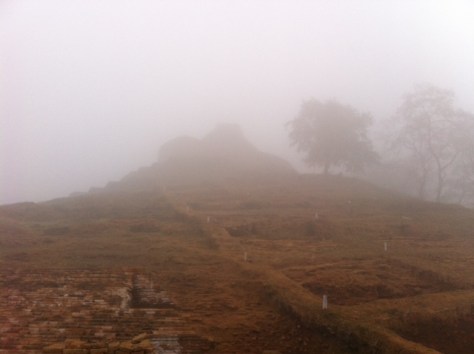
Kesariya Stupa East Champaran

A recent work trip took me to the north-east of Bihar, the poorest region of a state with ‘critical’ poverty incidence by any measure. For instance, within the state, on NSS 2004-05 data, West Champaran is the worst-performing district on headcount ratios (76.9) in rural India (Chaudhuri and Gupta, Economic and Political Weekly, 2009). Such destitution was on ample evidence amongst the segregated group of mahadalit and minority women members of a self-help group we spoke to, in a tola with no electricity and only candles to dispel an eerie fog settled over the village at dusk. Of 13 of them, 11 had repeat experience (up to three times per woman) of losing a child in the last trimester of pregnancy, just after giving birth or of a child under 5 years of age.  It was from Champaran that Gandhi first led landless labour and tenants or ryots, in his first satyagraha against the British, protesting the coerced cultivation of the cash crop, indigo. Almost a century later, not much has changed in tangible terms for the population of this part of the democratic Republic of India. Continue reading “Welcome to the Land of Enlightenment”: Kaveri Gill

A Massacre is a Massacre and There is no Good Taliban: S. Akbar Zaidi

Guest post by S. AKBAR ZAIDI [This post was sent to us by our friend S. Akbar Zaidi. Though published earlier in The International News of Pakistan, we are reproducing it here because it represents a position that is felt by many inside Pakistan but which right-wingers in India would love not to see. Like right-wingers and Talibanis in Pakistan, our very own Hindutvavadis too thrive on presenting a monolithic picture of something called ‘Pakistan’.]

This was a massacre, nothing less. We should call it that, nothing less. We may want to call the children ‘shaheed’, but they were not engaged in any war against anyone. They were too innocent and blameless for this. They were victims. Let us call them that. They were victims of our politics, of our opportunism, of hiding in the dark, and especially of protecting the murderers. Do we simply pray for innocent victims, and absolve ourselves of the crimes that we have allowed to persist which resulted in this massacre? As Mohammad Hanif has so eloquently argued, Pakistan’s civil and military leadership needs to examine their own bloodstained hands when they raise their hands in prayer. It was the bloody Taliban butchers who killed these children, not militants or some obscure, unspecific category called ‘terrorists’. Let us name them for who they are. We cannot hide away from this reality and unless we name names, we will not alter our political economy, our direction. If we are waiting for the good Taliban to emerge and denounce this massacre, we need to stop hoping. We must stop differentiating between different types of killers. There is no good Taliban, just one ideology represented and manifest in different groups and forms. Continue reading A Massacre is a Massacre and There is no Good Taliban: S. Akbar Zaidi

Taliban Attack – the Limits of Savagery: Akhlaq Ahan

Guest post by AKHLAQ AHAN

Every sane person is aghast to see what has happened in Peshawar, where Taliban’s attack on a school has crossed all limits of savagery and senselessness. They killed over 140 innocents mostly children, after taking them hostage, burned a teacher with gasoline and made the students watch the ghastly act.

Historically the area is part of the region known as ‘Khorasan e Buzurg’ or the greater Khorasan spanning over the so called North West Frontier, Afghanistan, North East Iran and erstwhile Emirate of Bukhara. The area, for thousands of years, has been the heart and mind of Asia; as this was the region where Gathas of Avesta and Vedas were compiled, Buddhist teachings flourished and survived, Persian traditions were revived, the seekers of truth flocked around Sufi masters to be enlightened. This is the land that produced personalities like Zarathustra, Panini, Alberuni, Khwaja Ansari, Data Ganj Bakhsh, Khwaja Gharib Nawaz, Rumi, Jami, Rahman Baba and hundreds of others. Scores travelled to the region to seek knowledge and training like Faxian, Xuanzang, Yijing, Shams Taprez (Tabrez), Amir Khusraw, Guru Nanak, Jamali and countless others. Though the region has seen occasional strife in the past too but the traditions of inclusion had continued to prevail till about a couple of centuries ago, when these values began to face systematic attacks. A few like Bacha Khan, in his autobiography, gauged the extent of the spread of these exclusionist ideas and warned against them. Continue reading Taliban Attack – the Limits of Savagery: Akhlaq Ahan

Why Should Adivasis Bear the Burden of ‘National Development’? Deba Ranjan

Guest post by DEBA RANJAN

On 25th August 2014 large number of armed police including CRPF with magisterial power reached at the top of the Baphlihill, where Utkal Alumina of Aditya Birla – Hindalco is continuously transporting bauxite through trucks to its Doraguda Alumina Plant. They started beating the villagers of Paikakupakhal. “They were in 25 four wheelers and one bus” Padman Nayak of the same village said. Many got the injured and three dalit villagers namely Mangaldan Nayak (30 years), Kalendra Nayak (30) and Ms Kiyabati Nayak got seriously injured. Kalendra got treatment outside but again was lifted from the Medical by the police so that he may not speak about such action of police to the outside world. Both print media and TV channels (except one newspaper) did not cover the incident. The local journalist of that newspaper later on was harassed by the goons not to write more on it.

I had been to Siju Mali few days before and went to the top of the Hill. It falls in Kashipur area of Odisha just behind the Niyamgiri hill. For last few months this Siju Mali and its adjacent Kutru Mali, two bauxite hill ranges, have been in news because the Vedanta International Limited (VIL) has kept its eyes on it.

After the Lok Sabha election, between April and November 2014, Anil Agrawal, director of VIL has met Odisha Chief Minister Naveen Patnaik thrice and every time he comes out with fully glowing remarks that the latter assured him of transferring the bauxite hills to the Company. It is quite possible too. Election experts have highlighted corporate funding behind Biju Janata Dal’s election campaign and the State Election Commission is unmoved on such complaints. Continue reading Why Should Adivasis Bear the Burden of ‘National Development’? Deba Ranjan

Human Rights Commission of Pakistan Condemns Killing of Children in Taliban Attack

The HUMAN RIGHTS COMMISSION OF PAKISTAN has issued the following statement on the Taliban attack on school children in Peshawar

December 16, 2014

Lahore, December 16: The Human Rights Commission of Pakistan (HRCP) has called the killing of more than 120 children in a Taliban attack on an army-run school in Peshawar a national tragedy which it said must open the eyes of anyone still harbouring any doubts that Taliban and Pakistan could coexist.

In a statement issued on Tuesday, the Commission said: “HRCP is deeply saddened by the large number of children killed in the Taliban attack on ArmyPublic School in Peshawar. This is a national tragedy of immense proportions, and an extremely sad day for Pakistan. Our heart goes out to the families of the children whose lives have been cut short by this abhorrent act of terrorism.

“The target was an army-run school, but it was a school nonetheless. It is not children who fight against the Taliban. And yet the choice of the target and the heavy casualties among the children leave no doubt that the massacre was aimed at killing as many children as possible.

“Nothing, including religion, norms of armed conflict or even common decency, justifies such brutal targeting of children. But it is no secret that the killers and those who dispatched them to attack the school have respect neither for religious commandments nor notions of civilised or decent behaviour. The targeting of children made sense to them because they stand for blood-letting and not much else.

“HRCP reiterates its firm belief that Taliban and Pakistan cannot coexist and anyone still harbouring any notions to the contrary is naive beyond belief.

“It had already been established, much before Tuesday’s massacre of children in Peshawar, where the Taliban stood in terms of education or value of children’s lives. Their actions today have shown once again that Pakistan will not know peace until this madness is taken on in all its manifestations and defeated. Continue reading Human Rights Commission of Pakistan Condemns Killing of Children in Taliban Attack

From a Professor to a Showman: Kishen Pattnayak on Prannoy Roy

Translated from the original Hindi by Akhil Katyal

Kishen Pattnayak (1930-2004) was a socialist thinker and writer. He had been a member of the Indian parliament from Orissa. Pattanayak was the founding editor of a Hindi monthly periodical called ‘Samayik Varta’. In this Hindi essay ‘Professor Se Tamashgeer’ published in March, 1994, he understands Prannoy Roy as representative of a new class of intellectuals which came into being precisely with the changing economic policies of the Indian government in the early ’90s.

Those who do not know English in this country might not know Prannoy Roy. But knowing him is important because Prannoy Roy represents a new social phenomenon. Prannoy Roy’s fame has been sealed by the program “The World This Week” running every Friday on Doordarshan. Not unlike a magician putting on a show, it has lately become quite an art for Doordarshan to concentrate the attentions of the TV viewers and keep them spellbound with only select news and statements on the channel. Pritish Nandy’s show and Prannoy Roy’s weekly program etc. are prime examples of this art.

Among the country’s intellectuals, such folks must surely be rare, who apart from being immensely intelligent, can also put on a circus-show in the middle of a street. Television professionals are always on a hunt for such gifted intellectuals. Through them, the TV business gets some intellectual prestige, making it reputable to carry on showing several dreadful and obscene things. Continue reading From a Professor to a Showman: Kishen Pattnayak on Prannoy Roy

Whither Social Movements? Exploring the Problematic and Action Strategy: Soumitra Ghosh

Guest post by SOUMITRA GHOSH

The context

One of the biggest and most visible problems plaguing the anti-capitalist social movements of today is the statist framework which conditions, shapes and governs their thoughts and actions. Thus the political praxis which should ideally be moored in a post-capitalist (hence post-state) vision of society, is seldom reached, and the movements are stuck in the morass of extremely limited actions informed by their purely normative and emotive thoughts about how the present society should function. The war-cry of justice is aired, millions take to the street demanding it, yet this ‘justice’ is rarely explained in terms of the real and the grounded. It is taken for granted that the state will be transformed from its overtly pro-capital avatar to a more radical one by this means or another because the movements want it to change: what is forgotten is that history has seen hundreds of experiments with such ‘changed’ states—each one of which failed in the long run, and led to a more coercive rule of capital.

Also, today’s social movements are non-violent and democratic, which in reality means that they prefer working within the framework of parliamentary democracy, and where that is absent, fight for it. Once again, the history of the institution of parliamentary democracy is forgotten: willy-nilly, it’s ignored that historically—more so going by today’s neo-liberal situation—such democracy is intrinsically linked with capitalist production systems and the hegemony of capital in both our societies and polities. Continue reading Whither Social Movements? Exploring the Problematic and Action Strategy: Soumitra Ghosh

This is What Frightens Them….

And the struggle continues, image courtesy Manorama online
And the struggle continues…Kochi, image courtesy Manorama online
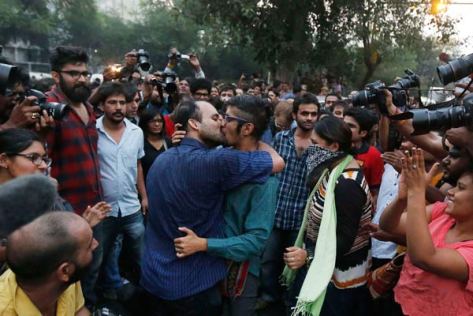
“If conservative elements can capture our public spaces and impose their diktat on us, we will do the same in retaliation. Our university spaces, parks and roads are not free any more. We are reclaiming them now. We live in an age where a Dalit man is hacked to 40 pieces because he fell in love with a woman from a higher caste. This Kiss of Love campaign is a defiance of moral policing and a struggle to uphold the spirit of love in all its forms and for everyone,” said Zareen, a campaigner.
Kiss of love Delhi, image courtesy, DNA

‘Downtown’ – Where the Kiss of Love Began: Sudha K. F.

Guest post by SUDHA K. F.

[This article was written in response to the recent incident of vandalism and violence meted out by BJP- affiliated Yuvamorcha activists against a restaurant called Downtown in Kozhikode, Kerala. This was the incident that led to the protest – the Kiss of Love at Kochi, Kiss of Love in Kolkata, and now, most audaciously outside the RSS Office in Jhandewalan. Wherever it goes, it acquires a flavour of its own. Thus in Kolkata, hokkolorob (let there be turmoil) mutated into another set of slogans – hokchumban (let there be kiss – or, let us kiss) and now, Sanghi gunde hoshiyar, tere saamne karenge pyar (beware Sangh goons, we will (make) love right before you. Sudha K. F. gives a sense of what it felt like after the goons attacked, the sense of indignation that subsequently burst forth.]

Kiss of love, Delhi
Kiss of love, Delhi, from the official facebook page

The now “notorious” Downtown restaurant is 5 minutes away by foot, from my home in my hometown Kozhikode. During my schooldays, that place was an old workshop. The restaurant came up after I had been away from my hometown for quite a while for my higher education. I remember being thrilled at the sight of this fine looking restaurant/coffee shop with glass windows, near my home during one of my visits. Earlier a few establishments had replaced the old workshop but didn’t do well commercially and closed down hastily. As I passed Downtown one evening, its busiest hour, my father remarked that this might have a longer life because it is so crowded with so many people frequenting the place for dinner. Still I remained a stranger to that place. Continue reading ‘Downtown’ – Where the Kiss of Love Began: Sudha K. F.

धर्मनिरपेक्ष दक्षिणपंथ – एक कल्पना का सच: सुशील चन्द्र

Guest post by SUSHIL CHANDRA

पिछले जयपुर साहित्योत्सव (हालांकि मैं उसे ‌‌‌तमाशा-ए-अदब कहना अधिक पसंद करूंगा) के दौरान अमर्त्य सेन ने अपनी सात अभिलाषाएं व्यक्त कीं। दिलचस्प यह है कि उनमें से एक अभिलाषा उलटबांसी अधिक नजर आती है – कि वह देश में एक धर्मनिरपेक्ष दक्षिणपंथ चाहते हैं । यह मासूम सी सदिच्छा न सिर्फ कई प्रश्न उठाती है बल्कि एक साथ कई सारी विवेचनाओं की मांग भी करती है। सच तो यह है कि यह कामना कोई नई बात नही है और पश्चिम की अधिकांश दक्षिणपंथी पार्टियां जैसे रिपब्लिकन पार्टी़, कंजरवेटिव पार्टी़, क्रिश्चियन डेमोक्रेटिक पार्टी इत्यादि इसी संकल्पना की उपज हैं। वस्तुत: यह संकल्पना इस अवधारणा से निकली है कि दक्षिणपंथ के धार्मिक-सामाजिक पक्ष (जिसकी परिणति कठमुल्लावादी रूढि़वाद में होती है) और आर्थिक पक्ष (जो अंतत: नव रूढि़वाद में प्रतिफलित होता है) बिल्कुल अलग अलग हैं और उनके बीच कोई पारस्परिक निर्भरता नहीं है।

पहली नजर में यह सही भी लगता है जहां फ्रांस में लंबे समय तक दक्षिणपंथी शासन के बावजूद प्रशासन राज्य और धर्म के बीच संपूर्ण अलगाव के प्रति समर्पित नजर आता है। यहां तक कि भारत में भी न सिर्फ स्वतंत्र पार्टी बल्कि मनमोहन सिंह सरकार भी अपने सारे नवउदारवादी आग्रहों के बावजूद धार्मिक रूढि़यों से मुक्त नजर आती थी। मैंने जानबूझ कर नजर आती शब्दों का इस्तेमाल किया है क्योंकि सचमुच ऐसा है या नहीं इसकी जांच अभी बाकी है। लेकिन इसके पहले कि हम इस बिंदु की पड़ताल करें, इन दो बहुचर्चित शब्दों ‍- वामपंथ और दक्षिणपंथ को समझना जरूरी है । जरूरी इसलिए है कि इन दो शब्दों का अर्थ संदर्भ के साथ बदलता जाता है । Continue reading धर्मनिरपेक्ष दक्षिणपंथ – एक कल्पना का सच: सुशील चन्द्र

Last Opportunity for CPI(M): Prasenjit Bose

Guest post by PRASENJIT BOSE

The CPI(M) is going to have its party congress next year in the backdrop of its worst ever electoral performance in the general elections. A four day meeting of its central committee held recently to discuss the review report and political resolution for the party congress, however, ended without adopting any worthwhile political decision. The only decision was to have another central committee meeting in January next year. When meetings of the topmost committee of a national political party end only with fixing the next meeting, something must be going wrong somewhere. It reflects lack of political direction and disarray at the top.

At the heart of the dilemma faced by the CPI(M) today is the political-tactical line to be adopted in the backdrop of BJP’s ascendancy across the country and the rightwing offensive unleashed by the Modi regime at the centre alongside the threat of political marginalization faced by the CPI(M) in what was once its citadel, West Bengal. The options apparently being debated within the CPI(M) – either align with the Congress against BJP or maintain the status quo – are both inadequate for its own revival or to take on the resurgent rightwing in India. Unless the Left mobilizes forces from below and seeks to build alliances based on struggles with like-minded progressive and democratic forces, the “political line” debate will be fruitless, abstract and of no yield. Continue reading Last Opportunity for CPI(M): Prasenjit Bose

Understanding the De- Criminalisation Demand: Aarthi Pai and Meena Saraswathi Seshu

Guest post by AARTHI PAI and MEENA SARASWATHI SESHU

STOP Panic around Sex Work; by conflating it with Trafficking

VAMP, SANGRAM and The National Network of Sex Workers, India (NNSW); a network of sex worker organisations, collectives, federations and unions from Karnataka, Tamil Nadu, Maharashtra, Kerala and Andhra Pradesh;  seek decriminalization of sex work. 

First, a quick distinction between ‘decriminalization’ and ‘legalization’.

Decriminalisation is the repeal or amendment of laws or statutes which make certain acts criminal, so that those acts are no longer crimes or offenses.

Legalisation, on the other hand, will mean regulation and control by the state authority ushering a zone specific ‘licence raj’ with mandatory health check-up, criminalizing defaulters. It could also mean criminalizing of some aspects of sex work e.g. clients.

The UNDP Global Commission on HIV and the Law stated that, “Sex work and sex trafficking are not the same. The difference is that the former is consensual whereas the latter coercive. Any point of view that casts “voluntary prostitution” as an oxymoron erases the dignity and autonomy of the sex worker in myriad ways. It turns self – directed actors into victims in need of rescue.”[1] Sex work is adult consensual provision of sexual services and must not be equated with sexual exploitation or sex trafficking. Continue reading Understanding the De- Criminalisation Demand: Aarthi Pai and Meena Saraswathi Seshu

Love for Fawad Khan vs Jihad against Love: Charu Gupta

Guest post by CHARU GUPTA

Fawad Khan, a Pakistani Muslim male, has become an endearing and enduring metaphor, a fascinating icon, the new heartthrob and fantasy of Indian girls and women. Zindagi, an Indian entertainment television channel, launched just four months ago, which telecasts cross-border serials from Pakistan, has captured our imagination. The central idiom of the channel has proven to be Fawad Khan, who besides having looks to die for and undeniable charm, portrays a sensitive, emotional and mature lover and husband in top of the charts serials Zindagi Gulzar Hai and Humsafar. He has entered Bollywood through the film Khubsoorat. Fan mails from women have poured over websites. One of them says: ‘You have to be living under a rock if you have not heard of Fawad Khan yet…. Did your mother just tell you she has a crush on Fawad Khan? Your female colleagues are probably head-over-heels in love with him too…. Women maybe have more photos of Fawad Khan in their phones than their own.’ Describing the film Khubsoorat, Shobha De articulates: ‘So, who is the real “khubsoorat” in the movie….Any guesses? You’ve got it! It’s a slim, bearded bloke from across the border…. He’s as yummy as those irresistible Lahori kebabs, and desi ladies want him.’

Fawad Khan’s religious and national identity is not hidden or muted; it is explicit and out there. But Indian women, most of them Hindu, are totally disinterested or unconcerned with the fact. While the ‘love jihad’ hysterics are crying themselves hoarse, Indian girls are not giving a damn whether Fawad Khan is a Muslim or a Pakistani. Instead, they are dreaming of having someone like him in their lives to romance and to love, who can make them feel so very special. This swooning over Fawad Khan by Indian girls and women of all ages reveals a religious and national liminality that can stump the hysteria over the constructed bogey of love jihad. The representation of Fawad Khan and the construction of love jihad, both in very different ways are part of fictive imaginations, myths and rhetoric, spectacles and obsessions. At the same time, they undercut each other, reflecting women’s desires on the one hand and Hindu male fears on the other. Love for Fawad Khan personifies allegories of intimacy and romance, while the love jihad campaign embodies hatred and anxieties. One contests power, the other attempts to reinstate it. It is these disjunctive representations that make their juxtaposition stimulating. Continue reading Love for Fawad Khan vs Jihad against Love: Charu Gupta

Sanskrit and Language Politics Then and Now: Muruganandham

Guest post by MURUGANANDHAM*

When all the arrangements were made by the corporate media and Hinduist forces for ensuring that Modi became the next Prime Minister, the democratic forces and progressive political organizations were still trying hard to make people understand his real agenda of imposing corporate capitalism and Brahminical Hinduism, in a rapidly fascist manner, in the guise of “development”. Middle class voters were lured by the media and believed him to be the harbinger of “development”. After taking over the rule at the center, Modi’s government has taken up the burden of disproving the undue trust placed on it by the unfortunate Indian middle class – through an array of anti-people activities like cutting of the gas subsidy, privatization of the public sector and substantial hike in train-fare, not to mention the red-carpet rolled out to FDI investments in defense and railway sectors. The Modi government has also been quite manipulative, and has tried to distract people’s attention from these vicious schemes, by working out cultural and social programs with attractive sounding slogans.  The imposition of Sanskrit week, Hindi usage for official purposes, Guru Utsav and more recently the Svach Bharat Abhiyan are only some of those programs which rely purely upon empty rhetoric, hardly having any logic or working mechanism. Invoking people’s imagination towards the “national” symbols is a constant resort of the rulers for political mobilization. More often than not in the Indian context, Sanskrit has been used for this political end in order to sustain the eternal hegemony of Brahminical forces. The present politics behind imposing Sanskrit as the symbol of national heritage and culture by the BJP government certainly demands a much broader understanding of the historical role played by Sanskrit and other languages in shaping the societal structure and cultures. The language which was once denied to the people is now promoted to be the language of all Indians. Let’s attempt to unearth this irony of imposing Sanskrit as the language of “ALL” so as to reveal the ridiculousness of these announcements and the urgent need to oppose them. Continue reading Sanskrit and Language Politics Then and Now: Muruganandham

‘Make in India’ – Modi’s War on the Poor

For some months now, I have been thinking of someone whom I saw on television during the parliamentary election campaign. The place was Benaras and Modi’s candidature from the seat had just been declared. The television journalist was interviewing a group of clearly poor people, taking their reactions on this new, though expected development. This person, fairly drunk in his Modi-elixir – and perhaps also a bit literally drunk – swaggered as he answered, affirming his support for Modi: Modi bhi chaiwala hai, hum bhi chaiwala hain (Modi is also a tea-seller and I am also a tea-seller). His words reflected the success of the remarkable gamble – that of projecting the new poster boy of corporate capital as a humble tea-seller. It was clear how so many of the poor had bought into this campaign.

What reminded me of this person initially, was that very soon after the election results were out, even before the government was formed, ‘team Modi’ announced a series of measures for the development of Benaras, which included the building of 60 flyovers – ‘to ease traffic congestion’. Mainly meant for the benefit of smooth flow of motorized traffic (rikshas, cycles and pedestrians, after all, have little place in the economy of the flyover), this was the beginning of a plan that would transform this holy city. If the experience of building flyovers anywhere in India is any experience, this would additionally mean mass demolition of settlements of the poor, shops and even entire informal markets – including tea shops that have long been part of life of local communities.

Then the government took office. Within a couple of months, the plan for Varanasi’s upgradation started being drawn up more concretely. Not everything in the proposed subsequent plan (end July 2014) seemed objectionable -not the least the idea to work on a possible mono rail, improvement of the bus network, and a Bus Rapid Transit System (BRTS) like the one in Ahmedabad. Except that this would mean more and more dislocation of the poor and destruction of their livelihoods. We have seen this happen in city after city in India, including in Delhi. Continue reading ‘Make in India’ – Modi’s War on the Poor

Open Letter to the Prime Minister – Stop the Dilution of MGNREGA

We are publishing below an Open Letter written by concerned citizens to the Prime Minister opposing the dilution of MNREGA

Dear Prime Minister,

We are very disturbed by impending moves of this government to undermine the Mahatma Gandhi National Rural Employment Guarantee Act (MGNREGA) and the support it provides to crores of vulnerable rural families. We write this letter to seek your immediate assurance that these retrograde, anti-poor and anti-labour measures will be withdrawn, and that every attempt will be made by your government to implement the MGNREGA in its true spirit.

Based on recent public statements from Shri Nitin Gadkari, Union Minister of Rural Development, and other available information, we learn that the Central Government has initiated the following changes under MGNREGA:

  • Restriction of NREGA to tribal/backward districts of the country through an amendment to the Act.
  • Reduction of the minimum labour-material ratio from the current level of 60:40 to 51:49.
  •  Severely restricting the MGNREGA through a budget squeeze. There have been unprecedented communications by the Central Government to States capping MGNREGA expenditure for the rest of the financial year, undermining the fundamental principle of demand-driven employment.

These changes are inimical to the spirit of the Act and compromise its basic objectives. They will only benefit the contractor class and other middlemen, and severely undermine the employment generating potential of the MGNREGA. The changes are also being undertaken without any public consultation. The MGNREGA was passed unanimously by all parties and all members of Parliament. We fundamentally object to this critical social legislation being undermined through casual use of executive powers and even a parliamentary majority.

The illegal and unwarranted budget squeeze has led to widespread reports of employment rationing and acute delays in wage payments. Even as MGNREGA workers are struggling to be paid for work already done, the Central Government is sending the message that money is going to be further rationed.

The undersigned demand that your Government immediately revoke the above decisions and renounce any dilution of MGNREGA. We urge you to ensure that MGNREGA employment remains a legal right of every rural household across the country and that there is no dilution of any MGNREGA entitlements. The MGNREGA budget should be based on work demand, keeping with the spirit of the act, without any discretionary cuts. Continue reading Open Letter to the Prime Minister – Stop the Dilution of MGNREGA

Marginalized Sections Living Under Fear – A Letter to NHRC

[We are reproducing below a letter to the NHRC Chairperson by Teesta Setalvad, Secretary, Citizens for Justice and Peace, Mumbai]

October 6, 2014
To the Chairperson Mr Balakrishnan, National Human Rights Commission.

Dear Sir,

There are extremely disturbing reports about the climate of abject fear that the poor and marginalised communitoies of JJ Colony, Bawana are living in, following recent incidents. Prominent residents of Delhi have carried out an independent fact finding into allegations of cow slaughter and the systematic intimidation of local Muslims. The team consisting of Dr. Mrigank (Delhi Committee, Indian Federation of Trade Unions, IFTU), Poonam Kaushik (Gen. Secy. Pragatisheel Mahila Sangathan, PMS), Rajeev (Convener, Progressive Democratic Students’ Union, PDSU) visited JJ Colony Bawana.

This report available here.

We urge Sir that the National Human Rights Commission carries out a suo moto inquiry into the incident and especially inquires into the following;-

From the above Report (see below) the observations made are :

1. That the allegations that there is plan of cow slaughter is bogus. There is no possibility of hiding the cows. And no cows were found.

2. That there is intimidation of Muslims and they are living amidst fear. The police protection is not enough.

3. That the organizations like Hindu Krantikari Sena are not spontaneous organizations. It is clears from the fact that among the main organizer was the nephew of BJP MLA. Also total inactivity of BJP MP is a clear indication.

4. That there is total communal harmony in JJ Colony and even today they are together. Continue reading Marginalized Sections Living Under Fear – A Letter to NHRC

On Hasan Suroor’s “Islam and Its Interpretations”: Zeeshan Reshamwala

Guest post by ZEESHAN RESHAMWALA

Many Interpretations are Still Better Than One

[Hasan Suroor suggests in an op-ed that one of the causes of Islamist violence is the ambiguity of the Quran and the hadith, adding that perhaps it is time to develop an “authorised” version of the Islamic tradition. This article critiques Suroor’s assumption that it is possible to achieve a “pure” interpretation of a text, whether it be from a religious tradition or otherwise. In addition, it argues against Suroor’s tendency to imagine violence as a “medieval” phenomenon, and world-history as a deterministic forward-moving arrow.]

Hasan Suroor suggests that the problem of Islamist fundamentalism and the violence that follows in its wake can be solved by untangling the multiple interpretations of ambiguous Islamic texts. In his op-ed in The Hindu (29 September), “Islam and its Interpretations,”  Suroor points out this apparent paradox: that although on the one hand Muslims cite verses and hadith that provide injunctions against violence, on the other hand a more violent strain of believers (such as the Taliban) are also able to cite Quranic verses and hadith that justify their violence. The problem, he claims, does not lie completely with the manner in which Islamic texts are interpreted, but instead with the fact that the Quran is an extremely ambiguous text, arranged athematically, and whose meaning is often dependent on the context of each individual revelation. More so the hadiths, written down from the sayings of Mohammed, are of variable authenticity. The lack of a single authoritative version of Islamic texts, says Suroor, leaves the tradition “open for fanatics to distort at will.” Continue reading On Hasan Suroor’s “Islam and Its Interpretations”: Zeeshan Reshamwala

Media Landscape and the Making of an Unconventional Journalist: Monobina Gupta

Guest post by MONOBINA GUPTA

A profile of Ravish Kumar, this post tells the story of the media from a uniquely interesting vantage point – even as it presents before us a slice of contemporary social conflicts. 

I

Five days a week at 9 PM, Ravish Kumar begins his news programme, Prime Time, on NDTV India with “namashkaar, main Ravish Kumar…” At the same time when English news channel anchors scramble over each other for ratings, putting on display wild (often unsubstantial) discussions on the day’s events, Prime Time – in style and news content – strikes a very different note.

A journalist on the move
Journalist on the move

Ravish starts his programme with a 5-minute introduction, which is its unique selling point and also one of the highlights of the show. Packaging the topic of debate with a well-researched perspective, Ravish speaks in lucid, eloquent Hindi, interspersed with subtle and witty asides. Meticulously, he references the news reports, analyses, blog posts and opinion pieces he has swotted over during the day. In his mindful reference to every author whose work he has accessed through both mainstream and social media, Ravish has created a new media morality. The cutthroat universe of corporate media is more dedicated to grabbing information first rather than acknowledging sources or granting space to insights generated by others.

“Firstpost.com is our rival but whenever I take any news or analysis from the website, I acknowledge it. You could say this is NDTV India’s inherent culture. English channels don’t have that system. But they can have it if they want to. I do that consciously. I want viewers (a lot of them are students) to follow up these references,” Ravish told me. Continue reading Media Landscape and the Making of an Unconventional Journalist: Monobina Gupta

The Indian Illusion: Shashank Kela

Guest post by SHASHANK KELA

Some time ago, I wrote an article seeking to dissect certain myths about Indian politics – and the class that dominates it, despite protestations to the contrary, the middle-class.[1] It is one of the habits of this class to see, and self-pityingly portray itself as victim – of mass politics, reservation policies, the great unwashed, of politicos bent upon appeasing the poor at the cost of sound principles and policies. Its conviction, of course, is that India was great, and on the cusp of becoming so again. This unfading glory is no more to be disputed than the existence of the sun, although opinions differ upon the precise placement of our golden age.

To the rabid fanatics of Hindutva, it resides in an unspecified Vedic time, when Hindus (not Indians) mysteriously succeeded in inventing aeroplanes, dynamite, nuclear weapons, the wheel, zero, and what have you (and mysteriously losing most of these wonderful things). To the Nehruvians, it is the age of Akbar, Ashoka, Harsha, periods of syncreticism and unique tolerance, where people of different faiths lived together peacefully and a composite culture flowered. To them, and to Gandhians, it also resides in the figure of Gandhi and the tradition of practical spirituality. To the fanatics of Islam, it is probably the age of Alauddin Khilji, the reign of Aurangzeb, and so on.

The never-ending debate about India’s pasts contains a diversity of opinions; however, on its future destiny, these begin to converge. The RSS and BJP believe, for example, that India is destined to become a great industrial power. So did Nehru, and assorted Indian Marxists. Indeed, it is an article of faith for the burgeoning middle-class (mostly, but not entirely Hindu) that India can, should and will equal China to become a great power, economic and military (thus leaving Japan and South Korea in the dust). Continue reading The Indian Illusion: Shashank Kela