All posts by Aditya Nigam

Scholar David Shulman on the Gaza Bombings

The following is a report from the indefatigable Prof David Shulman, who teaches at the Hebrew University of Jerusalem. Prof Shulman works on the history of religion in South India and poetry and poetics in Tamil, Telegu and Sanskrit. David Shulman writes as protests inside Israel increase, as do right-wing attacks on the protestors. This report has been circulated by Prof Louise Bethlehem of the Hebrew University of Jerusalem.

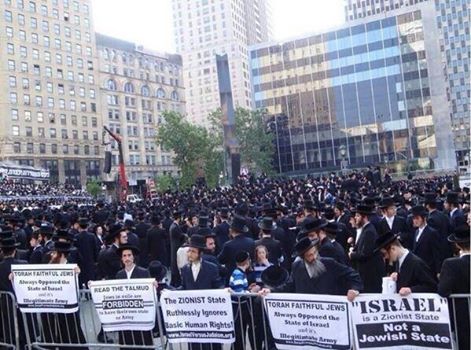
Jews demonstrate in New York Against Bombings

July 12, 2014 Umm al-Ara’is, Susya, Bi’r al-‘Id, Ma’asara

Business as usual in the South Hebron hills. There’s a war on in Gaza, but that too is business as usual, the meaningless biannual ritual in which both sides gleefully smash one another before reverting to the status quo ante. The Israeli media are drowning us in words, a vast and raucous flood, and the government is putting out its familiar, mendacious statements; perhaps in recent days only Abu Mazen has spoken the truth. The only solution, he said, is a political one, and Netanyahu is no partner. Meanwhile, rockets are flying, the Air Force is bombing, children are dying, soldiers are doing what soldiers mostly do, that is, wait around, and in South Hebron the land-grab proceeds apace, as always. Nothing, it seems, can stop that.

But wait a minute, some things have changed. Since the horrible murder of three Israeli teenagers, followed by the equally abominable revenge killing of the Palestinian boy from Shuafat, Israel has witnessed a wave of racist hatred on a scale perhaps not known before. Part of it has to do with the near-infinite opportunities of the internet: tens of thousands of virulent hate messages sent by ordinary Israelis have clogged the major sites; thousands of them call openly for revenge. I remember a time somewhat like this one, in the summer and autumn of 1982, the days of the first Lebanon War; the nadir came when a hate-filled nationalist threw a grenade into a Peace Now demonstration, killing my student, Emil Grunzweig. Some of the internet sites these days have called for the execution of leftists. Perhaps most striking of all is the utter shamelessness of this wave. Probably people used to have these same feelings but were not so ready, or eager, to state them in public. Decades of demagoguery and xenophobic incitement by the right, including, famously, by Netanyahu himself, have had an effect. The sluices are open. Continue reading Scholar David Shulman on the Gaza Bombings

An Endless Budget Session, Even Before it Begins: Shambhu Ghatak

Guest post by SHAMBHU GHATAK

“You can fool some people some times but you can’t fool all the people all the time”

So goes one of the famous lines of Bob Marley’s song that draws upon statement by Lincoln. Perhaps the same can be said about the new BJP government because it seems that this time there will be nothing new left to be presented during the upcoming Union Budget. Most of the things to be presented by the Finance Minister have gradually been placed even before the actual budget could see the light of the day (on 10 July). In fact, the entire stretch since the Government took power can be termed as a long, extended budget session – a session in slow motion.

Just think about the policy decisions announced or showcased by the new Government so far—allowing 100% foreign direct investment (FDI) in defence sector (to boost technology transfer and employment growth, so to speak); reforming environmental clearance (to avoid discrepancies, end red-tapism and ensure transparency) by making the process online; raising import duties on sugar by more than double and extension of existing sugar export subsidy of Rs 3,300 per tonne (to help the sugar mills) till September besides raising the mandatory level for blending cane-based ethanol in petrol from 5% to 10%; allowing hike in price of non-subsidized cooking gas (LPG) by Rs 16.50 per cylinder (which is partly attributed to the crisis situation in Iraq); and raising train fares by 14.2% & freight rates by 6.5% in the month of June prior to the just-presented Rail Budget, among other things. Continue reading An Endless Budget Session, Even Before it Begins: Shambhu Ghatak

Whose Ambivalence – Modi’s or Varshney’s? Jyoti Punwani

Guest post by JYOTI PUNWANI

What is it about Narendra Modi that makes people suspend disbelief? Ashutosh Varshney in his Modi’s Ambivalence, Indian Express, June 28, actually considers it possible that the new Prime Minister has a chance of going  down as “one of the greatest leaders of independent India”.  Surely anyone qualifying for such a status must be acceptable to the majority of Indians? Last we heard, the magic of Modi had left almost two-thirds of the electorate untouched, not to forget the fact that he doesn’t exactly inspire respect among our largest minority.

Varshney makes some bewildering assertions in his evaluation of Modi’s first month as PM. From a “novel policy language for poverty alleviation”  to a new acceptance of Mahatma Gandhi as the Father of the Nation,  to his RSS-defying portfolio distribution,  Varshney sees signs of a new Modi, quite different from the man cursed forever with the burden of Gujarat 2002.

Continue reading Whose Ambivalence – Modi’s or Varshney’s? Jyoti Punwani

From Baghdad to Bolangir – Labour Laws in India: Saba Sharma

Guest post by SABA SHARMA

From the crisis in Iraq, a story is emerging of 40 construction workers in Mosul who have gone missing, some reports claim because they were trying to escape from the city and were captured by militants in the process. Many of these workers, feared kidnapped by ISIS, refused both their employers’ and the Indian government’s help to evacuate, as many have not been paid up to five months’ wages. Another report reveals that a group of 46 nurses from Kerala, working in a hospital in Tikrit, have refused to leave despite an offer from Delhi to help them evacuate. They need the money, as do their families back at home, so they would rather move to a safe zone in Iraq than return. Two nurses in the same hospital, who are on holiday in India, told the BBC that they would return despite the travel advisory issued by India advising citizens not to travel to Iraq. For them, failing to return means defaulting on loans taken to pay recruitment agents.

A few days before, on June 16, the NDA government announced that it was looking at liberalizing labour laws, primarily to make easier the retrenchment of workers. The UPA, and former PM Manmohan Singh in particular, also had labour law reform as an agenda, propelled by constant laments from industry saying ‘obsolete’ labour laws hindering growth and holding back the economy. The Vansundhara Raje government is already amending some state-level acts in Rajasthan to ‘liberate the corporate sector from the shackles of stringent requirements of the laws’, as one report put it.

Continue reading From Baghdad to Bolangir – Labour Laws in India: Saba Sharma

Eta Kolkata (This is Kolkata): Kaveri Gill

Guest post by KAVERI GILL

Today comes the surreal news that anyone painting their house or apartment white or sky blue in Kolkata can claim a waiver on property tax for a full year, a horror conjuring up a city that looks like a crumpled weave of Mother Teresa’s saree. Now, towns of Regency England and the Cornwall coast have uniform building and color restrictions to maintain historical continuity, but this idea is more in the perverse vein of babus suggesting that the burning ghats at Varanasi be “white-washed” for “freshness”.

The Chief Minister's radio and music in public places scheme
The Chief Minister’s radio and music in public places scheme

Thankfully, another Humphrey shot that idea down, yet the decimation of the architectural integrity of the façade of these famous ghats continues apace, with sealed air-conditioned buildings overlooking the burning bodies at Manikaran. Bengal’s Chief Minister has been known to remark that the colours “promote happiness” and accordingly, the Trinamool Congress (TMC) Mayor has incentivised citizens to embrace the “theme colours of the city”[1]. Coming on the heels of a general election, where the TMC won 34 seats out of 42, up from 19 in 2009, and compared to only 2 each for the Communist Party of India (Marxist) and the Bharatiya Janata Party (with 18% of the vote share, not to mention an almost win in the city), even discounting for dirty tricks appropriated by their cadres from the Left of old, the scorn must be tempered by what this result says about the contemporary citizen of this state and city. Continue reading Eta Kolkata (This is Kolkata): Kaveri Gill

PUCL Petition to NHRC Urges Inquiry in the Case of Human Rights Defenders Teesta Setalvad and Javed Anand

The following is the text of the PUCL petition to NHRC in the case of Teesta Setalvad, Javed Anand and the Citizens for Justice and Peace

PEOPLE’S UNION FOR CIVIL LIBERTIES

270-A, Patpar Ganj, Opposite Anand Lok Apartments, Mayur Vihar I, Delhi 110 091 Phone 2275 0014 PP FAX 4215 1459 Founder: Jayaprakash Narayan; Founding President: V M Tarkunde President: Prof. Prabhakar Sinha; General Secretary: Dr. V. Suresh

E.mail: puclnat@gmail.com; pucl.natgensec@gmail.com

7th June, 2014

TO: THE HON‟BLE CHAIRPERSON AND HON‟BLE MEMBERS,

NATIONAL HUMAN RIGHTS COMMISSION,

Manav Adhikar Bhawan Block-C, GPO Complex,

INA, New Delhi – 110023

SUB.: SEEKING AN INDEPENDENT REVIEW AND INTERVENTION IN RESPECT OF CONTINUING PERSECUTION AND PROSECUTION OF HUMAN RIGHTS DEFENDERS, TEESTA SETALVAD AND JAVED ANAND OF CITIZENS FOR JUSTICE AND PEACE AND OTHERS

Continue reading PUCL Petition to NHRC Urges Inquiry in the Case of Human Rights Defenders Teesta Setalvad and Javed Anand

Ideas to Occupy Economics – A Note on Michal Kalecki: Pranjal Rawat

Guest post by PRANJAL RAWAT

A revolution of sorts is on the cards for the students of economics amidst a great surge of international support for radical restructuring of the subject and its pedagogy. From the politically incorrect ‘Non-Autistic Economics’ movement to the Post-Crash Society in Manchester to the Jadavpur University Heterodox Economics Students’ Association (JUHESA) in Kolkata we see an underlying common theme. The narrowness of the neoclassical economics is being criticized. Take for instance what the preamble of JUHESA has to say about Neoclassical Economics, “Students have rightly found it appalling that a theory which could neither predict nor suggest remedies to the biggest recession in more than half a century, continues to be taught as the sole approach to economic analysis the whole world over.” This so-called revolution will remain just a source of media income and wash over without changing much, unless scholars of economics take it upon themselves to destroy the inertia and raise arms against the old order. Revolutions exists only in retrospect, the rest is all popular gossip. For that purpose, it would do well to draw strength from the life and work of Michal Kalecki (1899 – 1970), a post-keynesian economist, whose work has remained relevant for a period longer than it took for American economy to recover from the Great Depression only to crash in the Great Recession. Continue reading Ideas to Occupy Economics – A Note on Michal Kalecki: Pranjal Rawat

Media Freedoms, Coercive regimes and Blasphemy-mania: M. Amer Morgahi

Guest post by M. AMER MORGAHI

[What the corporate interests have done to the Indian media the military is doing in Pakistan. In the continuing face-off, the Pakistan Electronic Media Regulatory Authority (PEMRA) has suspended Geo TV’s license for fifteen days and imposed a fine of $ 104, 000 on it. See report here]

Media revolutions in different developing countries are seen as an important factor in democratic process, in acquiring information and in enhancing consciousness. However, the media can be manipulated, coerced and used to develop certain consensuses that favors the ruling groups, as the example of recent happenings in Pakistan shows.

Photo: Anjum Naveed
Photo: Anjum Naveed

Continue reading Media Freedoms, Coercive regimes and Blasphemy-mania: M. Amer Morgahi

Religion, Modernity and Politics – Some Reflections on ‘Secularism’

I am grateful to Ravi Sinha for his post responding to the question of religion and politics that arises out of the brief exchange between Subhash Gatade and myself on Subhash’s post some time ago. Much has happened since the first draft of this response was written and with the advent of Narendra Modi as prime minister, ‘secularism’ too is back in public debate with renewed vigour.

Meanwhile, with Shiv Visvanathan entering the debate, flogging the long dead secularist horse, sections of the liberal and left intelligentsia seem to have gone into a tizzy. Shiv’s argument merely restates in 2014 what political analysts like Ashis Nandy had been saying at least since the mid-1980s and it does so without its nuance. The long and short of this argument is that secularism is the creed of a deracinated English-speaking, West-oriented elite which cares little about the beliefs and ways of thinking and being of the majority of their compatriots. (See also Visvanathan’s piece in Economic and Political Weekly, May 31, 2014, on ‘Narendra Modi’s Symbolic War’)

Somewhere between the two poles of the fast-dwindling tribe of the Leftist gung-ho secularist and the breast-beating liberal, the possibility of a serious debate dies a quiet death. The 1980s-1990s debate on secularism had raised all the important questions about secularism and its problematic practice that Shiv Visvanathan’s piece raises but which, it seems bypassed a whole generation of Leftists who either still seem to find it scandalous to relate to religion or are suddenly discovering their alienation or worse, the virtues of religiosity. Needless to say, such a rediscovery, in the face of political adversity is not likely to be anything more than instrumental use of religion.

The issues in 2014 invite us to revisit and indeed, go beyond what the earlier debate allowed for. Continue reading Religion, Modernity and Politics – Some Reflections on ‘Secularism’

Looking back – and forward – from Modi’s election: Shashank Kela

Guest post by SHASHANK KELA

So now the gloves are off. For the BJP, that is, whose victory in these elections gives India not only its most right-wing government, but, more to the point, a prime minister to the right of his party – more laissez faire, openly contemptuous of minorities, authoritarian in style. What the party, and Narendra Modi, will make of its – and his – comprehensive victory will soon be apparent, but the omens are far from good. Working in a coalition and under the supposedly moderate leadership of Atal Behari Vajpayee, the BJP between 1998 and 2004 achieved quite a lot – not just in the cultural wars that are its forte, but also in terms of putting economic “reform” on steroids. Now that it is being advised by that distinguished dispenser of received opinion and tireless self promoter, Dr Jagdish Bhagwati – an economist whose ignorance of history and the methods through which economic development was actually achieved in almost every successful industrial economy from Great Britain in the 16th and 17th centuries to South Korea in the 20th (cue: protectionism and lots of effective government intervention) is stupendous even by the low standards of the discipline – all bets are off. Continue reading Looking back – and forward – from Modi’s election: Shashank Kela

Beyond the Elections – Need for a Vibrant and Credible Left

The Peaceful Counter-revolution

It may not be an exaggeration to say that what has just transpired is nothing short of a peaceful counter-revolution. Counter-revolution, not because there was an imminent threat of revolution that has been put down, but because the big bourgeoisie has finally put an end to the challenge from mass struggles that corporate interests had been facing. Struggles around land acquisition, the pressures for environmental clearance that held-up corporate projects, social welfare programmes that came in the way of the most unbridled pursuit of profit, and subsidies that supposedly introduced market distortions – all these had been greatly troubling the corporate sector and their ideologues. A campaign was built up, gradually over the past few years, to install a strong leader with a solid majority, who would give the bourgeoisie a free hand. And it must be admitted today that most of us failed to see where and how that threat was building up. We failed to see that for at least three, perhaps four years, the idea of the ‘Gujarat model’ was being put in place as a shorthand for an unrestrained play to private big capital.

Even when we realized that Modi was being pushed seriously, our eyes were still fixed on the older question of Modi’s culpability or otherwise in the 2002 carnage in Gujarat. The dream of the Gujarat model was sold over the years in many different ways, among precisely those sections whose support the Left (in its broadest sense) would have liked to enlist. The UPA government, of course, left no stone unturned in alienating itself from its popular support. Thus while important social welfare programmes, formulated under pressure from popular and social movements lagged behind in implementation, the neoliberal axis of Manmohan Singh, Chidambaram and Montek Singh Ahluwalia pushed relentlessly on matters like abolishing subsidy on cooking gas and direct cash transfers. The UPA government’s experience, in fact, showed that you cannot be all things to all people; that the interests of the big bourgeoisie and those of common people stand in irreconcilable contradiction. The balancing act cannot really go on for very long. Continue reading Beyond the Elections – Need for a Vibrant and Credible Left

Shazia Ilmi – Why Her Exit is Such a Blow: Jyoti Punwani

Guest post by JYOTI PUNWANI

Shazia Ilmi’s exit marks a real blow for AAP supporters. Her frequent TV appearances as AAP spokesperson made her out to be an articulate, confident woman who didn’t need to assert her religious identity to prove a point, which is a rare thing in today’s politics. Her participation in the Anna andolan was as much a pointer to its inclusive nature as it was to the emergence of a new kind of Muslim in public life: one who had no hesitation plunging into a mass movement which had strong nationalist overtones, was avowedly against the political system and had little to do with minority concerns.

When Shazia almost won from Delhi’s R K Puram constituency, it suddenly came home – for the first time in years, a Muslim candidate had been fielded from a Hindu-dominated constituency, and the Hindus had voted for her. In Mumbai, a Muslim political activist who’s friendly with every political party, has for long told Shiv Sena leaders that the moment they field a Muslim from any of their strongholds, he would join them. “The ability to take the other community along, that’s the test of a secular politician,’’   a senior Congress Muslim in Nanded  told me, rueing the fact that Muslims who could do this were ignored by his leader Ashok Chavan (one of the two Congressmen to win in the state this time). Continue reading Shazia Ilmi – Why Her Exit is Such a Blow: Jyoti Punwani

The Modi Mandate – A Belated Response to S Varadarajan: Pradip Datta

Guest post by PRADIP KUMAR DATTA

Siddharth Varadarajan’s article raises some very important dilemmas before Modi which is really a rehearsal of the development versus welfare debate now bound to be exacerbated with the runaway capitalism that Modi promises to unleash.

But it raises another important question. Can we simply forget the past and get on with the future? Can we join the futurist chorus of Modi and his Thatcherite – Reaganite followers? Can an electoral mandate, even one as powerful as this, remove permanently the memory of 2002?

The immediate analogy comes with the anti Sikh riots followed by the 1984 verdict. 1984 returns every election to haunt the Congress even after they have made a Sikh prime minister for 10 years. Some historical memories are very stubborn and refuse to leave off the haunting of the future. It is not as if there have not been many riots. But only some riots achieve a historically emblematic status that remove them from the realms of simple memory alone. Some events become symbolic rallying points and they invite an excess of documentation, of witness testimonies, of cultural representations, all of which memorialize and fix them in chronology as a rupture in time that can never quite be bridged by the stitchings or blurrings of popular oral memory alone. In such events the archive becomes memory. Continue reading The Modi Mandate – A Belated Response to S Varadarajan: Pradip Datta

So Who Has Won the Election?

The sweep is certainly breathtaking. Way beyond what most surveys and exit polls predicted. To be sure, our commitment to the democratic spirit demands that we recognize the mandate for what it is – at least on the face of it. And on the face of it, it is a triumph of the Modi-led BJP. Behind it, of course, lies the organizational machinery of the RSS and its familial organizations.

However, it will be a mistake to think that the election was fought and won by any of these outfits. From 1998 onward, the BJP, backed by the same RSS parivar, has continuously registered a decline in vote share, irrespective of whether it was in power or out of it. From 25.6 percent in 1998, it declined to 22.2 percent in 2004 and further to 18.8 percent in 2009. The presence of younger people in RSS shakhas too has been significantly on the decline in this period and in particular, after 2004. In period of the run-up to the elections, the BJP was a ramshackle and directionless party – its top leaders like LK Advani and Jaswant Singh disgraced and then brought back; Atal Behari Vajpayee knocked out of action for quite some time by then and practically all state units riven with internal dissension. As a consequence, it was also a party therefore, with completely demoralized ranks.

How then did the change come about? As long as our eyes remain fixed on the supposedly ‘political’ domain, we are unlikely to be able to see what exactly has been going on. The fact of the matter is that Narendra Modi was neither BJP’s candidate of choice nor that of the RSS. This election was fought by the corporate sector directly, along with the Big Media – the surrogates of the corporate sector. The plan to set up Modi was put in place by these players. And in this process, the emergence of the Big Media as a full-fledged propaganda machine of Modi’s constitutes a significant moment. It is a moment that actually awaits a more detailed study of how exactly the game plan was put into operation but one thing can be said right away. What brought about this result was not just the machinery of the Sangh parivar but the mobilization of a whole range of opinion makers to serve what was to be a clearly Hindutva framed political formation. Most of these intellectuals and opinion-makers are economically right-wing (neoliberal fundamentalists) although not Hindu-communal, but while they do not seriously believe that Modi has shed his Hindutva skin, they are prepared to join the propagation of lies, lies and lies in the service of corporate capital, disguised as the ‘greater good of humanity’. Continue reading So Who Has Won the Election?

Accident at Koodankulan Nuclear Reactor, at least 6 Injured

An Urgent Alert has been posted by NITYANAND JAYARAMAN in DiaNuke.org on an accident that occurred in Koodankulan sometime in the afternoon today.

Koodankulan protest, courtesy New Indian Express

After initially flashing news about the incident, the media is now reportedly playing NPCIL’s statements denying and downplaying the incident. If NPCIL’s past record is anything to go by, truth will be a while in coming. Dr. APJ Abdul Kalam was unavailable for comment.

Today’s accident comes less than a week after the Honourable Supreme Court ruled that it was satisfied with the safety features installed at the plant. Read the rest of the report here.

Koodankulan protest 2, image courtesy The Hindu

We have reported earlier in Kafila on the ongoing struggle of the local people against the establishment of the nuclear reactor in Koodankulan here, here and here.

भगाणा कांड के पीड़ितों ने इंसाफ की मांग की: भगाणा कांड संघर्ष समिति

Press statement issued by the BHAGANA KAAND SANGHARSH SAMITI in New Delhi, 11 May 2014


Latthmar Mahila Sena
A call for direct action – an armed women’s squad – Latthmar Mahila Sena

हरियाणा के भगाणा गांव में सामूहिक बलात्कार की शिकार हुई चार नाबालिगों के हक में न्याय की मांग के समर्थन में आज पीड़ितोंके साथ भारी संख्या में दिल्ली के सामाजिक कार्यकता, बुद्धिजीवी और विद्यार्थी भी जुटे। यहां दिल्ली में पंत मार्ग पर स्थित हरियाणा के मुख्यमंत्रीआवास पर धरना देते हुए आंदोलनकारियों ने पीड़ितों के प्रति हरियाणा सरकार के रवैए की तीखी आलोचना की और कहा कि ऐसा लगता है कि हरियाणा सरकार सामंती उत्पीड़नकर्ताओं के पक्ष में खड़ी हो गई है और दलितों-पीड़ितों की आवाज को जानबूझ कर दफन किया जा रहा है।

बड़े पैमाने पर जुटेलोगों ने यहां दिल्ली में सरकार और प्रशासन से यह मांग की कि पीड़ितों पर जुल्म ढाने वाले दोषियों को  सख्त सजा दी जाए और फास्ट ट्रैक अदालतों का गठन कर पीड़ितों को जल्द से जल्द इंसाफ दिलाई जाए। Continue reading भगाणा कांड के पीड़ितों ने इंसाफ की मांग की: भगाणा कांड संघर्ष समिति

All About So-called Sins and the Game Plan: Atul Sood

Guest post by ATUL SOOD

The lexicon of this election is very different. Some things are being said in coded language while for others, a new language is being invented. Hindutva is repackaged and reworded with suffixes like ‘constitutional boundaries’ and anti-women, anti-dalit, anti-tribal, anti-minority and anti-poor development agenda is being openly articulated as a model that works. The latest in this frenzy about newer ways of framing things is a coinage about policy decisions, especially policy decisions that have been made in the past by the elected governments of this country (See for instance, A game changing reform strategy, Arvind Panagriya’s, TOI special op-ed, April 5, 2014).

The two key policy decisions of the UPA namely, the Industrial Disputes Act and, the Land Ceiling Act, are viewed by Mr. Panagriya as a catastrophe fallen on the Indian people who are now “condemned to forever live with our past sins”. Why do only labour and land laws, which impact the vast majority of the working classes and the peasantry of this country, become ‘sinful’? Why living with primitive judicial system or uncivilized AFPSA or dark age 377, low tax rate laws and so many others are not equivalent to living with past sins? The irony of 2014 elections, it appears, is that there is no need to specify one’s vantage point. It is the point. The author’s confidence does not end here. His argument goes on further to say that if anyone disagrees i.e. if the provinces disagree with this definition of sins, then make them fall in line by redefining the federal structure. Continue reading All About So-called Sins and the Game Plan: Atul Sood

There’s a G on my Neck (again): Simran Kaur

Guest post by SIMRAN KAUR

Shekhar Gupta is at it again: lacing an insidious agenda with just enough actual facts that even the targets of his vitriol become eager to swallow. Aspiring Indian Journos, this is how a good Sardar Joke—and while you are at it, jibe at the poor, the rural, the unemployed, the mourning—is done, while earning your paycheck yet again as an esteemed Editor-in-Chief, at best with head-in-clouds, at worst, a stake-in-oppression.

Shekhar G’s latest thesis: The rest of the country has moved on but Punjab has become a prisoner of its boisterous old stereotype. It has forgotten its entrepreneurial energy, its competitive spirit and slipped into a complacent, decadent trance of perpetual balle-balle.

His first argument for the thesis of Punjab’s decline: “the Punjabification”…of Punjab. He bemoans that signs and posts are in Punjabi, in Punjab.

The 50s and 60s saw Punjabi Hindus becoming the unique community to denounce their own mother-tongue. Upping the ante, G. ridicules Punjabis who use Gurmukhi, the script developed in the time of the Sikh Gurus. He finds tell-tale signs over Punjab (he notes his fieldwork of actually travelling on the Grand Trunk Road and flying over Punjab by helicopter recently) of the people being un-couth:  signage on Punjabi establishments, in poor English.

You will take a minute figuring out what the “burgars” and “nudles” painted on so many fast-food shops mean, or why Lily is always spelt “Lilly”, whether it be the name of a restaurant in Phagwara or a beauty parlour in Bathinda…If you haven’t figured out already that this, indeed, is Singh’s English.

Brilliant two-birds strike, Shekhar G. Continue reading There’s a G on my Neck (again): Simran Kaur

BJP’s Campaign of Intimidation – A Report from Banaras: Monobina Gupta

Guest post by MONOBINA GUPTA

The narrow streets of Goduliya Chowk were bursting at the seams yesterday. It was the time of the famous Varanasi aarti at the ghats of the Ganga, a time when the crowd multiplies by several hundreds of people. Narendra Modi was preparing to head out on his triumphant road show through this area, choc-a-bloc full. The BJP’s activists were in a frenzied trance – waving saffron flags, flaunting Modi caps (a tawdry imitation of the original AAP trademark), dancing and chanting: Modi, Modi. As a person with no love lost for Modi, I responded to the exultant mood with some apprehension. My thoughts were straying to the nukkad sabha of the AAP that I attended last evening when a group of 20 young and old AAP volunteers had gone around campaigning for Medha Patkar’s meeting. I found myself thinking about the evening a couple of days ago when I stood with Anand Patwardhan and some activists who were distributing leaflets right there at Goduliya Chowk, and a group of BJP men came surrounded us. I thought about another night spent at Kabir Math Chowk after watching the Dastangoi performance – when a group of young men from Bangalore and Maharashtra were confronted by BJP supporters. I was worried about their safety standing amidst a crowd which appeared dangerous in its swaggering triumph. Yesterday, with Modi’s cavalcade approaching, frictions were reaching fever pitch – encounters one could not possibly see on the images on TV at home.

Standing there amidst the crowd, I spotted an elderly Sikh gentleman walking through the throng of people wearing his AAP topi. Suddenly a roar went up, as Modi sympathisers lunged after him shouting ‘pagal, pagal’ (mad/mad). A little distance ahead I saw another man wearing the AAP cap. The crowd spotted him too, and ran after them both, gesticulating, heckling. As I start walking quickly towards the men I saw them, seemingly unperturbed, walk right through the charging hoard, not a sign of nervousness about their gait. They were walking the confident walk of men who know no fear. Continue reading BJP’s Campaign of Intimidation – A Report from Banaras: Monobina Gupta

Democracy as Permanent Advertising – Indian Media and Elections : Irfan Ahmad

Guest post by IRFAN AHMAD

It was nothing short of a scandal. On 12 April, India TV, a Hindi channel, telecast 117-minute interview of the BJP Prime Ministerial candidate, Narendra Modi. Conducted by Rajat Sharma, it became, or was made, a mega hit. Tow days later, news director of Indian TV, Qamar Waheed Naqvi, resigned from his position alleging that the interview was ‘fixed’. Though Naqvi’s resignation was silenced in media, the fixed interview represents the dark and mutually constitutive relationships between media and politics.

Based on the analyses of select elections coverage by five television channels – India TV, NDTV, Aaj Tak, ANI, and IBN– I argue that:

  • The way journalists pose questions to their favorite politicians are often already answers;
  • In pursuing a storyline, journalists subordinate, even sacrifice, actual responses or events/facts to bolster their pre-determined narrative; and
  • Electoral polity like India is heading towards a designer democracy marked by permanent campaigning-cum-advertising.

In short, I caution against the use of widespread phrase: ‘media and politics’. It is more fitting to say: ‘media as politics’ or ‘politics as media’.

Share of prime time coverage, Image courtesy The Hindu

Modi’s ‘Fixed’ Interview: India TV Continue reading Democracy as Permanent Advertising – Indian Media and Elections : Irfan Ahmad

Condemn the Massacre in Assam: A Statement by Civil Society Groups, Activists and Concerned Citizens

Text of a statement issued by Civil Society Groups and Concerned Citizens

5th May 2014

Condemn the Massacre in Assam, Demand immediate arrest of Pramila Rani Brahma; Ensure safety of Muslims in BTAD: A Statement by Civil Society Groups, Activists and Concerned Citizens

We, the undersigned, express our profound sense of grief and alarm over the gruesome massacre of Bengali-speaking Muslims on 2nd May. This most recent round of killings — in which 32 people, mostly women and children have lost their lives – is another link in the long and… bloody sequence of ethnic cleansing being carried out by tribal Bodo militant groups with impunity.

For years, Hindutva politics has successfully created the bogey of the ‘Bangladeshi’, rendering Muslims as suspects and targets, locked in a perpetual battle with the tribal Bodos. In his rally at Silchar, the BJP’s Prime Ministerial candidate reiterated precisely this. He said: “There are two kinds of people who came from Bangladesh to Assam: those brought as part of a political conspiracy for vote bank politics of a particular party (Muslims) and others who were harassed in the neighbouring country (Hindus). Those brought for vote bank politics and smugglers must be pushed back, while the second category must be accommodated.” (Silchar, 22nd February). Continue reading Condemn the Massacre in Assam: A Statement by Civil Society Groups, Activists and Concerned Citizens