All posts by Aditya Nigam

AAP and the Ideology Warriors

If ideology-warriors had their way, they would rather have Narendra Modi as the next prime minister than have their ideological purity compromised. Soon after AAP’s victory, many secularists rushed to declare, on Facebook and elsewhere, that they do not and will not partake of the AAP euphoria. ‘What is their stand on communalism?’, they asked indignantly. Some other friends insisted that Muslims need an assurance about AAP’s position on communalism and it should clarify its stand if it wanted the Muslim vote.

So what do the ideology warriors want? Just when the political agenda for the elections has decisively changed, throwing the BJP into a complete quandary, upsetting its strategic plans, they want the old familiar, secular/ communal divide back in place, opening up the political field once more to the same Hindu-Muslim polarization that we are so used to. The secular/ communal divide has been the millstone around our neck, preventing any other issue from being brought into public debate at election time and effectively preventing the emergence of any new force or formation. And let there be no mistake that in a communal polarization of Hindus and Muslims, secular forces will always, in the on-going drama of secular masochism, have to deposit themselves tied hand and foot, into the Congress party’s dungeon. The Amit Shahs will have a field day, creating one Muzaffarnagar after another, and erstwhile secular mascots like Mulayam Singh Yadav will vie with them in further entrenching the Hindu-Muslim divide. In all of this, the Congress will present itself as the saviour of Muslims.

The Congress, the BJP, the imaginary ‘third front’ – all have been able players and winners in this game. Continue reading AAP and the Ideology Warriors

The Year That Was and the Challenge of 2014

This is a slightly modified version of the article ‘Winds of Change’, published in Economic and Political Weekly (28 December, 2013). As the year ends and we brace up for the big battle that lies ahead in the coming year, here are some reflections on matters that may have a bearing on that battle. Politics is undergoing a transformation, in India as elsewhere. But perhaps, more importantly, it is also what we have so far understood as politics, that is on the point of transformation. For over a century, social science disciplines have maintained a neat distinction between the political and the economic, between state and capital and so on. Marxism ostensibly challenged this false division – but only to assert that the real thing was ‘economics’; that politics was mere epi-phenomenon. But the story of capital was never an economic story alone. In diverse ways, movements in different parts of the world are about this forced division, and the destruction of politics that followed in actual life as economics became a domain of so-called iron laws and economic models began to determine the ways we were taught to see and understand politics.  In the neoliberal 1990s and part of the 2000s, economic laws and the ‘needs’ of capital became sacrosanct – all politics was made to sing and dance to its tune. Only rank outsiders to this world could ask the emperor’s new clothes kind of questions. That is what seems to be happening. Till now, even those who saw that the emperor was naked, went on a maun vrata (vow of silence), fearing ridicule.

The dying old Kulin Brahmin in Goutam Ghose’s Bengali film Antarjali Jatra suddenly sprang to life on seeing his new attractive wife who had been married to him for the sole purpose of accompanying him in his life beyond as sati. Much like that character, the decrepit and ramshackle BJP seems to have suddenly sprung to life at the fantasy of power, having been out in the cold for almost a decade. And just as the young bride in the film was provided by another old impoverished Brahmin (his unmarried daughter), so an utterly impoverished Congress has provided the BJP with the most tantalizing possibility of what it might get in its life beyond.

How else do we explain the fact that the BJP after 2004, already in shambles with all its old leaders gone and its organization ridden with internal bickering and loss of direction, suddenly seems to have made such a comeback in the recent elections in five states? The ‘return of the BJP’ seems to be the overt message of the results of these elections. For there is certainly no doubt that in the past one year so, ever since the orchestrated rise of Narendra Modi in all-India level politics, the BJP’s fortunes too seem to have started turning. This development, however, was greatly facilitated by the Congress in more ways than one. The Congress seemed determined to hand over the game to Modi and the Hindu Right. Continue reading The Year That Was and the Challenge of 2014

Corporate Sabotage and AAP’s Chavez Moment

Even as the new AAP government was preparing to take oath of office, the news came of an unprecedented hike in the price of CNG (Compressed Natural Gas) – a hike of Rs 5.15 per kg. In principle, there is nothing wrong with a price-hike that is supposedly necessitated by the need to reduce supplies to metropolitan centres in order to ensure a more equitable distribution to other towns. However, knowing the way the Congress Party functions, the timing of this hike gives rise to legitimate suspicion that the intention is mala fide. At the very least, the decision could have waited till the new government assumed office and some consultation with the new government was carried out. This move shows up the nature of what can be expected from Congress and its ‘outside support’ to the new government.

Expectedly, auto-rickshaw drivers have started making noises about going on strike if fares are not commensurately hiked. If auto fares are raised, it hits the middle class, and if they are not, it alienates the auto-drivers.This clearly throws any new government into a quandary. Continue reading Corporate Sabotage and AAP’s Chavez Moment

AAP’s Rise and Congress Rout – Some Obvious but Unconventional Questions: Sanjay Kumar

Guest post by SANJAY KUMAR

A Congress rout and the AAP success are the most obvious results of recent polls. Both are spectacular, in their own ways. Even BJP’s landslide victory in Rajasthan and Madhya Pradesh pales in comparison, for these two open up new possibilities.

Why a party whose legacy of anti-colonial struggle had lost sheen generations ago, whose top leadership is in the grip of a seemingly disinterested and incompetent dynasty, that lacks any organised cadre, coherent ideology, social base, and whose average leader appears more of a wheeler-dealer, and scamster, should continue to get close to thirty percent of votes from Indians even in worst of times, is a genuine mystery. That the Indian social analyses, barring a few exceptions, have tried little to unravel this mystery, is not only an indication of their intellectual limitations, but also of their ideological biases. The enduring success of Congress indicates seamier side of liberal democracy in general, which bourgeois social sciences try more to paper over than explore.

From voters’ perspective elections under liberal democracy are an exercise in choice, but not in freedom. When people vote, they are not acting as citizens shaping their social world, but as little men and women facing pre-existing structures of social power. The magic of elections under liberal democracy is precisely this. They offer a choice, the choice is not fake, its collective outcome is uncertain, yet the choice is already pre-determined in ways that by and large reproduce pre-existing power structures. That is why, exercising franchise is not necessarily a marker of democratic exercise, and leaders of fascist persuasion are often the loudest votaries of compulsory voting.  But that is not all. If elections were mere gears in a machine that simply revolved on and on, they would be quickly become a ritual, like those under state socialism in which the Party and leaders always got more than 95% approvals. Elections under liberal democracy in contrast provide flexible adjustment of state political functionaries to changing social conditions. They allow reflection of changes in public opinion, demography, gender politics, caste equations and balance of class forces, whose origins lie somewhere else, onto state politics. Punctuated adjustment with a time lag produces a sense of drama. Personae on stage appear as victors and losers, for voters there is enough stage space to allow their hope, vengeance or gratitude to play their part. For a time, and only for a time, the impersonal structure of state power becomes humanly palpable. Continue reading AAP’s Rise and Congress Rout – Some Obvious but Unconventional Questions: Sanjay Kumar

We Are All Queer – Assemble at Jantar Mantar against Reactionary Judgement

Shocking! Shameful!!  Disgusting!!!

The Supreme Court has struck down the  Delhi High Court decision decriminalizing gay sex in what might go down as the most retrograde judgement in India’s history. While the details of the Court’s reasoning are still not available, we can perhaps easily imagine what they might be. This is time of civil disobedience. Time for protest.

Assemble at Jantar Mantar at 4.30 pm, today 11 December to announce to the world that ‘We Are All Queer’. To announce that this is not a struggle of just the ‘gay-lesbian community’ but a struggle for our most fundamental rights and cherished values.

The State Manufactures Terrorism: KP Sasi

An Interview with activist-film-maker, K.P. SASI by Md. EisaBadre Alam Khan and Abhay Kumar.

KP Sasi
KP Sasi

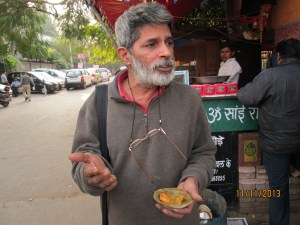
K.P. Sasi is a well-known social activist and filmmaker.  In his several decades of activism, he has been associated with a number of social movements ranging from anti-globalisation and anti-nuclear movement to anti-death penalty struggles and the movements led by environmentalists and marginalised social groups such as Dalits, Adivasis, and Muslims etc. He has expressed his activism through making more than two dozen documentaries and a few feature films. But his two music videos —America, America and Gaon Chhodab Nahin, watched by lakhs of people, continue to motivate social and political activists standing against injustice and inequality. The lean and thin Sasi, who spots thick grey beard, is again in controversies for his latest spell of activism. Early in this year he screened a 94-minute long documentary Fabricated based on the life of Muslim leader from Kerala Abdul Nasar Madani, accused in Coimbatore and Bangalore serial bomb blasts. Fabricated has been the fruit of Sasi’s two years of hard work during which he did an extensive research, met a number of people and travelled thousands of miles and received threats as well. Why did he take so much pain and risk his life? Fabricated, in Sasi’s words, is an attempt to bring a ray of hope to thousands of innocent people, mostly Muslims, Dalits, Adivasis, oppressed nationalities, workers and others languishing in jails for years and decades under draconian laws such as Unlawful Activities Prevention Act (UAPA). Fabricated is mostly woven around the story of Madani, making a strong case that the Muslim leader of Kerala is innocent and has been jailed for years simply because has been framed. He has a charisma, a great skill of oratory and above all a vision of the uplift of the marginalised sections. In the early week of November, Sasi was in Delhi where Fabricated was screened at many places. After watching the documentary at Jawaharlal Nehru University, Md. Eisa, Badre Alam Khan and Abhay Kumar had a detailed interview with K.P. Sasi during which he went on a great length about a host of issues from state terror, human rights, Hindu right, caste, and class to the Muslim politics. The excerpts of the interview are as follows: Continue reading The State Manufactures Terrorism: KP Sasi

AAP Halts BJP Advance in Delhi

Over a year ago, I had written on Kafila about the (Ir)resistible rise of Arvind Kejriwal,  a phenomenon thoroughly misread from the beginning to this moment, by free radicals and Left devotees of Congress-style politics. Taking the risk of saying ‘I-told-you-so’, some lessons need to be underlined, learnt from the political developments of the last three years. That post said – referring back to the days of the Anna Hazare movement (itself dubbed reactionary, casteist, even RSS-sponsored and fascist, by pundits of all hues) –

But here was the political class  and the intelligentsia from Left to Right taking the protestors to task – asking them to tame their dissent and channel it through ‘proper channels’. Contest elections and let us see how much support you have, they challenged. Anna Hazare stuck to his guns, refusing the bait. Kejriwal however, seems to have decided to call their bluff. And much before the last hunger strike failed, his political mobilization started moving away from the single point agenda of the Lokpal Bill. Apparently taking up the challenge and moving towards the constitution of a political party, Kejriwal has entered the field in a manner that might even begin to pose an electoral challenge to ruling as well as opposition parties. How much of a challenge it will be we cannot say. However, one thing is quite clear: It will probably introduce an element of serious uncertainty in the coming elections, whenever they are held. Old formulas will cease to work. Equations are bound to change with new imponderables entering the scene.

Continue reading AAP Halts BJP Advance in Delhi

PUCL Statement on Tehelka Sexual Assault Case

[We are publishing below the full text of the statement issued by the People’s Union for Civil Liberties, on the Tehelka case, which raises some important issues that have not received public attention yet.]
 
Press Statement on the Tehelka Sexual Assault Case
 Dated: 2 December 2013
The PUCL
  • Expresses Solidarity with the struggle of the Tehelka Journalist who raised her voice against Rape and Intimidation by the Ex-Editor Tarun Tejpal.
  • Demands fair investigation and early charge sheet into the matter, from the Goa Police.
  • Considers Six Day of Custodial interrogation of Tarun Tejpal granted by the Goa Judicial Magistrate Court unnecessary and invidious.
  • Appeals that police custody and the case not become a tool in the hands of BJP administered Goa police to settle scores with Tejpal.
The People’s Union for Civil Liberties from the very beginning has supported the complaint of the woman journalist of Tehelka magazine who accused the editor of Tehelka, Tarun Tejpal, of rape and sexual assault. PUCL salutes her courage for breaking the silence on rape and sexual intimidation carried out by her senior colleague and editor. We have also admired the consistent and principled manner in which the young girl stated her case, initially via internal emails within Tehelka, and later on to the media, neither allowing vituperation or anger at the blatant violation of her body to sensationalise her case or to prevaricate about the fact of the offence having been committed. Through her dignified stand she stands as a model to all women who suffer similar sexual violence, that the dignity of a woman’s body cannot be a plaything for anybody howsoever influential and powerful they be. By the same token, we also denounce the vilification campaign carried out by Tarun Tejpal and his lawyers against the complainant by seeking to impute that the entire crime was actually a `consensual’ act or at trying to trivialise the crime by calling it “light hearted banter”.

Continue reading PUCL Statement on Tehelka Sexual Assault Case

Laxmanpur Bathe, Then and Now: Monobina Gupta

Guest post by MONOBINA GUPTA

I remember a chill running down my spine that early afternoon in 1998. I was standing at Laxmanpur Bathe – the site of a cold-blooded massacre a year ago. Then a reporter with The Telegraph, I was touring Bihar, reporting on the 1998 general elections, less than two years after the United Front government came to power. Bihar was then firmly under the thumb of the redoubtable Lalu Prasad. Tensions between the Maoist Coordination Committee (MCC) and the Ranvir Sena, a private army of upper caste landlords, were running high. Every reporter visiting the area had been advised by the district magistrates concerned not to travel after sundown. Newspapers in Delhi were full of stories about Bihar’s lawlessness, extortions and abductions even in broad daylight.

I had read details of that deadly night in the newspapers; and then of the sudden trips made by VIP cavalcades to the village in the aftermath of the bloodbath. The massacre had pitched the forgotten hamlet of Dalits into the glaring spotlight. Crowds of politicians and media descended on the spot, even as the grief stricken survivors were struggling with the shock of the attack and the terrible loss of their loved ones. Continue reading Laxmanpur Bathe, Then and Now: Monobina Gupta

Courage is silent and Stoic – Tortured in Kashmir: Aditya Prakash

Guest post by ADITYA PRAKASH

The following is a narrative of a torture victim I gathered during my time in Kashmir as a researcher. The person interviewed was tortured by the 2nd Dogra regiment of the Indian Army.

Where is your gun?

On the night of 28th October 1991, the 2nd Dogra Regiment of the Indian Army was conducting interrogations in Palhallan. Palhallan is a large village in the Baramulla district of Jammu and Kashmir.

People suspected of having links with terrorists were interrogated. The women and men were asked to come out of their homes. The women were asked to gather at the local dargah (shrine) and the men were lined up in the village school.

A major from the 2nd Dogra handpicked Manzoor Ahmad Naikoo to step forward. Others were also short listed for interrogation. Manzoor was taken inside the school and forced to strip. He was made to sit on a chair. His hands were fastened to his back.

‘Taaki main kuch na kar sakoon’

He was completely immobilized. The army personnel then asked him for his gun. Manzoor Ahmad said he had no gun. He tried to convince them that he was a shopkeeper and never owned a gun. Continue reading Courage is silent and Stoic – Tortured in Kashmir: Aditya Prakash

Dilemma of Indian Muslims After Partition: Yasmin Qureshi

Guest post by YASMIN QURESHI. Excerpts from this essay were read at an event organized by the Partition Archives project in Berkeley earlier this year.

Abbu’s family, like many other Muslims in India was torn between staying in their ancestral land and going to the new country founded for Muslims. The call for Pakistan and the Muslim League movement was more prominent in the elite or educated classes. For Abbu’s family it was a distant idea and life outside Dilli was inconceivable. But the partition wave didn’t leave them untouched and a few family members including Abbu migrated to Lahore. Lahore was chosen because they had heard it was similar to Dilli. A year in Lahore was enough for them to realize their heart was still in DilliGhalib ki galiyan, echoes of azaans from Jama Masjid, pigeons flying above their roofs and the aroma of korma brought them back to the home their father had built.

The conflict of choosing between the newly founded nation states of India and Pakistan divided many families. Some of Abbu’s relatives shuffled between the two for many years till they were forced to make a choice by the governments in the 1960s. His elder sister’s family and a few other nieces and nephews decided to become Pakistani citizens.

For Muslims that stayed in India, the next few decades were years of fear and subjugation. Communal violence, often organized and manufactured by political parties or the right wing Hindu organization, RSS throughout the 1960s in cities where Muslims were in large numbers was a threatening message to the Muslims that if they choose to stay here they would have to live as a silenced minority with a constant reminder they were guilty of dividing India. Continue reading Dilemma of Indian Muslims After Partition: Yasmin Qureshi

Storm in a Calm IIT Campus Over a Sexual Harassment Case: Pronoy Rai

Guest post by PRONOY RAI

The serene, picturesque campus of the Indian Institute of Technology Guwahati has been witnessing some very noteworthy events in the recent past. According to reports in the popular media, a professor at the institute’s biotechnology department was accused of sending obscene text messages to his PhD student over her phone. Though the professor pleaded innocence, claiming that messages were sent from his sim card that was stolen, the local police found this hard to believe. The professor has also been accused of harassing the student during other instances on campus. Upon receiving the advice of the ‘Working Women’s Committee’ of the institute, the professor was recently suspended. This narrative constructs for us a simple, fair story of a just state-society system. A person breaks the law, and he is disciplined, as one would expect in a fair democratic society. If only that was the case.

The suspension of the professor was not immediately followed by the submission of the report, let alone the filing of complaint at the institute and with the local police. On August 13, Amingaon police in Assam arrested the professor for sending obscene text messages to a student. The arrest happened because the student had to file a FIR in order to request a telecom company to reveal the identity of the owner of the phone, from where the obscene messages being sent to her, were emanating. The delay in the inaction of the institute administration is unjustified, but perhaps not very inexplicable. Continue reading Storm in a Calm IIT Campus Over a Sexual Harassment Case: Pronoy Rai

The Unknown Fate of Thousands in Sri Lanka: Leena Manimekalai

Guest post by LEENA MANIMEKALAI

‘By the wayside’

“This wreath/ with no name attached /is for you/who has no grave/ As the place of earth/ which embraced you/ could not be found/this wreath was placed by the wayside/Forgive me/ for placing a memorial for you/ by the roadside.”

…writes Basil Fernando about the memorial constructed by families of disappeared  at Radoluwa Junction in Seeduwa, a town near the city of Negombo, Srilanka.  When I visited the memorial with lingering faces of the disappeared, it signified an important attempt to keep the memories alive, a yearning to prevent recurrence of mass disappearances and seek justice on behalf of the victims of disappearances and their families. Srilanka which has a deep and complex history of political violence is struggling to redeem the past with a frozen present and a black hole future. Communal riots, political assassinations and ethnic conflict have been an element of the socio-political landscape of this tear nation for more than a century. Two heads of State, dozen national political leaders and numerous regional and local politicians, journalists, activists and artists have been assassinated by groups representing virtually every shade of political spectrum. The Srilankan state deploys disappearances and extra judicial killings as an instrument of public policy in the name of State Emergencies, Prevention of Terrorism Act, dubbing of persons as terrorists, unpatriotic, enemies of state. Brutal suppression of two armed insurrections in the Sinhala South in 1971-72, 1987-89 led by Peoples Liberation Front (JVP) and an armed Tamil Separatist Movement  since 1970s led by the Liberation Tigers of Tamil Eelam (LTTE) in the Tamil North and East of the island had spotted Srilankan state guilty of horrific human rights abuses. Now the nation is the world leader in number of disappeared crossing millions who have no date of death, no place of death, no body, and no grave or funeral rites. Obviously there is no shelling, no bombing in the island since 2009 and the State wants the world to believe that war is over but who will bring peace to the families who continue to lose their members to State Terror and also been denied their basic right to even open their mouth about the injustice. Continue reading The Unknown Fate of Thousands in Sri Lanka: Leena Manimekalai

Decolonization of the Mind

Our modernity is incomplete, our secularism impure, our democracy immature, our development  arrested and our capitalism retarded: ask anyone trained in the social sciences, economics in particular, about what ails India today and you can be sure of getting one or all of these answers. And you can go on adding to the list of more and more things ‘we’ lack. We did not have ‘history’, we do not have social sciences – and of course, we do not have theory/ philosophy.

Everything, in other words, is about our ‘backwardness’ and our need to catch up with the West. And seen through the lens of social science, most of the world looks like this – living ‘inauthentic’ lives, always ever in the ‘waiting room of history’, to steal historian Dipesh Chakrabarty’s suggestive phrase.

In the world view of our state elites, this is actually a form of what one could call, paraphrasing Sigmund Freud, ‘Capital-Envy’. The ‘realization’ that ‘we do not have it’ can be a source of serious anxieties. That is what lies behind the current frenzied desire to ‘catch up’ with the West. And generations of feminist scholarship has challenged this unquestioned Freudian  assumption that the penis is the norm and not to have it, is Lack. Perhaps women do not want it? Freud never conceived of this as possible. Indeed in today’s world, there are many men who claim that they feel they are women trapped inside male bodies. Generations of scholarship has made us realize that the aura of that grand universal theory actually rested on the fact that it did not just describe the sexes; it produced the sexual norm itself.

The vision that propels our political elites and their parallel numbers who write in the media today, is something like that fantasy of Freud. The anxiety produced by this awareness of the ‘primordial Lack’, is what drives them today towards what has been the most violent phase of development in our entire history. Violent uprooting of populations from their land, often at gunpoint, coupled with the most ruthless plunder of our common resources by unscrupulous corporations – all this and more has been going on with the state elites looking on ‘benignly’. For they seem to know something ordinary mortals do not – that all this is but the necessary price to pay for becoming ‘modern’ like them. Continue reading Decolonization of the Mind

Reporting Hunger from the Margins: Agrima Bhasin and Ashwin Parulkar

Guest post by AGRIMA BHASIN and ASHWIN PARULKAR.

The watchdog metaphor obliges the media to step up their role, that of an opinion maker, and stir public opinion on hunger and food security in India

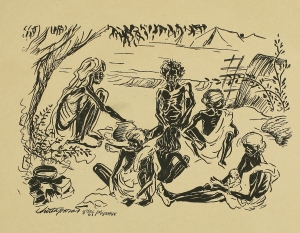
A priest turned beggar, his body starved thin; a family of destitute potters picking up grains soiled in mud; emaciated women forced into sex work; and a man scavenged by dogs and vultures. These were just a few of the scores of starving people journalist Chittaprosad Bhattacharya drew in black and white sketches in his travels through Bengal’s Midnapore district during the Great Bengal Famine of 1943, the last of a spate of famines that plagued colonial India during British rule. Bhattacharya’s portraits of the destitute ’showed’ stories of mass starvation, making visible through withering human flesh a nearly immeasurable tragedy of more than 3 million hunger deaths. Brutal yet compassionate, his graphic chronicles provoked the ire of colonial administrators, prompting officials to burn every copy of his book, Hungry Bengal (1943).

Women turned 'prostitutes
Drawing by Chittaprosad on the 1943 Bengal famine

Despite the censorship of his book, Bhattacharya continued to report on the famine for the Communist Party of India’s weekly newspaper, The People’s War. His sustained efforts to bring the realities of mass hunger to bear on the public conscience in colonial, famine-struck Bengal set a precedent for journalists to use the press as a watchdog that can impel the government to act. Today, his reportage is instructive for those in the profession who particularly cover hunger, poverty and inequality.

In today’s India, home to over 200 million chronically hungry and malnourished people, a significant but small number of dedicated editors, publishers, journalists, photographers and broadcasters are taking strides to highlight the complex nature of inequality in this country. A sporadic renewal of interest on the part of the media to report on hunger and starvation often only occurs in moments of crisis: starvation deaths, children’s deaths, or spoilage of grains in warehouses. Continue reading Reporting Hunger from the Margins: Agrima Bhasin and Ashwin Parulkar

The Changed Face of the Newsroom: Monobina Gupta

 Guest post by MONOBINA GUPTA. DelhiUniversity teachers are fighting back to hold on to the fast vanishing autonomy of academics and academia. For me, this is a significant moment. Not just because the teachers are setting an example in their refusal to submit to the destructive moves disguised as ‘reform’, slammed through by well-connected and powerful authorities at the top. I must confess to my own selfish reasons for celebrating this moment. As a journalist, I can’t but think of all that we too could have held on to had only we walked this path of resistance, stalled the first assault on the newsroom, resisted the first strike, shrinking what I would describe as our ‘journalistic territory.’

Had we moved in that difficult yet honourable direction, we too might have guarded our space, not allowed non-journalists to take it over, bit by bit. Is it too late to recover and reclaim what was once an autonomous, if not a radical newsroom? Maybe. Maybe not.

For journalists like me who entered the newsroom in the 1980s, it’s the transformation of that space that I find both fascinating as well as frightening, in equal measure. Tune out the deafening noise of  24×7 news – cut the frills – journalism emerges in all its bare bones as the craft it really is or should be: an incisive tool for chronicling and analysing events. Ring side spectators or distant observers, members of the media, under all circumstances, are supposed to have their ear to the ground. In an ideal world, these couriers of news – mostly nasty and brutish these days – shouldn’t be attuned to corporate boardroom culture or its fiat.  Continue reading The Changed Face of the Newsroom: Monobina Gupta

Lok Sabha elections, software imperialism and the Urdu language: Anant Maringanti

Guest post by ANANT MARINGANTI. Kapil Sibal may have unwittingly erased a whole historical geography of pre-windows software development in India. If the Times of India report on the release of Urdu fonts developed by National Council for Promotion of Urdu Language ( NCPUL) last week is accurate,  Sibal said that India developed Urdu Software and fonts and thereby ended a longstanding dependency on Pakistan. This, according to him is beneficial to the 15 crore Urdu language users. There is a  ‘pre-election Muslim wooing’ feel to the story which nicely blends with the  ‘massaging of Indian (read Hindu) nationalist pride’ feel.  The sense of triumph and pride at this historic achievement by Indian programmers would have been justified even if it could be read as symptomatic of the postcolonial condition that Amitav Ghosh captures in his recounting of the breakdown of conversation between himself and the Imam of Lataifa and Nashawy.  Unfortunately however, Urdu language users in India were never dependent on Pakistan for software and fonts.  This can be said in two different senses: first that Indian Urdu language computing originated in Hyderabad almost 25 years ago and has contributed significantly to local cultural economy. Second, to the extent that there has been exchange between India and Pakistan in Urdu language computing, the participants in that exchange have seen it primarily in terms of exchange. Afterall, people cannot help making language tools even if nation states do not pay them much attention.    Continue reading Lok Sabha elections, software imperialism and the Urdu language: Anant Maringanti

Boyalagudem’s Search for Water: Rajendran Narayanan

Guest post by RAJENDRAN NARAYANAN. Boyalagudem – The name sounds like one of those nondescript railway stations in south India that an express train whizzes by in utter condescension of its portly status. Except that in this case it is much worse. There are no railway tracks in a 50 kilometre radius of this village, tucked away in a corner of Mahabubnagar district in Andhra Pradesh. The landscape here is various hues of brown with not even a pretension of greenery anywhere, barring a few adamant shrubs as if standing up for their fraternity.

A not so covetous claim to fame of this region is its proneness to drought. People here spend each year in the hope that weather cannot play a prank every year. Prayers are offered each year in the second week of June to please the rain gods so that the chosen gods can have mercy this time around. But, the gods in turn haven’t been too pleased with the prayers so offered for the past few years.

Boyalagudem's scramble for water
Boyalagudem’s scramble for water

To cut to the chase, water is scarce in this region and so is electricity. Most villages in this part of the district have a central water pump connected to a storage tank that gets water when the State takes pity and provides electricity. Thus, no electricity implies no water. Electricity comes and goes at random times of the day and consequently there is no fixed schedule regarding the availability of water. Some desperate villager wakes up at 4 AM and rushes to the water pump in the hope of getting water. Another sleepy villager  walking out to take a leak at that hour observes an active man with four colourful pots running to get water and rushes back to his house to join the early riser in the daily water fetching ritual. News of water availability spreads and within 30 minutes one can see majority of the villagers, from 6 year olds to70 year olds, wiping their sleep off their face, walking, running or cycling, each with four to six bright colourful plastic pots to the solitary water pump. Multicoloured fluorescent pots form a long and winding queue to usher in the day. The chaotic queue naturally lends itself to quarrels and verbal skirmishes about who came first and why somebody has come with eight pots to hoard water.

Continue reading Boyalagudem’s Search for Water: Rajendran Narayanan

Media Campaign and the Ishrat Jahan Case: Faraz Ahmad

Guest post by FARAZ AHMAD: Even after the Central Bureau of Investigations (CBI) presented of its charge-sheet in CBI special court in Ahmedabad on July 3 in the infamous Ishrat Jahan encounter case of Gujarat of 2004 charging the Gujarat police, together with the IB of faking the encounter with Ishrat and three others, the media campaign, more particularly of the Times of India to damage CBI’s credibility continued unabated, with Bharti Jain’s lament on behalf of the IB.

However it is obvious that Bharti Jain’s is neither the first nor the last spirited defence of the questionable activities of our security and intelligence officers committing all kinds of crimes under the cover of protecting the nation from supposed external and internal threat. Unmindful of this, the media campaign is so visibly influenced by the BJP, attempting to discredit the CBI investigations and label these as biased before these are examined by the rightful authority, the courts, guided by competent lawyers of both the prosecution as well as Defence. Continue reading Media Campaign and the Ishrat Jahan Case: Faraz Ahmad

The curious case of the Tamil Nadu police preventing ex-Maoists’ return to electoral path!

Guest post. A statement by Prof A. MARX and other rights activists

We, the undersigned, wish to bring to the public’s notice a curious case of doublespeak by the state. The central and state governments constantly advise Maoists to give up arms and join the mainstream. But, in Tamil Nadu, the government in collusion with the police is torturing a group of ex-Maoists who have joined the mainstream. These comrades have given up armed struggle and have come out to function in the open under a party named People’s Democratic Republic Party (PDRP). They have also accepted the electoral path to pursue their mass line. It is clear from their case that the intention of the state is not to mainstream the armed fighters but to incapacitate anyone who dares to criticize the state’s policies, without any compromise.

Background

Earlier, many PDRP members were part of CPI (Maoist). Some of them were arrested and imprisoned under POTA in 2002, on charges of undergoing arms training in Uthangarai, Tamil Nadu. They eventually came out of the prison with women getting bail in 2005 and men in 2007. Many of the comrades who came out criticized the armed struggle line of CPI (Maoist) and stressed for a mass line. The CPI (Maoist) reacted to this by dismissing them from the party towards the end of 2007. Continue reading The curious case of the Tamil Nadu police preventing ex-Maoists’ return to electoral path!

On Passport Divas, ‘We are Like That Only, But We Want to be Superpower’!

‘It happens only in India’ – so goes the refrain. Because we are extra special. Yes we are. In our smugness and in our conceit. In our bloated sense of Self that will stop short of nothing less than the status of the next ‘superpower’ – without anything to show for it though. Wonder where all this actually comes from? Chala Murari Hero Banane. Years ago, we were told, we had colonized Silicon Valley. Our software writers, the best in the world, had placed India in the world map of rising powers. So much had it impressed the leaders of this country that they decided that all their higher education would be geared to producing more and more such labour for the new global economy (no offense meant to the software people). However that is another story. Right now I want to tell a different one – partly out of frustration but partly because I consider it my duty to forewarn others who might be in for a similar experience as mine. Continue reading On Passport Divas, ‘We are Like That Only, But We Want to be Superpower’!