All posts by Aditya Nigam

The New Janus of Sri Lanka: Revolution at the Gate? Maya John

Guest post by MAYA JOHN

[Maya John has been part of the Left Movement for the past two decades and this piece is in response to ongoing dialogues with Sri Lankan comrades.]

Anura Kumara Dissanayake, photo courtesy AP News

The recent presidential election has installed Anura Kumara Dissanayake (“AKD”) from the Janatha Vimukthi Peramuna (JVP)-led National People’s Power (NPP) alliance as the new president of Sri Lanka. This victory is seen as a result of rising popular hostility towards mainstream parties and rogue dynasts. Consequently, we find that AKD garnered an overwhelming share of the votes from those same electoral constituencies which had earlier voted in bulk for the corrupt Rajapaksas. Prior to this presidential election, the frustrated Sri Lankan masses, plagued by growing economic and political crises, generated the powerful people’s movement – the janatha aragalaya – that ushered in a huge legitimacy crisis for the ruling elites.

Continue reading The New Janus of Sri Lanka: Revolution at the Gate? Maya John

A Misguided Narrative – A Response to the Lemkin Institute’s Statement on Bangladesh: Sohul Ahmed

Guest post by SOHUL AHMED

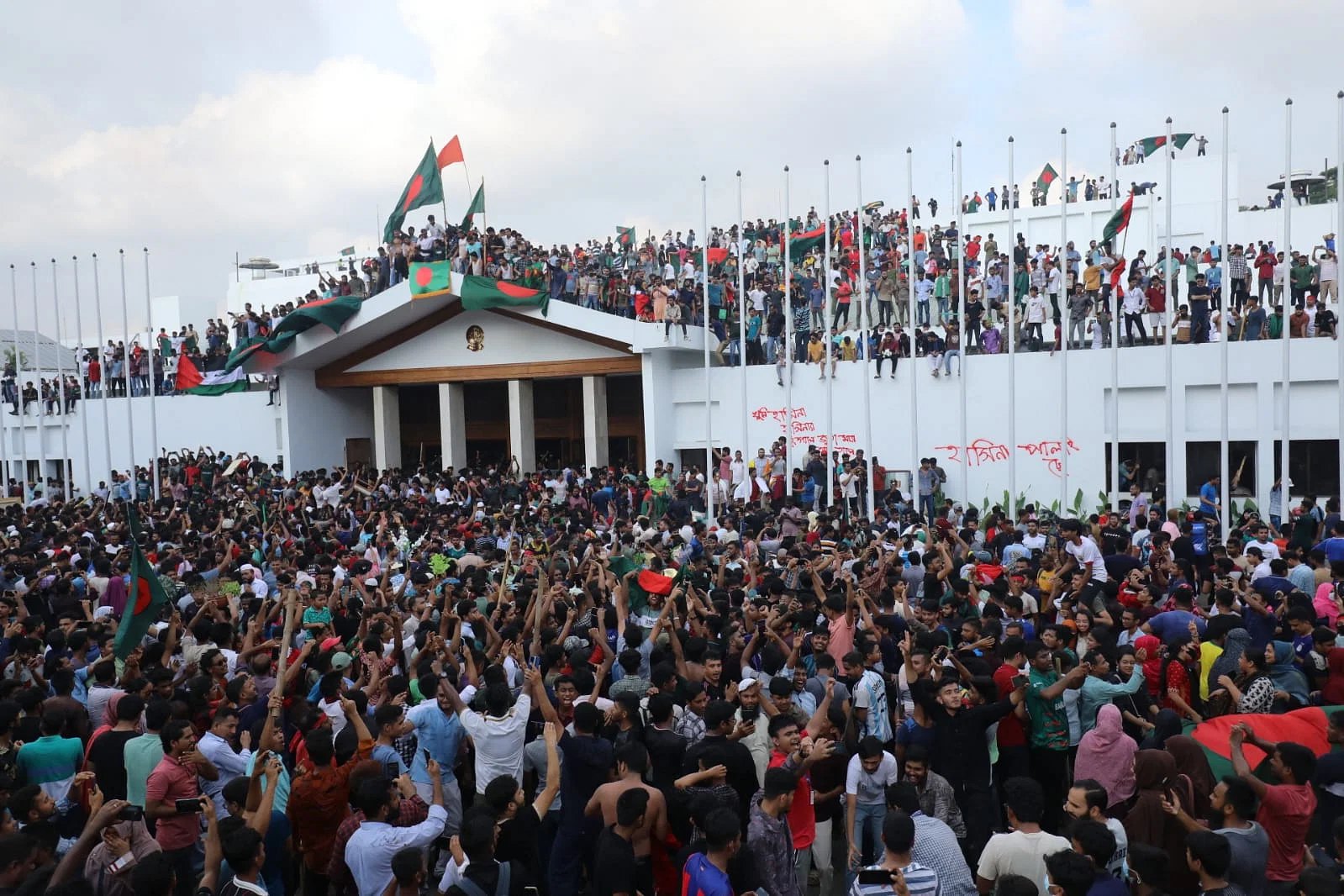
Crowds outside the prime minister’s office during the Uprising. Photograph by Dipu Malakar, courtesy Prothom Alo

The statement issued on 24 September 2024 by the Lemkin Institute for Genocide Prevention titled ‘Statement on Threats to Democracy in Bangladesh’[1] has drawn our attention not only due to misrepresentation of facts but also because it aligns more with the narrative of the ousted autocratic regime led by Sheikh Hasina and her party Awami League than with the aspirations of the people of Bangladesh. The statement has failed to capture the complexities of the situation in Bangladesh and thereby presents a misguided narrative about the uprising and its aftermath. Under the circumstances we feel obligated to respond to set the record straight and point out the inaccuracies in the statement.

Continue reading A Misguided Narrative – A Response to the Lemkin Institute’s Statement on Bangladesh: Sohul Ahmed

Long Live the Eternal Feminist, Anti-Fascist Fire and Flower Gauri! – A Letter from ALIFA

Following is an Open Letter from ALIFA (All India Feminist Alliance ) to Gauri Lankesh, marking 7 years of her cowardly killing. The Open Letter is in both English and Kannada. The Kannada version follows after the English one. ALIFA is linked to NAPM (National Alliance of People’s Movements). ಆತ್ಮೀಯ ಗೌರಿ ಲಂಕೇಶ್ ಅವರ ಹೇಡಿತನದ ಹತ್ಯೆಗೆ 7 ವರ್ಷಗಳಾಗಿ, ಅವರಿಗೆ ಅಲಿಫಾದಿಂದ (ALIFA) ಬಹಿರಂಗ ಪತ್ರ

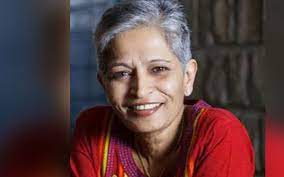
Gauri Lankesh, image courtesy Asianet Newsable

Gauri, dear sister, dear comrade!

It has been seven years. We still remember the day, the night! 5th September, 2017 – in fact the very moments – when the ‘news’ hit us. Gauri Lankesh shot in cold blood. Details poured in. Number of bullets. At your residence. By two men. We reeled with shock under immeasurable grief, loss and helplessness. Abandoning so many unfinished conversations, you left a void in all our hearts, the shape and size of a star!

Continue reading Long Live the Eternal Feminist, Anti-Fascist Fire and Flower Gauri! – A Letter from ALIFA

Vikalp Sangam – A Decade of Exploration on Alternatives in India: Ashish Kothari

Guest post by ASHISH KOTHARI

Abstract [1]

The multiple crises humanity confronts require fundamental shifts in how we relate to the Earth and to each other. This entails tackling the roots of these crises head-on, including the structures and relations of patriarchy, racism, colonialism, capitalism, statism, and anthropocentrism. This in turn needs to be done within the context of visions of the ideal society we want. This essay presents a process in India, Vikalp Sangam (Alternatives Confluences), that has attempted for a decade to document, visibilise, network, and create collaborations amongst movements and groups involved in alternative approaches for justice, equity, ecological sustainability. It describes the process and its various components, the challenges and opportunities of bringing very diverse groups from different cultural contexts together, the potential of a bottom-up and participatory visioning process, and the excitement of attempting to bridge conventional traditional-modern, practitioner-intellectual, urban-rural, and other divides.

Keywords: Democracy; Visioning; Alternatives; Environment; Civil society

Introduction: The Making of Vikalp Sangam  

A decade is not a short span of time – and yet, it is too short. These are the contrasting thoughts I have as I contemplate a process that I have been part of since its initiation, as I and my colleagues enter into a phase of reviewing whether it is on course to meeting the objectives it began with. This is Vikalp Sangam, or Alternatives Confluence, a national platform established in India in 2014.

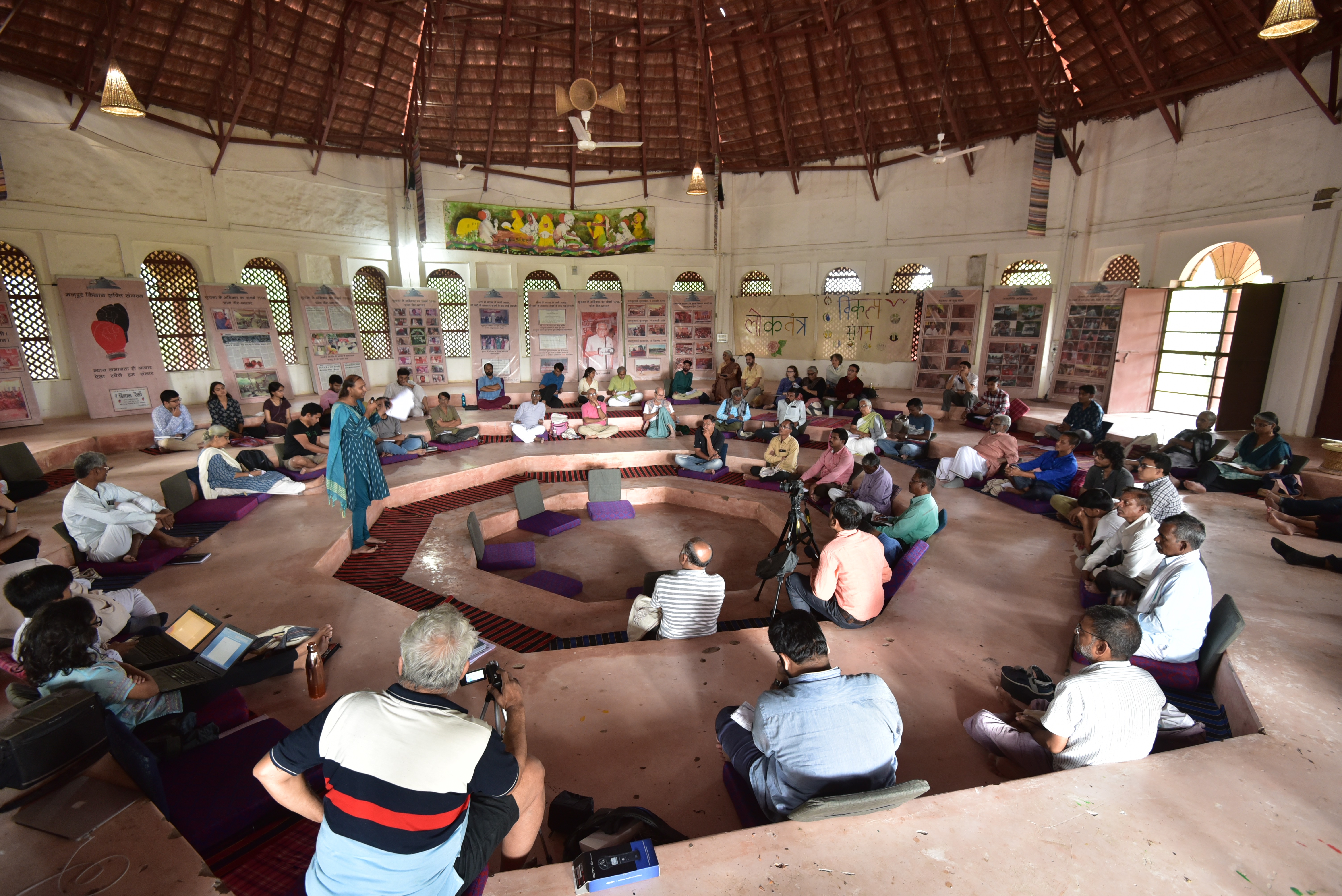
Democracy Vikalp Sangam, School for Democracy, Rajasthan, October 2019
Continue reading Vikalp Sangam – A Decade of Exploration on Alternatives in India: Ashish Kothari

Twenty Days that Shook the World – Bangladesh Uprising II : Shahed Suvo

Guest post by SHAHED SUVO

This is the second part of the two-part article by Shahed Suvo, published earlier in Bangla in Ekak Matra on 10 August 2024. The first part appeared yesterday and can be accessed here. This part deals with the last days of the Sheikh Hasina regime and the transition that immediately followed. It has been translated for Kafila by ARUN SINHA.

Responding to the call of the anti-discrimination student movement, student-citizens gathered at Shaheed Minar on August 3. Young people continued to gather at Shaheed Minar with separate protest processions.  At this time, elderly citizens were also seen participating in the protest march with them. At around 5:30 PM in the afternoon, the coordinator of the organization leading the quota reform movement Md. Nahid Islam announced a one-point demand in a speech to the students-people gathered at Shaheed Minar – Prime Minister Sheikh Hasina and her cabinet must resign.

Asif Mahmud, another coordinator of the movement, announced the outline program of the non-cooperation movement.

Continue reading Twenty Days that Shook the World – Bangladesh Uprising II : Shahed Suvo

‘Motherland that is Dearer than Heaven’ – Bangladesh Uprising I: Shahed Suvo

Guest post by SHAHED SUVO

As a lot of motivated propaganda continues to be dished out about the uprising in Bangladesh, with weird and utterly nonsensical stories of it being ‘engineered’ by ‘the CIA’ at one end, and ‘the Islamists’ at the other, we reproduce here this article that gives a virtually blow by blow account of the developments. Published earlier in Bangla in Ekak Matra on 9 August 2024, Twenty Days that Shook the World in two parts, it has been translated for Kafila by ARUN SINHA. This is the first part. Part II can be read here.

Bangladesh protest before 5 August, image courtesy Ekak Matra

The students’ community revolution in July 2024 will be etched as one very important and characteristic event in the annals of history of deconstruction of state in Bangladesh.  After declaration of Pakistan as a state, the first voices of protest were raised against Jinnah’s policy of declaring Urdu as the state language. That was Bhasa Andolan (Language Movement) in 1952, then came the movement on 1962 education commission, the mass uprising in 1969 culminating in the glorious Liberation War in 1971. The student community always participated in bringing these momentous changes walking hand in hand with the people in Bangladesh. Whenever people lost their way and paths in independent Bangladesh, it is the movement of the students that showed the road ahead. Therefore, for the people of Bangladesh the student community has always been the symbol of truth and justice.

Continue reading ‘Motherland that is Dearer than Heaven’ – Bangladesh Uprising I: Shahed Suvo

Women’s Rights Now! Citizens Speak Out Against Brutal Cases of Sexual Violence Across India

[More than 900 organizations and individuals speak out against brutal rape and cultures of impunity from Kolkata and Manipur to Uttar Pradesh, Gujarat and other parts of the country. Published below is their statement issued on 26 August 2024.]

WOMEN RIGHTS NOW!

CITIZENS SPEAK OUT AGAINST BRUTAL CASES OF SEXUAL VIOLENCE FROM KOLKATA TO MANIPUR, GUJARAT, UTTARAKHAND, BIHAR, UTTAR PRADESH…

DEMAND URGENT, INDEPENDENT AND UNBIASED INVESTIGATIONS AND INSTITUTIONAL ACCOUNTABILITY!

NO MORE SHIELDING OF PERPETRATORS AND THEIR PROTECTORS

JUSTICE TO VICTIMS AND THEIR FAMILIES!

Continue reading Women’s Rights Now! Citizens Speak Out Against Brutal Cases of Sexual Violence Across India

STATEMENT BY INDIAN CITIZENS AGAINST BRUTAL STATE VIOLENCE AND IN SOLIDARITY WITH THE STRUGGLE IN BANGLADESH

[Even as the massive Long March in Dhaka’s Shahbagh is going on, reportedly with lakhs and lakhs of people demanding Sheikh Hasina’s resignation, rumours of her having already resigned are coming in. The statement is of course in support of Bangladesh’s struggle for democracy and against the brutal repression unleashed by her Awami League regime.]

We, the undersigned citizens of India, writers, artists, intellectuals and activists, express our deep concern over the recent developments in Bangladesh. As fellow South Asians, we share a common destiny and the destruction of democracy in any part of it is obviously a matter of concern for all of us. The current government that has unleashed massive violence on its own citizens has brazenly hijacked the elections three consecutive times in the last ten years.

The world has been watching in horror the violent crackdown on protesting students and youth in Bangladesh since mid-July. On 15th July, a peaceful protest by students of Dhaka University demanding reform in the quota system was violently attacked by a group of goons said to be from the student wing of the ruling party. The crackdown followed statements by the Awami League general secretary and an important minister that the Chhatra League would teach a lesson to the students, whom the prime minister, Sheikh Hasina had earlier labelled ‘razakars’ – a term used for the collaborators with the Pakistan army during the 1971 Liberation Struggle. Expectedly, the Bangladesh Police, rather than acting against the attackers, started a full-scale crackdown on protesters all across the country from the next day. On 16th July, the police killed Abu Saeed, a student of Begum Rokeya University, as he stood with open arms, without any weapon, in front of the approaching police forces who aimed their guns at the protesters. The murder of Abu Saeed, who posed no threat to the approaching police forces, manifests how the intention behind the crackdown on protesters was not to maintain law and order but to forcefully silence voices of dissent arising from all across Bangladesh.

Continue reading STATEMENT BY INDIAN CITIZENS AGAINST BRUTAL STATE VIOLENCE AND IN SOLIDARITY WITH THE STRUGGLE IN BANGLADESH

The Movement in Bangladesh is for a Radical Reform of the State – Interview with Sarwar Tusher

Interview with SARWAR TUSHER, writer and activist in Dhaka. Sarwar is one of the leading critical intellectuals associated with the important journal of political thought in Bangladesh, Rashtrochinta Journal and is also member of its editorial panel. In this detailed interview Sarwar explains not just the movement but also the larger politics of Bangladesh. The interview was taken by Aditya Nigam over email.

Turbulent July, Photo courtesy Rahat Karim

[After a round of massive repression and killings, the details of which the reader will find below, the movement is now back with renewed strength. This time it is not just the students and youth demanding an end to quotas but rather huge popular movement that is demanding nothing less than resignation of the Sheikh Hasina government and radical reform of the state. The conception behind this demand for “radical reform of the state” has been spelt out by Sarwar Tusher in detail below and the reader can see how it has grown in conjunction with mass movements of the past. Critical political thinking in tandem with the experience of mass movements has now led to the demand also of a new Constituent Assembly and the drafting of a fresh Constitution. It is also significant that “July” is no longer the name of a month but the name of the struggle itself as it reappears with greater vigour. I should add one more point here, which as to do with some misgivings in India about the quota and reservation question. Though Sarwar deals with it at greater length in different part of the interview, my own sense on reading his responses as well as following the discussions over the past one month, is that the situation is more akin to what might have been (and still is) in countries of state-socialism where the communist party certification was crucial in getting jobs and rising in the bureaucracy and other state institutions. The party certified whether you were “revolutionary” (muktijoddha) or “counter-revolutionary” (razakar) and it is not difficult to see why those regimes became so seriously unpopular (to put it mildly) in their own countries. AN]

Continue reading The Movement in Bangladesh is for a Radical Reform of the State – Interview with Sarwar Tusher

The End is Nigh – Bangladesh Report from Ground Zero: Shahidul Alam

This is a guest post by the well known Bangladesh photographer, SHAHIDUL ALAM. The article was earlier published in NEW AGE BANGLADESH and sent to us by SIMONE RUDOLPHI. The photographs are courtesy DRIK. Shahidul’s article actually answers many question that have been on Indian readers’ minds, including, not the least, the question of “quotas.” Interested readers may also find this article by academic Naveeda Khan useful, written as it is from within Dhaka, though she herself is based in the USA.

It would be a mistake to see this as simply a demand for more jobs. The quota movement, justified as it is, is simply the tip of the iceberg. A rampant government running roughshod over its people for so very long has led to extreme discontent. The quota issue has merely lit the fuse to this tinderbox. As citizens counted the dead and the injured, the prime minister fiddled, advising attendees at an aquaculture and sea food conference on tourism prospects in Cox’s Bazaar.

The original quota had been designed, shortly after independence in 1972 to be an interim arrangement to acknowledge the contribution of freedom fighters who constituted less than 0.25% of the population. Since a government known to be incredibly corrupt is responsible for creating the list of freedom fighters, over 50 years later the 120 fold allocation through a 30% quota has become an easy back door for party cadres to much sought after government employment. Confirmation came through senior Awami Leaguers saying, ‘just get through the initial screening and we’ll get you through in the viva’ and more tellingly, ‘government jobs will only go to party people.’

Continue reading The End is Nigh – Bangladesh Report from Ground Zero: Shahidul Alam

In Defense of the Bangladeshi Students’ Uprising


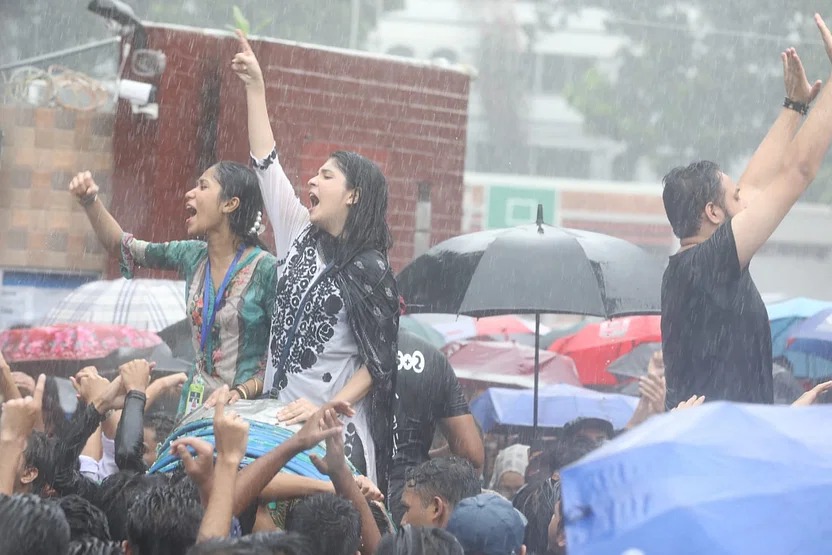
One of the innumerable anti-quota protests across Bangladesh, image courtesy Pressenza – International Press Agency

This post is dedicated to the innumerable young students of Bangladesh who have lost their lives in the last few days of struggle. This wasn’t supposed to be our first post on the Bangladesh students’ struggle because our friend Sarwar Tusher, one among the group of dynamic young critical intellectuals associated with the journal Rashtrochinta, was supposed to write a first hand analytical account. Meanwhile, from Thursday night (18 July) the Sheikh Hasina government enforced a total internet shutdown as the Army moved in to quell the protests. Tanks had already been seen moving in some streets and the protesters were expecting an exponential increase in state violence. Another Tienanmen Square seemed to be in the offing.

Continue reading In Defense of the Bangladeshi Students’ Uprising

Arvind Kejriwal’s Bail: Why the Establishment Wants to Destroy AAP


The Establishment’s desperation is becoming clearer by the day. And by ‘Establishment’ here, I do not mean simply the ruling duo in power today but a constellation of forces, many of whom congregated at a mega-wedding event in Mumbai recently. The embryonic New Congress thankfully stayed out of it – though the Old Congress is pretty much part of the Establishment, as we will see below.

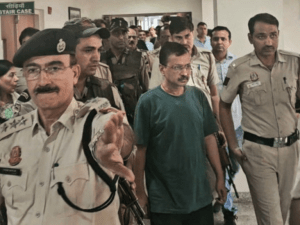
Popular Delhi chief minister, Arvind Kejriwal has finally got bail from the Supreme Court – both interim and regular – in the totally fictitious Enforcement Directorate (ED) case in which he has been framed. Yet he must remain in jail because on the eve of his release by a Delhi court and Additional Sessions Judge Nyay Bindu, the Central Bureau of Investigation (CBI) went and arrested him while he was still in jail!

Image courtesy The Economic Times

This arrest-within-arrest shows a desperation of the Establishment that has rarely ever been seen before. The desperation was even more evident in the fact that the High court judge, Justice Sudhir Kumar Jain went ahead to uphold the ED plea against the bail order by Judge Nyay Bindu, even before the order had been uploaded to their website. 157 lawyers wrote to the CJI alleging that the brother of the Judge, Anurag Jain is one of the counsels for the ED, which showed a clear conflict of interest. More importantly, referring to the urgent listing, hearing and stay of the trial court’s bail order by the high court, the lawyers’ letter said,

Continue reading Arvind Kejriwal’s Bail: Why the Establishment Wants to Destroy AAP

Elections 2024 – After the Euphoria, What Next?

Representational image. Women voters in queue, image courtesy Hindustan Times

A Turning Point

We have all been justly euphoric since 4 June 2024 as results started pouring in, especially since the non-biological being himself was trailing behind the Congress candidate Ajay Rai for quite some time. If the claim made in a video of a hardcore BJP worker Ujjwal Kumar from Banaras is to be believed, they – the unsung workers – had to arrange for ‘extra votes’ to ensure that ‘he’ wins. Regardless of whether his claim is correct, we kept up our euphoria even as the ECI website stopped updating counting figures and reports kept coming in from different constituencies in UP and some other places that INDIA alliance candidates were being forcibly declared lost after having won.

Continue reading Elections 2024 – After the Euphoria, What Next?

Surokkha Istehar, Forum of Theatre Workers Memorandum to Pashchimbanga Natya Akademy on Sexual Harassment

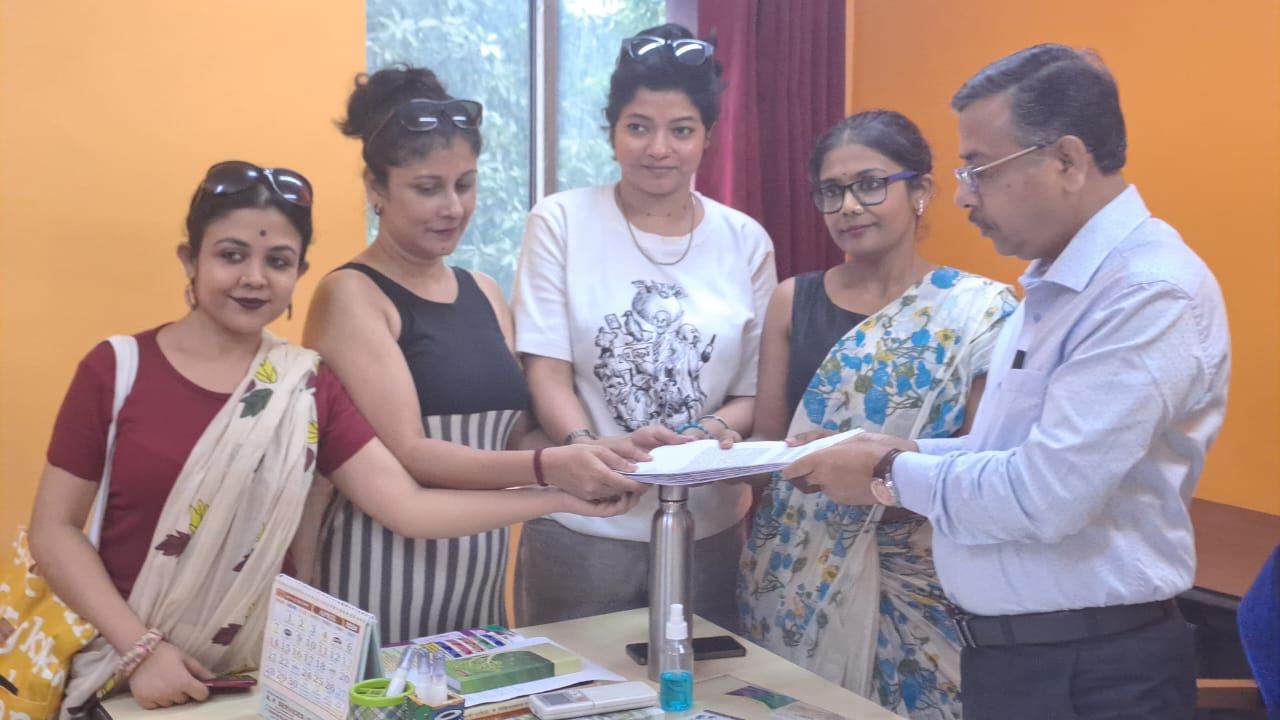
SUROKKHA ISTEHAR (Safety Manifesto), is a recently formed forum of theatre workers and individuals and organizations concerned with gender justice in Bangla Theatre. The forum was formed following a raging recent controversy arising from providing a forum to an accused in many sexual harassment cases. A deputation of Surokkha Istehar submitted a memorandum to the member Secretary, Paschimbanga Natya Akademi (the WB government body invested with the recognition and welfare of Bengal theatre groups) seeking immediate information about sexual harassment redressal mechanisms within the ambit of the Akademi, fair representation of all segments of the theatre workers’ community in the constitution of the Akademi as well as accountability of theatre groups and the Akademi in ensuring persons accused of sexual harrasment do not occupy positions of power within the Akademi, etc. 

Published below is the memorandum, containing more than 900 signatures, which also announces the launch of the forum, which seeks to offer assistance to survivors of sexual harassment in theatre spaces, to ensure gender justice in Bengali theatre, among others. 

Deputation of Surokkha Istehar submitting their Memorandum to the Pashchimbanga Natya Akademy

The Memorandum submitted to Pashchimbanga Natya Akademi

Madam/ Sir,

Continue reading Surokkha Istehar, Forum of Theatre Workers Memorandum to Pashchimbanga Natya Akademy on Sexual Harassment

Release Prof Nadera Shalhoub-Kevorkian of Hebrew University Immediately

A Statement by Academics Worldwide on the Arrest of Hebrew University Professor Nadera Shalhoub-Kevorkian

Around 5 pm on Thursday, April 18, 2024, Hebrew University professor and internationally renowned feminist scholar Nadera Shalhoub-Kevorkian was arrested by Israeli police at her home in the Old City of Jerusalem on the charge of incitement to violence. The police raided and searched her home and she is currently undergoing harsh and dehumanizing interrogation. Her lawyer said the charges against her are serious. Information about her release is unknown. Palestinians in Israeli detention suffer physical, emotional, and mental violence. Professor Shalhoub-Kevorkian, who holds both Israeli and U.S. citizenship, has been subjected to violent repression and harassment by the Hebrew University for speaking out against the ongoing genocide in Gaza. Furthermore, she was suspended from her teaching duties in March, though later reinstated once it became clear that there is no basis for the allegations against her. 

Continue reading Release Prof Nadera Shalhoub-Kevorkian of Hebrew University Immediately

Towards Securing Himalayas From Disasters – People for Himalaya Demand Charter 2024

People for Himalaya campaign is an initiative of progressive groups, civil society organisations and activists from the region. The campaign is not affiliated with any political party. For the list of supporting organizations, please scroll to the bottom of the post.

[Last year we witnessed the hills of Himachal Pradesh, Uttarakhand and Sikkim in virtual revolt against the mindless development that they have been subjected to. It was against the backdrop of these frightening developments that discussions began among groups across the Himalayan states in February this year, leading to the adoption of the Charter for the Himalayas. We also just saw environment activist from Ladakh, Sonam Wangchuk sit on a 21-day hunger strike in freezing minus 10 degrees Centigrade, demanding that the Sixth Schedule of the Constitution be implemented in Ladakh and it be protected from being handed over to corporate interests for so-called Development projects. Wangchuk’s hunger strike was withdrawn but the movement continues with women continuing their sit-in and other sections of the population, especially youth, preparing to join in soon. The movement is not about one person’s hunger strike but to prevent Ladakh meeting the same fate as Himachal Pradesh, Uttarakhand and Sikkim. – AN]

  1. STRENGTHEN REGULATION, MONITORING AND PLANNING OF LAND USE, LAND-USE CHANGE AND FORESTRY (LULUCF)
  • A complete moratorium on all mega infrastructure projects like railway, dams, hydro projects and four lane highways, tunnelling, transmission lines – and conduct a 360-degree multi- disciplinary review of the impacts of existing projects
  • Democratic decision making through referendums and public consultation on large infrastructure by strengthening the Environment Impact Assessment Notification 1994 (Scrapping the EIA 2020 Amendments & FCA 2023 Amendments); Free Prior informed consent of Gram Sabhas to be mandatory for all developmental projects
  • Terrain Specific Disaster and Climate Risk Studies and land susceptibility assessments to be mandatory for land use change for urbanisation, commercial development and public infrastructure construction
  • Just Implementation of 2013 Right to Fair Compensation and Rehabilitation Act
  • To ensure participation of citizens, civic bodies and Gram Sabhas in monitoring pollution and land use change works like stone crusher, sand-gravel mining, mineral mining, debris dumping, construction of local roads and every commercial construction work.

2. GRANTING COMMUNITIES CONSTITUTIONAL, LAND AND FOREST GOVERNANCE RIGHTS

  • Strengthening of state laws and regulations that protect the private and community resource rights of nature dependent communities – example Van Panchayat Rules in Uttarakhand
  • Complete the Unfinished land reforms and land regularisation agendas to provide secure land tenure to landless and displaced communities to practice land based livelihoods – example Nautor rules in Himachal Pradesh
  • Just implementation of constitutional provisions and laws that support the decentralised, autonomous and democratic governance and decision making – example the Scheduled Tribes and Other Traditional Forest Dwellers Act 2006 and other constitutional provisions
  • Protection of pastoral communities especially minority communities like the Van Gujjars and Bakarwals in migratory routes
  • Strengthen floral and faunal biodiversity through Community Forest Resource Rights governance framework under FRA 2006 – convert pine monocultures into broad leaf forests to address fodder scarcity, forest fires and soil erosion. Five ‘f’ species should drive plantations i.e. fruit, fodder, fertilizer, fuel, fiber and medicinal plants. Weed eradication programs for pasture development.

3. TRANSPARENCY, KNOWLEDGE BUILDING, SHARING AND EXCHANGE

Continue reading Towards Securing Himalayas From Disasters – People for Himalaya Demand Charter 2024

A Statement by Scholars and Writers on The Undermining of Elementary Freedoms in India

[Following is a statement issued by some eminent scholars and writers against the prolonged incarceration without trial of political prisoners in India.]

We, the signatories to this statement, write with the greatest of concern because we admire the democratic structures that India embraced since gaining Independence from colonial rule, including a set of Constitutionally-guaranteed fundamental rights for every citizen.  This entire democratic tradition is being fundamentally undermined by some recent developments in that country.   We write at this particular moment to draw the world’s attention to how this is being done by the prolonged incarceration without trial of a large number of writers, journalists and social activists, often without so much as a charge-sheet against them. All that these individuals have done is to criticize the present government in India.

Continue reading A Statement by Scholars and Writers on The Undermining of Elementary Freedoms in India

‘Cultural Marxism’: What Links Mohan Bhagwat and the ‘New Age Chain of White Terrorism’?

‘It was Norwegian far-right terrorist Anders Breivik, who killed over seventy people in a car bombing and mass shooting of children in 2011, who first brought the term “Cultural Marxism” to the world’s attention in his thousand-some paged statement of belief, which focused almost entirely on the concept.’ (Joan Braune, ‘Who’s Afraid of the Frankfurt School – “Cultural Marxism” as an Antisemitic Conspiracy Theory’, Journal of Social Justice, Vol. 9, 2019: 2)

Image from RSS mouthpiece Organizer on ‘Cultural Marxism’

The ideology of Hindu supremacism is going global. Last Vijaya Dashami the RSS supremo Mohan Bhagwat had waxed eloquent on a new enemy, imported directly from White supremacist terrorist discourse, namely ‘Cultural Marxism’. The term is a New Right invention that has nothing to do with any specific tendency, Marxist or otherwise. It is the name of a right-wing conspiracy theory that blames all the different claims being made today as threatening to ‘traditional family values’ (read patriarchy) and to ‘traditional ways of living’ of the Whites, now threatened by growing demands of equality and multiculturalism from various quarters. As the quote above states, this term was first brought to the world’s attention by a mass murderer who killed 77 people in Norway some thirteen years ago. According to Paul Rosenberg, Brevik had used the term ‘cultural Marxists’ or ‘cultural Marxism’ 600 times in his 1500-plus page manifesto.

Continue reading ‘Cultural Marxism’: What Links Mohan Bhagwat and the ‘New Age Chain of White Terrorism’?

After Citizens’ Commission on Elections, Independent Panel on Monitoring Indian Elections, 2024 [IPMIE] Formed

[We reproduce below a statement issued on 11 March 2024, by the group comprising the Citizens Commission on Elections, which included eminent citizens like former Justice Madan B. Lokur, Wajahat Habibullah, MG Devasahayam, Sundar Burra and others. This statement announces the formation of the IPMIE, keeping the special urgency to monitor the conduct of the electoral process that stands seriously threatened as we move into the 2024 general elections.]

India is world’s largest democracy wherein General Election to Parliament is around-the-corner (April-May, 2024). As is known the words “election” and “democracy” have become synonymous. The Universal Declaration of Human Rights of 1948 states as much: “The will of the people shall be the basis of the authority of government; this will be expressed in periodic and genuine elections which shall be by universal and equal suffrage and shall be held by secret vote or by equivalent free voting procedures.”

The situation on the ground in India, has created anxiety and upsurge within the country. The citizen is at the centre of any democracy with their right to vote in a free and fair manner. Currently, the concern among the Indian electorate is that this process is in peril. The present scenario reveals an unevenness of the playing field that militates against the right to free and fair elections, and risks obstructing the will of the people.

Continue reading After Citizens’ Commission on Elections, Independent Panel on Monitoring Indian Elections, 2024 [IPMIE] Formed

After FTII, Lalit Kala Academy Pune Students Face Attacks of Right Wing Goons

We publish below a statement circulated by Lalit Kala Kendra(Gurukul) alumni, art educators, visiting faculty and theatre/cine artistes regarding the recent attack on the students making an examination presentation of a play woven around a Ram Leela rehearsal, where routinely men play women’s roles. This attack took place on 2 February. This incident was preceded by an attack on FTII students on 23 January by a group of right-wing goons. We also present in this post, for the record, a statement on the previous incident by the FTII Students’ Association and a solidarity statement by FTII Alumni.

Statement from Lalit Kala Kendra(Gurukul) alumni, art educators, visiting faculty and theatre/cine artistes

We would like to begin by saying that despite our diverse ideological, cultural, social, religious and geographical backgrounds and identities, we write this note together as informed and sensitive artists, and citizens of India. We would like to strongly emphasise that we have great respect for all religions, castes, creeds, sects etc. We are proud of and value our rich Indian culture and traditions.

Continue reading After FTII, Lalit Kala Academy Pune Students Face Attacks of Right Wing Goons

उत्तराखंड महिला समूहों का बयान उत्तराखंड समान नागरिक संहिता (यूसीसी ड्राफ्ट बिल)

समान नागरिक संहिता के विधेयक के मसौदे पर उत्तराखंड महिला समूहों का यह बयान हम यहाँ छाप रहे हैं ताकि इस ख़तरनाक़ बिल पर और बहस हो सके।

6 फरवरी 2024

उत्तराखंड महिला समूह और प्रतिनिधि राज्य विधानसभा में पेश किए गए इस विधेयक को पूरी तरह से खारिज करते हैं।

  • संवैधानिक व्यवहार को अपराध बनाने वाला, नैतिक पुलिसिंग का परिचय देने वाला विधेयक अस्वीकार्य है।
  • प्रस्तुत हिंदूकृत समान संहिता विधेयक का एजेंडा सभी वर्गों के परिवारों में असमानताओं को दूर करना नहीं है, बल्कि मुस्लिम अल्पसंख्यक और वयस्कों के स्वायत्त व्यवहार को अपराधी बनाना है।
  •  मांग करें कि यह स्थायी समिति के पास जाए।
Continue reading उत्तराखंड महिला समूहों का बयान उत्तराखंड समान नागरिक संहिता (यूसीसी ड्राफ्ट बिल)