All posts by Aditya Nigam

The Rise of the Underground – A New Discovery?

Believe it or not, experts at the World Bank and the IMF are disovering the virtues of something we at Kafila have been, off and on, debating: the so-called ‘underground economy’, the ‘informal sector’ or what has also been called the sphere of ‘noncorporate capital’.

“Economists have long thought the underground economy — the vast, unregulated market encompassing everything from street vendors to unlicensed cab drivers — was bad news for the world economy. Now it’s taking on a new role as one of the last safe havens in a darkening financial climate, forcing analysts to rethink their views”, states a recent Wall Street Journal report from Ahmedabad. Continue reading The Rise of the Underground – A New Discovery?

Evangelist Zizek and the End of Philosophy – II

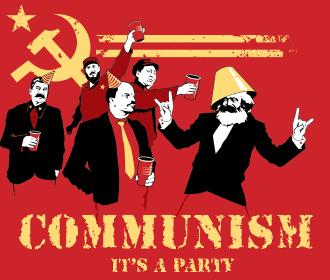
Idea of communism? Courtesy Oscar's global blog
Idea of communism? Courtesy Oscar’s global blog

Today was the third and final day of the ‘Idea of Communism’ conference and it was the truly most bizarre experience – bizarre philosophical experience, I should say – of my life. Let me start backwards today.

The preacher from Ljubliana was in full form and he closed his own hour-long (or was it 55 minutes) presentation ‘To Begin from the Beginning, Over and Over Again’ with the following: “If the rumour that Gilles Deleuze was writing a book on Marx before he died, is true then this should be seen as a sign that after having spent a life time away from the Church he wanted to come back to its fold…We welcome all those anti-communist Leftists who have spent their lifetimes attacking us to come and join us.” Continue reading Evangelist Zizek and the End of Philosophy – II

Re-booting Communism Or Slavoj Zizek and the End of Philosophy – I

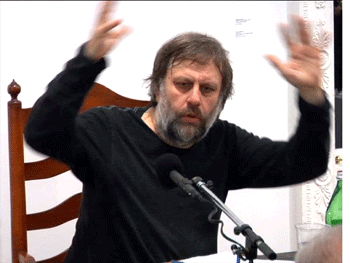
Zizek - the postmodern Lenin?

Today, 13 March, a whole galaxy of philosophers and theorists got together for a three-day conference “On The Idea of Communism” under the auspices of the Birkbeck Institute for the Humanities, London University. The Conference opened to a jam-packed hall where all tickets had sold out (no jokes, this was a ticketed show where the likes of Alain Badiou, Slavoj Zizek, Jean Luc-Nancy, Toni Negri, Jacques Ranciere, Terry Eagleton and many many others are to perform on the ‘idea of communism’). The huge Logan hall with a capacity of about 800-900 was so packed that the organizers had made arrangements for video streaming in another neighbouring hall – and that too was half full! Very encouraging in these bleak days.

The conference began in the afternoon with brief opening remarks by Alain Badiou and Slavoj Zizek. Badiou made his general point (see below) about the continuing relevance of the ‘communist hypothesis’. Staid and philosopherly. Continue reading Re-booting Communism Or Slavoj Zizek and the End of Philosophy – I

The Arrest of Shamim Modi at Industrialists’ Behest

Activist Working for Rights of Tribal People Arrested

Ms Shamim (nee Meghani) Modi, a law graduate working among the tribals in Betul district, Madhya Pradesh, has had to pay a heavy price for taking up the cause of tribal people and other industrial workers. Shamim, who works with the Samajwadi Jan Parishad (an organization of socialist-Gandhian orientation) has been put behind bars in Hoshangabad jail for exposing the corrupt nexus between politicians and the mining mafia.  She was arrested in gross violation of democratic rights on 10th February 2009 from her residence at Harda, M.P. The process of attempting to secure bail from M.P High Court is now on.

The arrest was made on false charges, one of instigating tribals to ‘attack forest officials’ and another of ‘kidnapping with the intention to kill’ these officials! These charges were brought against her (and her husband) two years ago in 2007. Subsequently no enquiries were conducted, and no follow-up was done but the fact that these charges hung over their heads was presumably meant to cow them down. These charges have suddenly been resurrected because the administration has been under pressure from industrialist lobbies. Earlier, the trial court had rejected her bail plea despite the fact that the person supposed to have been ‘kidnapped’ was said to be present in court and denied any such thing. Another evidence, if any was still required, of the deep nexuses of power that operate at these levels. Continue reading The Arrest of Shamim Modi at Industrialists’ Behest

Pink Panties – With Love to Muthalik

Today is Valentine’s day and it is only befitting of the changing times that the Ram Sene chief Pramod Muthalik and his cohorts should receive huge consignments of pink chaddies. Responding to the call of the ‘Consortium of Pub-Going, Loose and Forward Women’, pink chaddies, we are told, “kept pouring into the Sene office all through the day. The parcels came mainly from Punjab, Rajasthan, Mumbai, Bangalore and Kerala”, according to reports.

V-day love pours in for Muthalik

Many of us who wanted to be part of the open and vigorous demonstration of love but couldn’t, would like to send many more panties to the members of this monkey gang (Ram’s sena was after all, Hanuman’s!). And wherever we are, we will drink in pubs and make merry. Muthalik, you will always remain in the hearts and minds of all the ahle-junoon-i-ishq. Har ghoont sharaab ke saath tujhe yaad karenge…Aakhir kaun hai is duniya mein tere siva, jise jalaane ke liye ek bosa-e-gul, ek chaddi ya ek ghoont sharaab bas kaafi hai? Hamaare halaq se utri har ghoont teri chita ki aag hogi goya…

Beyond violence and non-violence – K Balagopal

Via Jamal Kidwai

[We are posting this piece by K Balagopal, hoping to continue our reflections on violence and non-violence in political movements. – AN]

The public arena is witness to dispirited discussion of the ineffectiveness of people’s movements, which are at the most able to slow down things, and nothing more. The discussion often turns around violence and non-violence, not as moral alternatives but as strategic options. Those who are sick of sitting on dharna after dharna to no effect are looking with some envy at violent options,
while many who have come out of armed groups find the Narmada Bachao Andolan (NBA) fascinating.

It is good that there is some openness in the matter now, for dogmatic attitudes have done considerable harm. To say that one should not be dogmatic about violence may be morally a little unsettling but it is a defensible position even without adopting a relativistic attitude towards the preciousness of life or a casual attitude towards one’s moral responsibility for injury caused in the course of a struggle. More of that in the right context. But the
discussion will unavoidably be based on assessments  of the effectiveness of the alternatives, and a distant view is likely to colour the reality with hopes and assumptions, even illusions. A realistic assessment of what each strategy has been able to achieve would better inform the debate.

The plain and stark fact is that while all strategies have been effective in curbing some injustice, none has succeeded in forcing the government to take back a single major policy in any sphere. And none has been able to reverse the trends inherent in the structures of society and economy. Yet no serious political movement or social struggle we know of is only for softening oppression or improving relief. The general understanding is that governance of the country – and may be the systemic infrastructure of society – is fundamentally wrong and needs remedying, maybe overturning. Do we know of any
effective strategy for that? I am not talking of political strategies,
but strategies of struggle that will successfully put pressure upon the State and the polity to stop them in their tracks. The struggle may be built around class or caste or any other social combination. It may in the end seek reform or the upturning of the polity. It may operate mainly or in part within the polity or keep out of it altogether. Whichever it is, the common problem is this: the experience of this country is that governments do not stop doing some thing merely because it has been demonstrated to be bad. Or even contrary to constitutional directives and goals. They stop only if going along is made difficult to the point of near impossibility. No democratic dispensation should be thus, but Indian democracy is thus. Short of that, you demonstrate the truth of your critique till you are blue in the face or shout till you are hoarse in the throat, it is all the same.

Continue reading Beyond violence and non-violence – K Balagopal

Chavez Expels Israel’s Ambassador, Becomes New Palestinian Hero

Via Liberation News Service

Venezuelan leader accuses Israel of being ‘murder arm’ of US, says solution to Gaza crisis is in Obama’s hand.
Report by Anna Pelegri of Middle East Online – BETHLEHEM, 12 January 2009

Demonstrators in Yemen
Portraits of Chavez carried by demonstrators in Yemen

“Venezuelan flags and portraits of President Hugo Chavez have been flying high during protests in the West Bank against Israel’s assault on the Gaza Strip”, says the report.

The report continues:

The Venezuelan president’s decision on January 6 to expel Israel’ ambassador from Caracas — the only country apart from Mauritania to take such a step — has made the left-wing South American leader a hero to Palestinians.

Hamas has welcomed Chavez’s “courageous decision,” while Hassan Nasrallah, head of Lebanon’s Hezbollah group, urged Arab states to follow the Venezuelan president’s example.

The Israeli Attack on Gaza: Chris Floyd

Shock, Awe and Lies: The Truth Behind the Israeli Attack on Gaza by Chris Floyd

DEMONSTRATION IN TEL AVIV AGAINST THE ISRAELI ATTACK

The Alternative Information Center
Courtesy: The Alternative Information Center, photo by Meni Berman

Award winning American journalist, Chris Floyd, author of Empire Burlesque: High Crimes and Low Comedy in the Bush Regime, writes:

Here is a simple, stone cold fact. You cannot read or hear the truth about what is happening in Gaza from any corporate media in the United States. The only thing you will find there are regurgitations of Israeli spin, which are themselves only regurgitations of the kind of spin that American militarists have put on their own depredations — for centuries now….”
“This is of course a damnable and deliberate lie. Papers in Israel — in Israel, but not the United States — are reporting the truth: the murderous assault on Gaza was planned not only before the six-month ceasefire ended — it was planned before the cease-fire even took effect.

Read the rest of the post here.

Families and Dynasties, Lettered and Unlettered – Monobina Gupta

Minister in the Rajasthan government
Golma Devi, Minister in the Rajasthan government

Guest Post by MONOBINA GUPTA

It is jarring, to put it mildly, that Times of India, a leading daily, engaged in a high-profile ‘Teach India’ campaign should publish a front page story mocking the unlettered. This story exhibits a strange callousness in its reporting about the very constituency of people the campaign is hoping to address…or ‘uplift’…
The story published in the TOI on December 20, smacks of arrogance as it speaks disdainfully of an unlettered woman legislator recently elected in Rajasthan’s assembly elections. Golma Devi, elected from the Mahuwa constituency is the butt of ridicule and lament in this article authored by P J Joychen. The author, it seems, cannot get over the fact that an unlettered person like Golma Devi has been elevated to the rank of a minister in the Ashok Gehlot government.

No, she is not a history sheeter; nor does she have a scam hot on her heels. She is nevertheless an offender – in the sense of ‘offending’ your ‘sensibilities’ – in the supercilious eye of the media; an object of ridicule. Her offense: her of lack of reading and writing skills.

Continue reading Families and Dynasties, Lettered and Unlettered – Monobina Gupta

John Milton Takes a Stand? Prasanta Chakravarty

This is a guest post by PRASANTA CHAKRAVARTY

[Dissidence comes along with responsibility. If that sounds an utter sell out, one has to look back no further than the career and oeuvre of John Milton, whose 400th Anniversary is being celebrated around the world.]

Students of English literature usually do not prefer meddling too much with politics, especially if that comes in the way of appreciating the hermeneutics of the text, the lyricism set aside for the work of art. Sophisticated scholars have learnt to deftly negotiate and work with Marxism, new historicism and cultural criticism, without compromising on the finer points of close reading. They have also welcomed areas like textual studies and performance and newer genres like memoirs, broadsheets, travelogues, petitions, graphic fiction and so forth within the critical ambit with a careful eye that such forays do not destabilize the Great Book tradition. Students of politics and the political, on the other hand, have a certain distrust for soft aesthetic options. In one interesting recent interview, James Scott, who routinely uses Zola and Tolstoy in his classes and works, lamented in jest on his status at the Yale Political Science Department as an outlier, blaming it onto the ascendancy and monopoly of formal and rational choice models in the discipline.

Continue reading John Milton Takes a Stand? Prasanta Chakravarty

Sandra Samuel, Faces and the ‘Nouveau’ Media – Monobina Gupta

Guest post by MONOBINA GUPTA

“The TV business is uglier than most things. It is normally perceived as some kind of a cruel and shallow money trench through the heart of the journalistic industry, along plastic hallway where thieves and pimps run free and good die like dogs, for no good reason.”

Hunter Thompson in Generation of Swine

We, in the business of media, are running a trade in ‘faces;’ swapping ordinary ones for the attractive, distorting news coverage and not really giving a damn about it. But the craft of journalism was not always so warped. We made it so.

Continue reading Sandra Samuel, Faces and the ‘Nouveau’ Media – Monobina Gupta

The Fascist Mind: Reading Mein Kampf Today

NOTES ON THE THEORY OF IDEOLOGY

It is highly instructive to go through the range of comments that some of our recent posts on terrorism and violence have elicited. Apart from some of the more mindless ones, there have also been some that raise supposedly substantive questions but in a manner that presupposes the answers. The very manner of raising the ‘questions’ is such that any answer but the one contained in the ‘question’ is bound to bring forth a volley of charges to which the comments themselves stand witness.

Continue reading The Fascist Mind: Reading Mein Kampf Today

Grotesque Terror Attacks in Mumbai

Courtesy Indian Muslims Blog

In one of the most daring and yet cowardly terror attacks, Bombay/Mumbai has been attacked. In an earlier post we had discussed the question of violence – ‘revolutionary’ violence, and the utter futility of resort to such methods. Violence is not a solution to anything; it cannot be. If anything, it is part of the problem; it is the problem. For violence begets more violence. Continue reading Grotesque Terror Attacks in Mumbai

Ecstatic Archaisms of Aurobindo Ghose – Prasanta Chakravarty

Guest post by PRASANTA CHAKRAVARTY

In Reflections on Revolutionary Violence Aditya Nigam makes some nuanced points about the nature of Maoist violence and by contrast, comments on the bedrock character of democracy itself. Can we trace the sublime cult of blood and gore further down, to the founding principles of Forward Bloc, for instance? Or espy it in the millennial longings of a few Gita wielding swadeshis, for that matter? One may begin to see a pattern.

Continue reading Ecstatic Archaisms of Aurobindo Ghose – Prasanta Chakravarty

Reflections on Revolutionary Violence

In the last one year, I have often found myself going back to a conversation I had had with a Maoist ideologue. As it happened, it was he who started interrogating me about my stand on violence. ‘So, you have become a Gandhian?’ he demanded. I must confess I was a bit taken aback, not quite able to figure out the context of this poser. ‘What do you mean by Gandhian’, I kind of mumbled. Pat came his reply: ‘Well you have been making some noises lately about Maoist violence, haven’t you?’ Suddenly it all became clear. Through this ridicule, he was trying to appeal to that part of me that still remained marxist – presumably now buried in some remote past – and to resurrect it against my ostensible ‘non-marxist’, ‘liberal’ present (for which ‘Gandhian’ was some kind of a short hand code). I found myself at a loss of words. Does a criticism of the mindless and nihilistic violence of the Maoists make one a Gandhian? Is there no space left between these two polar positions? The conversation did not go very far that day but has kept coming back to me ever since.

Continue reading Reflections on Revolutionary Violence

Buddhadeb Bhattacharjee will be grateful to the Maoists – Monobina Gupta

[Guest post by MONOBINA GUPTA. As things begin to change on the ground in West Bengal, the irresponsible attempts by both the Maoists and the Trinamool Congress, to take over and ‘represent’ the popular discontent, in order to legitimize their own brand/s of politics, can only benefit the CPI-M. The alternative to the CPI-M, it might appear, are the Maoists – a sure put off , even for large sections supporting the Singur and Nandigram struggles. AN]

A deadly ambush executed by Maoists earlier this month has given the badgered West Bengal chief minister a god-sent opportunity to deflect attention from the burgeoning resistance in Nandigram-Singur to the more chilling phenomenon of ‘red terror.’

The story runs somewhat like this …

Continue reading Buddhadeb Bhattacharjee will be grateful to the Maoists – Monobina Gupta

The ‘Obama Moment’: Sangay Mishra and Jinee Lokaneeta

The ‘Obama Moment’ and Conversations on Race
Guest post by SANGAY MISHRA and JINEE LOKANEETA

[The ‘Obama moment’ is much more than the man. Elementary, one would have thought. But maybe not. For, it has been intriguing to watch and listen to people – radical and nonradical liberal alike – mock this moment in a cynical, ‘we-know-it-all’ and ‘what-do-you-expect?’ mode. Intriguing, because, somewhere the insinuation is that those who celebrate are just being carried away by an ephemeral event. Maybe. It seems however, and the authors argue below, that this persona we now know as ‘Obama’ was not there even a year or two ago; he emerged in this present form, through a series of ‘encounters’ – with race, with his own history and with ‘blackness’. In his present form, Obama is produced by a certain African American investment in the earlier Obama (of, say, the pre-campaign Obama). – AN]

Much as the Obama victory on the 4th of November was expected and already predicted by a number of polls, the reaction to his victory both inside and outside the United States was breathtaking.

Continue reading The ‘Obama Moment’: Sangay Mishra and Jinee Lokaneeta

हि‍न्दी के वर्जित प्रदेश में…

[यह लेख कुछ अरसा पहले वाक् पत्रिका के लिए लिखा गया था – पुराने दोस्त सुधीश पचौरी के इसरार पर। जब यह लेख लिख रहा था तब से अब तक हालात कुछ बदल चुके हैं। इसे लिखते वक़्त तक भी मुझे यह गुमान था कि शायद एक रोज़ मैं हिन्दी के क़िलानुमा परिसर में घुस पाने क़ामयाब हो पाउंगा। हज़ार पहरों में घिरे इस क़िले में एक रोज़ ज़रूर दाखिल होने का मौक़ा मिलेगा। मगर इधर कुछ समय से ऐसा लगने लगा है कि यह क़त्तई मुमकिन नहीं है। हिन्दी के पहरेदार ऐसा कभी न होने देंगे। लिहाज़ा अब इस क़िले में घुसने की कोशिश छोड़ कर हिन्दुस्तानी के खुले और बे-पहरा मैदान में, खुली हवा में टहलना चाहता हूँ। कह देना चाहता हूँ पहरेदारों से कि मैं आप के मुल्क का बाशिंदा नहीं हूँ। मैं एक लावारिस मगर आज़ाद ज़ुबान में पला बढ़ा और वही मेरी ज़मीन है। अलविदा। – आदित्य निगम]
एक ज़माना हुआ हिन्दी से जूझते हुए। यह दीगर बात है कि हिन्दीवालों को इसकी ख़बर तक नहीं। हो भी क्यों? आप बेचते ही क्या हैं?
Continue reading हि‍न्दी के वर्जित प्रदेश में…

Durga Puja as a Homecoming Metaphor – Prasanta Chakravarty

(This is a guest post. It was also published in Hindustan Times, October 2, 2008)

Tagore’s short tale Kabuliwallah concludes right in the middle of autumn—saratkaal. Mini’s marriage takes place during the puja holidays, and Rahman’s own Parbati awaits her father’s return in her distant mountain home. Even as Mini prepares to initiate her journey to her in-laws, Rahman, having been released from his own figurative abode-of-the-in-laws, the jail, seeks home afresh in his “… mountains, the glens, and the forests of his distant home, with his cottage in its setting, and the free and independent life of far-away wilds.” Uma’s arche story is reinvented by Tagore and a secret bond is established between two fathers. But such weaving of the puranic akhyan as a homecoming narrative is realized, or used to be realized shall we say, at a different order where home is also a matter of participating in a certain generous spirit during the pujas. The essence of Kabuliwallah lies in basking in such an aura of human generosity. So, the fundamental question to me is whether such a spirit can be glimpsed during the pujas even today without being overly sentimental about it.

Continue reading Durga Puja as a Homecoming Metaphor – Prasanta Chakravarty

Maoist disruption of the non-violent Human Shields movement in Chhattisgarh

[We are posting below a statement issued by some of us on the Maoist threats and intimidation in Chhattisgarh and its most recent manifestation in relation to the human shields programme of the Vanvasi Chetna Ashram. It is a distressing but undeniable fact that, by and large, the civil liberties and democratic rights movement has fought shy of condemning Maoist violence. This is a matter of deep concern as the absolutely undefensible, nihilistic violence perpetrated by the Maoists violates all tenets of the great revolutions of the twentieth century that they themselves swear by. Despite their subsequent degeneration (after coming to power), neither the Chinese revolution nor the Vietnamese (the Russian, of course happened without a single shot being fired) made a cult of violence. Never, in any case, did they use violence against defenseless civilians. In fact, revolutionaries have been known to court defeat and annihilation, rather than kill ordinary people – whenever they were presented with the choice between the two. The perverse cult that targets ordinary, unarmed civilians simply in order to have its way can only be seen as, to say the least, a kind of Left-wing Fascism. – AN]

We, the undersigned, are distressed to learn that a peaceful movement in the conflict-ridden Dantewada district, Chhattisgarh to help villagers return to their land has been disrupted by the Communist Party of India (Maoist). The villagers had been displaced earlier by the state-sponsored Salwa Judum campaign that began in 2005 and has resulted in horrific violence against ordinary villagers in the area. Continue reading Maoist disruption of the non-violent Human Shields movement in Chhattisgarh

‘The Best Form of Saying is Doing’ – Ravikumar on Che

Picture by Alberto Korda
This portrait of Ernesto ‘Che’ Guevara, titled "Heroic Guerrilla", is the most reproduced image in the history of photography. Taken in 1960, at the highpoint of the Cuban revolution, by Alberto Korda, it hung for years in his studio before it became the iconic figure of the rebel.

[This is a guest post by well-known Tamil writer RAVIKUMAR on the occasion of Che Guevara’s 40th death anniversary on 9 October. The article was written on the 9th. ]

Ernesto Guevara de la Serna popularly known as ‘ Che’ was born on June 14, 1928 in Argentina. A doctor by profession he involved himself in revolutionary activities from his student days. He was with the political activists of Guatemala when the elected government of Jacob Arbenz was overthrown by a CIA backed coup in 1954. He escaped to Mexico where he met the exiled Cuban revolutionaries led by Fidel Castro. He joined with them in their struggle to liberate Cuba from the Batista regime.

Che was the name his Cuban companeros gave him. It is a popular form of address in Argentina. He sailed with the Cuban revolutionaries in the famous yacht ‘Granma’ as a doctor. Later he was promoted as commander. Che played an important role in the success of the Cuban revolution. He led a guerilla column in the final battle. Finally, Batista fled the country on January 1, 1959.

Continue reading ‘The Best Form of Saying is Doing’ – Ravikumar on Che