All posts by subhash gatade

Indianity and Modernity : Dr Ravi Sinha

[ YouTube links of Ravi Sinha’s Informal talk in Lucknow in April 2025 on “Indianity and Modernity”.  Credits to Kumar Sauvir for recording, editing and posting. The title and intro are also by him ]

[ Ravi Sinha is an activist-scholar who has been associated with progressive movements for around five decades. Trained as a theoretical physicist, Dr. Ravi has a doctoral degree from MIT, Cambridge, USA. He worked as a physicist at University of Maryland, College Park, USA, at Physical Research Laboratory, Ahmedabad and at Gujarat University, Ahmedabad before resigning from the job to devote himself full time to organizing and theorizing. He is the principal author of the book, Globalization of Capital, published in 1997, co-founder of the Hindi journal, Sandhan, and one of the founders and a leading member of New Socialist Initiative.]

Class, Inequality, and the Current Political Moment in China and India : Prof Vamsi Vakulabharanam

Democracy Dialogues Series 39

Organised by New Socialist Initiative

Theme : Class, Inequality, and the Current Political Moment in China and India

Speaker : Prof Vamsi Vakulabharanam

Co-Director of the Asian Political Economy Program and Associate Professor of Economics at the University of Massachusetts, Amherst

Live streamed at Facebook ( facebook.com/newsocialistinitiative.nsi).
———————————-

Theme: Class, Inequality, and the Current Political Moment in China and India

This talk is based on a recently published book by the Oxford University Press – Class and Inequality in China and India, 1950-2010. China and India have seen a significant revival over the last three decades in terms of their place in the world economy. Two and a half centuries ago, they contributed 50 percent of the world output; after suffering a decline thereafter, their share fell to a paltry 9 percent in 1950 but has since resurged to over 25 percent today. Their growth and inequality experiences diverged for three decades following India’s independence (1947) and the Chinese revolution (1949). Thereafter, there are remarkable underlying similarities in the experiences of both countries, especially in terms of their rising inequality patterns analyzed through a class lens. Vamsi demonstrates that the mutual interconnectedness between Chinese and Indian growth and inequality dynamics and the transformation and evolution of global capitalism is key to understanding the within-country inequality dynamics in both countries over the 1950-2010 period. Based on this analysis of class-based inequalities, Vamsi reflects on the current political moment in both countries, from a political economy perspective.

Speaker : Prof Vamsi Vakulabharanam
Vamsi Vakulabharanam is Co-Director of the Asian Political Economy Program and Associate Professor of Economics at the University of Massachusetts, Amherst. He has previously taught at the University of Hyderabad (2008-14) and the City University of New York (2004-07). His recent research focuses on inequality in India and China and the political economy of Indian cities through the axes of gender, caste, class, and religion. In the past, he has also worked on agrarian change in developing economies, agrarian cooperatives, and the relationship between economic development and inequality. Vakulabharanam was awarded the Amartya Sen award in 2013 by the Indian Council of Social Science Research.

Can Extradition of Tahawwur Rana Bring Closure to 26/11 Terror Attack?

David Headley remains inaccessible in the US, and so do the masterminds in Pakistan.

The extradition of Tahawwur Rana to India to face trial for his role in the 26/11 terror attack is big news in the media. One can sincerely hope that with the arrest of only the second suspect to face trial for the 26/11 attacks – the first one was Ajmal Kasab – we can unearth other critical links in the conspiracy, role played by the terrorist groups and the support the whole operation received from the Pakistani establishment or its deep state.

Of course, it will be rather premature to assume that this arrest can bring a closure to the dastardly 26 /11 terror attacks. We are yet far away from the possibility of the mastermind of the attack – Hafeez Saeed and his accomplices – facing trial in Pakistan or being extradited to India.

There is no clue yet whether David Headley, a close friend of Tahawwur Rana, who is called the main conspirator of the operation would ever face trial in India. In fact, it is still a mystery how and why the US entered into a plea deal with him – promising him that he will not be extradited to India.

[ Read the full article here : https://www.newsclick.in/can-extradition-tahawwur-rana-bring-closure-2611-terror-attack]

SANITISING THE SUPREMO : How RSS Is Trying to Rewrite its Own History One Step At a Time | 

,,The rewriting spree has not left untouched RSS’s own history itself.

The biggest manifestation of this exercise is evident in the way we have before us a new look Dr Keshav Baliram Hedgewar (1888-1940) founder member of RSS and its first Supremo.

He is being called as ’‘born patriot’’, one amongst the ‘great revolutionaries who fought for India’s independence, ’’social reformer’ , ’maker of Modern India’ etc etc. disregarding the fact that all his life he focussed his attention to build Hindu Unity, to usher India into a Hindu Rashtra and never once gave a call to the organisation he founded with others – namely RSS – that it joins the anti colonial struggle. He did go to jail during the anti colonial struggle but not as a member of the RSS but as a member of Congress Party.

Many monographs, books .. – are also before us which are trying to emphasise this new image, obliterating many inconvenient aspects of his tumultous life or maintaining tactical silences over them. The latest in series is the way he is being projected as a leader of the “jungle satyagraha” at Pusad, Maharashtra which was organised as part of the Civil Disobedience Movement led by Congress. [10]

What is noticeable that this ’rewriting’ of RSS history seem to begin at the beginning only. [ Read the full article here : https://www.mainstreamweekly.net/article15650.html]

Kshama Sawant Honoured in Absentia – Press Release

Kshama Sawant honoured in absentia by Canadian Radio station for standing up against caste-based oppression. Former Seattle City Councillor was presented with the annual Hands Against Racism award by Spice Radio at a well-attended event in Surrey on Sunday, March 30.
Born and raised in India, Kshama Sawant was instrumental behind the historic anti-caste ordinance brought by the City of Seattle in 2023. Since then, she has been under attack from supporters of the right-wing Hindu nationalist Modi government in New Delhi.
For doing that she had to pay a heavy price, as the Indian government denied her visa and an opportunity to go and see her ailing mother in Bengaluru.
Sawant couldn’t make it to the event organized at Surrey City Hall, due to the current tensions between Canada and US caused by the trade war. Spice Radio broadcaster and her vocal supporter Gurpreet Singh accepted the award on her behalf.
He earlier introduced her before her video message was played.
In her greetings, Sawant revealed that because of the hostile political environment, including ongoing arrests of pro-Palestine activists in the US, especially those who are naturalized American citizens like her, she had been advised not to travel outside the country.
However, she pulled no punches in criticising the Liberals and Democrats on either side of the border for their complacency and opportunism, enabling the extreme right wing forces to grow powerful.
Her speech received a huge applause from the audience.
Spice Radio CEO Shushma Datt started the campaign in 2015, on the birth anniversary of Martin Luther King Jr. It coincides with Holi, a Hindu festival of colours, and encourages participants to colour their hands and leave a palm print on a white sheet of paper with a message against racism. A practicing Hindu herself, she believes in diversity and inclusion and greeted everyone Happy Eid at the Sunday program.
Every year, individuals are also shortlisted and awarded for their anti-racism work as part of this initiative. This year Sawant and Bob Rennie were honoured. Rennie is a famous art collector and a strong advocate against xenophobia and homophobia, besides gender discrimination.
The very first recipient of the award, Senator Baltej Singh Dhillon, who served as the first turbaned Sikh Royal Canadian Police officer and faced racism from within the force, was also present and addressed the gathering.
Other past recipients also spoke on the occasion, including Attorney General Niki Sharma, anti-racism educator Annie Ohana and prominent journalist Charlie Smith.

Federal fracture: A Nation in crisis – Prof C P Chandrasekhar

Democracy Dialogues Series 38

Organised by New Socialist Initiative
Theme : Federal fracture: A Nation in crisis

Speaker : Prof C P Chandrasekhar

Former Professor, Centre for Economic Studies and Planning ,JNU, Delhi

Time and Date : 6 PM (IST), Sunday, 30 th March, 2025, 

 facebook.com/newsocialistinitiative.nsi).

—————-

Theme :

Indian federalism is on the verge of breakdown for multiple reasons. A crucial contributor is the collapse of the system of revenue sharing between the Centre and the States and the weaponization of vertical transfers as an instrument for political contestation.

The conflict over resources in India’s quasi-federal political structure is by no means new. Framers of the Constitution, who recognised that the division of taxation rights and spending responsibilities between the two principal tiers of government in India was asymmetrical, sought to partially resolve this problem by providing for a share for the States in a defined set of tax revenues garnered by the Centre, with the principles governing the share devolved and distributed to individual States recommended by successive Finance Commissions. But State governments have been increasingly disappointed with the actual experience with devolution, because of the concentration of resources mobilised in the hands of the Centre.

The issue, however, is not one of mere competition for resources between the Centre and the states. Having gained control over the Lok Sabha, the BJP has made it clear that it is keen on establishing an opposition-free political space. To realise this objective, it has not only sought to undermine the legitimacy of individual opposition politicians with charges of corruption or “anti-national” activity, but of opposition-ruled State governments by eroding their ability to adopt economic policy measures and initiatives that could win them political legitimacy. Expenditures on building State infrastructure or social expenditures on subsidised food provision, a modicum of social protection, and employment guarantee schemes, do contribute to winning a party in power in a State a degree of political legitimacy. The attack on the fiscal capacity of the State governments helps limit such expenditures, even while Central claims on expanding infrastructural investments and social sector spending are advanced, with an increase in ‘central’ schemes, especially those attributed to the patronage of the highest authority, the Prime Minister. 

Speaker : 

Prof C P Chandrasekhar

 Prof C. P. Chandrasekhar is emeritus professor at the Centre for Economic Studies and Planning, Jawaharlal Nehru University (JNU), New Delhi. He has published widely in academic journals and is the coauthor of Crisis as Conquest: Learning from East Asia (2021, Orient Longman), When Governments Fail – A Pandemic and Its Aftermath (with Jayati Ghosh et al) , 2021 ; Interpreting the World to Change It – Essays for Prabhat Patnaik (with Jayati Ghosh), 2018 ; After Crisis : Adjustment, Recovery and Fragility in East Asia ( with Jayati Ghosh) 2009 ; The Market that Failed: Neo-Liberal Economic Reforms in India (2002, Leftword Books), and 

 
He received his MA and Ph.D (economics) from Jawaharlal Nehru University, where he served as a professor from 1997 until his retirement. He is a member of the executive committee at International Development Economics Associates (IDEAs) and the World Economics Association, as well as a contributor to Frontline, Economic and Political Weekly, and Businessline.
 
Chandrasekhar received the Malcolm Adiseshaiah Award for 2009 for contributions to economics and development studies.

Goa: Who Fears The Truth?

How Hindutva Supremacists are engaged in ‘rewriting history’.

There are times when madness reigns

And then it is the best who hang’

– Albrecht Haushoffer

[January 7, 1903 – April 23, 1945, German geographer, diplomat, author, who faced martyrdom for his resistance to Nazism]

Uday Bhembre, the 87-year-old widely respected Konkani writer, son of legendary freedom fighter Laxmikant Bhembre, who has been a Sahitya Akademi awardee, is a worried man these days.

He has discovered to his dismay that his courage to speak the truth and challenge a narrative being peddled by the ruling dispensation in Goa, .. regarding well established facts of Goa’s own history, would lead to protests, led by Right-wing formations and many among them trespassing his house at night and pressuring him to issue an public apology.

Not very many people outside Goa know how this great writer – he was even a MLA (1984-89) — had neglected his literary career to fight for rights of Konkani language and has been against attempts to merge Goa into Maharashtra, to preserve its culture.

Thanks to the existence of powerful voices of resistance and a vibrant civil society in Goa, a significant number of people have publicly condemned these attempts to intimidate Bhembre and demanded strict action against the perpetrators and exposed the collusion of the Right-wing formations with people in power. Many even went to meet the noted writer to express solidarity with him. ( Read the full article here :https://www.newsclick.in/goa-who-fears-truth)

‘पवित्र स्नान’ का दूसरा पहलू :  क्या महाकुंभ में सरकारी लापरवाही से लोग बेहद गंदे पानी में नहाते रहे?

आस्था और गंदगी सहयात्री रहते आए हैं। आस्था के तमाम जाने-माने केन्द्रों पर या अपनी आस्था को सेलिब्रेट करने के नाम पर मनाए जाने वाले समारोहों में-प्रचंड ध्वनि प्रदूषण और रौशनी का प्रदूषण आदि के माध्यम से-इसकी मिसाल अक्सर देखने को मिलती है। प्लास्टर ऑफ पेरिस की मूर्तियों से भरे गंदे जलाशय-जिनकी मौजूदगी पानी के ऑक्सीजन की मात्रा पर विपरीत असर डालती है, पानी में ही फेंकी गयी सूखे फूलों की मालाएं आदि आदि से महानगर भी अछूते नहीं रहते हैं।

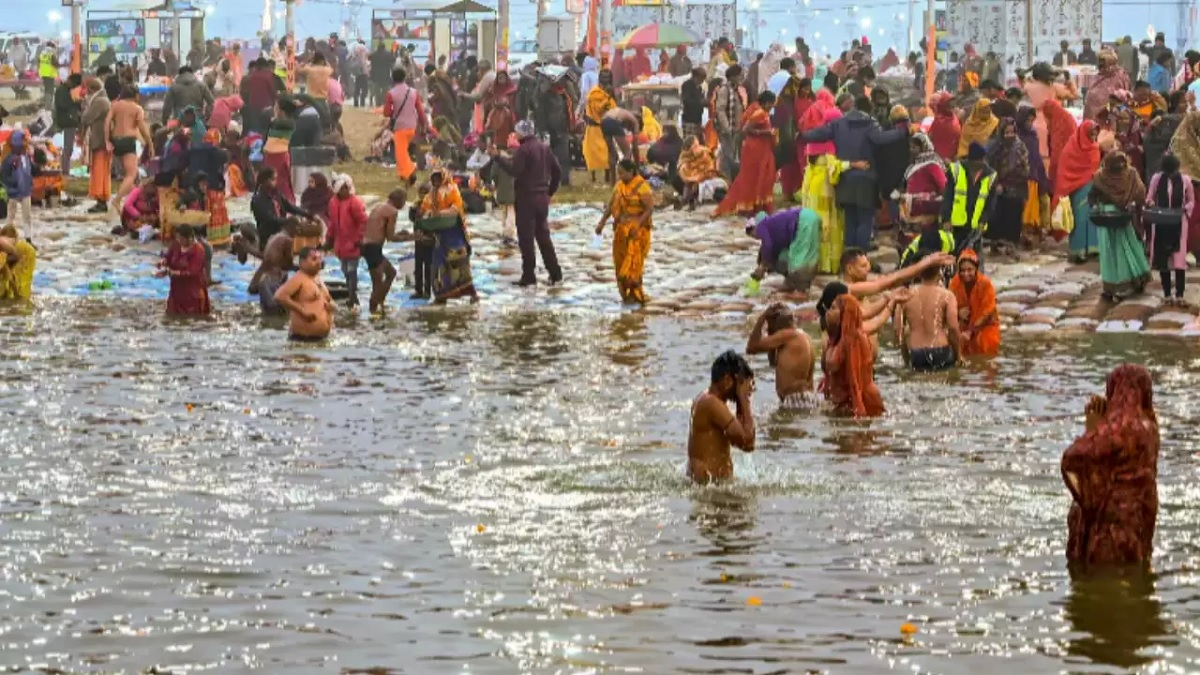
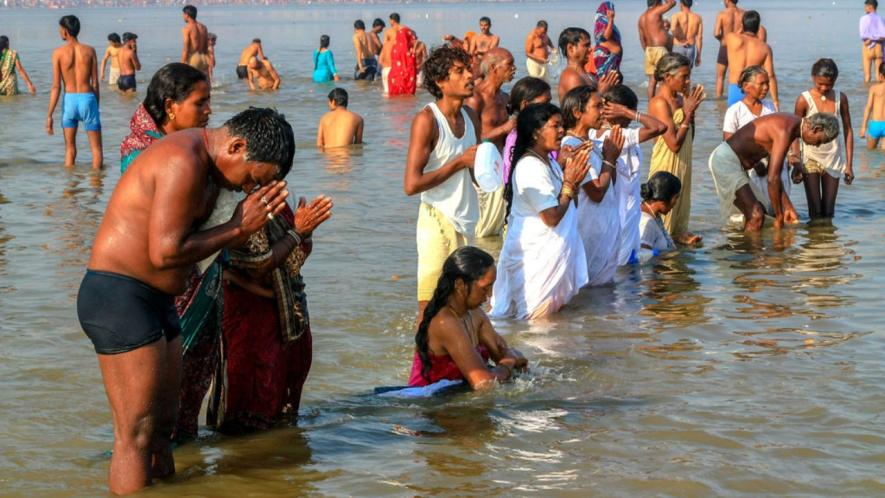
इस सम्बन्ध में ताज़ी मिसाल महाकुंभ के बहाने से उजागर हुई है, जब केन्द्रीय प्रदूषण नियंत्रण बोर्ड (CPCB)  की रिपोर्ट ने इस बात को उजागर किया कि किस तरह प्रयागराज के पानी में उन्हें उच्च स्तर पर मल के जीवाणु मिले हैं, जो किसी भी सूरत में नहाने योग्य नही है। इस सिलसिले में नेशनल ग्रीन टिब्यूनल ने उत्तर प्रदेश प्रदूषण नियंत्रण बोर्ड (UPPCB) के अधिकारियों को तलब भी किया है कि ‘प्रयागराज/इलाहाबाद में गंगा, यमुना के पानी की गुणवत्ता के उल्लंघन को लेकर-उन्होंने जो दिशानिर्दश जारी किए थे उस पर उन्होंने अमल नहीं किया है।

गौरतलब है कि राष्ट्रीय  ग्रीन टिब्यूनल (NGT) ने  उत्तर प्रदेश प्रदूषण नियंत्रण बोर्ड की इस बात के लिए भी आलोचना की है कि अपनी जो रिपोर्ट उन्होंने प्रस्तुत की है, उसके सैम्पल पुराने है और सभी 12 जनवरी के पहले के-अर्थात कुंभ मेला शुरू होने के पहले के है। ….

…निस्संदेह महाकुंभ के अवसर सीवेज युक्त पानी को लेकर उठे सवाल अब दबना मुश्किल है। सरकार जो भी प्रचार करे, अधिक से अधिक लोग अब इस बात का अनुभव करेंगे कि गंगा किनारे उन्होंने जो ‘पवित्र  स्नान’ किया उस वक्त वह पानी कत्तई शुद्ध नहीं था। यात्रियों का एक छोटा सा हिस्सा अब यह कहने का साहस भी जुटाएगा कि किस तरह सत्ताधारी समूह ने उनकी धार्मिक आस्था का दोहन किया है। [ Read the full article here :https://janchowk.com/beech-bahas/the-other-aspect-of-the-holy-bath/]

Should Faith be Used to Brush Away Filth?

Did Hindutva supremacists make devotees bathe in polluted sewage water during the Mahakumbh?

Faith and filth have an uncanny existence together

The latest in series happens to be the report by the Central Pollution Control Board (CPCB) underlining how they have found high faecal bacteria levels in Prayagraj river water, which fails bathing standards and the summoning of the Uttar Pradesh PCB (UPPCB) authorities by National Green Tribunal (NGT) over non-compliance of directives regarding ‘serious water quality violation in Ganga, Yamuna at Prayagraj’

The fact is that NGT has repeated itself when it said that high levels of faecal and total coliform were found at various locations at the Maha Kumbh, during a hearing on allegations that untreated sewage has been discharged into Rivers Ganga and Yamuna in Prayagraj. 

Will the UP Chief Minister Yogi Adityanath’s rejection of this report on the floor of the House and underlining that the water at the Sangam was fit for ‘drinking’ serve any purpose when NGT grills the UPPCB authorities over non-compliance of their directives issued earlier over the quality of water?

Any sane person would know the answer.

May be in a bid to appear uncompromising or cover his own nervousness over the developments, Adityanath tried to question the veracity of this report – in an indirect way – by condemning people who spread misinformation against “Sanatan Dharma, Maa Ganga, and India” and warning them that they were attacking the “faith of those 56 crore people who had taken a bath there.”

( Read the full article here : https://www.newsclick.in/should-faith-be-used-brush-away-filth)

Whether AAP’s Defeat Can Become a Wake Up Call for New Cheerleaders of Hindutva Lite Politics!

Time for Ideological Politics Now !

“ Do Not Put Each Foot in a Different Boat.”
– Chinese Proverb

A defeat in elections should not be The End of politics for a political party.

There are examples how parties who were humbled in one election could bounce back with huge majority in next elections.

It is a different matter that with AAP ( Aam Aadmi Party) things seem to be unfolding in rather unpredictable ways, thanks to its rather unceremonious exit from the citadels of power in Delhi and defeat of all its top leaders in the recently held elections to the assembly.

Nobody would have imagined that its Supreme Leader would feel so insecure after the loss that he will summon all MLAs of his party – which is leading the government in neighbouring Punjab  – to the national capital the very next day for consultation or may be sweet talk.

No doubt it did give way to speculations about increasing disgruntlement within his party and its legislators and their being in search of greener pastures.It also rekindled debate about the personality centric functioning of the AAP or how a close confidante of Kejriwal was appointed on a key post under Bhagwant Mann – Chief Minister of Punjab – last year itself which was construed as clipping of his wings by the opposition. ( Read the full article here : https://countercurrents.org/2025/02/whether-aaps-defeat-can-become-a-wake-up-call-for-new-cheerleaders-of-hindutva-lite-politics/

Anti-Colonial Constitutionalism and the Defence of India’s Democracy

Democracy Dialogues Series 37

Organised by New Socialist Initiative
Theme : Anti-Colonial Constitutionalism and the Defence of India’s Democracy

Speaker : Prof Sugata Bose

Gardiner Professor of Oceanic History and Affairs, Harvard University, ex Member of Parliament

Continue reading Anti-Colonial Constitutionalism and the Defence of India’s Democracy

हिन्दुत्व के कल्पना-लोक में स्त्री और RSS के लिए उसके अतीत से कुछ सवाल

[मध्ययुग में पश्चिमी जगत में आधुनिकता के आगमन ने धर्म के वर्चस्व को जो चुनौती दी थी, भारत में अंग्रेजों के आगमन के बाद पैदा हुई परिस्थितियों और राजनीतिक आजादी ने यहां धर्म के प्रभाव को और अधिक सीमित कर दिया। रूढ़िवादी, प्रतिक्रियावादी ताकतों ने समय-समय पर इस बदलाव को बाधित करने की कोशिश की। संविधान निर्माण से लेकर स्त्रियों को अधिकार-संपन्न करने के लिए ‘हिन्‍दू कोड बिल’ को सूत्रबद्ध एवं लागू किए जाने का हिन्दुत्ववादी ताकतों ने जिस तरह से विरोध किया, ऐसी ही बाधाओं का ही परिणाम रहा कि डॉ. आंबेडकर को नेहरू के मंत्रिमंडल से इस्तीफा देना पड़ा। यह आलेख संविधान-निर्माण के दौरान स्पष्ट तौर पर उजागर हुए राष्ट्रीय स्वयंसेवक संघ के स्त्री-विरोधी विचारों एवं सक्रियताओं की पड़ताल करता है]

वह 1936 का साल था, जब राष्ट्रीय स्वयंसेवक संघ (RSS) के विचारों एवं कार्यों से प्रभावित होकर नागपुर निवासी लक्ष्मीबाई केलकर (1905-1978) ने संघ के संस्थापक सदस्य डॉ. केशव बलिराम हेडगेवार से मुलाकात की और संघ से जुड़ने की इच्छा जाहिर की थी। सुश्री केलकर- जिन्हें बाद में लोग मौसीजी नाम से पुकारने लगे थे- को यह कतई उम्मीद नहीं रही होगी कि संघ सुप्रीमो इस प्रस्ताव को ठुकरा देंगे और उन्हें सिर्फ स्त्रियों का संगठन बनाने की सलाह देंगे। ‘’राष्ट्र सेविका समिति’’ की स्थापना की यही कहानी बताई जाती है, जिसे आरएसएस का पहला आनुषंगिक संगठन भी कहा जा सकता है।

राष्ट्र सेविका समिति की जब स्थापना हुई, तब RSS का निर्माण हुए 11 साल का वक्फा गुजर चुका था। वह दौर औपनिवेशिक शासन के खिलाफ तथा सामाजिक उत्पीड़न से मुक्ति के लिए उठी हलचलों का था, जिसमें स्त्रियों ने बढ़-चढ़ कर हिस्सा लिया था। भारतीय राजनीतिक-सामाजिक जीवन में जबरदस्त सरगर्मियों के इस दौर में संघ संस्थापक महानुभावों में से किसी को भी यह खयाल तक नहीं आया था कि आबादी का आधा हिस्सा स्त्रियां उनके नक्शे से गायब हैं। वैसे, उन्हें इस बात का एहसास होता भी कैसे क्योंकि इन दोनों किस्म की हलचलों से उन्होंने दूरी बना कर रखी थी और अपने बेहद संकीर्ण व असमावेशी नजरिये के तहत संगठन बनाने में जुटे थे। धर्म आदि के आधार पर जिन्हें वह ‘अन्य’ समझते थे, उनको लेकर अपनी एकांगी सोच के प्रचार-प्रसार में सक्रिय थे। ( Read the full article here : :https://followupstories.com/politics/women-in-hindutva-ideological-realm-and-historical-blunder-of-rss/)

WHO CAN HATE THE ‘OTHER’ MORE!

CLASH OF TITANS ! REALLY ?

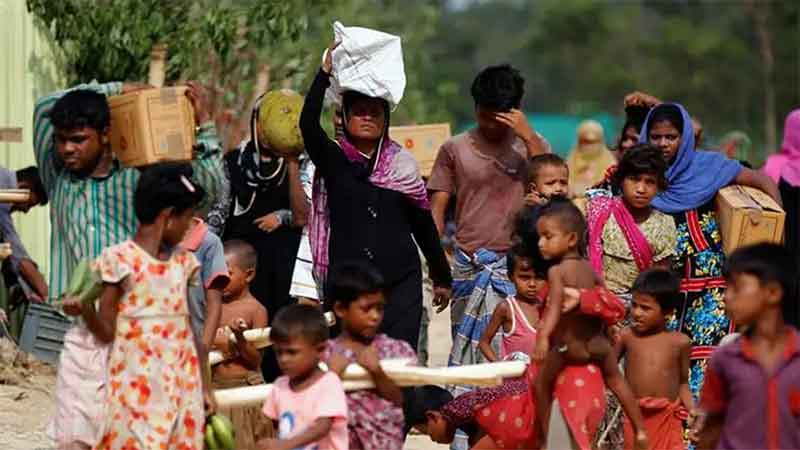
Aisha, a 7 year old girl living in Khajuri Khas Colony of Delhi, is yearning for a day when like her elder sister Asma, she would also be admitted to a nearby government school.(1)

This possibility is growing dimmer by the day, as the school has refused her admission and asked for Indian documents like Aadhar – which refugees do not possess.

Aisha is the younger daughter of Ahmad, a Rohingya refugee who has finally reached Delhi and has duly received his UNHCR card – which refers to the document issued by the UN refugee agency.

Thanks to the circular issued by Delhi government ( Dec 24) led by AAP asking schools to ensure strict guidelines during admissions perhaps Aisha will have to remain satisfied with the same private school which lacks facilities.With a drive underway to ensure that children of “illegal Bangladeshi immigrants” are not allowed enrolment, Aisha knows very well that her fate is sealed. (2)

It is difficult for her father to explain that while Asma got admission on the UNHCR card but why the rules have been suddenly changed ? ( Read the full article here : https://countercurrents.org/2025/02/clash-of-titans-really-who-can-hate-the-other-more/)

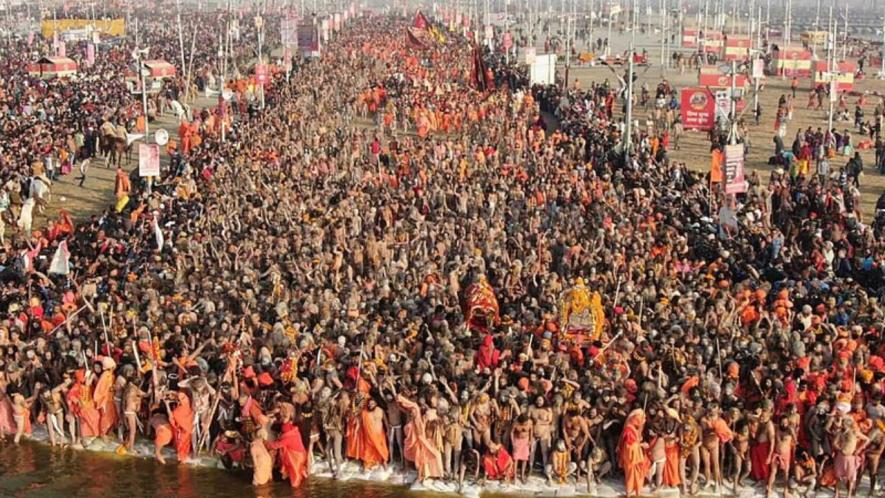
Road to Kumbh: Paved With Hindu Rashtra Intentions?

The Mahakumbh has provided Hindu Supremacist forces an opportunity to further marginalise and invisibilise Muslims, and further push for a ‘Hindu Constitution’.

Whether Uttar Pradesh Chief Minister Yogi Adityanath will be able to recover his image after the tragedy at Mahakumbh, which officially killed more than 30 people and wounded many, many more, is a question being raised in hushed voices in the corridors of power in Delhi.

Obviously, questions are also being raised about the great hiatus between the massive propaganda undertaken around the Mahakumbh and the level of preparations for this ‘biggest congregation on earth’….

For Chief Minister Adityanath, who had ‘positioned himself as the ‘host of the biggest congregation on earth’, the path ahead looks challenging, with the tremendous ineptness of the administration led by him on full display. Much has been reported about conscious attempts made allegedly to downplay the tragedy and how it continued for the whole day. A UP minister, supposed to be close to the Chief Minister, even made a controversial statement that “such small events keep happening in large gatherings.” The statement caused so much uproar that he had to issue an apology. The mainstream media added another page of shame to its track record when it continued to publish government handouts, and did not even deem it necessary to report the tragedy. ( Read the full article here : https://www.newsclick.in/road-kumbh-paved-hindu-rashtra-intentions)

Tridents for Men and Daggers for Women

Why are “legally permissible weapons” being distributed in Delhi on election eve, and why is there criminal silence about it?

We are committed to turning out the non-Hindu sinners from Delhi.”

– A VHP leader addressing a gathering in Delhi.

“..Consume less food, purchase a cheaper mobile phone, anything, only promise to have five tridents in a home”.

– Another VHP leader addressing a meeting in Delhi.

Provocative speeches and distribution of what is being peddled as ‘legally permissible weapons’ , very much in the heart of the national capital ; detailed plans to hold similar events all over the city, on the eve of elections – all this has not stirred the deep slumber in which the law and order machinery found itself in.

Thanks to the inaction, now the campaign to arm a section of radical Hindus has reportedly spread to the womenfolk as well. Plans are afoot to distribute 20,000 daggers to women from the majority community under what is being billed as ‘Shastra Deeksha Samaroh’. In fact, media was agog with footage of daggers being distributed to Hindu women in the second week of January itself.

No doubt, it would be height of innocence to presume that the silence of the officers/ personnel entrusted with maintaining law and order in the city – which is directly under the purview of the Ministry of Home – is inadvertent. ( Read the full article here : https://www.newsclick.in/tridents-men-and-daggers-women)

Democratic Dogmas and Disquiets

Democracy Dialogues Series 36

Organised by New Socialist Initiative

Theme :Democratic Dogmas and Disquiets

Speaker : Prof Niraja Gopal Jayal

Avantha Chair, Professor of Politics,

King’s India Institute , King’s College London

Livestreamed on : facebook.com/newsocialistinitiative.nsi

Abstract:

The erosion of democracy worldwide has placed all those who self-identify as democrats in a conundrum. We are loath to recognise the inherent imperfections of democracy because it is by championing democracy that we seek to challenge authoritarian rule. However, the failure to acknowledge the potential distortions of democracy has consequences, obliging us to confront the question of the ways in which democracy must be safeguarded, if necessary against itself.

About the Speaker :

Niraja Gopal Jayal joined King’s India Institute as Avantha Chair in October 2021. She was formerly Professor at the Centre for the Study of Law and Governance at the Jawaharlal Nehru University, New Delhi and presently also Centennial Professor (2019-23) at The London School of Economics, in the Department of Gender Studies.She has also held visiting appointments at, among others, Princeton University, King’s College, London, and the EHESS, Paris.

Her book Citizenship and Its Discontents (Harvard University Press and Permanent Black, 2013) won the Ananda Kentish Coomaraswamy Prize of the Association of Asian Studies in 2015. She is also the author of Representing India: Ethnic Diversity and the Governance of Public Institutions (Palgrave Macmillan, 2006) and Democracy and the State: Welfare, Secularism and Development in Contemporary India (OUP, 1999). She has co-edited The Oxford Companion to Politics in India, and edited, among several others, Democracy in India (OUP, 2001) and Re-Forming India: The Nation Today. (Penguin Random House, 2019) Her most recent book is Citizenship Imperilled: India’s Fragile Democracy (Permanent Black).

Bhagwat Puran of a Different Kind

How to denigrate India’s historic freedom struggle and humiliate the sacrifices of martyrs, and keep sermonising happily ever after

Image Courtesy: Wikimedia Commons

Though this be madness yet there is method in it…’

–‘Hamlet’, Shakespeare I.

The search for the real Independence Day has perhaps become longer in the Hindutva supremacist circles.

Close on the heels of the likes Kangana Ranaut, film actress and ruling Bharatiya Janata Party (BJP) Member of Parliament, who had (in)famously said that “India attained freedom in 2014 and 1947 was ‘bheek’”, or alms and Vikram Massey, another flop Bollywood hero, questioning the freedom of 1947 as “so-called” Independence, has come the news that the numero uno of the Sangh Parivar, Mohan Bhagwat, has joined the ranks.

Speaking on the first anniversary of the Ram Temple inauguration day in Indore (as per the Hindu calendar), the Rashtriya Swayamsevak Sangh (RSS) chief underlined that this day of consecration should actually be celebrated as “true independence” of Bharat, which faced enemy attacks “parachakra” for several centuries.

As expected, Bhagwat’s remarks have received widespread condemnation in Opposition circles. Congress leader Rahul Gandhi has even called it an act of “treason” and asserted that they were an affront to every Indian. He even underlined that the “[R]SS chief would have been arrested in any other country” for such controversial remarks.

Looking at the fact that Bhagwat happens to be the supremo of the ‘biggest cultural organisation in the world’, whose ideology drives India today, who has the complete liberty of sharing his pearls of wisdom whenever he deems it necessary, at times even boomeranging on the organisation, it is difficult to imagine that any action would be taken against him, or whether he will be censured for his controversial remarks, which are an attack on the sacrifices and historic legacy of the freedom fighters as also on the Constitution. ( Read the full text here :https://www.newsclick.in/bhagwat-puran-different-kind)

Professor Balveer Arora in Democracy Dialogues, 5 th January 2025, 6 PM (IST)

https://youtu.be/GM6KiF9zwII?si=hA3U2WAY_lh18jLF

Democracy Dialogues Series 35 / Organised by New Socialist Initiative

Theme : India’s Federal Democracy @ 75: Is it Secure?

Speaker : Prof Balveer Arora

Chairman, Centre for Multilevel Federalism and Former Professor of Political Science and Rector, JNU

Time and Date : Sunday, 5 th January, 2025 6 PM ( IST)

Live Streamed on : facebook.com/newsocialistinitiative.nsi

Abstract :As we celebrate the 75th year of the Constitution, it is important to remember that Indian federalism flowered late. In the initial years, the development of democracy overshadowed the federal provisions of the Constitution. Certain formulations of the Constitution and single-party dominance even cast doubts on its very existence.

Dismissed as quasi, much was made of the preference for the term Union to question even the federal intent of the framers of the Constitution. As India’s federal polity developed, it became clearer that federalism was not merely intended but also an integral part of the basic structure of the Constitution. It was further defined and refined with asymmetrical provisions to accommodate its burgeoning diversity.Is it being denied today?

The federal fact is central to the understanding of contemporary Indian politics. Federalism has imparted resilience to Indian democracy. Traditionally, the concept of federalism involved relationships between central governments and federated units. Defined in legal- constitutional terms as different power distributions between the central government vis-à-vis the states and local governments, they typically limited relationships to those between governments, notably between various actors in the executive branch. We seek to go beyond this framework to look at federalism as a democratic process.

The threats to the federal essence of the polity are many, majoritarianism being the foremost. Majoritarian democracy is incompatible with the federal principle, which is based on the recognition of the right to self-rule for all constituents of the federal polity. Is this under siege today by an integrationist vision that seeks unity through uniformity? How can federal democracy be protected and preserved under these conditions? Can it be made more secure?

About the Speaker : BALVEER ARORA is Chairman, Centre for Multilevel Federalism and Former Professor of Political Science and Rector, JNU. Earlier, he was a visiting fellow at the National Political Science Foundation, Paris and the Center for the Advanced Study of India, University of Pennsylvania, USA. He has edited / co edited many books : Here is a list of few of his publications :
– Transforming India: Social and Political Dynamics of Democracy
– Multiple Identities in a Single State: Indian Federalism in Comparative Perspective
– Party System in India: Emerging Trajectories ,
– Federalism in India: Origins and Development
– The Value of Comparative Federalism: The Legacy of Ronald L. Watts
– Federalism and Public Health in India: Dissonant Discourses

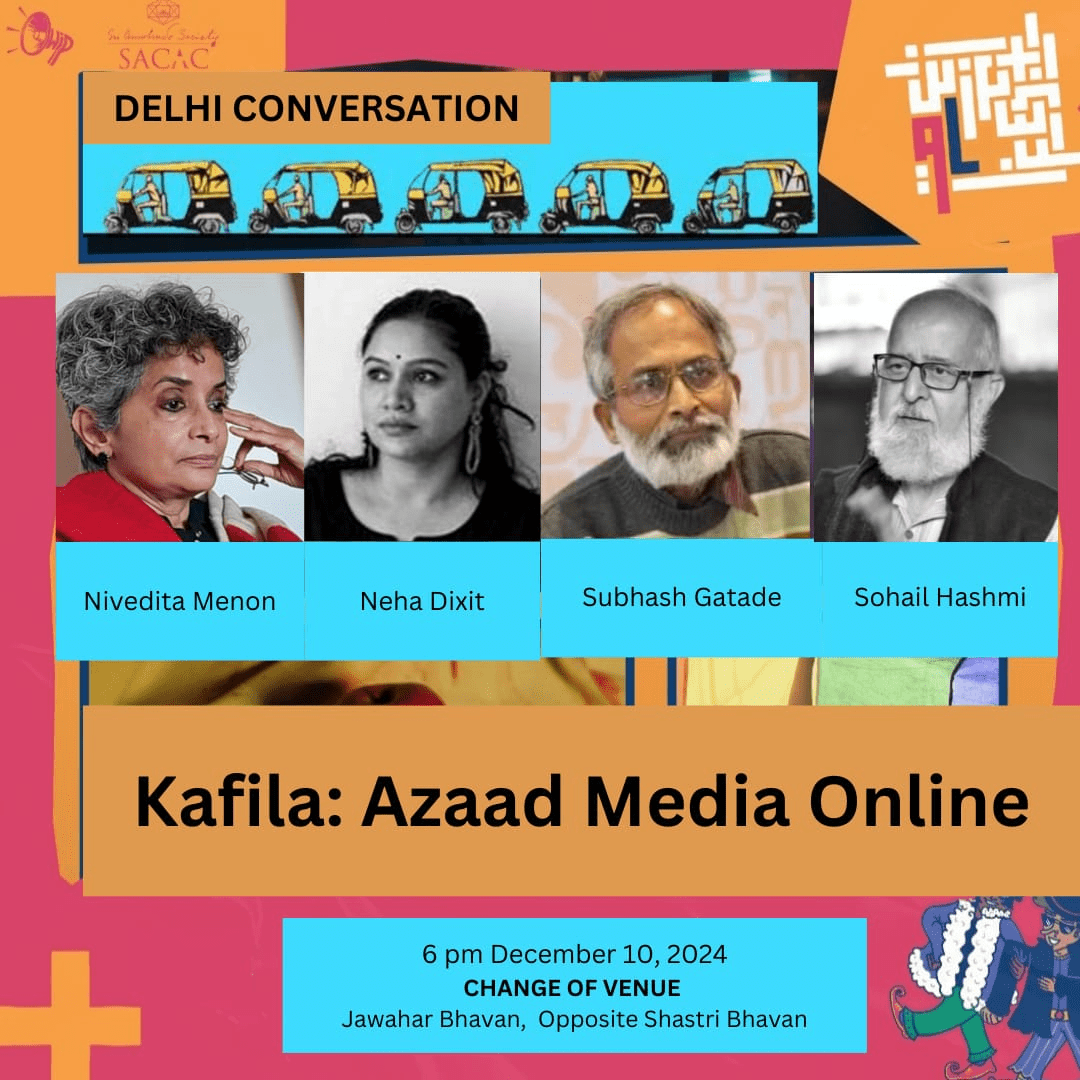
Reflections on the Kafila journey : ‘We Should Learn from Them!’

Presentation   at the panel on Kafila held as part of the W.I.P alt.FEST held in Bangalore and Delhi in  December 2024. The second post in the series can be read here and the third by J. Devika here.

They were different times.

Times when the space for debate and discussion had not shrunk as we it witness today, when stigmatisation of ‘others’ or ‘criminalisation of differences’ had not yet started; times when one had rarely heard about writers. rationalists or cultural workers coming under murderous attacks in this part of South Asia, just because they dared to speak the truth.

Perhaps it is better to begin from the beginnings.

One still remembers the very first meeting we had at CSDS, Delhi in Aditya’s room to discuss the idea of a blog and its launching. Apoorvanand was there, a young blogger Shivam Vij – was also present ( who became a ‘Guru’ of many of us ‘oldies’ for sometime, who were then taking baby steps in this virtual world of self publishing).

For me it was my first experience to be directly associated with a blog.

None of us  had any premonition that we are in for interesting times and would be helping catalyse conversations on various issues of concern among a wide spectrum of writers, activists, scholars and concerned individuals.

All of us had our own teething troubles then, in fact initially I found it extremely difficult even to upload my posts on the blog and had to take the help of a close friend in the IT sector to do it. 

What is worth underlining about Kafila

Looking back, one today feels mesmerised the way it could attract people of various shades to contribute for the blog . Thanks to the wide network of contacts of a few among us- the number of admins reached the figure of twenty two . What connected them was their unflinching opposition to communalism, capitalism, casteism, patriarchy etc and their yearning to  enhance and enrich the intellectual atmosphere in their own way and promote a culture of discussion and debate in the rest of the society.

Nirbhaya movement and the  India against Corruption campaign – popularly called as Anna Movement were the two high points when Kafila reached its peak. One can still recall Shuddho returning from a rally in Jantar Mantar and on his way back home, posting an article on the theme which used to gather scores of comments the next morning

It was a period when even the mainstream magazines, publications felt it necessary to pay attention to the debates happening there and gladly rerepublished pieces which had earlier appeared on Kafila or even referred to Kafila post. Another important facet of Kafila was that there were occasions when the views of Kafila admins themselves differed but what was remarkable that it did not create any bad blood or any rancour among us. We continued to remain friends / comrades as earlier.

Perhaps it also had its genesis in the long bonding which had emerged between many of us during various social political interventions in the capital since mid nineties. Campaigns for defence of rights of workers (Delhi Janwadi Adhikar Manch) or struggles against communalism (Aman Ekta Manch) or issue of caste (Durban Abhiyan)  etc

Anna movement was the high point also because it clearly witnessed a clear division of opinion between us – few of us were completely opposed to the movement for its politics, who felt that it was a RSS inspired movement but others were equally vehement supporters of the movement, who felt that it provided a ray of hope in those times.

Another important point was the impact it could generate across a large sections of people.

It was the year 2014 ( elections were yet to be held) and one fine morning I got a call from an officer associated with a Eurozone country that he wanted  to meet me. This gentleman – who was much familiar with Kafila – who had even read the morning article which had appeared in Kafila, felt that someone like me could provide him with necessary details and analysis of the unfolding situation and also the possibility of Modi’s coming to  power.

What one observed that influence of Kafila was not restricted to only lefts and liberals, it was also read by the Rightwing.

A close relative of mine – who was then associated with a Hindutva Rightwing organisation but had started having doubts about their project – then had shared with me about the discussion he heard in the ‘family’ office.

He heard two of the seniors talking, ‘ we should learn from Kafila, look how they write and polemicise’




Democracy and the Logic of Capitalism: The recent Indian Experience – Professor Jayati Ghosh

Democracy Dialogues Lecture 34 :

Speaker: 

Professor Jayati Ghosh

Professor of Economics at the University of Massachusetts Amherst

Time and Date

Sunday, 17 th November 2024l, at 6 PM (IST)

Topic : ‘Democracy and the logic of capitalism: The recent Indian experience

Abstract :

Many analyses of the recent erosion of democracy in India have dwelt on political and social forces. I will examine the role of economic forces unleashed by a particular form of capitalist development, and how they may have contributed to this process in recent decades.

About the Speaker

Professor Jayati Ghosh, Professor of Economics at the University of Massachusetts Amherst,  a member of the Club of Rome’s Transformational Economics Commission and Co-Chair of the Independent Commission for the Reform of International Corporate Taxation, Formerly a Professor with the Centre for Economic Studies and Planning, JNU, Delhi, has also worked as a Consultant with the Planning Commission of India. Recipient of many awards including UNDP Award for Excellence in Analysis 2005, she has authored- co edited  around twenty books on Economics.

Here is a list of a few of her recent books :

-Women, Gender and Work (Volume 2): Social choices and inequalities, (volume coedited with Mark Lansky, Dominique Meda and Uma Rani, 2016, Geneva: International Labour Office.

-Interpreting the World to Change It: Essays for Prabhat Patnaik (volume co-edited with C. P. Chandrasekhar), New Delhi: Tulika books, 2017.

– Demonetisation Decoded (with Prabhat Patnaik and C. P. Chandrasekhar) New Delhi: Routledge Taylor and Francis India, 2017.

– Indian Banking: Current challenges and alternatives for the future, AIBOC, Chennai, 2018.

– Informal Women Workers in the Global South: Policies and Practices for the Formalisation of Women’s Employment in Developing Economies, (edited volume) Routledge, 2020

– The making of a catastrophe: The Covid-19 pandemic and the Indian economy, New Delhi: Aleph Book Publishing, Forthcoming 2021.

– Development: A collection of articles from the International Labour Review, ILO Centenary Volumes, Geneva: ILO, forthcoming 2021 (co-edited with Uma Rani)

न्यायपालिका और हिन्दुत्व वर्चस्ववादी परियोजना 

दुनिया में जनतंत्र पर मंडराते खतरों की तरफ हाल के समय में बार-बार लिखा गया है। जानकारों ने इस बात को साफ किया है कि किस तरह जनतंत्र का कवच साबित होने वाली उसकी संस्थाओं को अंदर से कमजोर करके, कार्यपालिका, विधायिका या न्यायपालिका को अंदर से खोखला करके या इन सुरक्षा कवच ( guardrails of democracy) का अपहरण करके भी इसे बखूबी अंजाम दिया जा सकता है।

भारत में जहां हम कार्यपालिका का, अर्थात उसकी विभिन्न संस्थाओं को प्रभावहीन बनाने या उन्हें सत्ताधारी पार्टियों के मातहत करने की परिघटना को बारीकी से देख रहे हैं, मगर अभी तक न्यायपालिका में आ रहे बदलावों की तरफ हमारी निगाहें कम गई हैं।

गौरतलब है कि भारत में ऐसे बहुत कम कानून के विद्वान हैं या वकील हैं जिन्होंने भारत की न्यायपालिका के गति विज्ञान को बारीकी से देखा है और उसके रास्ते हमारे सामने रफ्ता-रफ्ता नमूदार हो रहे ख़तरों की तरफ इशारा किया है। जनाब डॉ. मोहन गोपाल, का नाम ऐसे लोगों में शुमार है।

कानून के यह आलिम और प्रैक्टिशनर हिन्दुत्व वर्चस्ववादी ताकतों के नज़रिये के बारे में और उनकी रणनीतियों के बारे में बारीक समझ रखते हैं और संविधान के हिसाब से एक धर्मनिरपेक्ष, लोकतांत्रिक, समाजवादी और संप्रभु भारत को हिन्दू राष्ट्र में तब्दील करने के उनके इरादों के बारे में बताते हैं कि ‘वह संविधान को उखाड़ फेंक कर नहीं बल्कि सर्वोच्च अदालत द्वारा उसकी एक हिन्दू दस्तावेज के रूप में व्याख्या करके’ अमल में लाना चाहते हैं।

कुछ वक्फ़ा पहले ‘लाईव लॉ’ द्वारा आयोजित एक प्रोग्राम में बोलते हुए उन्होंने उसके गतिविज्ञान को साफ किया था। ( Read the full article here : https://janchowk.com/beech-bahas/judiciary-and-scheme-of-hindu-dominance/)