All posts by subhash gatade

When Police Comes Visiting Bookshops!

How saffron forces weaponise ignorance and stigmatise intellectauls
Silence gives consent

[Qui tacet consentire videtur – In Latin]

“Intellectual terrorists” are “more dangerous than cross-border terrorists”

These were the pearls of wisdom of the then Human Resource Development minister, who was addressing a conference of the Bharatiya Janata Yuva Morcha (December 19, 2001).  Murli Manohar Joshi had even asked the ‘nationalist youths’ to counter ‘both types of terrorism effectively.’

…It would be 25 years soon since these objectionable remarks were targeted at India’s topmost historians, scholars, public intellectuals, even provoking followers to deal with them effectively’ like the way they deal with ‘cross border terrorists.’

Later commenting on these controversial remarks, the legendary historian Romila Thapar had famously said: ‘And then the government fell. But the books continued!”

Time for Thought Police?

As everybody can see, there is a sea change in the situation since the past more than a decade in this part of South Asia…

…..The target of attacks has now become broader, more expansive and more unpredictable. It is no longer restricted to ‘leftist’ ‘progressive’ writers, historians.

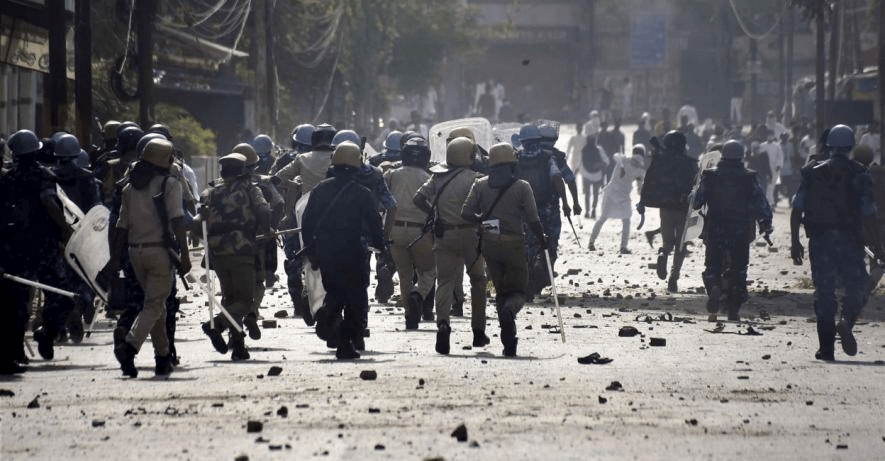
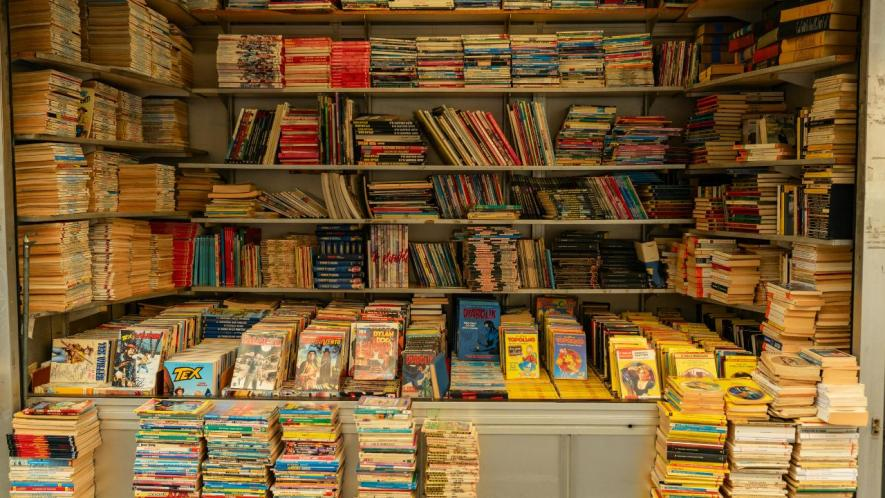
The recent move to ban 25 books on Kashmir history at a single go ‘for propagating false narrative and secessionism‘ — written by a spectrum of national and international scholars — which even do not share a similar world view, books which had been in circulation for years, even decades together is a case in point.

This list of authors includes, A G Noorani, Arundhati Roy, Anuradha Bhasin, Sumanta Bose, Victoria Schofield and several others… [Read the full article here : https://www.newsclick.in/when-police-comes-visiting-bookshops]
A Strategy for India’s Tryst with Its Destiny : Arun Maira

Democracy Dialogues Lecture 41

Organised by New Socialist Initiative

Title: A Strategy for India’s Tryst with Its Destiny

Speaker: Arun Maira, Author, Thinker, Former Member of the Planning Commission of India

Date and Time: August 31, 2025, 6 PM IST 

The lectures are also live streamed at facebook.com/newsocialistinitiative.nsi

Abstract:

I will share what I have learned about the process of transforming complex systems, the changes necessary in ideologies, and in the way in which public policies are being made, for India to progress towards its vision of poorna swaraj. The following points indicate an outline of the argument I plan to make in the talk:

• Global governance has broken down. The world is in disorder.

• India is strategically vulnerable. It is a long way off from its ‘tryst with destiny’ of poorna swaraj.

• India must become much more self-reliant, and less dependent on the US and China to protect its strategic autonomy. It must find its own democratic path to strengthen its society and economy. The US (and the West) cannot provide a blueprint. 

• Development and progress are processes of learning.

• Nations are complex ‘self-adaptive’ systems.

• Power and wealth in a system accumulate by a process of cumulative causation.

• The process of change must be democratic for new ideas to emerge.

I have explained such ideas in my book, Reimagining India’s Economy: The Road to a More Equitable Society, published this year, and in some previous books.

About the Speaker:

Arun Maira is an eminent author, a strategic thinker and a former member of the Planning Commission of India. He had joined the Commission at the invitation of then Prime Minister Dr Manmohan Singh himself. Mr. Maira has had a distinguished career as an enlightened business leader and management consultant. He worked as Executive Director on the Board of Tata Motors and later as the Chairman of Boston Consulting Group. He has authored many books including Transforming Systems: Why the World Needs an Ethical Toolkit; Transforming Capitalism: Improving the World for Everyone; Redesigning the Aeroplane While Flying: Reforming Institutions; Shaping the Future: A Guide for Systems leaders; and most recently, Reimagining India’s Economy: The Road to a More Equitable Society, published in June 2025.

Citizens as Infants? – Judiciary ‘Schools’ People in Patriotism

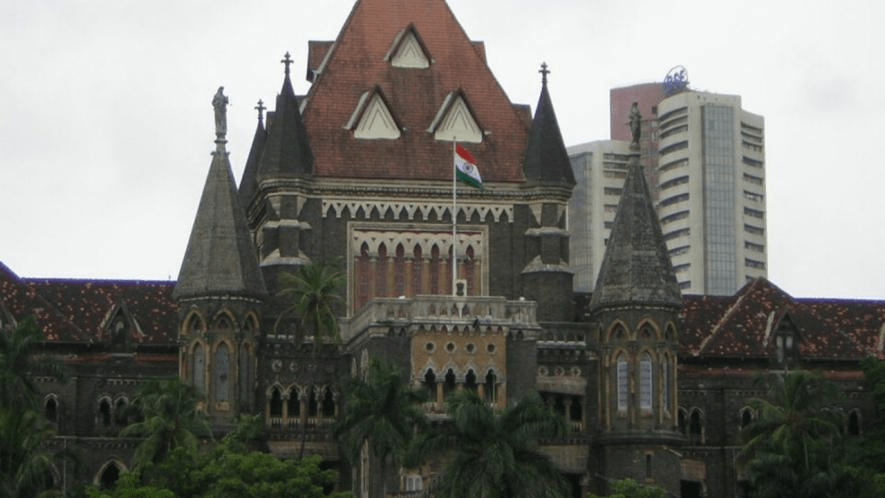
Could it be argued that Bombay HC’s highly debatable decision on a peaceful rally against Gaza genocide is an attempt not to inconvenience the ruling dispensation?

It was the year 1763, when Genevaís ecclesiastical assembly ordered one Robert Covelle to genuflect and listen to a reprimand for having fathered an illegitimate child. Covelle refused to kneel and turned to Voltaire for help.

Voltaire, a leading light of enlightenment, outraged at the very idea that religious authorities daring to make a citizen kneel, wrote a pamphlet against genuflection comparing the act with a tyrant punishing slaves or pedant correcting children. The rest of the philosophes rallied behind Voltaire and after six years of agitation, the Genevaís ecclesiastical assembly was forced to abolish genuflection from its code 

Meera Nanda, writer and historian of science discusses, this episode in one of her monographs

Rereading this episode and seeing if around two-and-half centuries ago, the Church could be compelled to see incongruence, injustice and unreason in its own ruling, can a a similar thing be possible vis-à-vis the judiciary in the 21st century in the ‘biggest democracy in the world’?

This poser is related to a recent debatable decision of the Bombay High Court, which has rightly received enough opprobrium.

( Read the complete article here : https://www.newsclick.in/citizens-infants-judiciary-schools-people-patriotism_

Why No ‘Gita’ Recitation in Schools ?

Is a resistance of some kind slowly emerging from the teaching community to save the secular character of education and foil Supremacist designs?

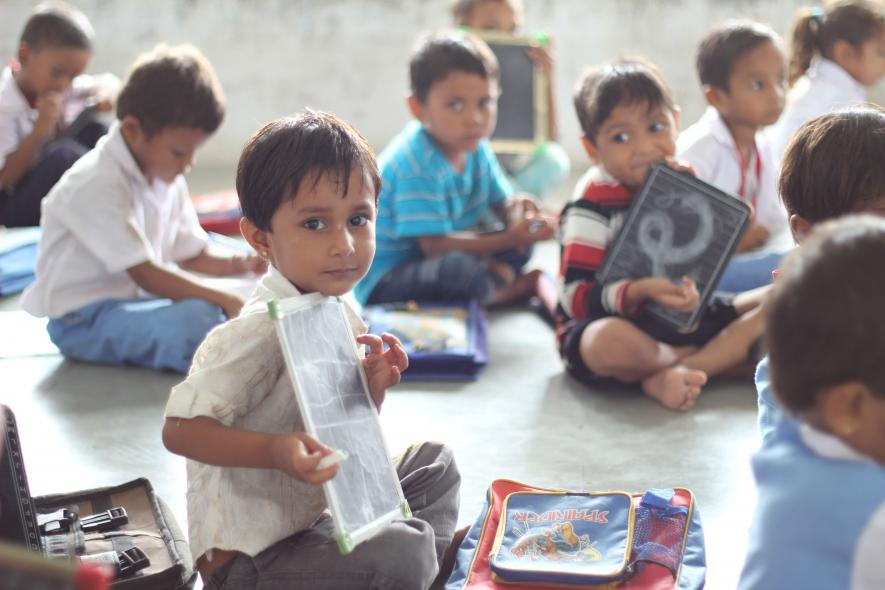
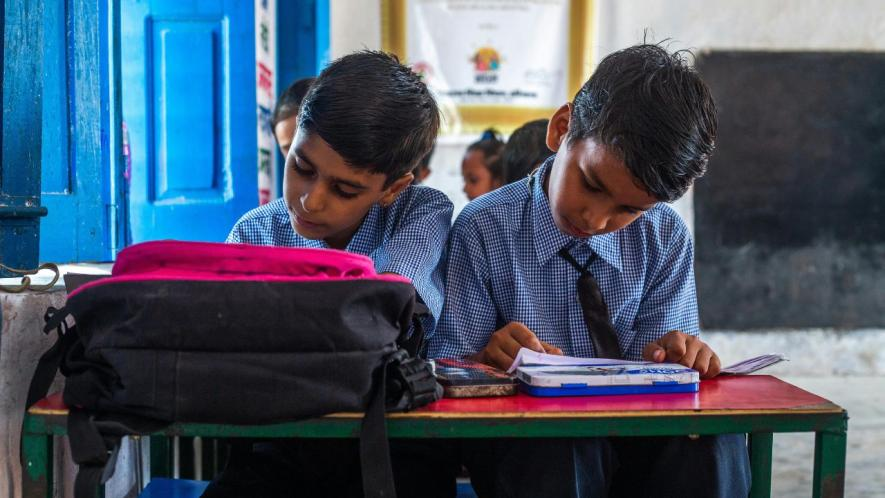
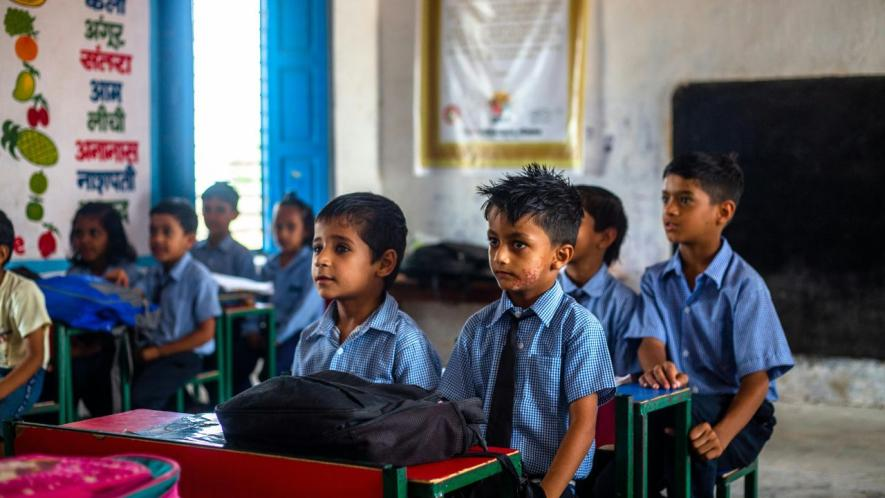
Representational Image. Image Courtesy: Pexels

“To learn to read is to light a fire.

Every syllable that is spelled out is a spark.” –

 – Victor Hugo

 Victor Hugo, (1802- 1885), the great French poet, novelist, and dramatist, once considered a national hero and a living symbol of republicanism in France, would not have imagined in his wildest dreams that a day would arrive where one of his famous quotes ‘“There is in every village a torch – the teacher; and an extinguisher – the priest”, would suddenly start reverberating across a section of learned people engaged in educating future generations in far away India, rather discreetly.

Close on the heels of an intervention by concerned citizens/activists on education in Uttar Pradesh, to stop Ramayana and Vedic workshops in Schools, as it violates Article 28 of the Constitution that specifically enjoins the State not to use public funds for religious instruction, one has come across two important and bold interventions from honourable members of the teaching community themselves, especially in the Hindi belt.

FIR For Asking ‘Light the Lamp of Knowledge’?

The police case against a school teacher from Bareilly for a Kanwad song is a case in point. The ‘offence’ of the teacher, Rajneesh Gangwar, is that he was singing a song in front of students asking them “not to bring kanwars“, instead “go light the lamp of knowledge’. A purported video of the incident, has gone viral. [ Read the complete article here : https://www.newsclick.in/why-no-gita-recitation-schools]

South Asian Futures in a Tri-Polar World : Professor Pervez Hoodbhoy

Democracy Dialogues Series – Lecture 40
Organised by New Socialist Initiative

Theme :
South Asian Futures in a Tri-Polar World

Speaker :
Professor Pervez Hoodbhoy
Eminent Physicist, author, public intellectual

Time and Date :
6 PM (IST)
Sunday , 27 th July 2025

The lecture is also live streamed at facebook.com/newsocialistinitiative.nsi

Abstract:

The Cold War and the collapse of the Soviet Union are long behind us, and we’re now hurtling toward a tri-polar world dominated by America, Russia, and China. These three powers vy to shape global influence, often competing but sometimes colluding. As the saying goes, “When elephants fight, the grass gets trampled.” So, the central question for this lecture is: What path are the nations of South Asia—including Afghanistan and Iran—likely to take? What alternatives and tools do they possess to navigate this landscape? Most importantly, what vision of society and power should guide them toward a viable future?

Speaker :

Professor Pervez Hoodbhoy is a nuclear physicist, author, and a prominent activist who is particularly concerned with promotion of freedom of speech, secularism, scientific temper and education. He is the founder-director of The Black Hole in Islamabad and as the head of Mashal Books in Lahore, he leads a major translation effort to produce books in Urdu that promote modern thought, human rights, and emancipation of women.

Prof Hoodbhoy received his undergraduate and doctoral degrees from MIT and has taught  physics and mathematics at Forman Christian College-University in Lahore, at the Quaid-e-Azam University (QAU) in Islamabad and later at Lahore University of Management Sciences (LUMS).

He is a recipient of the Baker Award for Electronics and the Abdus Salam Prize for Mathematics. He was visiting professor at MIT, Carnegie Mellon University, and the University of Maryland. In 2003 he was awarded UNESCO’s Kalinga Prize for the popularization of science.

Here is a list of a few of his publications :

– Pakistan: Origins, Identity and Future, published by Routledge (London, New York), 2023.
– Confronting the Bomb – Pakistani and Indian Scientists Speak Out, (edited) Oxford University Press, 2013.
– Education and the State – Fifty Years of Pakistan, (edited) Oxford University Press, 1998.
– Islam & Science: Religious Orthodoxy and the Battle for Rationality, published by ZED Books, London, in 1991 with translations in Turkish, Malaysian, Indonesian, Arabic, Spanish, Sindhi, and Urdu.
– Proceedings of School on Fundamental Physics and Cosmology, co-edited with A. Ali, World Scientific, Singapore, 1991.

Democracy For The Few ?

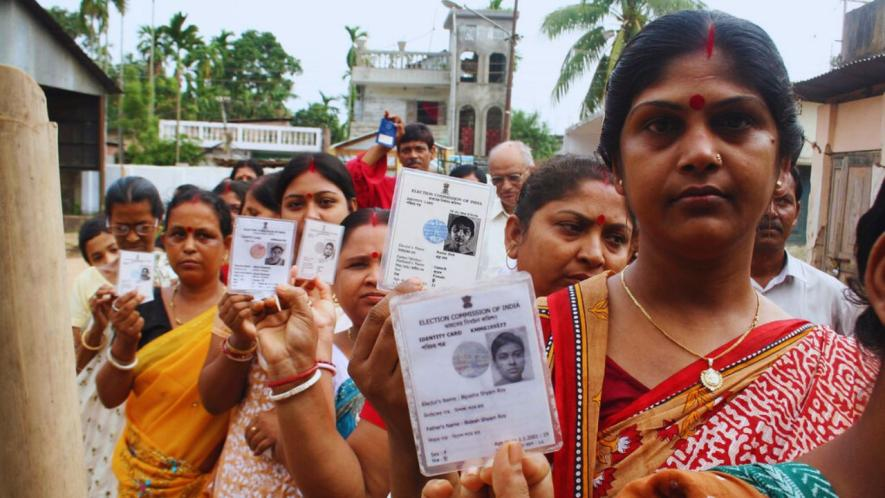
Is Bihar being turned into a test case of disenfranchising people?

Representational Image. Image Courtesy: Flickr

India pledged to usher in a democracy with universal adult franchise.

It was the late 1940s, when India, a newly independent nation, whose less than 10% population was then literate, embarked on this unique experiment, unheard of in those times.

The architects of Independence rejected all the Western prescriptions that openly said that .’.. India had no democratic future‘ (Winston Churchill) or ”monarchial arrangement best suited the Asian people‘ (British Prime Minister Clement Attlee to Nehru, 1949), and (to quote a student of history) ‘met the imperial argument on direct terms, firmly believing in the possibility of creating democratic citizens through democratic politics.’ (India’s Founding Moment: The Constitution of a Most Surprising Democracy by Madhav Khosla)

What is worth emphasising is that all those great leaders who shaped a forward-looking Constitution were on the same page when it came to granting the right to vote. For example, B.R Ambedkar, who was chairman of the Drafting Committee of the Constitution, firmly believed that ‘To limit the franchise, was to misunderstand the meaning of democracy ... ‘

None of them dithered over this provision despite knowing well that even the Western countries had not fully adopted universal adult franchise. Remember, Switzerland granted the right to vote to women only in 1971.

Much water has flown down the Ganges, the Jhelum, the Brahmaputra, the Godavari or the Kaveri.

A good 75 years after the adoption of the Constitution (1950), today we are faced with a challenge that at first looks unbelievable, the present ruling dispensation seems to have embarked on a journey in an exactly reverse direction. [Read the full article here : https://www.newsclick.in/democracy-few]

Dark Shadows of Emergency! 

How they have become arsenal for the majoritarian Hindutva forces to convert the sovereign, independent, secular, socialist republic into a Hindu Rashtra.

25 th June 2025 happened to be the fiftieth year of the internal emergency imposed by the then Indira Gandhi regime. Much has changed during all these years but till date we are still far away from a balanced review of that period.

What really prompted Indira Gandhi to declare emergency , whether drive for personal power was the key factor, as has been reiterated multiple times…..

On the other hand, whether it could be said that she correctly perceived how sinister forces in the subcontinent were hell bent on sabotaging the democratic experiment at the behest of imperialist powers , who were even found to be provoking police and security forces to pursue their dubious agenda.

No doubt such a holistic review is a need of the hour but one thing cannot be denied that the biggest beneficiary of this whole exercise has been the Hindutva rightwing forces who are keen to transform India into a Hindu Rashtra

[ Read the full article here : https://www.mainstreamweekly.net/article15924.html]

Assam: Arms Licenses to ‘Vulnerable Citizens’

How saffrons are engaged in militarising Indian society not so surreptitiously.

Representational Image. Image Courtesy: Flickr

“…though this be madness, yet there is method in it“?

-Polonious, in ‘Hamlet’ by William Shakespeare

Pushback of ‘alleged foreigners’ It was May end, when the Assam government led by Bharatiya Janata Party’s (BJP) Himanta Biswa Sarma, was in the news for its policy of pushback where it was found literally pushing what it termed as ‘illegal foreigners’ into Bangladesh.

What was noticeable was that when its controversial pushback policy came under the scanner of national and international human rights organisations, the Assam government approved another scheme that has raised new questions?

This was a ‘special’ scheme to make the border areas, especially those inhabited by indigenous people living in “vulnerable and remote areas”, safe. ..

.. ..it was basically to give arms licenses to people and those along the border with Bangladesh to “help them protect themselves.” [ Read the full article here : https://www.newsclick.in/assam-arms-licenses-vulnerable-citizens]

Review : ’And Quietly Comes the Dawn’

The ‘Other Haryana’ Which Rarely Gets Discussed

BOOK REVIEW

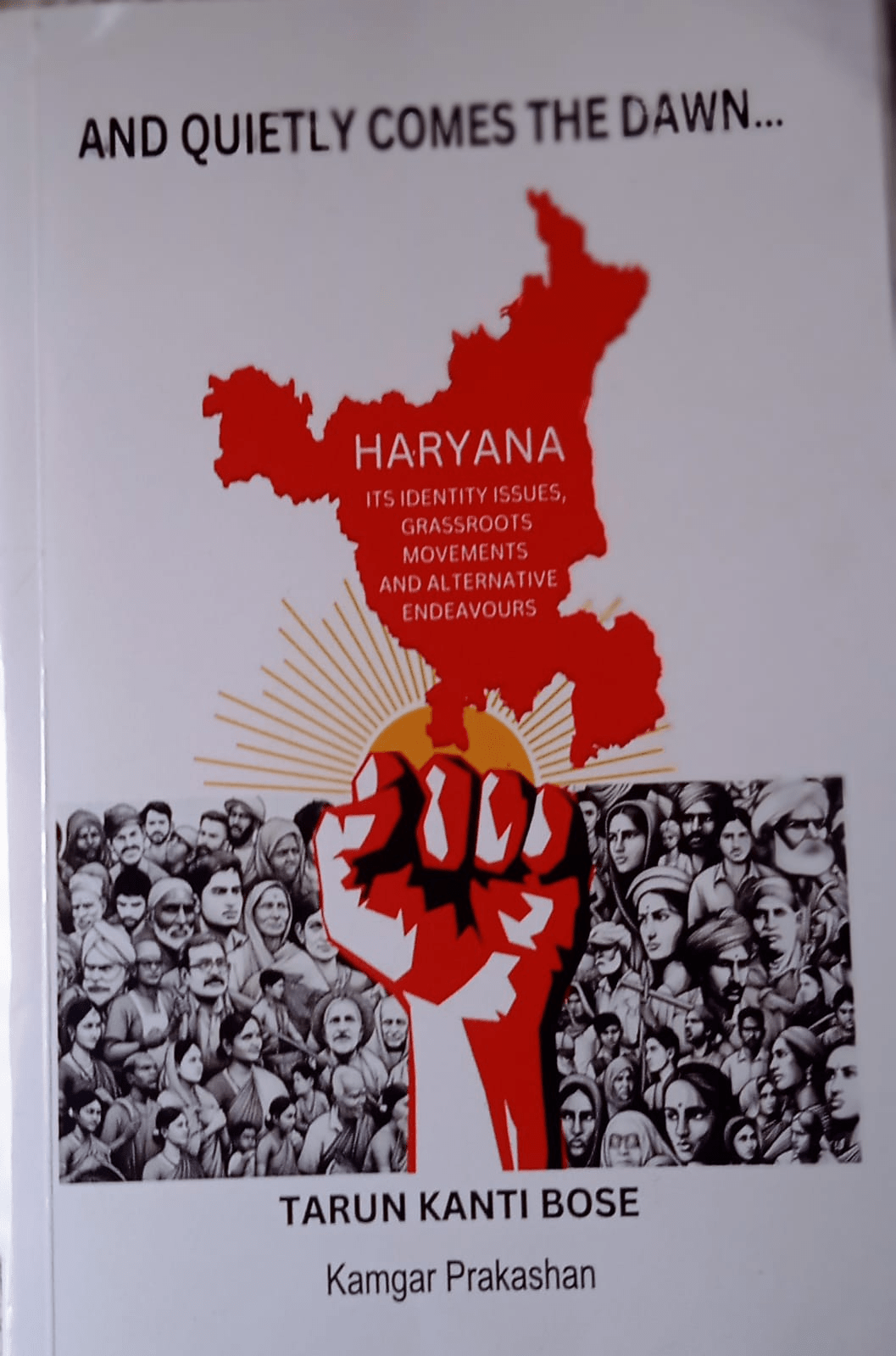
And Quietly Comes the Dawn:
Haryana —Its Identity Issues, Grassroots Movements and Alternative Endeavours
by Tarun Kanti Bose

Kamgar Prakashan | https://kamgarprakashan.com

What image does one conjure up when Haryana finds mention anywhere !
It is the image of the millenium city Gurgaon – with offices of leading MNCs or neighbouring Nuh – the Muslim majority district with one of the lowest literacy rates in India or the dominant Jat peasantry, the growing gender imbalance in the society which even gets reflected in the phenomenon of purchasing of brides from Bihar or other areas, etc

Various cases of dalit oppression add another gloomy layer to the not so bright picture.

Rarely does one find voices of the ’other Haryana’ getting reflected in the public discourse.

….Writer, journalist, left activist Tarun Kanti Bose’s new book, ’ And Quietly Flows the Dawn : Haryana— Its Identity Issues, Grassroots Movements and Alternative Endeavours breaks a new ground in this dominant discourse and brings before us many such unheard voices.

( Read the full review here : https://www.mainstreamweekly.net/article15848.html )

बच्चों के लिए सैनिक प्रशिक्षण : आखिर महाराष्ट्र सरकार की यह नई योजना क्यों एक चिन्तित करने वाली पहल है ?

‘मैंने जापान में जनता को अपनी स्वतंत्रता की सीमाएं अपनी सरकार द्वारा स्वेच्छा से स्वीकार करते हुए देखा है…लोग इस सर्वव्यापी मानसिक दासता को प्रसन्नता और गर्व के साथ स्वीकार करते हैं क्योंकि वे अपने आपको शक्ति की एक मशीन, जिसे राष्ट्र कहा जाता है, में बदलने की तीव्र इच्छा रखते हैं…’ 

-रवीन्द्रनाथ ठाकुर, ‘नेशनलिज्म’  

बच्चों के लिए फौजी तालीम !

भारतीय संघ के सबसे समृद्ध सूबा कहलाने वाले महाराष्ट्र ने स्कूली शिक्षा के क्षेत्र में एक नयी पहल हाथ में ली है। वह स्कूली छात्रों के लिए कक्षा 1 से ही बुनियादी फौजी प्रशिक्षण देना शुरू करेगा ताकि बच्चों में ‘देशभक्ति, अनुशासन और बेहतर शारीरिक स्वास्थ्य की नींव डाली जा सके।’ एक स्थूल अनुमान के हिसाब से चरणबद्ध तरीके से लागू की जाने वाली इस योजना में लगभग ढाई लाख सेवानिवृत्त  सैनिकों को तैनात किया जाएगा। …..

यह प्रस्ताव कई स्तरों पर चिन्तित करने वाला है:
 
एक, जैसा कि जानकारों एवं शिक्षा शास्त्रियों ने बताया है कि राज्य का शिक्षा जगत एक जटिल संकट से गुजर रहा है, जिसका प्रतिबिम्बन कमजोर होती अवरचना / इन्फ्रास्टक्चर /infrastructure, अध्यापकों की कमी और नीतियों को लागू करने के रास्ते में आने वाली प्रचंड बाधाओं में उजागर होता है। ..अगर सरकार की तरफ से कक्षा एक से आगे फौजी प्रशिक्षण प्रदान करने की योजना को लागू किया गया तो उसका असर स्कूली शिक्षा के लिए आवंटित किए जा रहे संसाधनों में अधिक कटौती में दिखाई देगा।

[ Read the full article here :https://janchowk.com/military-training-for-children-why-is-this-new-scheme-of-maharashtra-government-a-worrying-initiative/]

Maharashtra: Military Training for School Children!

Why this latest move by the state government is a worrying development.

“I have seen in Japan the voluntary submission of the whole people to the trimming of their minds and clipping of their freedom by their government, which through various educational agencies regulates their thoughts, manufactures their feelings, becomes suspiciously watchful when they show signs of inclining toward the spiritual, leading them through a narrow path not toward what is true but what is necessary for the complete welding of them into one uniform mass according to its own recipe. The people accept this all-pervading mental slavery with cheerfulness and pride because of their nervous desire to turn themselves into a machine of power, called the Nation, and emulate other machines in their collective worldliness.”

-Rabindranath Tagore, Nationalism

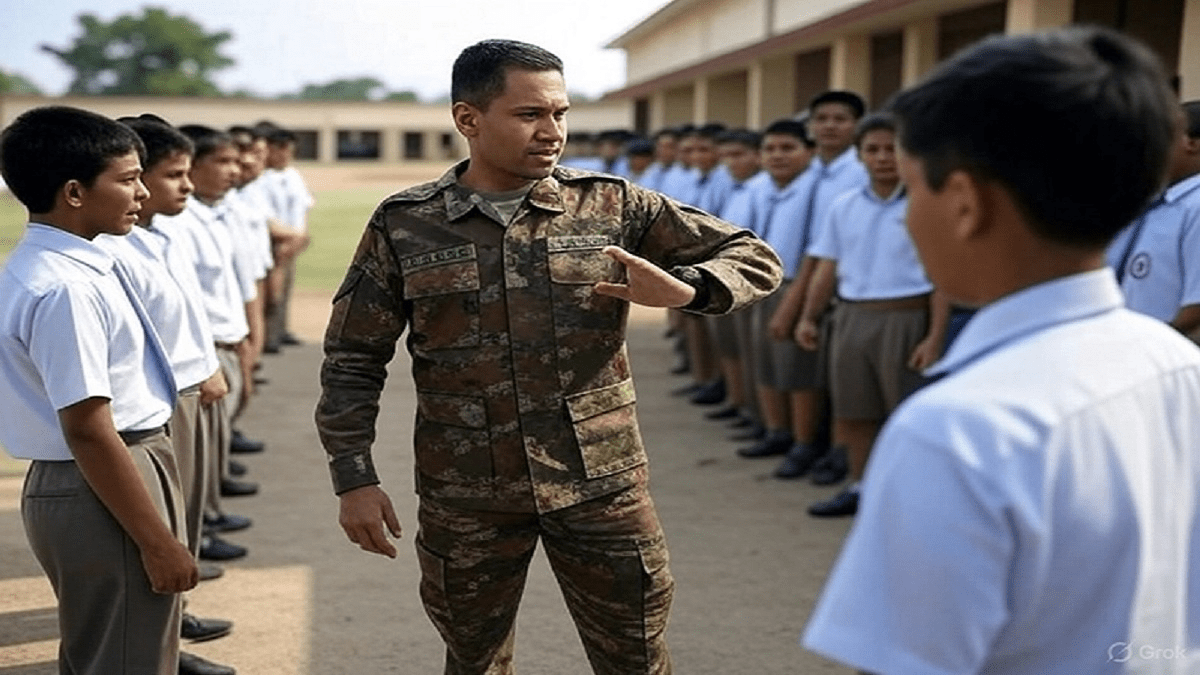
The richest state in the Indian union, Maharashtra, has embarked on a new initiative in the field of school education. It would provide basic military training to school students starting from Class 1, to promote  “patriotism, discipline, and physical fitness among young learners from an early age”. Around 2.5 lakh ex-servicemen would be involved to deliver this training which will be introduced in a phased manner.

Undoubtedly, in the aftermath of Operation Sindoor, this proposal will be able to gather enough eyeballs in the rest of the country and it would not be surprise that few other Bharatiya Janata Party-ruled states would implement similar schemes in education.

This proposal is worrying at many levels. ( Read the full article here :https://www.newsclick.in/maharashtra-military-training-school-children)

Will Asjad Babu Get Justice in Today’s India

“Our dead are never dead to us until we have forgotten them”

– George Elliot (English Novelist and Poet, 1819-1880)

Firdaus Alam alias Asjad Babu – age 24 years – is dead.

Details of this cold blooded killing have appeared in a section of the media and make chilling reading. (1)

Asjad – a native of a village in Kishenganj district of Bihar, married hardly 7 months back, worked as a tailor in Panipat, Haryana.That tragic evening, he was sitting with his friends including his brother Asad Raza in a playground when the accused approached him and started mocking him for wearing a skullcap.

None of the friends had any personal enmity with the accused Narendra alias “Susu Lala”.When confronted, he felt further agitated and attacked Asjad with a knife, inflicting serious fatal injuries.

Death of Asjad is no ordinary death.

It appears to be a hate crime.

Hate crime is a special crime where a person is targeted just because of hostility or prejudice towards that person’s colour, look, dress, which reveals the person’s community, religion or belief etc. One does not know whether the police or the law-and-order machinery would be ready to acknowledge this brutal murder as a hate crime (2) because that would entail stricter charges, which may be followed by stricter punishment.

What is even more disturbing, is to note that killings, like that of Asjad have become commonplace. ( Read the full article here : https://countercurrents.org/2025/06/will-asjad-babu-get-justice-in-todays-india/)

UP: Ramayana, Vedic Workshops in Govt Schools Challenged

Why the Yogi Adityanath-led BJP government’s move of using public funds for imparting religious instruction violates Article 28 of the Constitution.

Representational Image. Image Courtesy: Pexels

“No religious instruction shall be provided in any educational institution wholly maintained out of State Funds” unless “established under any endowment or trust which requires that religious instruction shall be imparted in such institution”. (Article 28 of the Indian Constitution)

It has been more than 75 years since the founding fathers (and mothers) of the Constitution took this bold stand when they were shaping the guidelines around which the newly independent country would move forward. ..

…..Much water has flown down the Ganges, the Jamuna and all rivers of the country and it appears that slowly, but not so silently, attempts are on to water down the provisions of this Article and facilitating religious instruction in government schools through the back door.

The manner in which Yogi Adityanath-led Bharatiya Janata Party (BJP) government in Uttar Pradesh has suddenly decided to hold summer workshops on the Ramayana and the Vedas in government schools across the state, without any broader consultation with the stakeholders involved in this endeavour, is symptomatic of the brazen attitude of the government. We are told that these workshops will be organised under the aegis of the International Ramayana and Vedic Research Institute, Ayodhya, and will include activities, like Ramlila, Ramcharitmanas recitation, Vedic chanting, painting, and mask-making.

As expected, this retrograde move by the Yogi government has generated anger among the broad masses as well as concerned citizens, who have demanded that this move be immediately rescinded. ( Read the full article here : https://www.newsclick.in/ramayana-vedic-workshops-govt-schools-challenged )

Two Minute Silence for Amir Pathan!

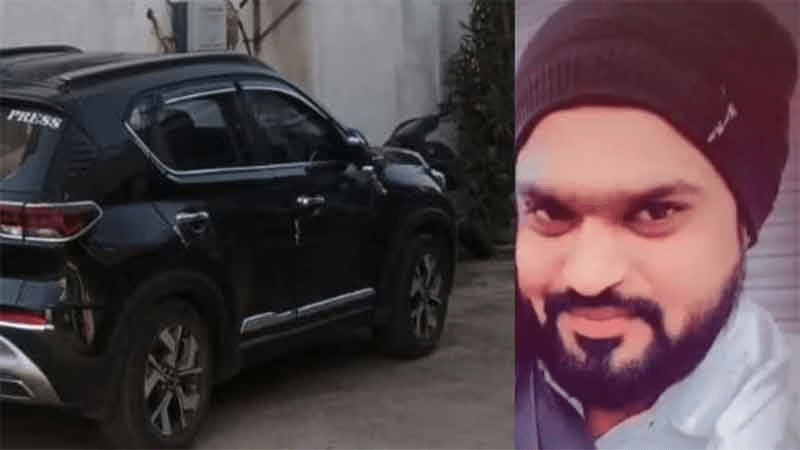
Life in Latur, a city in Maharashtra, known for its historical monuments is normal again. There was little commotion more than ten days back in one part of the city following the suicide of a senior executive with a telecom company who had resorted to this extreme step a day after a road rage incident when he allegedly faced communal slurs. Looking back what followed on that day was nothing unusual by Indian standards. ( Read the rest of the article here : https://countercurrents.org/2025/05/two-minute-silence-for-amir-pathan/)

””””””””””””””

Why a 3-Year-Old Child’s Death Will Haunt us For a Long Time

Keeping aside disagreement about customs like ‘Santhara’, one can at least agree that only an adult can make a decision to opt for death voluntarily in times of sickness.

Men never do evil so completely and cheerfully as when they do it from religious conviction.

Blaise Pascal (1623–1662)

French mathematician, physicist, inventor, philosopher, and Catholic writer

Namrata (name changed), the three-year-old daughter of IT professionals from Indore, is dead.

She had brain tumour which was successfully operated upon in January in Mumbai but it relapsed in March, and within less than a week, she breathed her last.

Apropos nothing seems amiss in her story.

The child got the best treatment available, and for her parents, belonging to Jain community, money was never a problem.

Despite all these relevant details, it is rather difficult to forget or disremember the past few hours of her life when she was still alive, when she must have been in tremendous pain and the way she was made to undergo some ritual to ‘improve her next birth’ — as impressed upon her parents by their spiritual leader.

We learnt that instead of hospital bed, where she should have been given palliative care, the child was shifted to the ashram of one Maharaj, a Jain monk, who had convinced his gullible disciples – her parents – to opt for Santhara “to decrease her suffering and improve her next birth”.

And these young IT professionals, barely in their 30s, had no qualms in shifting their dying daughter to the ashram, despite knowing full well that she was in tremendous pain and any sudden change would exacerbate her death. [ Read the full article here : https://www.newsclick.in/why-3-year-old-childs-death-will-haunt-us-long-time]

Is an All-India Plan Underway to Foment Communal Conflicts?

President Rajendra Prasad had written to Sardar Patel, flagging cases of Hindutva activists dressing as Muslims to foment communal trouble. That trend continues.

“…I am told Hindutva activists have a plan of creating trouble. They have got a number of them dressed as Muslims and looking like Muslims who are to create trouble with the Hindus by attacking them.. …The result of this kind of trouble amongst the Hindus and Muslims will be to create a conflagration.’’

[Extracts of a letter, written by Dr Rajendra Prasad on March 14, 1948, cited in Nehru-Patel: Agreement within Differences, Select Documents and Correspondence, edited by Neerja Singh, Page 43]

‘How Hindutva activists plan to foment communal trouble?’

It was the year 1948 and Dr Rajendra Prasad, who later became the first President of India, wrote a letter to the first Home Minister of independent India, Sardar Vallabhbhai Patel, about the plan of Hindutva activists to foment trouble in the newly independent country. As per reports that he had received from different sources, Prasad wrote how these Hindutva supremacists get dressed up as Muslims and ‘looking like Muslims’ create trouble with Hindus by attacking them.’

Much time has passed since the time letter was written, but every now and then, this template, created and developed by Hindutva Supremacist formations during the Partition violence and later, is active with the aim to communalise and polarise the society further. [ Read the full article here : https://www.newsclick.in/all-india-plan-underway-foment-communal-conflicts]

Indianity and Modernity : Dr Ravi Sinha

[ YouTube links of Ravi Sinha’s Informal talk in Lucknow in April 2025 on “Indianity and Modernity”.  Credits to Kumar Sauvir for recording, editing and posting. The title and intro are also by him ]

[ Ravi Sinha is an activist-scholar who has been associated with progressive movements for around five decades. Trained as a theoretical physicist, Dr. Ravi has a doctoral degree from MIT, Cambridge, USA. He worked as a physicist at University of Maryland, College Park, USA, at Physical Research Laboratory, Ahmedabad and at Gujarat University, Ahmedabad before resigning from the job to devote himself full time to organizing and theorizing. He is the principal author of the book, Globalization of Capital, published in 1997, co-founder of the Hindi journal, Sandhan, and one of the founders and a leading member of New Socialist Initiative.]

Class, Inequality, and the Current Political Moment in China and India : Prof Vamsi Vakulabharanam

Democracy Dialogues Series 39

Organised by New Socialist Initiative

Theme : Class, Inequality, and the Current Political Moment in China and India

Speaker : Prof Vamsi Vakulabharanam

Co-Director of the Asian Political Economy Program and Associate Professor of Economics at the University of Massachusetts, Amherst

Live streamed at Facebook ( facebook.com/newsocialistinitiative.nsi).
———————————-

Theme: Class, Inequality, and the Current Political Moment in China and India

This talk is based on a recently published book by the Oxford University Press – Class and Inequality in China and India, 1950-2010. China and India have seen a significant revival over the last three decades in terms of their place in the world economy. Two and a half centuries ago, they contributed 50 percent of the world output; after suffering a decline thereafter, their share fell to a paltry 9 percent in 1950 but has since resurged to over 25 percent today. Their growth and inequality experiences diverged for three decades following India’s independence (1947) and the Chinese revolution (1949). Thereafter, there are remarkable underlying similarities in the experiences of both countries, especially in terms of their rising inequality patterns analyzed through a class lens. Vamsi demonstrates that the mutual interconnectedness between Chinese and Indian growth and inequality dynamics and the transformation and evolution of global capitalism is key to understanding the within-country inequality dynamics in both countries over the 1950-2010 period. Based on this analysis of class-based inequalities, Vamsi reflects on the current political moment in both countries, from a political economy perspective.

Speaker : Prof Vamsi Vakulabharanam
Vamsi Vakulabharanam is Co-Director of the Asian Political Economy Program and Associate Professor of Economics at the University of Massachusetts, Amherst. He has previously taught at the University of Hyderabad (2008-14) and the City University of New York (2004-07). His recent research focuses on inequality in India and China and the political economy of Indian cities through the axes of gender, caste, class, and religion. In the past, he has also worked on agrarian change in developing economies, agrarian cooperatives, and the relationship between economic development and inequality. Vakulabharanam was awarded the Amartya Sen award in 2013 by the Indian Council of Social Science Research.

Can Extradition of Tahawwur Rana Bring Closure to 26/11 Terror Attack?

David Headley remains inaccessible in the US, and so do the masterminds in Pakistan.

The extradition of Tahawwur Rana to India to face trial for his role in the 26/11 terror attack is big news in the media. One can sincerely hope that with the arrest of only the second suspect to face trial for the 26/11 attacks – the first one was Ajmal Kasab – we can unearth other critical links in the conspiracy, role played by the terrorist groups and the support the whole operation received from the Pakistani establishment or its deep state.

Of course, it will be rather premature to assume that this arrest can bring a closure to the dastardly 26 /11 terror attacks. We are yet far away from the possibility of the mastermind of the attack – Hafeez Saeed and his accomplices – facing trial in Pakistan or being extradited to India.

There is no clue yet whether David Headley, a close friend of Tahawwur Rana, who is called the main conspirator of the operation would ever face trial in India. In fact, it is still a mystery how and why the US entered into a plea deal with him – promising him that he will not be extradited to India.

[ Read the full article here : https://www.newsclick.in/can-extradition-tahawwur-rana-bring-closure-2611-terror-attack]

SANITISING THE SUPREMO : How RSS Is Trying to Rewrite its Own History One Step At a Time | 

,,The rewriting spree has not left untouched RSS’s own history itself.

The biggest manifestation of this exercise is evident in the way we have before us a new look Dr Keshav Baliram Hedgewar (1888-1940) founder member of RSS and its first Supremo.

He is being called as ’‘born patriot’’, one amongst the ‘great revolutionaries who fought for India’s independence, ’’social reformer’ , ’maker of Modern India’ etc etc. disregarding the fact that all his life he focussed his attention to build Hindu Unity, to usher India into a Hindu Rashtra and never once gave a call to the organisation he founded with others – namely RSS – that it joins the anti colonial struggle. He did go to jail during the anti colonial struggle but not as a member of the RSS but as a member of Congress Party.

Many monographs, books .. – are also before us which are trying to emphasise this new image, obliterating many inconvenient aspects of his tumultous life or maintaining tactical silences over them. The latest in series is the way he is being projected as a leader of the “jungle satyagraha” at Pusad, Maharashtra which was organised as part of the Civil Disobedience Movement led by Congress. [10]

What is noticeable that this ’rewriting’ of RSS history seem to begin at the beginning only. [ Read the full article here : https://www.mainstreamweekly.net/article15650.html]

Kshama Sawant Honoured in Absentia – Press Release

Kshama Sawant honoured in absentia by Canadian Radio station for standing up against caste-based oppression. Former Seattle City Councillor was presented with the annual Hands Against Racism award by Spice Radio at a well-attended event in Surrey on Sunday, March 30.
Born and raised in India, Kshama Sawant was instrumental behind the historic anti-caste ordinance brought by the City of Seattle in 2023. Since then, she has been under attack from supporters of the right-wing Hindu nationalist Modi government in New Delhi.
For doing that she had to pay a heavy price, as the Indian government denied her visa and an opportunity to go and see her ailing mother in Bengaluru.
Sawant couldn’t make it to the event organized at Surrey City Hall, due to the current tensions between Canada and US caused by the trade war. Spice Radio broadcaster and her vocal supporter Gurpreet Singh accepted the award on her behalf.
He earlier introduced her before her video message was played.
In her greetings, Sawant revealed that because of the hostile political environment, including ongoing arrests of pro-Palestine activists in the US, especially those who are naturalized American citizens like her, she had been advised not to travel outside the country.
However, she pulled no punches in criticising the Liberals and Democrats on either side of the border for their complacency and opportunism, enabling the extreme right wing forces to grow powerful.
Her speech received a huge applause from the audience.
Spice Radio CEO Shushma Datt started the campaign in 2015, on the birth anniversary of Martin Luther King Jr. It coincides with Holi, a Hindu festival of colours, and encourages participants to colour their hands and leave a palm print on a white sheet of paper with a message against racism. A practicing Hindu herself, she believes in diversity and inclusion and greeted everyone Happy Eid at the Sunday program.
Every year, individuals are also shortlisted and awarded for their anti-racism work as part of this initiative. This year Sawant and Bob Rennie were honoured. Rennie is a famous art collector and a strong advocate against xenophobia and homophobia, besides gender discrimination.
The very first recipient of the award, Senator Baltej Singh Dhillon, who served as the first turbaned Sikh Royal Canadian Police officer and faced racism from within the force, was also present and addressed the gathering.
Other past recipients also spoke on the occasion, including Attorney General Niki Sharma, anti-racism educator Annie Ohana and prominent journalist Charlie Smith.