All posts by Shuddhabrata Sengupta

Zehn ki Loot – The Plunder of Reason in a Times Now TV Studio: Kavita Krishnan

Guest Post by Kavita Krishnan

“Phool shaakhon pe khilne lagey” tum kaho,
“Jaam rindon ko milne lagey” tum kaho,
“Chaak seenon kay silne lagey” tum kaho,
Iss khule jhooth ko,
Zehn ki loot ko,
Main nahin maanta,
Main nahin jaanta

“Branches are abloom with flowers” you say!

“The thirsty have got to drink” you say!

“Wounds of the heart are being sewn” you say!

This open lie…

A plunder of reason…

I shall not accept!

I shall not recognise!

(Habeeb Jalib, translated by Ghazala Jamil)

In Shakespeare’s Taming of the Shrew, Petrucchio declares the noontime sun to be the moon: “I say it is the moon,” to test his wife’s loyalty and obedience. As long as she stands by her reason and asserts “I know it is the sun”, she continues to be a ‘shrew’. Only when she consents to ‘zehn ki loot’ (plunder of reason), when she agrees to subordinate her own reason to the whim and diktat of her husband, and deny the self-evident truth, does she achieve approval as a suitable wife.

We, the people of India, are being similarly tamed of our ‘shrewish’ behaviour, with propaganda and public shaming in TV studios accomplishing the ‘zehn ki loot’. It is a process that seeks to bully us into declaring that the sun is the moon, that night is day, that ‘khula jhooth’ (open lie) is in fact the only truth. Refuse to part with your reason, and you are chastised for ‘bad behaviour’.

I would like to revisit the #GovtVsNGO News Hour show on Times Now, on 17th February, as a particularly glaring instance (Activism or Anti-nationalism, Parts 1 and 2 )

The topic of the show was the Government of India’s decision to deplane a Greenpeace activist Priya Pillai from a London-bound flight, because she was planning to depose before British MPs about the violation of India’s forest rights laws by a British mining company, Essar, in Mahan in Madhya Pradesh.

Continue reading Zehn ki Loot – The Plunder of Reason in a Times Now TV Studio: Kavita Krishnan

Are Jibran Nasir and his friends Game Changers in today’s Pakistan? Fawzia Naqvi

Guest Post by FAWZIA NAQVI

One cold Karachi Night

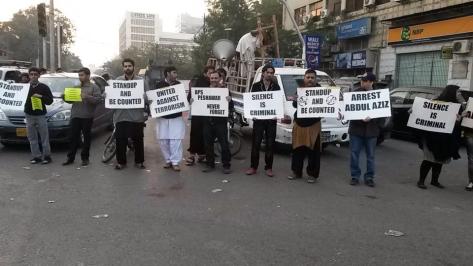
On the night of February 1st, Jibran Nasir Pakistan’s leading activist and a handful of peaceful protesters sat on a road in Karachi near the Sindh Chief Minister’s house for more than 24 hours, demanding the arrest of terrorists responsible for the January 30th Shikarpur attack which killed 65 Shias during Friday prayers, and demanding action against banned sectarian organizations. There were only 20 protesters, their average age 25, outnumbered it seemed by riot police with water cannon and batons at the ready.

Protest in Karachi against Terrorism and Secterian Violence

Continue reading Are Jibran Nasir and his friends Game Changers in today’s Pakistan? Fawzia Naqvi

Storm in a Kahwa Cup: Organizers of the Kashmiri Food Counter at the International Food Festival, JNU 2015

Guest Post by Organizers of the Kashmiri Food Counter at the International Food Festival, JNU 2015

Universities are supposed to be the centers of free inquiry, speech and expression. However, in the recent months universities and other democratic spaces have been under attack from right wing fascist elements across India. University authorities under the influence of right wing forces have increased surveillance on sections of students and have started to monitor and control campuses. As a premier institute of learning Jawaharlal Nehru University (JNU) has always has preserved its democratic culture and has resisted such attacks tooth and nail. However, in recent days even JNU is experiencing pressures from the right wing fascist forces.

Every year, JNU organizes an International Food Festival (IFF) where students from diverse cultures and nations displaying their flags come together to offer global cuisines. This year on 20thJanuary, a group of students from Kashmir booked a counter at the IFF. After completing necessary formalities and depositing security amount the festival organizers allotted space for Kashmir food counter along with the Tibet food counter. However, International students association (ISA), body that organizes the festival started receiving threats from the ABVP goons. The president and other members of the organization were harassed and intimidated. The organizers received open warnings from ABVP threatening them with disrupting the festival in case Kashmiris were allowed to open their food counter. International students who organize the festival were threatened with legal action and deportation. Just two days before the festival the booking for Kashmiri food counter was cancelled by the organization. Continue reading Storm in a Kahwa Cup: Organizers of the Kashmiri Food Counter at the International Food Festival, JNU 2015

Love in the Time of Military Courts: Fawzia Naqvi

Guest Post by FAWZIA NAQVI

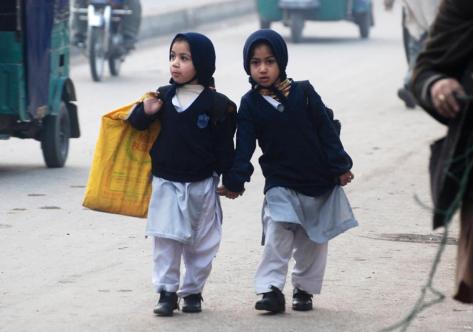
[ This guest post marks one month of the 16th December massacre of school-children by Islamists in Peshawar, Pakistan ]

Fawzia 1 

Pakistan has become a euphemism for insanity.  Doing the same thing over and over again and hoping for a different outcome. There are though some incredibly brave, thoughtful, humane and patriotic Pakistani men and women who have decided enough is enough and they are determined to chart a different future for the country. Continue reading Love in the Time of Military Courts: Fawzia Naqvi

On “Scandalmongering of the Senile” – Ruminations on Tapan Raychaudhuri, Historian: Ahona Panda

Guest Post by Ahona Panda

[ One of the great losses of this year was the passing of the historian Tapan Raychauduri in November, who is remembered not just for the acuity of his scholarship, but also for his warmth, his humour and his embodiment of a certain cosmopolitan, worldly elan. In this tribute, Ahona Panda, a young scholar at the University of Chicago, remembers what it means for all those committed to the life of ideas to have shared the world with Tapan Raychaudhuri and to have lived through the years in which he sojourned through time. We thought it would be fitting to offer these reflections across generations to our readers as another turbulent year draws to a close. ]

In November 2014, the world lost an astonishing historian called Tapan Raychaudhuri. Professor Raychaudhuri’s laurels and accolades and many publications, along with his students, span the entirety of the globe. I write this obituary as a young graduate student who knew him in some personal capacity, a personal capacity that is difficult to define—my parents were his graduate students in the 1980s—thus making me a recipient of his affection (personal, intellectual) and something akin to a grandchild, no perhaps not quite that, but more what he called a (jokingly) “grand-student”.

It was when I stepped into the murky world of South Asian studies, and dabbled and read material pertaining to India in general and Bengal in particular, that I understood the great contribution that Tapan Raychaudhuri has had in the field of not only South Asian history, but also the cultural history of Bengal. This latter Bengal is not that limited, parochial and steadily shrinking ideological/geographical entity that today stands the risk of being run by a Hindu right wing party. Tapan Raychaudhuri, a tremendous celebrity in Calcutta, was not guilty of belonging to West Bengal. In fact, he was perhaps never guilty of “belonging”.

Continue reading On “Scandalmongering of the Senile” – Ruminations on Tapan Raychaudhuri, Historian: Ahona Panda

Statement on David Bergman Case in Bangladesh: Concerned South Asian Journalists and Others

Guest Post. Statement by Concerned South Asian Journalists, Writers, Historians and Activists

We, the undersigned journalists, writers, historians and activists from South Asia,  are deeply concerned about the use of ‘contempt of court’ law to curb freedom of expression. The conviction and sentencing on December 2, 2014, of Dhaka-based journalist David Bergman by the International Crimes Tribunal 2 on charges of “contempt of court” for citing published research on killings during the Bangladesh Liberation War of 1971, is a serious set-back to Bangladesh’s commitment to free speech and independent scholarship.

At the outset, we reiterate our belief that those responsible for genocide and international crimes during the Liberation War must be prosecuted and punished through an open and transparent process.

Continue reading Statement on David Bergman Case in Bangladesh: Concerned South Asian Journalists and Others

A Women’s Charter for Delhi Elections: Women against Sexual Violence and State Repression

Guest Post by Women Against Sexual Violence and State Repression

The elections in Delhi are approaching.

Violence, as well as discrimination against women, and sheer denial of women’s dignity and rights, has been a huge concern for Delhi’s citizens.

This is the time when women are looking towards the political parties, to see what place women’s rights and freedoms have on their agenda.

We are disturbed to see that while most parties pay lip service to the cause of women’s rights, they blithely field candidates accused of violence against women, and they play to the patriarchal gallery on a range of issues, ignoring the voices of the women’s movement.

We, the undersigned would like to put the following concerns on the agenda of the Delhi elections, and we ask the political parties contesting Delhi elections to respond to them with urgency and seriousness. We appeal to all women voters to place this charter before every candidate and every party campaigner, and ask them for a clear position on each of its points.

1. We are alarmed at the spiralling of communal violence towards the Delhi elections. We are shocked that, instead of nabbing those who are fuelling the violence in a planned way, the Delhi Police has instead beaten up and brutalised innocent women in Trilokpuri. Above all, we are appalled at the attempts to justify communal, caste, racial or homophobic/transphobic violence in the name of ‘protecting women’. We assert that women are invariably rendered most unsafe by such violence. We seek a commitment that no party will promote leaders – either as candidates or as campaigners – who are accused of stoking violence against women, as well as communal, caste, racial or homophobic/transphobic violence. Specifically, we do not want the notorious 1984 duo Jagdish Tytler and Sajjan Kumar, we do not want to see Gugan Singh (who made communal speeches in Bawana) or Sunil Vaidya (who incited riots at Trilokpuri), or Somnath Bharti (charge-sheeted for racist and anti-women violence at Khirki) to be candidates or campaigners. Continue reading A Women’s Charter for Delhi Elections: Women against Sexual Violence and State Repression

Appeal to Stay the Execution of Surinder Koli: Concerned Women, Individuals and Groups

Guest Post by Concerned Women, Womens’ Groups and Others against the Death Penalty Awarded to Surinder Koli

To,

The President of India

Rashtrapati Bhavan, New Delhi, India.

2 December 2014

Subject:  Execution of Surinder Koli Would be a Travesty of Justice:
Plea for Mercy from Women’s Groups, Lawyers, Academics, Students and Activists

As women who have been engaged in the struggles for women’s rights and justice, (and their allies) we appeal to you to commute Koli’s death sentence or at least to stay his execution till the completion of the other cases involving other Nithari victims in which he is an accused. 

Continue reading Appeal to Stay the Execution of Surinder Koli: Concerned Women, Individuals and Groups

Days and Nights in Manesar – Reflecting on the ASTI Workers’ Struggle: Anshita & Arya

Guest Post by Anshita & Arya (Krantikari Naujawan Sabha)

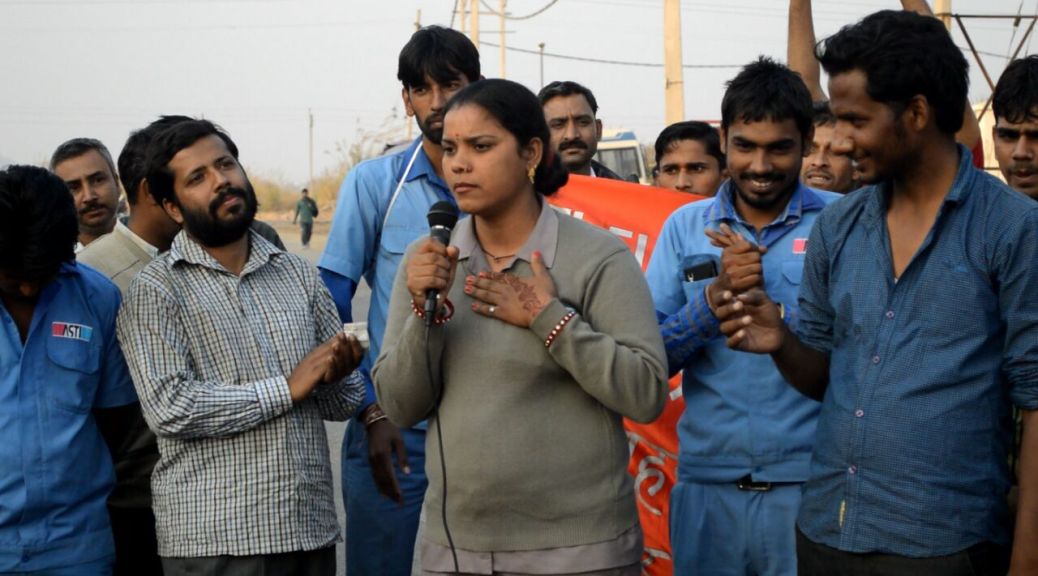
All 310 contract workers in ASTI Electronics factory in IMT Manesar in Gurgaon, Haryana have been on dharna since 3rd November 2014 after they were laid-off on 1st November 2014 citing low work demand. Seven of them are on fast-unto-death from 24th November, while ten workers and pro-worker activists each everyday sit on relay hunger strike.

 In a context where contract workers, increasing exponentially as a demand of the capitalists gleefully forced down by the government through labour law reforms, are finding it ever harder to organize/unite and sustain spontaneous outburts of discontent, due to the precarious nature of their life and work conditions, workers at ASTI Electronics (as a continuation of the 60-70 strikes in various factories in the industrial belt of Gurgaon-Manesar-Dharuhera-Bawal in the last few months) are fighting back and keeping the flame of new emergent struggles alive.

These workers are raising important questions on contractualisation and informalisation within the organized sector which even Central Trade Unions have constantly avoided. Over 250 of these 310 workers are women whose militancy in struggle and leadership is redefining the overall struggle and changing the gender relations within the workers movement.

This struggle for work-livelihood-life is unmasking the heart of the developmental model on DMIC (see current projects in makeinindia.com) which Mr Modi under the supervision of the capitalist class is proposing as the solution to all ills before so-called ‘progress of the country.What follows is a short reflection from the factory gate on the ongoing struggle. Continue reading Days and Nights in Manesar – Reflecting on the ASTI Workers’ Struggle: Anshita & Arya

The Class Politics of Blasphemy in Pakistan: Fatima Tassadiq

Guest Post by FATIMA TASSADIQ

The brutal murders of Shehzad and Shama, a Christian couple in the village of Kot Radha Kishan in Kasur district on 4th November, spawned predictable outrage in the press and social media. The rush of horror, the diagnoses and prescribed course of action against such violence involved the familiar paternalistic discourse of the ‘illiterate masses’ whose ‘ignorance’ evidently leaves them particularly vulnerable to the manipulation of the much maligned mullahs. Such a narrative serves the dual function of reducing religious violence to the faceless masses while at the same time reaffirming the educated urban upper class as the rightful custodian of Islam and Pakistan. This construction conveniently ignores the role played by the state and the elite in producing religious violence and feeds the class-based blind spots that exist in our understanding of what constitutes religious extremism.

Continue reading The Class Politics of Blasphemy in Pakistan: Fatima Tassadiq

Images from Kiss of Love Gathering in Delhi: Ishan Tankha

Guest Post by ISHAN TANKHA

Every time my girlfriend puts her arms around me while we are out  on our terrace i end up first doing a quick scan of the windows that look down at us to see if we are visible to anyone, it’s almost  an instinctive reaction. Mind you, one that doesn’t win me much affection from her ,understandably! It’s not that I care but I do notice them looking, and it’s always disapproving. Unfortunately, It’s not just my neighbours.

After the ‘Kiss of Love ‘ protests in Kochi and Kolkota it was Delhi’s turn and the few hundred who turned up to stand up for their right to not be morally policed did a fantastic job countering the right wing hooligans, for whom showing love or affection to one of our choosing is ‘immoral’.  The police spent it’s time not allowing the peaceful protesters from marching to the RSS headquarters, their intended destination, pushing and shoving them.  While pleading with, instead of arresting those who threatened and abused with impunity.

It’s not over of course, if it’s not a skirt wearing girl being stopped from entering a building or a cafe being trashed, there will be another reason to collect and be heard.
Maybe tomorrow we’ll give my neighbours a matinee to gawk at.Meanwhile, here are some pictures I took at the Kiss of Love gathering in Jhandewalan, Delhi.

Continue reading Images from Kiss of Love Gathering in Delhi: Ishan Tankha

‘Kiss of Love’ in Delhi, confronting the RSS: Vasundhara Jairath and Bonojit Hussain

Guest Post by Vasundhara Jairath and Bonojit Hussain 

In the first of its kind in India, youth in Kochi launched a campaign called ‘Kiss of Love’ to challenge the moral policing of the Hindu Right. While that protest was attacked by right wing thugs and suppressed by the police, this form of protest has since spread to different parts of the country like Hyderabad, Bombay and Calcutta. Today, the ‘Kiss of Love’ protest was held at nowhere short of the Rashtriya Swayamsevak Sangh (RSS) head office in New Delhi. A few individuals took the initiative and gave a call for this protest on Facebook with the title, ‘Sanghi Gunde Hoshiyar, Tere Samne Karenge Pyaar’ (Sanghi thugs beware, we will love in front you). Continue reading ‘Kiss of Love’ in Delhi, confronting the RSS: Vasundhara Jairath and Bonojit Hussain

Resist the Sangh Parivar’s Hatred of Love: Nayanjyoti and Subhashini

Guest Post by Nayanjyoti and Subhashini

In late October, the youth wing of the Sangh Pariwar among others vandalised a café in Calicut on the pretext that lovers ‘date’ each another sitting in this café. When many young men and women in Kochi gathered together to protest by expressing their love in public, they got beaten up by various right wing groups and the police in response. The students and youths in different regions of the country gathered in solidarity of this protest going by the name of ‘Kiss of Love’. At the same time, as the news spread rapidly through the media and social networking site, a polarization continues to develop in the society, even among the individual activists and similar organizations, for and against the form of this movement.

Continue reading Resist the Sangh Parivar’s Hatred of Love: Nayanjyoti and Subhashini

Statement Condemning Rape on EFLU Campus: EFLU Alumni and Other Concerned Individuals

Guest Post by EFLU Alumni and Other Concerned Individuals

[ This is a statement prepared by some alumni of EFLU, in the aftermath of the rape of a woman student on campus last week. The statement was then shared on the social media for endorsement. Those who had drafter the statement say that they “…were overwhelmed by the support shown by a cross section of people including alumni, not just practicing academics and students of other universities, but also techies and bankers, journalists and professionals.” The statement is intended to be seen as an expression of solidarity with the complainant, in appreciation of her bravery and as a means of extending support to the EFLU community who are trying to fight for gender justice in innovative and inclusive ways. ]

This is a public statement condemning the rape of a girl student in the hostels of The English and Foreign Languages University, Hyderabad. We express our solidarity with the complainant and demand that the guilty be punished. Happening within the university space, this action by the student’s peers shocks and saddens us, but also points at the deep entrenchment of patriarchy even within the most radical of spaces.

Continue reading Statement Condemning Rape on EFLU Campus: EFLU Alumni and Other Concerned Individuals

On The Recent Communal Disturbances in Trilokpuri: People’s Alliance for Democracy and Secularism

Guest Post by People’s Alliance for Democracy and Secularism (P.A.D.S)

NOVEMBER 2, 2014

(Members of P.A.D.S. have been interacting with and visiting residents of Trilokpuri ever since the communal disturbances started on Oct 23. Along with many other citizens we are involved in efforts to re-establish peace and in providing legal aid to those wrongfully arrested. This statement is based on the experiences of P.A.D.S members.)

The inhabitants of Trilokpuri, a densely populated neighbourhood of working people in Delhi, went through a harrowing week after Diwali night on 23 October. A brawl around two places of worship that night proved to be the first event. Although the situation appears to have settled down that night, some motivated planning and mobilisation must have taken place that night itself, because the next day it was a full scale communal clash. Armed mobs from outside the locality are reported to have joined the rioting that involved brick throwing. Firearms were also used and two boys suffered critical bullet injuries.  Inhabitants are emphatic that the police fired into the crowd. The police first denied firing at all. Its latest claim is that it fired only in self defense. One apparel show room owned by a Muslim resident was gutted. Police intervened in force only two days after the clashes started. It turned the neighbourhood into an occupied war-zone. More than fifty men and minor boys were arrested randomly, many picked up forcibly from their houses amid verbal abuse and physical violence. Road intersections were barricaded and entry and exit points were closely monitored. Drones were used in surveillance and houses systematically searched. Essential supplies were in short supply. Daily wage earners, contract workers, and self employed who could not go out lost their source of livelihood. Seriously wounded and ill had no access to medical aid. While the entire neighbourhood suffered in one form or another, inhabitants of three blocks in particular, nos 15, 27 and 28, and attached  jhuggi clusters, mainly occupied by citizens who are Muslims bore the brunt of police action.

Hok Kolorob! A Strange Chatter in the Air – Ranabir Samaddar’s Fictofacts: Anindya Sengupta

This post continues the ongoing debate on Kafila occasioned by the charge made by Prof. Ranabir Samaddar in the DNA Newspaper about what he thinks is the ‘elitist’ character of the students movement that is continuing at Jadavpur University, Kolkata.

Guest Post by Anindya Sengupta

Now Ranabir Samaddar has done it. This charge of elitism – as evident in his article’s title ‘Elitist Protest in Jadavpur’ – is not new; it was in the air right from the onset of the movement, evident in numerous threads of comments in social networks. But when such labelling, as is regularly dished out by a Trinamul Congress backed Bengali daily like Khobor 365 Din, finds an echo in left-wing scholars, it hurts. It was almost a relief that Prof. Samaddar didn’t repeat the accusation that these rebelling students are a doped and debauched lot.

Looking up for the word ‘elite’ in the dictionaries yielded this among many: “A group or class of persons enjoying superior intellectual or social or economic status”.

Continue reading Hok Kolorob! A Strange Chatter in the Air – Ranabir Samaddar’s Fictofacts: Anindya Sengupta

Thirty Years On (from November, 1984): Jaspreet Singh

Kafila normally never publishes poems. But sometimes, we make an exception. Because poetry give voice to memory in ways that prose can’t always. And because we must never forget November, 1984.

Guest Post by Jaspreet Singh

30 YEARS ON

One hears that the grass has grown again

and old domes have been plated

with gold. Children of ashened fathers

have acquired autos and crystals, and Lutyens’

stones have bloomed

Continue reading Thirty Years On (from November, 1984): Jaspreet Singh

Jis tann lãgé soee jãné – Delhi, November 1984, 30 Years After: Gauri Gill

Guest Post and Photographs by Gauri Gill

[30 Years ago today, Delhi, and some other cities in India saw the beginning of days of organized massacre of Sikhs, ostensibly as a response to the assasination of Indira Gandhi. In memory of that dark time, we present a documentary text-photographic project by Gauri Gill. Gauri revisits the survivors of the 1984 violence in Delhi, and invites artsits, writers, and others to consider their memories of that dark time. An earlier version of this project by Gauri Gill was uploaded on Kafila in April 2013 by Shivam Vij. We are posting an updated version of the project, with fresh material, on the occasion of the 30th anniversary of the November Pogrom. ]

In 2005, when I heard Nirpreet Kaur relate her story, she had to have a psychologist present in the room. For us, it was too much to fully absorb. I did not know what to do with the weight of her words. We urged her to write a book, I hope she does someday.

Continue reading Jis tann lãgé soee jãné – Delhi, November 1984, 30 Years After: Gauri Gill

Goodbye Politics, Hello Social Science 
- A Reply to Ranabir Samaddar and Others on Recent Students’ Politics in Jadavpur: Rajarshi Dasgupta

Guest Post by RAJARSHI DASGUPTA

[ This post by Rajarshi Dasgupta continues the debate with Ranabir Samaddar’s piece on the character of the students’ movement that has begun in Jadavpur University which was published recently in DNA, also critiqued in a recent post in Kafila by Uditi Sen ]

Nobody knows why social science routinely condemns the lack of radicalism in society when social scientists with radical pasts so easily dismiss new radicalisms as harmful and shallow. I was attending a meeting on students’ politics in the campus I work on the other night, when some colleagues, who have long been part of progressive politics since their student life, voiced such sentiments. I was struck by the arguments they made against what they saw as merely fancy and passing fashion. They were rather similar to a set of arguments made by an older generation of teachers about my colleagues when they were young and radical students. I think these arguments are worth a little discussion since they show something like a pattern that is predictable to some extent, and which may reveal a more uneasy relationship between social science scholarship and social transformation than we usually care to admit. They also have a deep affinity with the criticisms aired about the recent students’ unrest in Jadavpur university, by Ranabir Samaddar among others. Unlike some who have written in support of the students, there are senior scholars like Samaddar who have expressed profound and serious misgivings that must be tackled head on. I will argue in the following that such misgivings result from a muddle of liberal and leftist understanding of the student’s place and the academy’s role in society. A more clear understanding becomes possible, incidentally, in this case, if one returns to a basic capitalist framing of the university.

Continue reading Goodbye Politics, Hello Social Science 
- A Reply to Ranabir Samaddar and Others on Recent Students’ Politics in Jadavpur: Rajarshi Dasgupta

A Reply to Ranabir Samaddar on Jadavpur: Uditi Sen

Guest Post by UDITI SEN

Prof. Ranabir Samaddar of the Calcutta Research Group has recently published a screed (in the DNA Newspaper) against the #Hokkolorob movement  initiated by the students of Jadavpur University which has found resonance with students and young people all over West Bengal and elsewhere in India. Samaddar, who seems to have lost the ability to recognize the many intersections of solidarity between students, young people in metropolitan as well as non-metropolitan contexts, women, young workers, accuses the movement of what he calls ‘elitism’ and a disconnect with realities on the ground.

Uditi Sen responds.

It is settled then. With this latest denunciation (by Ranabir Samaddar, in DNA, see link above) of the student movement at Jadavpur, we finally have a verdict we can trust. Student politics is not what it used to be. The glory days of the 60s are long gone and the protesting young today fail to live up to the authentic radicalism of their elders. Those were the days, indeed. Those were the days when student politics, organised under the banner of the organised left took up real issues, such as those of the peasants and workers and did not distract themselves with inequities closer to home. Such as, why women ‘comrades’ were expected to cook and clean and provide for their men, who led the vanguard. Such as why even the most progressive politics, when speaking of the rights of peasants, meant the rights of male peasants. Those indeed were the days of glory, which we should remember and seek to emulate, when the leaders, usually dadas, had no answers when a peasant woman asked, ‘“Why should my comrade beat me at home?” (See Samita Sen’s Toward a Feminist Politics: The Indian Women’s Movement in Historical Perspective)

Continue reading A Reply to Ranabir Samaddar on Jadavpur: Uditi Sen

I am a Muslim, an Atheist, an Anarchist: Salmaan Mohammed

Guest Post by Salmaan Mohammed

[ Salmaan Mohammed, a twenty five year old philosophy student was arrested in Thiruvananthapuram on 19 August 2014 for sedition, and for allegedly dishonouring the national flag and national anthem. The complaint against him originated as a response to his refusing to stand while the national anthem was played in a cinema during a screening. Salman is currently out on bail, but still faces the prospect of a life term in prison if he is found guilty of sedition by the judicial process. We at Kafila have been in touch with Salman and he has recently sent us a translation of an audio interview he did after coming out of prison on bail so that the world outside Kerala (and those who do not read or speak Malayalam) can understand what he has been thinking.]

Continue reading I am a Muslim, an Atheist, an Anarchist: Salmaan Mohammed