All posts by Nivedita Menon

Sinful liberals and the war against jihadi terror: Manisha Sethi responds to Praveen Swami

Guest post by MANISHA SETHI: It has been seven months since the Jamia Teachers’ Solidarity Association brought out its report, Framed, Damned, Acquitted, chronicling in detail how the Delhi Police’s Special Cell implicated innocents – former militants, police informers, businessmen, and just ordinary, unlucky men – as terrorists. It is one of the few documents that lends evidentiary credence to the widespread sense amongst Muslims that they are being targeted in the war against terror. Apologists for the police and investigative agencies however do not tire of contesting its conclusions, namely that there is a systemic and systematic bias against minorities when it comes to terror investigations. What bias, they ask. As does our chief National Security ‘analyst’ Praveen Swami, who has stressed that “liberals are compromising the war against jihadi terror“.

Could such ‘analysts’ be echoing the sentiments of a judge of the Allahabad High court, who less than two decades after India gained independence, noted, that “in the entire country there is not another criminal force whose misdeeds can come anywhere near the list of crimes of that organised body called the Indian Police force” (All India Reporter, 1964, Vol. 51, 702). Do they mean, that our extraordinarily brutal police force is even-handed in its application of cruelty across the spectrum of our citizenry, and is not especially biased against the Muslims, or Dalits, adivasis and so on?

Continue reading Sinful liberals and the war against jihadi terror: Manisha Sethi responds to Praveen Swami

Taking Stock of the new Anti Rape law: Madhu Mehra

This is a guest post by MADHU MEHRA: The Criminal Law (Amendment) Bill, 2013, more popularly called the Anti-rape Bill, is now law. The outrage following the homicidal gang rape in Delhi unleashed events that lent force to the longstanding demand by the women’s movement for comprehensive reform of laws relating to sexual assault. These demands were bolstered by the recommendations of the high level committee, headed by retired Justice Verma, that called for reform of criminal laws, police reforms, prevention and education interventions to effectively tackle impunity for sexual violence. With the new bill passed by the parliament, the law stands substantially changed. This article takes stock of the ways in which the new amendments re-framed sexual offences in the law, their significance and the challenges that remain. While being far from comprehensive, these changes substantially transform the way legal redress for sexual offences have been framed in the law. A few examples below contextulise the significance.

Continue reading Taking Stock of the new Anti Rape law: Madhu Mehra

Food Security Bill – MPs clueless: Ankita Aggarwal

This is guest post by ANKITA AGGARWAL: Last week a group of about fifteen of us (students who have been working on the right to food in various capacities) met Members of Parliament to discuss the amended National Food Security Bill and how it can be improved. We knocked on the doors of more than a hundred MPs, but managed to meet only about twenty of them. Most of the MPs were away from Delhi, in their constituencies or elsewhere, and a few were “too busy” or “too tired” to meet us.

Our overall experience was quite disappointing. Most MPs were quite clueless about the Bill. But instead of using our visit as an opportunity to inform themselves about the Bill and its shortcomings, most of them preferred to indulge in rhetoric, making statements like “we will raise your demands in the Parliament” or “it’s shameful that there is hunger in the country even so many years after independence”. A few MPs talked to us at length about issues ranging from the demand for Telangana to the impossibly high cut-offs in colleges, but not about how the Bill can be salvaged. Some MPs were of the opinion that there was no scope for discussion of the Bill in Parliament, and that it was pointless to discuss it with us. Continue reading Food Security Bill – MPs clueless: Ankita Aggarwal

Of Angry Young Students and Education in India – A Response to Thane Richard: Aritra Chatterjee

This is a guest post by ARITRA CHATTERJEE: In his response to the article by some students of St. Stephen’s College, Thane Richard has raised a set of questions about the college, about the students participating in the present movement, about education in India and students’ voice in shaping education. He is critical about what he calls the lack of quality education, of a system where education is primarily about rote learning and conformity to structures of authority; in such a situation the promise of a good liberal arts education remains a mere promise and students migrate to the West in search of it. He also rues the lack of students’ voice in the education system, rhetorically asking, “Do students have any right?” He welcomes the students’ fight against the oppressive regime at St. Stephen’s College but views it as a movement that is too little too late and even that in “the wrong direction”. I shall respond to his views at two levels – at the level of education in the country as a whole, and that of the present movement at St. Stephen’s College. Continue reading Of Angry Young Students and Education in India – A Response to Thane Richard: Aritra Chatterjee

Showkat Ahmad Paul is no terrorist: APDP

This is a press release from the Parveena Ahangar-led ASSOCIATION OF PARENTS OF DISAPPEARED PERSONS on 11 April 2013:

The Association of Parents of Disappeared Persons (APDP) strongly refutes the recent claim of the police that Showkat Ahmad Paul, of Lawaypora, is part of a fidayeen squad of a militant group planning to carry out a strike in the civil lines area of Srinagar City.  APDP states that the claim floated through a section of the media quoting police sources is utterly baseless and false.  After having abducted and disappeared Showkat Ahmed Paul in 2003, this is a fabricated attempt by the security forces and  state intelligence agencies to obfuscate and deny responsibility in the case of his disappearance. The family who are being harassed by the security agencies fear for the safety of their son who is in their illegal and unlawful custody since 2003. They fear that after branding him as a Fidayeen the security agencies now intend to murder Showkat, by staging an encounter or using some other extra judicial method. Continue reading Showkat Ahmad Paul is no terrorist: APDP

Melbourne Academics in Solidarity with UPenn Professors

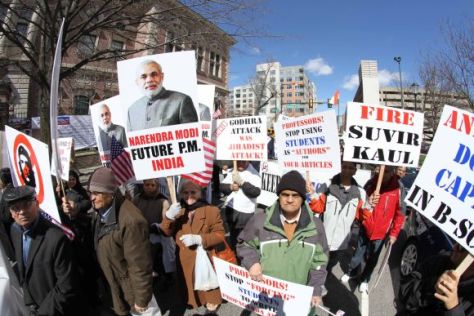
Statement from Melbourne Academics in Solidarity with Ania Loomba, Suvir Kaul, Toorjo Ghosh and others at the University of Pennsylvania.

24wharton1

The statement follows the brief background to the issue below:

Ashley L Cohen in The Daily Pennsylvanian

In the pages of The Daily Pennsylvanian and elsewhere, supporters of Narendra Modi have framed the issue of Modi’s disinvitation from the Wharton India Economic Forum as one of free speech. The framing is a clever one. Narendra Modi is a rather unsavory figure, and he is difficult to defend on any other terms. Continue reading Melbourne Academics in Solidarity with UPenn Professors

Margaret Thatcher – RIP

524356_379428788839386_1501923291_n

Image from Hope for Africa

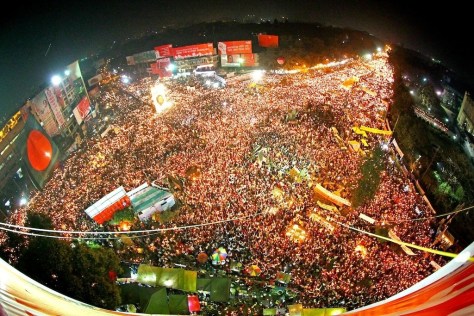
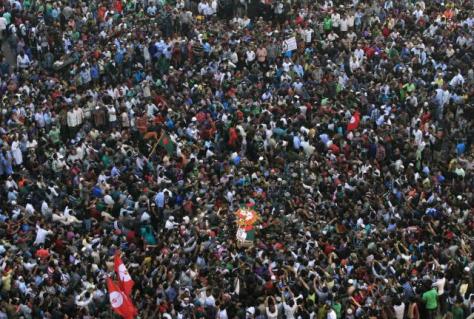
Gonojagoron march in Dhaka April 6, 2013

Images courtesy KALYANI MENON-SEN

1365252284-hefajat-program-attack-revealed-at-press-conference_1935474


1365426178-strike-in-dhaka-called-by-hefajateislam_1941888

What a time to be in Dhaka! Kalyani Menon-Sen

This is a guest post by KALYANI MENON-SEN

I am in Dhaka right now.

Being here at this moment, in Shahbagh (Projonmo Chottor, as it is now called) and on the streets with activists from the Gonojagoron Mancha – young people, academics, veterans of the liberation movement, singers, artists, writers, professionals and thousands of ordinary people – is a unique and inspiring experience.

Battle for the soul of Bangladesh – Rally in February against the killing of Rajab Haider, the blogger who was a key figure in the protests against Islamists

The similarities and differences with the Delhi mobilisation are striking. Continue reading What a time to be in Dhaka! Kalyani Menon-Sen

Children of Kollegal: Blassy Boben

This is a guest post by BLASSY BOBEN

Loud voices singing the alphabet ring clear through the otherwise silent morning at Ardhanaripura. Bright eyed children assemble themselves in the school’s only classroom, chattering excitedly while waiting for their teacher to arrive. The school compound is alive with the laughter of the children. The only other sound in the village is that of the wind blowing through the locked, empty houses.

1298953987071-government school kids

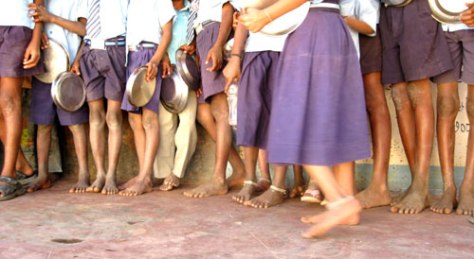
Children at a school in another village of Kollegal district lining up for the midday meal (Image by  Junaid A Tagala)

As is the case in most villages in the taluk, the only residents of Ardhanaripura in Kollegal district of Karnataka are the aged and the very young, as all able bodied persons go out of the villages in search of work. Continue reading Children of Kollegal: Blassy Boben

Nuclear Energy – Reassurances Don’t Guarantee Safety: M V Ramana

This is a guest post by M V RAMANA 

On 23 March 2013, NDTV featured one of its Walk the Talk features with Shekhar Gupta interviewing Yukiya Amano, the Director General of the International Atomic Energy Agency (IAEA). This was reproduced a few days later in the Indian Express. Coming shortly after the second anniversary of the multiple accidents at Fukushima, the purpose of the interview is made clear by Gupta late in the interview when he says:

…some of us who support the idea of [expanding] nuclear power [in India] need more reassurance from people like you.

And Amano does oblige by asserting,

with more caution, with further measures, I am very confident that nuclear power is much safer than before.

To those already supportive of more nuclear reactors, the interview is likely to have been successful in offering them the assurance that they need, not so much for themselves, but to silence those skeptical of the expansion. But if one reads the interview more carefully, it is clear that the assurance is not really a guarantee that no catastrophic accidents will happen. Continue reading Nuclear Energy – Reassurances Don’t Guarantee Safety: M V Ramana

Vedanta-Sterlite – Dangerous by Design: Nityanand Jayaraman

Guest Post by  NITYANAND JAYARAMAN 

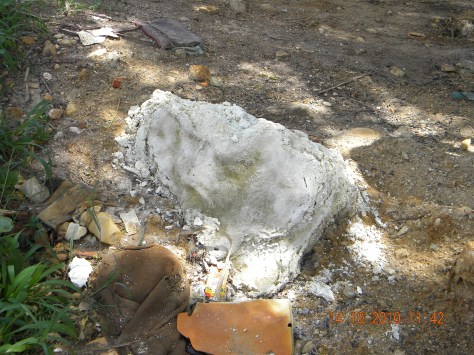
Tuticorin Oct 2010 298

A toxic hotspot in the backyard of a house in Therkuveerapandiapuram, a village adjoining the Sterlite factory.  Dangerous levels of iron and arsenic were found in the soil here. (Picture by Nityanand Jayaraman)

On 23 March, 2013, a toxic gas leak from Vedanta-subsidary Sterlite’s copper smelter in Thoothukudi spread panic and discomfort for several kilometres around the plant. The leak once again highlighted the increased potential for major catastrophes due to an atmosphere of collusion between regulators and polluters. The company, which was shut down for maintenance, resumed operations in the early hours of 23 March. Within hours, people in the nearby areas complained of suffocation and eye and nose irritation. A 35-year old Bihari contract labourer, who was working at Sterlite’s thermal power plant nearly a kilometre away, reportedly succumbed to the effects of the toxic gas. Irate residents rallied to the District Collector’s office demanding permanent closure of the offending factory. Continue reading Vedanta-Sterlite – Dangerous by Design: Nityanand Jayaraman

The Delhi University Four Year Structure – Myths and Reality

This document has been prepared by the  JOINT ACTION BODY OF DELHI UNIVERSITY.

Myth 1

The four-year system is a measure of reform that is necessitated by the state of higher education in India today.

Reality

There is no clarity in the objective of why Delhi University is moving to a four-year undergraduate system. Is it to introduce more value based courses, or is to elevate the university to “global standards”? Unless the issue is understood, debated and discussed publicly and democratically, reforms will be ill-conceived and not in general public interest as the following sections will show. Continue reading The Delhi University Four Year Structure – Myths and Reality

“Politics Pulls at Me” – The Palestinian Youth Movement: Sunaina Maira

bab-al-shams

The establishment of Bab Al Shams, a direct action against Israel’s settlement enterprise. (Photo credit: Issam Rimawi / APA images)

SUNAINA MAIRA writes in muftah.org 

The eruption of resistance villages is an extension of popular struggles in which young Palestinians have been actively involved since March 15, 2011. During Palestine’s so-called Arab Spring, a series of protests organized by youth erupted in Ramallah and in other sites across the West Bank, as well as in Gaza and within the 1948 borders of Israel among the “’48 Palestinians.”

Inspired partly by the Arab revolutions and in solidarity with the Palestinian prisoners, this new “youth movement” is but one phase in ongoing resistance against Israeli occupation, colonialism, and apartheid. Nevertheless, as the second anniversary of the Palestinian youth movement approaches, it is important to reflect on a phenomenon that largely remains in the shadows of much more dramatic revolts in North Africa, and the more difficult struggle, in a sense, that Palestinian activists have been waging for democracy as well as national liberation.

Read the full article

Responding to a debate on the Kudankulam struggle against nuclear energy

Taking the debate on nuclear energy forward (after the wonderful review of MV Ramana’s book by Nityanand Jayaraman), here’s an exchange between Rahul Siddharthan and Madhumita Dutta in The Hindu in September 2012, Siddharthan advocating nuclear power, Dutta pointing to its utter indefensibility.

nuke-protest_350_091412024253

Jal satyagraha at Kudankulam in September 2012

Dutta says, in her response to Siddharthans initial article:

In the case of Kudankulam, the fisherfolk have been…asking to see the disaster management plan which, till date, remains a secret, even under the Right to Information Act. Given the inherent uncertainties of natural disasters, questions about preparedness to mitigate impact of calamities such as tsunami waves of higher magnitude are being asked. Continue reading Responding to a debate on the Kudankulam struggle against nuclear energy

Understanding the Empty Promises of Nuclear Energy: Nityanand Jayaraman

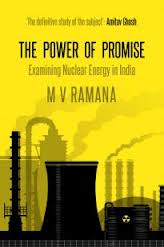
This is a review by NITYANAND JAYARAMAN of M.V. Ramana’s book The Power of Promise: Examining Nuclear Energy in India (Penguin/Viking).

Narayanasamy’s monthly promises of power from the Koodankulam nuclear plant may be something of a joke in Tamil Nadu. But the periodic promises served a function. They kept one section of Tamil Nadu hopeful that commissioning Koodankulam will solve the state’s power crisis, and therefore resentful of the agitators who were seen to be putting their own lives, livelihoods and safety over the needs of the state.

In late 2012  Penguin published the first solo book by Princeton University-based physicist M.V. Ramana. The book is titled The Power of Promise: Examining Nuclear Energy in India.

downloadRamana’s commentary is witty, articulate and rich with anecdotes. He makes a solid case for his central thesis – that delivering on the promises of power or security were never the actual goal of India’s nuclear program, and probably never will be. Rather, promises are the engines that power the program, he argues. By holding out the twin ideals of unlimited electricity and infallible security in the form of a credible nuclear deterrent, India’s nuclear establishment has carved for itself an enviable position. It is answerable to no one but the Prime Minister, and can spend billions over decades with nothing to show for the expense.

Continue reading Understanding the Empty Promises of Nuclear Energy: Nityanand Jayaraman

Women – rights-bearers, economic assets, or stranded starfish? Uma Narayan

This is a review by UMA NARAYAN of the book Half the sky: Turning Oppression into Opportunity for Women Worldwide by Nicholas D. Kristof and Shirley WuDunn (2010). This review was first published in Perspectives on Politics, Vol. 8, No. 1, March 2010.

Why are we republishing a three year old review? The book has since then become a “movement” with celebrity advocates and a Facebook game that was launched this year. While being widely celebrated across the media in the US, it is also being sharply attacked for its “your women are oppressed, but ours are awesome” rhetoric. 

8065751089_c4fd818f4e

Asks Sayantani Dasgupta in her blog post from which the image above is taken:

For example, would Kristof, a middle-aged male reporter, so blithely ask a 14-year-old U.S. rape survivor to describe her experiences in front of cameras, her family, and other onlookers? Continue reading Women – rights-bearers, economic assets, or stranded starfish? Uma Narayan

Myths and Facts About the Criminal Law (Amendment) Bill, 2013

This document has been put together by the group pursuing advocacy related to CLRB 2013, in Delhi. It addresses several myths about the new Criminal Law Amendment Bill that are circulating in the media. The note also explains the one change feminists  continue to push for and did not get – to make the victim of rape a person, that is to say, gender neutral. The new law must be expanded to protect all persons, and not be limited to women – because all persons/ anyone can be raped.

The Justice Verma Committee (JVC) report was a landmark statement, applauded by all citizens, welcomed by all Political Parties. JVC was significant because it showed a mirror to the Constitution of India, and reflected its wise and just guarantees of women’s equality. Today the women and youth of India are looking with hope and expectation towards Parliament, and towards all Political Parties. We urge all Members of Parliament to pass a law upholding the spirit and letter of the Justice Verma Committee; to pass a law that makes a step forward in our collective struggle to end sexual violence in India.

Myth 1: The Criminal Law (Amendment) Bill 2013 is against men

Fact: The new anti-sexual violence Bill is NOT against men. For our fathers, brothers, husbands, partners, neighbours and colleagues are men too. Are these Men in our lives not committed to seeking an end to the constant threat of sexual violence lurking around every corner? Continue reading Myths and Facts About the Criminal Law (Amendment) Bill, 2013

Why was Ram Singh killed in Tihar jail?

The chief accused in the Delhi gang rape “found dead” in his cell? Killed with his own shirt? Hanging from a grill, with his three cell mates sound asleep all the while? The moment I heard the news  on Monday, every conspiracy theory-oriented cell in my body did a quick cartwheel. Promptly I sent out a mail to the sisterhood on the Feminists India e-list:

I’m wondering whether there is something more than police negligence involved here. I have always felt that the role of the police on that night was more than simply their usual laparwahi – that bus may have been used often in the past for such activities, remember they didn’t follow up the complaint of the man who had been earlier that night robbed by the same guys? And how they located the bus from their hafta diaries? I’m wondering – and going to sound paranoid and like a loony conspiracy theorist – whether the key accused in court would have revealed more about police complicity in rapes and other activities on buses like Yadav’s than we imagine. Prisoners in jail often carry out attacks on other prisoners on the orders of the police themselves.

Yes, Indian prisons are violent and brutal, and the police callous and vicious. Yes, there should be an enquiry to assign responsibility. But I’m pretty certain I know who killed Ram Singh – some other prisoners. And I think that they did it on orders from the police. Continue reading Why was Ram Singh killed in Tihar jail?

The Irony of Iconhood – The life and times of Bhanwari Devi: Laxmi Murthy

08MN_DEVI_1389073f

Bhanwari Devi (right) with her daughter Rameshwari, in Mangalore 

This is a guest post by LAXMI MURTHY: “Only justice can fill my belly, not awards,” says Bhanwari Devi in response to a question from the audience about whether or not she had been recognised by international awards. She was speaking at a meeting organised by the Alternative Law Forum, Bangalore. The previous day, along with other leaders, Bhanwari had roused a massive rally in Mangalore with her fiery calls for solidarity and action against violence against women. The Mangalore March 8th program itself was phenomenal, from all accounts The unprecedented coalition of women’s and progressive groups (almost a hundred groups) to raise a voice against the saffronization of Karnataka’s coastal belt and increasing attacks on women, has been the outcome of dedicated work by the Forum Against Atrocities on Women (the Mahila Dourjnya Virodi Vedike, Karnataka). With delicious irony, Bhanwari, Urmila Pawar and other invited activists were accommodated at “Morning Mist’, the homestay that was ransacked by right-wing goons who broke up a private celebration there last June. That none of the events, which saw the mobilization of more than 5000 women, made it to even the Bangalore editions of the dailies (can’t even dream of the national media bothering!) is a matter of dismay, but won’t go into that right now. Continue reading The Irony of Iconhood – The life and times of Bhanwari Devi: Laxmi Murthy

The Mind And Heart Of Lotika Sarkar, Legal Radical, Friend, Feminist: Usha Ramanathan

LOTIKA-SARKARUSHA RAMANATHAN via Women’s Feature Service: We have to marvel at how the world has changed since r*** was a four letter word, and young Lotika Sarkar (1923-2013), the first woman lecturer in the Faculty of Law, University of Delhi, shocked the department by teaching rape to her students.

This is what happens when you let women into hallowed institutions of learning:  They don’t understand that, even when they are allowed to be seen, they may not be heard about the obscene. This was our LS-given, early version of the Vagina Monologues, without the theatre. Shift to the present: I suspect some will tell us that the battle to take rape to the classroom is far from over; except, thanks to LS, it is prudery that is on the back foot now. Continue reading The Mind And Heart Of Lotika Sarkar, Legal Radical, Friend, Feminist: Usha Ramanathan