All posts by Shivam Vij

Shivam Vij is a writer and journalist based in New Delhi.

Statement Condemning the Repression of the POSCO Pratirodh Sangram Samiti

This statement, signed by many individuals and organisations, was released on 29 November by the CAMPAIGN FOR SURVIVAL AND DIGNITY

CONDEMN THE REPRESSION ON POSCO PRATIRODH SANGRAM SAMITI AND THE LIKELY IMMINENT ATTACK ON THE PEACEFUL PROTESTERS OF THE AREA

The undersigned condemn the growing brutality of the state repression being unleashed against the peaceful, democratic protesters of the POSCO project area, who are only fighting for their legal and fundamental rights.  This repression has reached a peak with the arrest yesterday (Friday) of POSCO Pratirodh Sangram Samiti leader Abhay Sahoo.  The government’s constant announcements of its intention to start construction in the area lead us to apprehend that there will be more violence and brutality against the movement. Continue reading Statement Condemning the Repression of the POSCO Pratirodh Sangram Samiti
Pundit Manto’s First Letter to Pundit Nehru

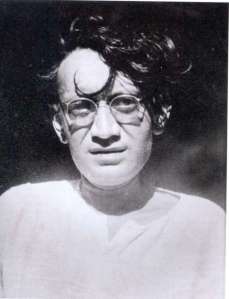
This is M. ASADUDDIN‘s translation of a letter written by SA’ADAT HASAN MANTO to Jawaharlal Nehru in 1954. This translation first appeared in The Annual of Urdu Studies (volume 11, 1996).

Pundit-ji, assalamu alaikum!

This is the first letter I’m sending you. By the grace of God you’re considered very handsome by the Americans. Well, my features are not exactly bad either. If I go to America, perhaps I’ll be accorded the same status. But you’re the Prime Minister of India, and I’m the famed story writer of Pakistan. Quite a deep gulf separating us! However, what is common between us is that we are both Kashmiris. You’re a Nehru, I’m a Manto. To be a Kashmiri is to be handsome, and to be handsome … I don’t know. Continue reading Pundit Manto’s First Letter to Pundit Nehru

Everything you wanted to know about Suhel Seth but didn’t know who to ask

Suhel Seth, adman, actor, lobbyist, news TV pundit and god knows what else (the Facebook page for his book describes him as that know-all of our age, “marketing guru”), has published a self-help book that Mihir Sharma set out to review for The Caravan magazine. It is not Mr Sharma’s fault that this review became a profile of Seth, because he found that in the garb of a self-help book Seth had written an autobiography!

Mr Sharma notes:

Seth says his most important rule is: “Don’t make clients out of friends. But make friends out of clients.” Yet Suhel is friends with “almost everyone there is to know in the country”, or so the book’s jacket informs us. This may finally provide the explanation for why Get to the Top exists: he’s made friends at such a phenomenal rate that he must be running out of clients. [Must read – the full review.] Continue reading Everything you wanted to know about Suhel Seth but didn’t know who to ask

Apples and Oranges in Egypt’s Historic Election: Alia Allana

This guest post by ALIA ALLANA, a despatch for Kafila from Cairo, is the eleventh in a series of ground reports from the Arab Spring. Photos by Alia Allana

This slideshow requires JavaScript.

“Votes and rocks: just two ways to get heard,” said Salma.

Continue reading Apples and Oranges in Egypt’s Historic Election: Alia Allana

A case for remission of punishment for Dr Khaleel Chishty under Article 161 of the Constitution of India: Kavita Srivastava

Guest post by KAVITA SRIVASTAVA

Pardon and or Remission of Punishment for Pakistani prisoner Dr. Khaleel Chishty under Article 161 of the Constitution of India by the Governor of Rajasthan

Continue reading A case for remission of punishment for Dr Khaleel Chishty under Article 161 of the Constitution of India: Kavita Srivastava

An open letter from a photojournalist assaulted by Indian security forces in Kashmir: Yawar Kabli

Guest post by YAWAR KABLI

AP photo by Yasin Dar: Local Kashmiri photographers Yawar Nazir, left, and Showket Shafi wait for treatment after they said they were assaulted by police and paramilitary forces during a protest in Srinagar, India, on Nov. 25. At least four journalists said they were assaulted by police and paramilitary forces Friday as they covered a protest in Indian-controlled Kashmir.

All freedoms enshrined in the Constitution of India are being violated or altogether thrown away by the Jammu and Kashmir Police. One could substantiate that with any number of examples. We were not the first pressmen to be thrashed by the police while covering the stone-hurling protests in the Kashmir. On Friday, 25 November 2011, without any rhyme or reason policemen along with the Central Reserve Police Force (CRPF) thrashed four of us, including me, and snatched away our expensive cameras. They did not even hesitate to bundle us into police vehicles while taking us to the Khanyar police station.

Continue reading An open letter from a photojournalist assaulted by Indian security forces in Kashmir: Yawar Kabli

‘Did the generals think we were fools?’ Alia Allana reports from Cairo

This guest post by ALIA ALLANA, a despatch for Kafila from Cairo, is the tenth in a series of ground reports from the Arab Spring. Photos by Alia Allana

A week into protesting, the revolution became about preservation lest someone forgets.

Mohammed Mahmoud Street, the sight of intense fighting was officially off-limits for protestors. A concrete wall separated the protestors and police. Atop the wall army soldiers kept guard. The aim was simple: to keep protestors from barging past and facing-off with the authorities, like they had done for the past few days. But sometime in the night, a maverick with a graffiti can had his way and the beige concrete wall now read, “Change is coming soon.”  Continue reading ‘Did the generals think we were fools?’ Alia Allana reports from Cairo

Uthao, uthao video ab, won’t you make the video now?

This photograph shows photojournalist Shahid Tantray being assaulted by the Central Reserve Police Force in Srinagar on 25 November 2011

No tears will be shed for press freedom for attacks on journalists in Srinagar by the Central Reserve Police Force and the Jammu and Kashmir Police. Fahad Shah reports what happened in Srinagar yesterday:

Journalists were beaten up and one of them detained, today, when they were covering the post-Friday prayers protests in the Old City, here at Srinagar. Umar Mehraj, who works as video journalist for Associated Press says he, along with other journalists, was covering protests when Central Reserve Police Force (CRPF) and local policemen start beating. He said while beating, the forces were shouting, “Uthao, uthao video ab (Shoot, shoot the video now.).” Umar says his camera was broken and they were abused too.

Continue reading Uthao, uthao video ab, won’t you make the video now?

Shame on G.K. Pillai: Women demand an apology for his sexist comments

Released by JAMIA TEACHERS’ SOLIDARITY ASSOCIATION

24 November 2011

Stung by the SIT report which concluded that Ishrat Jahan was executed in cold blood, former Union Home Secretary G.K. Pillai—hard-pressed to defend his affidavit to the Supreme Court that Ishrat was a Lashkar operative—has stooped to now slandering the girl’s personal life suggesting that her checking into different hotels with “another man” was definitely suspicious. Perhaps, Mr. Pillai wishes us to believe that all those young women who travel and work independently are ‘suspicious’ and could have terrorist links. Continue reading Shame on G.K. Pillai: Women demand an apology for his sexist comments

Egypt, Revolution 2.0: Alia Allana reports from Tahrir Square

This guest post by ALIA ALLANA is a despatch from Cairo for Kafila, the ninth in a series of ground reports from the Arab Spring. Photographs by Alia Allana

This slideshow requires JavaScript.

The police lobbed another tear gas canister and soon the feeling of suffocation would take over. But he didn’t move, instead he stood in the center; he continued to wave the Egyptian flag. The sound of rubber bullets being fired drowned under the sound of the drum. The drum was the harbinger of doom: when it was sounded by protestors, when the cacophony cut through the air, the message was simple – run, run as fast as you can because the police would begin their attack, again.

Continue reading Egypt, Revolution 2.0: Alia Allana reports from Tahrir Square

Arrested Development – a comparative study of Delhi’s schools and prisons: Sajan Venniyoor

Guest post by SAJAN VENNIYOOR

“Schools are prisons,” sang the Sex Pistols. “Another brick in the wall,” raged Pink Floyd, “Teacher, leave them kids alone!” Schools and prisons have been so frequently equated in the popular imagination that it has become a cliché almost never held up to scrutiny. But even a cursory study of Delhi’s schools and prisons belies the comparison.

Sure, Delhi’s schools and prisons are both dreadfully overcrowded. Delhi’s jails, built for 6250 prisoners, house 10500 on an average.  We cannot say with any statistical certainly just how overcrowded our schools are, as the Dept. of Education has no idea how many schools it runs or the actual number of teachers and students therein.

But in almost every major indicator of human development, the penal system far outperforms the public school system in Delhi. Continue reading Arrested Development – a comparative study of Delhi’s schools and prisons: Sajan Venniyoor

JTSA welcomes the SIT report on Ishrat Jahan, demands free and fair probe into Batla House ‘Encounter’

This release comes from the JAMIA TEACHERS’ SOLIDARITY ASSOCIATION

21 November 2011 

JTSA welcomes the SIT report which has concluded that the teenaged college girl Ishrat Jahan and her three companions were killed in cold blood—and were not terrorists on way to kill Narendra Modi. This has reinforced the findings of the Tamang Enquiry Report which had drawn similar conclusions in 2009, and which the Gujarat government had tried to suppress and discredit.  The SIT report has given credence to the allegation of civil rights activists that the officers in Gujarat police had executed several people through the last decade in collusion with the highest political authority in the state. The police officers gained medals and promotions and Modi built his image as the Hindutva hero by highlighting the alleged assassination attempts on him. Continue reading JTSA welcomes the SIT report on Ishrat Jahan, demands free and fair probe into Batla House ‘Encounter’

Dilli

Dilli, the name most people of Delhi use for their city, is “a multiple-award winning documentary that has played in over 50 international film festivals across North America, South America, Africa, Europe and Asia”. Recently released online.

Continue reading Dilli

An account of deadly clashes in Tahrir Square: Alia Allana

This guest post by ALIA ALLANA is a despatch for Kafila from Cairo, the eighth in a series of ground reports from the Arab Spring. Videos and photos by Alia Allana

This slideshow requires JavaScript.

A peaceful protest with men selling candyfloss and making chai turned into an orgy of violence.

Tahrir Square had been quiet for the earlier part of the day today. The Sunday afternoon saw couples strolling, a mother carried her sleeping child, his face was buried in her bosom, scooters with loud speakers blared music.  There was no chanting and very few slogans. Small and sporadic groups of people protested. They called for change.

Continue reading An account of deadly clashes in Tahrir Square: Alia Allana

Trading with the Enemy: Raza Rumi

Guest post by RAZA RUMI

Reports suggest that Pakistan has decided, in principle, to grant the Most Favoured Nation (MFN) status to India. Much progress has taken place since the earlier announcement and several parleys between the officials suggest that trade relations may finally ‘normalise’. India already conferred MFN status to Pakistan in 1996. India and Pakistan have no formal trade agreement. Until now Pakistan maintained a Positive List of importable items from India consisting of 1075 items.

Most Favoured Nation: Under the WTO agreements, countries cannot normally discriminate between their trading partners. Grant someone a special favour (such as a lower customs duty rate for one of their products) and you have to do the same for all other WTO members. This principle is known as most-favoured-nation (MFN) treatment. It is so important that it is the first article of the General Agreement on Tariffs and Trade (GATT), which governs trade in goods. MFN is also a priority in the General Agreement on Trade in Services (GATS). Continue reading Trading with the Enemy: Raza Rumi

A few questions about a few thousand new auto-rickshaws in Delhi: Simon Harding

Guest post by SIMON HARDING

On Friday, Supreme Court judges KS Radhakrishnan and CK Prasad gave the go-ahead for 45,000 new auto rickshaw permits to be issued in Delhi. The move has the potential to drastically improve the city’s auto-rickshaw service for passengers and drivers alike, but many unanswered questions about distribution, implementation and numbers remain.

There are currently around 55,000 auto-rickshaws in the capital. The number of autos has not grown since the Supreme Court stopped the issuing of new auto permits in 1997 due to concern about the pollution emitted from the old dirty two-stroke petrol engines (now replaced with CNG).

The number has not remained frozen. Evidence suggests that it has actually fallen since 1997 because around 20,000 autos were lost during the CNG switchover as many drivers had their permits cancelled as they were too slow to convert their autos to the new fuel or simply could not afford the conversion. The fall in numbers contrasts with the growing demand for autos from Delhi’s population, which grew 21.6% in the period 2001-2011.

Continue reading A few questions about a few thousand new auto-rickshaws in Delhi: Simon Harding

In The Indian Express, a statistical Nehru-Gandhi oddity

Over at the Indian media blog Sans Serif, Pritam Sengupta counts the number of advertisements by the Government of India on the holy occassion of the late Prime Minister Indira Gandhi’s birth anniversary, and discovers a statistical oddity:
While it is natural that ToI and HT should garner so many ads given their large circulations in the national capital, the second place for the Express group is revealing considering it sells less than five per cent of market-leaders ToI and HT in the Delhi market, which both sell in excess of 5 lakh copies.

The tabloid Mail Today, which has the third highest circulation among the Delhi newspapers, too gets fewer ads than the Indian Express. [Read the full post]

Justice for Valsa John of Jharkhand, latest victim of the mining mafia

This press release was put out on 18 November 2011 by the NATIONAL ALLIANCE FOR PEOPLE’S MOVEMENTS (NAPM), the NATIONAL FISHWORKERS’ FORUM (NFF) and the NATIONAL FORUM OF FOREST PEOPLE AND FOREST WORKERS (NFFPFW)

Sr. Valsa, an activist of the Rajmahal Pahad Bachao Andolan (RPBA) and an ordained nun with the Sisters of Charity of Jesus & Mary, who had been working among Santhal Adivasis in the coal rich region of Dhumka, Jharkhand was brutally murdered by a group of about 40 armed men on the night of 15 November 2011. On behalf of Indian peoples’ movements and resistance struggles, NAPM, NFF and NFFPFW condemn this heinous and cowardly act, evidently conceived by the powerful mining mafia, aimed at essentially hunting down individuals and movements to silence the voices of resistance by people.  Continue reading Justice for Valsa John of Jharkhand, latest victim of the mining mafia

Dr Khaleel Chishty’s family in Ajmer to appeal for his release: Kavita Srivastava

This press release comes from KAVITA SRIVASTAVA of the People’s Union for Civil Liberties. It was released after a press conference in Ajmer on Friday, 18 November 2011

  • Family appeals to Governor Shivraj Patil to sign the mercy petition of Dr. Khalil Chishty pardoning him at the earliest
  • Government of Rajasthan grants perrmission to the family to meet Dr. Chishty in Jail

In Search of Ram and Kabir

You may have seen this documentary film before. If you have, you will, I’m sure, want to see it again. It is not about Ram or Kabir. It is about you and me.

Had Anhad is a documentary film, part of the Kabir Project, released in 2008.

A film by Shabnam Virmani
Language: Hindi & Urdu with English Subtitles
Duration: 103 min

Kabir was a 15th century mystic poet of north India who defied the boundaries between Hindu and Muslim. He had a Muslim name and upbringing, but his poetry repeatedly invokes the widely revered Hindu name for God – Ram. Who is Kabir’s Ram? This film journeys through song and poem into the politics of religion, and finds a myriad answers on both sides of the hostile border between India and Pakistan.

Watch it on Culture Unplugged.

Sexting no more: Pakistan’s hilarious list of 1,795 expletives to be banned on SMS

Whoever made the English and Urdu lists deserves an award, though I did find some Pakistanis who knew expletives that were not on the lists.

Thanks to this helpful compendium many Pakistanis are finding their expletive vocabulary enhanced. @UroojZia asked what “BUMBLEFUCK” and “LADYBOOG” meant. @Zakoota said the lists should be required reading in schools to give children the vocabulary to describe politicians and cricketers. With the amount of phrases that include the word “BUTT”, @KhaLeak wondered if Aijaz Butt was banned as well. [My story for FirstPost.com]