Category Archives: Bad ideas

Disability Law Violations in Delhi University admissions – notes from the margins: Rijul Kochhar

Guest post by RIJUL KOCHHAR

Contrary to what they may tell you, they don’t really give a damn about the disabled in this country. Systemically flouted laws, polite terms substituted for impolite realities, and stony silences meted to those who seek to question—these comprise the working of the disability model in this nation, a model that only goes so far as the abundance of obligation and ‘feel-good’ eye-wash will take it. The juggling of words—‘disabled’ for handicapped, then annihilation of ‘crippled’, and finally that awful phrase regnant in contemporary fashionable use, ‘differently/specially-abled’—constitutes our single biggest achievement as far as dealing with the disabled as rights-bearing persons is concerned. Continue reading Disability Law Violations in Delhi University admissions – notes from the margins: Rijul Kochhar

Trials, errors and the art of compromise

This morning The Hindu carries a long piece I wrote on one of Jaipur’s more sensational trials. The idea of “samjhauta” or “compromise” has informed a lot of my work over years, and this instance is particularly heart breaking. Court documents and chargesheets are always interesting things to read; in this instance, it was intriguing how the police accorded one woman – Pushpa – infinite agency when she creates a cycle of repression and exploitation; while the other – Shweta – has zero agency and is thoroughly incapable of independent action.

One dawn in January last year, a young woman slipped out of her house, walked down to the Gandhi Nagar station and stepped into the path of an oncoming train.

She survived, but lost her left leg and all sensation below her waist. Last Wednesday, the woman, Pushpa*, was brought before the Special Judge for Women Atrocities and Dowry Cases to identify the three policemen who, she alleged, had sexually tortured her to the point of suicide. Also in court was Shweta*, a 20-year-old known to Pushpa, who claimed that Pushpa and her cohorts had drugged, raped and blackmailed her in December 2010.

The two women had been friends, meeting occasionally in Pushpa’s room to gossip, experiment with cigarettes and alcohol and on one occasion photographed themselves kissing. In many ways, their twin trials document the contradictory impulses of the small Indian town grown big, where tech-savvy youth shun the contractual new economy for the security of the bureaucracy, the government school, and the government bank, and the sheher’s liberatory promise is tempered by the lingering claustrophobia of the samaj.

Read on

Oppressing the teacher, democratic style

( In 2006 the Parliament had debated and lambasted  Hindi NCERT textbooks prepared as part of the NCF, 2005 process . Our Parliamentarians were then offended  by Premchand, Pandey Bechan Sharma Urg, Dhoomil, M. F. Husein,  Avtar Singh Pash and Omprakash Valmiki. The argument of hurt sentiments had united political parties from left to right to demand action against  the culprits. In the eyes of MPs like Sushma swaraj , Ravi Shankar Prasad and Sita Ram Yechury ,  Hindi textbooks  were full of offensive and abusive words and descriptions which could hurt Brahmin, Women , Dalit and Hindu sensibilities. They were also very concerned about the the effect that these books were to leave on the impressionable minds of our children. The extra-ordinary unity seen this time in the Parliament in   the case of  the  ‘offending’ Political science texts books is not unprecedented. What we need to ask is that why did we not react to This debate and assault on Hindi textbooks then.

Back then I had published this open letter to our MPs in Tehelka. I am re-posting it here to bring historical context to the ongoing debate on an NCERT political science textbook.)

In an open letter, Apoorvanand asks members of Parliament to stop politicising education

Do we really need to legislate on how languages should be used by our writers? Should the State be given authority to issue licenses to our poets? Continue reading Oppressing the teacher, democratic style

Net Loss: Sajan Venniyoor

Guest post by SAJAN VENNIYOOR

Image via dailygalaxy.com

Net: noun, verb.

1. a contrivance of strong thread or cord worked into an open, meshed fabric, for catching fish, birds, or  other animals
2. anything serving to catch or ensnare

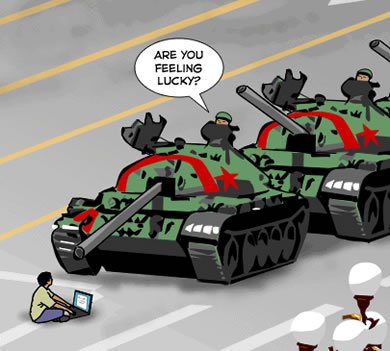
The other day, in a Parliamentary debate on Internet Rules 2011, the leader of the Opposition in the Rajya Sabha said something so absurd that for a moment I thought he had joined the government. “You can control print and electronic media, but not internet,” he said, only removing his foot from his mouth to add, “If internet had been in existence, Emergency would have been a fiasco.”

Actually, if the Emergency had been in existence, the Internet would have been a fiasco. Continue reading Net Loss: Sajan Venniyoor

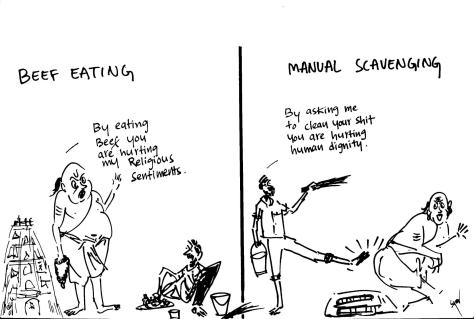
I have a beef with you: Unnamati Syama Sundar

This guest post by UNNAMATI SYAMA SUNDAR is a cartoon

From Kafila archives:


Jaya Hey to Jai Ho to Jayate: Sumana Roy

Guest post by SUMANA ROY

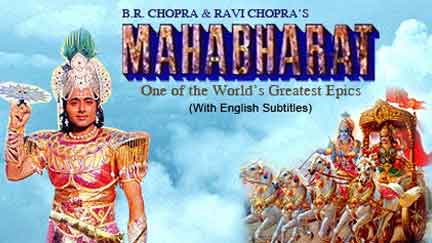
I watch Satyamev Jayate on Doordarshan. The word ‘National’ below the Doordarshan logo seems rather appropriate for Aamir Khan’s show about issues of mass frustration. In one of the many interviews that prefaced the airing of his show, the kind of airgun shooting that now heralds any and every kind of release – films, books, television shows, automobiles, increasingly, even babies – Aamir Khan said that he argued with channel producers who wanted to give it a prime-time slot: ‘I wanted to telecast my show on Sunday morning. I want each family to watch the show and connect with it. We have watched Ramayana and Mahabharata and it used to come on Sunday morning. The shows created a different atmosphere’. Continue reading Jaya Hey to Jai Ho to Jayate: Sumana Roy

’बिगड़ैल बच्चे की खोज में’: हिमांशु पंड्या

“क्या आपको इस बात का अहसास है कि ताकाहाशी को ‘तुम्हारी पूँछ तो नहीं है?’ पूछने पर कैसा लगा होगा” बच्चे शिक्षिका का जवाब नहीं सुन पाए. उस समय तोत्तो चान यह नहीं समझ पायी कि पूंछ वाली बात से हेडमास्टर साहब इतना नाराज़ क्यों हुए होंगे क्योंकि अगर कोई उससे यह पूछता कि तोत्तो चान तुम्हारे क्या पूंछ है? तो उसे तो इस बात में मजा ही आता.
-‘तोत्तो चान’ (तेत्सुको कुरोयांगी, अनुवाद – पूर्वा याग्निक कुशवाहा)

दलित चेतना और कार्टूनों का पुनर्पाठ
इस कार्टून पर चली ऐतिहासिक बहस के बाद अब यह पक्के तौर पर कहा जा सकता है कि साहित्य से आगे अभिव्यक्ति के अन्य क्षेत्रों में भी दलित चेतना ने दस्तक दे दी है। शायद हम कल चित्रकला और बहुत आगे संगीत में भी दलित चेतना युक्त दृष्टि से इतिहास का पुनर्पाठ देखेंगे। Continue reading ’बिगड़ैल बच्चे की खोज में’: हिमांशु पंड्या

India asks Google to remove 2 items every 3 days

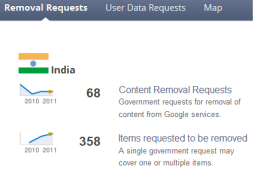
Google’s just released fourth biannual Transparency Report says that between January and June 2011, India asked it to remove 358 different items from various Google-owned web services such as Orkut and YouTube. Google complied in 51% cases. The requests were made by various central and state government departments through 68 different requests. The fourth such report, it goes against communications minister Kapil Sibal’s claims that internet companies are not willing to “self-regulate”.

Worryingly, the report also confirms the allegations that what bothers government officials the most about the internet is not defamation or hate speech but government criticism. Continue reading India asks Google to remove 2 items every 3 days

(Updated) List of websites blocked in India

Given below is a list of websites blocked in India by one or more Internet Service Providers. This list was hacked from Reliance servers by the hacker group ANONYMOUS, which claimed in a web press conference that while most of this list of 434 is blocked as a result of government or court orders, some have been blocked by Reliance on its own. The ones blocked by Reliance on its own relate to Satish Seth, a Reliance ADAG executive. Continue reading (Updated) List of websites blocked in India

Tinker, tailor, soldier, coup-maker: Jyoti Rahman

Guest post by JYOTI RAHMAN

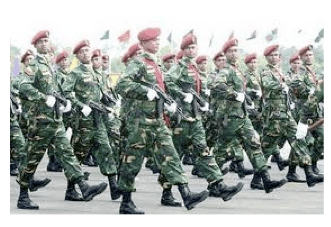
The country of Bengal is a land where, owing to the climate’s favouring the base, the dust of dissension is always rising — so said the Mughal court chronicler Abul Fazl in the 16th century. Four hundred years later, the People’s Republic of Bangladesh has been a country where the dust of dissension has repeatedly risen among the men armed to guard the republic. The allegedly thwarted coup in January is but the latest in a long list of coups / mutinies / revolutions / military interventions going all the way back to the country’s very foundation in 1971. Continue reading Tinker, tailor, soldier, coup-maker: Jyoti Rahman

How Essar, Teamwork Productions and the Chhattisgarh government changed the lives of Dantewada’s children

Any moment now I expect India’s litfest mafiosi to describe this article on the ‘Essar Kahani Utsav’ by Akshay Pathak as an ‘attack on free speech’:

Money was not the only thing coloured there. Long pieces of cloth in different colours hanging outside the venue— in classic Teamwork Productions style (the event management company organising this festival)—conjured a sense of celebration. The packaging was good. It mostly is—like that of the DSC Jaipur Literature Festival, also organised by the same company.

The mood inside, though, didn’t match. That is, if you set aside the sight of visibly uninterested festival organisers and district administrators finding ways to pat their backs. And there was certainly no festive air around the 600-odd Adivasi children who had travelled hours on foot and buses to hear stories on an empty stomach—“the district administration miscalculated the numbers”, the organisers explained to me later, and so they had run out of food for the children. [Read the full article.]


National Appeal on Koodankulam Becomes a Rallying Point for Solidarity Actions Across India

The “Urgent Appeal to the Conscience of the Nation on Koodankulam” open for signatures on DiaNuke.org was released yesterday, May 20th,  in New Delhi, Mumbai and Kolkata. Concerned people and activists are planning release events and readings of the appeal

India Gate, Delhi

in Chennai, Bangalore, Pune, Hyderabad and other cities in coming weeks. Grassroots organisations are distributing the appeal as pamphlet, translated in regional languages.

This Sunday, Vandana Shiva, renowned environmentalist and eco-feminist, released the national appeal on Koodankulam at the India Gate in New Delhi. Releasing the appeal, she expressed her anguish on the undermining of democracy by the Indian government in its pursuit of nuclear energy. Inviting NIMHANS doctors to ‘treat’ the mindset opposing nuclear energy projects is reflective of the nuclear-obsessed government’s contempt for its own people and their concerns, she said. Continue reading National Appeal on Koodankulam Becomes a Rallying Point for Solidarity Actions Across India

पाठ्यपुस्तक का संघर्ष 

संसद राजनीति और लोकतंत्र पर स्कूली किताबों में कार्टून नहीं चाहती हैइस मसले को लेकर संसद के दोनों ही सदनों में सारे राजनीतिक दलों में अभूतपूर्व मतैक्य देखा  गयाएक राजनीतिक  दलजिसका नाम नेशनल कान्फरेंस हैइस दमनकारी बहुमत से अलग स्वर में बोलने की कोशिश करता रह गयाउसे क्रूर बहुमत ने बोलने नहीं दियाआखिर वह एक बहुत छोटे से इलाके का थामुख्य भूमि में बन रही सहमति में विसंवादी स्वर पैदा करने की अनुमति उसे दी ही कैसे जा सकती थीउसे उसकी लघुता के तर्क से नगण्य माना जा सकता थायह स्वर कश्मीर  से आ रहा था जिसे भारत का अंग बनाए रखने के लिए देश के क्रूरतम क़ानून की मदद लेनी पड़ती है.

 यह विवरण यहाँ अप्रासंगिक लग सकता है.लेकिन मुझे इसमें एक तरह की प्रतीकात्मक संगति दिखलाई पड़ती हैवह संगति  असहिष्णुताजन्य  अधैर्य  के तत्व से निर्मित होती है जो हमारे सामाजिक और सांस्कृतिक जीवन को परिभाषित करता है और इसीलिए सरलीकरण की पद्धति उसके चिंतन की दिशा तय करती है. Continue reading पाठ्यपुस्तक का संघर्ष 

Meet Ashok Kumar the John Doe of India; or The Pirate Autobiography of an Unknown Indian

The internet has been abuzz with  news of all the major ISPs in India blocking popular websites including piratebay, vimeo, dailymotion and pastebin etc. This is pursuant to a Chennai high court order available here and there are a number of unanswered questions about the validity of the blocking of the websites including whether the DOT were entitled to ask for a blocking of the site on the basis of the orders, how the ISPs chose these particular websites since the order itself does not mention any particular website. This is not to mention the larger question of how the last ten years has seen the dubious rise of John Doe orders as preemptive measure against copyright infringement.

For those unfamiliar with John Doe orders, they are ex parte injunctions ordered against unknown persons. Just to put this in context, ex parte injunctions are not the easiest things to obtain since they are based on the denial of  another person’s right to be heard. So even for cases of violence against women getting an ex parte restraining order is not easy. In contrast the last ten years we have seen the ease with which one can obtain these orders for copyright infringement cases. Continue reading Meet Ashok Kumar the John Doe of India; or The Pirate Autobiography of an Unknown Indian

[UPDATED] Urgent Appeal to the Conscience of Nation on Koodankulam

Statement issued from the struggle against the Koodankulam nuclear power plant.

This statement is a reflection of our collective frustration and instead of being sent to the Government, it will be presented before people of India on May 20th (6 pm) at the India Gate, New Delhi.

It is already endorsed by prominent figures like Prashant Bhushan, Vandana Shiva, Lalita Ramdas, Partha Chatterjee, Parful Bidwai, Achin Vanaik, Gnani Sankaran, John Dayal, Meher Engineer, Sandeep Pandey.

Please send the e-petition on DiaNuke.org.

Endorsements can also be directly sent to cndpindia@gmail.com

Dear Fellow Citizens of India,

On the occasion of our Parliament, the pinnacle of democratic governance, celebrating its 60th anniversary, our hard earned democracy is being ruthlessly repressed and violently suppressed. Within the accelerated race towards ‘destructive development’ and the generation of nuclear power to fuel such ‘development,’ entirely peaceful mass protests voicing people’s legitimate dissent are brutally put down. The common man, woman and child are unheard. In utter desperation, people at large are surrendering their ‘Voter ID cards,’ the ultimate symbol of ‘people’s power,’ which is the essence of any genuine democracy. Can there be a more ominous way to dissent?

Continue reading [UPDATED] Urgent Appeal to the Conscience of Nation on Koodankulam

When Laughter becomes a laughing matter: Statement by CSSSC Faculty Members on the Cartoon Controversy

Going by the ruckus surrounding cartoons these days, by the angry, at times violent, reactions of elected lawmakers against any kind of caricature of prominent personalities, it seems ‘laughter’ itself has become a laughing matter in contemporary India. And, this indeed is puzzling. The emerging trend of automatically equating lampooning with character assassination, of treating every expression of joviality targeting persons deputed by people to run the republic as being fundamentally slanderous and libelous, cannot but result in undermining the nation’s democratic charter.

Those who now readily question the public right to parody celebrities or icons are also guilty of forgetting that India has a long tradition of producing social and political commentaries in the form of hilarious visuals and words. The lack of sense of humour of persons at the helm of power today is so profound now that we may very soon lapse into a state of amnesia in relation to the deeply admired and dearly loved cartoonists, such as, Gaganendranath Tagore, R. K. Laxman, K. Shankara Pillai (better known as Shankar), Attupurathu Mathew Abraham (known popularly as Abu Abraham), O. V. Vijayan, Mario de Miranda (better known as Mario).

It is on behalf of the ‘little men’, from whose perspectives the celebrated cartoonists dared to make light heavy-going matters, that we condemn the somber Indian politicians’ and their lathi-wielding goons’ zeal to persecute persons committed to the cause of irony, irreverence and critical humour in public life.

Tapati Guha-Thakurta

Sibaji Bandyopadhyay                                                                     Lakshmi Subramanian

Indraneel Dasgupta                                                                        Sugata Marjit

Manabi Majumdar                                                                           Jyotsna Jalan

Dwaipayan Bhattacharyya                                                          Prachi Deshpande

PranabKumar Das                                                                           Priya Sangameswaran

Rosinka Chaudhuri                                                                        Anirban Das

Saibal Kar                                                                                           Somnath Ghosal

Bodhisattva Kar                                                                               Partha Chatterjee

Centre for Studies in Social Sciences, Calcutta (CSSSC)

May 14, 2012

Please Sir, may I take a newspaper into my class?

At last, the real anxieties lurking behind what has come to be called the “Ambedkar cartoon” controversy are out in the open. It is hideously clear by now that MPs “uniting across parties” are acting as one only to protect themselves from public scrutiny, debate and criticism. It turns out, as some of us suspected all along, that the “sentiments” that have been “hurt” this time are the easily bruised egos of our elected representatives.

(By the way, you may have noticed that “MPs unite across party lines” is not a headline you will ever see after a massacre, a natural calamity, brazen public acts of sexual violence  against women and so on.  Oh no. Such unity is reserved only for utterly self-serving and anti-democratic interpretations of  “Parliamentary privilege”).*

Artist: Abu Abraham

Declared HRD minister Kapil Sibal – “Much before the issue came to parliament, I had already taken action. I called for the NCERT text books and I looked at other cartoons. I realised that there were many other cartoons that were not in good taste and disparaging in nature. They were not sending the right message to our children in classrooms”.

Continue reading Please Sir, may I take a newspaper into my class?

Good woman=Mother/Bad woman=Sex worker/Sex worker mother =? Amrita Nandy

Guest post by AMRITA NANDY

The math of this morality can be puzzling. Why should “sex worker mother” sound like an oxymoron to so many?

It was Mother’s Day recently –  judgment time on who can be a mother, what makes a good mother. Time magazine’s provocative current cover shows a young Los Angeles mother breastfeeding her three year old son (standing on a stool to reach mommy’s breast) as the headline asks “Are you mom enough?” The accompanying article on “attachment parenting”, as put forward by “parenting expert” Bill Sears in his The Baby’s Book, encourages parents to keep their infants in constant bodily contact with the parent by wearing a baby sling, let their children wean themselves from the breast when they are ready and allow “co-sleeping” which aids a child to grow up to be well-adjusted adults.

Attachment parenting has been widely criticized for setting the bar for good parenting impossibly high, especially for parents who have to work full-time, but it is a bar quite easily reached by Radha – she is very “mom enough”.  Amidst the din of the Delhi brothel where she works, she continues to suckle her four year old daughter. But if the judges of “good mothering” were policemen in Satara, Radha would not qualify. For them, a sex worker mother is a “shame”. This is why they dared to kick Anu Mokal, a four-months pregnant sex worker, leading to bleeding and an eventual miscarriage.

Continue reading Good woman=Mother/Bad woman=Sex worker/Sex worker mother =? Amrita Nandy

“Ideal Journalists” and a Woman’s Right to Dignity: Aswathy Senan

Guest post by ASWATHY SENAN

[The astoundingly misogynist representation of Aswathy Senan’s appointment as the Liaison Officer in Calicut University by the Deshabhimani newspaper was discussed earlier on Kafila in a guest post by APARNA ESWARAN]

Just as issues of gender and ethical journalism have been raised with regard to the Deshabhimani report on 30.04.2012 by C. Prajosh Kumar, a legal and ethical concern bothers any interested reader, who is beginning to feel involved. The reporter while correcting himself as a response to my letter stated it thus: “For a post that was advertised on 21-12-11, a bio-data was sent more than a month back, and a recommendation by VC was made on it: it is this irregularity in the procedure that the report tried to bring forth. And thus, the reporter has done the duty of an ideal journalist.” Continue reading “Ideal Journalists” and a Woman’s Right to Dignity: Aswathy Senan

Facts and Fiction – Creative Journalism and Real Consequences: Aparna Eswaran

Guest post by APARNA ESWARAN

Increasingly, a section of young unmarried Malayali women are choosing to leave the comforts and shackles of their homes in Kerala, to live independently in alien cities in an unapologetic pursuit of their particular dreams. The patriarchal society of Kerala negotiates this category of women with a strange ambivalence, and the Malayalam media tackles her in two convenient ways.  Continue reading Facts and Fiction – Creative Journalism and Real Consequences: Aparna Eswaran

Life and its suburbs

The writings of Ismat Chughtai and Saadat Hasan Manto, perhaps two of the finest writers of the short story in any language, have begun to attract a much larger audience thanks to the many translations in English and other languages and transliterations in Hindi that have become available in recent years. All the translations are not as good as they should be but Asaduddin’s work is top-of-the-shelf stuff.

The title chosen by Ismat for her autobiography—Kaghazi Hai Pairahan, literally robes of paper—is an allusion to petitioners appearing in court dressed in paper robes with their complaints inscribed upon them. The phrase is iconic, drawn as it is from the first ghazal from Ghalib’s anthology. Asaduddin’s translation of the title, A Life in Words: Memoirs, is a little extended perhaps, but translating Ghalib, with all the hidden, multi-layered nuances, is next to impossible. Everything else about the book is worth treasuring. You can’t possibly commend a translation more than this; if there are faults, they are faults carried over from the original, like the mixing up of Sheikh Chilli and Sheikh Saleem Chishti in ‘Conflict’ or perhaps a little printer’s devil that has turned Majaz’s sister Safia Siraj, who was to marry Jan Nisar Akhtar, into Sufia Siraj. Continue reading Life and its suburbs