Category Archives: Culture

Crime Foretold? Dileep Movies, Conspiracies, “Quotation Rapes”, and Rape Culture –1

[This is part of the series of analyses that Althea Women’s Friendship is circulating that takes a close and critical look at the movies by the actor Dileep so that the public memory about the atrocious exoneration of the Malayalam movie actor in the actor-assault case of 2017 by the Ernakulam Principal Sessions Court does not fade into oblivion, like so many earlier cases of patriarchal violence. On social media, the tide of anger continues to swell with the unbelievably crude mocking that Dileep engages in against the survivor in the new piece of dirt that he throws at the Malayali public, calling it a ‘movie’. This is the first segment in the series in which Gayatri Devi takes apart Dileep’s movies — and reminds us that this crime was, in a way, foretold. The signs that the depravity were there much earlier. Just that we did not see well enough.]

I belong to that group of Malayalis who have not been watching Dileep’s movies. But his notoriety as the eighth accused in a case in which an actor was kidnapped while returning from work, threatened to the point of immobilization from shock, and subjected to gang rape made me change my resolve not to watch his movies. On December 8, the Ernakulam Sessions Court acquitted him. That is but a temporary reprieve. The Kerala State’s Special Prosecutor has declared that the State will move against the verdict with an appeal at the High Court. This is very welcome indeed.

News from the world of Malayalam cinema indicates that Dileep is being protected by a section of his colleagues. It is not possible to discern the motives of these people from the news — whether it is sympathy, camaraderie, gratitude, love, respect, or fear. For example, a new movie starring Mohanlal along with Dileep has just been released — titled Bha-Bha-Ba. This is apparently an abbreviation of sorts for the Malayalam words Bhayam-Bhakti-Bahumanam (Fear-Devotion-Respect) but it sounds like the (cruel) caricature of stuttering. That makes one think that this movie must surely be about their own lives. There are many reports in the Malayalam press that point to the difficulties encountered by all individuals who attempted to challenge him and his ways. The Hema Committee Report itself mentions the split in film industry bodies like MACTA, and how technicians who questioned his ways were banned by such bodies as FEFKA and AMMA. Describing the latter issues, it mentions without naming him, the tensions between him and the directors Thulasidas and Vinayan. He emerges from these reports as a vindictive personality who would seek revenge as a way of getting past differences.

But in his movies, he is recognized as the funny guy. He employs many different vocal tones; imitates people; dresses in female clothes; delivers egregious patriarchal nonsense in ways that project it as humorous. The last type of ‘joke’ in Dileep movies has been noticed and widely critiqued. For example, the unbelievably crude and insensitive rape joke his character makes in the hit movie Meesha Madhavan — in which he sneaks up to the sleeping female lead, and says, kedanna kedappiloru rape angottu vachu thannaalondalla! Literally that means ” … and what if I shove a rape on you when you are lying here supine and senseless!” This does not make sense in English, but the emphasis is important: rape is an instrument that can be thrust at a woman when she is least anticipating it. After spitting out this filth, Dileep’s character continues his jest waddling around awkwardly saying, “In ten months, you’ll have a belly sticking out and [you’ll be moaning] Amme… Amme— caricaturing a heavily-pregnant woman walking with difficulty. This is supposedly, humour — in any case when this movie appeared in 2002, by all reports, audiences enjoyed it thoroughly, hooting and laughing in theatres. Meesha Madhavan was the biggest hit of the year. Our people, the Malayalis love rape jokes. This joke and the laughter it elicited shows that what we have here is indeed a rape culture. But it is doubtful if the scene will elicit the same kind of mirth in 2025, even though he has been acquitted in the gang rape case.

But I decided not to begin from his commercial movies, but from the ‘high cinema’ in which he has appeared. I started watching his filmography from the movie Pinneyum (Once Again) (2016) directed by none other than the leading figure in ‘high’ Malayalam cinema, Adoor Gopalakrishnan. In it, he played the role of a notorious criminal who once fascinated Malayalis : Sukumara Kurup. His notoriety stemmed from the peculiarly-cruel crime that he committed. Faking his own death for the sake of a fifty-lakh insurance payout in 1984, Kurup strangled to death in his car a man called Chacko near Karuvatta in the Alappuzha district, who had asked for a lift. He burned his body and tried to make it look like it was he who died. This crime was apparently planned by him and his family. Adoor Gopalakrishnan tries to retell the story of this warped mind as the tale of intensely-twisted love. It is one of Adoor’s least-watchable films, and the screenplay and dialogues are so bad and brash that one wonders if it were really written by Adoor at all. One would even think that the usual fare in his movies — long-drawn-out shots of women cooking and serving food to useless men who cram down endlessly — was so much better.

But then, this is indeed the same man who had the temerity to try to dismiss the critical remarks of the well-known singer and the Vice-Chairperson of the Kerala Sangeetha Nataka Akademi, P R Pushpavathi in the film conclave organised by the Kerala government early this year against his obviously-casteist claims: his actual words were, reportedly: “Who is this woman? The film conclave is not some marketplace where any woman who passes by can just step in and talk!” I fear that his wrath might land on me too. However, I am an address-less ‘just-a-woman’ and so it may bypass me.

Adoor may think poorly of marketplaces in general, but he is surely on the side of the man who holds the levers of commercial cinema in Malayalam, Dileep. After all, cinema is indeed a high-level, sophisticated market place where human beings are bought and sold. Adoor directed Pinneyum in 2016; just a year after, in the wake of the actor-assault case, he stated publicly that he believed in Dileep’s innocence. It is of course a total coincidence that Sukumara Kurup’s and Dileep’s real names are the same: if one is Gopalakrishna Kurup, the other is Gopalakrishna Pillai. Thus the movie involved three Gopalakrishnan’s. The wife of the protagonist in the movie, Devi, was played by Dileep’s present partner, Kavya Madhavan. This was her last movie; she married Dileep that year. The attack on the actor happened the next year, in February 2017. Ms Madhavan’s last outing on screen was as the wife of a notorious and unrepentant criminal. Just months later, her husband was accused of conspiracy to organise a hair-raising gang rape. What a coincidence, or maybe fate!

The court has dismissed the case against Dileep, but in the above-mentioned movie, he is indeed the master-conspirator. Though it is all highly coincidental, anyone watching the scenes in Pinneyum in which the criminal and his wife and their relatives gather around make a plan to find a dead body and burn it cannot helping thinking about the accusations against him in the 2017 case. When they watch the scenes in which they strangle Chacko to death in the car and pack straw to set him alight will surely recall the actor trapped in a moving vehicle being sexually assaulted by six thugs. (It is worth remembering that the actor-assault case differs quite significantly from the Nirbhaya case of 2012. If the latter was about a young woman mistaking an off-duty private bus for a DTC bus, this was about a young woman being trapped in the very vehicle arranged for her by her own employer. This, then, is a workplace crime). We can also hardly help remembering the testimony of the late film director Balachandrakumar who witnessed Dileep and his family members gathering together to watch the recording of the assault. “The Cruel Deeds of Pulsar Suni,” Dileep reportedly joked.

From now on, we cannot help seeing all his ‘family movies’ differently.

Of course, that raises the question whether these ‘family movies’ can be viewed within family contexts — if that means social spaces shared by people bound by love, care, notions of equal worth, and mutual respect. They are stuffed with not just cheap, salacious humour and rape jokes (as mentioned earlier) — more than that is a kind of obsession with rape that surfaces repeatedly in his movies. After Pinneyum (2016), I watched a commercial movie of his that predated it, Mr Marumakan (Mr Son-In-Law). It was released in 2012, the same year as the Nirbhaya case.

In this movie, the villain (played by Baburaj) who had a score to settle with the lead character played by Dileep, hires a thug (played by Suraj Venharammood) to rape his sister. The movie describes this as ‘quotation rape’. The thug receives his payment, touching the villain’s hand reverentially, as though to acknowledge the auspicious nature of the deal. These scenes are stuffed with filthy dialogues like: “Until now, I had to pay so that I could do this; this is the first time I am getting paid to do it!” The plan is to lure the young woman to a room in a lodge, then rape her, simultaneously inform the police of sex trafficking happening there so that the matter becomes public, and the lead character’s family drowns in shame.

The villain’s sister assists in this crime; she draws the other girl into the lodge on the pretext of introducing her to her parents. She is about to lock her in a room — when Dileep arrives and rescues her. Then, to extract revenge, he pushes the villain’s sister into the room and locks the door, knowing that the thug would soon arrive and rape her. Before he locks the door, he tells his sister to deliver a sharp slap on the other girls’ face. And smiles, seeing woman punish woman. Then he invites the villain and the local sleaze-sheets and the police to uncover the illicit goings-on in the lodge. The villain arrives, expecting to find Dileep’s sister, but finds his own sister and the thug trying to hide under the cot. Some people try to sneak away; others take photos. A girl tries to cover her breasts weeping as the cameras wink around her.

Wow, what a ‘family movie’!! But wonder if you remember any instance of ‘quotation rape’ in Kerala in the recent times?

There are bursts of laughter when Suraj Venharammood’s rapist-character appears on screen. They are our favourite jokers, aren’t they? Mr Marumakan was a bumper hit of 2012. The rapists who tore out the intestines of that young woman known as Nirbhaya and Dileep’s Mr Marumakan share something in common: the phenomenon called rape culture. Through deeds and words, characters and narrative styles, they make rape feel absolutely normal, trivial, and palatable to our sensibilities. That is what Dileep’s cinema has been doing.

Anyway, watching these two movies gave me a sense of what ‘Dileep’s cinema’ is. The man himself peeps out from behind them. ‘Dileep’s cinema’, ‘conspiracy’, and ‘quotation rape’ — these seem to be expressions made in the same breath. In his movies, he seems to have explored them quite thoroughly. This is the ‘comedy’ that has brought him wealth and fame.

I will write more about his other movies soon. Let the awful taste that these two films have left in me subside.

[Gayatri Devi is a scholar of English based in the US. She is part of Althea Women’s Friendship. Translated by J Devika.]

When Decolonisation turns Inward – On the Dangers of Methodological Nationalism: Sabah Siddiqui

[This post is the eighth essay of the series in Kafila titled Decolonial Imaginations. Links to the previous essays are given at the end.

The terms ‘decolonization’ or ‘decolonial’ have become quite critical now, given that the impulse of justice lies at the core of these concepts. Neither postcolonial nor decolonial perspectives are compatible with right-wing ideologies but the fact that Hindutva ideologues in India and the rightwing globally are now trying to appropriate that language makes it seem to some that the very idea of the postcolonial or decolonial is suspect. We believe that this demonizing of decolonial theory from a position defensive of the European Enlightenment needs to be unpacked in the interests of a mutually productive debate. Kafila has been publishing a series of interventions on what the idea of the decolonial imagination involves, locating decolonial theory as speaking from the margins, drawing attention to identities which the orthodox Left subsumed under ‘class’ and which the rightwing in India seeks to assimilate into Brahminism. Additionally the orthodox Left’s rejection of spiritual beliefs and inability to engage with them is also a factor that may have produced the space for right wing appropriations of a field marked “religion”. 

We hope that these interventions will clear the ground for productive conversations on the Left rather than polarised and accusatory claims that mark some spurious claims to ‘correctness’.]

When I first encountered postcolonial theory as a young scholar, it felt like an opening into a new way of understanding the world. Much of my introduction came through Indian thinkers, some of whom were not located in India, yet their work spoke powerfully to questions of colonial legacies, subjectivity, and the politics of knowledge. These early engagements helped me grasp the goals of postcolonial scholarship: to make visible the structures of power that colonialism left behind and to explore the ways in which it continues to shape our systems of knowledge and self-representation. Over time, however, I noticed a subtle shift; the language of postcolonial studies seems to have receded somewhat, while the term decolonial has gained prominence as a way to address questions of knowledge and authority in the present moment. Other contributors to this blog series have traced the rise and relative decline of postcolonial thinking in South Asia. I still resonate with postcolonial analysis, and have used it within my own work, but for the purposes of reflecting on the current politics of knowledge in Indian universities, I am choosing to engage now with the decolonial project.

Continue reading When Decolonisation turns Inward – On the Dangers of Methodological Nationalism: Sabah Siddiqui

Rotting Civil Society, Mounting Insecurity: Understanding Hijabophobia in Kerala

Last week, when most mainstream media was in the middle of yet another paroxysmal bout of Islamophobia over a thirteen-year-old child’s wish to wear the hijab to school, I was thinking: why is hijabophobia the most acceptable manifestation of the hatred of Islam in Kerala? Why is it that it seems to provoke many non-Muslim women to the point of anti-Muslim hysteria?

Continue reading Rotting Civil Society, Mounting Insecurity: Understanding Hijabophobia in Kerala

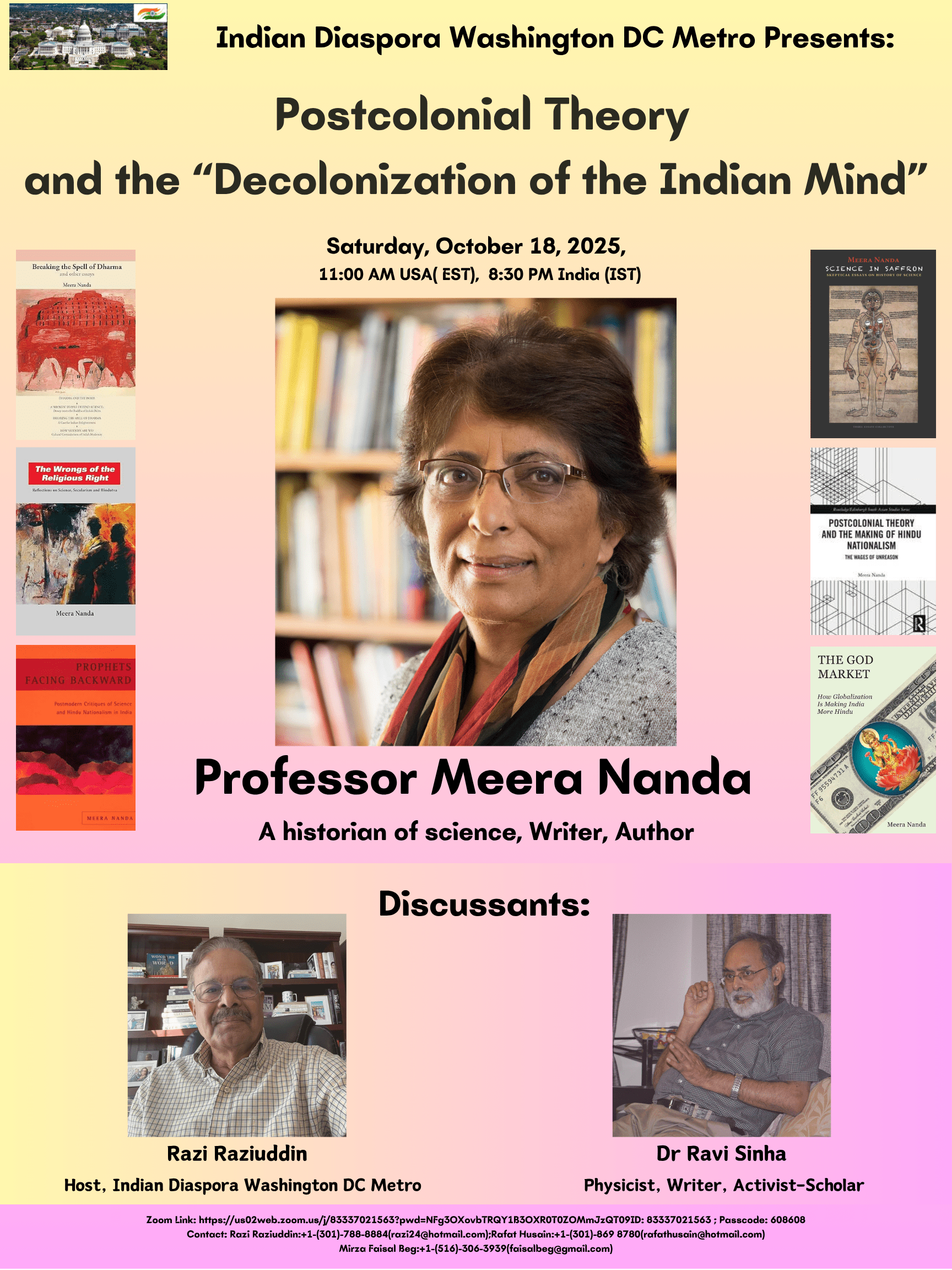
Postcolonial Theory and the “Decolonization of the Indian Mind” : Professor Meera Nanda

Indian Diaspora Washington DC lecture series

Topic: Postcolonial Theory and the “Decolonization of the Indian Mind”

Speaker: Professor Meera Nanda

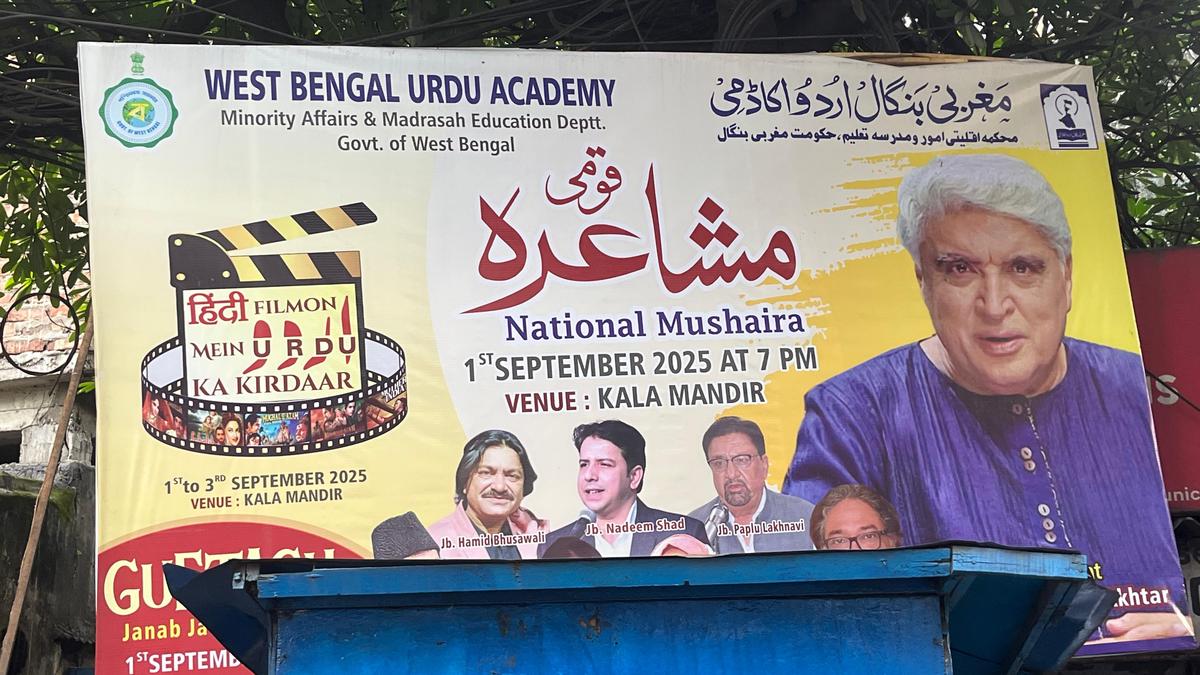
Javed Akhtar, Bollywood and Urdu’s Ghostly Existence – Rashid Ali

Guest post by RASHID ALI

Image courtesy The Hindu

Javed Akhtar’s recent ‘exile’ from the West Bengal Urdu Academy event did more than generate headlines. It dwarfed a bigger debate about Urdu in Hindi cinema, which was the event’s main theme. The media precipitately reduced the whole issue to the conflict between the lyricist and the Urdu Academy. The controversy carried a tinge of ‘Muslim fundamentalism,’ reflecting today’s cultural and political ideologemes. However, the discussion on Bollywood’s uneven relationship with Urdu was lost in the sound and fury of cultural climate of the country. Et tu, Brutus?’ finds a new stage – ‘Et tu, Bollywood?’ You speak against the very world that gives you voice. Continue reading Javed Akhtar, Bollywood and Urdu’s Ghostly Existence – Rashid Ali

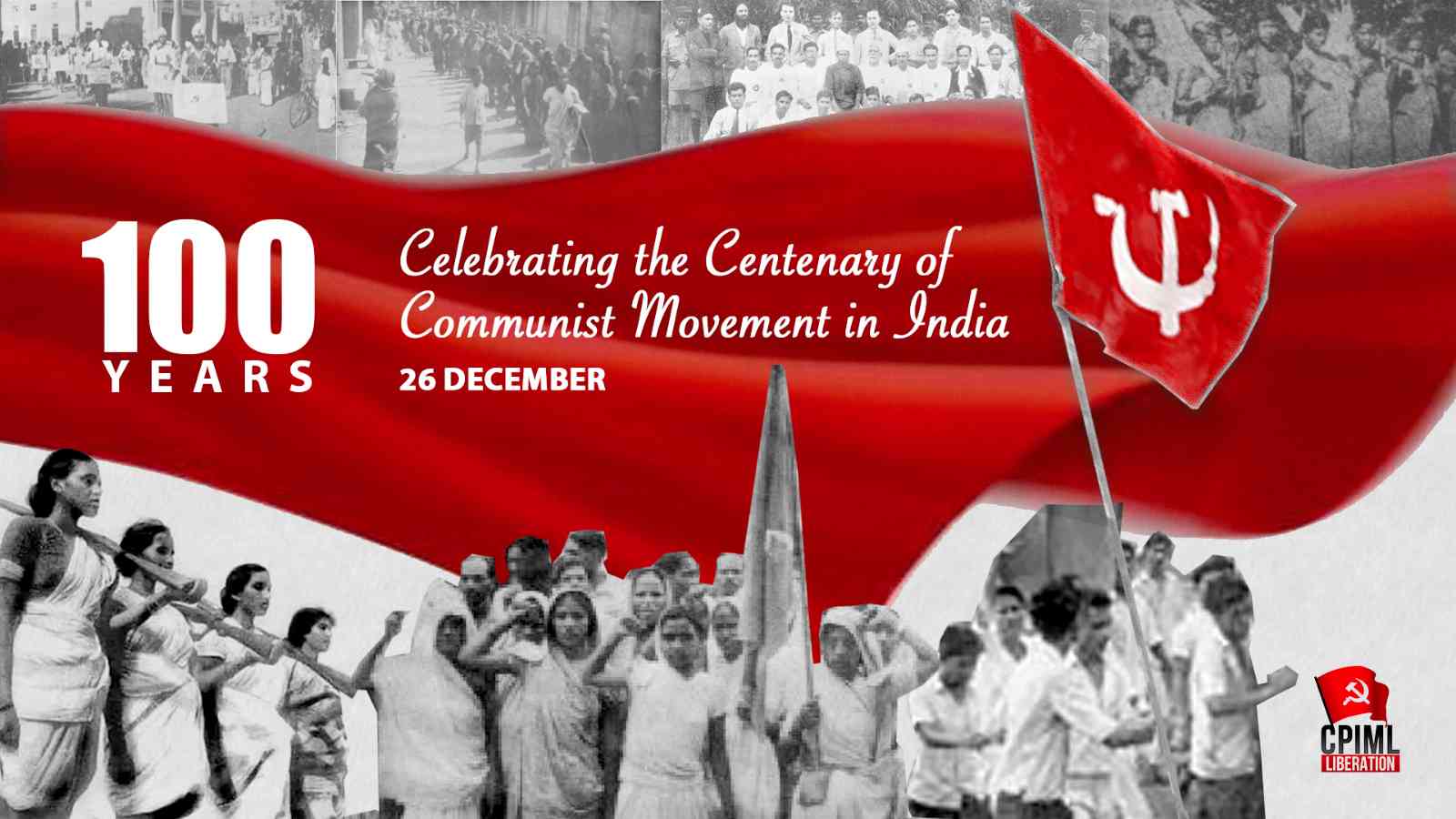
Red Dreams, Saffron Marches – Longue Durée of India’s Struggles and Strategies of Power: S. M. Faizan Ahmed

Guest post by S.M. FAIZAN AHMED

[The author writes about the current scenario, reflecting on the one hundred years of the communist movement as well as of the RSS. In these important reflections Ahmed recounts the great achievements of the communist Left, while at the same time speculating on where the RSS scored over it – leaving us with a number of questions to seriously ponder about. – AN]

Image courtesy Liberation

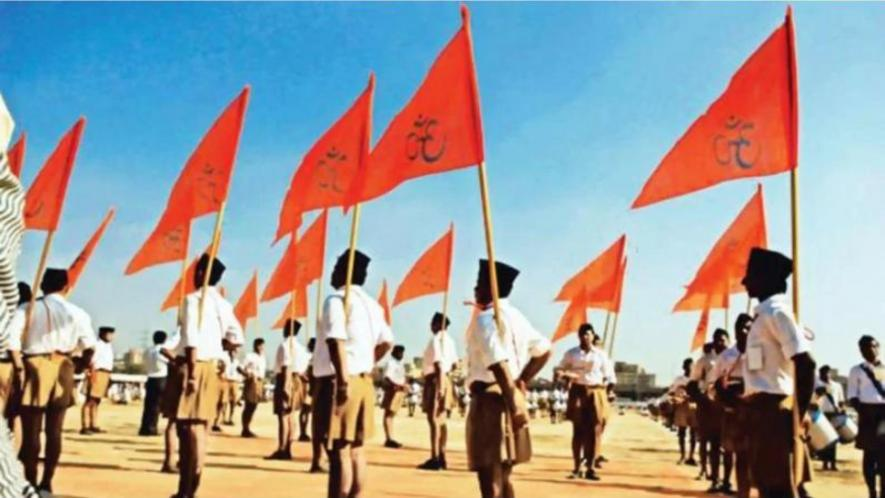
On October 1, 2025, a day before Gandhi’s birth anniversary, long revered and associated with ahimsa and moral conscience, the government unveiled a ₹100 coin at the Dr. Ambedkar International Centre, 15 Janpath, marking a century of the Rashtriya Swayamsevak Sangh. A day earlier, as if to turn ideology into spectacle,  a Shakha parade, named Path Sanchalan, traced its way through Jawaharlal Nehru University—once a fortress of dissent and the audacious poetry of thought. The rhythmic march of uniformed bodies through corridors once alive with debate did more than display ceremony; it signaled a shift in the republic’s moral conscience, where the choreography of discipline seeks to mute the dialectic of doubt, and the university—once a sanctuary of questioning minds—becomes a stage for the theatre of obedience. Continue reading Red Dreams, Saffron Marches – Longue Durée of India’s Struggles and Strategies of Power: S. M. Faizan Ahmed

Decolonizing the ‘Colonial-Brahmanical’ – Thinking outside Modernity: Sunandan K N

[This post is the sixth essay of the series in Kafila titled Decolonial Imaginations. Links to the previous essays are given at the end.

The terms ‘decolonization’ or ‘decolonial’ have become quite critical now, given that the impulse of justice lies at the core of these concepts. Neither postcolonial nor decolonial perspectives are compatible with right-wing ideologies but the fact that Hindutva ideologues in India and the rightwing globally are now trying to appropriate that language makes it seem to some that the very idea of the postcolonial or decolonial is suspect. We believe that this demonizing of decolonial theory from a position defensive of the European Enlightenment needs to be unpacked in the interests of a mutually productive debate. Kafila will be publishing a series of interventions on what the idea of the decolonial imagination involves, locating decolonial theory as speaking from the margins, drawing attention to identities which the orthodox Left subsumed under ‘class’ and which the rightwing in India seeks to assimilate into Brahminism. Additionally the orthodox left’s rejection of spiritual beliefs and inability to engage with them is also a factor that may have produced the space for right wing appropriations of a field marked “religion”. 

We hope that these interventions will clear the ground for productive conversations on the left rather than polarised and accusatory claims.]

This short essay builds on the articles published in this series and has already explored the various ways in which the concept of de-colonization is articulated, appropriated and adapted in various historical contexts in India and elsewhere. This note aims to map, in a preliminary fashion, the divergent engagements with questions concerning caste across three key groups – colonialists, nationalists (including the Hindutva nationalists), and postcolonial and decolonial practitioners in the last two centuries. This note does not purport to break new empirical ground but instead assembles and juxtaposes existing academic and public arguments to construct a focused framework for comparison.

It is important to begin with the now established argument that concepts are not static but dynamic entities, formed, transformed and deployed along historical processes. In larger Humanities and Social Science disciplines, historians, philosophers, anthropologists and linguists have increasingly shifted the question from ‘what does a concept or a category or just a noun mean’ to ‘what does it do’.  This shift posits that meaning is not a stable core but a secondary effect created from practice through a process of ‘densification’. We can observe this in Foucault’s inquiries into the concept of madness or Wittgenstein’s exploration of the performative nature of language. While the dominant forces have the power to deploy a category more widely and to limit its interpretations or in other words have the power to solidify and concretize the uses and effects of the category, they cannot guarantee to reduce this category to a singular use/meaning or limit its interpretation.  Hence the importance of the analysis of the travel and transformation of categories in various routes, its adaptations and mutations across various historical contexts and times.

Colonialism held divergent meanings and ‘affected’ differently for different groups of colonised, who in turn responded differently in varied temporal and spatial contexts. In what follows, I will briefly describe how colonialism affected the discourse and practice of caste and how different sections of the colonised reciprocated and acted on these colonial interventions. By doing so, I will demonstrate that, while colonialists, upper caste and Hindutva nationalists, and Leftists at some or other point have taken ostensibly anti-caste positions, their intentions or outcomes were not similar and all of them varied drastically from the radical project of annihilation of caste proposed by Ambedkar.

A parallel divergence exists within academic scholarship, where the analysis of caste from nationalist, postcolonial and decolonial perspective have criticized caste system but from different standpoints and with different objectives. It will therefore be both analytically trivial and politically dangerous to equate Ambedkar’s radical anti-caste position with Hindutva rhetoric against caste. Similarly equating a genuine decolonial position on caste with Hindutva’s strategic engagement with caste or about any other issues, can only stem from either a misreading or a cynical anxiety of losing one’s own relevance.

Colonial practice was never governed by a single monolithic principle; instead it was characterised by contradictions, ironies and exceptions that became the very norm of colonial rule. A pivotal moment in this history was the orientalist introduction of ‘Hindu’ as a unified religious category which fundamentally reshaped the colonial discourse on caste in India. Earlier, the category jathi dominated in the organisation of social practices and in the reflection of these practices. This does not mean jathi remained static in the precolonial period. As a dynamic system jathi underwent many transformations but remained hierarchical all through this period. The orientalists understood jathi as the essential principle of Hindu religion but also created a historical myth in which there existed a Hindu golden past which was destroyed by the Islamic invasions. This enabled many problematic concepts such as the idea that Hindu religion existed from the Vedic period onwards, and that all precolonial kingdoms were religious or something articulated as Sanathana Dharmam was part of this Hindu religion.

These notions are dominant even in contemporary debates and in common sense. The Hindutva history is completely premised on this colonial historical myth (not on the postcolonial or decolonial critique of these concepts) which the Hindutva propagandist will never admit. While they wholeheartedly embrace this part of colonial history, they vehemently oppose the theory of ‘Brahmanical despotism’ which was also an integral part of the colonial understanding of the Hindu religion.  In the so called ‘decolonisation project’ of the Hindutva only the latter part is to be decolonised. To be exact, even the other versions of nationalist history in the first half of the twentieth century – Gandhian, Ambedkarite, Nehruvian, Marxist – incorporated some or other elements of this colonialist orientalist interpretation. Decolonisation project attempts to point out not only the overlaps of the nationalist project with colonial one, but also focuses on how this enables the current forms of domination and subordination.

Postcolonial and decolonial histories challenged both colonial interpretation of caste and its nationalist adaptations as well. Nicholas Dirks explained how caste identities were re-constructed and even rigidified through various colonial governing practices. This was often misinterpreted as though he was arguing that caste was a pure colonial construction, which is clearly a Hindutva argument which, unlike Dirks, completely overlooks the inhuman caste domination and violence in the precolonial period. G Aloysius in his book Nationalism without a Nation analysed how caste was central to the nationalist political position of anti-colonialism. Lata Mani’s work on Sati (Contentious Traditions: The Debate on Sati in Colonial India) shows how colonialist and the upper castes together reconstructed ‘traditions’ which also became the basis for the reform narrative which attempted to separate good traditional practices from superstitions.

The idea that jathi was an exception that accidently emerged in the long history of Hindu religion was central to Hindu reform attempts and this was the exact point that Ambedkar rejected in his essay ‘Annihilation of Caste’.  While this essay premises existence of Hindu religion based on Shasthras (Orthodoxy), which one can now see as an orientalist construction, his arguments were anchored against the colonial and nationalist narratives of a Hindu golden past and against the possibility of an egalitarian reformed Hinduism as depicted by Hindu reformers of the period. The fact that the Hindutva propagandists attempt to make him one of the many Hindu reformers does not make him a ‘strange bedfellow’ or ‘enabler’ of Hindutva politics. On the contrary, his political philosophy has become the inspiration for anti-Hindutva politics in the twenty-first century.

Ambedkar’s critique focused on the social practices and political ideology of casteism embedded in Hindutva politics. Decolonial historians have extended this critique by analysing the role of caste not just in traditions but also in what is described as modern as well. This scholarship is inspired by feminist standpoint theories and black and queer feminist (many among them are scientists) critique of Science (Sandra Harding, Karen Barad, Chanda Prescod-Weinstein etc.), critique of modern forms of knowledge production from indigenous perspective (Linda Tuhiwai Smith, Dian Million, Candis Callison) and Indigenous critique of modernity and its genocidal developmental practices in India (Abhay Xaxa, Hansda Sowvendra Shekhar, Jacinta Kerketta) and so on. In a close reading of these works one could easily recognize that they are all part of a politics that challenges racist, casteist, patriarchal dominations and other right wing ideologies.

Ajantha Subramanian in her book Caste of Merit: Engineering Education in India shows how brahmanical notions of merit were embedded from the very beginning of IITs in India. Her analysis shows that the upper caste dominance in the so-called Nehruvian temples of modernity is not an exception but by design. The history of IIT Roorkee will also tell a similar story.   Started as Thomason College of Civil Engineering in 1847 to train Indians as engineers for the Ganga Canal Project, the engineering education here was based on the workshop model as it was in Europe and other places. However as most of the students in the first three batches were upper caste Bengalis, the learning based on doing was not successful. After an inquiry committee report it was decided that there should be a three tier system in which the top tier will be a fully theoretical (mental labour based) education in the classroom, the middle level will be half classroom and half workshop based and the lowest level will be fully in the workshop. This is the model that was replicated in technical education as the three tier system of Engineering College, Polytechnic, and ITIs. Here caste hierarchy was clearly mapped into the hierarchy of knowledge in which mental labour is separate from the manual labour and superior to the latter. This separation of theory from practice (mental labour from manual labour) is central to all forms of modern knowledge practices not only in India but everywhere in the world. Hence wherever these institutions emerged in the eighteenth and nineteenth centuries, they incorporated the local power hierarchies into their notion of knowledge. Considering this history, it is not an accident that the Science and Technology institutions and science and technology departments in Universities are the worst domains of caste discrimination and exclusion.  This is not to say that Social Science as a discipline or the departments are egalitarian. It is the same modernist and casteist notion that established the divide between theoretical Brahmins and empirical Shudras, a Gopal Guru has already pointed out.

In my book Caste, Knowledge and Power: Ways of Knowing in the Twentieth Century Malabar, I have demonstrated that caste discrimination in the domain of knowledge production in India is not just institutional but epistemological as well. Hence, I have argued that the dominant form of modernity in India in general and its forms of knowledge production in particular need to be understood not as Western, Scientific, Eurocentric or Universal but as Colonial-Brahmanical. Brahmanical understanding of jathi and gender are part of the epistemology and practices of all modern institutions. In other words, any attempt of decolonisation will be anti-colonial as well as anti-Brahmanical and will inherently be an anti-Hindutva project as well.

In conclusion, It is critical to recognise that the Hindutva appropriation of icons like Gandhi or Ambedkar, their attack on Nehru or their revivalist understanding of Science and Technology, should not circumscribe one’s own critique of Gandhi or Nehru or Science or be apologetic in fear of appropriation. An appropriate response would not be that ‘we are not abandoning rationality’ or ‘we are not relativists’ or ‘we believe in different kinds of Science’. Rather, we must reject the foundational role of the very binaries of – Rational/ irrational, absolute / relative, modernity / tradition – to advance a politics of equality and fraternity. The more productive analytical framework would be to ask what these concepts do: Do they enable and intertwine with other actions for a more democratic and equal world or do they reinforce social hierarchy?

Sunandan KN is Associate Professor, Azim Premji University, Bangalore. The opinions are personal.

Sleeping with the enemy? Postcolonialism, misread and misjudged: Shamayita Sen

Beyond philosophical gaslighting – seven theses on decolonization/ decoloniality: Aditya Nigam

Anti-colonial thought and the global right – an untenable alliance: Ishan Fouzdar

The Hopeless Quest for a Pure Incorruptible Knowledge – Decoloniality and its Discontents: Nivedita Menon

The Struggle for a ‘Coloured Modernity’: Meghna Chandra and Archishman Raju


Books as Crime ? – Whether J and K High-court Will End the ’Unprecedented Situation’ ?  

‘So you are the little woman who wrote the book that made this great (American) civil war’
— Abraham Lincoln to Harriet Beecher Stowe, author of Uncle Tom’s Cabin

The Writers’ Police !

Bruno Fulgini, a nondescript employee at the French Parliament, would not have imagined in his wildest dreams that his tedious and boring job at the Parliament library would lead him to a treasure hunt of another kind.

Nearly two decades back one witnessed him metamorphose into an author and editor, thanks to the sudden discovery of old files of the Paris police, which provided details of its surveillance work done way back in 18 th century. A report filed by AFP then, quotes Fulgini tell us that ’Beyond criminals and political figures, there are files on writers and artists. In some cases, they go far in their indiscretions.’….

It was clear to these protectors of internal security of a tottering regime that the renowned literati then viz. Victor Hugo, Balzac or Charles Dickens, might be writing fiction, but their sharp focus on the hypocrisy of the aristocrats or the livelihood issues of ordinary people is adding to the growing turmoil in the country. They knew very well that they might be writing fiction for the masses but it is turning out to be a sharp political edge that hit the right target and is becoming a catalyst for change.

The Parisian police was engaged in tracking down the daily movements of the writers, was more subtle in its actions; its present-day counterparts in the West do not seem to have such patience.

The strongest democracy in the world namely the US has of late become a site of an ’unprecedented’ ’Multi-level barrage of US book bans’ as per PEN America [1]….

And now there are indications that the biggest democracy in the World namely India is keen to follow the footsteps of the strongest democracy ?
Or it is too early to say that .[ Read the full article here : http://mainstreamweekly.net/article16227.html

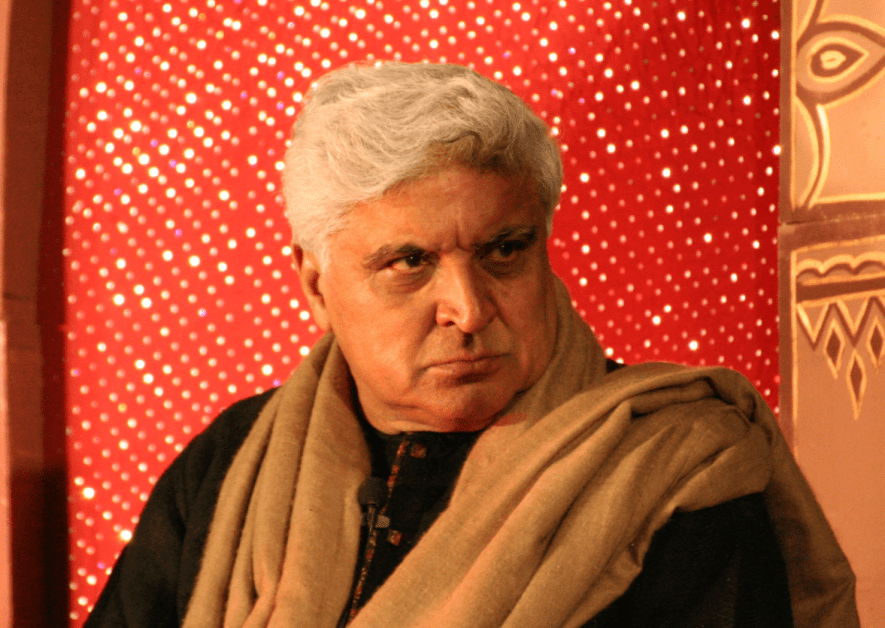
Rightwing-Rightwing ‘Bhai Bhai : Who Fears Javed Akhtar?

A ‘unity of purpose’ has been witnessed between Hindu and Muslim supremacists, who consider themselves the sole spokespersons of ‘their community’.

There are rare occasions when literary academies associated with governments wilt under mob pressure.

Rarer are occasions when they even cancel the very programme they had organised with much fanfare.

It has been more than 10 days that West Bengal witnessed such a spectacle, when the West Bengal Urdu Academy suddenly postponed a programme where it intended to discuss ‘Urdu in Indian Cinema’ for four consecutive. Javed Akhtar — one of the foremost living Urdu poets — was also invited as a key speaker in the programme.

Two prominent Islamist organisations in Kolkata, Jamiat Ulema-e-Hind and the Wahyahin Foundation, had protested the invitation, as they considered Akhtar’s views on religion problematic, labelling him as someone who “speaks against religion and God”.

Akhtar is a declared atheist and openly talks about it on public fora, and that had irked these people.

The organisations even threatened to launch a state wide agitation — much on the lines of their agitation against Bangladeshi author Taslima Nasreen which as everyone knows had forced her to leave the state (2007) — if the government did not heed their demand.

Mamata Banerjee, the West Bengal Chief Minister, did not want to take any risk as elections to the state Assembly are not too far.

( Read the full article here : https://www.newsclick.in/rightwing-rightwing-bhai-bhai-who-fears-javed-akhtar)

RSS Centenary: In Search of an Icon!

[Centenary celebrations of RSS – the biggest ‘self-proclaimed’ cultural organisation in the world — comprising of Hindus are on.

Much is being said about its longevity etc., and much will be said about it in coming days, it remains to be seen if it is ready to take a fresh look at some discomforting aspects of its own history when it is embarking on a journey towards what it calls as ‘new horizons]

Ram Lila, the dramatic folk re-enactment of the life of Rama is still popular in Northern India.

Anyone who has watched this programme — especially in villages or towns — might have noticed a particular scene where god curses a sage for his misdemeanour that he will get a donkey’s face for his actions and will not even realise that he has got this new face.

One is reminded of this story — which tells us the great hiatus between claims and reality — whenever an individual or a formation starts bragging about its achievements that have no basis in reality.

Leaders of the Hindutva Supremacist movement in this part of South Asia look no different when they declare from the rooftops the “great role their political ancestors have played during the freedom movement”. It is a different matter that any objective student of India’s history — especially of the Independence struggle — is conversant with hundreds or thousands of pages, books, monographs written or documented to underline the contrary, their meek behaviour and compromising role during the very struggle. [https://www.newsclick.in/rss-centenary-search-icon]

Punjab: Why Proposed ‘Law Against Blasphemy’ Needs to be Discarded

The CCG’s concern that the proposed PPOHS Act is ‘unconstitutional’ and is an ‘open invitation to ‘oppressive misuse’ needs to be heeded.

Image : Courtesy Fiickr

Whether history will repeat itself, that is the question being asked about Punjab government’s renewed attempt to enact a law supposedly against ‘sacrilege’?

Anyone who is a keen observer of the social-political developments in the state knows very well that it has a history of such efforts (2015 and 2018) where similar attempts were made to amend laws related to sacrilege, and both attempts proved unsuccessful as they failed on the yardstick of constitutionality.

As per reports, the proposed Punjab Prevention of Offences against Holy Scriptures Bill, 2025 (PPOHS Act), which was recently referred by the state legislature to a committee for further discussion, has come under the scanner of experts of the Constitution and concerned citizens.

A leading voice among them, namely the Constitutional Conduct Group (CCG) — a platform of retired civil servants and diplomats– has in an open communication underlined how Punjab government’s proposed ‘PPOHS Act’ is ‘unconstitutional’ and is an ‘open invitation to oppressive misuse’ .

[ Read the full article here : https://www.newsclick.in/punjab-why-proposed-law-against-blasphemy-needs-be-discarded]

Not Another Salacious Sex Scandal,  Please: Althea Women’s Collective Statement on Mainstream Public Discussions of Complaints against Rahul Mankoottathil

[ A translation of the statement from the Kerala Feminist Forum is appended to ours. Both are translated by Gayatri Devi, a member of Althea.]

The way political parties and mainstream media in Kerala have framed the public discussion on the complaints against Rahul Mankoottathil comes as a real shock to anyone who sees Malayali women as citizens with equal rights and equal dignity, and to those who are committed to the welfare of children.

Continue reading Not Another Salacious Sex Scandal,  Please: Althea Women’s Collective Statement on Mainstream Public Discussions of Complaints against Rahul Mankoottathil

When Police Comes Visiting Bookshops!

How saffron forces weaponise ignorance and stigmatise intellectauls

Silence gives consent

[Qui tacet consentire videturIn Latin]

“Intellectual terrorists” are “more dangerous than cross-border terrorists”

These were the pearls of wisdom of the then Human Resource Development minister, who was addressing a conference of the Bharatiya Janata Yuva Morcha (December 19, 2001).  Murli Manohar Joshi had even asked the ‘nationalist youths’ to counter ‘both types of terrorism effectively.’

…It would be 25 years soon since these objectionable remarks were targeted at India’s topmost historians, scholars, public intellectuals, even provoking followers to deal with them effectively’ like the way they deal with ‘cross border terrorists.’

Later commenting on these controversial remarks, the legendary historian Romila Thapar had famously said: ‘And then the government fell. But the books continued!”

Time for Thought Police?

As everybody can see, there is a sea change in the situation since the past more than a decade in this part of South Asia…

…..The target of attacks has now become broader, more expansive and more unpredictable. It is no longer restricted to ‘leftist’ ‘progressive’ writers, historians.

The recent move to ban 25 books on Kashmir history at a single go ‘for propagating false narrative and secessionism‘ — written by a spectrum of national and international scholars — which even do not share a similar world view, books which had been in circulation for years, even decades together is a case in point.

This list of authors includes, A G Noorani, Arundhati Roy, Anuradha Bhasin, Sumanta Bose, Victoria Schofield and several others… [Read the full article here : https://www.newsclick.in/when-police-comes-visiting-bookshops]

Citizens as Infants? – Judiciary ‘Schools’ People in Patriotism

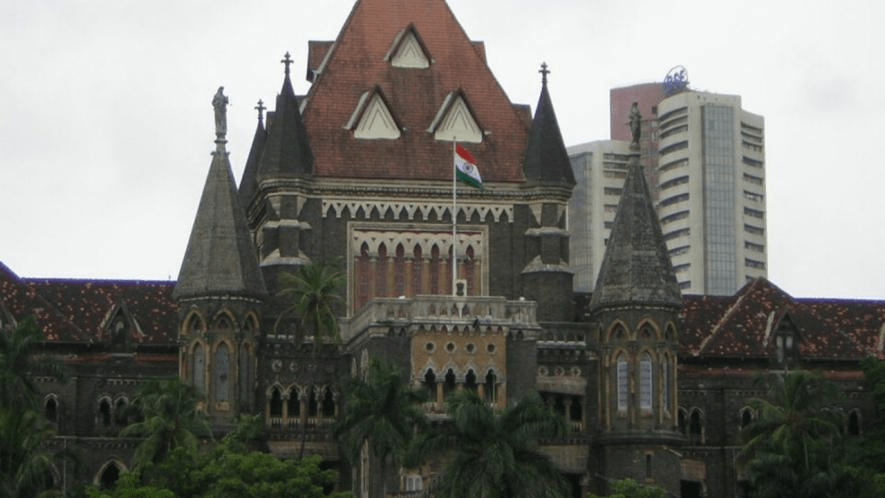
Could it be argued that Bombay HC’s highly debatable decision on a peaceful rally against Gaza genocide is an attempt not to inconvenience the ruling dispensation?

It was the year 1763, when Genevaís ecclesiastical assembly ordered one Robert Covelle to genuflect and listen to a reprimand for having fathered an illegitimate child. Covelle refused to kneel and turned to Voltaire for help.

Voltaire, a leading light of enlightenment, outraged at the very idea that religious authorities daring to make a citizen kneel, wrote a pamphlet against genuflection comparing the act with a tyrant punishing slaves or pedant correcting children. The rest of the philosophes rallied behind Voltaire and after six years of agitation, the Genevaís ecclesiastical assembly was forced to abolish genuflection from its code 

Meera Nanda, writer and historian of science discusses, this episode in one of her monographs

Rereading this episode and seeing if around two-and-half centuries ago, the Church could be compelled to see incongruence, injustice and unreason in its own ruling, can a a similar thing be possible vis-à-vis the judiciary in the 21st century in the ‘biggest democracy in the world’?

This poser is related to a recent debatable decision of the Bombay High Court, which has rightly received enough opprobrium.

( Read the complete article here : https://www.newsclick.in/citizens-infants-judiciary-schools-people-patriotism_

Why No ‘Gita’ Recitation in Schools ?

Is a resistance of some kind slowly emerging from the teaching community to save the secular character of education and foil Supremacist designs?

Representational Image. Image Courtesy: Pexels

“To learn to read is to light a fire.

Every syllable that is spelled out is a spark.” –

 – Victor Hugo

 Victor Hugo, (1802- 1885), the great French poet, novelist, and dramatist, once considered a national hero and a living symbol of republicanism in France, would not have imagined in his wildest dreams that a day would arrive where one of his famous quotes ‘“There is in every village a torch – the teacher; and an extinguisher – the priest”, would suddenly start reverberating across a section of learned people engaged in educating future generations in far away India, rather discreetly.

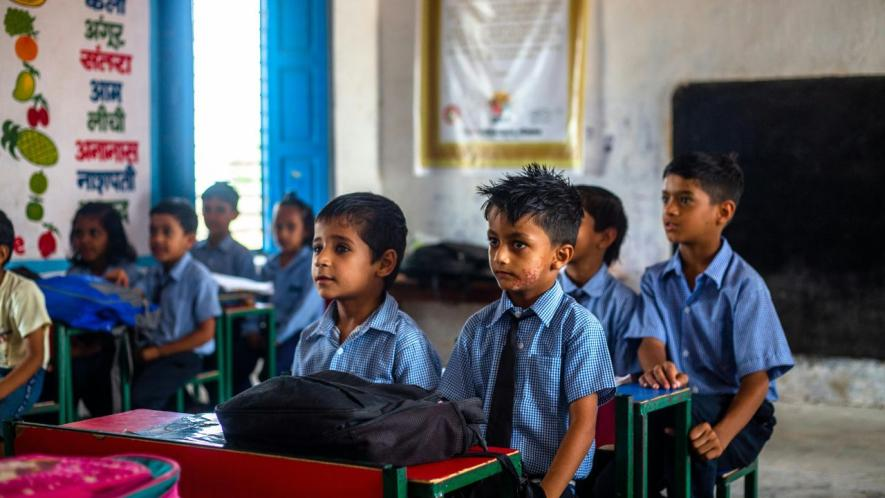
Close on the heels of an intervention by concerned citizens/activists on education in Uttar Pradesh, to stop Ramayana and Vedic workshops in Schools, as it violates Article 28 of the Constitution that specifically enjoins the State not to use public funds for religious instruction, one has come across two important and bold interventions from honourable members of the teaching community themselves, especially in the Hindi belt.

FIR For Asking ‘Light the Lamp of Knowledge’?

The police case against a school teacher from Bareilly for a Kanwad song is a case in point. The ‘offence’ of the teacher, Rajneesh Gangwar, is that he was singing a song in front of students asking them “not to bring kanwars“, instead “go light the lamp of knowledge’. A purported video of the incident, has gone viral. [ Read the complete article here : https://www.newsclick.in/why-no-gita-recitation-schools]

South Asian Futures in a Tri-Polar World : Professor Pervez Hoodbhoy

Democracy Dialogues Series – Lecture 40
Organised by New Socialist Initiative

Theme :
South Asian Futures in a Tri-Polar World

Speaker :
Professor Pervez Hoodbhoy
Eminent Physicist, author, public intellectual

Time and Date :
6 PM (IST)
Sunday , 27 th July 2025

The lecture is also live streamed at facebook.com/newsocialistinitiative.nsi

Abstract:

The Cold War and the collapse of the Soviet Union are long behind us, and we’re now hurtling toward a tri-polar world dominated by America, Russia, and China. These three powers vy to shape global influence, often competing but sometimes colluding. As the saying goes, “When elephants fight, the grass gets trampled.” So, the central question for this lecture is: What path are the nations of South Asia—including Afghanistan and Iran—likely to take? What alternatives and tools do they possess to navigate this landscape? Most importantly, what vision of society and power should guide them toward a viable future?

Speaker :

Professor Pervez Hoodbhoy is a nuclear physicist, author, and a prominent activist who is particularly concerned with promotion of freedom of speech, secularism, scientific temper and education. He is the founder-director of The Black Hole in Islamabad and as the head of Mashal Books in Lahore, he leads a major translation effort to produce books in Urdu that promote modern thought, human rights, and emancipation of women.

Prof Hoodbhoy received his undergraduate and doctoral degrees from MIT and has taught  physics and mathematics at Forman Christian College-University in Lahore, at the Quaid-e-Azam University (QAU) in Islamabad and later at Lahore University of Management Sciences (LUMS).

He is a recipient of the Baker Award for Electronics and the Abdus Salam Prize for Mathematics. He was visiting professor at MIT, Carnegie Mellon University, and the University of Maryland. In 2003 he was awarded UNESCO’s Kalinga Prize for the popularization of science.

Here is a list of a few of his publications :

– Pakistan: Origins, Identity and Future, published by Routledge (London, New York), 2023.
– Confronting the Bomb – Pakistani and Indian Scientists Speak Out, (edited) Oxford University Press, 2013.
– Education and the State – Fifty Years of Pakistan, (edited) Oxford University Press, 1998.
– Islam & Science: Religious Orthodoxy and the Battle for Rationality, published by ZED Books, London, in 1991 with translations in Turkish, Malaysian, Indonesian, Arabic, Spanish, Sindhi, and Urdu.
– Proceedings of School on Fundamental Physics and Cosmology, co-edited with A. Ali, World Scientific, Singapore, 1991.

Democracy For The Few ?

Is Bihar being turned into a test case of disenfranchising people?

Representational Image. Image Courtesy: Flickr

India pledged to usher in a democracy with universal adult franchise.

It was the late 1940s, when India, a newly independent nation, whose less than 10% population was then literate, embarked on this unique experiment, unheard of in those times.

The architects of Independence rejected all the Western prescriptions that openly said that .’.. India had no democratic future‘ (Winston Churchill) or ”monarchial arrangement best suited the Asian people‘ (British Prime Minister Clement Attlee to Nehru, 1949), and (to quote a student of history) ‘met the imperial argument on direct terms, firmly believing in the possibility of creating democratic citizens through democratic politics.’ (India’s Founding Moment: The Constitution of a Most Surprising Democracy by Madhav Khosla)

What is worth emphasising is that all those great leaders who shaped a forward-looking Constitution were on the same page when it came to granting the right to vote. For example, B.R Ambedkar, who was chairman of the Drafting Committee of the Constitution, firmly believed that ‘To limit the franchise, was to misunderstand the meaning of democracy ... ‘

None of them dithered over this provision despite knowing well that even the Western countries had not fully adopted universal adult franchise. Remember, Switzerland granted the right to vote to women only in 1971.

Much water has flown down the Ganges, the Jhelum, the Brahmaputra, the Godavari or the Kaveri.

A good 75 years after the adoption of the Constitution (1950), today we are faced with a challenge that at first looks unbelievable, the present ruling dispensation seems to have embarked on a journey in an exactly reverse direction. [Read the full article here : https://www.newsclick.in/democracy-few]

Dark Shadows of Emergency! 

How they have become arsenal for the majoritarian Hindutva forces to convert the sovereign, independent, secular, socialist republic into a Hindu Rashtra.

25 th June 2025 happened to be the fiftieth year of the internal emergency imposed by the then Indira Gandhi regime. Much has changed during all these years but till date we are still far away from a balanced review of that period.

What really prompted Indira Gandhi to declare emergency , whether drive for personal power was the key factor, as has been reiterated multiple times…..

On the other hand, whether it could be said that she correctly perceived how sinister forces in the subcontinent were hell bent on sabotaging the democratic experiment at the behest of imperialist powers , who were even found to be provoking police and security forces to pursue their dubious agenda.

No doubt such a holistic review is a need of the hour but one thing cannot be denied that the biggest beneficiary of this whole exercise has been the Hindutva rightwing forces who are keen to transform India into a Hindu Rashtra

[ Read the full article here : https://www.mainstreamweekly.net/article15924.html]

Review : ’And Quietly Comes the Dawn’

The ‘Other Haryana’ Which Rarely Gets Discussed

BOOK REVIEW

And Quietly Comes the Dawn:
Haryana —Its Identity Issues, Grassroots Movements and Alternative Endeavours
by Tarun Kanti Bose

Kamgar Prakashan | https://kamgarprakashan.com

What image does one conjure up when Haryana finds mention anywhere !
It is the image of the millenium city Gurgaon – with offices of leading MNCs or neighbouring Nuh – the Muslim majority district with one of the lowest literacy rates in India or the dominant Jat peasantry, the growing gender imbalance in the society which even gets reflected in the phenomenon of purchasing of brides from Bihar or other areas, etc

Various cases of dalit oppression add another gloomy layer to the not so bright picture.

Rarely does one find voices of the ’other Haryana’ getting reflected in the public discourse.

….Writer, journalist, left activist Tarun Kanti Bose’s new book, ’ And Quietly Flows the Dawn : Haryana— Its Identity Issues, Grassroots Movements and Alternative Endeavours breaks a new ground in this dominant discourse and brings before us many such unheard voices.

( Read the full review here : https://www.mainstreamweekly.net/article15848.html )

बच्चों के लिए सैनिक प्रशिक्षण : आखिर महाराष्ट्र सरकार की यह नई योजना क्यों एक चिन्तित करने वाली पहल है ?

‘मैंने जापान में जनता को अपनी स्वतंत्रता की सीमाएं अपनी सरकार द्वारा स्वेच्छा से स्वीकार करते हुए देखा है…लोग इस सर्वव्यापी मानसिक दासता को प्रसन्नता और गर्व के साथ स्वीकार करते हैं क्योंकि वे अपने आपको शक्ति की एक मशीन, जिसे राष्ट्र कहा जाता है, में बदलने की तीव्र इच्छा रखते हैं…’ 

-रवीन्द्रनाथ ठाकुर, ‘नेशनलिज्म’  

बच्चों के लिए फौजी तालीम !

भारतीय संघ के सबसे समृद्ध सूबा कहलाने वाले महाराष्ट्र ने स्कूली शिक्षा के क्षेत्र में एक नयी पहल हाथ में ली है। वह स्कूली छात्रों के लिए कक्षा 1 से ही बुनियादी फौजी प्रशिक्षण देना शुरू करेगा ताकि बच्चों में ‘देशभक्ति, अनुशासन और बेहतर शारीरिक स्वास्थ्य की नींव डाली जा सके।’ एक स्थूल अनुमान के हिसाब से चरणबद्ध तरीके से लागू की जाने वाली इस योजना में लगभग ढाई लाख सेवानिवृत्त  सैनिकों को तैनात किया जाएगा। …..

यह प्रस्ताव कई स्तरों पर चिन्तित करने वाला है:
 
एक, जैसा कि जानकारों एवं शिक्षा शास्त्रियों ने बताया है कि राज्य का शिक्षा जगत एक जटिल संकट से गुजर रहा है, जिसका प्रतिबिम्बन कमजोर होती अवरचना / इन्फ्रास्टक्चर /infrastructure, अध्यापकों की कमी और नीतियों को लागू करने के रास्ते में आने वाली प्रचंड बाधाओं में उजागर होता है। ..अगर सरकार की तरफ से कक्षा एक से आगे फौजी प्रशिक्षण प्रदान करने की योजना को लागू किया गया तो उसका असर स्कूली शिक्षा के लिए आवंटित किए जा रहे संसाधनों में अधिक कटौती में दिखाई देगा

[ Read the full article here :https://janchowk.com/military-training-for-children-why-is-this-new-scheme-of-maharashtra-government-a-worrying-initiative/]

Maharashtra: Military Training for School Children!

Why this latest move by the state government is a worrying development.

I have seen in Japan the voluntary submission of the whole people to the trimming of their minds and clipping of their freedom by their government, which through various educational agencies regulates their thoughts, manufactures their feelings, becomes suspiciously watchful when they show signs of inclining toward the spiritual, leading them through a narrow path not toward what is true but what is necessary for the complete welding of them into one uniform mass according to its own recipe. The people accept this all-pervading mental slavery with cheerfulness and pride because of their nervous desire to turn themselves into a machine of power, called the Nation, and emulate other machines in their collective worldliness.

-Rabindranath Tagore, Nationalism

The richest state in the Indian union, Maharashtra, has embarked on a new initiative in the field of school education. It would provide basic military training to school students starting from Class 1, to promote  “patriotism, discipline, and physical fitness among young learners from an early age”. Around 2.5 lakh ex-servicemen would be involved to deliver this training which will be introduced in a phased manner.

Undoubtedly, in the aftermath of Operation Sindoor, this proposal will be able to gather enough eyeballs in the rest of the country and it would not be surprise that few other Bharatiya Janata Party-ruled states would implement similar schemes in education.

This proposal is worrying at many levels. ( Read the full article here :https://www.newsclick.in/maharashtra-military-training-school-children)