Guest Post by Madhura Balasubramaniam and Padmapriya Govindarajan
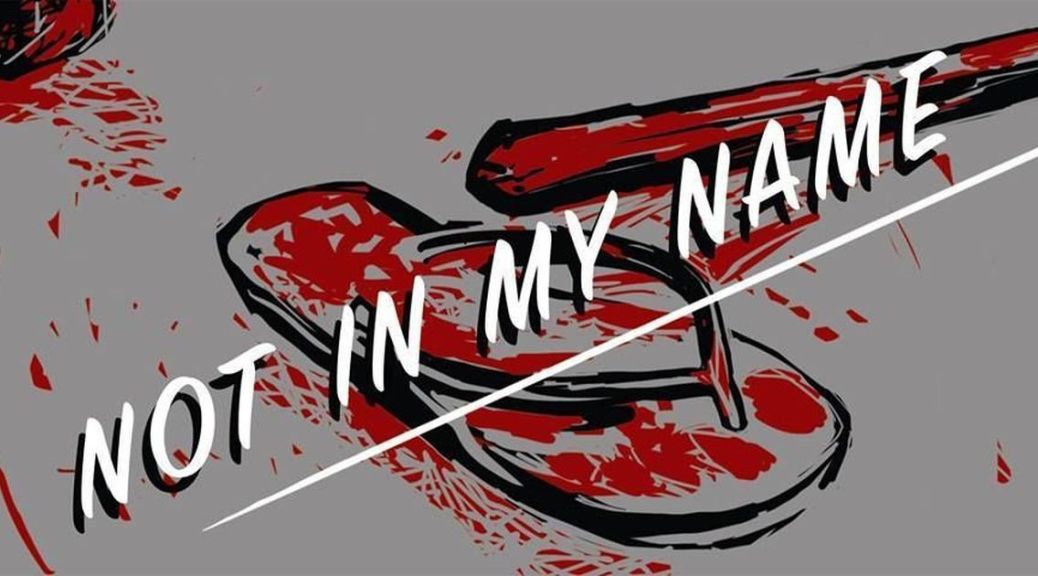
On July 1, 2017 a gathering of citizens congregated at the Valluvar Kottam monument in Chennai, India, in solidarity with the spate of demonstrations across the nation condemning the rise in instances of mob lynching and violence that disproportionately targeted Dalit and Muslim citizens for beef consumption. The protests were triggered by the murder of 16 year old Junaid Khan by a train mob. Since July 28, peaceful citizen gatherings have joined a wave that attempts to call out government silence, and thereby perceived tacit complicity, regarding the actions ofGau Rakshaks and other vigilante mobs that engage in lynching with a strongly communal or casteist skew. They have been collectively termed as #NotInMyName protests, alluding to the argument that these murders occurred in the name of the cow and in the name of Hinduism. Continue reading #BreakTheSilence – Chennai against mob lynching: Madhura Balasubramaniam and Padmapriya Govindarajan→
Bharat Mata’s daughter? But the Hindutvavadi motherland produces only sons – Hindu, savarna sons – to protect their mother’s ever fragile honour.
Let us begin these reflections with a moment from Nisha Pahuja’s disturbing film the World Before Her, which tracks two young women – Ruhi, a beauty pageant contestant and Prachi, a trainer with the Durga Vahini, women’s wing of the Vishwa Hindu Parishad.
While Ruhi and her fellow participants emerge as conventional and pallid, Prachi is fierce and questioning, independent minded. But towards the end of the film, you realize that for both women (and not for Ruhi alone), this period of training was only a small window that gave them a brief glimpse of broader horizons. It was only a brief moment of excitement and hope, and what seemed like freedom, before real life – the real lives of real women – closed in on them.
Throughout the film, Prachi has been telling the film-maker that she will never get married, she will live her life as a Hindutva activist. She emphatically rejects the ordinary life of a wife and mother. But towards the end, her father declares quite explicitly that this is out of the question. She can never be a full time activist. Of course she must get married. She has a womb, do men have wombs? Her responsibility then, is to bring up children. Initially in this sequence, Prachi argues against him vehemently, verges on the insolent, but gradually she falls silent. Her expression, still rebellious, but devastated, resigned, signals to us her recognition that the daughter of the Hindu nation is only in training to be a mother. That is the highest ambition she can have.
Playing for the Oxford University Women’s team and the Oxford Cricket Club, I have noticed three different rules for women’s cricket. These may be observed in other countries as well. I argue that these rules are based only on gender stereotypes about women’s inferior sporting abilities and even if were once instituted to encourage them to join the game, have now outlived their utility. 1. The women’s match ball is lighter than the men’s ball (also true at the international level). 2. The women’s match boundary is smaller than the men’s and; 3. One of my coaches here told me that the men’s bat is different from the women’s. This is incorrect, and the England and Wales Cricket Board (ECB) website states that both men and women are entitled to use Type A bats for one-day internationals. However, I include this point in my analysis because regardless of a rule, these kinds of statements from a coach translate into the lived experience of a female cricketer, and act as a rule for them. Continue reading Women’s Cricket – Rules Based Only on Gender Stereotypes Need to Go: Surabhi Shukla→
Bhupendra Singh Chudasama, Education minister of Gujarat and his colleague Atmaram Paramar, who handles the Social Justice Ministry, were in the news sometime back- albeit for wrong reasons. A video went viral which showed them participating in a felicitation ceremony of exorcists in Botad. They were also seen watching how a couple of the exorcists were beating themselves with metal chains to live music near the stage.
Perhaps it did not matter to them that the Constitution frowns upon such activities and Article 51A (h) of the Indian constitution clearly says that it shall be a fundamental duty of all citizens “to develop the scientific temper, humanism and the spirit of inquiry and reform.” Neighbouring state Maharashtra has even enacted a law (The Maharashtra Prevention and Eradication of Human Sacrifice and other Inhuman, Evil and Aghori Practices and Black Magic Act, 2013) to rein in all such activities and it criminalises practices related to black magic, human sacrifices, use of magic remedies to cure ailments and other such acts which exploit people’s superstitions. And it was a culmination of a prolonged movement led by activists led by Dr Dabholkar – who even faced martyrdom for his activities. Continue reading Promoting Superstition – Everything Official About It !→
Guest Post by Sanjay Kak, for #Notinmyname / Statement from Not In My Name, Delhi
Last evening’s (June 28th) spirited protest at Jantar Mantar, New Delhi, under the banner of Not In My Name, was an autonomous citizens protest against the recent spate of targeted lynchings of Muslims in India – the most recent of 16 year old Junaid, stabbed to death on 23 June 2017 in Delhi (NCR).
For an audience that was estimated to be 3500 strong, the torrential downpour at a little past 8 pm may have rained out a part of the programme. But something remarkable had already been achieved: the evening had washed away, even if temporarily, an almost overwhelming sense of despondency, of hopelessness, and of fear.
Since the Not In My Name protest had announced that the platform was not meant for political parties, and their banners and slogans, the stage saw the marked absence of the speeches (and faces) of routine protest meetings at Jantar Mantar. Rhetoric was displaced by feeling, and it was left to the poets and musicians to carry the sharp political messages of the day. On an evening that was often very emotional, the most difficult moments came when a group of young men from Junaid and Pehlu Khan’s extended families (and residents from their respective villages) came on stage and spoke to the audience.
When the call for a protest meeting went out last Sunday we were hoping that a few hundred people would gather to express their outrage at what is happening around us. For the attacks on Muslims are part of a pattern of incidents that targets Dalits, Adivasis, and other disadvantaged and minority groups across the country. In almost all these incidents the possibilities of justice seem remote, as the families of the victims are dragged into procedures they are ill-equipped to handle. Through all these heinous crimes the Government has maintained a silence, a gesture that is being read as the acquiescence of all Indians.
Not In My Name aimed to break that silence. But the scale and spirit of the protest meeting at Jantar Mantar became amplified many times over, as similar gatherings were spontaneously announced all over the country. As word spread through social media, groups in 19 other locations announced Not In My Name protests, and this phenomenal synergy inevitably drew media attention to all the events, and gave the protest a solidarity and scale that was truly unprecedented – there were at least 4 protests in cities abroad too. (And more protests have been announced for later this week…) The protest meeting ran on the shoulders of a group of volunteers who managed to put together everything in less than four days. No funds were received (or solicited) for the expenses from any political party, NGO, or institution. Instead volunteers worked the crowd and our donation boxes received everything – from Rs 10 coins to currency notes of Rs 2000, and everything in between.
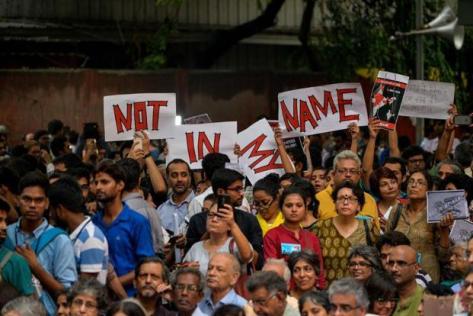
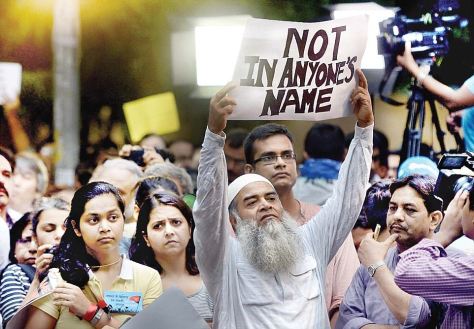
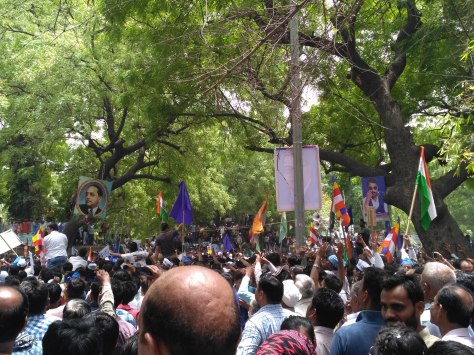
Citizens hold placards during a silent protest Not in My Name against the targeted lynching, at Janter Manter in New delhi on wednesday. Photo by Parveen Negi/Mail Today, June 28, 2017
The impact of the Not In My Name protest at Jantar Mantar yesterday only points to the importance of a focused politics to deal with the crisis this country seems to be enveloped by. Less than a day after the protests Prime Minister Modi broke his silence on the matter of lynchings. It could not have been a coincidence: speaking in Ahmedabad he said killing in the name of gau bhakti is unacceptable. But to protect the life of a 16 year old being brutalised in a train needs more than a tweet, and we all wait and watch.
This fight has just begun. In the days to come the exceptional solidarity attracted by the protest in New Delhi will have to become less exceptional, and more everyday.
Sanjay Kak is a filmmaker and writer based in Delhi.
The #NotinMyName protests, which began in a response to a Facebook post uploaded by Delhi filmmaker Saba Dewan, have since taken place in more than twelve cities in India, and also in the UK, USA and Pakistan. More protests, under the #NotinMyName tag, as well as independently of it are being planned by citizens groups, organizations and individuals in many places.
Tomorrow, July 2nd, 2017 will see a sit in at Jantar Mantar from 11 in the morning, at Jantar Mantar, New Delhi called by families, individuals and panchayats from Nuh, Ballabhgarh and Faridabad, they will be joined by students, activists and other individuals.
ऊपर से शांत दिखने वाली भीड़ का हिंसक बन जाना अब हमारे वक्त़ की पहचान बन रहा है. विडंबना यही है कि ऐसी घटनाएं इस क़दर आम हो चली हैं कि किसी को कोई हैरानी नहीं होती.
15 वर्ष का जुनैद ख़ान, जिसकी चाहत थी कि इस बार ईद पर नया कुर्ता पाजामा, नया जूता पहने और इत्र लगा कर चले, लेकिन सभी इरादे धरे के धरे रहे गए. उसे शायद ही गुमान रहा होगा कि ईद की मार्केटिंग के लिए दिल्ली की उसकी यात्रा ज़िंदगी की आख़िरी यात्रा साबित होगी. दिल्ली बल्लभगढ़ लोकल ट्रेन पर जिस तरह जुनैद तथा उसके भाइयों को भीड़ ने बुरी तरह पीटा और फिर ट्रेन के नीचे फेंक दिया, वह ख़बर सुर्ख़ियां बनी है.
दिल्ली के एम्स अस्पताल में भरती उसका भाई शाकिर बताता है कि किस तरह भीड़ ने पहले उन्हें उनके पहनावे पर छेड़ना शुरू किया, बाद में गाली गलौज करने लगे और उन्हें गोमांस भक्षक कहने लगे और बात बात में उनकी पिटाई करने लगे. विडम्बना है कि समूची ट्रेन खचाखच भरी थी, मगर चार निरपराधों के इस तरह पीटे जाने को लेकर किसी ने कुछ नहीं बोला, अपने कान गोया ऐसे बंद किए कि कुछ हुआ ही न हो.
ट्रेन जब बल्लभगढ़ स्टेशन पर पहुंची तो भीड़ में से किसी ने अपने जेब से चाकू निकाल कर उन्हें घोंप दिया और अगले स्टेशन पर उतर कर चले गए. एक चैनल से बात करते हुए हमले का शिकार रहे मोहसिन ने बताया कि उन्होंने ट्रेन की चेन भी खींची थी, मगर उनकी पुकार सुनी नहीं गई. इतना ही नहीं, रेलवे पुलिस ने भी मामले में दखल देने की उनकी गुजारिश की अनदेखी की.
विडंबना ही है कि उधर बल्लभगढ़ की यह ख़बर सुर्ख़ियां बन रही थी, उसी वक़्त कश्मीर की राजधानी श्रीनगर की मस्जिद के बाहर सादी वर्दी में तैनात पुलिस अधिकारी को आक्रामक भीड़ द्वारा मारा जा रहा था. जुनैद अगर नए कपड़ों के लिए मुंतज़िर था तो अयूब पंडित को अपनी बेटी का इंतज़ार था जो बांगलादेश से पहुंचने वाली थी.
( Read the full article here : http://thewirehindi.com/12095/mob-lynching-and-india/)
On 22 June 2017 fifteen-year old Hafiz Junaid was stabbed to death on a Mathura-bound train from New Delhi. He was traveling home for Eid with his brothers and two friends. A dispute over seats resulted in a group of men repeatedly assaulting and stabbing Junaid and his companions. The assailants flung their bodies onto the Asoti railway platform. A crowd gathered. At some point an ambulance was called and two bodies were taken away. Junaid is dead. His companions are in critical condition. While one person has been arrested the police investigations are running into a wall of social opacity since they have been unable to find a single eye-witness to the incident. Of the 200 hundred strong crowd that assembled on Asoti railway platform on Thursday evening, the police cannot find one person who can say what they saw. The police cannot find a witness because something very peculiar seems to have happened to those present at Junaid’s death. A report by Kaunain Sherrif M in the Indian Express provides specific details. When asked if he had seen anything that evening, Ram Sharan a corn-vendor whose daily shift coincides with the killing, Sharan said he was not present at the time of the incident. Two staffers who were sent to investigate by the station master were unavailable for comment. Neither the station-master, the post-master or the railway guards saw the event they were present at.
In this startling piece the journalist reports how the public lynching of a Muslim child becomes a social non-event in contemporary India. He shows the reconfiguring, and splitting, of a social field of vision. He reports all the ways in which people – Hindus- did not see the body of a dead – Muslim – child that lay in front of them. The Hindus on the Asoti railway platform managed to collectively not see a 15 year old Muslim boy being stabbed to death. Then they collectively, and without prior agreement, continued to not see what they had seen after the event. This is the uniquely terrifying aspect of this incident on which this report reflects: the totalising force of an unspoken, but collectively binding, agreement between Hindus to not see the dead body of a Muslim child. Hindus on this railway platform in a small station in north India instantly produced a stranger sociality, a common social bond between people who do not otherwise know each other. By mutual recognition between strangers, Hindus at this platform agreed to abide by a code of silence by which the death of a Muslim child can not be seen by 200 people in full public view on a railway platform in today’s India. Continue reading Why Two Hundred Ordinary Hindus Did Not See A Dead Muslim Child On A Railway Station In North India→
(Protest in Guwahati against unconstitutional and discriminatory policy of the Assam govt. in teacher recruitment, organised by KMSS on 19 June 2017 (Photo courtesy: Amar Asom)
In an unconstitutional and discriminatory move, the Education Department of the Assam government has recently come up with a notification that bars candidates who have studied in the vernacular medium from appearing for the Special Teachers Eligibility Test (TET) for Graduate Teachers in the Adarsha Vidyalayas in Assam. The advertisement No. RMSA/Special TET/842/2017/2 dated 7 June 2017, issued by the Secondary Education Department of the state government states: “The candidates must be passed out from English Medium Schools as Adarsha Vidyalayas are CBSE affiliated English Medium School (sic).” To further clarify the matter, the Education Minister of the state, Himanta Biswa Sharma, said in a press conference that those who studied in Assamese or vernacular medium schools do not have the essential ability to teach in English medium schools. Mr. Sharma not only ridiculed and questioned the qualifications of those who studied in the vernacular medium but also invalidated the entire vernacular medium education system of the state. Continue reading The method in madness and the case of Adarsha Vidyalayas in Assam : Delhi Action Committee for Assam→
On the First Anniversary of the Una Floggings – Call from JIGNESH MEWANI and RASHTRIYA DALIT ADHIKAR MANCH
उना से आई फिर आवाज़,नहीं सहेंगे हिंदु राष्ट्र, भगवा आतंकवाद और पूंजीवाद!
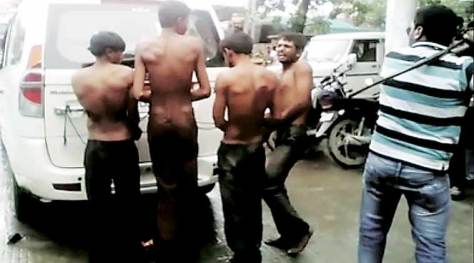
Una floggings, image courtesy Indian Express
दलित, मुस्लिम, मज़दूर और किसान साथ मिलकर मांगेगे तीन साल का हिसाब
बहुजन,मज़दूर और किसान साथ मिल फिर ललकारेंगे ‘गाय की पूंछ तुम रखो, हमें हमारी जमीन दो’
साथियों,
आप जानते हैं, 11 जुलाई को उना के दलितों के उत्पीड़न की जगानेवाली घटना को एक वर्ष होने जा रहा है. जिस तरह पिछले वर्ष 11 जुलाई को गुजरात के गिर सोमनाथ जिले के मोटा-समधियाला गांव के बालू भाई सरवैया और उनके चार बेगुनाह लड़कों को दिन दहाड़े, भरे बाजार गाड़ी के साथ बांधकर पुलिस थाने के सामने बेरहमी के साथ मारा गया और जिस तरह इस कारनामे को अंजाम देने वाले इन तथाकथित गौ रक्षकों ने खुद ही अपने इस कारनामे को सोशल मीडिया पे वायरल किया, उससे पूरा देश हिल गया था.
इस अमानवीय कारनामे को अंजाम देने वाले लोग खुद ही अपनी इस घिनौनी हरकत को सोशल मीडिया पे वायरल करे उससे पता चल जाता है कि यह तथाकथित गौ रक्षक कितना बेखौफ महसूस करते और उनको राजसत्ता की कितना संरक्षण मिला हुआ है.
आखिर जिन छोटे बच्चों को क़ानून वोट डालने का अधिकार नहीं देता, जीवनसाथी चुनने का अधिकार नहीं देता, उन्हें आध्यात्मिकता के नाम पर इस तरह जान जोखिम में डालने की अनुमति कैसे दी जा सकती है?
17 साल का वर्षिल शाह – जिसने 12 वीं की परीक्षा में 99.93 परसेन्टाइल हासिल किए, अब इतिहास हो गया है.
दुनिया उसे सुविरा महाराज नाम से जानेगी और वह अपने गुरु कल्याण रत्न विजय की तरह बाल भिक्खु में शुमार किया जाएगा, ऐसे लोग जिन्होंने बचपन में ही जैन धर्म की दीक्षा ली और ताउम्र जैन धर्म के प्रचार में मुब्तिला रहे.
बताया जा रहा है कि इन्कम टैक्स आफिसर पिता जिगरभाई शाह और मां अमीबेन शाह ने अपनी सन्तान को बिल्कुल ‘धार्मिक’ वातावरण में पाला था, उनके घर में टीवी या रेफ्रिजरेटर भी नहीं था और बिजली का इस्तेमाल भी बहुत जरूरी होने पर किया जाता था क्योंकि शाह दंपति का मानना था कि उर्जा निर्माण के दौरान पानी में रहने वाले जीव मर जाते हैं, जो जैन धर्म के अहिंसा के सिद्धांत के खिलाफ पड़ता है.
वर्षिल-जो अभी कानून के हिसाब से वयस्क नहीं हुआ है, जो वोट भी डाल नहीं सकता है, यहां तक कि अख़बारों में प्रकाशित उसकी तस्वीरों में मासूमियत से भरे उसके चेहरे को भी देखा जा सकता है- के इस हालिया फैसले ने बरबस तेरह साल की जैन समुदाय में जन्मी हैदराबाद की आराधना (जो चार माह से व्रत कर रही थी) के बहाने उठी बहस को नए सिरे से जिंदा किया है, जो पिछले साल खड़ी हुई थी.
( Read the full article here : http://thewirehindi.com/11503/monk-jain-bal-diksha-fasting/)
बिहार फिर से खबर में है. इंटरमीडिएट परीक्षाओं के परिणाम आए हैं.पैंसठ प्रतिशत छात्र फेल हो गए हैं.बिहार में विरोध प्रदर्शन चल रहे हैं.कॉपियों की दुबारा जाँच कराने की माँग की जा रही है. जन संचार माध्यमों के जरिए वैसे छात्रों की व्यथा और क्रोध का पता चल रहा है जिन्होंने आई आई टी जैसी कठिन प्रवेश परीक्षाओं में सफलता प्राप्त की है लेकिन जो बारहवीं की बोर्ड परीक्षा में फेल हो गए हैं.इसे पर्याप्त माना जा रहा है यह कहने के लिए कि परीक्षा परिणामों में घपला ज़रूर है वरना इतने प्रतिभाशाली युवा, जो आई आई टी की परीक्षा की बाधा दौड़ पार कर गए हैं,बोर्ड के इम्तहान में फेल कैसे हो जाएँगे! Continue reading बिहार क्या सिर्फ बिहार में है ?→
अरुंधति राय के खिलाफ अपशब्दों की, गाली-गलौच की, आरोपों की हिंसा ने हमें एक बार फिर यह प्रश्न पूछने के लिए विवश कर दिया है – क्या हमने सचमुच अपने देश में सभ्यता व सहिष्णुता के महान मूल्यों की रक्षा करने के दायित्व से छुटकारा पा लिया है? कहीं हम पूरे राष्ट्र को ‘डिसोसिएटिव आइडेंटिटी डिसआर्डर’ (खंडित व्यक्तित्व मनोरोग) का शिकार बनते तो नहीं देख रहे हैं जिसमें किसी व्यक्ति नहीं बल्कि पूरे राष्ट्र के चरित्र में परस्पर विरोधी मूल्य इस प्रकार विषैले कांटों की तरह उग आते हैं कि राष्ट्र का पूरा व्यक्तित्व चरमराने या दिग्भ्रमित होने लगता है! एक सभ्य-लोकतांत्रिक देश के रूप में आत्मछवि और हिंसक बाहरी आचरण में जितना गहरा भेद पैदा हो जाता है, वह राष्ट्र की आत्मा मार देता है। जिसने भी स्वयं में अनूठी लेखिका को जीप के बोनट से बांधने की कल्पना की, उसे संभवतः अंदाजा भी नहीं था कि वह केवल एक वक्तव्य नहीं दे रहा है, बल्कि मनुष्यता के सभी संभव परिकल्पनाओं के विरुद्ध अपराध कर रहा है। ऐसी कल्पना में बीमार विचारशून्यता ही नहीं बल्कि भयानक सड़ांध, विकृति और मनोरोग की झलक मिलती है। परेश रावल के अरुंधति के विरोध में लिखे ट्वीट से उल्लसित सोशल मीडिया के एक समूह ने तो अरुंधति राय की सामूहिक ढंग से हत्या कर उनके शव को पाकिस्तान में दफनाने की वकालत भी कर डाली।
यूँ तो अम्बेडकर जयंती हर साल आती हैं और दलित-पिछड़े समुदाय का एक बड़ा तबक़ा इसे बड़ी शिद्दत से मनाता आया है। लेकिन इस बार अम्बेडकर का 126वां जन्मदिन कुछ और ही नज़ारा ले कर आया। यू॰पी॰ का सहारनपुर ज़िला जहाँ अच्छी ख़ासी तादाद में दलित समुदाय के लोग रहते हैं और अन्य जिलों की बनिस्बत ज़्यादा संगठित हैं, वहाँ दो आयोजनों और उसकी अनुमति को लेकर दबंग जाति के लोगों ने जम कर उत्पात मचाया, जिसका दलित समुदाय के द्वारा ना केवल डट कर मुक़ाबला किया गया बल्कि एक वाजिब जवाब भी दिया गया। हालाँकि प्रशासनिक कार्यवाही हमेशा की तरह एकतरफ़ा रही जिसमें 40 दलित युवकों को जेल में ठूँस दिया गया और दबंगो को सस्ते में जाने दिया गया। शब्बीरपुर की ये घटना(एँ) कई दिनों तक चलती रही जिसमें दबंग जाति के लोगों के अहम को चोट तो लगी ही, साथ ही साथ एक और संदेश दे गयी : जिस तरह से दबंग जाति के लोगों ने हिंसा को अपनी बपौती समझ लिया था, अब वैसा नहीं हैं, लगभग देश के कुछ हिस्सों में तो।
Guest Post by Bastar Solidarity Network Delhi Chapter
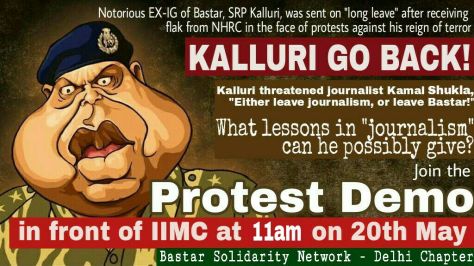
The democratic forces, organizations and the thinking minds of IIMC took part in a spirited protest today against the invitation extended to notorious ex-IG Kalluri by the IIMC administration to take part in a seminar. To start with, since last two days, there were several attempts on the part of the organizers to confuse/conceal Kalluri’s invitation. Immediately after the declaration of the protest, Kalluri’s name was dropped from the poster. There were also threats of counter-mobilisation by the BJP goons. But undeterred, as we reached the gates of IIMC at 11am, the site echoed with slogans of “Killer Kalluri Go Back”!
English language television news in India nowadays is nothing more than exaggerated visual editorials. They pick two or three stories, sensationalize them, run them in a loop through the day, alongside panel discussions where the editorial ideology of the channel is forced down the throat of the panelists and the viewers. In short there is hardly little journalism left in these channels. Though they do have panel discussions, regional language channels – at least Malayalam and Tamil channels that I watch – have a wider and more diverse reportage than self-proclaimed national television.
It wasn’t always like this. When Prannoy Roy pioneered private television content for Murdoch – regardless of the ideological content – there was reportage. Editorial proselytizing and endless panel discussions were limited most often to when psephologists stepped in.
सच्चिदानंद हीरानंद वात्स्यायन अज्ञेय हिंदी के ही नहीं वरन समूचे भारतीय साहित्य में निरंतर जिज्ञासा और पाठकीय आकर्षण पैदा करने वाले रचनाकार के रूप में देखे जाते हैं। विभिन्न किस्म की दासता-वृत्तियों, परजीवीपन और क्षुद्र खुशामद से भरे मुल्क में उनका स्वाधीनता बोध जितना गरिमावान लगता है, उतना ही चौंकाने वाला भी। इसी स्वाधीनता बोध ने अज्ञेय की दृष्टि को भारत के लोकतांत्रिक मिजाज के अनुसार ज्यादा खुला व अपने रचना संसार को स्वेच्छा से निर्मित करने लायक बनाया। उनके इस स्वाधीनता बोध का प्रभाव व्यापक रूप से सृजन के बहुत सारे आयामों पर पड़ा है।
अज्ञेय के साहित्य पर लिखने वाले कई आलोचकों ने इस प्रभाव के मूल्यांकन का प्रयास किया है। जैसे कि निर्मल वर्मा ने स्वाधीनता बोध से उत्पन्न उनकी इसी खुली, व्यापक दृष्टि को उनके संपादन कर्म से जोड़कर देखा था। अपने द्वारा संपादित पत्र प्रतीक व दिनमान में उन्होंने मुक्तिबोध, शमशेर बहादुर सिंह व सज्जाद जहीर को जोड़ा तो तार सप्तक के विविध खंडों में अपने से पूर्णतया भिन्न दृष्टिकोण वाले कवियों को। स्वाधीनता के प्रति तीव्र संवेदनशीलता को व्यक्तिवाद के दायरे में रखकर समझने की सरल चिंतन-प्रक्रिया साहित्य में बहुतायत से मौजूद रही है। ऐसा मानने वालों की सीमा प्रकट करते हुए निर्मल वर्मा ने कहा है कि स्वाधीनता के प्रति अत्यंत सचेत अज्ञेय के प्रति लोगों को झुंझलाहट उस समाज में स्वाभाविक थी जहां लोगों को हर समय किसी ‘ऊपर वाले’ का मुंह जोहना पड़ता है। इन ऊपर वालों में परिवार, जाति, रूढ़ि, पार्टी, विचारधारा, संगठन आदि सभी कुछ शामिल रहा है। यहां तक कि गांव में जातिवाद-परिवार की गुलामी करने वाले लोग जब शहर आए तो उन्होंने विभिन्न पार्टियों, संगठनों व विचारधाराओं की गुलामी को बिना किसी आलोचना के स्वीकार कर लिया। जिन्होंने नहीं स्वीकारा उन्हें कुलद्रोही, जनविरोधी, परंपराद्वेषी, धर्मविरोधी, व्यक्तिवादी आदि आरोपों का सामना करना पड़ा।
Pitr-paksh/ पितृ-पक्ष (also pitru-paksh) is the 16 day lunar period in the Hindu diurnal calendar when believers pay homage to their ancestors, through specific food offerings. Most years, the autumnal equinox falls within this period, that is, the Sun transitions from the northern to the southern hemisphere during this time. In Northern and Eastern India and Nepal, among the cultures following the purnimanta or the solar calendar, this period usually corresponds with the waning fortnight of the month Ashwin. The souls of three preceding generations of one’s ancestor reside in Pitr-loka, a realm between heaven and earth. Continue reading Linger Like Moisture Within – On Viren Dangwal’s Pitr-Paksh: Prasanta Chakravarty→
Update: Reports coming in that the UP government plans to use NSA against Chandrashekhar. Should be condemned and opposed by all concerned.
Even as the embers of the recent fires continue to smolder in Saharanpur, ‘Dalit-Thakur’ clashes have been reported just now from Sardana. Ravi Das statues have apparently been desecrated in many places in Western UP, according to preliminary reports from senior journalist Radhika Ramaseshan. In that context, we are Chalchitra Abhiyaan the organization of Dalits that is in the eye of the storm, fighting back – the Bhim Army. Vilified by the local media for fighting back, Nakul Sigh Sawhney and the Abhiyaan have recirculated their video interview of Advocate Chandrashekhar, taken a few weeks back. Chandrashekhar is the founder of Bhim Army. Here is the video:
My life has revolved around the concept of God. I have been a Muslim, a theist, an agnostic and an atheist in all types of phases of my life. I am sure, I am still just growing and my perceptions will mature as I grow. My Muslim identity slowly faded when I picked Dawkins and Ayaan Hirsi Ali in my late teens. To put it simply I was a perpetually angry Muslim. Angry at Islam, angry at Wahabism, angry at imposed patriarchy in Islam. I believed religion was so bad for the world, so unscientific. And so I wrote and I discussed with my fellow Hindu friends. They opened their hearts out. A lot of them told me how Muslims were always cruel and misogynistic. And they told me how I was different to see the truth. I felt a sense of moral superiority, I felt I was so unbiased and rational that I could see faults in my own religion. Continue reading A Non-believing Muslim’s Experience of Islamophobia→
Its best to stay as far aways as possible when two mafia dons meet to talk business. Especially when their deep state security detail has a disturbing tendency to shoot first and ask questions after. Today, Delhi’s roads are emptier than usual, even on a Sunday. And I am reading Nazim Hikmet, because a thug is coming to town.
These are tough times for muslims in India. But now that I look back and shed my ‘liberal’ prejudices – muslims were never acceptable as ‘who they were’ in Indian society. I had always blamed my mother for not giving me proper lunch box to carry to school. But the truth is that even in class 5, no student ate from my tiffin and gradually I started going to the play field in recess rather than enjoying a meal under the big Peepal tree. After that I took tiffin only when I prepared it myself, that was class 11 & 12. But even then the girls would hardly eat from my lunch box. We did sit together but no one touched my food. Was I the Untouchable?






 KAFILA - COLLECTIVE EXPLORATIONS SINCE 2006