Category Archives: Debates

ABVP and Dalit upsurge: Jatin Goraiya

Guest Post by JATIN GORAIYA who recently resigned from the post of Vice President of ABVP JNU unit. 

Read also his interview to The Telegraph here.

Jatin sent this statement to Kafila, which we publish here in full.

The right wing in our country is keen to strengthen the model of Hindutva fascism in India which is jeopardising the secular fabric of this country. This model of Hindutva fascism is based on a narrow, conservative sense of nation which tends to exclude a major population of dalits, adivasis, muslims and women. This imagination necessarily feeds on this idea of exclusion, the propagators of  RSS and Sangh ideology would never be able to sustain their dominance if they render equal status to Dalits, Adivasis, Muslims and women in this country. Hierarchy and inequality is the basic minimum to keep them in power. At the same time they are trying to inculcate and justify a particular kind of idea of nation and nationalism in people around the country. The BJP has not been able to do any good as far as the rhetoric of development is concerned, so the alternative strategy is to sway people in the name of nationalism and religion. Ideologically they are aware of their hollowness and bankruptcy, so the idea now is to mobilise people in the name of sentimental and unreasonable matters. For example they provide an ideological backup to the Manusmiriti, where women are seen as objects of seduction and are to remain under the feet of men all their lives no matter how brutal he is. Dalits are supposed to serve the upper castes and should be given inhuman punishments if they don’t comply. Following this kind of  mindset, they tend to keep the caste and gender hierarchies and divisions intact, while paying lip service to social justice.

Continue reading ABVP and Dalit upsurge: Jatin Goraiya

A secularism of despondency or a secularism of hope? Vikas Bajpai

Guest post by VIKAS BAJPAI

Mera abai watan, my ancestral home, the place to which I belong, is Lucknow.  Lucknow is ‘my city of joy’; and for me Lucknow’s identity derives from ‘old Lucknow.’ The newer part of the city is a creation of barely thirty to thirty-five years and bears little reflection of what Lucknow otherwise stands for.

There can be little conceptualization of Lucknow’s legendary culture, its tehzeeb, without any imagination of ‘old Lucknow’. As an instance of how deeply this tehzeeb had percolated into society, I still recall, on a few occasions that I happened to accompany my maternal uncle to the Raqabganj sabzi mandi, the hawkers would attract buyers for slender and delicate kakdis (skinny cucumbers) with the poetic call – ‘lijiye – lijiye, laila ki ungliyan, majnu ki pasliyan’ (‘Come, get these delicate fingers of Laila, Majnu’s slender  ribs’, referring to the legendary star-crossed lovers Laila-Majnu).

Old Lucknow’s lanes and by-lanes, its busy bazaars, the Chowk – famous for chikan embroidery and zari work; Prakash ki kulfi in Aminabad (a popular market in old Lucknow); the early morning doodh malai and jalebi stalls; the horse-driven ikkas and the tangas; the masjids and their aazaans; the Siddhanath Mandir next door to our house; burqa clad women and the Muslim men wearing dupalia topis, headgear sometimes worn by Hindu men too, especially on Holi; Chaar Bagh railway station; Hanuman Inter ‘Kalej’ and ‘Quins Kalej’ (colleges from where my mother and father matriculated respectively; in the Awadh area of Uttar Pradesh ‘college’ would typically be pronounced as ‘kalej’); and of course how can one forget the mangoes – all of these shall forever be etched as a part of my childhood memories.

Continue reading A secularism of despondency or a secularism of hope? Vikas Bajpai

Dalit Uprising and After …

Why Hindutva Would Not Be The Same Again ?

Image result for una struggle

(Photo Courtesy : newsclick.in)

When I was born I was not a child
I was a dream, a dream of revolt
that my mother, oppressed for thousands of years ,
dreamt.
Still it is untouched in my eyes
Covered with wrinkles of thousand years, her face
her eyes, two lakes overflowing with tears
have watered my body…..

– Sahil Parmar*

Well known Gujarati poet Sahil Parmar’s poem ‘When I Was Born’ perhaps reverberates these days in Gujarat when we are witnessing a Dalit Upsurge- a first of its kind at least in that regions history. It will be a talk of folklore for times to come how flogging of dalits in a village in Saurashtra by Hindutva fanatics suddenly erupted into a mass movement of dalits which could catch imagination of the people cutting across different sections of society. An attempt is being made here to understand the dynamics of the movement and its likely impact on the future trajectory of Hindutva.

Continue reading Dalit Uprising and After …

Adventures in Creepland: An Open Letter to the District Collector, Calicut, Kerala

This letter is jointly written by the signatories.


Dear Mr Prasanth Nair

We, the undersigned participants of the 7th Queer Pride March held on 12 August 2016 in Calicut, would like to bring to your attention the unforgivably irresponsible attitude of the Kozhikode police towards the rights of young people who identify themselves as queer, and their allies. In what should have been a completely joyous event, their attitude cast a dark shadow, for sure. Continue reading Adventures in Creepland: An Open Letter to the District Collector, Calicut, Kerala

Slow Rendering of an Ache & Mahesh Verma’s Translation : Prasanta Chakravarty

This is a guest post by PRASANTA CHAKRAVARTY


“If the translation of poetry is impossible, then the translation of poetry is a genuine art.”

~Nasos Vayenas, Eight Positions on the Translation of Poetry


Translation is an act in the wake of literature. Both the languages – source and target – are variations on literary themes, with neither having priority. But translation depends on an essential paradox: a collision between restlessness and poise, detachment and recreation. In the best translations of poetry this paradox turns into a synthesis that must remain unfinished. Continue reading Slow Rendering of an Ache & Mahesh Verma’s Translation : Prasanta Chakravarty

What exactly happened in Jamia Millia Islamia on 13th August? Jamia Millia Islamia Students

Guest Post by Jamia Millia Islamia Students

What exactly happened in Jamia Millia Islamia on 13th August?

The sequence of events:

Just two days before Independence Day, all the hostel residents were informed personally by the administrative authorities to be careful as there may be some raid by IB or CBI or Delhi Police. Students were instructed not to keep any non-resident student in the hostel.

While it is okay to instruct students not to keep any non-resident student in the hostel, what is problematic is the atmosphere of fear that was created among students. Many of the students were told to be careful regarding ‘KASHMIRI STUDENTS’ in particular.

The hostel authorities repeatedly instructed the students not to come out of their rooms and to be careful.

On the 13th of August, at around 3 p.m., two police constables in uniform and around 15-20 officials in plain clothes were seen sitting just outside the hostel gate. Two constables came inside the gate and started having conversation with the guards while around 10 officials were sitting in their cars inside the hostel campus.
Continue reading What exactly happened in Jamia Millia Islamia on 13th August? Jamia Millia Islamia Students

The Mahmood Farooqui Rape Conviction – A Landmark Verdict: J Devika & Nivedita Menon

This post is jointly written by J DEVIKA and NIVEDITA MENON

Bitter arguments rage within the community that we may term as broadly secular, leftist, even feminist, around the Farooqui judgement – in many ways, this judgement and the case itself, may be to Left politics in India with regard to sexual violence, what “Nandigram” was with regard to the question of land, agriculture and environmental costs of industrialization. That is, the dismantling of an older framework of ethics and politics and the painful emergence of what one hopes will be a new consensus on what constitutes rape, but more importantly, on what the harm of rape and sexual violence is.

The authors of this post have read the judgement and followed the case closely, and that is the basis of our analysis here.

We believe that the judgement and verdict in the Mahmood Farooqui rape case indicates an unmistakeable and important shift in the way in which rape is viewed in a courtroom.

“She was bitter against the accused for committing a sin and taking what was most precious to her i.e her control over her sexuality.”

Judgement in the Mahmood Farooqui rape case

This is a radical break from the dominant discourse on rape. It does not focus on loss of honour or physical hurt as the most deeply felt loss by a rape survivor. It recognises, instead, that “sin” of rape is that it robs a woman of what is most precious to her: control over her own sexuality. Continue reading The Mahmood Farooqui Rape Conviction – A Landmark Verdict: J Devika & Nivedita Menon

Open Letter against Raids in Jamia Millia Islamia University Hostels: Protesting Students from Jamia Millia Islamia

Guest Post by Jamia Millia Islamia Students, Delhi

At the stroke of midnight Jamia Students are leading a massive protest against the administration at Jamia Millia Islamia university and while the concerned authorities are no where to be seen. The protests erupted following the intrusion of Delhi police personnals and some unknown people in plainclothes within the hostel premises. The proctor and the provost of Boys hostel who visited the protesting students stated that they had no information about any such “surprise raid” as it is being reported by a section of media. However, the same media reports are categorically mentioning that the Jamia administration says it was a routine exercise. The students who reside in the hostels are contradicting the administrations claim of being in no knowledge of the so-called “surprise raids” as they were warned by their care-takers that there will be a raid or search soon.

The proctor and the Provost along with other university officials came and assured the students that they are writing a letter to the DCP of Delhi police urging him to take cognisance of the matter and inquire into it. The students demand that the university officials shall call a press conference and tell the media that how without their permission the Delhi police entered the hostel premise. The students have vowed not to disperse from the main gate of the university as a mark of protest until the administration acts on the demands of the protesting students.

The students are articulating this incident with the larger attacks by the cohorts of this government and its various institutions upon universities and students. This incident has raised a plethora of question among students of the university. This institution on account of being a minority institution has been a target of this government and the party in power. Why only Jamia comes under the scanner? Why not such “surprise raids” in the premises of Delhi University, Jawaharlal Nehru University, Ambedkar University and scores of private institutions located in the NCR region? What makes Jamia, its hostel and students so suspicious elements that Delhi police needs to intrude into the premise without taking prior permission?
We students of Jamia Millia Islamia do not wish to be misquoted or misrepresented into the media therefore we take the onus upon ourselves to spread our word and request all democratic and progressive forces to stand with us. 
(A copy of this letter has been sent to Kafila, Wire, The Citizen and others)

एक विद्रोहिणी का अकेलापन

इरोम हम जैसा होना चाहती है ?
Image result for irom sharmila
(Photo Courtesy : Times of India)
कुछ कुछ तस्वीरें ताउम्र आप के मनमस्तिष्क पर अंकित हो जाती हैं।
चंद रोज पहले टीवी के पर्दे पर नज़र आयी और बाद में प्रिन्ट मीडिया में भी छायी उस तस्वीर के बारे में यह बात दावे के साथ कही जा सकती है। इस फोटोग्राफ में इरोम शर्मिला – जो आज़ाद भारत के सबसे खतरनाक दमनकारी कानून सशस्त्र बल विशेष अधिकार अधिनियम (Armed Forces Special Powers Act) के खिलाफ संघर्ष की एक प्रतीक बनी रही हैं – अपना सोलह साल से चल रहा अनशन तोड़ती दिख रही हैं। उन्हें एक चम्मच में शहद आफर किया जाता है और वह बेहद भावुक हो जाती हैं, महज एक बंूद लेकर उसे लौटा देती हैं।
ईमानदारी की बात है कि इस तस्वीर को कई कोणों से पढ़ा जा सकता है – एक कोण हो सकता है कि एक किस्म का हताशाबोध कि दुनिया के पैमाने पर ऐतिहासिक कही जा रही इतनी लम्बी भूख हड़ताल के बावजूद इस खतरनाक कानून को टस से मस नहीं किया जा सका, एक अन्य कोण हो सकता है इस एहसास का कि यह सरकार इस कदर संवेदनाशून्य हो चुकी है कि उससे लड़ने के लिए एक नयी किस्म की रणनीति की जरूरत है – बेकार में जान देने के बजाय, अपनी उर्जा को नए सिरेसे एक नए किस्म के संघर्ष मंे लगाने का – तीसरा कोण यह भी हो सकता है कि  महामानव या महामानवी घोषित किए गए किसी व्यक्ति का उस आरोपित प्रतिमा से तौबा करते हुए यह बताने का कि वह भी एक साधारण मानवी है, जिसके अन्दर बाकी लोगों जैसा जीवन जीने की हसरत है।

Continue reading एक विद्रोहिणी का अकेलापन

Not Pakistan, but Modi has pushed Kashmir on the Brink : Ashok Swain

This is a guest post by ASHOK SWAIN

Since the death of a young and charismatic separatist named Burhan Wani, Kashmir has erupted into violence and chaos. Weeks of violent protests in the Valley have resulted in the deaths of at least 50 people and over 5,000 injuries. Kashmir is not new to violent protests and civilian deaths, but this time the intensity of the protest and the passion of the protesters is unprecedented. Continue reading Not Pakistan, but Modi has pushed Kashmir on the Brink : Ashok Swain

Democratic centralism – ‘freedom of thought (sic.) and unity in action’? Rajinder Chaudhary

This is a guest post by RAJINDER CHAUDHARY; you can view his previous post on democratic centralism, on Kafila here.

The title of this note uses a quotation from ‘On Democratic Centralism’ by Com Prakash Karat carried in The Marxist, XXVI, 1, January-March 2010. This piece by the then General Secretary of the CPI(M) and the constitution of CPI(M) available on its official site (as updated in October 2015) throws interesting insights into operationalisation of the principle of democratic centralism, which recently once again came into public view in the Jagmati Sangwan episode. (All quotations henceforth are from either of these two documents.)

            Prima facie ‘unity in action’ appears quite desirable but is it really so in all situations? Does it require to ‘bind the entire collective into implementing that decision’ in all situations as Karat argues, or ‘the individual shall subordinate himself to the will of the collective’ as article XIII 1(b) of party constitution requires? Do all actions-decisions that a communist party undertakes in a parliamentary democracy like ours are of the war like situation requiring marshalling of all resources without exception? Obviously, all organisational decisions cannot be equally crucial to require binding the whole organization to it. Why can’t there be freedom of action where some members or units decide to focus on health issues and others on educational issues, and some may refrain from either? Why can’t some members/units try particular tactics of organization, follow a calendar of their own and others a different one? If it sounds that one is stretching the centralism aspect a bit too far, it may be noted that Karat points out that the ‘democracy is practiced, before the conference when the political line is being formulated. Centralism comes in when the line is being implemented’, ‘when the party is formulating its policies, at the time of conferences etc., there will be democracy in action, free discussions within the party forums. Once a call for action is given, the aspect of centralism will predominate’. As if defining the political line once in three years, clinches everything and thereafter, on no other issues independent and dencentralised decisions can be taken. In fact article XXXIII of the party constitution, makes it explicit that democratic centralism means “the centralised leadership based on inner-Party democracy under the guidance of the centralised leadership”. There is a whole article on “Inner-Party Discussions” (article XXI) which states thatState Committee can initiate inner-Party discussion on an important question of Party policy concerning that particular State… with the approval of the Central Committee” (emphasis added). So, even discussion at state level on state issues can only be initiated with the approval of the Central Committee (and off course format has to be approved too). This amply clarifies the meaning of ‘freedom of thought (sic.) and unity in action’ and where emphasis lies in ‘democratic centralism’. No wonder many times one has come across situation where Party members are just curious to know what the party line on particular issue was and not the detailed arguments and would not speak on a current issue until unless party line was clear.

Continue reading Democratic centralism – ‘freedom of thought (sic.) and unity in action’? Rajinder Chaudhary

Cow-Gangs of Akhand Bharat and the Dalit Revolt – Hindutva Unravels

As the cow-gangs of Hindutva go on a rampage and the the prime minister, Narendra Modi, adopts a posture of strategic silence, the country is rapidly being pushed to the brink of a civil war. This might sound a trifle far-fetched but classically, when large numbers of people begin to believe that there is no government for them, the time is not far when they will start making preparations for defending themselves. It started with the attacks on Muslims but soon enveloped the Dalits as it was bound to. The Una incident, which sparked off a veritable revolt, was followed up by subsequent attacks in Lucknow. The Progressive Dairy Farmers’ Association in Punjab, involving large number of Sikh farmers, has also been fighting continuing harassment and violence by cow-gangs of Hindutva in Punjab for some time now. The PDFA president has also stated that they might be forced to act in self-defense. The president Daljit Singh Gill, in fact, reportedly told mediapersons that “(I)f someone attacks the farmers, we will stop them now,” and “(I)f something goes wrong, it is the government’s responsibility.”

Even as the cow-gangs continue with their vigilantism unrestrained and unchecked, a large demonstration yesterday at Jantar Mantar by Samta Sainik Dal, actually sent out yet another signal. It spokespersons said in so many words that they were now prepared to take on the cow-gangs physically, if and where necessary.

Tracing SSD’s lineage back to Dr Ambedkar’s initiative in the 1924, the President of the organization openly blamed the ‘Manuvadi’ forces, in cahoots with the police and bureaucracy, backed by the government. He was candid that it is not the Sikhs or Muslims or Christians who are attacking the Dalits today but the Hindus who are doing it in the name of nationalism and that people were now in a mood to fight back unitedly together.

Not only is Modi’s deafening silence now coming to be seen as a sign of encouragement and complicity, with BJP leaders like Hyderabad MLA Raja Singh openly justifying the Una attack, and no action being taken against him by the party yet, it is clear that this vigilantism is endorsed by the highest quarters in the party. For those who may have missed seeing Raja Singh’s video, this is what he said:

“Jo Dalit gaye ke maas ko le ja raha tha, jo uski pitai hui hai, woh bohut hi achhi hui hai (Those Dalits who were taking the cow, the cow meat, those who were beaten, it was a very good thing to happen).

Continue reading Cow-Gangs of Akhand Bharat and the Dalit Revolt – Hindutva Unravels

A response to “Kashmir is Feminist Issue” by Sonam Mittal: Tupur Chatterjee

Guest Post by Tupur Chatterjee

Sonam Mittal’s recent piece in Kafila, “Kashmir is Feminist Issue” draws upon an oft-cited gendered analogy to describe the Kashmir’s relationship with India and Pakistan. Though it makes a few pertinent points about the nexus of power and patriarchy and the urgent need for Indian feminist solidarity with the Kashmiri resistance, I found the analogy deeply problematic and strongly feel that it needs further unpacking to underline its worrying implications.

Continue reading A response to “Kashmir is Feminist Issue” by Sonam Mittal: Tupur Chatterjee

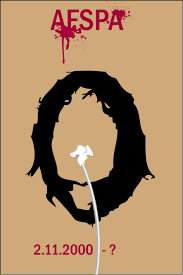
In Solidarity With Irom Sharmila – Repeal AFSPA: Forum Against Oppression of Women

Statement issued by FORUM AGAINST OPPRESSION OF WOMEN
index

Let Us Work Together To Create New Strategies Of Struggle Against Armed Forces Special Powers Act (AFSPA)

We wholeheartedly support the decision of Irom Sharmila to withdraw, her fast of nearly 16 years for the revocation of AFSPA, we salute Irom Sharmila for her undying spirit, heroic struggle and undeterred determination in struggle against AFSPA.
It is our responsibility to take the struggle further and also support Irom Sharmila in her continuing struggle against AFSPA.
 
The history of post-Independence India is also the history of subjugation of the citizens of the North-eastern region. There has been a systematic crushing by the Indian state of their aspirations, and a consistent betrayal of promises made. The Armed Forces Special Powers Act (AFSPA) was enacted as long ago as 1958, in order to suppress the genuine protests of the region’s inhabitants.
 
What is essentially a political issue has been treated simplistically as a law and order problem. AFSPA gives unbridled powers to the army and airforce. (Mizoram is the only part of India where the air force has actually bombed its own people.) The original Act allowed state governments to declare an area to be ‘disturbed’ and to call in the army. A 1972 amendment further allowed the central government to override state governments in order to do the same in any area.
 
AFSPA gives army officers the power to arrest without warrant, to shoot and kill on mere suspicion, to destroy property, and many other such draconian powers. The armed forces are required to act “in aid of” civilian authorities, but that caveat exists only on paper. In reality the army has virtually taken over large areas for decades together now, becoming a force unto itself, answerable to none. No army personnel may be prosecuted without permission from the central government – a permission hardly ever granted. Even bodies like the National and State Human Rights Commissions have little jurisdiction when it comes to human rights violations in the context of AFSPA.
 
What might have served at best as a short-term measure has become a permanent feature in Manipur and most of the North East (except Tripura where AFSPA was withdrawn in May 2015) and some parts of Kashmir. Yet the AFSPA is in violation of various international instruments that India has ratified, such as the Universal Declaration of Human Rights (UDHR), the International Covenant on Civil and Political Rights (ICCPR), the Convention Against Torture, the UN Code of Conduct for Law Enforcement Officials, the UN Body of Principles for Protection of All Persons Under Any Form of Detention, and the UN Principles on Effective Prevention and Investigation of Extra-Legal and Summary Executions.  It is patently unconstitutional, which makes it all the more unfortunate that the Indian Supreme Court got carried away by security concerns and upheld the constitutional validity of the Act.
 
In Manipur there has been widespread unhappiness, with the continuing abuse of human rights by the armed forces under cover of AFSPA causing bitter grievances to surface. Protests against these abuses are a constant feature. In one unique protest in 2004, angered by the custodial rape, torture and killing of 32-year-old Manorama who was picked up from her home on “suspicion”, a number of women paraded naked in front of an army base in protest against the army’s atrocities against women. The other unique and non-violent protest has been that of Irom Sharmila, poet and activist from Manipur. In what has possibly been the longest fast-unto-death anywhere, she has spent more than fifteen years now refusing food and demanding the repeal of AFSPA. For these fifteen years she has lived under arrest and been kept alive through intravenous force-feeding by the authorities.

Continue reading In Solidarity With Irom Sharmila – Repeal AFSPA: Forum Against Oppression of Women

Kashmir’s Freedom is India’s Freedom: Hum Kya Chahte? Azadi

I do not think ordinary Indians support the brutality of army occupation in Kashmir. Despite what the Indian state says, and despite what the Indian army and CRPF are doing, I honestly do not believe that any ordinary Indian supports the torture of young men, the blinding of people attending a funeral, the rape of women, the killings and maiming and abuse and humiliation that are now a routinized fact of daily life in the Kashmir valley. To believe that ordinary Indians enjoy watching this spectacle of violence, that ordinary Indians take pleasure in the torture of children, would be to think India is now a country comprised of sadistic psychopaths. I honestly do not think ordinary Indians are psychopaths. I do think, however, that ordinary Indians, and I count myself amongst them, have somehow managed, till now, to keep some distance between what is happening in Kashmir and the idea of India as a whole. After all, India is a large and complex country, a huge and diverse society. Everything that happens in Kashmir, the brutality of the army and the security forces, cannot signify the whole truth of India we tell ourselves. It seems somehow unfair to us ordinary Indians that what happens in Kashmir reflects on us all.

But the time has come now to squarely face some hard truths about ourselves, and the dissimulations, psychological and social, by which we continue to live in this country and call ourselves ‘Indians’. Continue reading Kashmir’s Freedom is India’s Freedom: Hum Kya Chahte? Azadi

Black and Blue: A Short Story by Saunvedan Aparanti

This is a guest post by SAUNVEDAN APARANTI

[Based on Gujarat Dalit flogging. It chronicles the fictionalised life of one of the victims.]

What comes to your mind when you think of India? If you’ve been seduced by films, books, pictures and anglophile Indians over the last century then you will no doubt paint a happy picture. You might romanticise the poor yet happy people, the colours, the cuisine, the attire, the mystics, the music, the dance, the cacophony, the heat and the sensory overload of this one country. The only colour missing in your picture will be any shade of black because black is a colour that India hides.Black is a colour that India detests whether it be the colour of your skin or the colour of the sewer that you’re lowered in. A bottomless pit is where you will find the true colour of India. Continue reading Black and Blue: A Short Story by Saunvedan Aparanti

Kashmir, Summer 2016: Angana Chatterji

Guest Post by Angana Chatterji 

In 2011, I had written an essay on Kashmir entitled: “The Militarized Zone,”which was published in an anthology on Kashmir (Verso Books).

What was apparent then is all too real now. I reproduce an edited fragment here today, in solidarity with Kashmiris who are being asphyxiated in their land and subjected to life under conditions akin to collective internment, and their allies across India who are being intimidated to conserve the silence. Speaking up on Kashmir is inevitably accompanied by fear for many even as silence is a betrayal of humanity. Continue reading Kashmir, Summer 2016: Angana Chatterji

Statement Against State Violence in Kashmir: Ashoka University Students and Alumni

Guest Post by Ashoka University Students and Alumni

Letter condemning the State Violence in Kashmir

To

The Govt of India. and the Govt. of Jammu and Kashmir.

We, the undersigned—current students, alumni of the Young India Fellowship, and faculty of Ashoka University—write to voice our deepest anguish and grave concern at the violent turn of events in Kashmir in the past few days. The violence perpetrated by the Indian State after the extra-judicial execution(1) of 22-year old Hizbul Mujahideen Commander Burhan Wani (2) is highly condemnable. The Indian Army, Kashmir Police and other task forces have reacted violently with bullets, pellets and lathis in the clashes that erupted after Burhan’s funeral. This was immediately followed by many more protests and demonstrations as part of Kashmiri resistance to the military occupation of Kashmir by the Indian State. In the violent repression of the protests which had a huge ground support (evident from the large attendance to Burhan’s funeral) , 55 civilians (3) have been killed and around 3100 people (4) were severely injured by the pellets(5), lathis and bullets, some of whom have lost their eyesight. We, unequivocally, condemn this brutal use of force by the Indian State in dealing with the protests after the killing of Burhan Wani. Continue reading Statement Against State Violence in Kashmir: Ashoka University Students and Alumni

Students Protest in JNU Over Rising Civilian Casualties in Kashmir

The number of unarmed civilians killed in instances of firing by the armed forces, police and paramilitaries enforcing the occupation of Kashmir by the Indian state in the latest wave of violence has crossed fifty. Many more have been blinded by pellet guns. Hundreds have been injured and hospitalized. Reports of protests are coming not only from the Kashmir valley, Kargil, Drass and Jammu, but also from many cities in India. From Delhi (where there has been a public protest at Jantar Mantar, a press conference at Gandhi Peace Foundation and a student protest at Jawaharlal Nehru University), from Kolkata, which saw a massive turn out in a public march, from Chennai, from Patna, and from Kochi and Tricky in Kerala.

On Friday 22nd July, I went to a night protest march and public gathering by students at Jawaharlal Nehru University, Delhi. The march was called by Shehla Rashid, Vice President, JNUSU and Rama Naga, General Secretary, JNUSU (Both AISA activists) There were perhaps two hundred students gathered peacefully. The march began around 10:00 pm, made its way around the university campus and the protest continued well past midnight. Several student organizations, AISA, BASO, Hundred Flowers, Collective, DSU and individual students participated in the march. Shehla Rashid, Vice President, JNUSU and an AISA student activist, addressed the gathering before the march began, stating clearly, that this was going to be a peaceful expression of the democratic right to protest against the atrocities being enacted by the Indian state on the people of the part of Kashmir that is under Indian occupation. She asked the students to be vigilant in case any disruptive slogans were raised by planted agent-provocateurs. The entire march, and the protest meeting was documented by the students, so as to ensure that no ‘doctored videos’ would raise their ugly digital heads in the days to come. The students raised the demand for freedom for the people of Kashmir, and for people in all parts of South Asia. The slogans connected the realties of the people of Kashmir, the North East, Bastar, Jharkhand, with the experiences of Dalits, Workers, Peasants, Women, Students and Minorities. Slogans were raised against the killings and blindings by pellet guns in Kashmir. against torture, again rape, against draconian acts like AFSPA and PSA. The march made its way through the entire campus and culminated outside Chandrabhaga Hostel, where a meeting was held on the steps. The meeting lasted over two hours, was completely peaceful,and more than two hundred students listened to the speakers with close attention.

Police officers and campus security guards were present, and recorded everything. The students also recorded everything. And the indefatigable Shamim Asghor Ali made video recordings of several speeches, and uploaded them on to youtube, which we are lucky to be able to share here. We are also grateful for the still images uploaded by V. Arun, several others also took pictures and videos, which are now being shared on Facebook. Continue reading Students Protest in JNU Over Rising Civilian Casualties in Kashmir

The Outsiders: Jagjit Pal Singh

This is a guest post by JAGJIT PAL SINGH

It was the year 2013; I took an auto-rickshaw from Dal Gate to Shankaracharya temple. As the auto-rickshaw took a right from the Boulevard towards the road that goes to the temple it was halted by a long queue of vehicles, mostly cars. I could see a security-check post from the distance, men in uniform grilling the drivers and their automobiles with the same thirst. You have to clear it before you pay visit to the deity. In Kashmir, these security-checks posts are just like traffic signals we habitually obey and cross in Delhi or in any other city, every day, every few kilometres. As I got off from the auto to take some fresh air a faujee approached me. He inquired from where I was coming, a very friendly tone in his voice. I was not new to these security-checks. I am half-Kashmiri, half-Punjabi, half-Sikh, half-Indian, half-Pakistani, half- refugee, and many others halves I could never put together to give a name to. He was visibly happy to see an ‘Indian’ in the land of ‘terrorists’, probably mistaken by my Punjabi/Sikh appearance. I’m more Kashmiri than a Punjabi though. If it were 1980’s or 1990’s the approach would have been different. Punjabis, mostly Sikhs, were terrorists those days. There are few other adjectives he used for Kashmiris I would like to skip. I instantly gathered all my Indian-ness and replied in an equally friendly-Indian tone to his friendly-Indian questions. It was a casual chat. Then, he went to the auto-driver in his role as a uniformed Indian in a ‘conflict-zone’; spoke to him in a dialect ‘only Kashmiris understand’, gave a green signal and in few minutes our middle-class auto-rickshaw bypassed all the expensive cars with JK number at the rear. Continue reading The Outsiders: Jagjit Pal Singh

What Made Burhan a Hero?: Muzaffar Ali

This is a guest post by MUZAFFAR ALI

Around two lakh people participated in the funeral procession of Burhan Wani: the slain Hizb militant from Shareifabad, Tral. Without a break Kashmiris are offering prayers in absentia and paying tributes to the `martyr.` Community kitchens in his locality have been set up to feed people who come to pay tributes. Defying curfew, people are crossing hills and hamlets on foot to reach his native place. Graffities in the Lalchowk area of Srinagar hail him as a hero who lives in “our hearts.” Never before has anyone witnessed such a tremendous support or tribute base for a slain militant. Militants have died before as well, but his death has given life to something unprecedented. Banners in his honour have been installed across the valley to convey the message that he will be remembered. The valley is on boil, and people are risking lives to attack armed police officers and CRPF personals. The death toll according to reports in Rising Kashmir has reached 43 and thousands of people are injured, many of them critically. While the state and the propagandistic TRP driven media emphasize Burhan being a ‘terrorist’, Kashmiris hail him as their ‘hero’ and ‘saviour.’ The question is what turned Burhan into a hero and why are Kashmiris across age groups eulogizing him? What is inspiring people to raise a slogan like, “mubarak tas maajeh yes ye zaav: shaheed hai aav, shaheed hai aaav” (congratulations to the mother who gave birth to Burhan—the Martyr). Continue reading What Made Burhan a Hero?: Muzaffar Ali
