Category Archives: Debates

‘लव जेहाद’ की असलियत – इतिहास के आईने में: चारू गुप्ता

Guest post by CHARU GUPTA

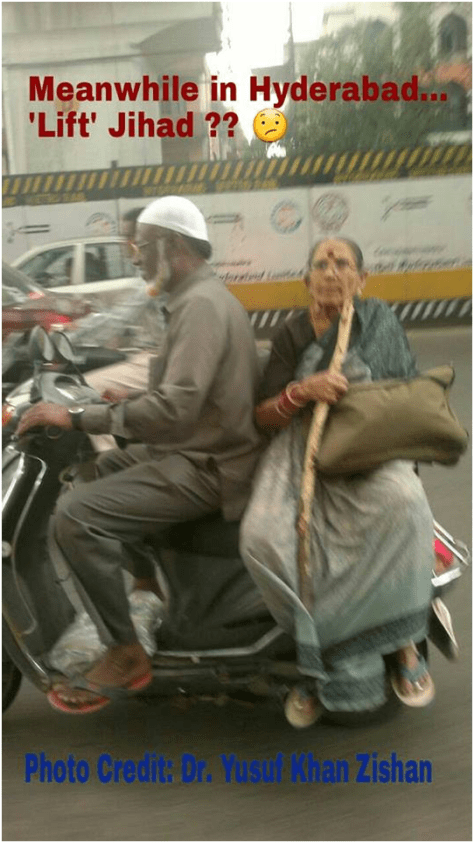
लव जेहाद आंदोलन स्त्रियों के नाम पर सांप्रदायिक लामबंदी की एक समकालीन कोशिश है. बतौर एक इतिहासकार मैं इसकी जड़ें औपनिवेशिक अतीत में भी देखती हूँ. जब भी सांप्रदायिक तनाव और दंगों का माहौल मज़बूत हुआ है, तब-तब इस तरह के मिथक गढ़े गए हैं और उनके इर्द गिर्द प्रचार हमारे सामने आये हैं. इन प्रचारों में मुस्लिम पुरुष को विशेष रूप से एक अपहरणकर्ता के रूप में पेश किया गया है और एक ‘कामुक’ मुस्लिम की तस्वीर गढ़ी गयी है.

मैंने 1920-30 के दशकों में उत्तर प्रदेश में साम्प्रदायिकता और यौनिकता के बीच उभर रहे रिश्ते पर काम किया है. उस दौर में लव जेहाद शब्द का इस्तेमाल नहीं हुआ था लेकिन उस समय में भी कई हिंदू संगठनों — आर्य समाज, हिंदू महासभा आदि –- के एक बड़े हिस्से ने ‘मुस्लिम गुंडों’ द्वारा हिंदू महिलाओं के अपहरण और धर्म परिवर्तन की अनेकोँ कहानियां प्रचारित कीं. उन्होंने कई प्रकार के भड़काऊ और लफ्फाज़ी भरे वक्तव्य दिए जिनमें मुसलमानों द्वारा हिंदू महिलाओं पर अत्याचार और व्यभिचार की अनगिनत कहानियां गढ़ी गईं. इन वक्तव्यों का ऐसा सैलाब आया कि मुसलमानों द्वारा हिंदू महिलाओं के साथ बलात्कार, आक्रामक व्यवहार, अपहरण, बहलाना-फुसलाना, धर्मान्तरण और जबरन मुसलमान पुरुषों से हिंदू महिलाओं की शादियों की कहानियों की एक लंबी सूची बनती गई. अंतरधार्मिक विवाह, प्रेम, एक स्त्री का अपनी मर्जी से सहवास और धर्मान्तरण को भी सामूहिक रूप से अपहरण और जबरन धर्मान्तरण की श्रेणी में डाल दिया गया. Continue reading ‘लव जेहाद’ की असलियत – इतिहास के आईने में: चारू गुप्ता

A civil-war is on the doorstep of India: Interview with Kancha Ilaiah by Mahmood Kooria

This is a guest post by Mahmood Kooria

We are publishing an English translation of an important interview of the intellectual and academic Kancha Ilaiah, conducted by Mahmood Kooria for the Malayalam weekly Mathrubhumi. While what I see as Professor Ilaiah’s underestimation and perhaps misreading of the historic role of the Communists in Indian politics leaves me severely uncomfortable, especially when he exonerates the right from commensurate charges of elitism, his framing of Hindustva and Modi’s appeal within the great stream of caste in the subcontinent is brilliant and thought-provoking, as always. 

Kooria conducted the interview as well as translated it in to English. His introduction is as follows, “At a time when there was no any such discussion, in 2002 Professor Kancha Ilaiah predicted that Narendra Modi will be the prime-ministerial candidate of Baratiya Janata Party. It has come true and now Modi is in the office. At this point, I talked with him at Moulana Azad Urdu University Hyderabad where he chairs the Centre for the Study of Social Exclusion and Inclusive Policy. In the conversation, he talked about the future of Modi government and he predicted that a civil war is going to break out in India if Modi does not cater the needs of backward classes. A Malayalam-version of this interview was published in the Mathrubhumi Illustrated Weekly (August 24, 2014).”

Mahmood Kooria: Ten years ago you wrote that Modi will be the prime ministerial candidate of BJP. What would be your response as your prediction has come true?

Kancha Ilaiah: Well, at that time I was predicting that based on the Left parties’ indifference to understand the caste question. The caste question is not been seriously taken by the Left parties. And, after Mandal, the BJP and the RSS wings started looking at caste-question seriously because when Babari Masjid was demolished they mobilized a lot of backward classes. Though they oppose Mandal reservation, they wanted the backward classes to be part of the Hindu religion. Around 1994, a non-Brahmin called Rajju Bhaiya became the Sarsanghchalak of the RSS. Then he recruited a large number of backward classes, large number of youth, and he promoted the people like Narendra Modi, Uma Bharati at that time. Earlier, the first backward-class chief minister of Uttar Pradesh was a BJP man: Kalyan Sing. He was the chief minister in 1992 when the Babri Masjid was demolished.

The Sangh Pariwar was responding to the backward class demands more. But the Left or the Congress was not responding to the OBCs. The Congress was responding to the Dalits and Muslims. There was upper caste all the time on the top. So, when Narendra Modi became the chief minister and this whole atmosphere was created, I was writing a column in The Hindu. I thought that this seems to be cause/course of India, since the Hindu religion is surviving because of the backward classes. It is inevitable for the Hindutva organizations that they will have to project an OBC for the prime-ministership. But there was resistance from within itself. It is not that the Brahmins have given up the principle of varna-dharma. After that article came and of course after my writing Why I am not a Hindu itself, the backward classes even within RSS seemed to use that material for their advantage. The communists did not use or recognize it. The question of labour and caste which I have been consistently raising, which was also part of their theory, they did not care about. So the Communist Party remained tightly under the control of upper castes.

Continue reading A civil-war is on the doorstep of India: Interview with Kancha Ilaiah by Mahmood Kooria

The Wrongs In The Right To Education: Noyonika Bose

Guest Post by  NOYONIKA BOSE

In the winter of 2013 I had carried out a survey as part of an NGO CRY, Child Rights and You in 10 schools in the heavily populated slums of Rajabazar, an area in north Kolkata. The objective of the survey was to see whether the Right To Education (RTE) Act was being properly implemented in these schools.  The findings of the survey though not absolutely abysmal, were not positive either. However what I learnt is that it is not entirely the fault of these government and government aided schools that they were unable to provide their students with quality education. It has also to do with the basic structure of the RTE act which is peppered with several flaws. This article is a critique of the RTE and some possible solutions. Continue reading The Wrongs In The Right To Education: Noyonika Bose

Reading the Debate on the Planning Commission

I find it hard to think through the current debate on the Planning Commission (PC) outside a few things. The first is a clear centralisation of power at and within the PMO which I cannot help but be alarmed by. It’s all well and good when the decisions are those you agree with and all to easy to forget what centralisation does in the hands of, let’s please not forget so easily, a man whose IMHO has no H.

Its faults are easy to list but the PC (when it worked) did remain a space for thinking through a centre-state relationship and a development vision outside the government. It was a moment of articulation of intent with an (albeit diminishing) ability to put some weight behind it. I can’t quite bring myself to defend it because of what it refused to become in the more recent years, and the fights it refused to fight, but the need for such an autonomous voice remains. I don’t believe this new body will be anything other than a rubber stamp for a deeply authoritative PMO. In that, I am cautious of what will come. And by cautious, I mostly mean afraid.

Continue reading Reading the Debate on the Planning Commission

If Gail Omvedt is Katherine Mayo, then Sugatha Kumari is …? Thoughts on Salman’s Predicaments

Salman Zalman is a young man from Kerala who has recently been arrested for an alleged act of disrespect towards the Indian National Anthem. As an observer in Kerala, I think young people like him who choose to get involved in public struggles for justice face a number of predicaments that were perhaps not so severe for my generation when we were young. For this reason, I do feel that members of my generation, those of us alive to public issues, need to be more open to the challenges that public-minded younger people face today. Continue reading If Gail Omvedt is Katherine Mayo, then Sugatha Kumari is …? Thoughts on Salman’s Predicaments

When David Became Goliath: Lee-Alison Sibley

Guest post by LEE-ALISON SIBLEY

Back in the 1960s when Hollywood was making a number of movies based on biblical stories, they came out with Orson Welles as King Saul in “David and Goliath.” I was a little kid when I saw this movie, but I remember identifying with little David who yes, played beautifully on his harp, and used his slingshot with divine accuracy. I also remember the monster Goliath – he was huge and ugly and represented the Philistines, our enemies.  I cheered in my head and my heart for David to defeat the monster and he did, so that I could feel the good guys won and God was indeed on our side, the side of the Israelites.

Like any idealistic Jew, though not religious, I went to Israel to work on a kibbutz in the summer of 1971.  I was in the south, near Eilat and the border with Jordan.  Young and naïve, I was friendly with everyone I met — the Sabras of Israel, the Christians in Bethlehem, and Arabs in Gaza. In Gaza?  Yes, I was there with a British fellow from the kibbutz who was picking up some cane furniture he had ordered.  I wasn’t supposed to be there, of course, and when an Israeli army jeep spotted me, my friend was in big trouble.  “Get her out of here immediately!” was the order he shouted.  I guess it had something to do with my appearance and that there were no other women on the street at that time.  Like I said, I was friendly with everyone – my parents did not raise me to hate, they raised me to love.  The Israelis tried to make me feel guilty for not staying in Israel, but I kept saying, “I’m an American, my home is the U.S.A.”  Still, I certainly supported Israel and every person I met there had lost someone, a family member or a friend in a war and I felt very sad for them and angry that they lived with the constant threat of attack. Continue reading When David Became Goliath: Lee-Alison Sibley

Learning from Babasaheb: Harsh Mander

Guest post by HARSH MANDER

Among most  secular progressive people in India today there is the belief – indeed an article of faith – that India has been, through most of its long history, a diverse, pluralist and tolerant civilization – the land of Buddha, Kabir and Nanak, of Ashoka, Akbar and Gandhi. It is a culture in which every major faith in the world found through the millennia the space and freedom to flourish and grow, where persecuted faiths have received refuge, where heterodox and sceptical traditions thrived alongside spiritual and mystical traditions, and where ordinary people live and instinctive respect for faith systems different from their own.

All of this is true, and this is why the rise of a narrow, monolithic and intolerant interpretations of Indian culture – what Romila Thapar describes as the right-wing Semitisation of Hinduism – in new India causes us deep disquiet. But what our analysis does not stress often or deeply enough is that all of India, both old and new, has been also built on the edifice of the monumental inequality and oppression of caste, and that this is equally the story of India, old and new. Continue reading Learning from Babasaheb: Harsh Mander

Who is guiding Modi’s economic thinking and what is their background?: Aditya Velivelli

Guest post by ADITYA VELIVELLI

The Modi government’s actions over WTO are a case of much ado about nothing. They have pointedly created a false perception over a non-issue so as to appear pro-poor. Modi said “Do we choose feeding our poor or getting good press world-wide?” Turn this statement around and one gets to see the truth of the matter. The real attempt here is “How to masquerade as pro-poor and get good press in India by using WTO?”

This demonstration of concern for the poor helps Modi’s government in implementing ultra-neoliberal economic policies in the coming months. To understand the game-plan one should only look at the people guiding Modi’s economic thinking. Continue reading Who is guiding Modi’s economic thinking and what is their background?: Aditya Velivelli

September 5 as Teachers’ Day – The Dalit Critique: Abhay Kumar

Guest post by ABHAY KUMAR

While the schools and educational institutions of the country have been observing September 5 as Teachers’ Day since 1962, on the birth anniversary of the first Vice-President and second President of independent India Dr. Sarvepalli Radhakrishnan (1888-1975), a section of Dalits, mostly students, activists and intellectuals at public universities, are increasingly denouncing its observance. They contend that the birthday of Radhakrishnan, a Brahmin, should no longer be held as Teachers’ Day because he had made no contribution to the educational uplift of lower castes and classes. Instead they exhort people to observe National Teachers’ Day on January 3, the birth anniversary of the nineteenth century social reformer, and teacher from backward caste, Savitribai Phule (1831-1897).

national_teachers_day

According to the biographer of Savitribai Phule, M. G. Mali (Krantijyoti Savitribai Phule, 2005), she was taught by her husband in a school run under the shade of a mango tree. Access to education enabled her to become aware about egalitarian movements at global level as she managed to read the biography of Thomas Clarkson (1760-1846), who fought for liberation of the Black. Later when she became a teacher, it was vehemently opposed by reactionary Brahmins who pelted stone and threw dung on her in order to “save” orthodox Hindu religion. When frustrated Brahmins were unable to deter the zeal of Phules about imparting education, they succeeded in reasoning with her father-in-law, Govinda Rao, to force them to leave home. She preferred eviction with her husband from home to giving up her mission on education. Despite the opposition, they continued to persuade parents to send their daughters to schools. As a result of their hard work, 18 schools were opened from 1848 to 1852. Her dedication to spread education, particularly among subalterns is self-evident from a few lines of her poem. ‘All gets lost without knowledge… We become animal without wisdom…So learn and break the chains of caste….Throw away the Brahman’s scriptures fast.’   Continue reading September 5 as Teachers’ Day – The Dalit Critique: Abhay Kumar

Why I am an anti-Zionist Jew: Ray Filar

RAY FILAR on openDemocracy

IMG_1810

The Israeli government deliberately invokes terrorist attacks, rockets, and scary brown men in headscarfs to stoke the population’s fear, but I am scared of the racism Zionists use to justify the occupation.

The discussions in the comments that follow are equally instructive and interesting – do scroll down and follow those as well.

Don’t let the Magic Fade: Thoughts on Kudumbashree’s Sixteenth Anniversary

I do not write on Kafila as frequently as I used to because I don’t want to be writing stories of impending doom all the time. These are times in which we appear doomed, but it does not help to get obsessed with it; in fact, the obsession may actually hasten the downfall.

But these days, we also hear stories which may be told either way. For example, I can tell the story of the mining going on at Mookunnimala in Trivandrum as yet another episode in the continuing story of the destruction of our natural environment and its impending collapse. But I can also tell it another way, foregrounding the resistance that has shaped up there despite the formation of a deadly nexus of Kerala’s political parties, bureaucracy, predatory capitalists and other criminals against local people. Or, I can tell the story of the ‘development’ of the government school at Attakkulangara in the heart of Trivandrum city as another incident that proves the unrelenting march of ‘urban development’ which is nothing but shorthand for the steady takeover of prime urban space by corrupt officials and venal politicians. But it is also a David-and-Goliath tale of how a few dedicated members of the school’s old students’ association, and nature-lovers and environmental activists who go by the name Tree Walk  managed to draw the attention of others, alert authorities, and arrest the steady pace of these forces. Continue reading Don’t let the Magic Fade: Thoughts on Kudumbashree’s Sixteenth Anniversary

Rape and Rakhi – Patriarchal-Communal Narratives: Kavita Krishnan

Guest Post by KAVITA KRISHNAN

Even as the communal cauldron in UP is kept on the boil, there is news that the RSS has launched a campaign to tie Rakhis to lakhs of Hindu men, asking them to pledge to protect their sisters from Muslim men and “love jehad.” The VHP has been running a helpline urging Hindus to approach them “if your daughter is being harassed by Muslim boys.” And a khap panchayat in Muzaffarnagar has imposed a ban on mobile phones and jeans for girls, claiming that these result in ‘eve-teasing’.

Woven into the above events is an old, familiar theme – that of patriarchal restrictions packaged as ‘protection’. In the wake of the anti-rape movement that followed December 16 2012, the streets of Delhi and many other parts of India had resounded with the voices of women declaring ‘Don’t take away our freedoms in the name of ‘protection’ – protect our right to fearless, fullest freedom instead’. Those women had raised their voice demanding freedom from sexual violence – and also freedom from rape culture that advices women to dress decently to avoid rape; and freedom from the khap panchayats, freedom even from the restrictions imposed by one’s own fathers and brothers.

Continue reading Rape and Rakhi – Patriarchal-Communal Narratives: Kavita Krishnan

सीसैट के जरिये सरकारी नौकरियों में दाखिले के खिलाफ एक आवाज के खिलाफ एक और आवाज – रविकांत

Guest post by RAVIKANT

‘निकम्‍मों व गये-गुजरों’ के लोक सेवा आयोग और सीसैट के जरिये सरकारी नौकरियों में दाखिले के खिलाफ एक आवाज के खिलाफ एक और आवाज

(टीप मेरी- इसका यह मतलब नहीं कि सीसैट के खिलाफ बोलने व आंदोलन करने वाले बेहतरीन के समर्थन में नहीं हैं. उन्‍हें बेहतरीन के साथ संवेदनशील के समर्थन में भी होना चाहिये.)

इस वक्‍त जब देश के एक हिस्‍से में कई युवा इस बात पर आंदोलनरत हैं कि लोकसेवा आयोग द्वारा आयोजित की परीक्षाओं में चुने जाने वाले व्‍यक्तियों की जांच भारतीय भाषाओं की जानी चाहिये, उस वक्‍त 27.07.14 के टाइम्‍स ऑफ इंडिया अखबार में श्रीवत्‍स कृष्‍णा का एक लेख छपा है, जो कि खुद भी प्रशासनिक सेवा के एक अधिकारी हैं. इस लेख का प्रमुख तर्क यह है कि भारत की एक राजभाषा अंग्रेजी को छोड़ कर तमाम भारतीय भाषायें (दूसरी राजभाषा हिंदी सहित), भारत में राजकाज चलाने वाले लोगों की क्षमताओं की जांच करने के लिहाज से नाकाबिल है. लिहाजा यह हक अंग्रेजी के पास ही रहना चाहिये.

लेख के नाम व उसके साथ दी गयी टीप का मतलब कुछ यों बनता है – ‘‘फालतू की बात के लिये इतना शोरशराबा- संघ लोक सेवा आयोग और सीसैट के जरिये निकम्‍मों व गये गुजरों का नहीं, बेहतरीन का चयन होना चाहिये.’’

लेख के शीर्षक में ही आंदोलन को फालतू का बता दिये जाने के बाद अगली ही पंक्ति में आंदोलनकारियों के लिये हिकारत की झलक मिलती है, जब लेखक यह संकेत देता है कि यह आंदोलन गये-गुजरों या निकम्‍मों की पैरवी कर रहा है. वैसे मुझे लगता है कि लेखक को लगता है कि यह शोरशराबा फालतू का नहीं है इसलिये उन्‍हें यह लेख लिखने की जरूरत पड़ी. अगर फालतू के शोर शराबे  के खिलाफ किसी को लेख लिखने की जहमत उठानी पड़े तो यकीनन वह इतना फालतू भी नहीं है कि उसकी सफाई देने की जरूरत आन पड़े. Continue reading सीसैट के जरिये सरकारी नौकरियों में दाखिले के खिलाफ एक आवाज के खिलाफ एक और आवाज – रविकांत

The Chunduru Caste Atrocity – Discussing a Retrograde Judgment: Anonymous

Guest post by An Anonymous Advocate from the AP High Court 

On 22nd April, 2014, two Judges of the Andhra Pradesh High Court held that there was no evidence in the Chunduru atrocity case. The court acquitted all the accused. Not just that. They blamed the Dalits for not being responsible enough in alerting the police immediately, and obliquely cast a doubt on their integrity.

The Chunduru atrocity has gained national importance as much for the atrocity itself as for its place in the Dalit movement. On 6th August 1991, eight dalits were hacked to death by the upper caste men of Chunduru village, located in Guntur district of Andhra Pradesh. The political mobilization that was generated around this atrocity became the corner stone for the Dalit movement in Andhra Pradesh, and an inspiration for Dalit movements elsewhere in the country. On the legal side, it has been one of those long-drawn trials, resiliently overcoming one hurdle after another, be it the controversy around who the victims are (Dalits or Christians), or regarding the choice of the Special Public Prosecutor for the trial, or the venue of the trial. The case went back and forth between the High Court and the trial court, having been contested viciously by the Reddy accused, their lawyers and their ideologues.

Continue reading The Chunduru Caste Atrocity – Discussing a Retrograde Judgment: Anonymous

Gandhi, Palestine and Israel: Irfan Ahmad

Guest post by IRFAN AHMAD

Amidst Israel’s recent deadly attacks on Gaza and what Venezuela’s President called ‘its policy of genocide’, many have invoked Mohandas Karamchand Gandhi (1869–1948) on two counts. First, he opposed settler colonialism. One analyst in The Economic Times gave a quote, also shared on Facebook: ‘Palestine belongs to the Arabs in the same sense that England belongs to the English and France to the French’. Second, implicit in invoking Gandhi is the idea that he stood for non-violence and thus the indicting advice to the terrorised Palestinians to ‘choose peace’.

Both these positions linked to Gandhi, when analysed historically, are misleading, even incorrect and wrong. In 1921, Gandhi did oppose the imposition of Jews over the Arab land. However, later he subtly endorsed settler colonialism. As for Gandhi’s official preaching of non-violence and civil disobedience (satyagraha), they were at best tactical, contextual and temporary. Contrary to his deified mythology as apostle of non-violence, Gandhi indeed justified killing, even felt proud of violence, and opposed civil disobedience when both suited his political and national interests. Continue reading Gandhi, Palestine and Israel: Irfan Ahmad

Anti-Semitism Cannot be the Response to Israeli Attacks on Gaza

Extremely disturbing reports of anti-Israeli sentiments spilling over into generalized attacks in France have been coming in lately.  This is completely unacceptable. The just cause of the Palestinian people is about occupation of their land by Zionists and all Jews are by no means responsible for the brutality that Israel is exhibiting in its attacks on Gaza, sparing no one and even specifically targeting small children. This is not a religious or a racial issue but one of political justice. Let us make no mistake that any attempt to make it into either a religious or race issue will only harm the Palestinian cause in the long run. Here is an extract from a report in Huffington Post:

France’s politicians and community leaders have criticised the “intolerable” violence against Paris’ Jewish community, after a pro-Palestinian rally led to the vandalizing and looting of Jewish businesses and the burning of cars.

It is the third time in a week where pro-Palestinian activists have clashed with the city’s Jewish residents. On Sunday, locals reported chats of “Gas the Jews” and “Kill the Jews”, as rioters attacked businesses in the Sarcelles district, known as “little Jerusalem”…

Religious leaders gathered for an interfaith service on Monday to call for calm, and Haim Korsia, the chief rabbi of France, and Hassen Chalghoumi, the imam of Drancy shook hands on the steps of the synagogue.  Read the full report here

That said, it also needs to be underlined that in this no-holds-barred war, Zionists themselves have been keen and eager to see that the anti-Zionist feeling is transformed rapidly into an anti-Semitic one. Thus Mondoweiss published a Youtube video along with a report that showed that the attack on the synagogue was actually provoked by members of the Jewish Defense League. Mondoweiss’ story has since been confirmed by the President of the Synagogue de la Roquette. His words:

In an interview broadcast Friday on the 24-hour news channel i-Télé, Serge Benhaïm said that there was “not a single projectile thrown at the synagogue” and that “at no moment, were we ever physically in danger.” (“Pas un seul projectile lancé sur la synagogue”. “A aucun moment, nous n’avons été physiquement en danger.”)

While Benhaïm did not describe the street fight outside as resulting from a JDL “provocation”, he did say that the extremist group smashed up a cafe on Rue de la Roquette (“le président de la synagogue de la rue de la Roquette confirme également que la LDJ a ‘cassé des chaises et des tables’) in order to confront pro-Palestinian demonstrators (“pour aller livrer ce face-à-face”). He added that he did not condone the action, and described the JDL as having a “bad reputation” using a French phrase – “une renommée un peu sulfureuse — that is not done justice by a literal translation. Read the full Mondoweiss report here.

There will be – as there are – desperate attempts to drown the groundswell of anti-Israeli sentiment in a flood of outcries of anti-Semitism, by all interested quarters. There is need therefore to see that no quarter is yielded to those who wish to transform the present mood of anti-Zionism into anti-Semitism.


The Sheepification of Bakistan: Mina Malik-Hussain

We are reproducing this piece by Mina Malik-Hussain, which appeared in The Nation (Pakistan) as it deals with an important issue which concerns the changes that are taking place within subcontinental Islam. The piece underlines the great cultural battle underway within Islam which, in the final analysis is about being Muslim in many different ways. Mina Malik-Hussain is a feminist based in Lahore.

When we were small, there was a month and it used to be called Ramzan. It was Ramzan on television, it was Ramzan in the newspaper with the sehr-o-iftar timings and while nobody had a cell phone or Facebook to wish anyone, it would have been Ramzan Mubarik nonetheless. Sometimes if one was being quite linguistically adventurous it would be Ramazan, but nobody seemed to mind.
And then, insidiously, The Arabs crept up on us. It wasn’t like the return of Muhammad Bin Qasim, but somehow Ramzan became Ramadan. Nobody knew exactly how it happened, but almost overnight our crisp z’uad sound became a lisping Arab burr, and we—a nation of language speakers with no apparent consonant pronunciation difficulties—were flung into the downward spiral of an affectation obsession. Now it was cool to sound Arab, and soon enough it began to be increasingly desirable to look it. Cue Al Huda, cue our streets being lined with gangly palm trees that do nothing, either in terms of beauty or shade, cue the availability of the most bling Islamic cover-up gear you’ll see this side of Dubai.

Still, as a nation we were still fairly open-minded about this, so we fasted year after year and didn’t really pay attention to the semantics of it. We were busy trying to live our lives and be regular Pakistanis, but The Arabs kept making inroads onto our cultural minds. One year ‘khuda-hafiz’, that old and comfortable way of saying goodbye and Godspeed, became ‘Allah hafiz’ with the dubious reason of having to specify which deity to whose protection one was recommending you. Because here in multi-religious, multi-cultural and secular Pakistan there was actual leeway where one would wonder who exactly Khuda is, and perhaps not want to be entrusted to a pagan god. Some people resisted, and continue to resist Allah hafiz and keep saying khuda-hafiz with the logic and hope that whatever His name, He will still protect and love them. Also if it was good enough for one’s grandfather and great-grandfather, it was just fine for them too. Read the full article here

How History Was Unmade At Nalanda! D N Jha

This response to Arun Shourie by DN JHA is the complete original, of which a shorter version was published in The Indian Express today.

Ruins of Ancient Nalanda University

Ruins of Nalanda University

I was amused to read  ‘How History was Made up at Nalanda’ by Arun Shourie who has dished out to readers his ignorance masquerading as knowledge –  reason enough to have pity on him and sympathy for his readers! Since he has referred to me by name and has  charged  me with fudging evidence to distort the historical narrative of the destruction of  the ancient Nalandamahavihar,  I consider it necessary to rebut his allegations and set the record straight instead of ignoring his balderdash.

My presentation at the Indian History Congress in 2006 (and not 2004 as stated by Shourie), to which he refers, was not devoted to the destruction of ancient Nalanda per se – his account misleads  readers and pulls wool over their eyes.  It was in fact focused on the antagonism between the Brahmins and Buddhists  for which I drew on different kinds of evidence including myths and traditions. In this context I cited the tradition recorded in the 18th century Tibetan  text, Pag-sam-jon-zang by Sumpa Khan-Po Yece Pal Jor,mentioned by B N S Yadava in his Society and Culture in Northern India in the Twelfth Century (p.346) with due acknowledgement, though in his pettiness, Shourie is quick to discover plagiarism on my part! I may add that “Hindu fanatics” are not my words but  Yadav’s which is why they are in quotes. How sad that one has to point this out to a Magsaysay awardee journalist! Continue reading How History Was Unmade At Nalanda! D N Jha

(How) Does the Sovereign Speak?: Akshaya Kumar

This is a guest post by Akshaya Kumar

In a recent piece, entitled The Modi Wave, I analyzed the orientations of the Modi campaign, and argued that crucial to Modi’s repackaging was his ‘sovereignty effect’. In this case, entirely a property of the media narratives that pitched Narendra Modi as someone from outside history, he was offered as an intervention into national history. I have suggested that this was a masterstroke to the extent that the subject within history has a compromised agency. The continuities – of forces, events, rationales and time as a whole – blunt the provenance of the outsider. In order for the subject to act upon history, he must stand entirely outside it. In this way, he cannot be accessed from within historical time. Modi not only offered a historical narrative of an unending Congress rule, infested with corruption, appeasement and misrule, but also that of him observing this lingering malady from outside the fence. His story of his own rise goes from being a tea-seller to the Chief Minister of Gujarat, from a not-yet to a fully sovereign. He is never a deputy, never a peg within the system; he suffers till his agency is still being shaped, and appears as already the incumbent. This fundamental separation from the substance of historical progression is needed to project oneself as unsullied, unlike those defiled by the their political existence within history.

Continue reading (How) Does the Sovereign Speak?: Akshaya Kumar

Remembering Naz: Danish Sheikh

Guest Post by DANISH SHEIKH

“We declare that Section 377 IPC, insofar it criminalises consensual sexual acts of adults in private, is violative of Articles 21, 14 and 15 of the Constitution.” Today marks 5 years of the Delhi High Court’s Naz Foundation v. Union of India judgment. Every year since the judgment came out, this has been a day marked by celebration. I remember this day in 2009 when the sheer novelty of the “decriminalized” tag reverberated through us in euphoric waves; the time in 2011 when we stood with flamboyant helium balloons in Bangalore’s Cubbon park, struggling with an untimely Bangalore drizzle; and then in 2013 in the same park, where the rain gave way to a too bright sun and lingering uncertainty about the fate of the judgment. It is now 2014 and we know its immediate fate. It has hit a bit of a, shall we say, roadbump.

Continue reading Remembering Naz: Danish Sheikh

The Hindi Imbroglio – Videshi Nationalism? Rita Kothari

Guest post by RITA KOTHARI

Bqkh32sCcAAodoA

We live with multiple Hindis – one for instance, in railway and flight announcements, the other in cinema, a mixture of Hindi and Urdu, or Hindustani,  the kind Gandhi wanted India to adopt as its national language. The former kind – sarkari Hindi – survives only in its ceremonial avatar. This  was acknowledged in a rare moment of honesty when   the Rajbhasha unit of Ministry of Home Affairs issued an order in December 2011 to provide relief to beleaguered translators who came up with words like ‘Misil’ (for file) and sanganak (for computer). It suggested using English words or words from Indian languages instead of  coining new ones but to be written in the Devangari script. It is interesting that this remained unnoticed, for it was business as usual when it happened. How is language both incidental and central at the same time? I wondered.


Government Order dated May 27, 2014 on use of Hindi

Continue reading The Hindi Imbroglio – Videshi Nationalism? Rita Kothari