Category Archives: Debates

When the Vishwa Hindu Parishad went time travelling: Ilija Trojanow and Ranjit Hoskote

3_3

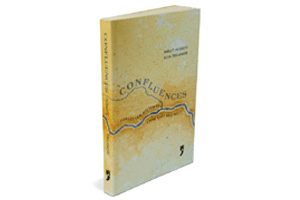
This is an excerpt from Confluences: Forgotten Histories of East and West by ILIJA TROJANOW and RANJIT HOSKOTE (Yoda Press, 2012). In defiance of the current tide of national and cultural neo-tribalism, the authors argue that the lifeblood of culture is confluence. No culture has ever been pure, no tradition self-enclosed, no identity monolithic. Employing a variety of approaches, ranging from the essayistic to the poetic, from rigorous historical analysis to the playfulness of fiction, they follow the journeys of stories, ideas, people and songs, and trace the umbilical connections between Europe and Asia, Zoroastrianism and Christianity, Western revolutionary thought and the annihilatory politics of Jihad and Hindutva. In this particular section, titled ‘Travelling Back in Faith’, history is presented through the prism of science fiction:

vhp2The Vishwa Hindu Parishad (VHP) is a powerful organization founded on the belief that the Hindu religion is eternal and unvarying, that it has existed in India for thousands of years (the VHP’s chronological estimates vary between 8,000 and 50,000 years), and that its essence has never been affected by any foreign influence or borrowing. Hinduism is unique to India, and India is a uniquely Hindu country: such is the logic of the VHP. And yet, occasionally, the VHP is assailed by a sense of doubt. It is all very well to thunder at Muslims and Christians in self-congratulatory public meetings, its leaders say to themselves, but it would be nice to have some proof with which to fight off the scoffing scientists. And so, as documents recently made available to researchers reveal, the high command of the VHP decided to sponsor a time travel project, sending a fact-finder back to the glorious Vedic age to collect evidence of how the ancestors of the Hindus performed their rituals, worshipped their gods, and conceived of their relationship to the Divine. Continue reading When the Vishwa Hindu Parishad went time travelling: Ilija Trojanow and Ranjit Hoskote
A summary of the National Food Security Bill, 2013

This summary of the National Food Security Bill 2013 (revised version, as tabled in Parliament, 22 March 2013) comes to us via Jean Dreze

1. Preliminaries

The Bill seeks “to provide for food and nutritional security in human life cycle approach, by ensuring access to adequate quantity of quality food at affordable prices to people to live a life with dignity and for matters connected therwith and incidental thereto”.

It extends to the whole of India and “shall come into force on such date as the Central Government may, by notification in the Official Gazette appoint, and different dates may be appointed for different States and different provisions of this Act”. Continue reading A summary of the National Food Security Bill, 2013

No Time for Grieving – Or Why We Should Talk Some More About Kai Po Che: Debashree Mukherjee

Guest post by DEBASHREE MUKHERJEE

Okay, so the popular consensus is that Kai Po Che is a good film. Everyone agrees that it’s well shot and edited, the relatively unknown heroes are excellent, and the narrative is taut and emotionally resonant. It is competent and follows all the right cues worthy of a buddy movie about growing up and testing loyalties. But the film is hardly an event. It has been seized upon as a significant cinematic landmark for its depiction of the Gujarat pogrom of 2002. It might be worth our while to get some perspective here.

Today I will look at some other questions about our collective liberal attitude to this film, and what it indicates about our memory of select incidents of mass violence in this country. The main question to ponder is whether there is something dangerous about a historically-contextualized cultural product that can be coopted by a range of political perspectives? Is there something objectionable about a film (and the emotions it generates) which is deliberately toothless in the face of power? Over the last few weeks we have witnessed a range of informed cultural commentators  protest that critics of the film are making much to-do about what is in fact the first “realistic” and engaging Bollywood depiction of the Gujarat massacre. This post rejects that opinion and appeals for responsible film criticism and an alert, active mode of spectatorship.

Continue reading No Time for Grieving – Or Why We Should Talk Some More About Kai Po Che: Debashree Mukherjee

Aadhar/UID is Against Equality and Democracy: Moiz Tundawala

Guest Post by Moiz Tundawala

After the suppression of the 1857 Mutiny and the British take over of Delhi, Mirza Ghalib was once asked by a military official whether he were Muslim or not. Ghalib is said to have quipped: “Only half Muslim; I drink wine but refrain from swine.” For me, this ripost evinces a flippant disdain for modern forms of rule which essentialize persons and groups purely based on certain attributes which are deemed definitive and prioritized over others. As far as Ghalib’s case was concerned, the idea may have been to find out based on his religious identity if at all he could pose problems for the newly established colonial regime. In later years, this policy, which African intellectual Mahmood Mamdani has recently termed ‘define and rule’, gradually became integral to governmental practices in most parts of the modern world; today, populations are ever so readily classified and enumerated based on empirically observable characteristics in order to make them amenable to effective government. The Aadhaar project of the Unique Identification Authority of India clearly falls within the gamut of such practices, marking a transition to modernity in a radical break from the past. So my reservations with it are just the same as those with any other modernity inspired programme wherein personal and collective identities are reduced to a somewhat arbitrarily determined bare essence which may have no real connection with lived experiences of fuzzy and contextually constructed identities.

Continue reading Aadhar/UID is Against Equality and Democracy: Moiz Tundawala

A Political Hanging: Nirmalangshu Mukherji

Guest Post by Nirmalangshu Mukherji

Since the secret hanging and burial of Afzal Guru in Tihar jail, many writers have justly condemned the manner in which the government conducted the execution . However, once the state decides to hang a person, the issue of whether the killing took place in a ‘transparent’ and ‘dignified’ manner is a largely aesthetic one. The process that initiated the killing continues to be of primary epistemic concern.

No doubt the manner and timing of the hanging clearly indicates that the government had ulterior political motives in mind. Yet, these motives are better understood in terms of the political considerations that guided the case of Afzal Guru from his arrest to the rejection of his mercy petition. His hanging within a few days of the presidential rejection was just the inevitable culmination of this political process.

Continue reading A Political Hanging: Nirmalangshu Mukherji

Myths and Facts About the Criminal Law (Amendment) Bill, 2013

This document has been put together by the group pursuing advocacy related to CLRB 2013, in Delhi. It addresses several myths about the new Criminal Law Amendment Bill that are circulating in the media. The note also explains the one change feminists  continue to push for and did not get – to make the victim of rape a person, that is to say, gender neutral. The new law must be expanded to protect all persons, and not be limited to women – because all persons/ anyone can be raped.

The Justice Verma Committee (JVC) report was a landmark statement, applauded by all citizens, welcomed by all Political Parties. JVC was significant because it showed a mirror to the Constitution of India, and reflected its wise and just guarantees of women’s equality. Today the women and youth of India are looking with hope and expectation towards Parliament, and towards all Political Parties. We urge all Members of Parliament to pass a law upholding the spirit and letter of the Justice Verma Committee; to pass a law that makes a step forward in our collective struggle to end sexual violence in India.

Myth 1: The Criminal Law (Amendment) Bill 2013 is against men

Fact: The new anti-sexual violence Bill is NOT against men. For our fathers, brothers, husbands, partners, neighbours and colleagues are men too. Are these Men in our lives not committed to seeking an end to the constant threat of sexual violence lurking around every corner? Continue reading Myths and Facts About the Criminal Law (Amendment) Bill, 2013

Sahibs, Pandits and the Scholarship on Caste: Manish Thakur and Nabanipa Bhattacharjee

Guest post by MANISH THAKUR and NABANIPA BHATTACHARJEE

Scholarship on caste has always been much more than merely about caste. At stake has been the very idea of India, and the production of knowledge about it. Expectedly, whenever academic knowledge on caste spills over in the public domain (and it does so often, as in the recent Ashis Nandy case), politically charged contestations about the idea of India inevitably follow. In the academy, the privileging of Brahmanical worldview in sociological discourses on India continues to be a source of deep-seated resentment. ‘Indian Critiques of Louis Dumont’s Contributions’ (Khare 2006) notwithstanding, the figure of ‘the learned Brahman’ (Alamgir 2006) looms large in the voluminous corpus of anthropological knowledge about India. So much so that Richard Burghart(1990) views modern anthropological knowledge primarily as a function of multiple dialogues between modern day anthropologists and the Brahmanical tradition of knowledge.

Continue reading Sahibs, Pandits and the Scholarship on Caste: Manish Thakur and Nabanipa Bhattacharjee

Why was Ram Singh killed in Tihar jail?

The chief accused in the Delhi gang rape “found dead” in his cell? Killed with his own shirt? Hanging from a grill, with his three cell mates sound asleep all the while? The moment I heard the news  on Monday, every conspiracy theory-oriented cell in my body did a quick cartwheel. Promptly I sent out a mail to the sisterhood on the Feminists India e-list:

I’m wondering whether there is something more than police negligence involved here. I have always felt that the role of the police on that night was more than simply their usual laparwahi – that bus may have been used often in the past for such activities, remember they didn’t follow up the complaint of the man who had been earlier that night robbed by the same guys? And how they located the bus from their hafta diaries? I’m wondering – and going to sound paranoid and like a loony conspiracy theorist – whether the key accused in court would have revealed more about police complicity in rapes and other activities on buses like Yadav’s than we imagine. Prisoners in jail often carry out attacks on other prisoners on the orders of the police themselves.

Yes, Indian prisons are violent and brutal, and the police callous and vicious. Yes, there should be an enquiry to assign responsibility. But I’m pretty certain I know who killed Ram Singh – some other prisoners. And I think that they did it on orders from the police. Continue reading Why was Ram Singh killed in Tihar jail?

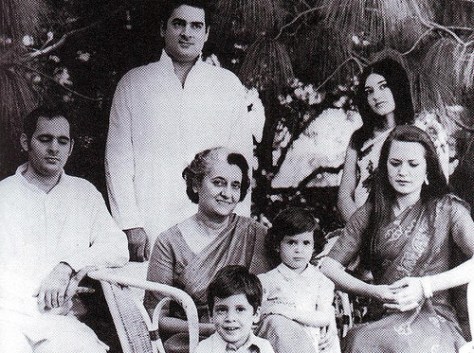
Pot calling the dynasty black: Ajaz Ashraf

gandhi-family

AJAZ ASHRAF writes: It is time we examined the society we have created before we invoke the rather trite argument of dynastic rule to stridently criticise the Gandhis and the Congress. No doubt, dynasty is antithetical to democratic politics. Yet, it is also true that dynastic succession is the norm outside the Indian political realm as well. Its sheer pervasiveness explains why people dismiss outright the hypocritical media outcry against dynastic succession to routinely vote pater familias to power, in state as well at the Centre. Continue reading Pot calling the dynasty black: Ajaz Ashraf

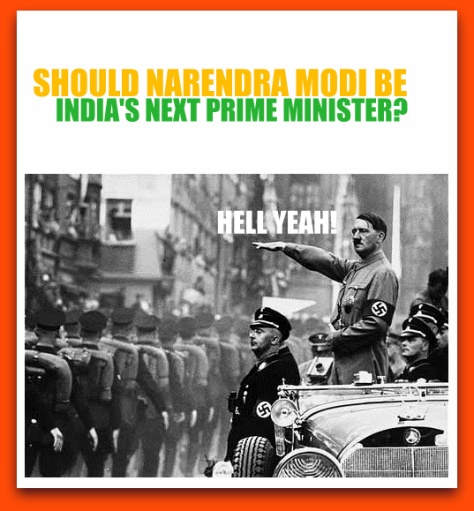
Should Narendra Modi be India’s next Prime Minister?

MODI-HITLER

Sheela Bhatt writes: Continue reading Should Narendra Modi be India’s next Prime Minister?

A Tale of Two Panels: Vrinda Marwah

Guest Post by Vrinda Marwah

On 6th March, in the run up to International Women’s Day, I was involved in two panel discussions on women’s rights, both adrenalin-raising but for entirely different reasons. As someone who has been working in feminist organisations, and who, like so many others, is trying to be active and simultaneously make sense of the agitations and conversations following the Delhi gang rape, I decided to write about this experience because it was so revealing about how power operates.

The second panel, which I will talk about first, was in the United Nations Information Center, from 7:00 PM to 9:00 PM approx., organized by the New Delhi hub of the Global Shapers Community of the World Economic Forum, on issues of women’s safety in Delhi and practical measures that can be taken to address these. I don’t know much about this rather fancy sounding group (in their correspondence with me they describe themselves thus: The Global Shapers Community is a network of hubs developed and led by young people who are exceptional in their potential, achievements and drive to make a contribution to their communities). Continue reading A Tale of Two Panels: Vrinda Marwah

A Modest Proposal from EFLU Students, Hyderabad: Anonymous

Anonymous Guest Post

[This is a response to the recent political developments in the English and Foreign Languages University, Hyderabad. On 1nd March, 2013, Mudasir Kamran, a Kashmiri Muslim PhD scholar of the university was taken to the police station by the Proctor and some other professors of the university in pretext of a personal enmity between Mudasir and his erstwhile room-mate, where he was detained throughout the night without any written complaint being filed. Mudasir came back broken, asking why he was treated like a thief and a criminal. On 2nd March, he committed suicide. A section of the students since then has been demanding for the suspension of the Proctor, an apology from the university, and compensation to the family. The university administration dealt with this in a fiercely draconian manner. They refused to meet the students, they enforced police protection, they threatened a null semester, even a total shut-down of the university. They did not issue a single apology, they appeared in front of media and produced false versions of the events hand in glove with the police (that was subsequently refuted by the alleged eye-witnesses), they constituted a faculty-only Fact-Finding Committee without removing the accused from his administrative position. Rumours have been floated about the alleged homosexuality and the mental instability, thus inciting the cultural stereotype of social aberration and criminality. One unofficially Leftist section alleged that the students are spreading rumours and contacting their “Kashmiri friends” to ignite the fire of unrest in Kashmir (although there has been and still is no connection between student’s demand and what is happening in Kashmir). On 8th March, they finally succeeded in coercing the students enough to make them ask for a resumption of normalcy on the campus. The Vice-Chancellor has threatened that any political activity on the campus will result in a null semester. She has ensured that classes will commence under heavy ‘police protection’ on Monday. A section of the teachers who has refused to accept the responsibility for Mudasir’s unfortunate death has demanded for criminal cases to be filed against the protesting students. Since the protesting side has been majorly comprised of dalits, OBCs, minorities, this is an attempt from their side to allegorically (and satirically, in the tradition of Jonathan Swift who once wrote his ‘modest proposal’ that the British landed aristocracy simply eat Irish children as a way to end the problem of poverty in Ireland) express some of the horrors they have to go through to even stage a basic minimum democratic protest in a so-called elite university.]

[This text has been slightly edited and modified, mainly to allow for easier reading, and to correct a few syntactical slips, but the general tone and style, including capitalization and some archaisms have been maintained so that it is clear that this is a legitimate work of satire, written in the public interest. Kafila]

​​A MODEST PROPOSAL FOR PREVENTING THE DALITS, MINORITIES, AND IN GENERAL THE POOR AND THE MARGINALIZED FROM BEING A BURDEN ON THE GLORY OF THE ENGLISH AND FOREIGN LANGUAGES UNIVERSITY, HYDERABAD AND FOR MAKING THEM BENEFICIAL TO THE UNIVERSITY.

Continue reading A Modest Proposal from EFLU Students, Hyderabad: Anonymous

Some Urgent Considerations on Genetically Modified Crops and Food Security: Neha Saigal

This is a guest post by NEHA SAIGAL: The Budget Session is upon us and we might be witness to one of UPA’s most ambitious flagship programmes, the National Food Security Bill (NFSB), becoming a reality. So it seems like Food Security is the flavour of this session with President, Mr Pranab Mukherjee, reiterating UPA 2’s commitment to food security in his maiden speech at the start of the Budget Session.

But this commitment comes under serious question when one of the responsible agencies of the Government dilutes the issue of food security and further misleads the debate on an important issue like hunger and malnutrition. I am referring to the Ministry of Agriculture (MoA) under Sharad Pawar mindlessly promoting GM crops as a solution to food security. Continue reading Some Urgent Considerations on Genetically Modified Crops and Food Security: Neha Saigal

Leaping Across a Troubled History – Launch of Pratiman

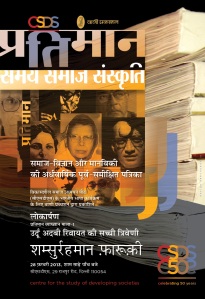
Poster of the launch event  for Pratiman
Poster of the launch event for Pratiman

A new research journal in Hindi, Pratiman – Samay, Samaj, Sanskriti, was launched on 28 February 2013, at the Centre for the Study of Developing Societies, Delhi. The occasion was historic in many ways. Given the long and troubled history of the great language divide between Hindi and Urdu and the lost traditions of Hindustani, the fact that the launch was marked by a public lecture by noted Urdu scholar-poet Shamsur Rahman Faruqi cannot but be anything but historic. There is a certain impertinence and perhaps even insolence, in the move to leap across that history of over a century and a quarter, in complete disregard of the custodians of purity on both sides, in the insistence that language is not what the custodians make of it but what lives in the world of creativity and exchange.

It was only befitting of this occasion that Faruqi chose to speak on “Urdu Adabi Ravayat ki Sachchi Triveni.” In what turned out to be a remarkable and breathtaking tour de force, Faruqi turned his scholarly apparatus to the task of dissecting the Urdu poetic and aesthetic tradition in a manner that revealed its three currents (the ‘triveni’) – namely, Arabi, Persian and Sanskrit.Through the metaphor of the Triveni at Allahabad, where the Ganga and Yamuna meet the third river Saraswati, which is invisible but nonetheless ‘present’, Faruqi too perhaps wanted to stress the significance of the third but invisible current of Sanskrit poetics.

Continue reading Leaping Across a Troubled History – Launch of Pratiman

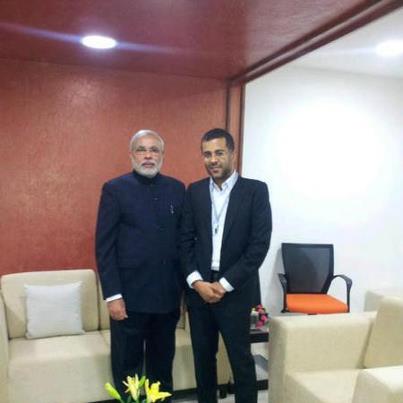
The sickening political opportunism of Chetan Bhagat

modi-chetan-bhagat

Snigdha Poonam watches Kai Po Che, whose script was written by Chetan Bhagat, based on his book The Three Mistakes of My Life:

In the film adaptation, Mr. Bhagat has also added what seems like justification for some Hindus to turn violent, like the death by burning of both of the parents of one of the three protagonists in the Sabarmati Express; in the novel, it was his nephew. We all know the level of vengeance with which Bollywood heroes respond to the targeting of their mothers: “Teri maa mari hai kya (Is it your mother who has died?),” the bereaved son explodes at a sensible friend trying to stop him from losing control of himself.

In his book, Mr. Bhagat clearly showed the 2002 riots as a state-sanctioned exercise (“Whatever it takes to quench the hurt feelings,” says a “senior Hindu Party leader”). But he excised that from the film completely. [Read]

That image above is via DeshGujarat.com, where an article quotes Bhagat as saying in a TV debate:

“It has been discussed much that Modi ji has done well in Gujarat, but what I believe is that he is a very good politician. A politician has to change with public mood. When communal issue mood was there in the country, that was Modi version 1, when he elected for the first time. And when he won the election for second time, he won it on development agenda.”

Clearly, Mr Chetan Bhagat is also a good politician.

The colonial legacy of capital punishment

G Mohan Gopal writes:

The British and their collaborators had made a similar mistake. They thought that the common people of India would be deterred and cowed down by the violence of the state. A young scholar from Columbia recently shared with me data collected from the National Archives showing that the British were hanging on average three people daily in the 1920s in a desperate bid to frighten Indians into obeying British rule. We know how that ended. The government should know how this will end too. [Frontline]

And Fahad Shah meets Maqbool Butt’s mother:

“Both Maqbool sahib and Guru sahib were innocent and on the right path. India thinks that this freedom movement will stop but it won’t stop. It will continue. There are so many Maqbools in Kashmir” [The Kashmir Walla]


On Ram Setu: ‘Mahakaal ka ling kiya hain?’

The Government of India again seems to be in the mood of going ahead with the Sethusamudram Shipping Canal Project that would reduce travel time for ships around coastal Tamil Nadu and Sri Lanka, and bring economic advantages to both countries. The project involves breaking limestone shoals that some regard to be the remains of the mythological Ram Setu. The controversy is an old one. In 2007, I had interviewed Hindutva ideologue Bharatendu Prakash Singhal, who was particularly vocal against the ‘destruction’ of the limestone shoals. Singhal is a former Rajya Sabha MP and a retired Indian Police Service officer. The bits from the interview that were directly about the Ram Setu controversy had appeared in Tehelka, but Singhal was more interested in talking about “mind, body and soul” than about Ram Setu. Here are the unpublished bits – though I had put them on my blog back then. Every word was transcribed faithfully from the recorded audio. Continue reading On Ram Setu: ‘Mahakaal ka ling kiya hain?’

Shahbagh: The Forest of Symbols: Naeem Mohaiemen

This is a guest post by NAEEM MOHAIEMEN

Shahbagh_SyedLatifHossain
© Syed Latif Hossain

There is a particular way of lensing mass movements, when we are observing from within immediate tactics. In a fast moving situation, with opponents and allies squared off, the first thing to shrink is the space for internal critique. Professor Azfar Hussain uses the term “critical solidarity” for his approach to Shahbagh. A critique that seeks to help the movement, but also a critique some are not ready to hear yet.

For the last sixteen days, Bangladesh has been in an intense new political phase. The ground has shifted and been recast by the scale of the Shahbagh movement. The flash point was the sentencing of the “Butcher of Mirpur” (a war criminal who collaborated with the Pakistan army in 1971). But, by now, the demands have expanded to a call for a ban on the main Islamist party Jamaat-e-Islami, or even Islamist politics altogether. Older leftist thinkers like Badruddin Umar are daring to ask questions of the hallowed place of “state religion” in the constitution. Younger bloggers are urging all to make it clear that the movement is about war criminals, not religion. But of course, with war criminals conflated with the Jamaat-e-Islami, and that party eager to present themselves as standing for “Islam,” category errors will happen. Continue reading Shahbagh: The Forest of Symbols: Naeem Mohaiemen

People’s Watch Over Parliament: Bekhauf Azadi Campaign

20130220-235633.jpg

  • Protestors at the ‘Freedom Parade’ Rally of the Bekhauf Azadi Campaign, New Delhi, 26 January, 2013

Guest Post by Bekhauf Azadi (Freedom Without Fear) Campaign.

People’s Watch Over Parliament: February 21, 1st Day of the Budget Session, Jantar Mantar
Gather in large numbers – 12 PM onwards at Jantar Mantar, New Delhi.
Are Our Lawmakers Ready to Listen to the Voice of the Movement Against Sexual Violence?

Continue reading People’s Watch Over Parliament: Bekhauf Azadi Campaign

Why India Needs the Death Penalty

poltu-hangman-gandhi-india

So, The Law has been taking its Own Course, without any help from the political bankruptcy of the Kangress party. The Law took its Own Course and hanged Ajmal Kasab before a Parliament session and co-incidentally Afzal Guru before another Parliament session. The Law’s Own Course is stranger than the river Kosi which changes direction at will (actually, even the Kosi river changes directions because of corruption in the unnecessary embankments the Bihar government builds). Continue reading Why India Needs the Death Penalty

Capital Punishment – An Agenda for Abolition: Yug Mohit Chaudhry

This is (a slightly modified) text of the second Shahid Azmi Memorial Lecture, delivered at the Indian Law Institute on 9 February 2013 by advocate YUG MOHIT CHAUDHRY. The lecture and its topic had been scheduled days in advance, but co-incidentally, Mohd. Afzal Guru was hanged in the morning of the day of the lecture. The Shahid Azmi Memorial Lecture has been instituted by his friends, comrades and students, who want to keep alive the memory of his inspiring work. Advocate was shot dead in his office on 11 February 2010, at the age of 32. At the time of his murder, Shahid was fighting several terrorism cases, including of those falsely accused in the Malegaon blasts and the 26/11 Mumbai attacks.You can read tributes to Shahid Azmi in Kafila archives by Mahtab Alam, Arvind Narrain and Saumya Una, and Susan Abraham.

In Furman v. Georgia (1972), where the U.S. Supreme Court struck down the death penalty, Justice Marshall said that if citizens were fully informed about how people are sentenced to death, they would find capital punishment shocking, unjust and unacceptable. However, research on the death penalty and public awareness of the exact nature of the death penalty have been the most neglected areas in the abolition campaign in India. The last three challenges to the constitutionality of the death penalty in India were rejected by the Supreme Court, inter alia, on the grounds that there is no empirical data to support the abolitionists’ claims. Unfortunately, the situation has not changed at all, and even now there is hardly any research on this subject. Therefore, the highest priority in any abolition campaign is to produce empirical research on the death penalty. That, and doing our utmost to stop each proposed execution and, failing that, to make it as difficult as possible for the state to carry out an execution, adopting all legal, political and social means at our disposal.   Continue reading Capital Punishment – An Agenda for Abolition: Yug Mohit Chaudhry