Anantkumar Hegde, BJP MP from Uttari Karnataka, is again in the news.
Close on the heels of his controversial statement about demolition of a mosque and his invoking of Hindu community who would not rest ‘until more mosques are reclaimed ‘ (1) he has delivered another explosive statement.
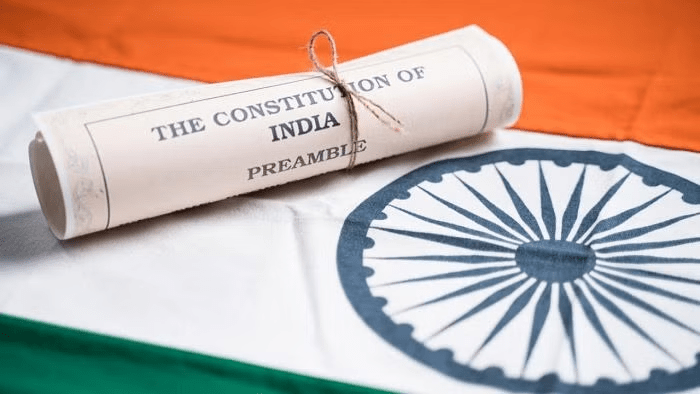
This time the whole edifice of Constitution is under his attack, which according to him has ‘distortions introduced by the Congress to suppress Hindu society’. (2) ..
..Critics have rightly said how this suggestion exhibits real intentions of the saffron regime which wants to usher us into Hindu Rashtra, end reservation for scheduled and backward communities, reinforce caste system and also replace Constitution drafted by Dr Ambedkar with a worldview inspired by Manusmriti. The main opposition party Congress has expressed fear that all such statements, steps just go to vindicate how a ‘cloud of dictatorship’ now hovers over India. (3)
It is a different matter that neither BJP top guns nor PM Modi – who had famously declared way back in 2014 that for him ‘Constitution is the most sacred book’ deemed it important to condemn Hegde’s statements or ordered him to seek apology for his claim.
One learns that it has merely distanced itself from Hegde’s controversial statement to convey an impression that what he said was his ‘Mann ki Baat’ and not BJP’s Dil ki Baat’ .
[We reproduce below a statement issued on 11 March 2024, by the group comprising the Citizens Commission on Elections, which included eminent citizens like former Justice Madan B. Lokur, Wajahat Habibullah, MG Devasahayam, Sundar Burra and others. This statement announces the formation of the IPMIE, keeping the special urgency to monitor the conduct of the electoral process that stands seriously threatened as we move into the 2024 general elections.]
India is world’s largest democracy wherein General Election to Parliament is around-the-corner (April-May, 2024). As is known the words “election” and “democracy” have become synonymous. The Universal Declaration of Human Rights of 1948 states as much: “The will of the people shall be the basis of the authority of government; this will be expressed in periodic and genuine elections which shall be by universal and equal suffrage and shall be held by secret vote or by equivalent free voting procedures.”
The situation on the ground in India, has created anxiety and upsurge within the country. The citizen is at the centre of any democracy with their right to vote in a free and fair manner. Currently, the concern among the Indian electorate is that this process is in peril. The present scenario reveals an unevenness of the playing field that militates against the right to free and fair elections, and risks obstructing the will of the people.
An atheist school teacher’s case in Nashik before the Bombay HC resonates with the recent case of a Dalit teacher’s suspension in Rajasthan.
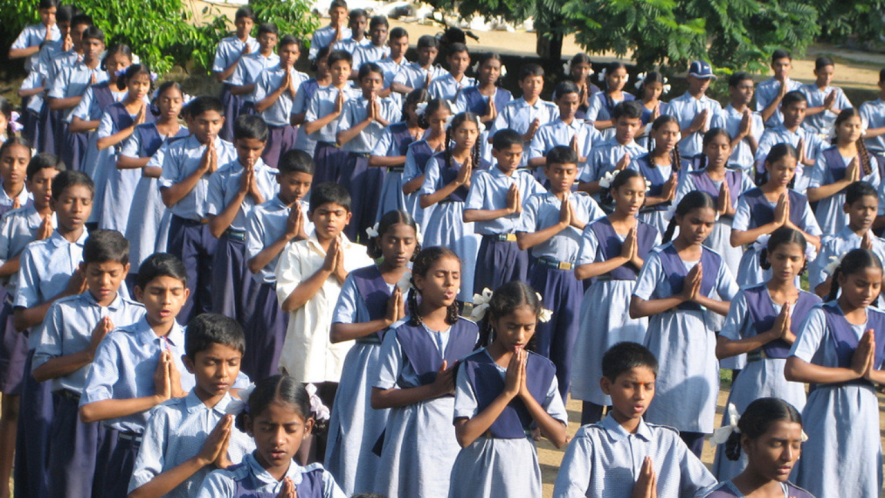
Representational Image. Image Courtesy: Flickr
Can anyone compel a teacher to offer prayers inside a school?
This was a little vexed question before the Bombay High Court when a case came up before a two-judge bench led by Justice Abhay Oka and Justice Revethi Mohiti-Dhere. Sudhir Salve, an atheist teacher from a school in Nashik — who otherwise had an excellent record in his profession — had approached it for relief, because the school management where he worked had denied increment to him for ‘indiscipline’.
The teacher’s refusal to fold hands at the time of school prayer or even at the time of taking oath of the Constitution was construed as such an act. As it happens in most such cases, Salve’s case had lingered on for more than six years in the lower courts.
But it did not take much time for the two-judge bench to decide the case, which declared that any such compulsion to fold hands will be a ‘[v]iolation of the fundamental rights conferred on an individual under the Constitution’.
One was reminded of Salve’s case when the suspension of Hemlata Bairwa, a Dalit lady teacher from an upper primary school in Rajasthan’s Baran district, made headlines recently.
To recapitulate the turn of events, it was Republic Day (January 26, 2024) and Bairwa had garlanded the portraits of B.R. Ambedkar, Savitribai Phule and Mahatma Gandhi before the assembly of students in her school. Two of her fellow teachers interrupted the programme and asked her to put a photograph of Saraswati, goddess of knowledge as per Hindu mythology, which she plainly refused. Despite pressure by them, who even allegedly made casteist slurs against her and were even helped by the local head of the panchayat, Bairwa refused to relent.
When the video of the whole incident went viral, the state education minister Madan Dilawar announced her suspension in a public programme — an act that evoked a strong reaction within the Dalit community. Demonstrations were held in different parts of the state opposing this action by the education minister, demanding revocation of the suspension order and removal of the minister from the post.
The question arises: Will Bairwa similarly have to wait for a long period like Salve for justice? Or whether the Bombay High Court’s intervention would impel the Rajasthan High Court to take up her case suo motu.
“They took so much away from us that they ended up taking away our fear” — Message scrawled on a placard in a women’s march in Spain
’How does Justice feel?’
A difficult query to answer but perhaps Bilkis Bano would be the best person to respond to it.
Yes the same Bilkis – survivor of a mass rape and the only witness to horrific massacre of her 14 relatives – when the state she lived witnessed a carnage when officially one thousand innocents perished in the communal pogrom and many thousands were displaced from their homes and were condemned to live as internal refugees.
One can still recollect her words when the highest courts of the country finally cancelled the remission of sentences to her perpetrators who had been convicted for this heinous crime. [1].
She frankly narrated her feelings before a reporter.
’It feels like a stone the size of a mountain has been lifted from my chest, and I can breathe again. This is what justice feels like.”
Last month, on the 21st of January 2024, a young woman, an assistant public prosecutor at a lower court in the district of Kollam in Kerala, took her own life, after sending out one last desperate plea — calling for justice after her death at least. She revealed through audio clips that fighting for justice at her workplace had worn her out completely. Her words brought out the rot infecting the institution of public prosecution (the stench of it is very much in the air, actually, unbearable it has become, though our political leaders and social justice motormouths seem to largely ignore it).
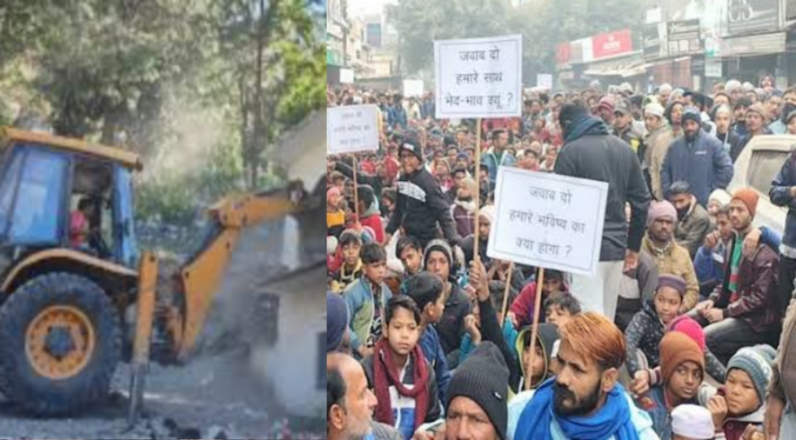
A Joint Statement and Appeal issued by people’s organisations, intellectuals and concerned citizens from Uttarakhand about the violent incidents on 8 th February
( This is an attempt at English translation of the original statement issued by writers, journalists, social activists and people’s organisations. For original statement , please see here )
Developments on 8th February are serious, condemnable as well as tragic. We would like to express our deep concern for the dead as well as the injured and demand proper compensation for them
We appeal to people in Uttarakhand and rest of India to maintain peace and harmony . We condemn all sorts of violence and want that an impartial legal action be taken about the incident. We are of the opinion that every type of resistance, opposition should always remain in the bounds of law and constitution.
We also appeal to the administration that no action should be contrary to Constitutional principles and values.
Negligence, hurry and biased approach of the administration can be clearly seen in these developments. Even the language of the administration sounds sectarian. When the allegedly illegally built mosque and madarsa were in the control of the administration itself and the next hearing in the case was scheduled to be heard on 14 th February, what was the necessity to go for demolition in such a hurried manner. It is time that the District Magistrate and Senior Superintendent of Police are immediately transferred and a judicial enquiry be done about the whole incident.
We need to bear in mind that since 2017 the Uttarakhand government has desisted from taking an impartial legal action against vigilante violence and hate speeches. Right from citizens groups, people organisastions, opposition parties, leading intellectuals, advocates of Supreme Court to ex generals of the army from the state have been raising their voices in this connection. When the government does not appear impartial it emboldens anti-social elements. In this background voices have been raised to underline how use of hate, communal and violent incidents for political benefits ultimately engenders further challenges to social harmony and rule of law. It is high time that steps on war footing be taken to strictly implement decisions of the Supreme Court in 2018 and later, regarding hate speeches and violence.
We have always maintained that the “anti encroachment drive” is plagued by unnecessary hurry and a biased approach. Hundreds of such incidents have occurred since last one year . We are of the opinion that without resettlement nobody should be made homeless and every such action be undertaken in proper legal manner and with enough sensitivity. As far as Uttarakhand is concerned today lakhs of people are living on 4 lakh hectare Nazul land. In Haldwani itself a large population has settled on Nazul land which comprises people belonging to all religions. It has been a long time demand that people living on nazul land be given the ownership of the land. The state government has even sent proposal to the central government in this connection. Despite all this it is beyond comprehension to see that government seems to be in an unnecessary hurry regarding the issue of encroachment. Since quite some time the state government is engaged in these efforts under the name of anti encroachment drive. We feel that the government is pushing its sectarian agenda under the name of anti encroachment drive. This should be immediately stopped.
Say No To Hate, We need Jobs
Rajiv Lochan Sah, Uttarakhand Lok Vahini; Naresh Nautiyal, General Secretary, Uttarakhand Parivartan Party ; Tarun Joshi, Van Panchayat Sangharsh Morcha; Bhuvan Pathak and Shankar Dutt, Sadbhavna Samiti Uttarakhand; Shankar Gopal and Vinod Badoni, Chetna Aandolan; Islam Hussain, Sarvoday Mandal ; Lalit Upreti and Munish Kumar, Samajwadi Lok Manch ; Trilochan Bhatt, Independent Journalist; Heera Jangpani, Mahila Kisan Adhikar Manch ; Mukul, Mazdoor Sahyog Kendra
We publish below a statement circulated by Lalit Kala Kendra(Gurukul) alumni, art educators, visiting faculty and theatre/cine artistes regarding the recent attack on the students making an examination presentation of a play woven around a Ram Leela rehearsal, where routinely men play women’s roles. This attack took place on 2 February. This incident was preceded by an attack on FTII students on 23 January by a group of right-wing goons. We also present in this post, for the record, a statement on the previous incident by the FTII Students’ Association and a solidarity statement by FTII Alumni.
Statement from Lalit Kala Kendra(Gurukul) alumni, art educators, visiting faculty and theatre/cine artistes
We would like to begin by saying that despite our diverse ideological, cultural, social, religious and geographical backgrounds and identities, we write this note together as informed and sensitive artists, and citizens of India. We would like to strongly emphasise that we have great respect for all religions, castes, creeds, sects etc. We are proud of and value our rich Indian culture and traditions.
Let us do it together!
The Supreme Court of India on 29th of November 2023 took up the long pending case of Rajive Raturi vs Union of India, and expressed dissatisfaction on the manner in which the Union, States and Union Territories were implementing their accessibility obligations. Since the reports submitted by the governmental authorities to the Court were also found unsatisfactory, the Court directed the Centre for Disability Studies (CDS), NALSAR Hyderabad:
to submit a report on the steps required to be taken in accordance with the guidelines and the Accessible India Campaign to, inter alia, make all State and Central Government buildings, airports, railway stations, public transport carriers, all Government websites, all public documents and the ICT eco system fully accessible to persons with disabilities.
The Court had asked the Union Ministry of Social Justice to take care of the logistics.
Text of a petition initiated by SWASA, signed by 3640 sex workers and allies, sent to the UN Special Rapporteur on Violence Against Women, Reem Alsalem on January 31, 2024. This is in response to a call for inputs towards the Special Rapporteur’s report on violence against women to be presented to the UN Human Rights Council in June 2024.
Sex workers and allies at a rally demanding sex work be recognized as work under government labor rules, on the eve of International Labor Day, in Kolkata, April 30, 2022. AP Photo/Bikas Das. Image courtesy Human Rights Watch
We, the undersigned write to bring to your attention our concerns regarding the problematic terminology used in the call for inputs to the report of the Special Rapporteur (SR) on violence against women (VAW) and girls to the Human Rights Council. The thematic report of the SR on VAW that will be presented to the UN Human Rights Council at its 56th session in June 2024 proposes to examine the nexus between the global phenomenon of prostitution and violence against women and girls.
The call for inputs states that the Special Rapporteur would like to receive inputs to better understand the relationship between prostitution and violence against women, to clarify terms, approaches and actions States should take in order to maintain the spirit of international human rights law and to effectively protect women and girls from all forms of violence. Continue reading Demanding respectful and inclusive language for sex workers: Sex Workers and Allies South Asia (SWASA)→
2024 की शुरूआत में भारत एक प्रचंड बदलाव की दहलीज पर खड़ा है। सभी जनतंत्र प्रेमी, इन्साफ पसंद और अमन के चाहने वालों के सामने यही बड़ा सवाल मुंह बाए खड़ा है कि 2024 के संसदीय चुनावों में- जो मई माह के अंत तक संपन्न होगा तथा नयी सरकार बन जाएगी (अगर उन्हें पहले नहीं कराया गया तो)- का नतीजा क्या होगा?
क्या वह सत्ता के विभिन्न इदारों पर भाजपा की जकड़ को ढीला कर देगा, क्या वह जनतंत्र की विभिन्न संस्थाओं को निष्प्रभावी करने की या उनका हथियारीकरण करने की सोची समझी रणनीति को बाधित कर देगा, क्या वह धर्म के नाम पर उन्मादी तक हो चुकी जनता में इस एहसास को फिर जगा देगा कि 21वीं सदी में धर्म और राजनीति का घोल किस तरह खतरनाक है या वह भारतीय जनतंत्र की अधिकाधिक ढलान की तरफ जारी यात्रा को और त्वरान्वित कर देगा, भारत के चुनावी अधिनायकतंत्र ( electoral autocracy) की तरफ बढ़ने की उसकी यात्रा आगे ही चलती रहेगी
The life of the dead is placed in the memory of the living.
– Marcus Tullius Cicero
Politics is nothing but theology in action
– Ambedkar
Right-wing politics suffers from a common syndrome everywhere.
It never feels confident to project its own icons for the rest of the humanity, whatever might be their claims about their worldview, it knows that its own icons are detested by a wide spectrum of people.
The easiest way it finds to overcome this lacunae is to appropriate already established icons – who were even opposed to their world view as well and claim them their own. In fact, it does not have any qualms in utilising dates – bearing special significance for exploited and oppressed and marginalised of the world – to put their stamp on it.
The project of Hindutva Supremacism – which yearns / strives to transform a Secular, Socialist, Democratic and Sovereign Republic into a Hindu Rashtra has perhaps achieved near perfection in this kind of politics.
(Translated by Nivedita Menon from a widely circulating post earlier attributed to Saroj Mishra, on social media, originally in Hindi.
UPDATE: We have since heard from the author himself. This post was written in 2010 by VIVEK KUMAR (Vivek Asri) and so we have made the necessary changes. Here is the link to VIVEK KUMAR’s original post.
This 300 year old Janmasthan temple in Ayodhya, built on land donated by a Muslim zamindar, was demolished in August 2020 to accommodate an expanded vision of the new Ram Mandir. Image courtesy The Wire
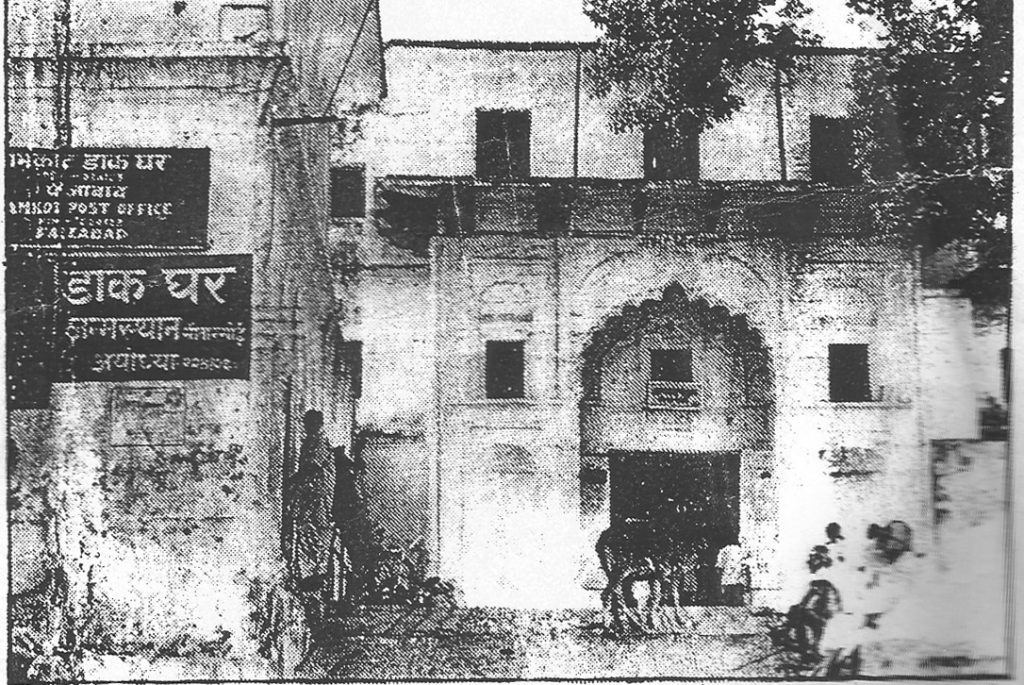
They say Ram was born in Ayodhya; in Ayodhya he played and roamed around as a youth, grew into adulthood, was sent from there into exile in the forest, and then returned to rule there. There are temples in Ayodhya to commemorate every moment of his life. Where he played, there is Gulela Mandir. Where he studied there is Vashishta Mandir. Where he sat and ruled, there is a mandir. Where he ate his meals, there is Sita Rasoi. Where Bharat stayed, there is a mandir. There’s Hanuman Mandir, Kop Bhavan. There’s Sumitra Mandir, Dashrath Bhavan. There are many many such temples and all of them are about 400 to 500 years old. That is to say, these temples were built when Hindustan was ruled by the Mughals, by Muslims.
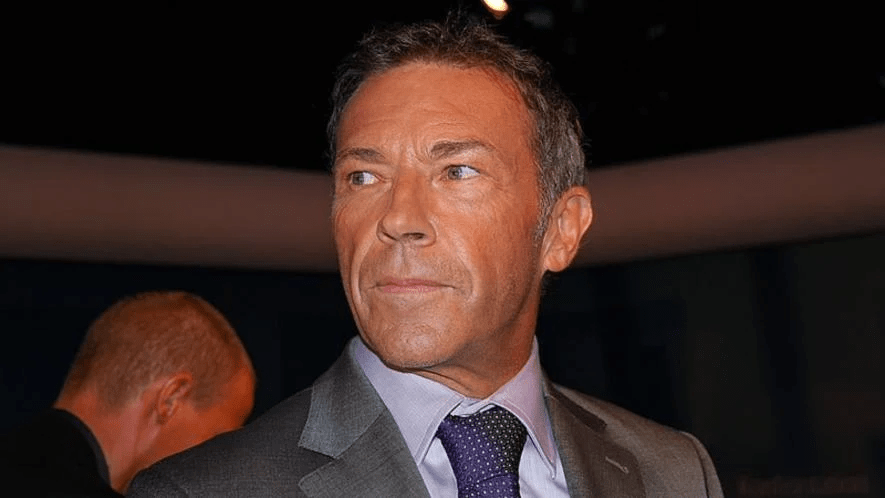
Jorg Haider, a far-right Austrian politician who died in 2008, is largely forgotten. It is also forgotten that merely two decades ago, he was considered a very dangerous man in Europe, whose ascent to power had prompted rare European Union unity aimed to thwart his ambitions.
Twice elected as governor of the southern state of Carinthia, Haider—who opposed immigration and was critical of Islam and Muslims—once praised the Nazi regime’s “employment policies”.
His Freedom Party of Austria allied with another party, the OVP, which allowed Haider to become the country’s chancellor. But the possibility of a ‘right-wing extremist’ ruling a European Union member country prompted the other 14 members to join hands punitively against Australia, putting Haider out of the chancellorship race.
The European Union stuck by the 1997 Treaty of Amsterdam principles and emphasised that nobody would be allowed to “breach them”.
Many European countries threatened to recall envoys from Austria, and some said that Austria could be shunted out of the union if the need arose. The Belgian foreign minister at the time said, “Europe can very well do without Austria. We don’t need it.
After much water has flown down the Thames, the Rheins, the Danubes and all other rivers of Europe, the world has Geert Wilders in the Netherlands, a “political earthquake”, whom some consider more extreme and fanatical than Haider. But Wilders’ views on immigration and Islam cause no similar outrage in European capitals today.
Wilders’s party, which promised to ban mosques and compared the Quran with the infamous Mein Kampf, has won 37 seats in a 150-member Parliament. It is now the number one party in the country’s parliament.
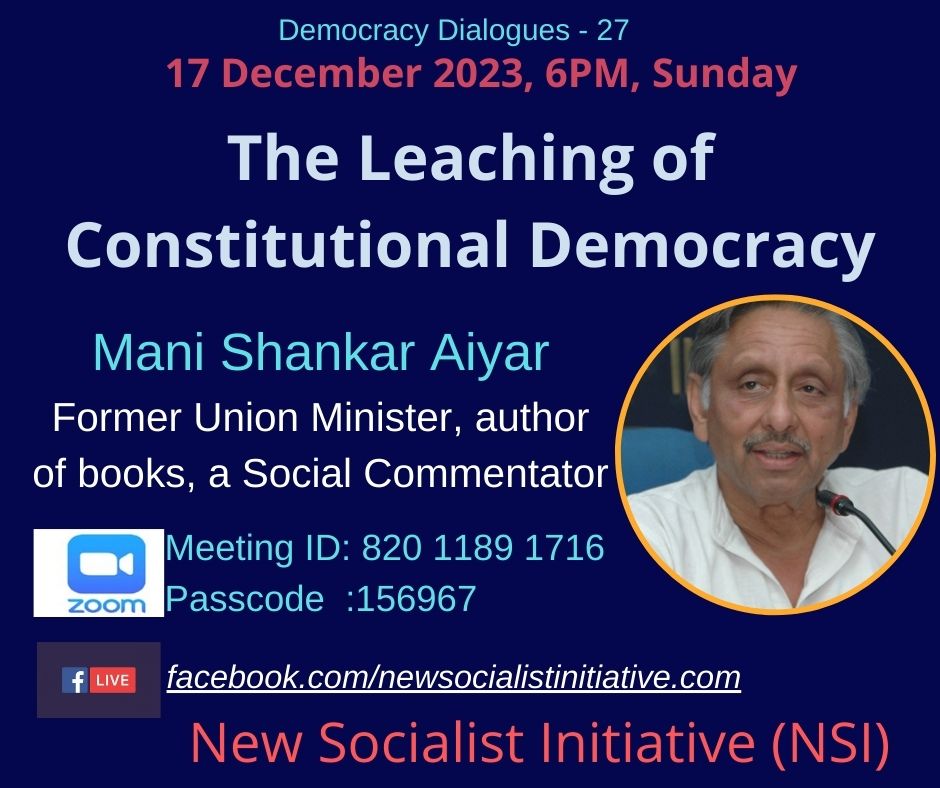
On the face of it, we are an on-going democracy. We have a Constitution which has been honoured by the present government declaring 26 November as Constitution Day. We have regular elections at national, State and panchayat levels. We have the various institutions of democracy in place: an elected Parliament; an independent judiciary; an accountable executive; and a functioning, non-governmental media. Yet, there is fear all around. a new fear, a fear not seen since the Emergency, that has been spreading over the past decade. Why? Is it perhaps because the “spirit of constitutionalism”, as Fali Nariman has put it in his latest work, missing? Can we continue to be the nation envisaged by Gurudev Rabindranath Tagore: “Where the mind is without fear/And the head is held high”? Are we progressing towards or in retreat from that “Heaven of Freedom” of which Tagore sang?. Are the institutions of democracy functioning? Is the Preamble being venerated or violated? Are our civil servants really free? Is our civil society being muzzled? Is the media glowing in the light of freedom of expression? Is the investigative and judicial process being made the punishment? Is the economy in any meaningful sense “socialist” as enjoined by the Preamble? Is the Constitution being reduced in practice to a non-justiciable set of Directive Principles of State Policy? Above all, are we as a nation still ‘secular” – again as enjoined by the Preamble? Is Hindutva compatible with the basics and parameters of the Constitution? Is our ‘unity in diversity” threatened or is it being revered?What are the challenges ahead that need to be addressed before we cease being the world’s largest democracy?
Speaker :
Mani Shankar Aiyar
Author of many books and a regular social commentator, Mani Shankar Aiyar, has had a distinguished foreign service career , he was Union Ministers during Congress led government (2004 till 2009) and has handled different ministries. Ministry of Petroleum and Natural Gas, ( 2004-06) Youth Affairs and Sports (2006-08), and Development of North Eastern Region ( 2008-09).
Here is a list of few of his publications :Memoirs of a Maverick Juggernaut, 2023 ; A Time of Transition: Rajiv Gandhi to the 21st Century, Penguin, 2009 ; Confessions of a Secular Fundamentalist, Penguin, 2004; Rajiv Gandhi’s India, 4 vols. (General Editor), UBSPD New Delhi, 1997, Knickerwallahs, Silly-Billies and Other Curious Creatures, UBS Publishers, 1995 . Pakistan Papers, UBSPD, New Delhi, 1994 ; One Year in Parliament, Konark, New Delhi, 1993 ; Remembering Rajiv, Rupa & Co., New Delhi, 1992 ; Rajiv Gandhi: The Great Computer Scientist of India, Mughal Publishers, New Delhi, 1991 ; How To Be A Sycophant, NBS, New Delhi, 1990
As academics and other concerned persons, we, the undersigned, are outraged at the manner in which discussions on the ongoing war against Palestine are being silenced on Indian campuses, and in the public sphere more broadly. We are issuing this statement to call upon university administrators and the government to respect our academic freedom. We would also like to remind everyone of India’s own long history of anti-colonial struggle which has historically provided the lens through which the Palestinian struggle for self-determination, equality and human rights has been viewed in India.
We object to the way in which any discussion of the historical context of the occupation of Palestineand the barbaric Israeli assault on Gaza, along with the denial of food, fuel and water, since October 7th 2023, is being projected as support for the brutal terror attack on civilians in Israel by Hamas on October 7th.
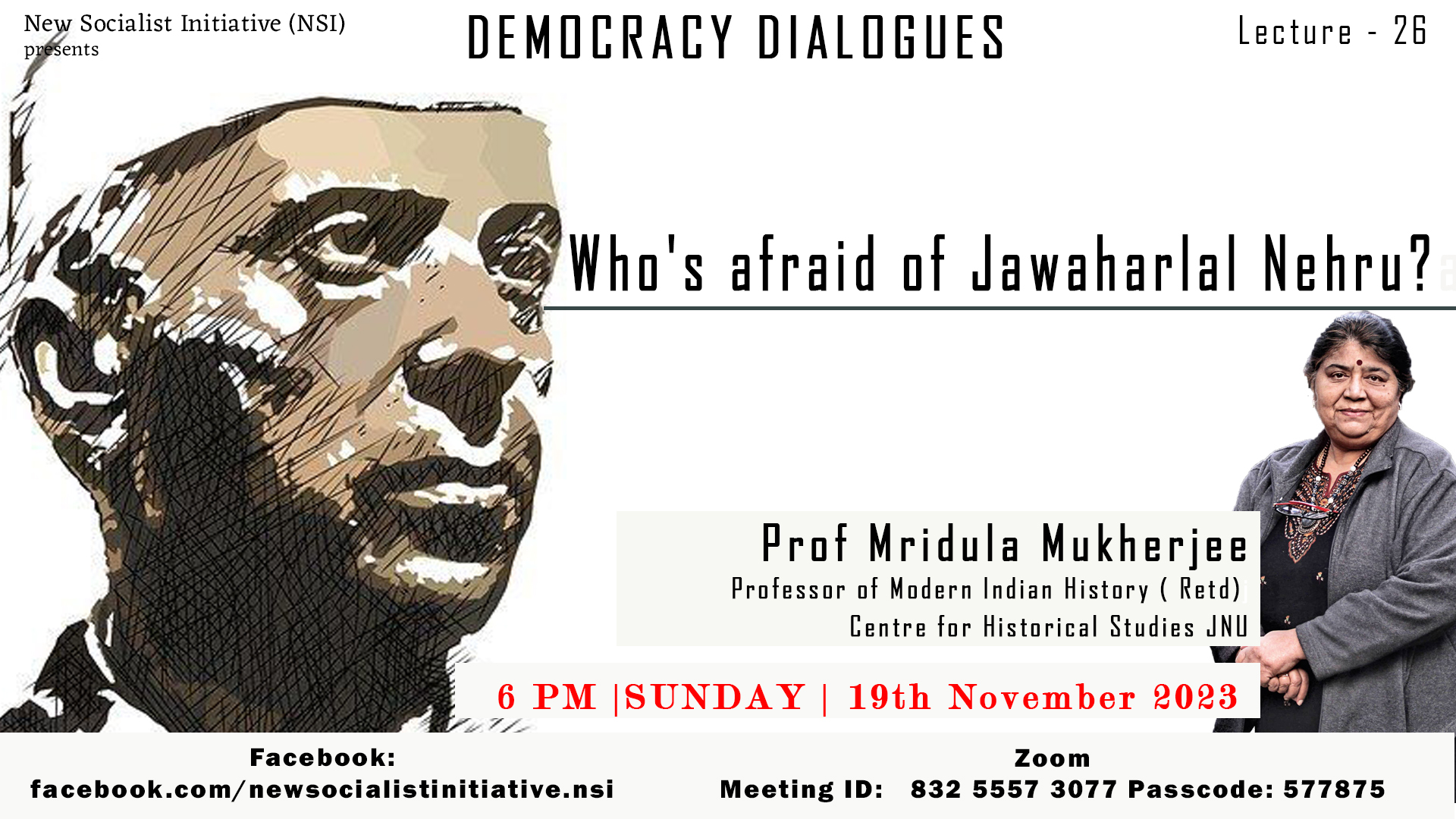
Professor Mridula Mukherjee, Professor of Modern Indian History ( Retd), Centre for Historical Studies, JNU, will be delivering the 26 th Democracy Dialogues Series lecture on Sunday, 19 th November 2023 at 6 PM (IST).
Theme : Who’s Afraid of Jawaharlal Nehru? Time: Nov 19, 2023 06:00 PM India
Summary : In his lifetime, Jawaharlal Nehru was recognized the world over as a statesman and an Indian leader second only to Gandhiji. A foremost leader of the freedom struggle, who gave it a decided socialist orientation, he remained unrivaled as Prime Minister after independence and built the solid foundations of a sovereign, secular, democratic, and egalitarian republic. He evolved the concept of non-alignment which enabled many ex-colonial countries to avoid becoming a part of the two power blocs engaged in the Cold War.
However, he is today the favourite whipping boy of the establishment. We are told he was responsible for the partition, for the mess in Kashmir, for the death of Subhash Bose, for delaying the integration of Hyderabad, and of Goa, for the defeat at the hands of China in 1962, for neglecting agriculture, and primary education, and much else. The reason for the defamation is of course that he stood for the exact opposite of what is valued today. His life and work present a continuous question mark to the regressive trends in fashion.
This will become evident as we focus in the talk especially on two areas of great relevance today in which we are facing a grave crisis: Democracy and Civil liberties, and Communalism/Secularism. We will also focus attention on Nehru’s evolving understanding of Mahatma Gandhi’s vision and method of non-violent struggle, of which he became the most ardent advocate after his death.
Speaker :
Author of many books, Prof Mukherjee has been a visiting Scholar at Duke University, USA, and at the Institute of Oriental Culture, University of Tokyo and was also Director of Nehru Memorial Museum and Library, ( NMML), New Delhi. She has published widely in the areas of agrarian history, peasant movements, social movements and the Indian national movement.
Here is a list of a few of her publications : Colonializing Agriculture, The Myth of Punjab Exceptionalism Sage (2005) ; Peasants in India’s Non Violent Revolution : Practice and Theory (Sage 2004).
This list also includes India’s Struggle for Independence (1999) and India After Independence 1947–2000 (2000), RSS, School Texts and the Murder of Mahatma Gandhi The Hindu Communal Project (2008) co-authored with Prof Bipan Chandra and others.
This post is based on a presentation at a panel discussion on “Israeli war against Palestinian people in Gaza” organised by Janhastakshep in Delhi on October 20, 2023.
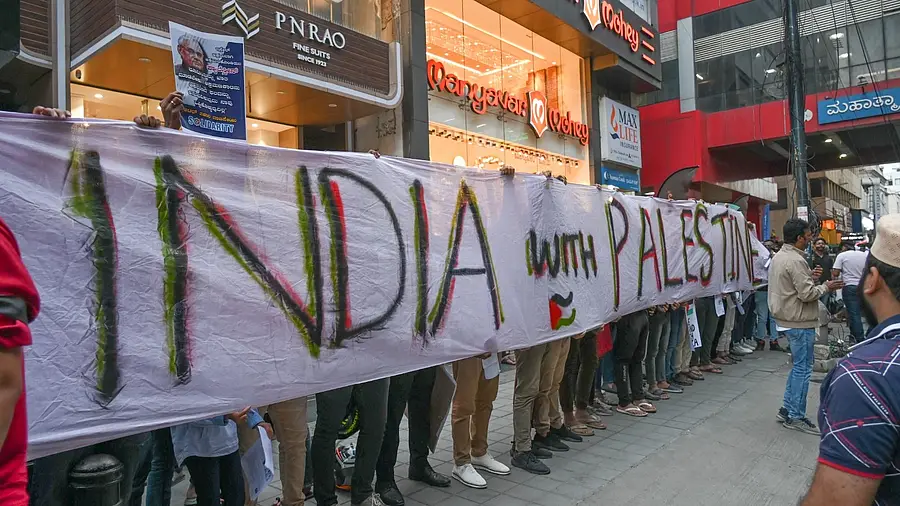
Palestine solidarity protest in Bangalore
But do you condemn…
We are expected to begin every discussion on the latest phase of the ferocious 75 year old war Israel has been waging on the Palestinian people, by answering the question – “But do you condemn the Hamas action?”
Sometimes, because stronger words are needed, they say “dastardly” Hamas action, as a television anchor recently did, trying to push Palestinian writer Susan Abul Hawa to place on Hamas the responsibility for the ongoing “humanitarian crisis” She did not. Nor did she accept the banal term humanitarian crisis, terming it instead, an intentional genocidal war.
This belligerent question comes from beginning with “secondly”, as the Palestinian poet Mourid Barghouti said –
“If you want to dispossess a people, the simplest way to do it is to tell their story, starting with ‘secondly’ “.
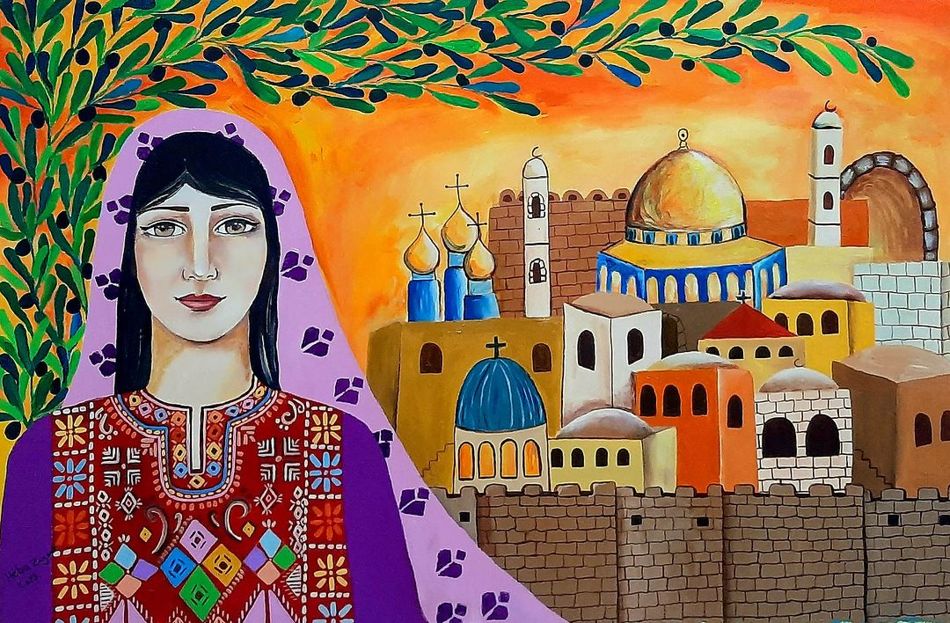
“Jerusalem is my city” by the artist Heba Zagout, killed by Israeli bombardment in Gaza along with two of her children, in October 2023
Democracy Dialogues Lecture Series (Online ) Organised by New Socialist Initiative
25th Lecture ( Sunday, 15 th October 2023)
Theme:India’s Democratic Longevity and its Hugely Troubled Trajectory
Speaker: Professor Ashutosh Varshney ( Sol Goldman Professor of International Studies and the Social Sciences at Brown University )
Theme :India’s Democratic Longevity and its Hugely Troubled Trajectory
Summary
India celebrated 75 years of its independence last year with a lot of enthusiasm.
Celebrations did not hide the fact it is also one of the leading countries which is passing through what is popularly known as ‘democratic backsliding’.
A country which, like many others, is using democratic processes to secure undemocratic outcomes, where freely contested elections are being deployed for the purpose of expressing, cultivating, or enhancing majoritarian prejudices—to target minorities and turn them into lesser citizens.
In this scenario, there is an urgent need to unpack this journey of democratic India further , there is a need to make a distinction between India as an electoral democracy and India as a liberal democracy.
Background Reading for the talk :
# India’s Democratic Longevity and its Hugely Troubled Trajectory ( Attached with this mail)
#. How India’s Ruling Party Erodes Democracy
Ashutosh Varshney
Journal of Democracy, Volume 33, Number 4, October 2022, pp. 104-118 (Article)
Prof Ashutosh Varshney is Sol Goldman Professor of International Studies and the Social Sciences and Professor of Political Science at Brown University, where he also directs the Center for Contemporary South Asia. Previously, he taught at Harvard (1989-98) and the University of Michigan, Ann Arbor (2001-2008).
His books include Battles Half Won: India’s Improbable Democracy (2013), Collective Violence in Indonesia (2009), Ethnic Conflict and Civic Life: Hindus and Muslims in India (Yale 2002), India in the Era of Economic Reforms (1999), and Democracy, Development and the Countryside: Urban-Rural Struggles in India (Cambridge 1995)
[Democracy Dialogues Lecture by Professor Ashutosh Varshney scheduled for coming Sunday has to be rescheduled. New dates will be announced as soon as Professor Varshney is in a position to deliver the lecture. Apologies.]
Topic : India’s Democratic Longevity and its Hugely Troubled Trajectory
Speaker : Professor Ashutosh Varshney,
Theme :India’s Democratic Longevity and its Hugely Troubled Trajectory


 KAFILA - COLLECTIVE EXPLORATIONS SINCE 2006