Category Archives: Education

JNUSU Statement on the Police Action and ABVP slander in JNU: JNUSU

Guest Post by Kanhaiya Kumar, Shehla Rashid Shora and Rama Naga, office bearers, JNUSU

We, the office-bearers of JNUSU, are appalled at the way an uproar has been created over the 9th February incident that happened in JNU and the way the entire incident is being used to malign JNU students and the democratic traditions of JNU.

At the outset, we condemn the divisive slogans (‘bharat ke tukde honge hazar’) that were raised by some people on that day. It is important to note that the slogans were not raised by members of Left organizations or JNU students. In fact, when such sloganeering took place, it was the Left-progressive organizations and students, including JNUSU office-bearers who asked the organizers of the programme to ask the people who were raising the slogans to stop slogans that are regressive. The divisive slogans and the ideology behind it has never been a part of the progressive tradition that JNU and the JNUSU uphold. On the contrary, the unity of the people of different parts of the country in challenging divisive, authoritarian, anti-people and anti-student forces is what we stand with and look up to. Even in the recent times, the JNU student community and the JNUSU have joined nation-wide students’ voice to defend the country against casteist and authoritarian power lobbies. The Left-progressive organizations were present at the programme only to ensure that no violence takes place, as ABVP had called in hooligans from DU to disrupt the program and the general atmosphere in the campus. And so, to interpret our presence as endorsement of some divisive slogans which were raised by some (and was protested and stopped) is extremely mischievous and manipulative. Continue reading JNUSU Statement on the Police Action and ABVP slander in JNU: JNUSU

Democratic Ethos of the University Under Threat: JNU Teachers’ Association

Statement by JNUTA
JNU has always been a University where there has been a vibrant democratic culture, where diverse political ideological and academic views have engaged with each other in a spirit of peaceful dialogue and debate. The JNU teaching community is extremely concerned at the threat to the democratic ethos, which has played a critical role in ensuring that the University serves its social functions and secures its position as one of the premier institutions of higher education.
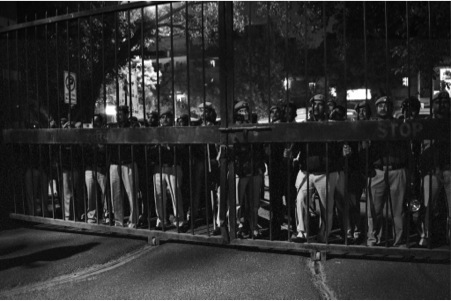
The University, having already instituted an enquiry to ascertain the facts and to take necessary action and there being no disruption of academic or any other regular functioning of the University, JNUTA strongly believes that the current excessive police action is totally uncalled for and it has only aggravated the situation. In view of this, JNUTA expresses its deep anguish over the University Administration’s decision to give a carte blanche to the police to enter the campus to search different premises and even make random arrests.
The teachers of JNU have always stood for upholding the Constitution of India and values enshrined therein and are opposed to any unconstitutional activity in the campus or outside. This very sentiment makes us express our strong opposition to attempts to use the law and the police to suppress democratic dissent and conduct a witch-hunt on our campus. The fact that the JNU Students Union (JNUSU) President is the first to be arrested establishes it. The JNUTA, following its Emergency Meeting, expresses its deep concern on the recent developments on our campus. The teachers of the University condemn the massive police presence and the attempt to escalate tensions.
JNUTA stands with the entire JNU community to maintain normalcy on our campus by immediately withdrawing the police and releasing all those detained.

JNU under seige: Ayesha Kidwai

AYESHA KIDWAI, Professor at JNU, on her Facebook page yesterday

For whom Our Constitution and its values are dear

There is no doubt that the Jawaharlal Nehru University is under siege right now. You will all have to forgive me the length of this post, but it is necessary so that we all understand that maintaining calm and mutual support is the only way we are going to get through this.

1. The JNUSU President Kanhaiya Kumar has been picked up and produced at the Patiala Court, which has remanded him to three days of police custody. He has legal representation, but the charges are, as you all know, serious. He is the first person who the police went to pick up even though he was not an organiser of the event that is being used to legitimise what has happening.

2. We are told that the police/IB has a list of twenty odd names of students that they want to pick up, although the FIR itself is against unidentified students. This happened while classes were taking place, seminars were being held and the whole university was normal. Even after that, no incident that disturbed the peace of the campus has taken place. AND WE ARE GOING TO KEEP IT THAT WAY. Continue reading JNU under seige: Ayesha Kidwai

Restore Normalcy in JNU, Release All Detained Students, Delhi Police Quit JNU

12716438_10153221773131150_2421721007167708352_o
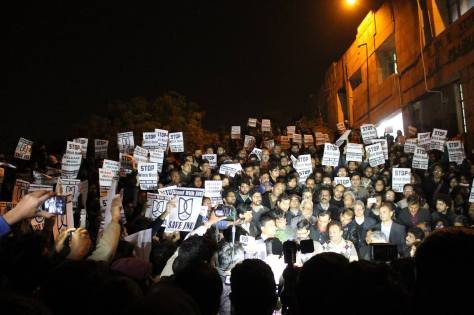
Students, Professors and Staff of JNU Stand Together in Protest on February 12, 2016 against the Police Action on Campus and the Assault on JNU by ABVP-BJP

In an unprecedented and draconian move, Delhi Police personnel entered the precincts of Jawaharlal Nehru University in Delhi yesterday afternoon, and began a search operation based on malicious complaints against ‘unnamed persons’ filed by a Delhi BJP leader in response to an event titled – ‘Country Without a Post Office’ – organized by some students to commemorate and protest against the execution of Afzal Guru on February 9th.

Continue reading Restore Normalcy in JNU, Release All Detained Students, Delhi Police Quit JNU

Stop the attack on Rohith’s mother! Solidarity Committee for Rohith’s mother Radhika

STATEMENT BY SOLIDARITY COMMITTEE FOR ROHITH’S MOTHER RADHIKA

We believe there  is a concerted effort on the part of the powers-that-be to diffuse the nation-wide mass protests against Dalit research scholar Rohith Vemula’s death and caste discrimination in higher educational institutions. They are keen to demonstrate that Rohith did not face caste discrimination by claiming that his mother Radhika is not a Dalit. Rather than addressing the critical issues that his death and the protests have raised, these misdirected attempts seek to dissolve the issue in narrow legalese. And thereby somehow save the people named in the students’ complaint from the stringent penal provisions of the SC/ST Atrocities Act. This malicious campaign is unethical, illegal and undemocratic. Continue reading Stop the attack on Rohith’s mother! Solidarity Committee for Rohith’s mother Radhika

Missing the Forest for Trees – Caste System’s Shadow on Rohith’s Suicide : Sanjay Kumar

Guest Post by Sanjay Kumar

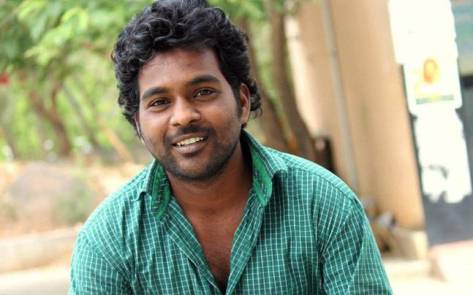
(Photo Courtesy : Prokerala.com)

Mainstream politics over Rohith Vemula’s suicide is becoming hot and ugly. Although whisper campaigns against Rothith’s dalit identity were on since his suicide, the BJP’s central leadership had been relatively quiet after HRD minister’s rather shrieky ‘appeal’ to not play caste politics over his suicide. However, now it seems daggers are out. The party in power, whose two ministers are accused of creating conditions leading to Rohith’s suicide, has decided that Rohith’s non-dalit status is the dog it is going to beat to counter its anti-dalit image. Rohith’s mother is a Mala, a Scheduled Caste, who lives seperately from his father, a backward caste Vaddera. He got an SC certificate on the basis of showing that he grew up in his mother’s Mala household. BJP’s strategy may look petty, but it is based on the age-old great Hindu tradition which can not contenance any violation of the privileges of the patrilineal system. After all, marital rape does enjoy legal sanction in India to this day. Continue reading Missing the Forest for Trees – Caste System’s Shadow on Rohith’s Suicide : Sanjay Kumar

In solidarity with Rohith Vemula: Concerned students and faculty at the Indian Institute of Management, Calcutta

Open letter to the President of India from Concerned students and faculty at the Indian Institute of Management Calcutta.

To

The President of India

Subject: An urgent appeal to address discrimination and political interference in academic institutions in the wake of the death of RohithVemula.

We, a group of students and faculty of the Indian Institute of Management Calcutta,expressour grief over the loss of the precious life of RohithVemula, a Dalit research scholar, at the University of Hyderabad.The events that transpired in the particular case were indeed tragic, with allegedinfringement of freedom of expression, caste discrimination and partisan interference by the higher State apparatus. This event is symptomatic of the larger malaise of failure of our institutions to provide a climate where students, irrespective of their social backgrounds, could find a way to excel. To create such a climate would require synchronised efforts in the parts of the State, the educational institutions and the society at large. Continue reading In solidarity with Rohith Vemula: Concerned students and faculty at the Indian Institute of Management, Calcutta

Paranoia and Procedure – Everyday Life within a University Labyrinth, Circa 2016: Prasanta Chakravarty

This is a guest post by PRASANTA CHAKRAVARTY

“The nature of peoples is first crude, then severe, then benign, then delicate, finally dissolute.”

–Giambattista Vico
The past congeals in savoir faire or habit, conserved as an ethos, in the corridors of the Arts Faculty at Delhi University. We all remember what is happening, while it is happening; watching ourselves as live spectators of our own actions. Wherefore such a sense of centripetal actuality? How this despotic pathology of inevitability in a place which was supposed to be the harbinger of a future? But the future arrives as a gyre, a loop. Continue reading Paranoia and Procedure – Everyday Life within a University Labyrinth, Circa 2016: Prasanta Chakravarty

Operation Ekalavya : Jhandewala, New Delhi, Rohith Vemula’s Birthday, 30th January 2016

Dear young friends who went to Jhandewala on Rohith Vemula’s birthday,

a1078-rohit-facebook-and-storysize_647_011816123527

And all those who were there in spirit, in Delhi, Hyderabad and elsewhere. I am writing to you because I think you might have all taken things much further than anyone can quite imagine or understand at present.

I am writing to you, for today and for tomorrow, so that every time in the future that young people gather to celebrate their friend Rohith’s birthday, we might all begin to have a different kind of conversation. So that the boundaries between mourning and celebration, between anger and joy may always remain blurred enough for us to know what to do next, each time.

Since you had a close encounter with the police and their colleagues in the RSS on Rohith’s birthday, I want to spend a little time thinking about them with you. Bear with me. I sincerely hope we will not have to bear with them for much longer.

Continue reading Operation Ekalavya : Jhandewala, New Delhi, Rohith Vemula’s Birthday, 30th January 2016

Reclaiming academia: understanding the student movement of our time: Tony Kurian and Suraj Gogoi

This is a guest post by TONY KURIAN and SURAJ GOGOI

Students from different parts of the country started protesting since a Dalit student from one of the premier universities of the country (University of Hyderabad) committed suicide on account of caste discrimination by the administration. This new wave of protests can be traced back to Occupy UGC which erupted when University Grants Commission (UGC) decided to stop the monthly research stipend known as non-net fellowship of Rs 5000 and 8000 for MPhil and PHD respectively. The ministry concerned has since constituted a panel to review the decision on account of student’s protests. On the other hand, we are seeing India becoming part of World Trade Organization (WTO) agreement on higher education. These instances should not be regarded as isolated moments but should be viewed as an integral part of a story unfolding. It is in this context that one should locate the student movement of our time. The movement itself is receiving much media attention, and, it was mostly couched as a student’s movement against the government. For sure, the immediate demands of the students is to ensure justice to Rohith Vemula. The present wave of student movement is aimed at reclaiming academia both from an exclusivist culture which permeates much of our academic institutions, and increasing influence of free market logic in our higher education.

 Why are we seeing a new wave of student protests?

To understand why a movement like that we are witnessing now is extremely important for a vibrant and democratic academic space, we should explore some of the unwritten rules of academia itself and our academic institutions. Research is a long-term investment for the person who undertakes it. Every day he or she spends as a full time researcher is a day forgone from the job market. For a research scholar to earn a permanent job, it can take anywhere between five to ten years after the master’s programme.

Continue reading Reclaiming academia: understanding the student movement of our time: Tony Kurian and Suraj Gogoi

Sandeep Pandey threatened by RSS persons on IIT-BHU campus

Close on the heels of the planned disruption of a speech by Siddharth Varadrajan, noted journalist and ex-editor of ‘The Hindu’ on the Allahabad University campus by members of the Akhil Bharatiya Vidyarthi Parishad  (http://thewire.in/2016/01/23/editors-guild-condemns-abvp-threats-to-the-wires-founding-editor-20015/) has come the news that Sandeep Pandey, who has been working as a guest faculty in IIT-BHU for the last two and half years was recently threatened allgegedly by members of the same fraternity on the university campus itself.

It may be added here that Sandeep Pandey’s services were abruptly terminated by the university on the charge of being a naxalite and being involved in ‘anti-national’ activities (http://kafila.org/2016/01/11/letter-against-dismissal-of-prof-sandeep-pandey/). Looking at the aggressive manner in which members of the Hindutva fraternity seem to be moving it is quite possible that their threats will not remain merely at the level of words and one definitely perceives a danger to Sandeep’s well being at their hands. Continue reading Sandeep Pandey threatened by RSS persons on IIT-BHU campus

Saluting Rohith Vemula on Republic Day: Meena Kandasamy and Ravichandran Bathran

Meena Kandasamy in The Hindu:

Rohith, you have left behind your dream of becoming a science writer like Carl Sagan, and left us with only your words. Each of our words now carries the weight of your death, every tear carries your unrealised dream. We will become the explosive stardust that you speak of, the stardust that will singe this oppressive system of caste. Within every university, every college, every school in this country, each of our slogans will carry the spirit of your struggle. Dr. Ambedkar spoke of caste as the monster that crosses ones path every way one turns, and within the agraharams that are the Indian educational institutions, our very physical presence must embody the message of caste annihilation. Let every despicable casteist force wince when they encounter a Dalit, a Shudra, an Adivasi, a Bahujan, a woman staking claim within academia, let them realise that we have come here to end a system that has kept trying hard to put an end to us, that we have come here to cause nightmares to those who dared to snatch our dreams. Let them realise that Vedic times, the era of pouring molten lead into the ears of the Shudras who hear the sacred texts, the era of cutting the tongues of those who dared to utter the knowledge that was denied to them, are long gone. Let them understand that we have stormed these bastions to educate, to agitate, to organise; we did not come here to die. We have come to learn, but let the monsters of caste and their henchmen bear in mind that we have come here also to teach them an unforgettable lesson.

Read the rest of this tribute here.

RAVICHANDRAN BATHRAN in Tehelka

A person who is conscious of and sensitive about caste discrimination is certain to become alienated in every psychological, emotional, social and political sense in today’s campuses that breed free-market-loving, reservation hating students who benefit from caste-intensive social networks. This is why the Dalit and anti-caste students’ movement is crucial in democratising our campuses. These outfits question the present, past and future of the society we live in. They may be few in number and not always successful, but their actions are solely committed to the welfare of Dalit students as they have no other support system in our campuses. I am proud to say that many like me are the product of such movements in the universities.

Read the whole article here

Constitutionalising the Administration of Higher Educational Institutions – An Important Supreme Court Decision: Aradhya Sethia

Guest Post by ARADHYA SETHIA

The Supreme Court bench comprising of Justice Chelameshwar and Justice Sapre delivered a judgment, which will have a widespread impact on governance of higher education in India – Dr. Janet Jayapaul v. SRM Universityin continuation of their “penchant” for education, recently reflected in Haryana Panchayati Rajdecision, delivered by this very bench.

By holding that a deemed university is ‘state’ under Article 12 of the Constitution of India, courts have opened the doors for application of even ‘vertical’ fundamental rights to these institutions. For an outsider to the practice of law, it may sound like an issue of mere technicality and semantics wrapped up in legal jargon. However, this case has a great potential in playing a very important role in infusing constitutional values in administration of these educational institutions. The issues such as gender discrimination, curbing of freedom of speech, right to privacy, etc. within the college environment are no more merely questions of propriety and culture, but also amenable to a claim in a court of law. Therefore, the outcome of this semantic exercise is very real, not just for the purposes of immediate case that the court was involved with, but for long-term educational reform in India. Continue reading Constitutionalising the Administration of Higher Educational Institutions – An Important Supreme Court Decision: Aradhya Sethia

An Open Letter to the President of India – Please take sexual harassment seriously

STATEMENT BY CONCERNED CITIZENS

It is shocking that the Hon’ble Visitor appointed Prof Bidyut Chakrabarty to the Executive Council of JNU on 8 October 2015 and his name now features as a candidate for the prestigious position of the Vice Chancellor of the University of Delhi, if this is accurately reported in the media. [1] Both these positions—either as a Vice Chancellor or as a nominated member in an Executive Council of a University—demand impeccable record of academic excellence and integrity. However, it would appear that a record of sexual harassment does not impact the process of appointments in Universities.

It is well known that a sexual harassment case was made by an employee of Gandhi Bhawan on 4.4.07 against the Director, Prof Bidyut Chakrabarty. The Delhi University Apex Committee on Sexual Harassment vide its report that was tabled and accepted by the Executive Council Resolution No 114 dated 8.10.07 resolved that:

  1. A letter of warning be issued to Prof Bidyut Chakrabarty.
  2. He should be asked to step down from the Directorship of Gandhi Bhawan.
  3. He should be debarred from holding any administrative post in the University for a period of three years.

Prof Chakrabarty was removed from the position of Director, Gandhi Bhawan, Head of the Department of Political Science and Dean, Faculty of Social Sciences. Continue reading An Open Letter to the President of India – Please take sexual harassment seriously

Farewell to Vidrohi: Pallavi Paul

Guest Post by Pallavi Paul

[ Rama Shankar Yadav ‘Vidrohi’, was a familiar figure for students, especially in Jawaharlal Nehru University in Delhi. He was a friend, a companion, a comrade, a mentor. Though rusticated many years ago from JNU, where he had been a student, for his participation in a  protest, he had never left the campus of JNU, and had become, over the years, a beloved feature of campus life. His visceral poetry, often heard at protest gatherings, was passed from person to person by word of mouth. A few days ago, he died while marching with his beloved student friends in a protest against cuts in education in Delhi.  Pallavi Paul, a filmmaker and artists, who made short films featuring Vidrohi, remembers him in this tribute..]

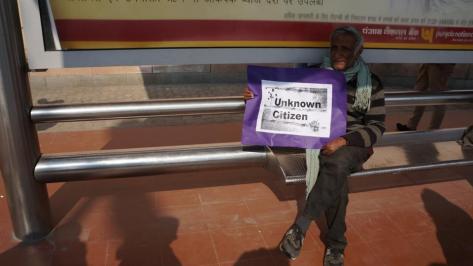
Unknown Citizen Vidrohi
Vidrohi as the ‘Unknown Citizen’ at a Protest to ‘Reclaim the Republic’ on 26 January 2013

Yesterday, as I was looking out a window of an old house in Ballygunge, Kolkata- my phone buzzed. I ignored it.  I was in the middle of telling a friend how happy I was to be away from Delhi for sometime. How the sights and smells of a different city were rejuvenating. The feeling of not having a ‘special connection’ with anyone or anything here felt liberating.

Much later, I opened the message from my friend Uday. ‘Vidrohiji passed away’, he wrote. Just three words.  In our conversations with him, Vidrohiji had often spoken about his death. We had revisited the scenario over and over again. Like a dream or a film – it had a grand setting. He had told us “Now that you are recording me, i know that i will say goodbye in the most glorious way possible. Very few people can say that about their death, while they are still alive.” On another day he had said to us, “As my fame has increased, so have the dangers. Now what i need is guarantee. Your records are guarantee against that largest threat of being killed. I say to my enemies, that if you want to kill me – then shoot me in the eyes. Because i will keep staring back at you till my last breath. Your records will help me stare back at them even after I am gone. “

Continue reading Farewell to Vidrohi: Pallavi Paul

NOT IN OUR NAME : JNU faculty for a gender-just campus

We the undersigned teachers of Jawaharlal Nehru University, and members of the JNU Teachers Association, hereby assert that in keeping with the best traditions of teacher politics of this university, we are committed to a gender-sensitive and gender-just university campus. This political understanding contributed to the formation of the GSCASH, and it is this politics that guides us to raise our voices AGAINST the current scenario in which:

  • Conduct of some teachers and officials does not recognise that each incident of sexual harassment results in violation of the fundamental rights of ‘gender equality’ and the ‘right of life and liberty’, wherein right to life means life with dignity.
  • University body decisions set up defendants’ representations as the benchmark against which the enquiry reports of GSCASH are to be judged, when in fact GSCASH is the sole inquiring authority into complaints of gender violence, as designated by the law of the land and the regulations of the University.
  • Confidentiality with regards to complaints enquired into by the GSCASH is blatantly violated by some teacher representatives.
  • Some teacher representatives assume that a ‘struggle for the rights of teachers’ can entail victim blaming and defamation of complainants.
  • Persons charged with (or found guilty of) sexual harassment/violence serve in statutory bodies and as teacher representatives.
  • The processes of GSCASH are perverted by some teachers’ campaigns on unfounded allegations of procedural infirmity.
  • The evaluation of a GSCASH enquiry report is done by persons not bound by the oath of confidentiality and impartiality.
  • The integrity of members of GSCASH is put on public trial in the name of guaranteeing the ‘principles of natural justice’ to defendants.

We stand FOR a campus atmosphere in which the health, and freedom of complainants is always primary and the fundamental rights guaranteed under Article 19(1)(g) of the Indian Constitution ‘to carry on any occupation, trade or profession’ are realised through the provision of a “safe” working environment for all.

Ayesha Kidwai                        

Brinda Bose                            

Chirashree Dasgupta   

Chitra Harshvardhan              

G. Arunima                              

Janaki Nair                    

Madhu Sahni                           

Mohan Rao                    

Mohinder Singh

Nilika Mehrotra                        

Nivedita Menon             

Parnal Chirmuley

Pratiksha Baxi                         

Ranjani Mazumdar                  

Rohit                    

Shambhavi Prakash               

Shankari Sundararaman        

Shukla Sawant

Surajit Mazumdar                    

Tiplut Nongbri                         

Urmimala Sarkar

Vikas Bajpai                  

Educationists and women’s rights activists oppose closure of Mahila Samakhya

Received via KALYANI MENON-SEN

Women’s rights activists, researchers, academics and scholars have written to the Minister of HRD against the government’s reported move to close the Mahila Samakhya programme. The letter, written in the backdrop of the announcement that the programme would not be funded after 31 March 2016 and a reported move to merge it with the National Rural Livelihoods Mission,  urges the government to retain the autonomy and unique character of this globally lauded programme.

The signatories to the letter include several individuals who have contributed significantly in building an inclusive policy framework and enabling public environment for gender equality in education, who have spoken eloquently of how they have been enriched through their association with  Mahila Samakhya.

Continue reading Educationists and women’s rights activists oppose closure of Mahila Samakhya

New Epidemics in Kerala – Ephebiphobia and Losing-Control Anxiety

“Torture isn’t  new to us, ” quipped my seventeen-year-old daughter. We were discussing the future of Indian democracy.She had just quit regular school and got herself enrolled in the Kerala State Open School.

I turned to look at her, surprised. She held me in her gaze, questioning that surprise. “In school, we were watched constantly through CCTV cameras … We were summoned to the Principal’s room whenever they thought they saw or heard something wrong. My friend was questioned by nine people, teachers and non-teaching staff. They sat in a circle with her standing in the middle. The more she denied their accusations, the more they pressed charges, threatening and insulting her… So why should we feel illegal interrogation to be abnormal? It is utterly normal to us!”  I could only stare blankly. “And the punishments … do you know how humiliating they are? They even maintain ‘reports’ – gossip by teachers – which they pass on to the next school you’d join.” Continue reading New Epidemics in Kerala – Ephebiphobia and Losing-Control Anxiety

We agree passionately: one world, one struggle, education is not for sale!

Dangerous Vandals, Goths and Visigoths: Students Demanding the Impossible at #OccupyUGC

The Occupy UGC movement looks irrelevant or ridiculous to the middle and upper classes in India because it can be made to appear so by the media. Not surprisingly, television channels and leading dailies either ignored the protests altogether, or worse, focused on the apparently far more *critical* issue of the “vandalism” and “disfigurement” of the ITO metro station by the protesting students. Times of India said they were “brazening it out” after their acts of vandalism, and on social media including Kafila, these student vandals have been additionally belittled by some as misguided pawns in the hands of an apparent conglomerate of ambitious lefty professors from JNU! Basically, anything but a legitimate set of demands, some of which this poster from the movement tries to explain…

Dekh Bhai UGC
Translation: Look here UGC, if you don’t give us the scholarship, I will face marriage pressure, but you will have to face the pressure of the entire student population!!

(Incidentally, it was this image that was painted on the walls of the ITO metro station. Personally I found it cheerful).

Anyway, as Camalita Naicker reminded us in her excellent article on South Africa here on Kafila, student protests against rising student fees and shrinking scholarships and fellowships are no flash in the pan but a burgeoning worldwide phenomenon cutting across political affiliations. This is because you don’t need to be a leftist to understand that in contemporary conditions, pursuing a higher education is both the only guarantee to economic security, and the one thing that may be denied to you if you are from the wrong side of the tracks. 

We post below statements from #OccupyUGC and #Occupy SOAS in support of each other. These have been sent to us by Akash Bhattacharya, research scholar in history at JNU.

Continue reading We agree passionately: one world, one struggle, education is not for sale!

An ‘Anti National’ Response from JNU to the ‘Nationalist’ RSS: Pratim, Gargi and Lenin

Guest Post by Pratim, Gargi and Lenin.

As writers, historians, scientists, film makers, poets, actors and others return their awards in protest against the rising intolerance and anti-rational climate in this country, we in JNU keep stocking up accolades of a different kind. These accolades are ones which are very generously gifted to us from the RSS and its affiliates. These accolades come in more than fifty shades, only highlighting the deep seated trouble that these folks have in seeing this University up to them, despite their attempts to tarnish it. A few days back the ever-so-absurd/islamophobic/irrational Subramaniam Swamy endowed JNU students with the honours of being ‘Jehadis’, ‘Naxal’ and ‘Anti-National’.

Continue reading An ‘Anti National’ Response from JNU to the ‘Nationalist’ RSS: Pratim, Gargi and Lenin

Knowledge and Innovation for a Better Society : Ravi Sinha

An Address to the Students of Gokhale Institute of Politics and Economics, Pune, India

Guest Post by Ravi Sinha

It should be a matter of no small comfort if, in today’s world and in today’s India, any discussion takes place anywhere about the relationship between knowledge and innovation on the one hand and the prospects for a good society on the other. It is greatly more satisfying and reassuring if this topic interests talented young minds such as present here, who, I hope, also nurse hopes for a better future, not only for themselves but also for the entire society and civilization. Yours is an esteemed institution with such a long history of cultivating and disseminating knowledge about society – about politics, economics and other related disciplines. I am sure this issue has been a core concern right from the inception of this institute, and I doubt if I will be able to bring in anything of added value. But, as I said, this is always a welcome topic for discussion. I am very happy for this opportunity to share some of my thoughts with you.

Today if one mentions these two words – knowledge and innovation – together, it is very likely that the image of a Mark Zuckerberg or Steve Jobs or Bill Gates will come to mind, even if such an association is not obvious to everyone. I, for one, often need to tell myself that I should not complain. After all, these gentlemen are symbols of one of the greatest technological revolutions humanity has experienced and we are living through. It has changed the way humanity works, communicates and lives, and it is not over yet. Unrealized potentials far outweigh the realized ones and far greater changes are in the pipeline. Physicists have recently discovered that the Universe now expands at an accelerated rate, but when it comes to accelerated expansion into the unknown, the Universe appears to be no match for technology.

For many the technological explosion is a cause for unadulterated excitement and a source of unbounded hope. For many others it is a cause for grave concern. There are yet others for whom it presents a mixed picture. In times of rapid and radical transformations, it is not unusual for many to have a sense of unease. Humanity has always innovated and created new ways and forms of life, and it has always found it difficult to adjust to its own innovations and creations. But the capacity to adjust improves with time. If the sense of unease or consternation appears widespread despite a greatly improved capacity for adjusting to the new, part of the reason lies in the break-neck speed of the current change. Continue reading Knowledge and Innovation for a Better Society : Ravi Sinha