Category Archives: Everyday Life

Of Shared Spaces and Experiences in Gujarat: Ayesha Khan

This is a guest post by Ayesha Khan

The other day, my brother dug out an old DD animation film on unity in diversity – Ek Titli, Anek Titli… We replayed it umpteen times in a fit of summer nostalgia, until we got all the lines correct. We  ignored the political subtext.  But only until it rebounded starkly on us, with the wails of  a baby that had newly come in to the family. The little one foisted on us the first ponderous responsibility – finding him a name.

The family brief for me, aunt to a six day old nephew, and equally to childhood pal Vandana, who is soon-to-be aunt to a niece in US,  was to think up  names resonating a core Indian-ness, the Muslimness, the TamBram-ness (in Vandana’s case), with a universal appeal and encapsulating  everything that is pious, lucky and great.

Continue reading Of Shared Spaces and Experiences in Gujarat: Ayesha Khan

Review: ‘Behind the Beautiful Forevers’ by Katherine Boo

Guest post by MITU SENGUPTA

In a remarkable book about slumdwellers in Mumbai, Katherine Boo brings to light an India of “profound and juxtaposed inequality” – a country where more than a decade of steady economic growth has delivered shamefully little to the poorest and most vulnerable.  But though indeed a thoroughgoing and perceptive indictment of post-liberalization India, the book fits into a troubling narrative about the roots of India’s poverty and squandered economic potential.

This is a beautifully written book.  Through tight but supple prose, Boo offers an unsettling account of life in Annawadi, a slum near Mumbai’s international airport.  In Boo’s words, this “single, unexceptional slum” sits beside a “sewage lake” so polluted that pigs and dogs resting in its shallows have “bellies stained in blue.” It is hidden by a wall that sports an advertisement for elegant floor tiles (“Beautiful Forevers” – and hence the title).  There are heartrending accounts of rat-filled garbage sheds, impoverished migrants forced to eat rats, a girl covered by worm-filled boils (from rat bites), and a “vibrant teenager,” who kills herself (by drinking rat poison) when she can no longer bear what life has to offer.

Continue reading Review: ‘Behind the Beautiful Forevers’ by Katherine Boo

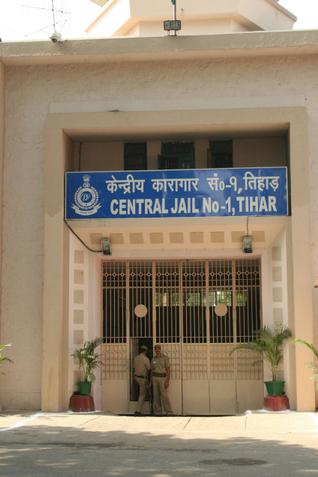
My Days in Tihar Jail

Mrs Gandhi, the then Prime Minister of India, represented the Rai Bareli seat in the Lok Sabha. On 12th June 1975 she was unseated on charges of election fraud and misuse of state machinery in a landmark judgement by Justice Jagmohan Lal Sinha of the Allahabad High Court.  Fakhr-ud-Din Ali Ahmad, the then President of India, declared internal emergency on the 25th of June,  on the recommendation of a pliable cabinet presided over by Mrs G. The people of India lost all civil liberties for a period of 21 months.

Trade unions were emasculated, political opponents were arrested, newspapers censored, the only place where a semblance of freedom survived, for a short while, were the universities, most were in turmoil and were being singled out for special attention. Students unions were being banned and activists were being picked up and thrown in jail.

Continue reading My Days in Tihar Jail

The King and I: Dispatches from Morocco

Rapper El Haked, or The Spiteful One, with translator Maria Karim in Casablanca

Last month, I spent a fortnight in Morocco speaking to people about the aftermath of the Arab Spring. The Moroccan establishment has spoken often of “The Moroccan Exception” – where the King acted quickly to usher in reforms and  defuse the protests.

Yet, many – such as the two young people in this photograph – feel that the reforms were largely superficial.

El Haked – or The Spiteful One – is young rapper from Casablanca’s working class neighbourhood of Oukacha. He was arrested yesterday for singing and uploading songs critical of the King and the establishment. My article on him, His songs on Youtube

Politics, ‘Political Society’ and ‘the Everyday’

Politics, ‘Political Society’ and ‘the Everyday’

 Book Review 

Lineages of Political Society, by Partha Chatterjee, Permanent Black, Ranikhet, 2011. Pages: 278, hardcover, Rs 750.


Lineages of Political Society

 Over a decade ago, political theorist Partha Chatterjee embarked on what was a novel journey in the history of political thought in India and perhaps, in the postcolonial, non-Western world. Bringing together the results of decades of his own intellectual engagement with Indian politics and the question of subalternity in particular, Chatterjee began articulating a concept that has now acquired wide currency: his concept of ‘political society’. ‘Political society’, in Chatterjee’s hands, was a way of recuperating a sphere of politics that had been a permanent source of anxiety for theorists of Indian (and postcolonial) modernity and democracy – the vast domain that existed outside the designated spheres of modern politics, where the untutored masses made claims on the state and formed their own associations and organizations, unmindful of the formal grammar of rights and citizenship. A crucial part of what defines activities in this domain is ‘illegality’, or, at any rate, non-legality, where the state itself places the law in suspension in order to recognize the claims of the governed. Thus for instance, squatting by the poor on government land that is strictly speaking, encroachment in legal terms and can never acquire the status of a ‘right’, is nevertheless allowed by governments to continue through the recognition of some kind of moral claim of the poor on governments and society at large.

Continue reading Politics, ‘Political Society’ and ‘the Everyday’

Oru Kili Iru Kili – A Party in Dubai: Alia Allana

Guest post by ALIA ALLANA

For the Pilipino there was no escaping the Indian song and dance.

A tube-light flickered as loud music blared from a room at the far end of the corridor. The flickering light and the ensuing cacophony gave the corridor in Sonapur Labour Camp a surreal discotheque feel: one that the Pilipino was no longer game to. Nearer the door, voices of men dipped low and then travelled high past the room in which the tired labourer from Cebu lived.

“Oru Kili Iru Kili,” they bellowed in Malayalam and the tune filtered through the flimsy plywood door. The tired looking Pilipino pulled a face as he described the scene he had once encountered when the door was left ajar. The “party” room was clouded over with smoke and six Indian labourers from Kerala lounged cross-legged in a circle, smoking cigarettes and drinking from steel cups, writhing their bodies and shaking their hands up in the air. A bottle with no label was passed around and the brouhaha escalated to a feverish pitch. Once again the merry men burst out, “Oru Killi Iru Killi”. Continue reading Oru Kili Iru Kili – A Party in Dubai: Alia Allana

Occupy Monsanto!

Some good news for a change…

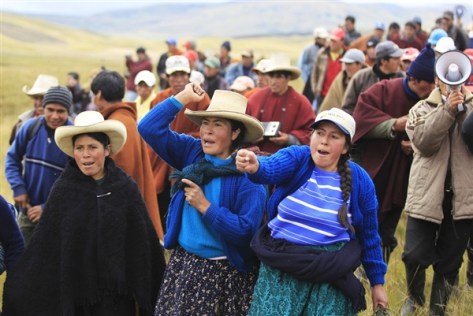
Peru Passes Monumental Ten Year Ban on Genetically Engineered Foods

In a massive blow to multinational agribiz corporations such as Monsanto, Bayer, and Dow, Peru has officially passed a law banning genetically modified ingredients anywhere within the country for a full decade before coming up for another review. Peru’s Plenary Session of the Congress made the decision 3 years after the decree was written despite previous governmental pushes for GM legalization due largely to the pressure from farmers that together form the Parque de la Papa in Cusco, a farming community of 6,000 people that represent six communities. They worry the introduction of genetically modified organisms (GMOs) will compromise the native species of Peru, such as the giant white corn, purple corn and, of course, the famous species of Peruvian potatoes. Anibal Huerta, President of Peru’s Agrarian Commission, said the ban was needed to prevent the ”danger that can arise from the use of biotechnology.”

Read the rest of this story here.

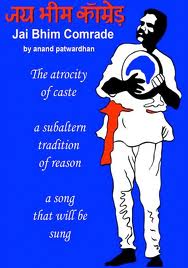
Jai Bhim, Comrade Patwardhan

How many murdered Dalits does it take to wake up a nation? Ten? A thousand? A hundred thousand? We’re still counting, as Anand Patwardhan shows in his path-breaking film Jai Bhim Comrade (2011). Not only are we counting, but we’re counting cynically, calculating, dissembling, worried that we may accidentally dole out more than ‘they’ deserve. So we calibrate our sympathy, our policies and our justice mechanisms just so. So that the upper caste killers of Bhaiyyalal Bhotmange’s family get life imprisonment for parading Priyanka Bhotmange naked before killing her, her brother and other members of the family in Khairlanji village in Maharashtra, but the court finds no evidence that this may be a crime of hatred – a ‘caste atrocity’ as it is termed in India. Patwardhan’s film documents the twisted tale of Khairlanji briefly before moving to a Maratha rally in Mumbai, where pumped-up youths, high on testosterone and the bloody miracle of their upper caste birth are dancing on the streets, brandishing cardboard swords and demanding job reservations (the film effectively demolishes the myth that caste consciousness and caste mobilisation are only practised by the so-called ‘lower castes’). Asked on camera about the Khairlanji murders, one Maratha manoos suspends his cheering to offer an explanation. That girl’s character was so loose, he says, that the entire village decided to teach her a lesson.

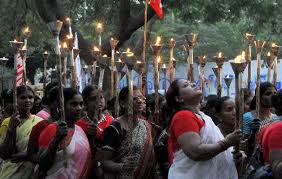
Continue reading Jai Bhim, Comrade Patwardhan

Sepia Mutiny (2004-2012)

The great Indian American blog Sepia Mutiny is shutting shop.

I also truly feel that the mission of Sepia Mutiny is complete, especially for what I envisioned SM would be all about (other bloggers can share their view).  Back in 2004 there was very little brown representation in the media and very little “voice” representing us.  There was not a single loud speaker for the South Asian American community. Now there is quite a bit more and brown is everywhere.  There seems much less need for a “Mutiny” given our strides.  We were even invited to blog at the 2008 Democratic National Convention which was hard to imagine in 2004.  That is not to say we are anywhere near where we’d like to be, but a Mutiny should naturally give way to a more organized movement of some kind.  I believe SM did its job in sowing the seeds for that next chapter, whatever forms it now takes. Continue reading Sepia Mutiny (2004-2012)

Modesty of Dress and Indian Culture: Suchi Govindarajan

Widely circulating just about everywhere, but for the unfortunate few who may have missed it…

I for one want to kiss the hem of her salwar/sari/jeans/other modest outfit.

Sir/Madam,
I write to complain about the abysmal standards of modesty I am noticing in Indian society. All bad things – sensationalist TV, obscene movies, diabetes among elders, pickpocketing, dilution of coconut chutney in Saravana Bhavan – are a result of Evil Western Influences. However, to my surprise, in this issue of modesty, even the Great Indian Culture (we had invented Maths and pineapple rasam when westerners were still cavemen) seems to encourage this.

The problem, sir/madam, is that revealing attire is being worn. Deep-neck and sleeveless tops, exposed legs–and these are just the middle-aged priests! Some priests are even (Shiva Shiva!) doing away with the upper garment. And I am told some temple managements even encourage this.

Read the rest of this brilliant and biting piece here.

All you need is Visa power

The great thing about the free movement of peoples and cultures is that it is so easy to prevent.

From the newspapers these last few months:

The government has revoked the visa of Japanese Maya Kobayashi, who was scheduled to visit India to share her experiences as a resident of Fukushima, the site of the nuclear disaster caused by an earthquake and tsunami last March…

“Your application for Business Visa does not match with the stated purpose of your proposed visit and is tantamount to factual misrepresentation,” said the letter from Sanjay Panda, Deputy Chief of Mission at the Indian Embassy in Tokyo. Continue reading All you need is Visa power

Feminism and the Family – Thoughts on International Women’s Day

Excerpts from my forthcoming book Seeing Like a Feminist (Penguin India/Zubaan Books).

Have you heard of ‘nude make-up’?

This is what it is:

‘Nude makeup looks are all about your skin looking fresh and dewy, without looking like you’re even wearing any makeup. All you need is eyeliner, mascara, nude lipstick, and a highlighting blush that will give your skin a natural-looking glow.’[1]

The whole point of nude makeup clearly, is to spend hours painting your face in order to make it look like you never touched it at all.

The maintaining of social order is rather like that. It requires the faithful performance of prescribed rituals over and over again throughout one’s lifetime. Complex networks of cultural reproduction are dedicated to this sole purpose. But the ultimate goal of all this unceasing activity is to produce the effect of untouched naturalness.

When one ‘sees’ the world like a feminist though, with the gaze of a feminist, it’s rather like activating the ‘Reveal Formating’ function in Microsoft Word (what an earlier generation of WordPerfect users knew as ‘Reveal Codes’). The feminist gaze reveals the strenuous, complex formatting that goes on below the surface of what looked smooth and complete. Continue reading Feminism and the Family – Thoughts on International Women’s Day

UGC’s point system – Why should we care? Pratiksha Baxi and Umesh O

Guest post by PRATIKSHA BAXI and UMESH O

Is it really surprising that Jawaharlal Nehru University has implemented the controversial UGC guidelines on the Career Advancement Scheme (CAS) with effect from its date of announcement in 2008 (rather than date of notification in 2010, thereby benefiting Associate Professors rather than Assistant Professors? Is it really shocking that JNU did not register protest with the UGC about the case of CAS, dubbed by some as the Comic and Sad Guidelines? Perhaps not?

This scheme does not merely impact all academics already hired, especially at the rank of lecturers/assistant professors, but will also impact all those who will apply for the many vacancies now advertised, especially senior doctoral students, now looking for teaching jobs.

However there has been little concern about how does a scheme, which prolongs promotions for Assistant Professors from 5 years to 12 years (9 odd years in JNU), impact junior academics?

Continue reading UGC’s point system – Why should we care? Pratiksha Baxi and Umesh O

What does Gunnar Toresen know about children?: Suranya Aiyar

Gunnar Toresen (Photo credit: Marie von Krogh / http://www.rogalandsavis.no/)

Guest post by SURANYA AIYAR

Much has been made of the differences between Indian and western parenting in the wake of the removal of two small children from their Indian family in Norway by the Norwegian Child Welfare Service. But there is something more invidious than racism at work here?

The children were two and a half and four months old at the time of their removal to foster care. Observe any mother with children, babies rather, of this age, and you will see that the mother is the centre of a small child’s world. For a young breast-fed infant of the age of four months, as was Aishwarya, the mother is almost her entire world. That is how infants and toddlers experience the world. So let us, first and foremost bring to centre stage this very un-adult, unscientific, but immutable truth of a baby’s reality before we start to speak of its rights.

Let us also make a distinction between adults and babies. Babyhood has its own unique set of needs – physical and emotional; its own personality, quite separate from adult needs and perceptions. You cannot apply adult co-ordinates of well-being to an infant or young child. Continue reading What does Gunnar Toresen know about children?: Suranya Aiyar

Fuel Prices and Protesting Voices in Sri Lanka: Mahendran Thiruvarangan

Guest post by MAHENDRAN THIRUVARANGAN

The United People’s Freedom Alliance government’s inability to put forward economic policies that address the grievances of the downtrodden sections of the Sri Lankan polity, outside the frameworks of neo-liberalism, has led to chaos in the country. The government’s move to privatize the higher education sector created a major uproar in the country last year. The academic staff attached to Sri Lanka’s universities began a trade union action demanding higher wages in 2011. In the Katunayake Free Trade Zone, garment sector workers took to the streets against a pension scheme introduced by the government much against the interest of the workers. These protests have brought to light the government’s ill-conceived economic policies, and its indifference to the concerns of the working people. Financial mismanagement, corruption at the various levels of the state, the escalating expenditure on the militarization of the North and East provinces, and the government’s sheer disregard for the fundamental needs of the people have created an atmosphere of economic instability. This situation might lead to political unrest in the future, if the Sri Lankan government continues to lack the will to salvage the economy from neo-liberalism and mismanagement. The government’s move to increase the prices of fuels has aggravated this situation.

Continue reading Fuel Prices and Protesting Voices in Sri Lanka: Mahendran Thiruvarangan

At the Bend

Continue reading At the Bend

Aapka poora naam kya hai?

The cast in this short film: Sharma- Rajesh, Mishra- Nishant, Choudhury- Roshan, Dalit- Dinamani
Camera- Babita, Script and Direction- Dinamani (dina_bhim@yahoo.co.in). Special thanks to Anoop for making the office available for the shoot.

Letter from the Stinkcity of Thiruvananthapuram

Respected development tourists, leftists and scholars from the West who have been coming here seeking your heterotopia, welcome to the city of Thiruvananthapuram.

Yes, you are here to see that Kerala which gives you relief from the relentless decline of the left in your part of the world.You have been honouring us with such visits since the 1970s. We have been happy to oblige, cast and recast to suit your projections. When ‘social development’ was fashionable in the UN circles, Kerala was indeed the space where you found ‘social development’ thriving. But when ‘human development’, the theoretical and political provenances of which are quite different from those of ‘social development, became your preference, Kerala transmogrified itself most willingly into the paradise of ‘human development’. And then you came to be fascinated by ‘participatory development’, we diligently turned into the very fount of ‘participatory development’. Thank you very much for keeping us afloat in the imagination of Western left developmentalist intellectuals (though I do see that the oodles of ‘agency’ showered upon us by you may actually be your way of compensating for the shrinking of your own agency in the face of the triumphant march of neoliberal capitalism in your homelands) Continue reading Letter from the Stinkcity of Thiruvananthapuram

JTSA lists some more ‘genuine’ encounters in Delhi for the Home Minister

This release comes from the JAMIA TEACHERS’ SOLIDARITY ASSOCIATION

Mr. Chidambram,

You say there shall be no re-visit of the Batla House encounter. You are of course absolutely right. All those agencies who conducted the encounter have already given themselves a clean chit. What further proof could be required of the genuineness of the encounter than the fact that no less than Karnail Singh, Joint Commissioner of Police, Special Cell, Delhi, (who by the by, was also trying to derail the probe into Ishrat Jahan encounter) wrote to the Lt Governor and the NHRC vouching for the innocence of their gallant heroes. Speaking of gallant heroes, we are sure it has been brought to your notice—or maybe it hasn’t—that some of the brave hearts of the Delhi Police Special Cell have been indicted by the courts in the past couple of years for scripting and executing fake encounters. These are the very men whom you have been felicitating with gallantry awards and Presidents’ medals. But Sir, rest assured, we are not asking what sort of democracies fete and glorify killers. Our kind, of course. Continue reading JTSA lists some more ‘genuine’ encounters in Delhi for the Home Minister

The Regulation of Surrogacy in India – Questions and Concerns: SAMA

Guest post by SAMA, a resource group for women and health.

As the clamor dies down, of news reports celebrating the ‘miracle of science’ that made the arrival of Aamir Khan and Kiran Rao’s baby boy possible,  it would serve to look more closely at commercial surrogacy in India.  Estimated to be a multi-million dollar industry, Assisted Reproductive Technologies  (ARTs, through which surrogacies are conducted) are a recent and fast-growing addition to India’s medical market and medical tourism sector. Their unregulated proliferation over the last few years has raised serious issues of safety, ethical practice, costs, and rights. While the proposed Draft Assisted Reproductive Technologies (Regulation) Bill & Rules-2010 is a long-awaited step towards regulation, several clauses, especially concerning commercial surrogacy, leave much to be desired.

Continue reading The Regulation of Surrogacy in India – Questions and Concerns: SAMA

This is the story of the monkeys of Delhi

From 2009 to early 2011, I lived in a south Delhi barsati which had an enormous terrace area. When I moved in, this open space looked sad and empty, so I spent many thousands of rupees doing it up with all kinds of plants. Then came the monkeys. A team of five to ten. On finding the kitchen locked, they would break the pots, and sometimes eat the plants. No flower was allowed to bloom.

I replaced the mud pots with heavy cement ones. The monkeys broke fewer of them but ate more shoots and leaves. They would come at night. Soon they’d come at dawn, and make such a commotion I’d wake up terrified. Mild banging on the door wouldn’t ward them off, nor would the other tactics I tried. I was afraid of them. They could be aggressive and strong and these traits were multiplied because they operated in gangs. I felt caged in the small room of my large barsati. All I could do was share my misery on Facebook. “Be careful,” a friend warned in a comment, “they once killed the deputy mayor of Delhi.” Read more…